Lifestyle
Sir Mobolaji Bank-Anthony: Nigeria’s Pioneer Industrialist and Philanthropist (PHOTOS)

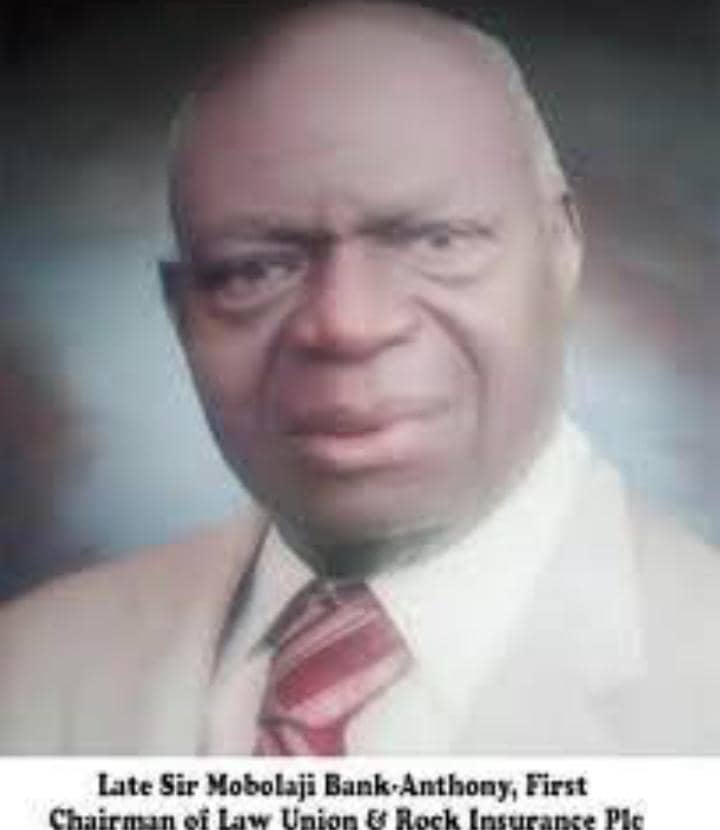
The visionary businessman whose generosity and leadership helped shape Lagos and Nigeria’s postcolonial economy
A Visionary Businessman Ahead of His Time
Sir Mobolaji Bank-Anthony was more than just a businessman; he was a nation-builder. Born in 1907 into a distinguished Yoruba family in Lagos, he rose to prominence during Nigeria’s transition from colonial rule to independence. His name became synonymous with integrity, enterprise, and selfless service — qualities that earned him a knighthood from the British Crown.
During the mid-20th century, when few Nigerians occupied leadership positions in major corporations, Bank-Anthony broke barriers. He played a crucial role in shaping Nigeria’s early industrial framework, setting the stage for the country’s economic progress in the decades that followed.
Contributions to Nigeria’s Economic Development
From the 1950s through the 1980s, Sir Mobolaji Bank-Anthony stood at the forefront of Nigeria’s emerging industrial scene. He was instrumental in several sectors, from aviation to finance and commerce.
He served as the Council President of the Lagos Stock Exchange, the institution that would later evolve into the Nigerian Stock Exchange (now the Nigerian Exchange Group). His leadership helped establish the foundation for modern capital markets in Nigeria, encouraging transparency and corporate accountability in a young economy still finding its feet.
Bank-Anthony also held numerous board and executive positions in various companies, reflecting both his business acumen and his trusted reputation. Most notably, he served as Chairman of Aero Contractors, a pioneering aviation company that remains active in Nigeria’s air transport industry today. His business philosophy combined innovation with integrity — a rare blend that earned him respect across both public and private sectors.
A Legacy of Philanthropy
Beyond commerce, Sir Mobolaji Bank-Anthony distinguished himself as a devoted philanthropist. His belief in giving back to society led him to invest heavily in healthcare and community development.
One of his most enduring contributions is the Ayinke House, a maternity hospital located within the Lagos State University Teaching Hospital (LASUTH), Ikeja. The facility, which he financed and built, has provided care to countless mothers and children for decades and remains one of the most respected maternal hospitals in Nigeria.
He also donated a ward to the National Orthopedic Hospital in Igbobi, Lagos, ensuring that Nigerians with physical disabilities and trauma injuries could access quality treatment. His philanthropic gestures were not limited to large projects; he quietly supported education, churches, and welfare organisations, often without seeking recognition.
Honours and Enduring Recognition
Sir Mobolaji Bank-Anthony’s contributions did not go unnoticed. His leadership and generosity earned him both national and international honours, including a British knighthood, making him one of the few Nigerians to be knighted during the colonial and post-independence eras.
In recognition of his lasting impact, a major Lagos thoroughfare — Mobolaji Bank Anthony Way in Ikeja — was named after him. The road serves as a daily reminder of his vision and contributions to the city’s growth and modernisation.
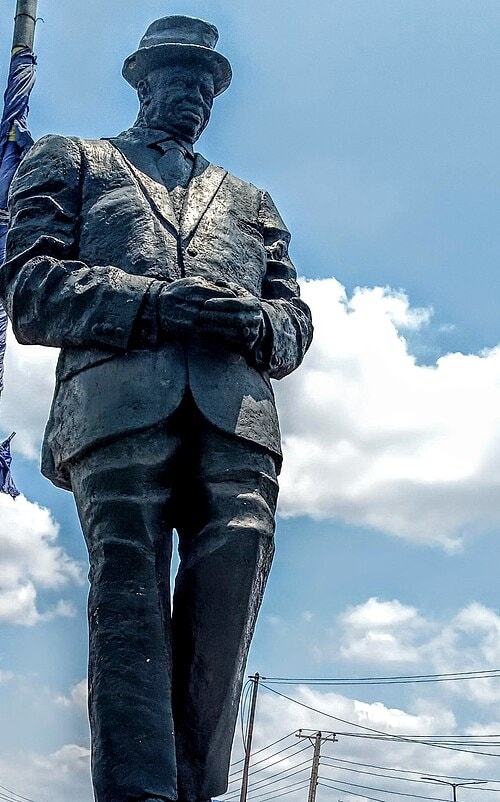
A statue in his likeness now stands in Lagos, honouring his service as one of Nigeria’s first indigenous business magnates who combined wealth with a deep sense of civic responsibility.
A Model of Integrity and Service
Sir Mobolaji Bank-Anthony’s life embodied the values of discipline, honesty, and compassion. At a time when many Nigerians were still fighting for economic inclusion, he blazed a trail that others would follow — showing that it was possible to achieve great success without compromising moral principles.
He passed away in 1991, but his legacy lives on through the institutions he supported, the lives he touched, and the infrastructure that continues to bear his name.
References:
Lagos State Government Archives
Nigerian Exchange Group Historical Records
National Orthopedic Hospital, Igbobi – Historical Files
FOLLOW US ON:






LIFE IS TEMPORARY — SO LEARN TO LIVE MEANINGFULLY BEFORE YOUR TIME RUNS OUT.

IF YOUR PARENTS FAILED TO TEACH YOU YOUR HISTORY, DON’T MAKE THE SAME MISTAKE WITH YOUR CHILDREN!

ONE DAY, YOUR CHILD MAY ASK, “MUM, DAD, WHERE DO WE REALLY COME FROM?” WILL YOU HAVE AN ANSWER?

‘Sleeping Prince’ of Saudi Arabia dies after 20 years in coma

2027: Atiku delays ADC membership card collection amid rumoured Jonathan comeback

How A Class Of 24 Students Produced 2 Presidents, 4 Governors, 2 Ministers, 4 Emirs, 3 Justices, 4 Ambassadors and Other Influential Leaders


-

 Videos17 hours ago
KWARA GOVERNOR DONATES 25 TOYOTA HILUX VEHICLES TO POLICE TO BOOST SECURITY! 🚔🇳🇬
-
News17 hours ago
El-Rufai earmarked $600,000 for EFCC officials – Investigator reveals
-
News16 hours ago
Tinubu transmits NDLEA, NSIB amendment bills to Senate
-
News18 hours ago
US Deports Nigerians, See Full List
-
Politics16 hours ago
PDP, APGA, Accord back Wike, Soludo, Adeleke for APC campaign
-
Education16 hours ago
Catholic diocese shuts schools, hospital over Benue attacks
-
Sports16 hours ago
CR7 deserves celebration despite tainting legacy – Mikel
-
News17 hours ago
Ondo plane crash: Epidemic fears mount as bodies remain unrecovered