

Connect with us

Education

WAEC mandates 250 computers, CCTV for schools participating in CBT

Published

on

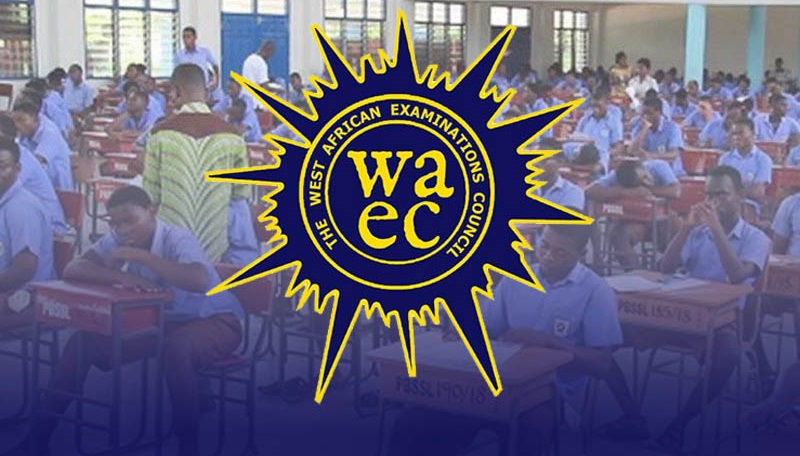
The West African Examinations Council has outlined key facilities schools must provide ahead of the full migration of the West African Senior School Certificate Examination to computer-based testing by 2026.

Head of Examinations, WAEC, Mr Lucky Njoagwuani, disclosed this on Thursday during a sensitisation programme in Port Harcourt.

According to him, schools must put in place a minimum of 250 functional laptops with 10 per cent backups, a robust computer server capable of supporting 250 systems simultaneously, and a Local Area Network setup.

Other mandatory requirements include functional air conditioners and lighting, uninterrupted electricity supply, a backup generator with at least 40kVA capacity, CCTV cameras, and a holding room or reception facility for candidates.

Njoagwuani noted that the move to CBT would cut logistics costs, improve exam security, and widen accessibility.

“We started with the fourth series of our private candidate exam about two years ago, and it was successful. This year’s private candidate exam, second series, is fully computer-based with no option for pen and paper. Invariably, next year’s school candidate exam will be fully computer-based as well,” he said.

The Port Harcourt Zonal Coordinator of WAEC, Mr Adeniran-Amusan Akim, urged schools to begin upgrading their ICT centres in line with WAEC standards, stressing that the CBT system “is here to stay.”

He added that schools unable to meet the requirements would be assigned to designated centres.

“WAEC will not lower the standards. Any school that wants to host the exams within its premises must provide the required equipment and infrastructure,” Akim stated.

See also  A Glimpse into Early UNN: The 1960s Lecturer’s Residential Building

Also speaking, the Rivers State Chairman of the National Association of Proprietors of Private Schools, Mr Sunday Jaja, encouraged school owners to leverage funding opportunities from the Bank of Industry and the Federal Government’s MSME intervention fund to finance the transition.

“Technology is playing a vital role in modern education. This initiative will enable schools to stay abreast of current trends and prepare students for the digital age,” Jaja said.

The sensitisation event was jointly organised by Teadro Systems Ltd, NAPPS, and partners, including the Bank of Industry, HP, Lenovo, and Canon.

The highlight was the donation of ICT gadgets, including computers, printers, and tablets, to schools through a raffle draw.

FOLLOW US ON:

FACEBOOK

TWITTER

PINTEREST

TIKTOK

YOUTUBE

LINKEDIN

TUMBLR

INSTAGRAM

Continue Reading
Click to comment

Leave a Reply

Your email address will not be published. Required fields are marked *

Education

Ekiti approves N165m for rehabilitation of two schools

Published

on

Ekiti State Government has approved about N165m for reconstruction works at two special schools in the state.

The Commissioner for Information, Taiwo Olatunbosun, in a statement in Ado Ekiti on Thursday, listed the schools as Government Special School, Ido-Ekiti and Government Special School for the Deaf, Ikoro-Ekiti.

Speaking on decisions taken at the State Executive Council meeting on Wednesday, Olatunbosun said the council approved N85.73m for the Government Special School, Ido-Ekiti, covering the reconstruction of failed drainage systems and the concrete landscaping of driveways and walkways within the school premises.

Similarly, the government approved N88.94m for the Government Special School for the Deaf, Ikoro-Ekiti, where erosion had severely affected drainage channels, driveways, walkways, and parts of the school frontage.

He said, “The interventions are expected to restore critical infrastructure within the affected schools, improve the safety and accessibility of the facilities, and provide a more conducive learning environment for students, particularly those with special educational needs.

“The approval specifically covers the reconstruction of failed drainage systems and the concrete landscaping of driveways and walkways at the Government Special School, Ido-Ekiti, as well as the construction of a new culvert, drainage systems, and associated concrete works at the Government Special School for the Deaf, Ikoro-Ekiti.”

According to him, the interventions became necessary following the devastating impact of erosion on key infrastructure within the schools, including collapsed drainage channels, damaged walkways, compromised driveways, and in some cases, damaged perimeter fencing and assembly grounds.

These, he said, had significantly affected the learning environment and overall safety of students, particularly given the special needs of the pupils in the affected institutions.

See also  Secondary Schools with unqualified teachers to lose WAEC and NECO accreditation – FG

The commissioner said the two projects “are to be executed within 16 weeks by the State Bureau of Special Projects through direct labour, given the urgency of the intervention and the need to minimise disruption to the learning activities of the students.”

punch.ng

FOLLOW US ON:

FACEBOOK

TWITTER

PINTEREST

TIKTOK

YOUTUBE

LINKEDIN

TUMBLR

INSTAGRAM

Continue Reading

Education

UNILAG faults ASUU strike, insists exams will hold

Published

on

The management of the University of Lagos UNILAG has chided the varsity’s chapter of the Academic Staff Union of Universities for declaring an industrial action without following due process.

PUNCH Online reports that the ASUU UNILAG, rising from a congress held on Tuesday, asked lecturers to withdraw their services from Wednesday over what they described as ‘amputated’ January and February salaries received.

The Chairman, ASUU, UNILAG chapter, Prof Idou Keinde, stated that the lecturers did not receive the full complement of their salaries: Consolidated Salary Structure for Academics, Consolidated Academic Tools Allowance and Professorial Allowance.

Keinde vowed that the lecturers would not resume work until their full salaries are paid.

But UNILAG, through its Head, Communication Unit, Adejoke Alaga-Ibraheem, on Wednesday, said the university would continue to engage with the ASUU executive to address the issues, especially the unpaid Consolidated Academic Teaching Allowances.

The statement read, “The Management of the University of Lagos has noted reports circulating in the media that the Academic Staff Union of Universities, UNILAG Chapter, at its Congress held on Tuesday, March 10, 2026, directed its members to suspend their services over alleged unpaid Consolidated Academic Teaching Allowances.

“Management observes that due process was not followed in making this declaration. Nevertheless, in its commitment to the welfare of staff and students, the university has continued to engage with the ASUU Executive to address all issues.”

While noting that engagement with the ASUU would continue, the UNILAG management said the ongoing students’ examinations scheduled for Wednesday will proceed as planned.

See also  Rivers varsity suspends lectures, evacuates students after abduction

“The university is particularly mindful that students are currently at a critical stage of the academic session, with semester examinations already underway.

“Any disruption at this time would adversely affect students, especially those scheduled to commence the Students’ Industrial Work Experience Scheme, internships, and those preparing to proceed to the Law School,” the statement added.

It, however, noted that courses for which students have been informed by their Deans or Heads of Department that examinations will not be held will be rescheduled.

“All examinations will continue as scheduled from Thursday, March 12, 2026, and deans are to ensure that necessary arrangements are put in place for the smooth and successful conduct of the examinations.

“Management appeals to all members of the university community to remain calm and continue to go about their lawful academic activities as discussions with ASUU executive continue toward an amicable resolution of the issues raised,” the statement concluded.

Continue Reading

Education

UNESCO hails Otti’s education reforms, pledges support

Published

on

The United Nations Educational, Scientific and Cultural Organisation has commended Abia State Governor Alex Otti for prioritising education and human capital development, describing the state’s reforms as a strong foundation for improving learning outcomes.

The UNESCO Head of Office and Country Representative to Nigeria and ECOWAS, Dr Jean-Paul Ngome-Abiaga, gave the commendation during a visit by a UNESCO delegation to the governor in Nvosi, Isiala Ngwa South Local Government Area, on Tuesday.

Ngome-Abiaga further commended Otti for the progress made in Abia State since 2023, particularly in infrastructure development, fiscal discipline, and education.

He noted that the reforms introduced by the Otti-led administration since assuming office were already yielding visible results.

Ngome-Abiaga lauded the state government for allocating 20 per cent of its budget to the education sector and disclosed that UNESCO has been working closely with the state government and its institutions, especially in the area of health education.

He said, “Our collaboration has resulted in the training of more than 1,000 teachers on health education, the engagement of over 700 community and religious leaders on HIV and health awareness, and the involvement of more than 300 schools under the Abia First Education Programme.

“And all this started when you launched the Abia First Education Programme. So we would like to thank you for that, and we would like to continue to support you in that very important agenda.”

Ngome-Abiaga urged the state government to further deepen collaboration with UNESCO, increase budgetary provisions for health education, and expand partnerships in areas within the organisation’s mandate.

See also  FG introduces mandatory ethics, criminal screening for teachers

He added that UNESCO is ready to provide technical expertise and institutional support to the Abia State Government in designing and implementing programmes in education, health education, and other areas within its mandate.

“We are here in this country because our mandate focuses on education, science, culture, communication, and information, and we are here for you.

“We are here to assist you, to support your work, and we would like you to know that we are available any time you need such support.

“We would like to continue together and to support you. We will put all our technical expertise at your disposal in any area you need it,” he assured.

Also speaking, the Chief Executive Officer of Sterling One Foundation, Olapeju Ibekwe, highlighted the Africa Social Impact Summit, a platform convened with the United Nations system in Nigeria to accelerate the achievement of the United Nations Sustainable Development Goals.

She said the summit, launched in 2022 after the COVID-19 pandemic, was designed to promote multi-sector partnerships among government, the private sector, and development organisations, adding that it has already helped unlock more than $100m in development financing.

Ibekwe also spoke about the Business Coalition for Education, launched in partnership with the Office of the Vice President to address the challenge of out-of-school children in Nigeria through private sector participation.

She invited Otti to participate in the summit scheduled for July 22–23 at the Eko Convention Centre in Lagos and urged Abia State to join as a pioneer public sector partner in the coalition.

See also  A Glimpse into Early UNN: The 1960s Lecturer’s Residential Building

In his remarks, Otti thanked the delegation for the visit and expressed readiness to deepen collaboration with UNESCO and other development partners.

“What you came with is a request that no one can say no to — partnership, support to reduce the number of out-of-school children, and a call for more investment in health education.

“Those are good, and they are imperative for a government that is serious,” the governor said.

He explained that the Abia State Government currently devotes 20 per cent of its budget to education and 15 per cent to health.

The governor recounted how his administration introduced free and compulsory education after discovering that school fees were a major factor keeping children out of school.

He said the policy led to a surge in school enrolment, prompting the government to recruit thousands of teachers and embark on massive school reconstruction, the introduction of smart schools, curriculum standardisation, and improved security for school facilities.

Otti assured the delegation that Abia State would continue to work closely with UNESCO and other partners to strengthen the education sector and reduce the number of out-of-school children.

punch.ng

FOLLOW US ON:

FACEBOOK

TWITTER

PINTEREST

TIKTOK

YOUTUBE

LINKEDIN

TUMBLR

INSTAGRAM

Continue Reading

Trending