
Connect with us

Politics

“Lagos Belongs To Everyone, Not One Man” – Rhodes-Vivour

Published

on

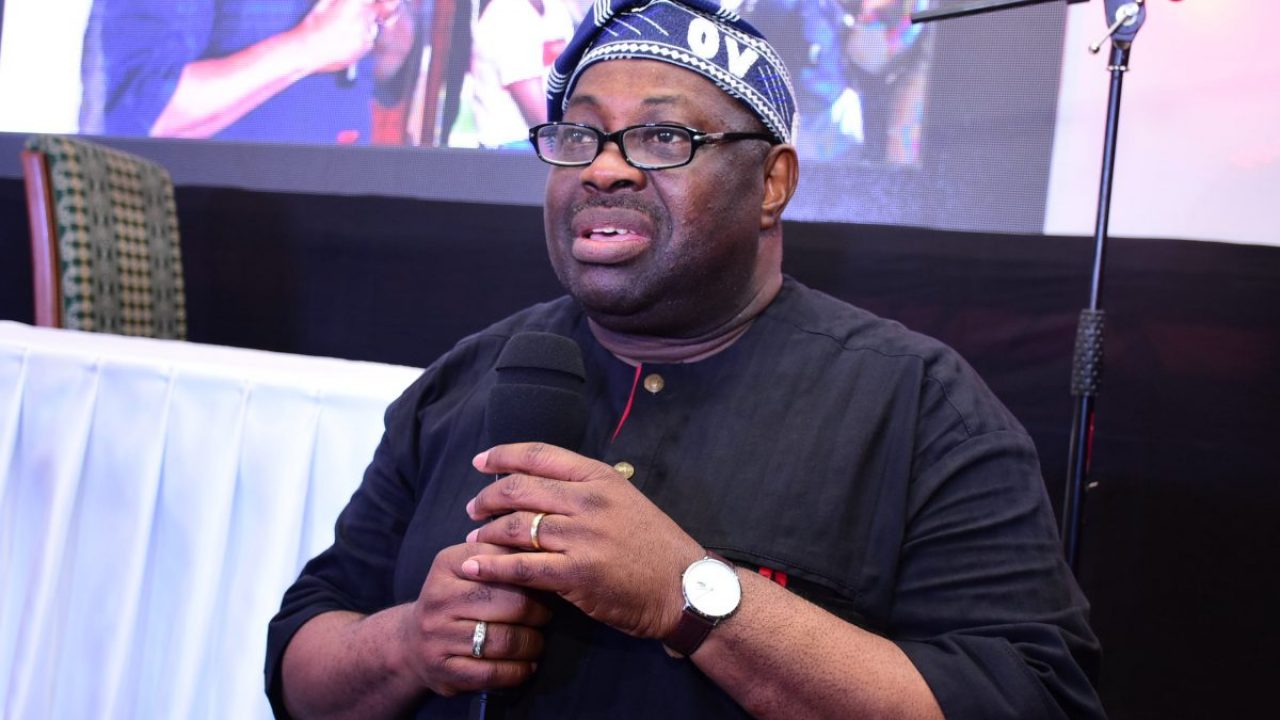
Former Labour Party governorship candidate in Lagos State, Gbadebo Rhodes-Vivour, has reiterated that Lagos State is not the preserve of a single individual.

The statement was made on Sunday, during an interview on Politics Today, a programme aired on Channels Television.

Rhodes-Vivour emphasised that leadership in Lagos should be a shared responsibility among all residents.

He said, “Lagos is a home to all. The idea that Lagos belongs to only one man and leadership in the state is controlled by only one man in the last two decades is what I’m completely against.”

He further highlighted challenges faced by opposition parties in the state, pointing out restrictions and security measures that hinder political activities.

“It’s not about me. It’s about the people of Lagos, the people of Nigeria. Look at the situation that we have today.

“You have local government chairmen going on inner roads that are terrible in this Lagos in Alogbomoso with policemen to prevent an opposition party from having a gathering.

“The opposition parties are not coming for violence but to give quality leadership to the people,” Rhodes-Vivour added.

On the broader political climate, he stated, “Leadership should not be a monopoly. Lagos belongs to every resident, every voter, every young person seeking opportunity.”

He also stressed the need for accountability, saying, “The people deserve leaders who listen, who provide solutions, and who create opportunities, not leaders who control everything from the top.

FOLLOW US ON:

FACEBOOK

TWITTER

PINTEREST

TIKTOK

YOUTUBE

LINKEDIN

TUMBLR

INSTAGRAM

See also  2027 Elections - Jonathan splits South-South PDP
Continue Reading
Click to comment

Leave a Reply

Your email address will not be published. Required fields are marked *

Politics

One ticket, two visions; read about the battle between NDC and the OK Movement today

Published

on

The presidential candidate of the opposition Nigeria Democratic Congress (NDC), Peter Obi and his running mate, Rabiu Musa Kwankwaso  appear to have divergent views on some issues ahead of the 2027 presidential election.

Obi and Kwankwaso hold different views on fuel subsidy removal and establishment of state police.

Daily Trust reports that Obi supports the removal of the subsidy but believes it should have been removed in a structured and phased manner, noting that the alleged mismanagement of subsidy savings should not have been an excuse for restoring it.Speaking at the Nigerian Bar Association conference in Port Harcourt, Rivers State, recently, Obi maintained that he did not support a return to the fuel subsidy era.

“I subscribe and maintain that you need to remove the subsidy. Mismanagement of the proceeds shouldn’t be the reason for not removing it. What we should have done is that when we remove subsidy, we would have given the people an alternative usage for the subsidy. What we have today is that the removal and attendant resources being recovered are also being mismanaged and stolen,” Obi had said.

But Kwankwaso said he supported the reintroduction of the subsidy in a modified form.

In a TV interview on Tuesday, the NDC vice-presidential candidate stated that an Obi-led government would bring back subsidy “in our own way.”

Asked whether it would be difficult for the NDC to campaign in the North-West, where there is support for the return of subsidy, Kwankwaso said, “No, no, no, look. We are bringing subsidy in our own way.”

“Of course, there are many ways. One, I can tell you: now we have a refinery built by a businessman, and I’m sure more refineries would be built.

“Now, if individuals in this country could build refineries, I see no reason why the government, under certain circumstances, will not build a refinery or refineries to the extent that we achieve the minimum requirement.

“What is the minimum requirement? The minimum requirement is for the people across the country to go to the filling stations and buy fuel at a reasonable price.

“We, in the NDC, will do whatever it takes, really, to put the price of oil down,” he said.

The position of the NDC presidential candidate and his running mate also differed on state police.

Obi had in a statement on his X handle, commended the State Police Bill, saying it represents a major legislative milestone in Nigeria’s quest to reform its policing architecture, but disagreed with the manner in which the legislation was processed.

He said the absence of broad public consultation and the speed with which the legislation was passed had created widespread suspicion about the motives behind the initiative.

Obi said, “The recent passage of the State Police Bill by the National Assembly marks a significant legislative milestone in addressing a long-standing demand of the Nigerian people.

Also, in an interview with Arise Television, Obi,  when asked if he believes in state police, retorted:  ‘’Yes I believe in state police. We will do whatever it takes to secure the country.”

But the NDC vice-presidential candidate, in the Tuesday interview, rejected the creation of state police in Nigeria saying the increasing calls for it were due to the inability of the current federal policing system to effectively tackle the country’s security challenges.

Kwankwaso insisted that the idea of state police emerged because of what he described as the failure of the federal or national police to effectively deal with insecurity.

He said, “I have always been against state police, and I can tell you the issue of state police came because of the failure of the federal or national police. I think it’s one of the big mistakes that government is doing.

NDC, OK Movement rift

Also, the brewing tension between the hierarchy of the NDC and grassroots volunteers under the auspices of the Obi-Kwankwaso (OK) Movement has spilled into the open after the executive leadership of the party disowned a 59-member Presidential Campaign Council (PCC) unveiled by the movement.

See also  ADC, APC trade words over alleged violence in Ekiti

The move marks the first major public battle over political supremacy, organisational control and strategy between the party platform and the high-profile support group backing the Obi-Kwankwaso ticket.

Analysts describe the disagreement within the party over the structure of its campaign machinery as “untimely” and warned the crisis could have wider implications for the opposition ahead of the 2027 general elections.

The crisis escalated when the OK Movement, through its National Secretary Saadatu Sani, announced the formation of an independent campaign machinery led by the movement’s National Director-General, John Ughulu, as Director-General of the PCC. The announcement was swiftly rebuffed by the party hierarchy.

In a counter-statement titled “Re: Purported OK Movement PCC Announcement,” the NDC National Chairman, Senator Cleopas Moses, officially disavowed the movement’s setup, insisting that no campaign structure could be unveiled without formal approval from the party’s National Working Committee (NWC).

Adding weight to the party’s stance, the NDC National Leader Senator Seriake Dickson cautioned support groups against setting up alternative organs that compete with official structures.

While acknowledging the importance of support groups in grassroots mobilisation, Dickson insisted that all campaign activities must be channeled through formal party machinery.

“Support groups should work with the political party and its campaign structures rather than compete with them during the electioneering process,” Dickson noted, reiterating that party supremacy remains non-negotiable.

Why NDC, OK Movement are at loggerheads

Behind the public statements lies a fundamental conflict between traditional party governance and organic political mobilisation.

Party insiders revealed that the NDC leaders fear being sidelined by the support group’s assertive structure.

An NDC chieftain, who spoke on condition of anonymity, outlined the core conflict.

“The friction rests on organizational independence versus party supremacy. The OK Movement maintains it is a volunteer-driven force that will not be absorbed or subordinated into the NDC machinery. Conversely, the NDC views political authority through constitutional structures. Allowing parallel campaign councils creates competing power centers that undermine party discipline,” the source said.

The feud is further complicated by leadership disputes around Ughulu. While state and ward coordinators of the OK Movement have threatened mass withdrawal if Ughulu is removed, NDC leaders have resisted his authority, citing unresolved disciplinary proceedings over past primary disputes in Lagos.

Campaign council list ‘nonsensical’ – Dickson

The NDC national leader, Dickson, also criticised the OK Movement over the controversy surrounding the 59-member presidential campaign council list, describing the group’s actions as “nonsensical.”

Dickson addressed the issue on Tuesday following a meeting of NDC stakeholders in Abuja, where Babachir Lawal, former Secretary to the Government of the Federation (SGF), officially joined the party.

Rejecting the movement’s stance, Dickson emphasised that support groups must understand their boundaries and avoid attempting to rival the party apparatus.

“Support groups don’t compete with the political party that is sponsoring candidates. Support groups don’t compete for supremacy and space. They provide grassroots support and mobilisation. They don’t convert themselves to become critics of the political party sponsored. They don’t attack the political party sponsored,” he said.

Dickson noted that while support groups exist across all political platforms, including the ruling All Progressives Congress (APC), none had attempted to usurp party functions.

“None of them will dare say they are setting up a presidential campaign council. It is unheard of. Nonsensical. And those who had a duty to educate and call people to order should do so,” he added.

Despite the reprimand, the NDC leader affirmed that the party recognises the value of grassroot support groups and remains open to collaborating with them, noting that he has previously held constructive meetings with Obedient groups.

See also  2027 Elections - Jonathan splits South-South PDP

Movement declares independence from party

Refusing to back down, Ughulu, in a statement on Wednesday, asserted that the movement remains an autonomous entity that will neither merge into the NDC nor surrender its nationwide structures.

“The OK Movement is an independent political organisation, not a support group created as an appendage of any political party. Its existence and internal administration are not subject to the internal management of the NDC. Political cooperation between the OK Movement and the NDC should be understood as collaboration rather than organizational subordination,” Ughulu declared.

He maintained that the movement is self-funded by its members and retains the right to design its own campaign strategy and field operations. While affirming that the group does not claim supremacy over the NDC, he warned against attempts to dissolve or hijack its network.

“No individual can simply declare that structure dissolved, transferred, or absorbed without the authority of the movement’s legitimate organs,” he warned.

He stressed that the movement operates through its own established nationwide structures across national, state, local government, and ward levels, adding that these assets would neither be surrendered, collapsed, nor merged into the NDC or any other political party.

“The movement’s structures were built through the commitment of thousands of coordinators across the country over time. No individual can simply declare that structure dissolved, transferred, or absorbed without the authority of the movement’s legitimate organs,” Ughulu said.

Reaffirming the group’s long-term strategy, Ughulu stated that the OK Movement remains united, lawful and fully committed to advancing the Obi-Kwankwaso presidential campaign through the 2027 general elections.

Rift may affect NDC’s chances at polls – Analysts

A Kano-based political analyst, Mustapha Isa, said the OK Movement operates outside the formal party structure and enjoys the blessings of both Obi and Kwankwaso because of its organisational strength and ability to mobilise resources more pragmatically than many party organs.

He noted that the recent rift between the NDC and the movement over the campaign council reflects a lack of synergy and highlights the group’s independence, which the party may see as a threat.

“Traditionally, what obtains in Nigerian politics is for the party to inaugurate its campaign council and assign roles to support groups. This is usually done under a coordinator or director of support groups, who harmonises their activities, just like the APC did,” Isa said.

The analyst maintained that the NDC was right to dissociate itself from the campaign council list released by the movement, warning that recognising it could encourage other support groups to set up parallel councils, thereby creating a cumbersome structure for the party to manage.

He added that the OK Movement, because of its allegiance to the candidates, believes the party cannot effectively manage campaigns or safeguard their mandate.

Isa advised that the way forward is for the party to accommodate the movement within its proposed campaign council and address its grievances, so that its wide network can be deployed during electioneering.

He urged Obi and Kwankwaso to personally intervene in resolving the feud before it worsens.

Speaking on the issue, a political analyst, Dr Ayinde Mosadi, said the disagreement within the NDC over the structure of its campaign machinery should be viewed beyond the immediate internal wrangling.

He warned that the crisis could have wider implications for the opposition ahead of the 2027 general election.

Mosadi said the NDC’s present crisis was partly rooted in the history of the party and the manner in which it had evolved with the entry of prominent political figures.

According to him, the party was initially a relatively small political platform that welcomed prominent figures such as Obi and Kwankwaso because of their political strength and the desire to win the election.

See also  INEC fears AI-powered disinformation for 2027 poll

A lecturer at the Department of Political Science, Adekunle Ajasin University, Akungba-Akoko, Ondo State, Idowu Ajayi, warned that the ongoing rift between the NDC and the OK Movement could affect the party’s performance in the 2027 general election if not urgently resolved.

Ajayi said the manner in which the campaign committee was constituted had the potential to create divisions within the political platform, particularly if the various groups involved were not adequately carried along.

He said the disagreement should not be treated as an ordinary misunderstanding because it could affect internal coordination, grassroots mobilisation and the party’s ability to present a common message to the electorate.

According to him, any political organisation preparing for a general election requires a clearly defined structure in which the roles of the party, campaign organisation and support groups are understood by all stakeholders.

“The way the campaign committee was constituted is capable of creating misunderstanding among the different interests within the movement. If the issue is not properly managed, it could affect the performance of the party during the general election,” he said.

Ajayi explained that the major issue appeared to be the relationship between the authority of the political party and the independent identity of the OK Movement and other support organisations associated with the Obi-Kwankwaso political project.

He said while the party would want to maintain control over its official structures and candidates, the support movements would also expect recognition of their structures and contributions.

He warned that failure to resolve the differences could create confusion among supporters at the grassroots, particularly over who is responsible for mobilisation, campaign activities and communication.

“When supporters begin to receive different directives from different structures, it can affect coordination. At the ward and polling-unit levels, there must be clarity about who is responsible for what,” Ajayi said.

The political scientist also noted that continued public exchanges between the NDC and the OK Movement could shift attention away from the party’s candidates, policies and campaign message, while prolonged disagreement could deepen mistrust among the different interests within the political platform.

We’re awaiting nominations to PCC from Obi, Kwankwaso – NDC

Meanwhile, the NDC has ceded the privilege to nominate key members of the party’s Presidential Campaign Council to Obi and Kwankwaso.

The party said the duo would nominate the Director-General, Deputy Director-General (North), campaign spokesman, deputy spokesman, Head of New Media, Finance Director, Deputy Finance Director and other officials of the council in consultation with the party leadership.

The NDC stated this in a statement on Tuesday by its National Publicity Secretary, Osa Director, following consultations between Obi, Kwankwaso and the party’s national leadership.

Director said the arrangement was designed to promote inclusiveness and cohesion in the campaign structure.

The spokesman explained that the organogram of the campaign council had been prepared since August and submitted to Obi and Kwankwaso for their input, while nominations had also been received from stakeholders nationwide.

He said, “The party leadership has given a free hand to the presidential candidate and his running mate to make nominations.”

The NDC said it would announce and inaugurate the council after receiving the candidates’ inputs.

“We also appeal to all our candidates at all levels to restrain their supporters and support groups to focus on the need to win elections. There are no battles to fight within the NDC. The common opponent to defeat is the ruling APC.

“We are committed as a party. The party has done its own and is ready to do more. The candidates and their supporters are encouraged to do the same,” he stated.

Source: dailytrust.com

FOLLOW US ON:

FACEBOOK

TWITTER

PINTEREST

TIKTOK

YOUTUBE

LINKEDIN

INSTAGRAM

Continue Reading

Politics

APC challenges Atiku’s substituted service request on Tinubu’s credentials, read details

Published

on

The All Progressives Congress has written to the Federal High Court in Abuja to argue that an order for substituted service granted against President Bola Tinubu in the suit filed by Atiku Abubakar and the African Democratic Congress challenging his eligibility for the 2027 election was needless.

The party insisted that the President’s lawyers had already filed and served his defence before the order was made.

In a letter dated September 22, 2026, and addressed to the Deputy Chief Registrar of the court for the attention of the Registrar of Court 6 presided over by Justice Inyang Ekwo, the party said it only learnt of the order “through the media propaganda embarked on by the plaintiffs immediately after the order was made.”

It stressed that the plaintiffs “have not served any Enrolled Order on the APC up to this moment.”

The letter, signed by the party’s National Secretary, Ajibola Basiru, and made available to our correspondent on Tuesday, was written in respect of Suit No. FHC/ABJ/CS/1888/2026.

Atiku and the ADC are seeking to disqualify Tinubu and the APC from the 2027 presidential race, principally over a discrepancy between the name on a National Youth Service Corps discharge certificate submitted to the Independent National Electoral Commission and the president’s official name.

The order being contested by the APC was made on September 16, 2026, permitting the plaintiffs to serve court processes on the President through the party’s national secretariat, after his direct service had proved difficult.

According to the party, while it respects all courts in the country, inclusive of all orders made by them, it also felt “under a duty to bring it to the attention of the court when its processes are being abusively employed to harass the public and/or any of our members, particularly, the leader of our party, President Bola Ahmed Tinubu, GCFR.”

See also  APC seeks cancellation of Kano by-elections over violence

Basiru, in a six-point chronology, laid out what he said were the facts of how the case had progressed.

According to him, the suit was filed against Tinubu, the party and INEC as first, second and third defendants sometime in August 2026, following which Atiku “addressed the press after filing the action and informed the general public that he personally went to the registry of the court to depose to the supporting affidavit.”

The party said that although the plaintiffs served the second and third defendants, they, “for reasons best known to them, refused or failed to serve the first defendant,” Tinubu.

They added that the President had briefed a legal team led by Chief Wole Olanipekun (SAN) to represent his interests, as soon as he learnt of the suit through media reports.

Narrating the sequence of court appearances, the APC said the matter came up on the cause list on September 1, 2026, when one of Tinubu’s lawyers, Omosanya Popoola (SAN), informed the court of his readiness to accept service on the President’s behalf, having been so instructed.

According to Basiru, counsel for the plaintiffs “objected to the harmless request which ordinarily, the plaintiffs or any plaintiff should have gladly accepted,” prompting the court to adjourn to September 28, 2026, for mention.


The party added that on Tinubu’s further instruction, Olanipekun formally wrote the court on September 10, 2026, to the effect that his client had instructed his legal team to collect the originating processes filed by the plaintiffs and obtain certified true copies, and that Tinubu had also directed that his defence be filed immediately after the documents were obtained.

See also  2027 Elections - Jonathan splits South-South PDP

Based on that, the letter said, the President’s lawyers “formally obtained and paid for Certified True Copies of the processes on 11th September, 2026,” after which they filed a preliminary objection to the processes on September 14, and followed with “a defence to the action with a comprehensive written address” the next day, September 15.

Both the preliminary objection and the defence, the party said, were served on the plaintiffs’ counsel on September 14 and 15 respectively, “and his office duly acknowledged receipt of service.”

It was against this backdrop, the APC said, that it found it curious that the application for substituted service was moved on September 16 by the plaintiffs’ counsel “and the attention of the court was not drawn to the above facts, particularly that the first defendant’s defence in the action had been filed and served on the plaintiffs’ counsel.”

The party further told the court that it does not have Tinubu’s “consent or authority… to receive any processes in this matter on his behalf,” noting that the President has his own counsel of choice representing him in the suit, a fact it said was already known to the plaintiffs’ lawyers.

“It is for the foregoing reasons that the APC wishes to inform the court that the ex parte application for substituted service filed by the plaintiffs was unnecessary, given the trajectory of the facts stated above,” the letter read, adding that both the party and Tinubu “have filed their respective defences to the plaintiffs’ action, and are ready to prosecute the case accordingly.”

See also  ADC, APC trade words over alleged violence in Ekiti

The suit at the centre of the dispute was instituted by Atiku and the ADC in August, asking the court to determine whether Tinubu ought to be barred from the 2027 poll over the alleged discrepancy between the name on his NYSC discharge certificate and his official name, and inviting the court to invoke relevant sections of the 1999 Constitution, as amended, along with provisions of the Electoral Act.

When the matter first came up for mention on September 1, the plaintiffs’ lawyer had told the court that his team had been unable to personally serve Tinubu with the originating processes, prompting the adjournment to September 28 for hearing.

At the same sitting, Popoola’s offer to accept service on the President’s behalf on the spot was turned down by the plaintiffs, who said they wanted to steer clear of any future arguments over technicalities in how service was effected.

INEC, on its part, has since filed a counter-affidavit describing the suit as an abuse of court process and contending that the plaintiffs lack the locus standi to institute the action.

The suit is one of a string of pre-election legal battles that have trailed Tinubu’s candidacy in past cycles, with disputes over service of process on him a recurring feature of such litigation.

The matter remains before Justice Ekwo, with the APC’s letter now placed before the registry ahead of further proceedings.

Source: punchng.com

FOLLOW US ON:

FACEBOOK

TWITTER

PINTEREST

TIKTOK

YOUTUBE

LINKEDIN

INSTAGRAM

Continue Reading

Politics

APC leaders weigh options as Wike-govs rift deepens ahead of the 2027 elections

Published

on

Leaders of the All Progressives Congress, including some aggrieved governors, are considering their options ahead of the 2027 presidential election, with some party stakeholders reportedly weighing support for alternative presidential candidates amid concerns over the political activities of the Minister of the Federal Capital Territory, Nyesom Wike.

Sources within the APC, who spoke on condition of anonymity because they were not authorised to comment on the matter, said many party leaders, including some governors, regarded Wike as a potential threat to President Bola Tinubu’s 2027 re-election bid.

Meanwhile, the Peoples Democratic Party National Publicity Secretary, Jungudo Mohammed, in an exclusive interview with our correspondent, urged Wike to support the party’s presidential candidate, Senator Sandy Onor, instead of backing Tinubu, saying his support would help bring the President’s administration to an end.

Reacting, the Tanimu Turaki (SAN)-led Interim National Working Committee’s Publicity Secretary, Ini Ememobong, criticised the ongoing political realignments involving the Wike-backed PDP group, describing those involved as “pretenders.”

Another party source said the APC National Working Committee was awaiting President Tinubu’s position before deciding on its next course of action.

However, political analyst and former President of the Nigerian Political Science Association, Prof. Hassan Saliu, and former APC Organising Secretary, Eze Duru, said President Tinubu needed the support of Wike and state governors to reconcile the various interests within the party ahead of the 2027 general elections.

They added that the ruling party had also depended on support from politicians and groups outside the APC.

The Minister of the Federal Capital Territory and PDP leader serving in the APC-led Federal Government, Wike has been promoting the Rainbow Coalition in Rivers State in support of President Tinubu ahead of the 2027 elections.

Wike, who has clashed with some APC governors, recently alleged during a media chat that Kwara State Governor AbdulRahman AbdulRazaq and Imo State Governor Hope Uzodimma were responsible for some of the political challenges he was facing.

He linked the governors’ opposition to the expanding influence of the Rainbow Coalition, which he said was providing a platform for politicians seeking to challenge APC candidates in governorship and senatorial elections.

Responding to the development, Uzodimma, who chairs the APC Progressive Governors’ Forum, said after the forum’s meeting last week that APC governors would not back any alliance or political arrangement capable of undermining Tinubu’s re-election or weakening the party ahead of the 2027 elections.

Uzodimma said the governors were committed to campaigning exclusively for APC candidates across all levels of government.

Wike, however, maintained his support for the Rainbow Coalition, arguing that the alliance was intended to back Tinubu’s presidential ambition while supporting the PDP in other electoral contests against the APC.

He insisted that supporting Tinubu for the presidency did not amount to endorsing APC candidates in the states, stressing that he remained entitled to support candidates of his choice.

The source said Wike’s continued media attacks and political activities against some APC governors were causing concern among leaders of the ruling party, with some governors and other stakeholders now considering alternative political options.

He stated, “As a member of the APC and somebody who understands how the governors work and what they have been doing, I know that the governors are not happy, especially the governors of Ogun, Kwara and Imo states. Other members of the party, including critical party leaders, are also not happy about the Wike matter. The way he goes around talking about people, party leaders and governors as if they have no influence or cannot have any impact on the 2027 election is quite discouraging.

See also  ADC constitution review targets women, youth inclusion

“Many of them are looking at alternatives. The governors, including some critical party leaders, are considering the fact that Wike has claimed that he has the power to deliver the President, even more than the number of governors supporting the President.

“If Wike continues along that line, many of them are already considering the option of supporting other candidates against Bola Ahmed Tinubu. Other options are also available to them because they are unhappy about being disrespected and belittled by a minister serving in an APC-led Federal Government, despite being a member of the PDP. They are also concerned that the President is yet to make any remark or issue a directive on the matter.”

Another source said the governors and APC leaders were expecting President Tinubu to intervene and resolve the matter before it escalated further.

The source stated, “What I know is that APC leaders and other critical stakeholders consider Wike a threat to President Bola Tinubu’s re-election. This is because Wike had quite a lot of enemies before now because of this kind of politics, and he is transferring some of those enemies to the President. Even party members who ordinarily support the President are beginning to think otherwise because of their opposition to Wike.

“Wike has continued to go on television and other media platforms to criticise the governors and portray them as though they have no influence, followers or supporters capable of affecting the outcome of a presidential election. This is seriously becoming unbecoming, and many party leaders are not happy about it.

“Some of them are looking up to the President to act speedily and nip the matter in the bud. If it is not addressed, some of them may simply watch from afar as the election unfolds, and that could have serious implications for the President in 2027.”

Reacting, the PDP National Publicity Secretary, Jungudo Mohammed, said the party hoped Wike would support its presidential candidate, Senator Sandy Onor, to bring an end to what he described as the political noise surrounding the 2027 election and the administration of President Tinubu.

Mohammed stated, “The Minister of the Federal Capital Territory is truly a political phenomenon. If there is any way we can persuade the minister to rescind his decision not to support our presidential candidate, Senator Onor, we would be glad to do so. However, we are only respecting his constitutional rights.

“If his romance with the President is constituting a double blockade for the PDP, the APC governors would not come out to call for an emergency meeting, have sleepless nights and express concern about a minister’s support for candidates in the PDP if they were not worried about the situation. So, we respect his decision. We also respect the fact that the party itself agreed that he should work for the President.

See also  PHOTOS: South East Group Offers To Buy N200m APC Presidential Form For Tinubu In 2027

“We are not uncomfortable with the situation, although we wish he would come and give us his full support. If he does that, it will make it easier for us to defeat President Ahmed Tinubu. His lack of support, as it is now, will no doubt affect our chances. But that is not to say that we do not have what it takes to surmount the challenges and defeat President Ahmed Tinubu.

“We are in the election to win. We will roll out our campaign across the nooks and crannies of the country to ensure that Nigerians support our candidate.”

On his part, Ememobong described the Wike-backed faction of the PDP and the APC as “pretenders.”

He stated, “I am a Christian, and I believe in standing by the truth. These people are pretenders—the APC and the Wike group are pretenders. They do not mean well for Nigerians. We are happy to see their house in disarray. It is a fact that all of them are in the same boat, doing exactly the same thing. It is something they think they can use to deceive Nigerians.

“It is a fact that they are taking Nigerians for granted under their so-called Rainbow Coalition. These people are not principled. They flourish in confusion. But we can assure Nigerians that, as an opposition party, we stand for the ideals of opposition politics, and that is what we are going to uphold. If we choose to play the ostrich and take a gamble, then we will kill the essence of opposition politics.”

Efforts by our correspondent to obtain a reaction from the APC National Publicity Secretary, Felix Morka, were unsuccessful, as he did not respond to calls. However, a senior party source, who spoke on condition of anonymity, said the party was awaiting President Tinubu’s directive before deciding on its next course of action.

The source stated, “For now, the party cannot do much about the matter. It is only the President who can intervene. The President will have to reach out and intervene between the governors and the minister. The last time APC NWC leaders tried to intervene in the Rivers State affair and Wike, it boomeranged. This time around, they are all waiting for the President’s directive and body language.

“Once that happens, the NWC will know the next line of action and proceed accordingly. That is why, for now, it is difficult for anyone to come out openly to condemn, back, support or speak extensively about the matter.”

Former APC Organising Secretary, Eze Duru, in an exclusive interview with our correspondent, said President Tinubu had a clear political strategy, which he had been revealing selectively based on what he considered necessary.

He noted that the support of governors and other political actors would be important ahead of the 2027 elections.

Duru stated, “It is very clear that President Tinubu has a strategy mapped out for himself, and he has revealed that strategy on a need-to-know basis. What he considers necessary to disclose is what he believes will work for him.

See also  NDC clears Peter Obi for presidential primary

“In reality, although it has not been officially described as a government of national unity, this administration has recognised the need to receive support from people who do not belong to the APC. These include members of other political parties, whether the PDP, Labour Party, APGA or, in the case of Osun State, the Accord Party.

“That has been the structure of the government from the beginning. People of different political persuasions who supported the government in the 2023 election were brought into the administration and, in some cases, given appointments. As we approach another election, that is also on the agenda. That involves the entire rank and file of the APC, as well as other supporters of the President.

“We have always known that Mr Wike has committed himself to supporting the President, and we will require all such support. Governors are expected to work with the President, particularly where they share the objective of ensuring his electoral success. The same applies to other interest groups that are not members of the APC but want the President to win the election. So, the President understands the game and will work to unite all of them to work for his victory, and not for anyone else.”

On his part, a former President of the Nigerian Political Science Association, Professor Hassan Saliu, said the President needed to carefully manage his relationship with Wike and the governors.

Saliu said politicians who felt excluded from their parties could seek alternative platforms, stressing that APC leaders should avoid internal disputes, ensure fairer processes and prevent disagreements from weakening support for Tinubu ahead of the 2027 elections.

He stated, “The political situation has not given the party a clean slate, so the party needs to earn the confidence of the electorate. In that case, it would be unfortunate to dispense with Wike at this point in time. That is not to say Wike does not have his successes. But given his position in the APC, which is now alienating some supporters of the President, the matter needs to be handled with care.

“Go around the states controlled by the APC and, without manipulation or anything else, some of the governors may struggle to emerge victorious and deliver their states to the President. That is the concern. I am not sure the President will support Wike against his governors. He needs all of them, and he appears to be trying to bring everybody into the fold. He has not discarded the governors.

“However, I suspect that security reports may have informed the President that some governors can deliver their states while others may not. However, he won’t let any of them go or feel rejected or unwanted. I expect the President to use his influence to manage the situation carefully and unite all of them for his victory.”

Source: punchng.com

FOLLOW US ON:

FACEBOOK

TWITTER

PINTEREST

TIKTOK

YOUTUBE

LINKEDIN

INSTAGRAM

Continue Reading

Trending