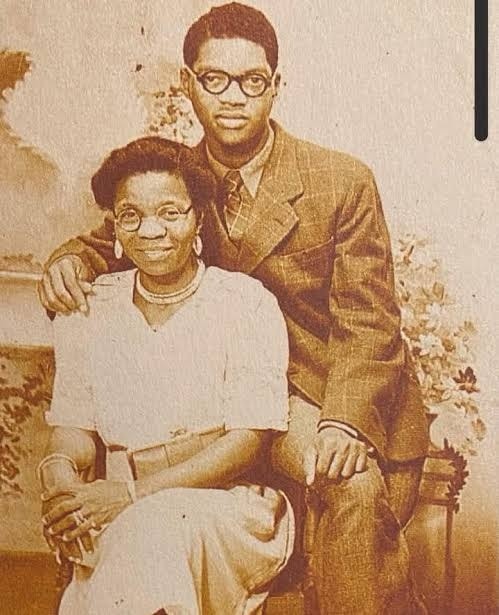
Grace Eniola Soyinka (1908–1983) and her cousin Professor Olikoye Ransome-Kuti (1927–2003) belonged to one of Nigeria’s most influential Yoruba families. Their mothers were sisters from the celebrated Ransome-Kuti lineage of Abeokuta, Ogun State—a family renowned for its pioneering roles in education, Christian ministry, and social reform.
Grace was the daughter of Anne Lape Iyabode Ransome-Kuti, making her a niece—not a daughter—of the celebrated clergyman-musician Rev. J. J. Ransome-Kuti. She grew up in the same household network that nurtured political activist Funmilayo Ransome-Kuti, who later married Grace’s uncle Rev. Israel Oludotun Ransome-Kuti. Olikoye, born almost two decades after Grace, was the first son of Israel and Funmilayo. This close-knit clan produced some of Nigeria’s most outspoken advocates for justice, cultural identity and social progress.
Grace Eniola Soyinka: Women’s Leader and Mother of a Nobel Laureate
Grace married the Anglican clergyman Samuel Ayodele Soyinka and became the mother of Wole Soyinka, Nigeria’s first Nobel Prize laureate in Literature (1986). But her influence reached far beyond motherhood.
She was an active member of the Abeokuta Women’s Union (AWU)—founded by her aunt Funmilayo—where she helped challenge oppressive colonial taxation and advocated for women’s rights. Grace combined the discipline of Christian mission schooling with a deep respect for Yoruba culture, shaping her children’s intellectual curiosity and fearless social conscience.
Her home doubled as a forum for cultural and political debate, giving young Wole the formative environment that later inspired his dramatic works challenging colonial and military oppression. In his memoir Aké: The Years of Childhood (1981), Soyinka vividly recalls his mother’s moral courage and her steadfast commitment to both faith and social justice.
Olikoye Ransome-Kuti: Physician and Global Health Advocate
Professor Olikoye Ransome-Kuti emerged as one of Nigeria’s most respected pediatricians and public health reformers. After medical training in London and Lagos, he served as Nigeria’s Minister of Health (1985–1992) and became a leading voice in global health policy.
Olikoye championed Primary Health Care (PHC) in line with the 1978 Alma-Ata Declaration, bringing affordable maternal and child health services to rural communities. He was also one of the first African leaders to speak openly about the HIV/AIDS epidemic, breaking the silence and stigma that had hindered early prevention efforts. His pragmatic, community-based approach earned international recognition from agencies such as UNICEF and the World Health Organization.
A Family of Bold Voices
Though raised in a devout Anglican tradition, the Ransome-Kuti and Soyinka households consistently challenged entrenched power structures. Grace’s son Wole Soyinka became a global literary figure and outspoken critic of political tyranny. Olikoye’s younger brother, Fela Anikulapo Kuti, pioneered Afrobeat music as a vehicle for fearless political protest.
This intergenerational blend of Christian mission influence, Western education and Yoruba cultural pride forged a distinctive tradition of outspoken activism—one that spanned literature, music, medicine and politics.
Enduring Legacy
The lives of Grace Eniola Soyinka and Olikoye Ransome-Kuti illustrate how a single extended family helped shape modern Nigerian identity. Their commitment to education, social reform and cultural self-determination continues to resonate through the achievements of their descendants and the lasting impact of their own work.
Key Sources
Wole Soyinka, Aké: The Years of Childhood (1981).
Olasope O. Oyelaran, “The Ransome-Kuti Family and the Making of Modern Nigeria,” African Affairs (1999).
Friends, family members, colleagues, and members of the Christian community are set to hold a night of tributes in honour of late gospel minister Olayemi Bayonle Bolaji, popularly known as Toluwanisings.
The event is scheduled for Tuesday, October 27, at 3 p.m. at the Hall of Grace, Jogor Centre, Ibadan, Oyo State.
The programme will provide an opportunity for loved ones and admirers to celebrate the life and legacy of the late gospel singer through tributes, reflections, cherished memories, and thanksgiving to God.
In an announcement inviting the public to the event obtained from his Instagram account on Wednesday, the organisers described Toluwanisings as a beloved brother, friend and gospel minister whose life and ministry touched many people.
The invite read, “Some lives leave footprints that time can never erase. Some voices may fall silent, but their songs, impact, and memories will forever echo in our hearts.
“With heavy hearts, yet in gratitude to God for a life that touched many, we invite you to join us for a Night of Tributes in honour of our beloved brother, friend, and gospel minister, Olayemi Bayonle Bolaji, fondly known as Toluwanisings.
“It will be a night of love, reflection, heartfelt tributes, cherished memories, and thanksgiving to God for the life he lived and the legacy he leaves behind.
“Though we mourn his departure, we hold firmly to the hope we have in Christ Jesus. His earthly journey may have ended, but the impact of his life and ministry will continue to speak. Come, let us stand together as family, friends, colleagues, and the body of Christ to celebrate a life that mattered,” the post read.
They expressed gratitude to God for his life, noting that although his passing had brought sorrow, the impact of his ministry and the memories he left behind would continue to inspire generations.
The organisers also urged family members, friends, colleagues and members of the body of Christ to come together to honour the deceased and celebrate his contributions to gospel music and Christian ministry.
They further called on well-wishers seeking to support the programme to contact them through direct messages.
The Night of Tributes is expected to bring together people whose lives were touched by the late minister to reflect on his legacy and pay their final respects.
The announcement concluded with a prayer for God’s blessings upon all those mourning his death.
The Federal Government has confirmed a case of Ebola disease in the Federal Capital Territory, Abuja, and commenced contact tracing to prevent further transmission of the infection.
The Minister of Health and Social Welfare, Prof. Ali Pate, disclosed this on Tuesday, following laboratory confirmation of the case involving a woman who recently arrived in Nigeria on an international flight from Uganda.
The woman was admitted to a private hospital in the FCT, where she received treatment for several days before the infection was confirmed.
She is currently in isolation and receiving medical care, according to the Federal Government.
The government said 44 contacts had been identified, including healthcare workers, patients, caregivers and travel contacts.
Public health teams are working to identify and monitor other people who may have been exposed to the infection.
The government has intensified surveillance and urged public and private health facilities to remain on high alert, promptly identify and isolate suspected cases, observe strict infection prevention and control measures, and report suspected infections to public health authorities.
Pate also appealed to people contacted by public health teams, including passengers who may have travelled with the patient, to cooperate with the tracing exercise.
The government advised Nigerians to remain calm, wash their hands regularly and avoid contact with the blood or other body fluids of anyone suspected of having Ebola.
Against the backdrop of the confirmed case, PUNCH Online revisited the World Health Organisation’s fact sheet on Ebola disease and its guidance on contact tracing to sensitise Nigerians on how the infection spreads and the precautions they can take to reduce the risk of infection.
According to the WHO’s “Ebola disease fact sheet”, people can contract the disease through direct contact, through broken skin or mucous membranes, with the blood or other body fluids of a person who is sick with or has died from Ebola.
The virus can also spread through objects and surfaces contaminated with infected body fluids, including blood, faeces and vomit.
WHO says people cannot transmit the disease before they develop symptoms, but they remain infectious for as long as the virus is present in their blood.
Human infection can also occur through contact with infected animals, including fruit bats and certain wild animals, particularly when people handle or consume infected animals.
The global health agency advises avoiding contact with sick or dead wild animals and not eating their raw meat.
Precautions Nigerians should take
The WHO advises people to avoid close physical contact with anyone suspected or confirmed to have Ebola, particularly contact with their body fluids.
Suspected and confirmed patients should be isolated in designated treatment facilities where they can receive appropriate care and where infection-control measures can be applied.
People should maintain good hand hygiene and keep their surroundings clean.
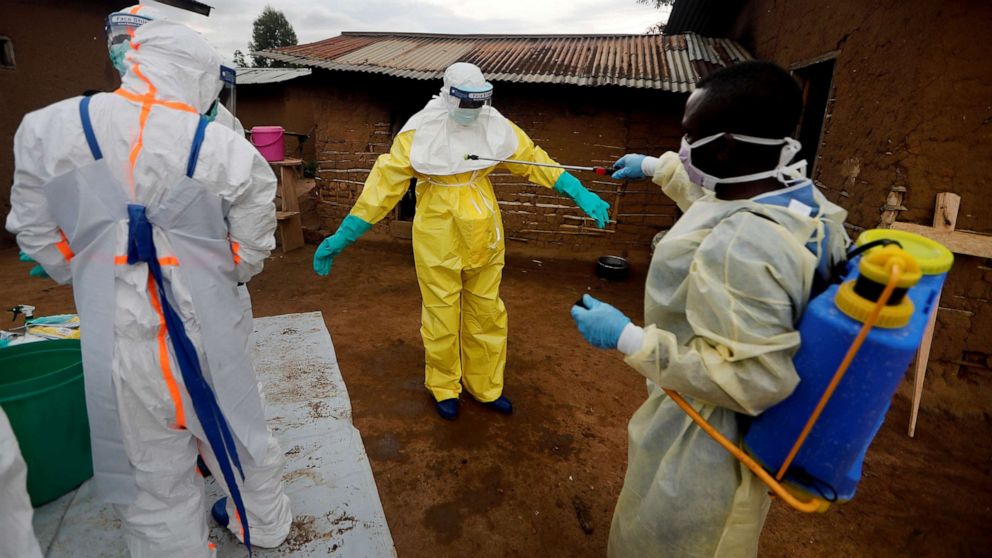
Healthcare workers must use appropriate personal protective equipment and follow infection prevention and control procedures when caring for suspected or confirmed cases, especially when there is a risk of exposure to blood, body fluids or contaminated materials.
Ebola
The WHO also advises communities to ensure that burials are conducted safely and with dignity.
Traditional or funeral practices involving direct contact with the body of someone who died from Ebola can expose others to infection.
The WHO says Ebola symptoms may appear between two and 21 days after infection.
Early symptoms can include fever, fatigue, muscle pain, headache and sore throat.
These may be followed by vomiting, diarrhoea, abdominal pain and other complications.
However, the WHO cautions that Ebola can be difficult to distinguish from other illnesses, including malaria and typhoid fever, based on symptoms alone.
Anyone who develops symptoms after a possible exposure should seek urgent medical assessment and inform healthcare workers about the possible contact.
People should not attempt to diagnose or treat suspected Ebola at home.
Why contact tracing matters
Contact tracing involves identifying people who may have been exposed to an infected person and following up on their health.
WHO says this helps contacts access care promptly if symptoms develop and helps public health authorities interrupt further transmission.
The organisation recommends monitoring the health of people who may have been exposed for 21 days, corresponding to the maximum known incubation period.
Anyone contacted by public health authorities should provide accurate information and follow the instructions given by health officials.
Nigerians who suspect an exposure should cooperate with public health teams rather than conceal information or avoid follow-up.
The Federal Government has also provided the Nigeria Centre for Disease Control and Prevention’s toll-free call centre, 6232, for information and reports of suspected cases.
Healthworkers in Ebola kits
The WHO says early supportive care, including rehydration and treatment of symptoms, can improve survival.
Prompt reporting, early medical care, cooperation with contact tracing and consistent infection-control practices are therefore important in limiting the risk of further transmission.
How far would you go to become rich? Would you betray a friend, destroy a family, abandon your principles, or watch another human being suffer just to protect your wealth?**
These are uncomfortable questions, but they reflect a reality that society can no longer afford to ignore.
In a world increasingly obsessed with money, status, power, and material possessions, the spirit of greed appears to be taking over hearts and minds. The desire to succeed is not the problem. The problem begins when the hunger for more becomes so powerful that compassion, honesty, loyalty, and human dignity no longer matter.
## When Money Becomes More Valuable Than People
Look around you. Families that once lived in peace are fighting over inheritance. Friends who once supported each other are becoming enemies over financial interests. Some people forget those who helped them when they finally acquire wealth.
In business, politics, relationships, and even within religious institutions, the temptation to put personal gain above the welfare of others can have devastating consequences.
The tragedy is not that people want to become wealthy. Everyone deserves the opportunity to improve their lives. The tragedy is when people become willing to destroy other lives to achieve their own ambitions.
**When your wealth grows but your humanity disappears, what have you truly gained?**
## The Endless Hunger for More
One of the most dangerous characteristics of greed is that it rarely recognises the word *enough*.
A person can own a beautiful house and still envy someone else’s mansion. Someone can drive an expensive car and still feel inferior to a neighbour with a more luxurious vehicle. A powerful individual can occupy the highest position and still crave greater control.
Eventually, life becomes a competition in which happiness is measured by what we own rather than who we are. People begin chasing the appearance of success while neglecting the relationships, values, and peace that give life meaning.
## The Human Cost of Greed
Behind every act of exploitation is a human consequence. Workers may be underpaid while profits rise. Vulnerable people may be manipulated for financial gain. Families may remain divided for years because nobody is willing to compromise over property.
And when greed enters leadership, the consequences can reach entire communities. Public resources that should improve people’s lives may be diverted for private benefit, while ordinary citizens continue struggling for basic necessities.
The cost is not always measured in money. Sometimes it is measured in broken trust, lost opportunities, suffering, and lives that could have been better.
## Wealth Is Not the Enemy—Greed Is
There is nothing wrong with working hard, building businesses, investing wisely, or aspiring to financial freedom. Wealth can create jobs, support families, fund education, and transform communities.
But money should remain a tool, not become a person’s master.
True success should not be measured only by the size of a bank account, the number of properties someone owns, or the attention their lifestyle attracts. It should also be measured by integrity, kindness, fairness, and the positive difference a person makes in the lives of others.
We all leave this world eventually. The possessions we spend our lives accumulating cannot accompany us. What remains is the impact we have made and the memories we leave behind.
**A person can be rich in money and poor in character. A society can be wealthy in resources and impoverished in compassion.**
Perhaps the most important question is not how much money we can accumulate, but how much of our humanity we are willing to preserve while pursuing it.
—
NEWSBREAK365 ASKS: HAS GREED BECOME ONE OF SOCIETY’S BIGGEST PROBLEMS?
Is the desire for money destroying families, friendships, leadership, and our sense of humanity? Or is greed simply part of human nature that society must learn to control?
**Join the conversation. Share your thoughts in the comments.**
*NewsBreak365 — News | People | Society | Development*