Connect with us

News

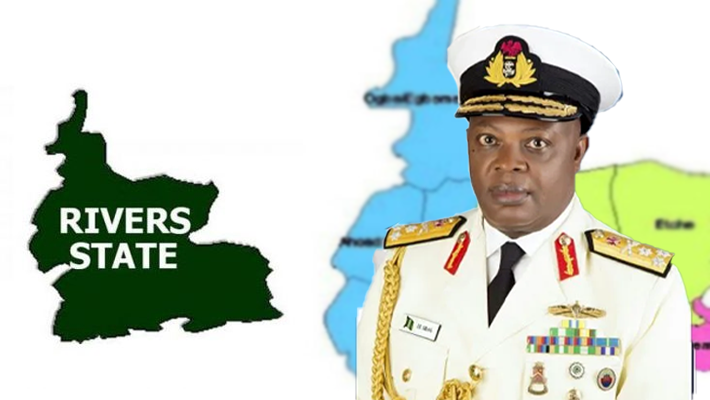
Ibas rejects Assembly’s move to probe six-month spending

Published

on

The immediate past Rivers State Administrator, Vice Admiral Ibok-Ete Ibas (retd.), and the Rivers State House of Assembly may be gearing up for a showdown following the latter’s decision to probe the state’s expenditure over the last few months under the former.

Ibas ceased to be the administrator of the oil-rich state on September 17, following the end of the six-month emergency rule, after President Bola Tinubu directed the suspended state governor, Siminalayi Fubara, his deputy, and the state House of Assembly members to return to office from the previous Thursday.

The Rivers State House of Assembly, presided over by the Speaker, Martin Amaewhule, during its first plenary after the end of emergency rule,  said it would investigate the state expenditure during the six months of emergency rule.

According to the resolutions of the House, “To explore the process of knowing what transpired during the emergency rule with regard to spending from the consolidated revenue fund for the award of contracts and other expenditure.”

Findings by The PUNCH showed that Rivers State received at least N254.37bn from the Federation Account Allocation Committee between March and August 2025 under the tenure of the sole administrator.

This figure is based on an analysis of FAAC data from the National Bureau of Statistics and other sources.

While the NBS has released official breakdowns up to June, the figures for July and August were collated from documents presented at FAAC meetings obtained and reviewed by The PUNCH.

In July, the state received about N38.42bn, while in August it collected N41.76bn, according to the documents analysed.

These brought total net allocations in the six months to N254.37bn, averaging N42.40bn per month.

If September follows the same trend, Rivers’ inflows could reach nearly N297bn in seven months.

However, the structure of these allocations highlights the state’s heavy dependence on the 13 per cent derivation from oil revenue.

A breakdown shows that the 13 per cent oil derivation remained the largest single source of income.

Between March and August, Rivers received N133.24bn in derivation, equivalent to about 52.4 per cent of its FAAC allocations.

In March, derivation amounted to N25.29bn, nearly five times the statutory allocation of N5.14bn, while in May it stood at N25.70bn against N6.05bn in statutory allocation.

Even in June, when derivation dropped to N20.94bn, it still surpassed all other components.

This dominance shows the risk of volatility, given that more than half of Rivers’ receipts hinge on oil-linked revenue streams.

Debt servicing has been a major burden on the state’s allocation. Between March and August, Rivers lost N26.31bn to external debt or foreign loan deductions.

This included a steady N4.56bn monthly from March through July and a reduced N3.54bn in August.

The deductions, which represent over 10 per cent of the state’s statutory allocation during the period, significantly eroded its gross receipts before other obligations such as contractual deductions, ecology transfers, and VAT adjustments were applied.

VAT receipts nonetheless provided an important cushion, with about N107.78bn received, which made up about 42.4 per cent of the total FAAC net allocation.

Rivers also benefited from inflows under the Electronic Money Transfer Levy, ecology funds, and exchange gains, which collectively lifted its net receipts despite heavy deductions.

See also  We won’t bow to terrorists’ intimidation, Tinubu vows

Despite these large allocations, Rivers State has failed to publish its 2025 Budget Implementation Report, the statutory document that details revenues, internally generated revenue, and expenditure patterns.

The absence of this report has left residents and civil society unable to determine how the billions have been deployed on capital projects, salaries, pensions, or recurrent costs.

Rivers State had been engulfed in political turmoil for nearly two years, largely due to a power tussle between former Governor Nyesom Wike and his successor Fubara, which resulted in a prolonged governance deadlock.

In response to the crisis, President Bola Tinubu, on March 18, 2025, declared a state of emergency in Rivers State and suspended Fubara, his deputy, Ngozi Odu, and all elected members of the state House of Assembly for six months.

This was following his declaration of emergency in the oil-rich South South state.

He said the decision was made to restore stability in the state, which has been experiencing political turmoil due to the disagreement between the state governor and the state lawmakers.

Citing Section 305 of the 1999 Constitution, Tinubu said the emergency measure was necessary to restore peace.

He added that the proclamation had been published in the Federal Gazette and forwarded to the National Assembly.

Two days later, on March 20, both the House of Representatives and the Senate endorsed the President’s declaration, effectively suspending Fubara and the Rivers State House of Assembly for forced holidays, despite widespread public criticism.

Objecting to what they considered an unconstitutional move, 11 PDP governors filed a case at the Supreme Court, registered as SC/CV/329/2025. However, there has been no public update on the matter since then.

Following the reconciliation between Wike and Fubara, the political climate in Rivers has eased.

The state held its local government elections on August 30, with the ruling All Progressives Congress securing 20 seats and the PDP winning the remaining three.

The PUNCH last week Monday reported that as Rivers State prepares for the return of Fubara on September 18 following the six-month emergency rule in the state, the sole administrator defended his tenure, stating that he fulfilled President Bola Tinubu’s mandate and stabilised the oil-rich state.

However, the opposition parties and civil society organisations called for an investigation into Iba’s tenure, particularly his management of the state’s resources during his six-month stay in Brick House.

CSO demands probe

Meanwhile, Civil Society Organisations in Rivers State have demanded accountability from the sole administrator over the money the state received from FAAC.

Chairman of the Coalition of Civil Society Organisations in Rivers State, Enefaa Georgewill, described the process that brought the sole administrator to power as illegal and insisted that the manner in which he has received and spent public funds since March was questionable.

Georgewill said the total amount the state got only deepened suspicion of mismanagement.

He explained that most major projects in the state, including the Rivers State House of Assembly Complex, remained stalled despite the heavy inflows.

Georgewill, therefore, called on Governor Fubara to set up a panel of inquiry to ascertain both federal allocations and internally generated revenue, and to investigate how the monies were expended.

He added that financial regulatory agencies must also play their part in interrogating the finances of the state under Ibas, stressing that civil society suspects corruption and will not relent in pressing for scrutiny.

Georgewill said, “We will be calling on the Rivers State Governor to set up a panel of inquiry to ascertain how much he received both in terms of federal allocation and Internally Generated Revenue and how he expended it. This is because we suspect corruption. The reason being that almost all the major projects are stalled, even the House of Assembly Complex, which he tried to touch; he couldn’t even finish it. So, we will be calling on the governor and financial regulatory agencies to make sure that they question how the funds of Rivers State were expended.”

See also  Tinubu defends reforms as Atiku faults economic policies

Also, the spokesperson for the Civil Liberties Organisation in Rivers, Emma Obe, echoed similar concerns, insisting that the current arrangement in the state amounted to an illegal emergency government that failed to follow constitutional prescriptions.

Obe pointed out that the 2025 budget was passed by the National Assembly without going through the necessary processes, such as public hearings, denying Rivers people the opportunity to know what was being budgeted in their name.

Obe said, “It has always been our position that the government in Rivers State under this emergency rule has been operating illegally because it didn’t follow what the Constitution prescribes. And so whatever they have been doing is founded on this basis, and we have always asked for accountability.

“There is no government without accountability. We all know what has happened so far. The budget of the state, for instance, was passed by the National Assembly without them going through all the necessary processes, including public hearings, where the people ought to know what is going into the budget and all that.

“But this government must give an account of what they have received so far. It is not enough for them to come and stay for six months and go away without telling the people of the State what came in, how they spent the money, and all that. If this is not done, of course, the remedies are open to us and open to every citizen of Rivers State to ask for it. And whoever spends public money without accounting for it will pay for it, if not today, sometime to come. We are not just going to rest.”

The civil society leaders maintained that the administration has failed to demonstrate transparency despite the huge FAAC receipts, reinforcing calls for a full public inquiry into the state’s finances since March.

 Ibas kicks

Reacting to the House of Assembly’s move to probe expenditure under his tenure, Ibas said the lawmakers lacked the power to investigate him, pointing out that they didn’t appoint him as the Administrator of the State.

Ibas, while answering questions from our reporter through his Senior Special Adviser on Media, Hector Igbikiowubu, on Sunday, said it was understandable that, having been away from the business of legislation for a while, the lawmakers were merely trying to make an effort to discharge their functions.

He, however, described the lawmakers’ resolve as commentary, adding that the attempt to probe the former administrator was tantamount to probing the President, who appointed him, as well as the National Assembly, which supervised the activities of Ibas as the state administrator, as he then was.

According to Igbikiowubu, while nobody can prevent the Assembly from probing what they perceive to be their functions within the state, the attempt to probe the immediate past administrator of the state would be a “fool’s errand.”

“When you say they were going to probe the tenure of the administrator, was it the Assembly that appointed the administrator?

See also  BREAKING: Israel Launches Simultaneous Attacks On Iran, Lebanon

“You see, the point to note is that commentary is free. You can’t stop people from running commentary. The House of Assembly has been on break for a very long time, and you will appreciate that they have not been able to discharge their functions for such a long time,” Igbikiowubu told The PUNCH.

“Now that they have resumed, they have to make an effort to carry out their functions. So, it will seem their right to probe what has gone wrong in the state. Nobody can stop the lawmakers from carrying out a probe of what they perceive to be their functions within the state.

“But like I asked earlier, were they the ones that appointed the administrator? So, if you didn’t appoint the administrator, it goes to reason that you have certain limitations. When you also realise that the administrator was appointed by the President, it goes without reason that the administrator acted for and on behalf of the President.”

He added, “When you also reason that the administrator was supervised by the National Assembly, it goes without reason that when you decide to probe the administrator, you’re invariably saying that you will be probing the administrator and the National Assembly.

“So, I wish them good luck with their plan and their probe. But you and I know that such an enterprise amounts to a fool’s errand.”

Fubara

Meanwhile, Governor Fubara has called on the church and people of the state to remain steadfast in prayers as he resumes the journey of governance.

The governor, who resumed official duties following the expiration of the six-month emergency rule, said prayers and intercessions have been the pillar of his strength and will remain critical as he works to fulfil his mandate to the people.

Fubara made the appeal on Sunday at St. Paul’s Anglican Church, Opobo Town, headquarters of Opobo/Nkoro Local Government Area of the state, where he attended a thanksgiving service, which was his first public outing since resumption of duties.

This was contained in a statement issued by the Chief Press Secretary to the Governor, Nelson Chukwudi.

Fubara stated, “I am here together with my wife this first Sunday after the suspension of the state of emergency. We cannot thank God enough as a family. Our being here is private; we came simply to worship in our home church. When my story ends, this church will lead me to my next journey.

“So, it is important that I come here to say thank you quietly before the Almighty God for what He has done, what He is doing, and what He will continue to do, not just for me and my family, but for this state and Nigeria,” he said.

Fubara thanked the people of Opobo for years of fasting and intercession on his behalf, stressing that their prayers had been answered. He likened prayers to deposits in a bank, whose dividends manifested in due season.

The Governor further underscored the importance of peace in fostering unity and development, aligning his remarks with the commemoration of the International Day of Peace.

Fubara reaffirmed his rededication to the service of Rivers people, urging continued prayers and support for his administration as it charts a renewed course of leadership.

punch.ng

FOLLOW US ON:

FACEBOOK

TWITTER

PINTEREST

TIKTOK

YOUTUBE

LINKEDIN

TUMBLR

INSTAGRAM

Continue Reading
Click to comment

Leave a Reply

Your email address will not be published. Required fields are marked *

News

SEE FULL LIST: NAF names 25 victims of Ondo aircraft crash

Published

on

The Nigerian Air Force has confirmed the death of all 25 people on board an NAF ATR-42 aircraft that crashed in the Igbokoda area of Ondo State.

The aircraft, with registration number NAF 931, was on a routine mission from Benin to Lagos when the accident occurred.

The NAF, in a statement issued by its Director of Public Relations and Information, Air Commodore Ehimen Ejodame, on Tuesday, said the aircraft had five crew members and 20 passengers on board.

The Chief of the Air Staff, Air Marshal Sunday Kelvin Aneke, expressed condolences to the families, colleagues and loved ones of the victims.

Aneke described the incident as “a deeply painful moment for the Nigerian Air Force and the nation,” assuring the bereaved families of the Service’s full support.

The statement said, “NAF 931 had 25 persons on board, comprising five crew members and 20 passengers.

“The aircraft was on a routine mission from Benin to Lagos when the accident occurred. Search-and-rescue procedures were immediately activated, with response efforts conducted in coordination with relevant authorities to locate and account for all persons on board. No survivors have been found.”

Crew
Squadron Leader MI Aburime — Flight Captain
Squadron Leader AP Man-Ugwueje — Co-pilot
Flight Lieutenant IS Bako — Co-pilot
Warrant Officer Abubakar A — Aircraft Technician
Corporal Uguru HC — Aircraft Technician

Passengers
Flight Lieutenant TL Lazarus
Flight Lieutenant M Akinloye
Flying Officer IM Adeshina
Master Warrant Officer Onwuka F
Master Warrant Officer Matini BA
Warrant Officer Nuhu FS
Flight Sergeant James RB
Flight Sergeant Mohammed AI
Sergeant Ani AE
Sergeant Izibenikien SI
Sergeant Alafuka C
Sergeant Mbadugha AN
Lance Corporal Ugwuba FC
Lance Corporal Eledan GE
Mrs Ezeh Nneka
Godstmine Tarabina
Joy Micheal
Sunday Micheal
Ukeme David
Gideon Omotola

See also  Tinubu unveils NRS corporate headquarters

The NAF said the Chief of the Air Staff had directed a comprehensive investigation to establish the circumstances surrounding the crash.

“The Nigerian Air Force will continue to provide timely and verified updates as the investigation progresses and urges the public to refrain from speculation and the circulation of unverified information, while respecting the privacy and dignity of the affected families,” the statement added.

The Service also announced that a condolence register had been opened at its headquarters in Abuja for government officials, members of the diplomatic corps, heads of security agencies and other well-wishers wishing to pay their respects to the families of the deceased and the Nigerian Air Force.

Source: punchng.com

FOLLOW US ON:

FACEBOOK

TWITTER

PINTEREST

TIKTOK

YOUTUBE

LINKEDIN

INSTAGRAM

Continue Reading

News

US moves to revoke citizenship of two Nigerians and 38 others

Published

on

The United States Government has commenced proceedings to revoke the citizenship of two Nigerian nationals and 38 other individuals accused of serious offences as part of the Donald Trump administration’s immigration enforcement efforts.

The United States Department of Justice made the announcement in a statement on Monday, October 5, 2026.

According to the statement, the department has filed denaturalization actions in multiple U.S. district courts against 40 individuals accused of serious offenses, including acting as an agent for a foreign government, committing voluntary manslaughter, and aggravated sodomy against a special‑needs man.

Filed between August 21 and October 2, 2026, these complaints represent the largest volume of complaints submitted in a single period under the Trump administration.

Under the Immigration and Nationality Act, a naturalized U.S. citizen’s citizenship may be revoked, and certificate of naturalization canceled, if the naturalization was illegally procured or procured by concealment of a material fact or by willful misrepresentation.

“Today’s announcement marks the largest denaturalization effort in modern history,” said Attorney General Todd Blanche.

“From an individual convicted of espionage to others convicted of sexual offenses against minors, these defendants concealed critical facts from the U.S. government and represent serious criminal offenders. Under President Trump’s leadership, the Department of Justice will continue to employ the denaturalization process to maintain our national security and protect the American people.”

“Every single one of these individuals lied their way into U.S. citizenship,” said Assistant Attorney General Brett A. Shumate of the Justice Department’s Civil Division.

“This administration will continue to pursue the largest denaturalization effort in department history to restore trust and integrity in U.S. citizenship. Our message is clear: the United States will not tolerate deception in the naturalization process.”

See also  PDP gov primaries: Adebutu, Lamido, Aondoakaa emerge flag bearers, read details

One of the Nigerians is identified as Douglas Chukwuka Eze, (citizenship Unknown/Adult, Age Unknown)

According to the statement, on August 10, the Department of Justice filed a complaint in the District of Maryland seeking the denaturalization of Eze, also known as Anthony Chux Ezehez, because he committed immigration fraud in his naturalization proceedings.

“In 2023, Eze was convicted of two counts of False Swearing in Immigration Matter, in violation of 18 U.S.C. § 1546, based on his admission that, in the 1990’s, he stole a birth certificate belonging to Spencer Douglas Callaghan and used Mr. Callaghan’s identity to obtain immigration benefits,” the statement read.

“The United States alleges that the court should issue an order revoking Eze’s naturalization because he procured his naturalization by concealment of material facts and willful misrepresentations, he illegally procured his lawful permanent resident status by misrepresenting his identity and criminal history, and he provided false testimony when he lied under penalty of perjury in his naturalization proceedings. (District of Maryland).”

The second Nigerian is Beatrice Chioma Nwaoha Ashamole, 54, who the Justices Department accused of concealing previous criminal and immigration records during her naturalisation proceedings.

“On Sept. 25, the Department of Justice filed a complaint in the District of Maryland seeking the denaturalization of Beatrice Chioma Nwaoha Ashamole because throughout her naturalization proceedings, she did not disclose prior aliases, prior arrests, a prior immigration benefits application, or prior exclusions and deportations, despite the application asking for such information,” the statement read.

“The United Sates is charging her with illegally procuring her naturalization through fraud and false testimony. (District of Maryland.)”

See also  Impeachment move against Fubara not influenced by Wike – Rivers lawmaker

FOLLOW US ON:

FACEBOOK

TWITTER

PINTEREST

TIKTOK

YOUTUBE

LINKEDIN

INSTAGRAM

Continue Reading

News

INEC reveals over 103m Nigerians eligible to vote in 2027

Published

on

The Independent National Electoral Commission on Monday said Nigeria’s national voters register had risen to over 103 million following the completion of the three-phase Continuous Voter Registration exercise and final biometric cleanup.

INEC Chairman, Prof. Joash Amupitan, disclosed this in his keynote address at a one-day strategic workshop for editors, organised by the Nigerian Guild of Editors in collaboration with the commission in Abuja.

The development said over 103 million Nigerians are eligible to participate in the 2027 general elections.

Amupitan said the three phases of the CVR exercise produced 10,772,421 new registrations, subject to verification by the Automated Biometric Identification System.

“Following the conclusion of our three-phase Continuous Voter Registration (CVR) exercise, which captured over 10.6 million new applicants, and the completion of the public display of the preliminary register for claims and objections, our Voter Register Department has completed the final Automated Biometric Identification System (ABIS) cleanup.

Nigeria’s National Register of Voters is now over 103 million,” he declared.

INEC first projected the 100 million voter register mark in August, when the INEC National Commissioner for Information and Voter Education Committee, Mohammed Haruna, said the voter register, then standing at over 93 million, was expected to surpass 100 million after the completion of the CVR exercise.

In September, the INEC chairman said the national register was “approaching the 100 million mark,” following 10,772,421 new registrations during the CVR exercise, subject to ABIS verification.

The INEC chairman further announced that the nationwide collection of Permanent Voters’ Cards would commence on Friday, October 9, 2026.

He said the commission had completed the processing and distribution of Phase 1 PVCs to all local government centres ahead of the commencement of collection.

He urged the media to inform citizens about collection locations and encourage registered voters to collect their cards promptly.

The INEC chairman also disclosed that the commission had acquired 57,000 new Bimodal Voter Accreditation System devices ahead of the 2027 general elections.

According to him, the BVAS devices have undergone software hardening, battery optimisation and biometric calibration to prevent accreditation bypass and eliminate manual manipulation.

He said the technological upgrades formed part of the commission’s efforts to strengthen the integrity of the electoral process ahead of the January 16, 2027 Presidential and National Assembly elections and the February 6, 2027 governorship and state Houses of Assembly polls.

See also  BREAKING: Israel Launches Simultaneous Attacks On Iran, Lebanon

“We have instituted hardware, software, and cybersecurity enhancements across our technological architecture. We have acquired 57,000 new BVAS for optimal performance.

“The devices have undergone extensive software hardening, battery optimisation, and biometric calibration to prevent accreditation bypass and eliminate manual manipulation,” the INEC chairman stated.

The commission also said it had taken a firm stance against vote-buying ahead of the elections, noting that it had entered a “strengthened coalition” with the Ministry of Justice and anti-graft agencies to prevent such practices.

“The integrity of the ballot box is fatally compromised when a citizen’s vote is treated as a commodity for sale. The commission is taking an uncompromising stance against vote-buying in all its forms ahead of the 2027 general election.

“Working through a strengthened coalition with the Federal Ministry of Justice, Economic and Financial Crimes Commission, the Independent Corrupt Practices and Other Related Offences Commission, and the Nigerian Financial Intelligence Unit, joint financial monitoring teams will be deployed to track illegal campaign spending and conduct undercover surveillance at polling units nationwide,” the chairman stated.

Amupitan also warned political actors against attempts to trade cash for votes, adding that any party or candidate found in such acts will “face immediate arrest and prosecution under the Electoral Act 2026.”

He added, “Elections must be decided by the conviction of the voter, not the depth of a candidate’s pocket.”

Speaking on the 2027 poll, Prof Amupitan said the commission was targeting the commencement of voting simultaneously across all polling units nationwide.

He said the commission was drawing lessons from recent off-cycle elections and would improve its logistics, personnel and technology ahead of the 2027 polls.

He said INEC was working to ensure that logistics were properly addressed and its technology worked optimally to enable Nigerians to vote without unnecessary delays.

“So some of those lessons from those elections, right from our technology optimisation, must improve. Our logistics must improve.

“I want to see a general election where voting starts in all the polling units in Nigeria at the same time. That is what we are targeting, where logistics is well-addressed, and where our technology works optimally,” he said.

The chairman said the commission had already commenced early procurement and distribution of non-sensitive election materials to state offices, while new operational pickup vehicles had been procured for state offices and local government areas to improve movement of personnel and materials.

See also  Tinubu unveils NRS corporate headquarters

He added that INEC had commenced nationwide zonal readiness assessments, with physical audits and staff engagements already completed in the South-West and North-West zones.

The commission, he said, was using the assessments to identify local vulnerabilities, test contingency systems and address potential bottlenecks ahead of election day.

Amupitan said INEC had also acquired 57,000 new Bimodal Voter Accreditation System devices, with the machines undergoing software hardening, battery optimisation and biometric calibration.

The chairman said the technological upgrades were designed to strengthen accreditation and prevent manipulation, while the enhanced electronic EC8A system would ensure that polling unit result sheets were digitised, cryptographically authenticated and uploaded directly to the INEC Result Viewing Portal.

The INEC chairman also said the commission had identified effective and transparent management of election results as a critical lesson from the challenges that followed the 2023 general elections.

He said the commission had resolved that its processes must ensure that election results were managed “effectively, optimally, and transparently,” with declarations made as soon as the electoral work was completed.

“Because the only way that can save us in this country from all the problems we’ve had since 2023 is if we manage our results effectively, optimally, and transparently, and then ensure that the results are declared as soon as the work of collation is completed,” Amupitan said.

He said the approach was intended to improve transparency and enable citizens to follow the process rather than leave room for suspicion and misinformation.

The chairman also disclosed that INEC had introduced technology aimed at making voter registration and access to voter cards easier.

He said the commission introduced an online registration portal during the third phase of the Continuous Voter Registration exercise to remove barriers associated with distance and time.

He further announced the introduction of printable Permanent Voter Cards in line with Section 18(1) of the Electoral Act 2026, saying the technology was intended to eliminate unnecessary delays in obtaining voter cards.

“Apart from that, we also introduced another technology, which is the printable PVC technology in line with Section 18(1) of the Electoral Act, to ensure that waiting becomes a relic of the past,” he said.

The chairman said the technology had already been tested during the Osun governorship election and used to enable voters whose PVCs had been stolen before the election to exercise their voting rights.

See also  PDP crisis: Turaki bloc seeks court order to unseal secretariat

Amupitan said the commission was now 101 days away from the presidential and National Assembly elections scheduled for January 16, 2027, with the governorship and state Houses of Assembly elections fixed for February 6.

He said INEC had executed eight of the 14 major statutory activities contained in its revised timetable and was advancing towards the completion of the ninth milestone.

He called on editors, whom he described as the “bridge in an era of information chaos,” to work with the commission to build a public space of verified information, civic responsibility, and institutional trust.

“When newsrooms prioritise factual accuracy over sensational headlines, when reports contextualise field logistics rather than default to inflammatory speculation, and when information is verified before publication, you perform a sacred public service. You act as the primary filter protecting our democracy against information disorder.

“As the nation prepares for the 2027 General Elections, let us work together to build a public space powered by verified facts, civic responsibility, and unassailable institutional trust,” he concluded.

In his address, the President of the Nigerian Guild of Editors, Eze Anaba, described media credibility as an essential part of a free and fair electoral process.

“The credibility of the media is itself an essential component of the credibility of the electoral process. The Nigerian Guild of Editors is committed to working with INEC, and other stakeholders, to promote elections that Nigerians can trust, and a media that the citizens can rely upon for credible information,” Anaba said.

He noted the challenge of courts deciding elections, urging stakeholders to work towards elections decided by electorates’ votes.

“There’s a need for us to fight for our electoral process to be fair, transparent, and to avoid courts being the last port of call. People are talking about courts speaking for citizens as a last arbiter for voters.

“But hopefully, with this next round of elections, citizens’ votes will speak. We cannot grow as a democracy without a very strong electoral body.

“The Guild believes strongly that a credible election is a shared responsibility. INEC has its constitutional mandate. Political parties and analysts have their responsibilities. The media has its own obligation, and ultimately, citizens must be adequately informed

Source: punchng.com

FOLLOW US ON:

FACEBOOK

TWITTER

PINTEREST

TIKTOK

YOUTUBE

LINKEDIN

INSTAGRAM

Continue Reading

Trending