


Connect with us

Business

CBN reduces interest rate to 27%

Published

on

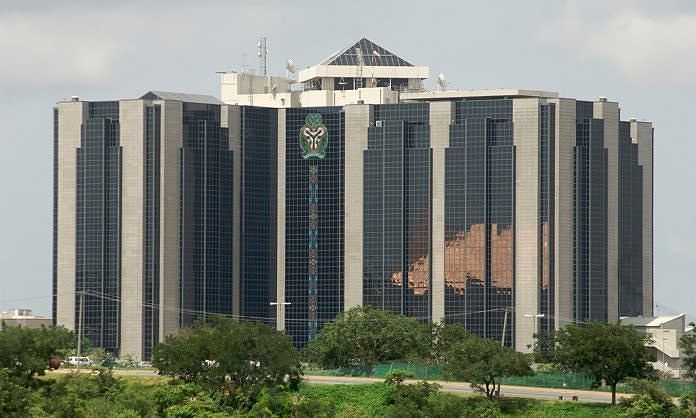
The Monetary Policy Committee of the Central Bank of Nigeria has reduced the country’s interest rate to 27.00 per cent for the first time in 2025.

The Governor of CBN, Olayemi Cardoso, disclosed this during a press briefing on Tuesday after the 302nd MPC meeting in Abuja.

“The Committee decided as follows: (1) reduce the monetary policy rate by 50 basis points to 27 per cent,” he said.

This 50 basis points reduction comes after three consecutive pauses in rates.

Cardoso noted that the reduction was due to consistent disinflation recorded in the country.

The PUNCH observed that there were six consecutive hikes recorded in 2024

punch.ng

FOLLOW US ON:

FACEBOOK

TWITTER

PINTEREST

TIKTOK

YOUTUBE

LINKEDIN

TUMBLR

INSTAGRAM

See also  Panic in ADC as EFCC goes after key members
Continue Reading
Click to comment

Leave a Reply

Your email address will not be published. Required fields are marked *

Business

States demand forensic audit of $8.8bn crude-for-loan deals

Published

on

State governments have called for a forensic audit of Nigeria’s crude oil-backed borrowing arrangements, warning that opaque crude-for-loan and swap deals may be undermining inflows into the Federation Account.

The PUNCH earlier reported that the Nigerian National Petroleum Company Limited pledged 272,500 barrels per day of crude oil through a series of crude-for-loan deals totalling $8.86bn, according to an analysis of a report by the Nigeria Extractive Industries Transparency Initiative and the NNPC’s financial statements.

According to The PUNCH’s findings, NNPC has already fully repaid $2.61bn in loans, representing 29.4 per cent of the total credit facility, while $6.25bn or 70.6 per cent, remains outstanding. Also, out of the $8.86bn credit facility, only about $6.97bn has been received from seven crude-for-loan deals, as of December 2023.

However, state governments, through their commissioners of finance, are demanding an audit of these deals.

The demand was contained in a communiqué issued at the end of the 2026 retreat of the Federation Account Allocation Committee Post-Mortem Sub-Committee, obtained by The PUNCH on Thursday, which stated that, “All crude oil-backed borrowing arrangements should be subjected to legislative approval, full disclosure, and independent audit. Existing arrangements should be reviewed, with forensic audits conducted to restore confidence and protect future Federation revenues.”

The communiqué followed a three-day retreat held in Enugu between February 9 and February 11, where fiscal authorities, state representatives, revenue agencies, and policy experts met to examine persistent revenue leakages affecting the Federation Account.

The retreat, which focused on “Assessing Fiscal and Sectoral Policies for Closing Revenue Leakage in the Federation Account,” was organised to critically assess fiscal frameworks and administrative practices affecting federal revenue collections and distribution to the three tiers of government.

According to the communiqué, the meeting was convened by the FAAC Post-Mortem Sub-Committee to “critically assess fiscal and sectoral policies contributing to revenue leakage in the Federation Account and to reposition the Sub-Committee for a more proactive revenue assurance role.”

The retreat was formally opened by the Governor of Enugu State, Dr Peter Mbah, who was represented by the Secretary to the State Government, Prof Chidiebere Onyia. In his goodwill message, Onyia welcomed participants and reaffirmed the importance of fiscal coordination and transparency in managing public finances.

He also emphasised the need for stronger accountability mechanisms in the management of Federation revenues, while commending the FAAC Post-Mortem Sub-Committee and the Revenue Mobilisation Allocation and Fiscal Commission for their efforts to strengthen public finance governance in the country.

The communiqué indicated that the welcome address was delivered by the Chairman of the FAAC Post-Mortem Sub-Committee, Abdulazeez King.

Goodwill messages were also delivered by the Chairman of the Revenue Mobilisation Allocation and Fiscal Commission, Dr Mohammed Shehu, who was represented by Federal Commissioner, Ntufam Whiley.

The former Minister of State for Finance, who is now the Minister of State for Budget, Dr Doris Uzoka-Anite, and the Permanent Secretary of the Federal Ministry of Finance, Mr Raymond Omachi, were represented at the event by Dr Ali Mohammed, Director of Home Finance.

See also  OPay named The Sun’s first-ever Fintech/Digital Bank of the Year 2025

A keynote address on the theme of the retreat was delivered by the Accountant-General of the Federation, Mr Shamseldeen Ogunjimi, who was represented by Mrs Rita Okolie, Director of the Federation Account at the Office of the Accountant-General of the Federation.

Participants at the retreat included representatives of the Federal and State Governments, revenue-generating agencies, oversight institutions, and technical experts.

According to the communiqué, deliberations during the sessions were enriched by presentations covering a broad range of fiscal governance issues, including the Federation Account framework, reforms in the petroleum sector, tax policy changes, audit oversight, crude oil-backed borrowing, and administrative practices affecting government revenue inflows.

Participants at the retreat reaffirmed the constitutional importance of the Federation Account as the central pool through which revenue is shared among the three tiers of government.

The communiqué noted that the account, established under Section 162 of the 1999 Constitution, “remains the backbone of fiscal sustainability for the three tiers of government.”

However, it warned that several structural challenges continue to erode the volume of distributable revenues available to the Federal Government, states, and local governments.

The communiqué stated that participants unanimously observed that “persistent revenue leakages, opaque deductions, institutional inefficiencies, and weak oversight continue to erode distributable revenues.”

The retreat also expressed concern over the increasing scale of quasi-fiscal deductions from Federation revenues. These deductions, according to participants, include power sector subsidy obligations, debt write-offs, and operational expenses deducted at source before revenue is remitted into the Federation Account.

The communiqué stated that these practices were widely viewed as inconsistent with the principles of transparency and fiscal discipline.

It said, “The retreat noted with concern the growing scale of quasi-fiscal deductions from Federation revenues, including power-related subsidy obligations, debt write-offs, and operational costs deducted at source. These practices were considered inconsistent with transparency, budgetary discipline, and constitutional intent.”

Participants also examined the implications of the Petroleum Industry Act and its impact on the management of oil and gas revenues. While acknowledging that the legislation has created opportunities for improved governance in the petroleum sector, the retreat raised concerns about certain operational practices under the new framework.

According to the communiqué, participants noted that issues surrounding the transfer of joint venture assets to NNPC Limited, management fees, production sharing contract profit oil administration, and the Frontier Exploration Fund had raised serious concerns among stakeholders.

“These developments were observed to have materially reduced inflows into the Federation Account and weakened oversight,” the communiqué stated.

The retreat further stressed the importance of transparency, accountability, and stronger oversight mechanisms in the management of public finances. Participants agreed that unrestricted access to Federation Account data by oversight institutions was essential for effective monitoring and recovery of government revenues.

The communiqué stated, “Transparency, accountability, and oversight are indispensable to closing revenue leakages. It was resolved that unrestricted access to Federation Account data by oversight institutions, particularly the Office of the Auditor-General for the Federation, is critical for effective monitoring, audit, and recovery of revenues.”

See also  Naira records mixed performance in FX markets

Participants also highlighted the role of the Supreme Audit Institution in preventing and detecting revenue leakages. The retreat emphasised the need to strengthen audit capacity and improve the timeliness of audit reporting to ensure that audit findings lead to concrete revenue recovery and deterrence against financial misconduct.

According to the communiqué, “Participants underscored the constitutional role of the Supreme Audit Institution in preventing and detecting revenue leakages. The retreat called for strengthened audit capacity, timely audit reporting, and enforceable follow-up mechanisms to ensure that audit findings translate into actual revenue recovery and deterrence.”

The meeting also raised concerns about the high cost of revenue collection by some government agencies. Participants described these costs as a major drain on the Federation Account and called for reforms to align collection charges with global best practices.

“The high cost of revenue collection by certain agencies was identified as a major drain on the Federation Account,” the communiqué said.

It added that participants resolved that cost-of-collection arrangements should be periodically reviewed and benchmarked against international standards. The retreat also welcomed ongoing tax reforms aimed at expanding the tax base and improving compliance across the country.

Participants noted that the reforms could significantly boost government revenue if implemented effectively. The communiqué stated that tax reforms should focus on strengthening compliance mechanisms and reducing fragmentation within the tax system.

Another major area of concern discussed at the retreat was the growing reliance on crude oil-backed borrowing and crude-for-product swap arrangements. The communiqué specifically mentioned arrangements such as Project Gazelle and the Direct Sale Direct Purchase scheme.

It stated that participants expressed “grave concern over crude oil-backed borrowing arrangements and opaque crude-for-product swaps, including Project Gazelle and the Direct Sale Direct Purchase scheme.”

The retreat noted that such arrangements could reduce transparency in revenue flows and weaken accountability in the management of oil revenues. It was, therefore, recommended that any future crude-backed financing arrangements must receive legislative approval and be subject to full disclosure and independent audits.

Participants also called for stronger collaboration between RMAFC and NNPC Limited to ensure proper accounting for oil revenues. The communiqué recommended that RMAFC should intensify engagement with the national oil company to obtain complete documentation relating to joint venture asset transfers and to compute net revenues due to the Federation.

It said the commission should also pursue appropriate recovery actions where discrepancies are identified.

The PUNCH earlier reported that about 14.66 per cent of Nigeria’s crude oil production in 2025 was likely committed to servicing crude-backed loan facilities, based on estimates derived from disclosures in the Nigerian National Petroleum Company Limited’s 2024 financial statements and official production data.

An analysis by The PUNCH shows that four major crude-secured arrangements — Project Gazelle, Project Yield, Project Leopard, and Eagle Export Funding — are backed by a combined 213,000 barrels of crude oil per day.

If this allocation remained unchanged throughout 2025, the total volume committed to debt servicing would amount to 77.75 million barrels for the year, calculated by multiplying 213,000 barrels per day by 365 days.

See also  Bulk fuel buyers dump middlemen for direct Dangote supply

Data from the Nigerian Upstream Petroleum Regulatory Commission indicate that Nigeria produced 530.41 million barrels of crude oil between January and December 2025.

The 77.75 million barrels tied to crude-for-loan arrangements therefore represent 14.66 per cent of total annual production. Using the 2025 average Bonny Light price of $72.08 per barrel, the 77.75 million barrels translate to about $5.60bn.

Converted at the official exchange rate of N1,492 to the dollar, the crude potentially deployed to service the loans is valued at approximately N8.36tn. This implies that out of the estimated gross crude oil earnings for 2025, a sizeable portion of output by volume was effectively earmarked for debt servicing before revenues could fully accrue to government coffers.

The obligations span multiple forward-sale and project-financing arrangements expected to be serviced through substantial crude oil and gas deliveries. These commitments have become a central pillar of NNPC’s funding framework following years of fiscal strain, volatile production, and declining upstream investment.

Several of the facilities were used to refinance legacy debts, fund refinery rehabilitation, support cash flow, and meet government revenue obligations.

The Chief Executive Officer of AHA Strategies, Mr Ademola Adigun, earlier linked declining oil earnings to opaque crude-for-cash arrangements and undisclosed loan repayments that have tied up part of the country’s output.

“Some of our crude is already tied up in loan agreements. The problem is that Nigeria doesn’t know the full details of these transactions because there’s little transparency around them,” Adigun said.

He added that several crude-backed projects, including Project Gazelle, were executed without adequate public disclosure or parliamentary scrutiny, urging the Nigeria Extractive Industries Transparency Initiative to strengthen its audits.

Development economist and Chief Executive Officer of CSA Advisory, Dr Aliyu Ilias, said Nigeria’s crude trading structure had grown increasingly complex, involving swaps and oil-to-naira transactions that might not be fully captured in official records.

The Director of the Centre for the Promotion of Private Enterprise, Dr Muda Yusuf, recalled that during the tenure of former Central Bank Governor, Godwin Emefiele, several forward-sale deals were signed to raise emergency funds amid fiscal pressure.

“During the Emefiele years, Nigeria committed a lot of its crude upfront,” he said. “Those forward sales are still eating into our current earnings.”

Yusuf, however, noted that transparency and professionalism within the NNPCL had improved under the current administration of Bayo Ojulari. “Under the new management of the NNPC, there’s better professionalism and openness,” he said.

He added that full disclosure of crude swap and forward-sale agreements is necessary to restore confidence in oil revenue reporting.

The Chief Corporate Communications Officer of NNPC Limited, Andy Odeh, had not responded to enquiries sent to him regarding the crude-for-loan arrangements as of the time this report was filed.

punch.ng

FOLLOW US ON:

FACEBOOK

TWITTER

PINTEREST

TIKTOK

YOUTUBE

LINKEDIN

Continue Reading

Business

Monopoly fears rise as Dangote controls N14.4tn petrol market

Published

on

Stakeholders, including energy experts, economists, and Nigerian workers, have raised alarm over the suspension of petrol imports by the Federal Government, urging urgent price regulation as Dangote Petroleum Refinery takes command of Nigeria’s N14.4tn petrol market, signaling a major shake-up in the nation’s energy sector.

On Wednesday, The PUNCH reported that the Nigerian Midstream and Downstream Petroleum Regulatory Authority confirmed that it had not issued any import licence for petrol this year, saying that it was no longer needed because local production now meets national requirements.

Data from the NMDPRA, a Federal Government agency, showed that Dangote refinery accounted for about 92 per cent of Nigeria’s daily petrol supply in February, as the regulatory agency stopped the importation of petrol.

Figures released in the February 2026 fact sheet by the NMDPRA showed that local refineries supplied 36.5 million litres per day of petrol in February 2026, while imports contributed just three million litres per day.

This brought the total national daily supply for February to 39.5 million litres, with domestic refining accounting for roughly 92 per cent of the volume, a sharp shift from the long-standing dependence on imported fuel. The data indicates a drastic drop in imports compared with the previous month.

Dangote refinery is the only plant producing petrol currently in Nigeria. Other modular refineries produce diesel. Taking a low-range price of N1,000/litre for petrol, and the total consumption of 39.5 million litres per day in February, it implies that the petrol market in Nigeria is worth over N14.4tn annually. This will however vary from time to time as the global crude price fluctuates.

The confirmation by the NMDPRA that it suspended petrol importation because the country now has enough domestic supply generated diverse reactions from stakeholders on Wednesday.

The NMDPRA warned against the return of petrol imports, as the Minister of Finance, Wale Edun, declared during a live television programme on Wednesday that the government would not tamper with market pricing of petroleum products, stressing that intervention would only be considered as a last resort.

“Rather than now reverting and taking a backward step, we will look at every other measure that can help the cost of living of Nigerians without resorting to non-market pricing,” Edun stated.

An energy expert, Professor Emeritus Wumi Iledare, said the government should allow competitive petrol supply instead of import substitution. While describing that announcement as a significant policy signal, Iledare said it could trigger market speculation and a scramble for market power.

The behaviour, he said, could manifest through precautionary stockholding, opportunistic pricing, or attempts to secure logistical and supply advantages. “The announcement by NMDPRA suspending the issuance of new petrol import licences, on the grounds that local production is sufficient to meet domestic demand, is a significant policy signal in Nigeria’s evolving downstream petroleum market.

“However, such announcements can also trigger market speculation. In a transitioning market structure, participants may interpret regulatory signals differently, leading to strategic positioning and, in some cases, scrabbling for market power. This behaviour can manifest through precautionary stockholding, opportunistic pricing, or attempts to secure logistical and supply advantages,” he said.

The don argued that the data showing reduced imports alongside lower overall PMS supply in February suggested that the market was still searching for equilibrium. “The data showing reduced imports alongside lower overall PMS supply in February suggests that the market is still searching for equilibrium between domestic refining output, inventory management, and distribution capacity.

“For policy effectiveness, regulatory communication must therefore be clear, predictable, and supported by verifiable supply assurance mechanisms. Market confidence improves when participants are certain that domestic production, logistics infrastructure, and pricing frameworks can consistently sustain national demand. Ultimately, the goal should be competitive market stability — not just import substitution,” Iledare submitted.

Also speaking, a professor of energy, Dayo Ayoade, said the NMDPRA is the only agency that knows whether or not the country has enough petrol stock. He said it is the duty of the regulator to ensure the country does not insist on costly importation when there is enough in-country refining. At the same time, he said the NMDPRA has to be careful to ensure the country is not stranded if there is any failure on the part of the Dangote refinery.

“The Petroleum Industry Act is very clear on competition. The Nigerian Midstream and Downstream Petroleum Regulatory Authority, as a regulator, has powers to ensure competition in the downstream sector,” he said.

He added that the heavy dependence on Dangote’s output reflects structural weaknesses in Nigeria’s refining capacity rather than deliberate market control by the refinery. “The fact that they are reliant on Dangote refinery output is because we don’t have functional Nigerian National Petroleum Company Limited refineries, and there are no alternatives at the moment,” he said.

According to him, the key responsibility lies with the regulator to ensure transparency in pricing and prevent profiteering. He, however, stressed that the regulator retains the authority to act if the refinery abuses its dominant market position. “But if they find that Dangote is abusing its monopoly privileges, then of course they have the power to penalise the refinery,” he said.

Ayoade added that increased competition would naturally emerge as more refineries come on stream. “The ball is really in the court of the regulator. It has nothing to do with the Dangote refinery. It is not their fault that we haven’t built our refineries to compete with them. As the market matures and other refineries come on stream, we will see more competition, and that will affect pricing,” he said.

The energy law expert also warned that even with multiple refineries in operation, regulators must still guard against anti-competitive behaviour. “Even when we have four refineries working, we still have to keep an eye on competition because they can easily agree and share the market among themselves. So regulation will always remain important,” he added.

Similarly, the Chief Executive Officer of petroleumprice.ng, Jeremiah Olatide, warned that relying on a single refinery for the bulk of Nigeria’s petrol supply could expose the country to major supply shocks. He noted that the production boost by the refinery was artificial and not natural.

See also  Konga targets singles in Valentine campaign

“It is quite great that in two years, Nigeria has achieved over 90 per cent of its petrol consumption produced in the country. But at the same time, we have to be very careful of the energy risks it imposes. A country like Nigeria that is quite fragile, and has a policy that is not properly implemented.”

According to him, the Dangote refinery currently supplies around 50 million litres of petrol daily, accounting for roughly 90 per cent of Nigeria’s estimated consumption. Olatide stressed that competition must be allowed to develop naturally in the market to ensure energy security.

“Relying on the Dangote refinery to supply an average of 50 million litres daily, in tune with 90 per cent of our daily consumption, is a complete energy risk. Competition must be natural. It must be allowed in an economy like Nigeria. We have over 200 million Nigerians who consume around 70 million litres of petroleum products on a daily basis. Any little glitch from the Dangote refinery might pose an energy crisis and even a security crisis for the country,” he warned.

To ensure stability, he proposed a more balanced supply structure that would combine local refining and imports. “For me, a 70:30 balance would be better. 70 per cent locally refined products and 30 per cent importation will give us that balance and energy security.

But 90:10 is too much for an economy like Nigeria that does not yet have very strong institutions to monitor these things. The combination of 70 locally refined products and 30 per cent of importation will give us that balance and energy security,” he said.

Olatide also criticised recent restrictions on petrol import licences, which he said had artificially boosted the Dangote refinery’s market share. While acknowledging the need to support local refining, he argued that restricting imports could distort the market.

According to him, competition combined with access to crude oil in naira for local refiners would naturally lower petrol prices and gradually eliminate the need for imports.

“In the month of February, because of the refusal of NMDPRA to give import licences, the Dangote refinery was able to achieve a lot, and I feel that move is an artificial move. Market forces are supposed to play out. What I mean by this is to allow both parties to compete.

“Though I understand that for us to grow our economy, we must encourage local refining. But giving out only a few import licences in the first quarter is not acceptable. The three million average imports per day shouldn’t be acceptable. It makes up 10 per cent, which is quite dangerous.

“So, for me, I think competition should be allowed to play out and give Dangote access to crude in naira. If this were done, prices would drop and chase out importation. With lower prices alone, importation will die a natural death. But restricting imports through licence withdrawal is an artificial methodology,” he said.

He added that even major economies maintain a level of imports to protect supply security. “Even China recorded above 15 per cent importation recently, and the United States reported about 12 per cent of refined product imports. So, why will Nigeria do just 10 per cent? We should allow the transition to play out gradually instead of jumping from about 40 per cent local supply last year to over 90 per cent in just two months,” he said.

Nigeria has struggled for decades with fuel supply challenges due to the poor performance of its state-owned refineries in Port Harcourt, Warri, and Kaduna, forcing the country to rely heavily on imported petrol.

The commissioning of the 650,000-barrels-per-day Dangote refinery in Lagos has significantly altered the structure of the downstream sector, reducing imports and boosting local refining capacity.

Price regulation

Calls for government price regulation are mounting after the Dangote refinery supplied more than 90 per cent of Nigeria’s petrol market in February, raising concerns about monopoly and consumer protection.

The Nigeria Labour Congress said the dominance of a single supplier in such a critical sector could expose consumers to price exploitation and worsen economic hardship if left unchecked. “The truth is that monopoly is not good for any nation, business, or economy,” NLC Assistant Secretary-General Christopher Onyeka said in an interview.

According to Onyeka, many countries enforce anti-trust regulations to prevent private-sector monopolies, warning that Nigeria risks allowing pricing power to concentrate in one company supplying a product central to economic activity.

The labour leader argued that government intervention has become necessary given the refinery’s growing market share, suggesting temporary price controls as a short-term solution. “In a monopoly situation, the seller fixes the price and determines supply. There is a need to regulate the price of this product at this time,” he said.

He urged authorities to engage the refinery operator to agree on a controlled pricing framework while also reducing taxes and levies on petroleum products to lower pump prices.

Onyeka added that affordable public transportation options should be introduced to cushion workers already facing rising commuting costs, noting that transport fares across major cities have increased sharply alongside fuel prices.

The NLC official claimed Nigeria’s current market structure emerged partly because public refineries remain idle despite claims they are capable of operating, alleging policy decisions had indirectly enabled market concentration.

He also argued that refined petroleum products are still being imported into the country despite claims of domestic supply dominance. “When one man controls a commodity critical to national survival, it becomes prone to abuse,” Onyeka said, warning that monopoly conditions could lead to abnormal profits at the expense of ordinary Nigerians.

As a lasting fix, the labour union called on the government to restore state-owned refineries and support other private refiners entering the market to create competition. “All bottlenecks preventing public refineries from operating must be removed,” he stated, adding that increased competition would help stabilise prices and reduce dependence on a single supplier.

See also  US sends troops to Nigeria after December airstrikes

The comments come amid broader debate over fuel pricing and market liberalisation following Nigeria’s subsidy removal reforms, which shifted petrol pricing largely to market forces.

An economist, Aliyu Alias, warned that Nigeria risks drifting into a monopoly-driven fuel market that could allow a single supplier to dictate petrol prices if competition is not urgently restored.  “I think we are going to a dangerous corner now. Once there is no competition, monopoly creeps in, and the supplier begins to determine prices,” Alias noted.

He said recent price reductions by the refinery should not be viewed as long-term relief, arguing that dominant market power allows a supplier to adjust prices at will. “You could see that he reduced N100, and people are saluting him. Such moves could mask deeper structural risks in a market lacking alternative suppliers,” he added.

According to him, the absence of operational public refineries and limited participation by other private refiners has weakened competition, leaving consumers exposed to pricing decisions by a single major producer. “If one supplier controls over 90 per cent of the supply, that means he will largely determine the price,” Alias said.

He also warned that market concentration could evolve beyond monopoly into coordinated pricing among suppliers if new entrants align their pricing strategies, creating cartel-like conditions that would be harder for regulators to address.

The economist urged the Federal Government to prioritise restoring domestic refining capacity to create competition and stabilise pricing. “If we have our refineries working, everybody will have to compete,” he said.

Alias stressed that stronger regulatory action from petroleum authorities would be necessary to ensure fair pricing and adequate fuel reserves, noting that several African countries have avoided sharp pump price increases by maintaining buffer stocks. “In Nigeria, once global shocks occur, prices immediately rise because there is not enough stock,” he said.

He warned that without structural reforms, rising global oil prices could continue to translate into higher pump prices for consumers even as government revenues improve. “We are moving into a zone where monopoly and cartel behaviour may flourish, and citizens will bear the cost,” he submitted.

OPS, economists speak

Members of the Organised Private Sector and economists advised the Federal Government to adopt temporary relief measures and expedite the establishment of additional refineries to prevent monopolistic tendencies in the domestic fuel market.

The Chief Executive Officer of Economic Associates, Dr Ayo Teriba, cautioned against making long-term policy decisions, such as price regulations, in response to a short-term global crisis.

He said, “You cannot, because of short-term crises, take a long-term policy decision. Whatever the government wants to do to cushion the shock of a war outbreak that may be over in two weeks or one month should be limited to short-term responses.”

Teriba warned that returning to any form of regulation could lead to price controls or subsidy regimes that could reverse reforms that stabilised the sector after the removal of the petrol subsidy.

The economist recalled that Nigeria “suffered when the subsidy lasted” and that things improved when the President Tinubu administration removed the subsidy. “I am shocked that anybody could suggest bringing price control back because of 11 days of disruption,” he added.

The CEO of Economic Associates added that the government should instead consider temporary interventions that ease the burden on citizens without distorting the market.

“We can announce a ‘US-Israeli-Iranian war relief’ to cushion the shock of that war on energy. No permanent price changes, no permanent policy changes—maybe one month’s relief for targeted Nigerians who need protection against the cost shock,” Teriba suggested.

He also suggested temporary measures to reduce transportation costs, saying, “If the government wants to do something, it can give a 75 per cent discount on train travel or bus travel the way they do during festive periods to ease transportation costs where people feel the pinch of higher fuel prices.”

Similarly, the Director of the Centre for the Promotion of Private Enterprise, Dr Muda Yusuf, rejected the idea of price regulation, warning that it could distort the economy.

He said, “Price control is not the way to go. It can be very arbitrary, and it can cause a lot of distortions in the economy.” Rather, Yusuf urged the government to reduce regulatory charges and costs imposed on refiners and fuel suppliers to ease pricing pressures.

“The best way is for the government to give concessions to those who are either refiners or suppliers or those who are producing the product. The Dangote refinery management recently said they pay about 46 different charges, and all of these things will end up as part of the price that they will charge at the pump,” he said.

He also stressed the need to develop more refineries to ensure competition in the sector.

Members of the OPS, including the National Vice President of the National Association of Small-Scale Industrialists, Segun Kuti-George, affirmed that the current fuel price pressures were driven mainly by global geopolitical tensions rather than by domestic market manipulation.

Kuti-George warned against returning to the era of petrol subsidies, saying, “I am not sure the government should respond by going back to the subsidy era as a result of that. We should not under any guise return to the oil subsidy era.”

He noted that the crisis in the country was external and more likely to be temporary. “It is nothing but the crisis in the Gulf region, the US-Iranian war, which is a temporary thing. That is what has driven up the cost of crude, and it is not Dangote that is responsible for it,” he cautioned.

But the NASSI leader noted that temporary relief measures could help cushion the effects on Nigerians. He suggested that the most important way to prevent Dangote’s dominance in petrol supply is to build more refineries. “The most important thing is that we already have a refinery here in the country. Government should encourage others to build more refineries so that we can have more competition,” he maintained.

See also  FG suspends planned 15% import duty on PMS, diesel

NMDPRA rejects petrol imports

Meanwhile, Chief Executive of the NMDPRA, Saidu Mohammed, has warned against attempts to push Nigeria back into an era of heavy petrol importation, saying the country must sustain the gains made in domestic refining.

Mohammed confirmed The PUNCH’s exclusive report that Nigeria did not issue a single licence for the importation of petrol this year, as part of efforts to strengthen local refining capacity.

He made this known on Tuesday while receiving a delegation from PUNCH Nigeria Limited at the agency’s headquarters in Abuja during a courtesy visit aimed at strengthening strategic partnerships between the media organisation and key institutions in the energy sector.

Speaking during the meeting, Mohammed said some interests were still pushing for the continuation of large-scale fuel importation despite the country’s progress in boosting domestic refining capacity.

“Today, we have a refinery that meets our requirements. But there are still people who want us to remain in phase three of importation. I must tell you. So we have to do all we can to make sure that what has been achieved is sustained. That is the hard work and the hard part of our job,” he said.

The NMDPRA boss explained that Nigeria’s petroleum sector has historically passed through different phases, from early domestic refining to the long period of import dependence caused by the collapse of state-owned refineries.

“We have a history of moving through phases. Phase one was very, very good. Most of us were not born then. We understood that there was only one refinery and that the products were being moved by rail. When we grew up, we saw waggons of different colours, and we were told those were petroleum products,” he said.

According to him, the second phase emerged with the establishment of the Nigerian National Petroleum Company Limited and the construction of additional refineries and pipeline infrastructure that improved fuel distribution across the country.

However, he explained that the situation deteriorated when Nigeria’s refineries gradually stopped working, forcing the country into almost total reliance on imported petrol.

“Until we entered the bad phase, phase three, when the refineries went down one by one, and we were faced with this bad phase of importation, almost 100 per cent. It was a bad phase, but good for some businesses. That is how we ended up lining up tank farms between Calabar and Badagry,” Mohammed stated.

He noted that more than 200 tank farms sprang up along Nigeria’s coastline during the period, reflecting the country’s heavy dependence on imported fuel.

“Over 200 tank farms were relying on importation because Nigeria is a very big market, and that created business opportunities for some people. Until the big bang came, which is phase four. Today we have a refinery that meets our requirements,” he said, referring to the Dangote refinery. “But there are still people who want us to remain in phase three. So we must do everything possible to sustain what has been achieved.”

400m barrels release

As the US-Iran crisis disrupted the oil market, the International Energy Agency said on Wednesday its member countries would unlock 400 million barrels of oil from their reserves to ease the impact of the Middle East war, the biggest such release ever.

The coordinated release was the sixth in the history of the organisation, which was created to coordinate responses to major supply disruptions after the 1973 oil crisis.

“IEA countries have unanimously decided to launch the largest-ever release of emergency oil stocks in our agency’s history. IEA countries will be making 400 million barrels of oil available,” IEA Executive Director Fatih Birol told reporters.

“This is a major action aiming to alleviate the immediate impacts of the disruption in markets. But to be clear, the most important thing for a return to stable flows of oil and gas is the resumption of transit through the Strait of Hormuz,” he emphasised.

The IEA-coordinated release exceeded the 182 million barrels of oil that member countries of the Paris-based global energy body released in 2022 when Russian leader Vladimir Putin invaded Ukraine.

The 32-member IEA said that the emergency stocks will be made available “over a timeframe that is appropriate to the national circumstances of each member country and will be supplemented by additional emergency measures by some countries”.

The crude market has been hit by wild volatility since the United States and Israel began striking Iran at the end of last month, with Tehran retaliating by attacking targets across the oil-rich Gulf and effectively shutting down the Strait of Hormuz.

The Strait normally carries about 20 per cent of the world’s oil and gas supplies. According to AFP, the IEA announcement came as leaders of the Group of Seven advanced economies discussed the economic fallout from the US-Israeli war with Iran, now into its second week, at a video conference meeting chaired by French President Emmanuel Macron.

Macron, whose country holds the rotating presidency of the G7 advanced economies, urged US President Donald Trump and other G7 leaders to coordinate to open the strait “as soon as possible”.

At the same time, he said that the strait being choked “in no way” justifies lifting the sanctions imposed on Russia over the invasion of Ukraine. “The consensus was that we should not change our position on Russia and should maintain our efforts on Ukraine,” said Macron.

The PUNCH observed that crude oil hovered around $90 per barrel on Wednesday.

Meanwhile, filling stations lowered their pump prices yesterday to reflect the N100 reduction from the petrol gantry price on Tuesday. Petrol sold for prices ranging from N1,130 to N1,150. However, a few filling stations still sold petrol at higher rates.

punch.ng

FOLLOW US ON:

FACEBOOK

TWITTER

PINTEREST

TIKTOK

YOUTUBE

LINKEDIN

Continue Reading

Business

‘Every Lagos resident must file annual tax returns before March 31’ LIRS says

Published

on

The Special Adviser to the Executive Chairman of the Lagos State Internal Revenue Service (LIRS), Abideen Akande, has disclosed why filing an annual tax return is compulsory for every Lagos resident.

He also revealed penalties for defaulters and the intent of the tax reform.

In an interview with Helen Oji for Guardian Nigeria, Akande said: “Filing of returns allows the tax authority to know how much you have earned in the preceding year and how much tax, if any, you have already paid in advance. Nigeria operates a self-assessment tax system. This means that you voluntarily declare your income for a defined period.”

He continued: “Filing of returns by individuals involves disclosing the income you earned in the previous year because that year has already ended.

“The interesting thing is that people often talk about constitutional rights, but shy away from constitutional obligations.

“Unlike the filing by employers that is done in January, which is predicated only on statutory provisions, filing by individuals is actually predicated on both the Constitution and the law. That tells you how important it is. In any organised society, you must have a tax system. As the saying goes, ‘aside from taxes, the only other certainties are death and change.’ So, tax compliance is inevitable.

“Here in Nigeria, it is based on self-assessment. You declare how much you earned. If you have already paid some tax in the preceding year, or if tax was deducted from your income at source, you disclose it to the tax authorities. Then, of your own volition, you may say: ‘This is how much I earned, and this is how much has already been deducted from me.’ If you still owe the State government, say, N5 or N10, you go ahead and pay it.

See also  Bulk fuel buyers dump middlemen for direct Dangote supply

“If you cannot pay immediately, you can approach the tax authorities and request a payment plan. For instance, you may say: ‘Please allow me to pay N3 now, N3 next month, and N4 later.’ If the tax authority is satisfied that you are genuinely facing financial challenges, it may approve the arrangement. But if it believes you are simply trying to evade payment, it may decline your request and proceed to recover the money, using the provisions available under the law.”

He added that filing tax return is “not optional” rather it is a must.

He said: “Even if by your own assessment, you believe you do not owe the government any money, you are still expected to file. For example, you may indicate that all the income you earned last year was below N840,000, which is around the annual equivalent of the minimum wage threshold. In that case, you would automatically not be liable to pay tax.

“However, you must still declare that you earned N800,000 from different sources.
The government has set a threshold below which it does not tax the poor; your tax liability in that situation would be zero, but you still need to inform the government that you earned that amount of money you claimed.”

On where to file tax returns, he said: “You simply go to the e-tax platform at e-tax.lirs.net. You input your details, and the system guides you to the filing page. It shows where to enter your income, your expenses, and any taxes that may have been withheld from you. Remember that the form called ‘Form A’ is a declaration of income and claim for reliefs.

See also  Panic in ADC as EFCC goes after key members

“Now, regarding what we are filing: it is the income of the preceding year. Since we are in 2026, you will file income earned from January 1, 2025, to December 31, 2025. You must disclose all income sources: salary, side businesses, rent and even investment income like dividends.

“Dividends are usually taxed at source, so the tax deducted is final. For instance, if you received N100,000 in dividends from BUA Cement, the company would already have deducted the applicable tax before payment. You still declare the income, but it will not be taxed again.

“This helps the tax authority to understand the full size of economic activity in the state, which also contributes to measuring the Gross Domestic Product (GDP) of Lagos State, including household economic activities.”

He added that “the filing window opens from January 1 and the deadline is March 31.”

As for the penalty for non-complainace, he said, “Under the new law, a taxable person who fails or refuses to file returns, or knowingly submits incomplete or inaccurate returns, is liable to an administrative penalty. The penalty is N100,000 for the first month of default and N50,000 for each subsequent month until compliance is achieved. N100,000 can buy your internet data for an entire year. So, it makes more sense to comply than to pay such penalties.

FOLLOW US ON:

FACEBOOK

TWITTER

PINTEREST

TIKTOK

YOUTUBE

LINKEDIN

Continue Reading

Trending