




Connect with us

News

Fubara consults Tinubu on Rivers peace sustenance

Published

on

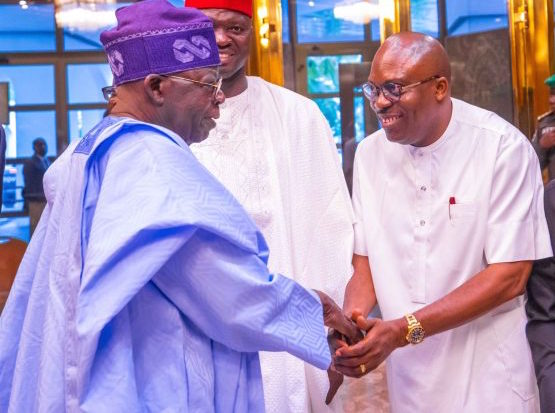
Rivers State Governor, Siminalayi Fubara, on Monday in Abuja said he is at peace with his political benefactor.

He also noted that “proper peace” has returned to the state after a months-long feud that triggered an emergency rule in March.

Speaking to journalists after meeting President Bola Tinubu at the Aso Rock Villa in Abuja, Fubara stressed that he had resumed his duties in an atmosphere of peace and cooperation.

“As far as I’m concerned, we have made peace. Fubara and his principal are working together,” the governor said, referring to his estranged predecessor and current Minister of the Federal Capital Territory, Nyesom Wike.

Fubara also revealed that his visit to Tinubu was a courtesy call and an opportunity to seek direction following the expiration of the six-month emergency rule that saw his suspension and those of key political leaders of the state.

“Ideally, it’s proper for me to see Mr. President and to tell him that I’m back, and I’ve also resumed my responsibility as the governor of Rivers State,” he said, adding, “It’s not much. It’s a father-son discussion, telling him thank you, and the areas where, if at all, there should be any issue for him to guide me properly so we don’t get in any situation of crisis.”

Tinubu lifted the emergency rule on September 17, restoring the offices of governor, deputy governor and the House of Assembly after a political impasse between Fubara and Wike that had crippled governance.

The Supreme Court had earlier declared that “there was no government in Rivers State,” citing the collapse of relations between the loyalists of both men in the assembly.

See also  Atiku demands probe of N17.5tn pipeline security spending

The crisis threatened governance in the oil-rich state as vital pipelines came under attack in the days leading to Tinubu’s declaration of emergency rule.

Meanwhile, Fubara on Monday lamented the huge economic opportunities lost due to the underutilisation of the state’s two seaports, warning that unless their capacities are optimised, both Rivers and Nigeria will continue to miss out on jobs, investments, and industrial growth.

The governor stated this when he received a delegation of the Nigerian Ports Authority Board and Management, led by its Chairman, Senator Adeyeye Adedayo Clement, on a courtesy visit to Government House, Port Harcourt.

In a statement by his Chief Press Secretary, Nelson Chukwudi, the governor said seaports remain critical to national development, noting that world-class ports and airports drive prosperity in many countries.

He stressed that despite being strategically blessed with the Port Harcourt and Onne seaports, Rivers had yet to fully harness their potential.

“We are blessed with the Port Harcourt and Onne seaports, but the truth is they are underutilised. Imagine if Onne Port was working at full capacity—the level of activities around Eleme, Tai, and the surrounding areas would transform the entire state’s economy. It will drive employment, create opportunities in manufacturing, and expand clearing and forwarding operations,” he said.

Fubara explained that maximising the capacity of both ports would attract industries seeking proximity to export facilities, reduce logistics costs, and boost investor confidence. He added that the ripple effects would include job creation, business growth, and higher tax revenues.

He also highlighted the relatively peaceful environment in Rivers under his administration, which, he noted, had fostered smoother relations between host communities, government, and the port authority compared to the disruptions seen elsewhere.

See also  Terror attacks: Tinubu approves fresh military hardware after security talks

On infrastructure, the Governor decried the poor federal roads linking the ports, describing them as a major hindrance to operations. While acknowledging that road repairs were a federal responsibility, he pledged state support through traffic management, discipline among trailer drivers, and complementary measures to ease congestion.

Fubara further promised to enhance security within the port precincts by establishing a new police station. He linked insecurity to unemployment, stressing that reviving port activity would reduce youth restiveness and crime.

“Most of these societal issues stem from unemployment. If activities pick up at the ports, nobody will want to be a criminal when there are genuine opportunities to make a living,” he said.

The Governor also cautioned against encroachment on port lands, warning that such practices undermine development. He urged the NPA Board to provide details of encroachment cases for immediate government intervention.

On flooding, he explained that poor access roads and drainage were the major causes and assured that the state would collaborate with the NPA on remedial works once the problem areas were identified.

Commending the board for partnering with the state before embarking on intervention projects, Fubara said such collaboration would ensure community buy-in and sustainability. “When government is part of your programmes, it means you have already succeeded, because the government represents the people,” he noted.

He pledged his administration’s full support to the NPA, urging the Board to transform the seaports into engines of economic growth rather than “monuments of neglect.”

In his remarks, NPA Board Chairman, Senator Adeyeye Adedayo Clement, said Nigeria’s littoral states are endowed with rich marine resources that are veritable catalysts for growth. He pledged the Board’s commitment to reviving operations at the Port Harcourt and Onne seaports and sought the state government’s support in rehabilitating access roads, ensuring environmental cleanliness, curbing illegal truck parking, and establishing a police post to tackle insecurity.

See also  US-based Nigerian doctor escapes death in Oyo mob attack

punch.ng

FOLLOW US ON:

FACEBOOK

TWITTER

PINTEREST

TIKTOK

YOUTUBE

LINKEDIN

TUMBLR

INSTAGRAM

Continue Reading
Click to comment

Leave a Reply

Your email address will not be published. Required fields are marked *

News

Labour to engage FG on minimum wage review

Published

on

The Nigeria Labour Congress and the Trade Union Congress said they will restart negotiations with the Federal Government over a new national minimum wage, warning that workers can no longer cope with rising living costs as inflation continues to erode real incomes.

The unions are pushing for what they described as a “genuine living wage” to replace the current framework, which they said no longer reflects Nigeria’s economic realities, particularly sharp increases in food, transport, housing, and healthcare costs.

The position was contained in a joint address delivered at the 114th International Labour Conference in Geneva on Monday, where the unions also rejected any proposal to tax the minimum wage or impose additional fiscal burdens on low-income earners.

Nigeria’s current minimum wage of N70,000 was signed into law on 18 July 2024, in an agreement between organised labour and the federal government. President Bola Tinubu formally announced the wage on 19 July 2024, and it took effect on 29 July 2024.

The agreement originally set a three-year review cycle, shifting from the previous five-year arrangement. However, in January 2025, the Federal Government adjusted the framework, announcing that the minimum wage would now be reviewed every two years, effectively setting 2026 as the next review point.

In light of this, labour leaders said they intend to formally open discussions with the federal government ahead of the July 2026 wage renegotiation deadline, in a bid to prevent the delays that have often hindered previous minimum wage reviews.

“The current Act expires early next year, and we have announced that renegotiation will commence by July 2026 to avoid the painful delays of the past. As soon as we leave here, we shall write again to the government demanding the commencement of the process for renegotiating the national minimum wage,” the unions said.

See also  Terror attacks: Tinubu approves fresh military hardware after security talks

The labour leaders said workers are already under severe pressure from inflation, currency depreciation, and rising costs across essential services, arguing that official economic indicators do not reflect the daily realities of most households.

They warned that taxing the minimum wage would worsen poverty and deepen economic hardship at a time when many citizens are struggling to meet basic needs.

“We demand nothing less than a genuine living wage that reflects today’s harsh economic realities. We also demand immediate relief measures by governments at all levels until a new minimum wage is signed into law. We reject outright any attempt to tax the minimum wage or impose further burdens on the poor,” the unions said in their communiqué.

The unions stressed that the upcoming negotiations must go beyond nominal wage adjustments and instead focus on protecting real incomes, which they said have been steadily eroded by inflation.

They also urged federal and state governments to introduce short-term relief measures pending the conclusion of negotiations, warning that delays could heighten industrial tensions across the country.

Beyond wage concerns, the labour movement used the Geneva platform to highlight broader economic and social challenges, including insecurity, unemployment, and rising poverty levels.

They said insecurity in several parts of the country has made commuting increasingly dangerous for workers, with killings, abductions, and displacement affecting productivity and livelihoods.

According to the unions, nearly 2,000 people were killed in the first quarter of the year, while millions have been displaced, with entire communities and economic activities disrupted by violence.

See also  2027: How coalition can stop Tinubu – Osuntokun

They warned that worsening insecurity could force workers to remain at home as a survival response, escalating tensions beyond traditional labour action if not urgently addressed.

The labour leaders also said about 65 per cent of Nigerians, estimated at roughly 150 million people, are currently living in multidimensional poverty, driven by inflation, job losses, and declining purchasing power.

They argued that while macroeconomic reforms are aimed at stabilisation, they have yet to translate into improved living standards for ordinary citizens.

As the 2027 general elections approach, the unions said they are developing a charter of demands to shape their engagement with political actors and inform their support for candidates, noting that  only political actors who commit to improved security, functional public services, wage reforms, and protection of labour rights would receive their backing.

The labour movement also raised concerns over alleged interference in union affairs in some states, accusing certain governments of undermining democratically elected labour leadership structures.

They emphasised that organised labour would resist any attempt to weaken union independence or impose external control on labour organisations.

As the current wage regime approaches its 2026 review window, the unions said their priority remains securing a wage structure that reflects economic realities and protects workers from further erosion of income.

They maintained that the outcome of the upcoming negotiations would determine whether Nigerian workers receive what they termed a “living wage” or continue to endure worsening economic hardship.

punch.ng

FOLLOW US ON:

FACEBOOK

TWITTER

PINTEREST

TIKTOK

YOUTUBE

LINKEDIN

INSTAGRAM

Continue Reading

News

Ribadu, Akpabio advocate tech-driven border control over Insecurity

Published

on

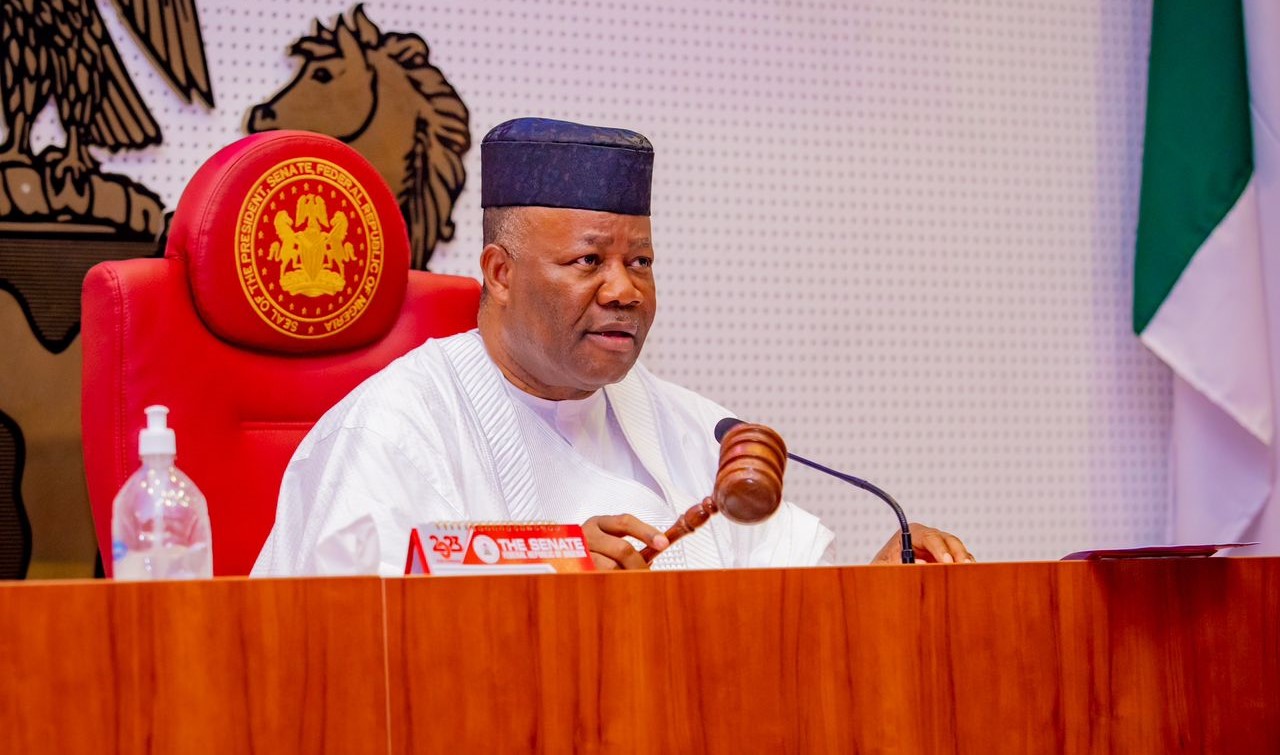
The National Security Adviser, Nuhu Ribadu, and President of the Senate, Godswill Akpabio, on Tuesday called for the deployment of modern technology and stronger regional cooperation to strengthen Nigeria’s border security architecture and address growing security threats across the country.

FILE: Akpabio

They made the call at the opening of the 15th National Security Seminar organised by the Alumni Association of the National Defence College in Abuja.

Represented by the Director of Policy and Strategy at the Office of the National Security Adviser, Yazid Gbemudu, the NSA said Nigeria’s territorial integrity and national stability were closely tied to the effectiveness of its border security framework.

He noted that while Nigeria’s extensive land and maritime borders facilitated trade, regional integration and socio-economic development, they also exposed the country to threats including terrorism, arms trafficking, smuggling, human trafficking, irregular migration and other forms of transnational organised crime.

According to him, weak border governance creates vulnerabilities that can be exploited by criminal and terrorist networks, thereby undermining national security and development efforts.

“A major pillar of Nigeria’s contemporary border security framework is the National Border Management Strategy, which promotes an integrated border management approach.

“The strategy seeks to enhance intelligence collaboration, strengthen border infrastructure, improve surveillance capabilities and modernise border management processes,” he said.

Ribadu said the deployment of Border Management Information Systems and other technological solutions at key entry and exit points had improved data collection, traveller screening and migration monitoring.

“These initiatives demonstrate Nigeria’s commitment to aligning its border management practices with international standards,” he added.

See also  Atiku Abubakar’s northern ticket campaign faces resistance, read details

The NSA stressed the need for the full implementation of an integrated border management system to improve coordination among security, intelligence and law enforcement agencies.

“Effective intelligence sharing, joint operations and harmonised border procedures are essential for addressing contemporary security threats,” he said.

He also advocated increased investment in technology-driven border security solutions.

“Expanding surveillance systems across land, maritime and coastal borders will significantly improve monitoring capabilities and reduce illegal cross-border activities.

“Modern challenges require modern solutions, including biometric identification systems, advanced border monitoring technologies and data-driven security frameworks,” Ribadu stated.

The NSA further emphasised the importance of regional and bilateral cooperation, noting that many of the security challenges confronting Nigeria’s borders were transnational in nature and required coordinated responses among neighbouring countries.

He also called for greater investment in border communities through sustainable development, improved infrastructure and economic opportunities to reduce their vulnerability to criminal exploitation.

“Strengthening Nigeria’s border security architecture is fundamental to ensuring national stability, protecting territorial integrity and promoting socio-economic development,” he said.

Ribadu, however, acknowledged challenges such as porous borders, inadequate infrastructure, limited technological capabilities and gaps in inter-agency coordination, saying they required urgent attention.

“Border security is a shared responsibility that requires the collective efforts of security agencies, government institutions, border communities and international partners,” he added.

Speaking at the event, Akpabio, who was represented by the Chairman of the Senate Committee on Defence, Ahmad Lawan, said Nigeria’s extensive land and maritime boundaries posed significant security challenges.

“As a country with extensive land and maritime boundaries, Nigeria faces significant challenges relating to border control, illegal migration, arms trafficking, smuggling and the infiltration of criminal and extremist elements.

See also  US-based Nigerian doctor escapes death in Oyo mob attack

“It is, therefore, imperative that Nigeria prioritises the strengthening of its border security architecture through improved surveillance, enhanced infrastructure, better inter-agency coordination, technological innovation and stronger regional cooperation,” he said.

Akpabio noted that many of the security threats confronting Nigeria had transnational dimensions, making coordinated responses essential.

He stressed that peace and security remained prerequisites for meaningful national development.

“There can be no meaningful development without peace and security. Porous and poorly managed borders can become vulnerabilities that undermine national security efforts and national stability,” he said.

The Senate President also advocated a whole-of-government and whole-of-society approach to addressing insecurity.

According to him, government institutions, security agencies, civil society organisations, the private sector, traditional institutions, the media and academia all have critical roles to play in safeguarding the country.

Earlier, the Acting President of AANDEC, Commodore Amatare Kpou (retd.), described the seminar as a key platform for promoting informed discourse on national security challenges and opportunities.

Kpou said the theme of the seminar, “Strengthening Nigeria’s Border Security Architecture for National Stability,” was timely, given the growing threats of irregular migration, smuggling, trafficking and other cross-border crimes.

He expressed confidence that the deliberations would generate useful recommendations for policymakers and contribute to efforts aimed at building a safer and more secure Nigeria.

Nigeria shares over 4,000 kilometres of land borders with neighbouring countries and an extensive coastline, making border security a critical component of national security.

Authorities have repeatedly identified porous borders as channels for terrorism, arms smuggling, human trafficking and other transnational crimes.

The Federal Government has in recent years intensified efforts to strengthen border management through technology, intelligence sharing and regional cooperation.

See also  Court Dismisses Mompha’s No-case Submission In N6bn Fraud Case

punch.ng

FOLLOW US ON:

FACEBOOK

TWITTER

PINTEREST

TIKTOK

YOUTUBE

LINKEDIN

INSTAGRAM

Continue Reading

News

FG releases barely 5% of N54.93tn three-year roads budget

Published

on

The Federal Government has released about N2.68tn for the construction, rehabilitation and maintenance of roads and bridges across the country between 2023 and April 2026, findings by The PUNCH from the Open Treasury Portal have shown.

The analysis, however, revealed a significant disparity between approved budgets and actual releases, with the government making provisions totalling N54.93tn for road-related projects within the period under review.

The figures highlight both the growing emphasis on infrastructure development and the persistent financing constraints that continue to affect capital project execution in the country.

The development also comes amid the ongoing Renewed Hope Media Tour organised by the Presidential Communications Team, designed to showcase projects being implemented under President Bola Tinubu’s Renewed Hope Agenda.

Data obtained from the Open Treasury Portal on Tuesday showed that road projects attracted a combined budgetary allocation of N2.53tn in 2023, out of which N631.51bn was released, representing an implementation rate of 24.95 per cent.

The Treasury data, however, did not specify the road projects to which the funds were released and did not indicate whether the government’s four legacy highway projects formed part of the expenditure.

A year-by-year breakdown showed that road construction projects received N280.14bn from a budget of N1.09tn during the year, while rehabilitation and repair works attracted N345.93bn from an allocation of N1.42tn. Road and bridge maintenance projects also received N5.44bn out of a total provision of N14.68bn.

In 2024, the Federal Government increased its budgetary commitment to the sector, making provisions amounting to N9.39tn for road-related projects. However, actual releases stood at N784.60bn, representing 8.36 per cent of the approved amount.

See also  Tinubu swears in Amupitan as new INEC chairman

Road construction projects accounted for N383.74bn of the spending from an allocation of N5.05tn, while rehabilitation projects received N384.49bn from a budget of N4.32tn. The government also released N16.37bn for the maintenance of roads and bridges out of a total provision of N18.18bn.

The trend continued in 2025, with the government budgeting N7.22tn for road construction and rehabilitation projects. Treasury records showed that N670.68bn had been released during the period, translating to an implementation rate of 9.29 per cent.

Of the amount released, road construction projects received N269.75bn from an allocation of N3.42tn, while rehabilitation and repair projects attracted N400.94bn from a budget of N3.80tn.

The 2026 figures indicate a sharp rise in budgetary provisions. As of April 2026, the government had earmarked N35.79tn for road construction, rehabilitation and maintenance projects, the highest within the four-year period.

However, only N597.08bn had been released, representing 1.67 per cent of the approved budget. Specifically, road construction projects had a budgetary provision of N23.61tn, with releases amounting to N293.06bn.

Similarly, rehabilitation and repair projects received N300.80bn from a total allocation of N12.03tn. Road and bridge maintenance projects had an allocation of N144.64bn, but only N3.22bn had been released as of the end of April. Treasury records show that N26.54bn was released in April alone, leaving an outstanding budget balance of N23.32tn yet to be funded.

The data indicate that although substantial sums have been earmarked for road projects over the years, actual cash releases remain significantly lower than approved allocations, reflecting the financing constraints that often affect capital project implementation.

See also  NNPC laments losses as PENGASSAN halts strike

Further analysis showed that road construction consistently attracted the largest allocations. Budgetary provisions rose from N1.09tn in 2023 to N23.61tn in 2026, reflecting the Federal Government’s increasing focus on large-scale highway projects.

Road rehabilitation spending remained substantial throughout the period. Allocations increased from N1.42tn in 2023 to N12.03tn in 2026, suggesting a parallel effort to repair existing infrastructure.

Maintenance received the smallest allocations but recorded the highest execution rate. In 2024, road and bridge maintenance achieved a 90.05 per cent implementation rate, compared to less than 10 per cent for construction and rehabilitation.

Overall, the Federal Government budgeted N54.93tn for road-related projects between 2023 and April 2026 but released N2.68tn during the same period.

The data also showed that while budgetary provisions expanded significantly over the years, the percentage of funds released declined. In 2023, about 25 per cent of the approved budget was released. This fell to 8.36 per cent in 2024 and 9.29 per cent in 2025.

As of April 2026, only 1.67 per cent of the total budgetary provision had been released. The development comes amid the Federal Government’s renewed focus on infrastructure as a catalyst for economic growth.

Several major road projects are currently underway across the country, including the Lagos-Calabar Coastal Highway, the Abuja-Kaduna-Zaria-Kano Road, the Sokoto-Badagry Super Highway and other strategic federal highways aimed at improving connectivity across Nigeria’s six geopolitical zones and stimulating economic activities.

The Minister of Works, David Umahi, recently disclosed that the Federal Ministry of Works would prioritise the completion of major highways and the execution of four presidential legacy projects in its 2026 capital plan.

See also  Court grants Malami, son N200m bail in terrorism financing case

According to the minister, the ministry inherited over 2,000 ongoing projects in 2023, many of which have been rolled over into subsequent budgets due to funding constraints.

Umahi also told lawmakers during the defence of the ministry’s 2026 budget proposal that the Federal Government owed contractors about N2.2tn for certified works executed between 2024 and 2025, underscoring the financing challenges facing the road sector despite rising budgetary allocations.

He added that only a fraction of expected capital releases had been made, forcing the ministry to re-scope and prioritise projects.

The Open Treasury Portal, which tracks government revenues and expenditures, provides a snapshot of how much of the approved budgets for capital projects has translated into actual spending.

Although the latest figures point to an unprecedented expansion in planned spending on road infrastructure, the challenge, analysts say, will be ensuring that budgetary commitments are backed by timely releases to deliver the intended benefits to Nigerians.

punch.ng

FOLLOW US ON:

FACEBOOK

TWITTER

PINTEREST

TIKTOK

YOUTUBE

LINKEDIN

INSTAGRAM

Continue Reading

Trending