Connect with us

Lifestyle

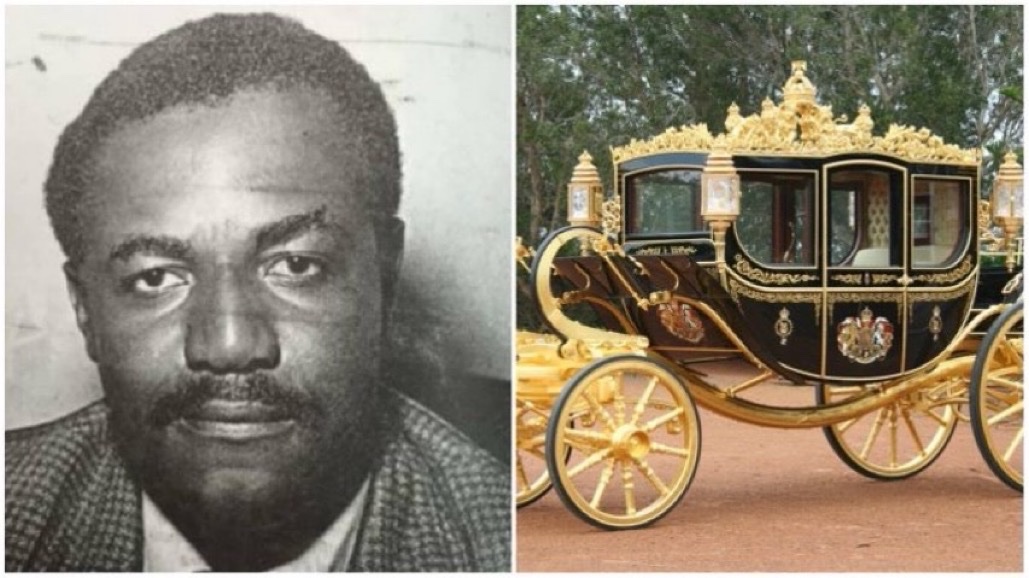
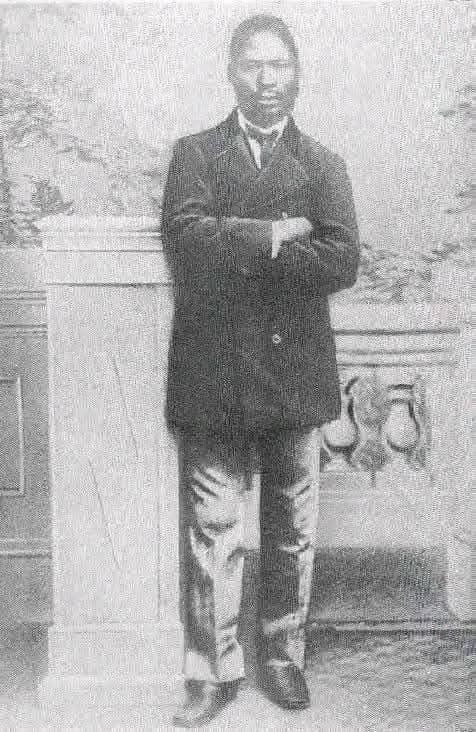
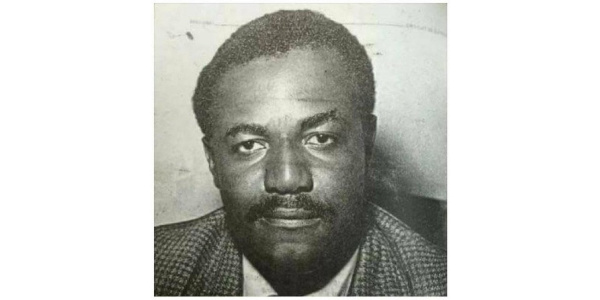
PHOTOS: Chief Candido Joao Da Rocha: Nigeria’s First Millionaire and Lagos’s Water Pioneer

Published

on

Chief Candido Joao Da Rocha remains one of the most fascinating figures in Nigerian economic history. Celebrated as Nigeria’s first millionaire, he was a pioneering businessman, landowner, and philanthropist whose life reflected both the entrepreneurial spirit and cultural richness of 19th-century Lagos.

Born in 1860 in Bahia, Brazil, Candido Da Rocha was part of the Afro-Brazilian returnee community — descendants of Yoruba people who were enslaved and later freed, choosing to return to West Africa. His father, Joao Esan Da Rocha, was among these returnees. A former Yoruba slave, Joao Esan returned to Lagos after gaining his freedom, where he laid the foundations of a family business that his son would later expand into a vast commercial empire.

Candido Da Rocha was a man of vision and enterprise. From his base on Kakawa Street, Lagos Island, he built what became known as the “Water House.” This iconic building housed the first borehole and water fountain on Lagos Island, serving as the main source of clean water for residents at a time when access to potable water was limited. Through his water distribution system, Da Rocha not only revolutionized how Lagosians accessed water but also established a successful business model that combined innovation with public service.

Beyond the water business, Da Rocha ventured into hospitality and real estate. He owned the now-defunct Bonanza Hotel, which catered to elite guests in colonial Lagos, and also operated The Restaurant Da Rocha, which was a popular establishment during his time. His business acumen made him one of the wealthiest men in Nigeria. One of the defining moments of his financial success was a lucrative gold bar transaction in 1894 that significantly increased his fortune.

See also  Three nights Nigeria will not forget

Despite his wealth, Chief Candido Da Rocha was known for his humility and generosity. He was a major benefactor to the less privileged and contributed to various community causes. As a member of the Afro-Brazilian elite, he played a significant role in shaping Lagos’s social and cultural landscape, promoting Western education, architecture, and entrepreneurship among returnee families.

Da Rocha’s influence extended beyond business. He held the chieftaincy title of Lodifi of Ilesa, a testament to his standing in both the Yoruba and Lagos communities. His Water House became more than just a family residence — it was a landmark of innovation and affluence in colonial Lagos and was later immortalized in Antonio Olinto’s novel The Water House, which drew inspiration from his legacy.

Chief Candido Joao Da Rocha’s life was a story of transformation — from the son of a freed slave to one of the most influential businessmen in Nigerian history. Through his enterprises, philanthropy, and cultural contributions, he helped shape Lagos into a modern, economically vibrant city. His legacy continues to symbolize the possibilities of hard work, innovation, and vision in the face of historical adversity.

Sources:

Falola, Toyin, Economic Pioneers of Colonial Lagos.

National Archives of Nigeria, Lagos Division.
FOLLOW US ON:

FACEBOOK

TWITTER

PINTEREST

TIKTOK

YOUTUBE

LINKEDIN

TUMBLR

INSTAGRAM

Continue Reading
Click to comment

Leave a Reply

Your email address will not be published. Required fields are marked *

Lifestyle

You Cannot Plant Seeds of Evil and Expect to Harvest Good Fruit — A Powerful Lesson About Life and Consequences

Published

on

You cannot spend your life hurting people, spreading hatred, deceiving others and creating problems, then expect peace, love and happiness to follow you everywhere.

Life has a way of teaching us that our actions have consequences. Every word we speak, every decision we make and every action we take can be compared to a seed. Some seeds produce beautiful fruit, while others eventually produce something painful.

The difficult truth is that you cannot consistently plant bad seeds and expect a good harvest.

Every Action Is a Seed

Think about a farmer. A farmer does not plant a particular seed and expect to harvest something completely different.

If you plant maize, you expect maize. If you plant a fruit tree, you expect fruit.

In much the same way, our actions can produce consequences.

When you treat people with kindness, you may build strong relationships. When you show honesty, you can earn trust. When you help others, you may create goodwill that lasts for years.

But when someone repeatedly lies, betrays, manipulates or deliberately hurts people, those actions can destroy relationships and create consequences.

The Harvest May Not Come Immediately

One of the reasons people sometimes continue doing wrong is because they do not immediately see the consequences.

Someone may lie today and appear to get away with it.

Someone may betray a friend and believe there will be no consequences.

Someone may mistreat people because they believe they are powerful enough to avoid accountability.

But the absence of an immediate consequence does not necessarily mean there will never be one.

See also  Guinness World Record reacts to BBNaija Queen’s bread-inspired outfit at the 12th AMVCA

Trust can take years to build but only moments to destroy. A reputation can be damaged by repeated choices. Relationships can disappear because of actions that were once considered insignificant.

Sometimes the harvest comes much later.

What Kind of Seeds Are You Planting?

This is a question everyone should ask themselves.

Are you planting love or hatred?

Are you planting peace or conflict?

Are you planting honesty or deception?

Are you planting forgiveness or revenge?

Are you planting kindness or cruelty?

Are you building people up or constantly looking for ways to bring them down?

Nobody is perfect. We all make mistakes, say things we regret and sometimes make poor decisions.

The important thing is recognizing our mistakes and choosing to change.

Your Words Can Also Be Seeds

Not every seed is an action.

Sometimes, words can be seeds too.

A simple word of encouragement can give someone hope when they are struggling. A kind word can strengthen a relationship.

But harsh words, insults, false accusations and deliberate humiliation can also leave lasting wounds.

Before speaking, it is worth asking:

“If these words come back to me one day, will I be proud that I said them?”

Do Not Confuse Success With a Good Harvest

There are times when people who behave badly appear to be successful.

They may have money, influence, popularity or power.

Meanwhile, someone who tries to live honestly may be struggling.

This can make people wonder whether doing the right thing really matters.

But material success is not always evidence of a good life.

A person can have money and still lack peace. Someone can be popular and still have broken relationships. Someone can have power and still be unable to earn genuine trust.

See also  Ebola spreading faster than response in DRC, UN warns

A good harvest is not measured only by money or possessions. Peace, integrity, meaningful relationships, respect and a clear conscience are also valuable forms of success.

It Is Never Too Late to Change Your Seeds

Perhaps you have made mistakes.

Perhaps you have hurt someone.

Perhaps you have allowed anger, jealousy, pride or resentment to influence your decisions.

The good news is that tomorrow gives you another opportunity to make a different choice.

You cannot change yesterday’s actions, but you can change what you plant today.

Apologize when you are wrong.

Forgive when forgiveness is possible.

Stop deliberately hurting people.

Choose honesty.

Choose kindness.

Choose peace.

Choose to become a better version of yourself.

What Harvest Do You Want Tomorrow?

Before complaining about the harvest in your life, take a moment to examine the seeds you have been planting.

If you want peace, plant peace.

If you want respect, give respect.

If you want love, show love.

If you want trustworthy relationships, become someone others can trust.

If you want people to forgive your mistakes, learn to forgive theirs.

The future is influenced by the choices we make today.

Life may not always work exactly like a simple equation, and not every difficult experience is caused by something we personally did. But our choices still matter, and repeatedly harmful behavior can have serious consequences for ourselves and others.

Final Thought

We all have the opportunity to change the direction of our lives.

The question is not only “What do I want to harvest?”

The more important question is:

See also  Massive Crowd Welcomes Sunday Igboho to Olowo’s Palace in Ondo State | Traditional Royal Reception

“What am I planting today?”

Because you cannot continue to plant seeds of evil and expect to harvest good fruit.

Plant kindness. Plant honesty. Plant peace. Plant love.

One day, you may be grateful for the harvest.

What do you think? Do you believe the way we treat people eventually comes back to us in one form or another? Share your opinion in the comments.

FOLLOW US ON:

FACEBOOK

TWITTER

PINTEREST

TIKTOK

YOUTUBE

LINKEDIN

INSTAGRAM

Continue Reading

Lifestyle

Life in This World Is Temporary and Full of Vanity

Published

on

There is a truth we often avoid because it is uncomfortable to think about: one day, every one of us will leave this world.

No matter how much money we make, how beautiful our house is, how expensive our car is, how popular we become or how powerful our position may be, none of us will live here forever.

Yet, every day, people wake up and enter a race they may never finish.

We chase money.

We chase houses.

We chase cars.

We chase political positions.

We chase fame.

We chase social media recognition.

We struggle to prove that we are successful, sometimes forgetting that life itself is temporary.

The Bible puts it powerfully in James 4:14:

“For what is your life? It is even a vapour that appears for a little time and then vanishes away.”

Think about that.

A person’s entire life, with all its struggles, achievements, celebrations and disappointments, is described as a vapour—something that appears for a short time and disappears.

We Are All Passing Through

Across Nigeria and Africa, we often measure success by what a person has.

A new house attracts attention.

A new car generates admiration.

A successful business earns respect.

Expensive clothes create impressions.

Money can make people suddenly treat someone differently.

But sometimes, behind the beautiful pictures and impressive lifestyles is a human being silently struggling to keep everything together.

We see the photographs, but we don’t always see the tears.

We see the new house, but we don’t see the years of sacrifice.

We see the expensive car, but we don’t see the anxiety.

We see the social media lifestyle, but we don’t know what happens when the camera is turned off.

And sadly, some people spend their entire lives trying to prove something to people who may not even care.

One Day, Everything Will Be Left Behind

Imagine working for decades to build a magnificent house, only to leave it behind one day.

See also  Three nights Nigeria will not forget

Imagine spending your entire life accumulating wealth, only for another person to eventually inherit it.

Imagine spending years chasing a political position, only to discover that your time in office eventually comes to an end.

Imagine buying everything money can buy, yet discovering that money cannot purchase another breath when your time comes.

This is not to say that money, houses, cars or success are bad.

They are not.

The problem begins when these things become more important to us than our character, our families, our relationships, our purpose and our relationship with God.

The Rich and the Poor Have One Thing in Common

One of the greatest realities of life is that death does not respect social class.

The rich man and the poor man both have an appointed time.

The powerful and the powerless eventually leave this earth.

The person living in a mansion and the person living in a small room both have the same fragile human life.

The celebrity and the ordinary person are both temporary inhabitants of this world.

Money may create differences in how people live, but it cannot make anyone immortal.

That should humble us.

Don’t Lose Your Family While Chasing Wealth

There are people who spend their entire lives trying to provide a better future for their families, only to become strangers to the very people they were working for.

A father may spend years chasing money but have little time for his children.

A mother may become consumed by survival and barely have time to enjoy her family.

Husbands and wives can become so focused on material success that they forget to love, communicate and build their homes.

Then one day, the children are grown, the years have passed and the opportunity to create certain memories is gone forever.

Money is important, but time is priceless.

You can make more money.

See also  Buhari vs Fela: How Buhari Administration illegally Jailed Fela in 1984

You can buy another car.

You can build another house.

But you cannot buy back yesterday.

Stop Living Only to Impress People

Africa has a strong culture of community, family and social recognition. Sometimes, however, the desire to impress others can become a dangerous burden.

We buy things we cannot comfortably afford because we want people to think we are successful.

We borrow money to maintain an appearance.

We compete with friends and neighbours.

We compare our lives with people on social media.

We become unhappy because somebody else appears to be doing better.

But remember this:

You do not have to destroy your peace trying to prove that you are successful.

The person you are trying so hard to impress may be fighting battles you know nothing about.

Live within your means.

Build your life gradually.

Take care of your family.

Do good.

Be content.

And most importantly, don’t allow material possessions to become your identity.

What Will People Remember About You?

When your name is eventually mentioned after you are gone, what will people say?

Will they remember your kindness?

Will they remember that you helped people when they were struggling?

Will your children remember you as a loving parent?

Will your friends remember your loyalty?

Will your community remember your contribution?

Or will your entire story simply be about the money you accumulated and the possessions you left behind?

Your greatest legacy may not be the things you leave in a house, but the values you leave in people’s hearts.

Life Is Too Short for Hatred and Pride

We spend too much time fighting.

Families separate over money and property.

Friends become enemies because of jealousy.

Siblings fight over inheritance.

People refuse to forgive each other for years.

Some relationships end because of pride.

But life is too short.

One day, the person you refuse to speak to may no longer be here.

See also  El Mafrex (born Mfreke Obong Ibanga; 14 May 1984)

One day, you may wish you had apologised.

One day, you may wish you had spent more time with your parents.

One day, you may wish you had told someone, “I love you.”

Don’t wait until the funeral before you realise how precious someone was.

You Are Only Passing Through

Whether you are in Lagos, Abuja, Accra, Nairobi, Johannesburg, Kampala, London, Brussels or anywhere else in the world, remember this:

You are only passing through.

Build your career.

Build your business.

Build your house.

Take care of your family.

Dream big.

Become successful.

But don’t forget that these things are temporary.

The car will eventually become old.

The house will eventually belong to someone else.

The money will eventually be spent.

The position will eventually be occupied by another person.

The photographs will eventually fade.

And one day, your journey on earth will come to an end.

So while you are still here, live meaningfully.

Love people.

Forgive quickly.

Help the poor.

Respect your parents.

Raise your children well.

Be honest.

Serve your community.

Use your success to make someone else’s life better.

And never allow the temporary things of this world to make you forget the eternal things that truly matter.

A Final Thought

The world may teach us to chase everything we can see.

But wisdom teaches us to prepare for what comes after what we can see.

Life in this world is temporary and full of vanity.

So don’t spend your entire life collecting things you cannot take with you while neglecting the things that make life truly worth living.

You came into this world with nothing.

You will leave with nothing.

The question is: what will you do with the time in between?

FOLLOW US ON:

FACEBOOK

TWITTER

PINTEREST

TIKTOK

YOUTUBE

LINKEDIN

INSTAGRAM

Continue Reading

Lifestyle

It Is Better to Give Someone a Chicken While They Are Alive Than a Cow at Their Funeral: The Powerful Lesson Behind the Proverb

Published

on

There is a time to show love, and that time is not after someone is gone.

An African proverb says:

“It is better to give someone a chicken when alive than to donate a cow during his funeral.”

At first glance, the proverb may sound humorous, but its message carries a serious lesson about kindness, appreciation, generosity and human relationships.

Show Love While People Are Still Alive

Many people wait until someone dies before they begin to demonstrate how much that person meant to them.

At funerals, families and friends may spend large amounts of money, organize elaborate ceremonies, provide food and drinks, or make generous donations in honour of the deceased.

But the person receiving all those tributes is no longer there to see them, hear them or enjoy them.

That is the wisdom behind the proverb.

A chicken given to someone while they are alive may seem small, but the person can appreciate the gesture. They can eat it, celebrate with you, thank you and remember your kindness.

A cow donated at their funeral, on the other hand, may be a much bigger gift—but the person can no longer benefit from it.

Why Do We Wait Until It Is Too Late?

The proverb raises an uncomfortable question:

Why do some people become generous only after someone has died?

Sometimes, we take the people around us for granted. We assume our parents, friends, relatives and loved ones will always be there.

We postpone the phone call.

We postpone the visit.

See also  Ebola spreading faster than response in DRC, UN warns

We postpone saying, “I appreciate you.”

We postpone helping someone who is struggling.

Then, when that person dies, regret can take over.

Suddenly, we remember all the things we could have done while they were alive.

A Small Gesture Can Mean More Than Money

Generosity is not always about giving large amounts of money.

Sometimes, it is simply:

Calling someone to check on them.
Buying food for someone who needs it.
Supporting a friend’s business.
Helping a family member through a difficult period.
Visiting an elderly relative.
Encouraging someone who feels discouraged.
Saying “thank you” while there is still time.
Showing appreciation without waiting for a funeral.

A small act of kindness can create a memory that lasts for years.

The Real Meaning of the “Chicken and Cow”

The chicken and cow are symbols of timing.

The lesson is not that giving a cow at a funeral is wrong. Rather, it reminds us that love and generosity are most meaningful when the person can experience them personally.

Why wait until someone’s funeral to celebrate them?

Why not celebrate them while they can smile?

Why wait until someone is gone before telling others how wonderful they were?

Why not tell them today?

Give Your “Chicken” Today

Perhaps there is someone in your life who needs your support right now.

Maybe they don’t need a cow.

Maybe they don’t even need much.

They may simply need a phone call, encouragement, food, financial assistance, a visit or a reminder that somebody cares.

Don’t wait until the funeral to show appreciation.

Give your “chicken” while they are alive.

See also  Three nights Nigeria will not forget

Because sometimes, the smallest gesture made at the right time is worth more than the biggest gesture made too late.

What do you think?

Would you rather receive a small act of kindness while you are alive, or have people make a huge gesture in your honour after you are gone?

Share your thoughts in the comments.

FOLLOW US ON:

FACEBOOK

TWITTER

PINTEREST

TIKTOK

YOUTUBE

LINKEDIN

INSTAGRAM

Continue Reading

Trending