Lifestyle
PHOTOS: 7 Beautiful Traditional Yoruba Hairstyles – Irun Dídì Ni Ayé Àtijọ́

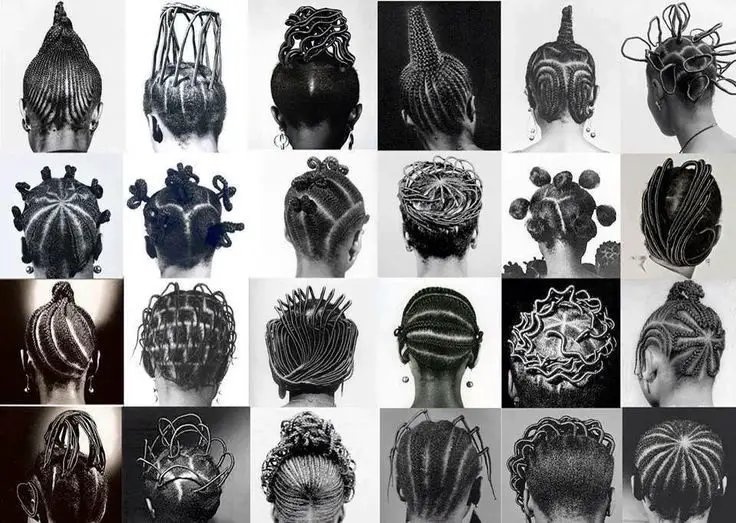
In Yoruba culture, hair is more than just a part of the body; it is a crown, a symbol of identity, and an expression of creativity. Among the Yoruba people, hairstyles in the olden days were of high cultural relevance, a source of storytelling, an index of social status, and a mirror to personal and collective identity. Whether braided, threaded, or even decorated with elaborate adornments, each hairstyle told something different about the age, marital status, spiritual condition, or even mood of the wearer.
Traditional Yoruba hairstyles were not only a testament to the artistic brilliance of the Yoruba people but also a cherished aspect of our heritage. Created with care, using natural oils, combs, threads, and sometimes beads or cowries, these hairstyles required skill, patience, and a deep understanding of the craft. More than just a fashion statement, they were a celebration of Yoruba values, connecting us to our ancestors and community.
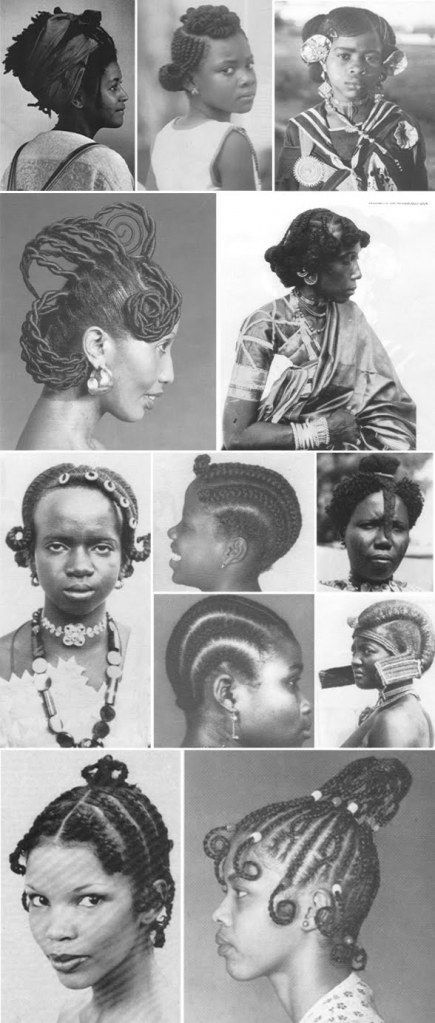
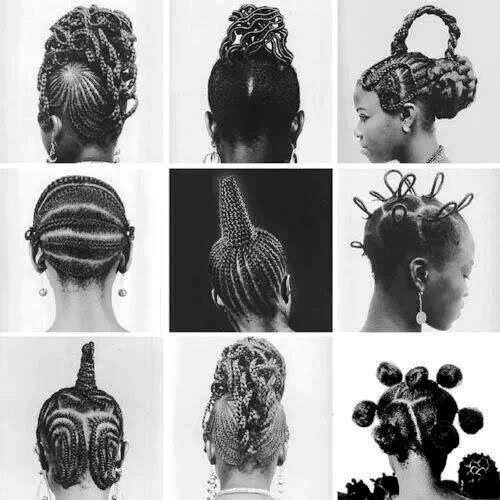
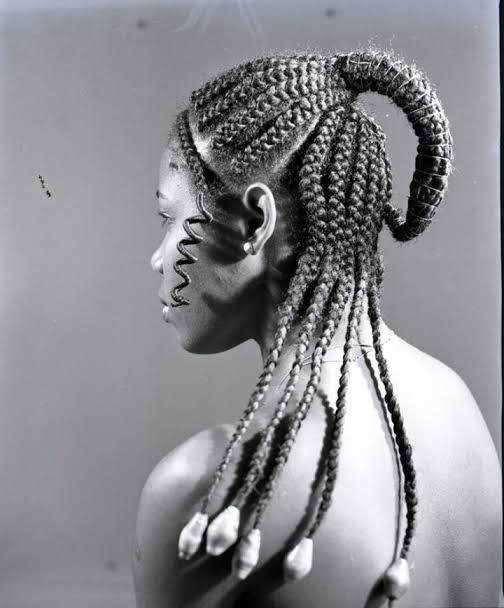
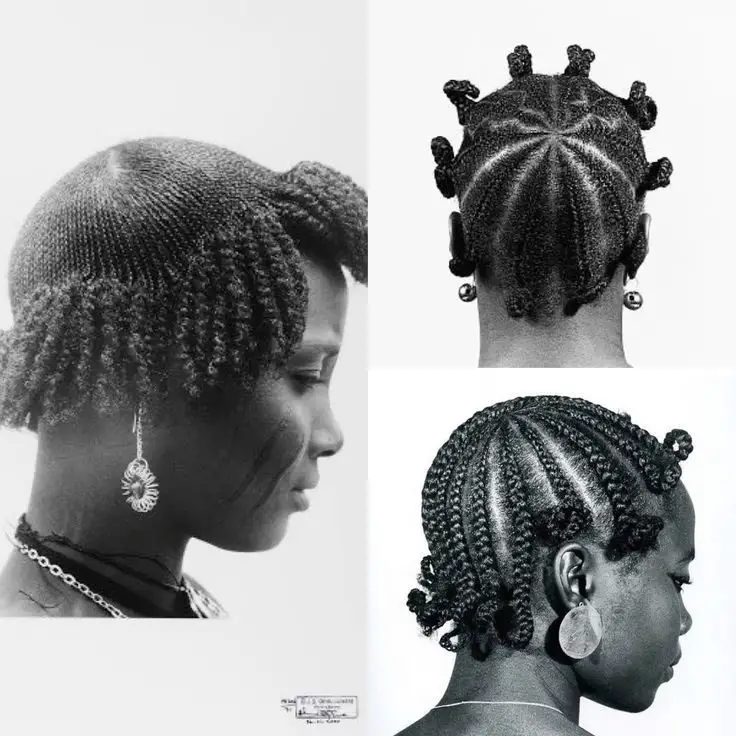
This article explores seven iconic hairstyles from olden-day Yoruba communities. Basically, there are two main ways Yoruba women traditionally styled their hair back in the day: Ìrun Dídì (cornrows) and Ìrun Kíkó (threaded hairstyles). We will take a look at the threaded styles and different cornrow styles (as it had many varieties). Each of these natural hairstyles represents the rich tapestry of culture of Yoruba people and takes you back in time when each braid and bead was an indication of something, and everything had a reason behind it.
1. Ìrun Kíkó: The Art of Threading Hair
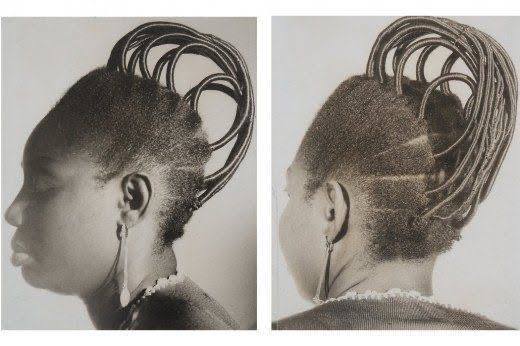
Ìrun Kíkó, also known as hair threading, is a traditional Yoruba hairstyle involving wrapping sections of hair with black thread to achieve a unique and eye-catching style. This method has been both decorative and protective in nature, hence being one of the cornerstones of Yoruba hair culture through generations.
Cultural Significance
In the Yoruba culture, Ìrun Kíkó was more than a hairdo. The style allowed women to be creative in designing several patterns and shapes with threaded hair. Ìrun Kíkó had practical uses other than aesthetics: it protected hair from damage and breakages while promoting hair length retention.
The threading technique also highlighted the natural beauty and versatility of African hair, symbolizing pride in heritage. Special events, such as weddings and festivals, were times when such a hairstyle was commonplace.
How It Was Done
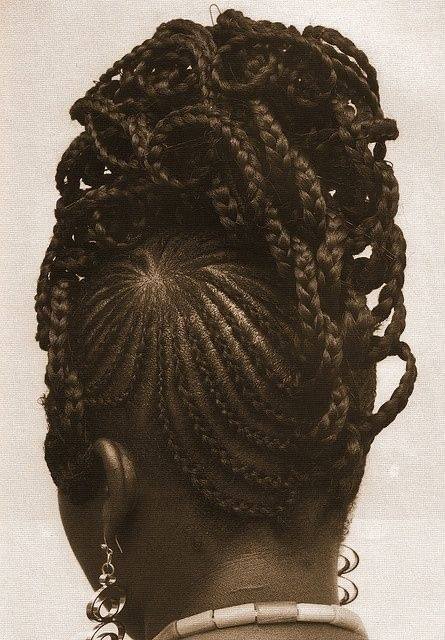
This hairstyle was made using a special black thread made from plastic or wool. A section of hair is made and then each is wrapped with the thread tightly from its roots to the ends. Depending on the desired outcome, it may be manipulated into several forms such as straight, spiral, or curved shapes.
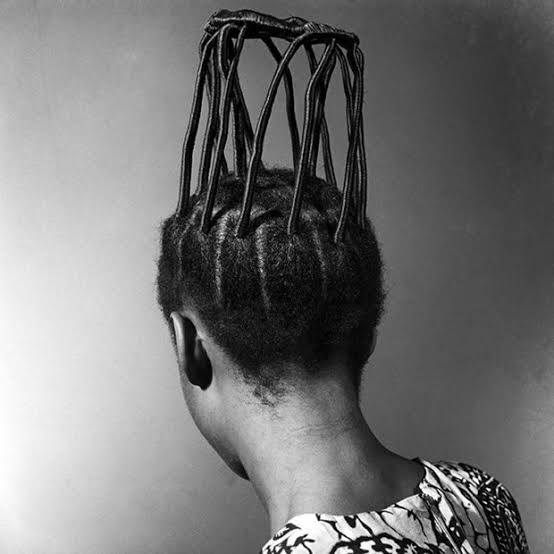
Ìrun Kíkó can be worn in styles ranging from very simple, practical wear to intricate statement wear. Like cornrows, it also can be made into several variations from looping and crowns to different geometric shapes.
One of these variations include the Police Cap hairstyle women wore during the colonial and post-colonial era. In this style, the threaded sections of the hair are stylishly brought to one side of the front of the face and held down, looking like a police cap (beret).
Present-Day Influence
While in the old days, Ìrun Kíkó was very popular; of late, people have gone back to appreciating this hairstyle for its protective nature and its ability to effectively stretch natural hair.
2. Ṣùkú
One of the most iconic and enduring hairstyles from olden-day Yoruba communities is Ṣùkú. This style is produced by weaving the hair up into an upward bun to give it an elegant and regal look. The name Ṣùkú itself, meaning “round” or “circular,” comes from this shape of the hairstyle.
Cultural Significance
Sùkú had great cultural significance, depicting beauty, youth, and energy. It was normally worn by young women, especially brides-to-be, as part of their wedding preparations or during festive events. This hair was also considered indicative of femininity and preparedness for new responsibilities.
The style was also commonly used by women in communal settings and signified shared values as well as the unity of the Yoruba tradition. It was a versatile hairstyle for both celebrations and everyday life.
How It Was Done:
The making of Sùkú is a process involving skill and precision: to begin, a stylist would section the hair into parts, weaving each braid upward toward the center of the head. Sometimes the hair was divided into symmetrical patterns or artistic shapes and then gathered into a bun. The use of natural oils, such as coconut oil or shea butter, ensured the hair was soft, shiny, and easy to braid.
In some instances, Sùkú was ornamented with decorations such as beads or cowries for beautification. These accessories often had their own meanings, symbolizing wealth, fertility, or spiritual protection.
Present-Day Influence
Although Sùkú originated in olden days, its influence can still be felt within the modern Yoruba communities.
Today, Sùkú hairstyles are worn during cultural festivals, weddings, and even as everyday hairstyles.
The modern stylists have reimagined Sùkú, combining traditional techniques with modern aesthetics to keep this timeless hairstyle alive.
Sùkú remains a testament to the ingenuity and artistry of the Yoruba people, reminding us of the beauty and significance of our cultural heritage.
3. Kolésè:
The Beauty of Natural Coils
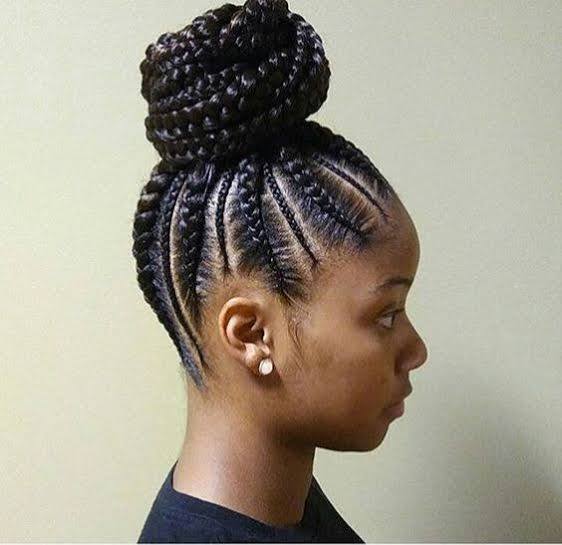
The Kolésè is a traditional Yoruba style in which cornrows run from the front or top of the head to the back, close to the neck. This peculiar style is distinguished by the absence of “leg” braids -meaning the braids do not go down the neck but end near the back of the head. The clean, structured cornrows are a representation of natural elegance, making Kolésè a timeless and distinctive look.
Cultural Significance
The name Kolésè is derived from the texture of the hair that was common among Yoruba women in precolonial times. The women often had curly or coily hair, and the hair ends would not lie flat; they would spring up naturally. This no doubt inspired the naming as “Kolésè,” a name closely mirroring the curling motion of the hair’s natural ends.
The Kolésè hairstyle in Yoruba culture is a proud symbol of one’s natural beauty and heritage. More than anything, it was not a fashion statement but reflected an identity and attachment to the wearer’s roots. The style accentuated the hair in its natural texture and hence spoke volumes of the strength and beauty of coiled hair.
How It Was Done:
Kolésè was made by equally parting the hair, then plaiting them into neat cornrows. These cornrows would begin from the front or top of the head, working their way to the back of the head near the neck, but won’t continue down the neck because of the natural hair texture (or by manually coiling the braid end). The cornrows were meant to be tightly and neatly drawn to show off clean lines and curl of the natural hair at the end.
For ceremonial occasions, Kolésè could be further adorned with accessories like beads or cowrie shells to enhance the style.
Present-Day Influence
The Kolésè hairstyle remains influential even in today’s natural hairstyling trends. It has been in the spotlight on social media recently because of its close similarity to the signature look of the world-famous and incredible singer-songwriter, Alicia Keys.
Many people with curly or coily hair wear hairstyles that reflect Kolésè as a way of paying homage to their cultural heritage by embracing their natural beauty. The braiding technique may vary slightly with modern tools, but the essence of Kolésè -celebrating natural, coiled hair- remains an important part of contemporary African hair culture.
4. Korobá:
The Upturned Basket Style
Korobá is one of the most recognizable and enduring hairstyles in Yoruba culture. Its name comes from the striking resemblance it holds with an upturned bucket. This distinctive design features braids that go from the center of the head outward to all sides, creating a basket-like appearance that is both elegant and practical.
Cultural Significance
The Korobá hairstyle has long been one of the symbols of beauty and cultural pride among the women of Yoruba. Its design reflects resourcefulness and creativity, with Nigerian traditions reflecting unity and balance in its neat and symmetrical structure. The style was popular for everyday life as well as festive occasions, making it a versatile choice for both simplicity and sophistication.
How It Was Made:
In creating Korobá, the stylist starts from the top of the head, braiding small, even sections outward in a circle. The outcome is clean and symmetrical cornrows that bring out the wearer’s natural features while exuding cultural elegance.
The style could be made more elaborate with beads, cowries, or colorful threads to give it a festive look and make it fit for weddings, ceremonies, or other special events.
Present-Day Influence
The Korobá hairstyle has remained a favorite among ladies who want to identify with their cultural heritage and still look timeless. The hairstyle has seen some modern variations, like incorporating longer extensions or bold colors. It continues being a go-to style for people wanting a unique and traditional look and has become used for photoshoots for this same reason.
With its rich history and its special aesthetic, Korobá stands as testimony to the artistry and genius of Yoruba hairstyling traditions.
5. Èkó Bridge:
A Bold Symbol of Lagos
The Èkó Bridge hairstyle is an inspired and symbolic Yoruba hairstyle, representing some of the major bridges in Lagos, Nigeria, such as the Eko Bridge itself. This style captures the essence of urban life and connectivity in Lagos, the bustling city often considered the heartbeat of Nigeria.
Cultural Significance
The name of this style is derived from the famous Eko Bridge in Lagos and signifies the city’s importance as a hub of activity and progress. The Èkó Bridge hairstyle was a form of art and a means of celebrating significant landmarks, events, and social concepts. It was mostly worn for special occasions and displayed a mixture of ingenuity and pride in the heritage.
How It Is Made:
In this style, the hair is parted into about 10 sections. Each section is then threaded and put together to form something similar to a bridge over the middle of the head. This is its focal point resembling an actual bridge with its characteristic arch and supporting structure.
To enhance the design, the stylist carefully arranges the braids to create a symmetrical, eye-catching pattern. The result is a hairstyle that not only stands out but also carries deep cultural symbolism.
6. Ìpàkó Àlèdè
Ipakò Alède is a Yoruba traditional hairstyle made with straight cornrows running from the back of the head to the front. The term ipako alède describes how the braids are set in the shape of the “occiput of a pig”. In this hairstyle, cornrows are beautifully woven to a sleek and orderly pattern straight to the face from the nape of the neck forward to the forehead.
It symbolizes neatness and good discipline in nature, often reserved for formal or ceremonial purposes. It is a hairstyle that intends to show the skill it takes to achieve a symmetrical look, with perfect alignments of each cornrow.
In Yoruba culture, the Ìpàkó Àlèdè was typically worn by women to show regard for their appearance and ability to keep a very elaborate hairstyle, which was also supposed to be an indicator of social status and attention to detail.
7. Pàtéwó
Pàtéwó, which literally means “clap your hands” in Yoruba, is a hairstyle symbolic and functional at the same time. It gets this name from how the braids are made to meet in the middle of the head, like two hands meeting either to pray or to clap. It is somewhat similar to the commonly known ṣádé hairstyle.
Cultural Significance:
Pàtéwó was generally a natural hairstyle for kids and women during big cultural events or just as a casual wear because it looks neat and elegant.
How It Was Made:
The hair is partitioned into two portions in making Pàtéwó. Each portion is cornrowed toward the center of the head, where the two sides meet to provide a symmetrical and clean finish. The braids are usually fine and quite close together so that the style will look neat and tidy. The middle meeting point can either be done with beads and cowries or remain empty, depending on the choice of the person wearing it……!
FOLLOW US ON:


Lifestyle
IF YOU’RE NOT FEEDING SOMEONE, WHY BULLY THEM? THE CRUELTY OF HUMILIATING THE LESS PRIVILEGED




YOUR UPBRINGING SHAPES YOUR CHARACTER, WHEREVER YOU GO

PHOTOS & VIDEO: Mob sets BRT Bus ablaze after motorcyclist’s death in Lagos

IF YOU’RE NOT FEEDING SOMEONE, WHY BULLY THEM? THE CRUELTY OF HUMILIATING THE LESS PRIVILEGED

‘Sleeping Prince’ of Saudi Arabia dies after 20 years in coma

2027: Atiku delays ADC membership card collection amid rumoured Jonathan comeback

How A Class Of 24 Students Produced 2 Presidents, 4 Governors, 2 Ministers, 4 Emirs, 3 Justices, 4 Ambassadors and Other Influential Leaders


-

 Business17 hours ago
FG, NLC clash over minimum wage talks
-
News17 hours ago
Tinubu orders rescue of kidnap victims, safe 2027 polls
-
News18 hours ago
Five Assemblies say yes, 31 yet to decide on state police bill, read details
-
Crime17 hours ago
Police freed suspect, left me with N40m losses – Lagos car dealer
-
Politics17 hours ago
Dave Umahi inaugurates APC infrastructure campaign team ahead of 2027 elections
-
Politics17 hours ago
INEC begins early logistics planning for 2027 elections
-
Lifestyle2 hours ago
IF YOU’RE NOT FEEDING SOMEONE, WHY BULLY THEM? THE CRUELTY OF HUMILIATING THE LESS PRIVILEGED
-
Crime16 hours ago
Troops rout Lakurawa fighters, destroy camps in Sokoto