






Connect with us

Business

Shettima urges respect for Dangote’s investment to protect Nigeria’s future

Published

on

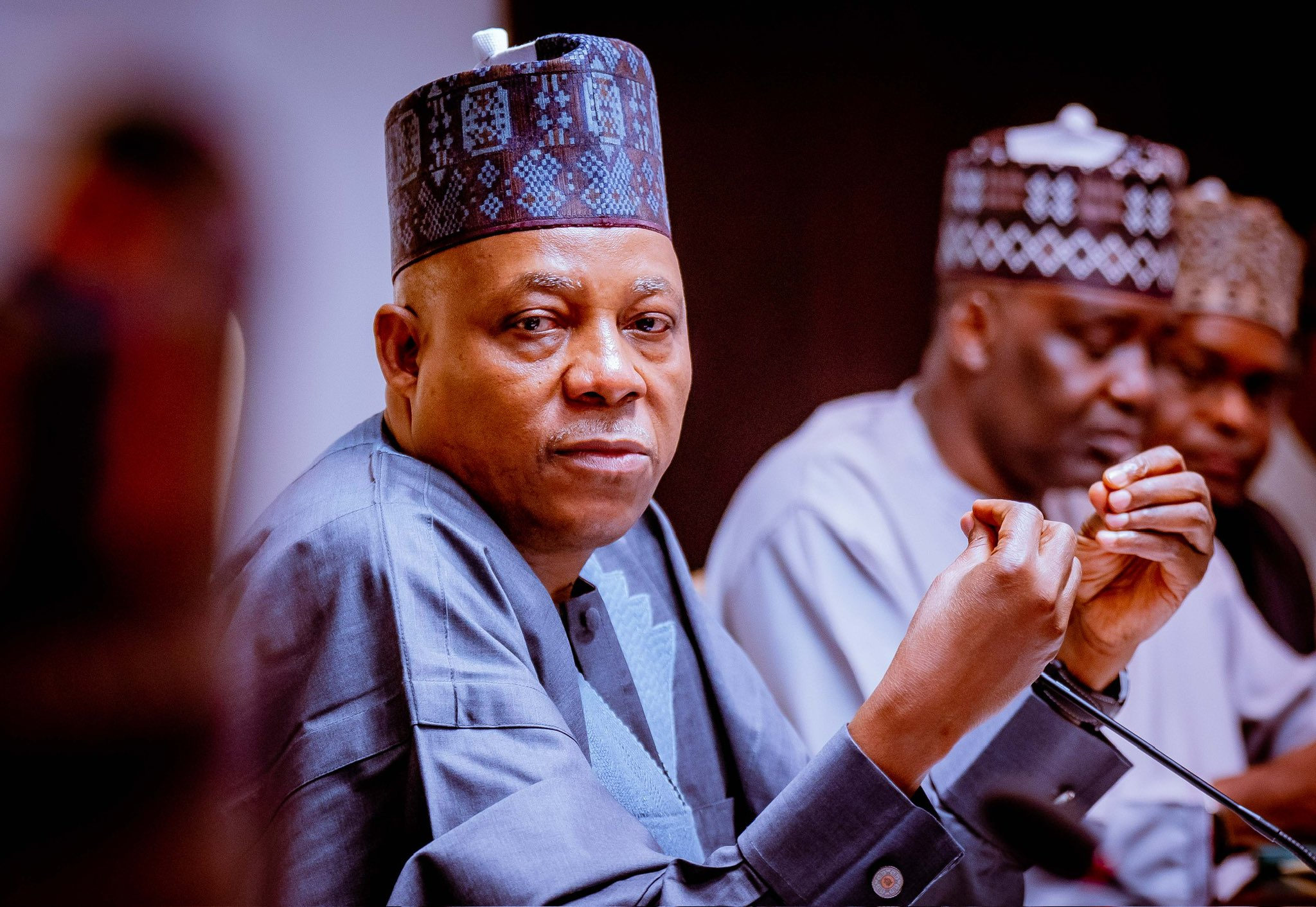
Vice President Kashim Shettima has urged Nigerians to respect and protect the multibillion-dollar investment of Africa’s richest man, Aliko Dangote, warning that safeguarding such ventures is crucial to securing the country’s economic future.

Speaking on Monday at the opening of the 2025 Nigerian Economic Summit in Abuja, Shettima described Dangote as an institution and a pillar of Nigeria’s economic development.

He stressed that the $20 billion Dangote Refinery, with its 650,000-barrel-per-day capacity, was a national asset vital to Nigeria’s growth and global competitiveness.

The vice president made the remarks against the backdrop of last week’s industrial action by oil workers under the Petroleum and Natural Gas Senior Staff Association of Nigeria over the alleged sack of about 800 unionised employees at the refinery.

The strike was later suspended following the intervention of the Minister of Labour and Employment, Muhammad Dingyadi, and the National Security Adviser, Nuhu Ribadu.

Shettima said the billionaire industrialist deserved collective support for choosing to invest heavily in Nigeria rather than abroad.

He said, “Aliko Dangote, he’s not an individual, he’s an institution, and he’s a leading light in Nigeria’s economic parliament. And how we treat this gentleman will determine how outsiders will judge us. If he had invested $10 billion in Microsoft, in Amazon, or in Google, he probably might be worth $70 to $80 billion by now.

“But he opted to invest in his country, and we owe it to future generations to jealously protect, promote, preserve, and protect the interests of this great Nigeria.”

See also  Rising fuel prices: NNPC may supply foreign crude to Dangote refinery

The Vice President also appealed to both labour unions and the organised private sector to show restraint and patriotism in resolving industrial disputes, warning that reckless actions could undermine national progress.

“I wish to call for caution, retrospection, and a deeper sense of patriotism from both labour and the organised private sector in defining and improving the relationship between labour and industry in the interest of maintaining our steadily improving economic fortunes. It’s not about holding the whole nation to ransom because of a minor labour dispute.

“Nigeria is greater than PENGASSAN. Nigeria is greater than each and every one of us. I’m not coming to you as a partisan,” he added.

punch.ng

FOLLOW US ON:

FACEBOOK

TWITTER

PINTEREST

TIKTOK

YOUTUBE

LINKEDIN

TUMBLR

INSTAGRAM

Continue Reading
Click to comment

Leave a Reply

Your email address will not be published. Required fields are marked *

Business

Middle East war may force Nigerians to work from home – Dangote

Published

on

Chairman and CEO of Dangote Group, Aliko Dangote, has warned that the ongoing Middle East crisis could force Nigeria and other African countries to adopt COVID-era work-from-home restrictions if the conflict does not de-escalate.

Dangote gave the warning on Monday after meeting with President Bola Tinubu at his Ikoyi residence in Lagos, expressing deep concern about the economic impact of oil price volatility on the continent already burdened by debt.

The industrialist stated, “If this thing doesn’t de-escalate, you know, normally we in Africa, we don’t have any reserves in terms of savings.

“And so, people normally go out and look for money for the next day or for even the same day. Some of them, if they don’t work that day, they won’t eat.”

He cited Indonesia’s response to energy crisis pressures, where authorities asked workers to operate only four days a week and are considering full work-from-home arrangements similar to the COVID-19 pandemic.

“In some countries today what they’ve done, they asked everybody to work from home because they cannot afford it.

“I think Indonesians also only go to work four days a week. And they will look at the situation if it doesn’t improve, they will ask everybody not to go to work anymore.

“We will do like that time of COVID, where people will work from home,” Dangote stated.

The billionaire businessman warned that Africa would pay a disproportionate price for a crisis in which the continent has no involvement.

“It’s not only energy. Some people will try and take a chance and say, ‘Ah, this is an opportunity. So, let me make money.’

See also  Kano proposes bill to criminalise same-sex marriage, ‘immoral practices’

“So, if this thing doesn’t de-escalate, it is going to keep going up and up and up, and governments cannot really and add to salaries.

“So, people will really, really feel the pinch,” he stated.

Dangote emphasised that the crisis would hit hardest at ordinary Africans operating small businesses, especially barbers, bread sellers, and industries dependent on generators for power.

“People who are barbers, people who make bread, people who have industries, who have to pay for their own generators, you know, I mean, you can see what is happening,” he said.

He called for urgent prayers and international intervention to end the conflict.

“We just need all hands-on deck to pray that this thing comes to an end,” the Dangote Group chairman stated.

Speaking on President Tinubu’s recent state visit to the United Kingdom, Dangote expressed optimism the trip will open doors for Nigerian business and investment.

He highlighted the £746m infrastructure agreement signed during the visit, describing it as significant beyond the monetary value.

“It has not been easy dealing with the British, getting this kind of money out of them. They too, they are struggling on their own. But I think this is to show confidence — it’s not about the money. It’s about the confidence in Nigeria,” Dangote said.

He predicted that the UK agreement would encourage other countries to follow suit.

“The moment that they do that, there will be other countries that will follow suit. Germany will come, others will line up and start coming up,” he stated.

See also  US boosts Nigeria’s fight against terrorism with new military supplies

Dangote also revealed that Nigerian investors could now access the UK Export Finance agency, a credit resource that has remained largely untapped for years.

“For Nigerian investors, it has shown that we can also go to the same agency and tap the resources. It means that the agency now is open for business for Nigerians, and we will go as private people to look for them to give us support,” he explained.

The infrastructure agreement signed during Tinubu’s UK visit focuses on port development and other critical areas, with funding from UK Export Finance.

Dangote said he visited the President to extend Eid-el-Fitr greetings and pay his respects following Tinubu’s return from the two-day state visit to the United Kingdom.

The Middle East crisis has triggered concerns about oil price volatility globally, with potential impacts on inflation, transportation costs, and energy-dependent sectors across Africa.

Nigeria, despite being an oil-producing nation, remains vulnerable to global oil price fluctuations due to its dependence on imported refined petroleum products.

punch.ng

FOLLOW US ON:

FACEBOOK

TWITTER

PINTEREST

TIKTOK

YOUTUBE

LINKEDIN

Continue Reading

Business

One week to deadline, banks in last-minute rush for Recapitalisation

Published

on

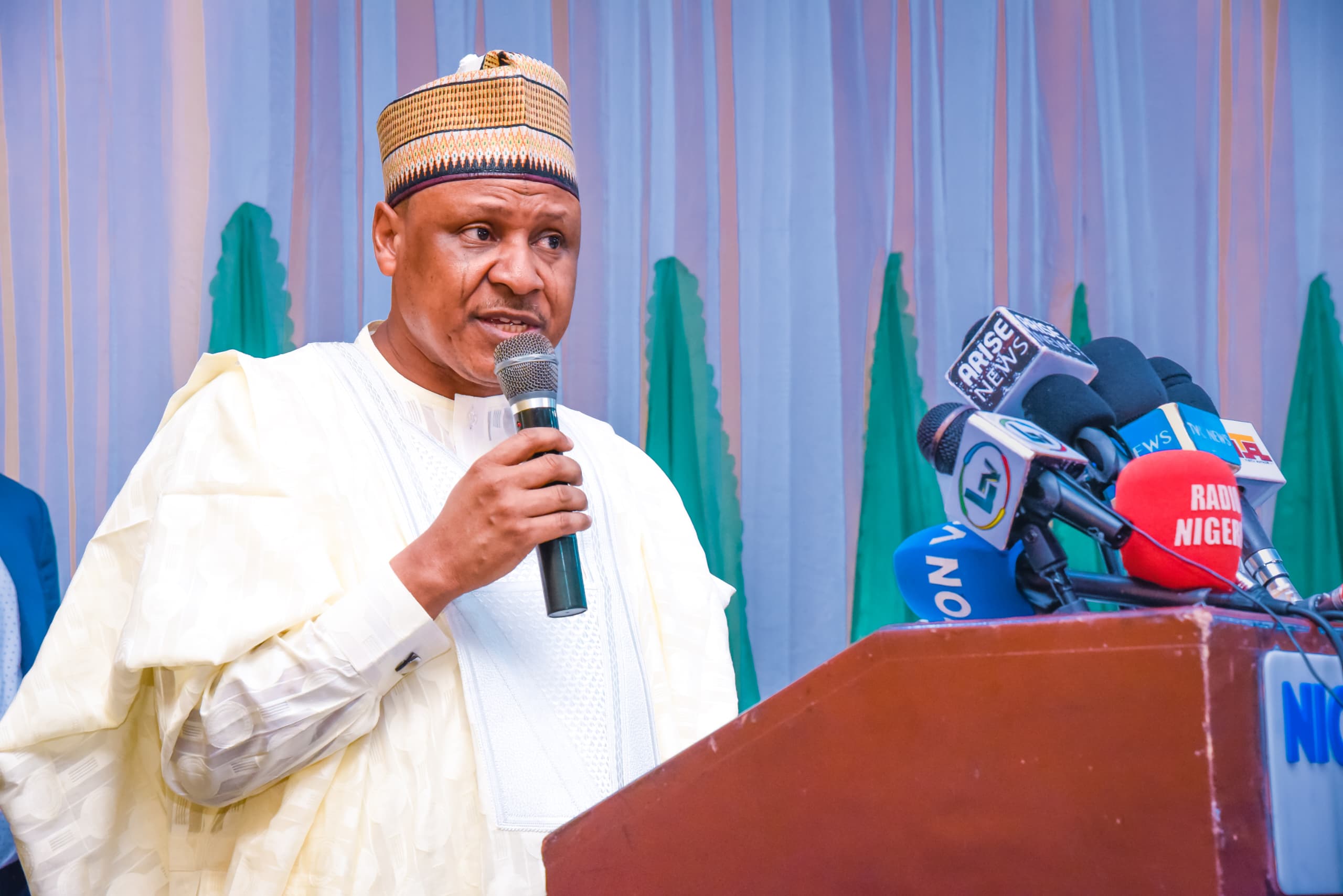
Banks are in a last-minute push to meet the Central Bank of Nigeria’s recapitalisation deadline, with the apex bank expected to make a major announcement this week as the March 31, 2026, cut-off approaches.

Findings by The PUNCH indicate that most lenders have substantially met the new capital requirements, while a few institutions are resolving final regulatory and structural issues ahead of the deadline.

Top officials of the CBN said the regulator would provide an update on the exercise on Tuesday or Wednesday, amid expectations that the process will largely conclude within the stipulated timeline.

The recapitalisation exercise, introduced in March 2024, requires banks to meet new minimum capital thresholds of up to N500bn for international commercial banks, as well as lower thresholds for other licence categories.

Speaking at the end of the 304th Monetary Policy Committee meeting in Abuja, the CBN Governor, Olayemi Cardoso, expressed confidence that the process would be completed within the deadline, while acknowledging that a few institutions were still finalising their plans.

“And quite frankly, I expected to conclude within that stipulated time. It is expected,” he said.

He added, “There are other institutions that are still finalising their plans and evaluating a range of strategic options. And there’s time, which, of course, includes consolidating where appropriate.”

Cardoso disclosed that the banking sector had already mobilised significant capital under the exercise. “As of February 19, 2026, total verified and approved capital raise stands at N4.05tn,” he said.

He further stated that, “Of this, N2.90tn, which is 71.6 per cent, has been mobilised domestically, with $706.84m, which is N1.15tn, representing 28.33 per cent foreign.”

See also  Dangote Set To Become World’s Largest Refinery As It Increases Capacity

He said the mix of domestic and foreign participation reflected strong investor confidence in the sector. “This balance, in my view, represents a mix of domestic and foreign, which signals broad investor engagement and confidence in the sector,” he added.

Despite the progress recorded, investigations showed that a few banks are yet to complete the process, largely due to delays affecting the merger process of two institutions, though there are indications that the issues may be resolved within the week.

There are also uncertainties around three banks under regulatory intervention, with the final capital position dependent on ongoing supervisory actions and possible support arrangements.

The CBN had earlier clarified that three banks under regulatory intervention are being treated as special cases and are not expected to follow the same sequence as other institutions in the recapitalisation process.

Cardoso acknowledged this category of banks during his remarks, noting that “The other group that I think I would be remiss not to mention are the institutions which are currently undertaking regulatory intervention with certain legal and structural considerations that have naturally influenced the sequencing of their recapitalisation actions.

“In other words, it’s unreasonable to expect that they would follow the same sequence as those that really and truly two and a half years ago, when we made this announcement, have had ample time in which to do a lot of the things they are doing.

“We remain the Central Bank of Nigeria, actively engaged with all relevant stakeholders to ensure that they have an orderly and credible outcome while maintaining financial stability.”

See also  INEC chair: Security check begins, Council of State to meet

He also reassured depositors about the safety of funds in such institutions. “Depositor funds in these institutions remain secure, and operations continue under close supervisory and regulatory oversight of the central bank,” he said.

Financial analysts say the recapitalisation exercise has exceeded expectations, especially given initial concerns about the size of the capital gap.

The Head of Financial Institutions Ratings at Agusto & Co, Ayokunle Olubunmi, told The PUNCH on Sunday that the recapitalisation exercise had recorded strong progress across the banking sector.

“I think the recapitalisation exercise has been a success thus far,” he said. “When the exercise started, a lot of people were sceptical. Even those who were optimistic were scared because the gap seemed to be huge.”

He noted that domestic investors played a major role in the capital raise. “The bulk of the funds were actually from the domestic economy… that’s the interesting part,” he said.

Olubunmi added that most of the banks yet to be formally cleared had already raised the required funds and were only undergoing regulatory verification. “It’s not that they are still in the market looking for funds. The funds are with the CBN. They’re just providing documentation for the CBN to certify it,” he said.

He further explained that the three banks under regulatory intervention were being handled differently by the regulator. “Those ones… are special cases… we can’t really benchmark them with others,” he said.

According to officials, while about three banks are outstanding in terns of meeting the target, two of the bank are expected to complete their merger process this week.

See also  Price war: Retailers drop petrol below Dangote’s N739/litre

The third bank is also expected to meet the recapitalisation threshold this week.

punch.ng

FOLLOW US ON:

FACEBOOK

TWITTER

PINTEREST

TIKTOK

YOUTUBE

LINKEDIN

Continue Reading

Business

Airlines under pressure after jet fuel surges 100%

Published

on

There are indications that airfares may jump in the coming weeks following the hike in the cost of aviation fuel, commonly referred to as Jet A1, a development that is already putting pressure on airline operations and signalling higher ticket costs for passengers.

The spike in JetA1 price is largely due to the crisis in the Middle East, which has slowed the production and movement of crude oil across countries, worsening the operational cost of domestic carriers.

Checks by our correspondent with airlines showed an astronomical increase in the operating cost of airlines, particularly caused by the spike in aviation fuel, which has become the dominant cost driver in recent weeks.

At the time of filing this report, aviation fuel, which was sold between N900 and N995 before the Middle East crisis commenced, has jumped to between N2,500 and N2,700, depending on the airport of delivery, sharply raising the cost burden for operators.

Operators said they were monitoring developments, stressing that an increase in airfares was imminent, with strong indications that the prices of air tickets might double if the current trend persists.

Aviation fuel remains the single highest component of airline operations, accounting for about 30 to 35 per cent of total operational costs, a figure that industry players say is rising rapidly under current market conditions.

Airline sources said the price of the product had remained unstable since February 28, 2026, when the war started in Iran, changing about five times since that time, further complicating planning and pricing decisions.

See also  US crude shipments to Nigeria surge 101% – Report

The spokesperson for United Nigeria Airlines, Chibuike Uloka, challenged the Federal Competition and Consumer Protection Commission to urgently engage domestic airline operators over the sustainability of current ticket pricing amid rising operational costs.

The FCCPC recently accused airlines of price fixing, with special attention on five unnamed airlines. This was, however, dismissed by the airline operators.

Uloka noted that despite aviation fuel prices soaring beyond N2,000 per litre, many carriers had continued to maintain fares at around N195,000, raising concerns about how long such pricing could be sustained under prevailing economic conditions.

He, however, warned that the situation could deteriorate further if fuel prices get to N3,000 per litre, stressing that not all airlines would be able to remain in operation under such pressure, a development that could further shrink capacity and push fares even higher.

He said, “Honestly, this is a very good time for FCCPC to come out and ask operators how they have been able to sustain flight tickets at N195,000 despite the increase in aviation fuel crossing N2000 and above. They should please ask how operators have kept on with operations? These are hard times. But most definitely, the current prices can’t be sustained for long periods.

“If this continues the way it is, because the way we are now, the price is also getting to N3000 per litre, and if it eventually gets to N3000, not all operators will be able to fly. And the ones that will be able to fly will not be Father Christmas. What we are asking now is not even profit, but at least to be able to operate optimally. Aviation has become a daily necessity because people must be able to move from one place to another. But FCCPC must be able to come out now and ask operators how we are faring.”

See also  Fuel war brews as Dangote presses Tinubu to ban imports

The PUNCH understands that Nigeria has been unable to produce enough crude oil for the Dangote Petroleum Refinery, forcing the indigenous refining company to import crude.

Crude prices have jumped from $65–$69 to about $112 per barrel as of the time of filing this report, further worsening the cost of aviation fuel and pushing airlines closer to inevitable fare adjustments.

This effect has also upped gantry prices, with operators warning that sustained increases will ultimately be transferred to passengers through higher ticket fares.

Industry expert, Samuel Caulcrick, projected an imminent rise in airfares, attributing it to the growing burden of operational costs on airlines, which is increasingly being driven by the surge in aviation fuel prices.

He explained that current market conditions suggest that operating expenses have surged significantly, with aviation fuel now accounting for about 45 per cent of total airline costs, making it the single largest cost component in the sector and leaving operators with little choice but to adjust fares.

Caulcrick noted that the shift in cost structure marks a departure from previous years when maintenance expenses dominated airline spending. However, the persistent increase in the price of Jet A1 fuel has altered the dynamics, placing greater financial pressure on operators and inevitably influencing ticket pricing across the industry.

He stated, “Before now, the highest component of airline operation was maintenance, but that has changed with the continuous rise in the prices of Jet A1. In those days when aviation fuel was less costly, the maintenance cost was higher, but now fueling has taken over.

See also  Pressure mounts on Bayelsa gov over choice of deputy

“If that component goes up, it will definitely affect the prices of every seat. But we should expect the airfares to go up by 20 to 25 per cent in the coming days.”

punch.ng

FOLLOW US ON:

FACEBOOK

TWITTER

PINTEREST

TIKTOK

YOUTUBE

LINKEDIN

Continue Reading

Trending