Lifestyle
PHOTOS: Veteran actor Kola Oyewo for burial August 7

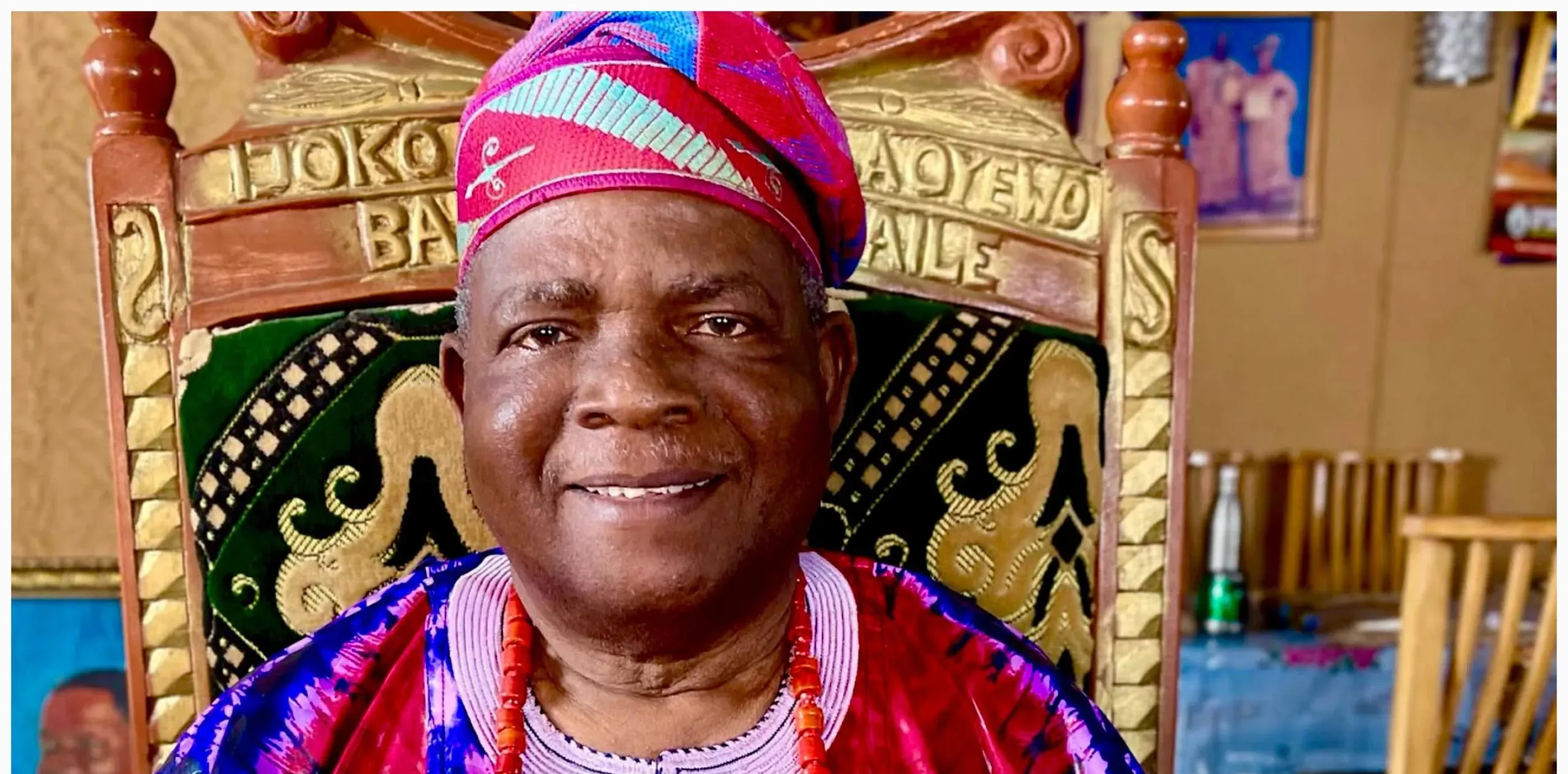
The remains of renowned Nigerian actor and theatre scholar, Chief Dr Adekola Gabriel Oyewo, popularly known as Kola Oyewo, will be laid to rest on Friday, August 7, 2026, in Osun State according to a funeral programme released by his family.
Oyewo, who died at the age of 80, was celebrated as one of Nigeria’s foremost theatre practitioners, with a career spanning several decades on stage, television and in academia.
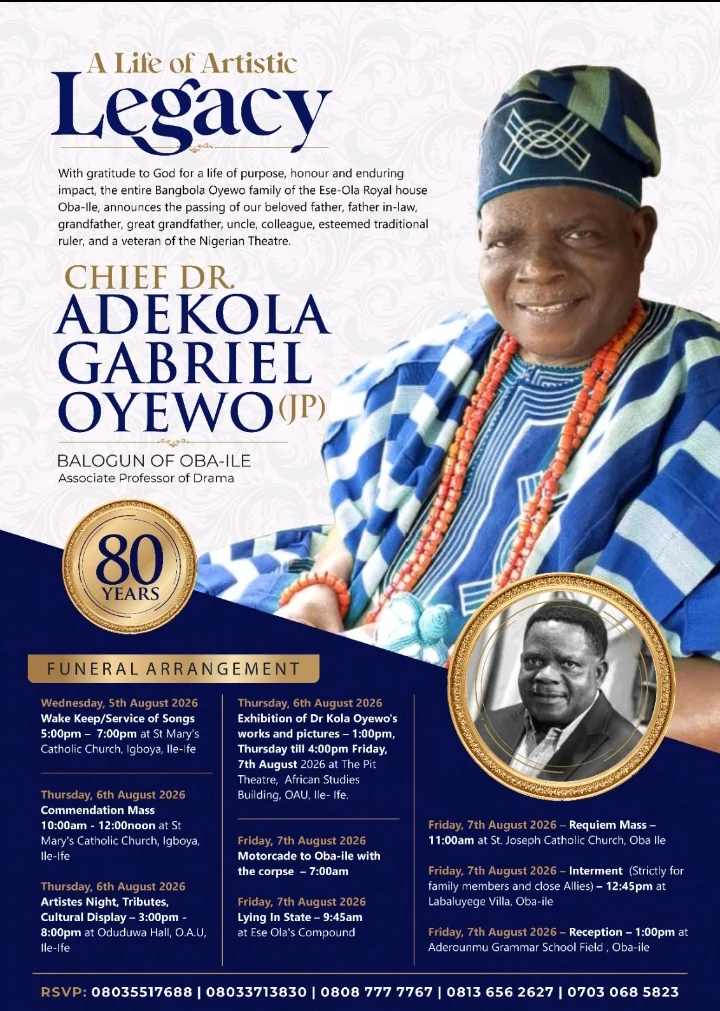
In a funeral announcement, the Bangbola Oyewo family of the Ese-Ola Royal House, Oba-Ile, described the deceased as “a beloved father, father-in-law, grandfather, great-grandfather, uncle, colleague, esteemed traditional ruler, and a veteran of the Nigerian theatre.”
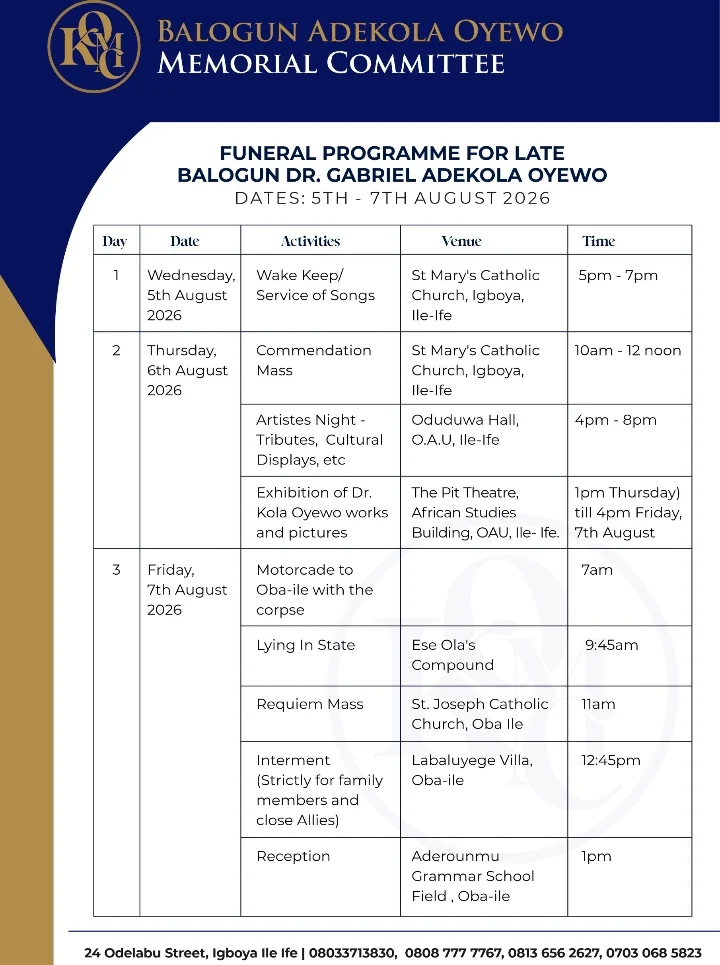
In a flier issued by the Balogun Oyekola Oyewo Memorial Committee, the three-day funeral programme will run from Wednesday, August 5, to Friday, August 7, 2026.
“With gratitude to God for a life of purpose, honour and enduring impact, the entire Bangbola Oyewo family of the Ese-Ola Royal House, Oba-Ile, announces the passing of our beloved father, father-in-law, grandfather, great-grandfather, uncle, colleague, esteemed traditional ruler and veteran of the Nigerian theatre,” Newspeak quoted the family’s statement as saying on Saturday.
The late actor was also the Balogun of Oba-Ile in Osun State and an Associate Professor of Drama, earning widespread recognition for his contributions to the development of theatre arts in Nigeria.
Activities lined up for the burial rites will commence on Wednesday, August 5, with a wake-keep and service of songs at St Mary’s Catholic Church, Igboya, Ile-Ife.
On Thursday, August 6, a commendation mass will be held at the same church, while an artistes’ night featuring tributes and cultural displays is scheduled for later that day at Oduduwa Hall, Obafemi Awolowo University, Ile-Ife.
A major highlight of the funeral programme will be an exhibition of Oyewo’s works and photographs at the Pit Theatre, African Studies Building, Obafemi Awolowo University, beginning on Thursday and continuing through Friday.
The funeral cortege will leave the late actor’s residence at Ese Ola’s Compound, Oba-Ile, on Friday morning before a requiem mass at St Joseph Catholic Church, Oba-Ile.
Interment will take place at 12:45 p.m. on Friday, August 7, at Labaluyegbe Villa, Oba-Ile, in a ceremony restricted to family members and close associates.
A reception for guests will follow at Aderonmu Grammar School Field, Oba-Ile.
Widely regarded as one of the leading figures in Nigerian theatre, Oyewo inspired generations of actors, playwrights and scholars through his work in performance, teaching and cultural preservation.
His death marks the end of an era in Nigeria’s theatre community, where he remained a respected voice and mentor for decades, the family noted.
FOLLOW US ON:






“I MADE THIS PERSON WHO THEY ARE TODAY!” — REALLY?

SOME PEOPLE WILL DO ANYTHING — EVEN EVIL — JUST TO MAKE MONEY!

Belgian parliament to legislate to allow police to enter homes to facilitate undocumented migrant removals

‘Sleeping Prince’ of Saudi Arabia dies after 20 years in coma

2027: Atiku delays ADC membership card collection amid rumoured Jonathan comeback

How A Class Of 24 Students Produced 2 Presidents, 4 Governors, 2 Ministers, 4 Emirs, 3 Justices, 4 Ambassadors and Other Influential Leaders


-

 News18 hours ago
Air chief pleads for patience as investigation begins on Ondo crash
-
News17 hours ago
Dapo Abiodun reveals that Nigeria needs 554,353 personnel for state police, read details
-
News17 hours ago
INEC displays voter register, begins PVC distribution ahead of 2027 elections
-
Business18 hours ago
FG’s 30-day petrol discount sparks opposition backlash
-
Sports17 hours ago
Adeniyi lauds Nigeria’s Veterans World Wrestling Champs medal
-
News16 hours ago
Trump rules out new Iran attack before US midterm elections
-
Business17 hours ago
Report reveals Nigeria leaves N40tn manufacturing opportunities untapped
-
Education16 hours ago
Lagos targets 2,500 medical varsity intake, expands capacity