Connect with us

Lifestyle

My life in grave danger over viral video on killing of Christians – Plateau cleric, Evangelist Dachomo

Published

on

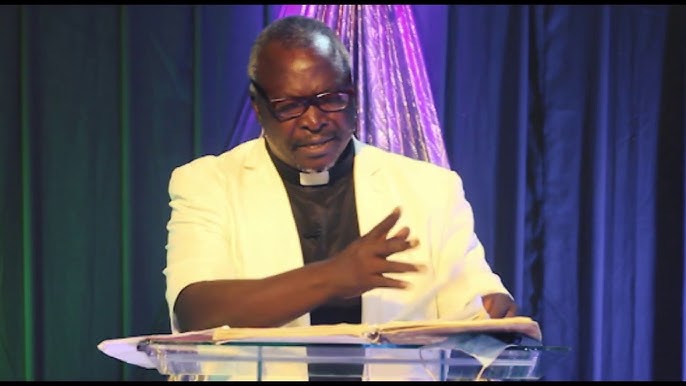
A Plateau-based cleric and regional leader of the Church of Christ in Nations, Evangelist Ezekiel Dachomo, stirred attention with a viral video showing the mass burial of victims of a recent attack in Heipang community near Jos. Dachomo, in this interview with OLUFEMI ADEDIRAN, speaks on the circumstances surrounding the clip, the repeated killings in Plateau communities, government inaction, and his call for global intervention to stop what he insists is the genocide of Christians

What motivated you to make that viral video at the mass burial site?

I made the video for record-keeping so that future generations will be able to see how we were terrorised and persecuted. The video is also evidence that a Christian genocide is going on in the North.

The purpose is to help both present and future generations stand firm in Christ despite persecution and terror. It is also meant to guide them in soul-winning. If they don’t have a record that strengthens their faith, they may give up.

This is what we are facing, and we have now resorted to self-defence; otherwise, the name of Jesus will not be mentioned again in our land. I want the world to know that we are going through the worst, as Jesus said, “You will be persecuted.” So, we are keeping records of what we are passing through, just as the Bible kept records of what Christians endured.

What led to the mass burial?

The incident happened last Thursday in Heipang, Jos, Plateau State. There is an airport there, and some Muslims have been trying to take control of the place. The village has been attacked several times because of this.

On that fateful day, Fulani herdsmen invaded the village and killed 11 people. We rushed to the scene; children were butchered without conscience, yet the Nigerian government denied Christian genocide. We made the video to prove them wrong.

See also  Segun Adewale: A Journey in Music and Legacy

That same day, they kidnapped the wife of one of our reverends, and she has yet to be released. They are asking us to pay ransom—another way of plundering Christians. If you pay ransom, they may still kill your loved ones.

About five people were injured and rushed to the hospital. Also, last Saturday, they attacked a hospital and abducted two ladies who are members of our church.

Many Christians have relocated to the South-South because of these attacks. We call on Nigerians to pray for us. These killings are too many. They started from Borno, and now they are bringing mercenaries from the far North. They attack and loot our villages, taking away farm produce, and the soldiers do nothing.

If it were Christians attacking Muslims, the entire military would rise against us, invade our villages, and make mass arrests. Before you are released, you must pay a lot of money.

Last Christmas, even in one of my churches in Riyom, they attacked while members were celebrating, killing many. Others fled. The same thing happened in Daruwa, where they killed people and burnt the village. Other affected areas include Maiyanga, Barkin Ladi, Tenti, and Bokkos, where hundreds have been killed. We are tired of burying our people daily. There are no youths left to dig graves. Sometimes, we abandon corpses and flee for our lives.

How has the government reacted to the attacks?

If the government acknowledged what was happening and took action, these killings would have stopped. But instead, they deny it and protect the perpetrators. Recently, a farmer who killed a Fulani herder while defending himself was sentenced to death by the court. This young man did nothing wrong except defend himself. Does this mean the Nigerian government has already handed the country over to Islam? If we don’t denounce our faith, they kill us. If a court can sentence a Christian to death for self-defence, who else can save us?

See also  The Shekere: Sound, Symbol, and Tradition (PHOTOS)

Do you think the military is compromised?

In the past, the military helped, but now nobody helps us. Our people live in fear. They rape our children and wives before our eyes, and if you complain, you are killed. We are living from hand to mouth and waiting to die.

When did the killings start?

It started in 2001. They brought mercenaries from Central African countries—Senegal, Niger, Chad, Burkina Faso, and Libya. These are the insurgents terrorising us every day. If Muslims say they are also being killed, the question is: who is killing them? Isn’t it their fellow Muslims?

Are you not afraid of being targeted?

My life is in grave danger. Even as I speak, I am on the lookout for attacks. I no longer sleep with my eyes closed. I have been attacked before but escaped. My grandmother was killed, and her heart was removed. My uncle was also killed.

They have been threatening me everywhere—even on social media. They have vowed to kill me. Even the Nigerian Army issued a press release against me, accusing me of inciting people. But they are the ones inciting the Muslims against us by refusing to make arrests.

When they release arrested suspects, those same people come back to hunt you down. I’m taking the risk of speaking the truth.

I have received many death threats through phone calls and messages, but I’m not afraid. I will continue to speak the truth and defend my people. They even threatened to kill me during mass burials. They did the same to Senator Gyang Dantong; he was killed during a burial.

See also  Wase Rock: Plateau State’s Towering Natural Wonder

A member of the Plateau State House of Assembly, Gyang Fulani, was also killed. I would rather die than continue burying my people. It is better to be in police custody than keep burying our people.

How often do the attacks happen?

The attacks are incessant—they can happen even tonight. Sometimes, I get calls in the middle of the night that another village has been attacked. We only pray to survive each night. We go to bed each night fearing we may die before morning.

Have you received any response from the US or other countries?

We have yet to get any major help, though some people sent donations for hospital bills and to support widows and children affected by the attacks. About five people are currently receiving treatment.

How is the church coping amid the attacks?

Like I said, every night we say our last prayers. We have put our trust in Jesus and have refused to deny Him, no matter the persecution or the number of people killed. Our faith is in Christ Jesus, and He comforts us through the Holy Spirit.

What message do you have for President Bola Tinubu?

Nigeria belongs to both Christians and Muslims. President Bola Tinubu must take action. He should ensure that the insurgents are arrested and prosecuted so that peace will reign.

punch.ng

FOLLOW US ON:

FACEBOOK

TWITTER

PINTEREST

TIKTOK

YOUTUBE

LINKEDIN

TUMBLR

INSTAGRAM

Continue Reading
Click to comment

Leave a Reply

Your email address will not be published. Required fields are marked *

Lifestyle

Soyinka decries Seyi Tinubu’s ‘excessive’ security escort

Published

on

Professor Wole Soyinka says President Bola Tinubu must be cautious about his approach to regional security, domestic governance, and the use of state protection for privileged individuals.

The nobel laureate said this at the 20th Wole Soyinka Centre for Investigative Journalism Awards in Lagos on Tuesday.

All these were captured in a now viral four-minute, 25-second video shared on Tuesday night by #Nigeriastories on X.

Soyinka had recounted an encounter which he described as recent in his hotel room in Ikoyi, Lagos State, that left him shocked at what he considered an extravagant display of state security.

He described seeing “an excessively large security battalion assigned to a young individual close to the Presidency,” an entourage he said was “sufficient to take over a small country.”

Soyinka revealed that the young man turned out to be Seyi Tinubu, the President’s son.

Soyinka on Tinubu’s son

He said the discovery concerned him enough to contact National Security Adviser Nuhu Ribadu.

“I was so astonished that I started looking for the national security adviser. I said track him down for me. I think they got him somewhere in Paris. But he was with the president; he was in a meeting.

“Then, I said I’ve just seen something I can’t believe I don’t understand and I described the scene to him I said do you mean that a child of the head of state goes around with an army for his protection or whatever.

“I couldn’t believe it. Later on, I did some investigative journalism, and I found that apparently this is how this young man goes around with his battalion, his heavy armed soldiers,” he said.

See also  Legacy of Lieut. Gen. Olusegun Obasanjo in Nigeria

“I was astonished,” Soyinka said, adding that “children must understand their place. They are not elected leaders, and they must not inherit the architecture of state power simply by proximity.”

In a separate remark captured at the same event in honour of veteran poet Odia Ofeimum and many others, Soyinka urged Tinubu to reconsider the scale of security personnel attached to Seyi, stressing that such resources are urgently needed elsewhere.

He humorously observed that if a major insurgency were to break out, perhaps the President should ask Seyi to “go and handle it,” given the size of his escort — but added that “beyond the humour lies a serious matter of priority and fairness.”

He warned that concentrating a battalion of operatives around one individual is inconsistent with a nation battling kidnappings, rural attacks, insurgency and criminal violence, insisting that security deployments must reflect national realities, not privilege.

Turning to the media, Soyinka praised journalists for resilience but urged stronger editorial discipline in an era of escalating misinformation.

He cautioned that “the next great conflict may well be triggered by the misuse of social platforms,” calling for renewed commitment to truth and verification, and describing credible journalism as one of Nigeria’s strongest defences against chaos.

PUNCH Online reports that the video shared at about 22.18pm on Tuesday night had garnered over 27,000 views, 466 reposts and 81 quotes.

Benin coup, Lagos demolitions

Also in the viral footage, Soyinka warned that Nigeria’s involvement in the recently halted coup attempt in the Republic of Benin carries significant risks.

See also  Secret of Uma Ukpai’s ministry revealed by his son

Soyinka described the intervention as “another unnecessary military entanglement next door,” arguing that Nigeria should focus on reinforcing democratic institutions rather than resorting to reflex military deployment.

He cautioned that instability in neighbouring countries inevitably spills into Nigeria.

He noted, “What happens in Benin inevitably affects us. Instability anywhere in the region echoes across our own sense of security.”

Beyond regional matters, Soyinka turned to domestic issues, criticising the ongoing wave of demolitions across Lagos.

He said he had personally received photos and testimonies of displaced families and stressed that even necessary urban reforms must prioritise dignity.

“Let us not strip away the humanity of the people affected,” he said, calling for evacuation procedures that protect the vulnerable.

PUNCH Online reports that the trending video continues to circulate widely on X, drawing public comment and discussion on governance, accountability in the country.

Late November, Tinubu ordered the withdrawal of police officers attached to Very Important Persons across the country, directing that they be redeployed to core policing duties.

While, there are no official communication or light response yet from the Presidency as of Tuesday night, PUNCH Online reports that no video confirmation or acceptance that the individual Soyinka raised the alarm about is indeed Seyi Tinubu.

Continue Reading

Lifestyle

Declare Your Lineage – Royal Family Tells Musician KWAM 1 Over His Interest In Becoming Next Awujale Of Ijebuland

Published

on

KWAM 1, in a letter dated December 3, 2025, addressed to the chairman of the Fusengbuwa Ruling House in Agunsebi Quarters, Ijebu-Ode, announced his interest in the stool, describing himself as a “bonafide son” of the ruling house.

The Fusengbuwa ruling house of Ijebu-Ode, next in line to produce the new Awujale of Ijebuland, Ogun State, has instructed Fuji musician Wasiu Ayinde, popularly known as KWAM 1, to confirm his family’s royal lineage to validate his membership in the ruling house.

KWAM 1, in a letter dated December 3, 2025, addressed to the chairman of the Fusengbuwa Ruling House in Agunsebi Quarters, Ijebu-Ode, announced his interest in the stool, describing himself as a “bonafide son” of the ruling house.

KWAM 1 also stated that his candidacy aligns with Ijebu customary law and the Ogun State Chieftaincy Laws.

In an interview with Punch, the Chairman of the ruling house and former National President of the Institute of Chartered Accountants of Nigeria, Abdulateef Owoyemi, said only bonafide members of the family would be allowed to participate in the selection process.

Owoyemi explained that KWAM 1, Olori Omooba of Ijebu land and others interested in the stool have been directed to complete the Fusengbuwa ruling house royal lineage data form.

According to him, the form, which requires contenders to trace their genealogy back seven generations, ensures that only genuine princes from the family can participate, thereby blocking “strangers” from claiming the throne.

He said, “The first step for anyone interested in contesting for the Awujale throne is to declare their lineage by filling the standard Fusengbuwa ruling house royal lineage data form. Once confirmed as a legitimate member of the ruling house, they can then apply for the expression of interest form.

See also  The Statue of Obatalá in Costa do Sauípe: A Living Symbol of Yoruba Heritage in Brazil

“We have told him, just like everyone else interested in the Awujale throne, that the first step is to declare his lineage. He will do this by completing the royal lineage data form, showing his full name, which parent and grandparent he descends from, and continuing up to seven generations.

“The completed form will be signed and submitted to the head of the ruling house unit of the Fusengbuwa ruling house, who will affirm that he is a genuine member. Only then will the process move forward.”

Owoyemi emphasised that although the application window for the throne officially closed on December 5, KWAM 1 had been given a five-day extension, which would lapse on December 10.

He noted, “We won’t shut anybody out of picking the next Awujale, but we must ensure that you are a legitimate member of Fusengbuwa. Every right comes with responsibilities. For a royal family, everyone must prove their legitimacy by completing the royal lineage data form.

“When we receive the form, we will review it meticulously. If clarification is needed, we will contact the applicant. We welcome men of influence who will use their influence to enhance the throne, not to claim it, ensuring that what truly belongs to our family is preserved.”

Owoyemi explained that the local government has given them 14 days to select candidates, and the ruling house hopes to have a new Awujale by the second or third week of January 2026.

He added, “The local government has given us 14 days to select candidates, which expires on December 18. After that, the kingmakers have seven days to deliberate and choose one candidate, whose name will be forwarded to the governor.

See also  The Shekere: Sound, Symbol, and Tradition (PHOTOS)

“Legally, the government then has 21 days to conduct background checks and security clearance, allowing for objections or protests. After this period, the State Executive Council will ratify the nominee, and the governor will announce the next Awujale, after which coronation rites will commence.

“So, combining the candidate selection, kingmakers’ deliberation, and legal objection period, we are looking at around 42 days. Therefore, we expect the next Awujale to emerge between the second and third week of January.”

FOLLOW US ON:

FACEBOOK

TWITTER

PINTEREST

TIKTOK

YOUTUBE

LINKEDIN

TUMBLR

INSTAGRAM

Continue Reading

Lifestyle

VIDEO: I’m Married But Not In My Husband’s House; I Didn’t Have The Experience Of Living Happily Ever After – Singer Shola Allyson Reveals

Published

on

While speaking about her love life, the 54-year-old who came into limelight with a love album ‘Eji Owuro’, revealed that she is married but not living with her husband.

Sola Allyson, the popular Nigerian gospel singer, has revealed that she is not currently living with her husband.

The musician made this known in her latest interview on Oyinmomo TV.

While speaking about her love life, the 54-year-old who came into limelight with a love album ‘Eji Owuro’, revealed that she is married but not living with her husband.

Sharing her marital experience, the singer said she has never enjoyed the kind of happiness many people describe.

“I’m married, but I’m not in my husband’s house. We live separately. He in his house and I in mine.”

The interviewer asked: “You sang ‘Eji Owuro’, did you experience genuine love from your husband?

She replied, “We lied before. Those older than us didn’t inform us that it’s tough. They made us believe that so long as you both love each other, you will live happily ever after, but it’s a lie.

“That’s not the experience I have. I didn’t have the experience of living happily ever after. I did all I could to make it work.

“Marriage has been a big challenge. I hear people talk about joy in marriage, but I have never experienced it.”

CLICK TO WATCH THE VIDEO

FOLLOW US ON:

FACEBOOK

TWITTER

PINTEREST

TIKTOK

YOUTUBE

LINKEDIN

TUMBLR

INSTAGRAM

See also  Secret of Uma Ukpai’s ministry revealed by his son
Continue Reading

Trending