Connect with us

News

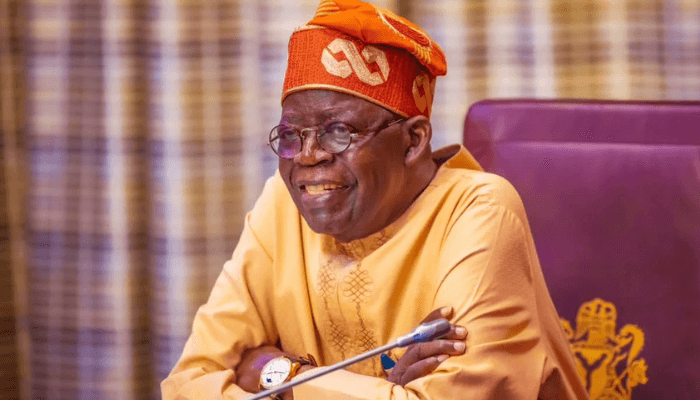
Why Tinubu sacked service chiefs — Presidency

Published

on

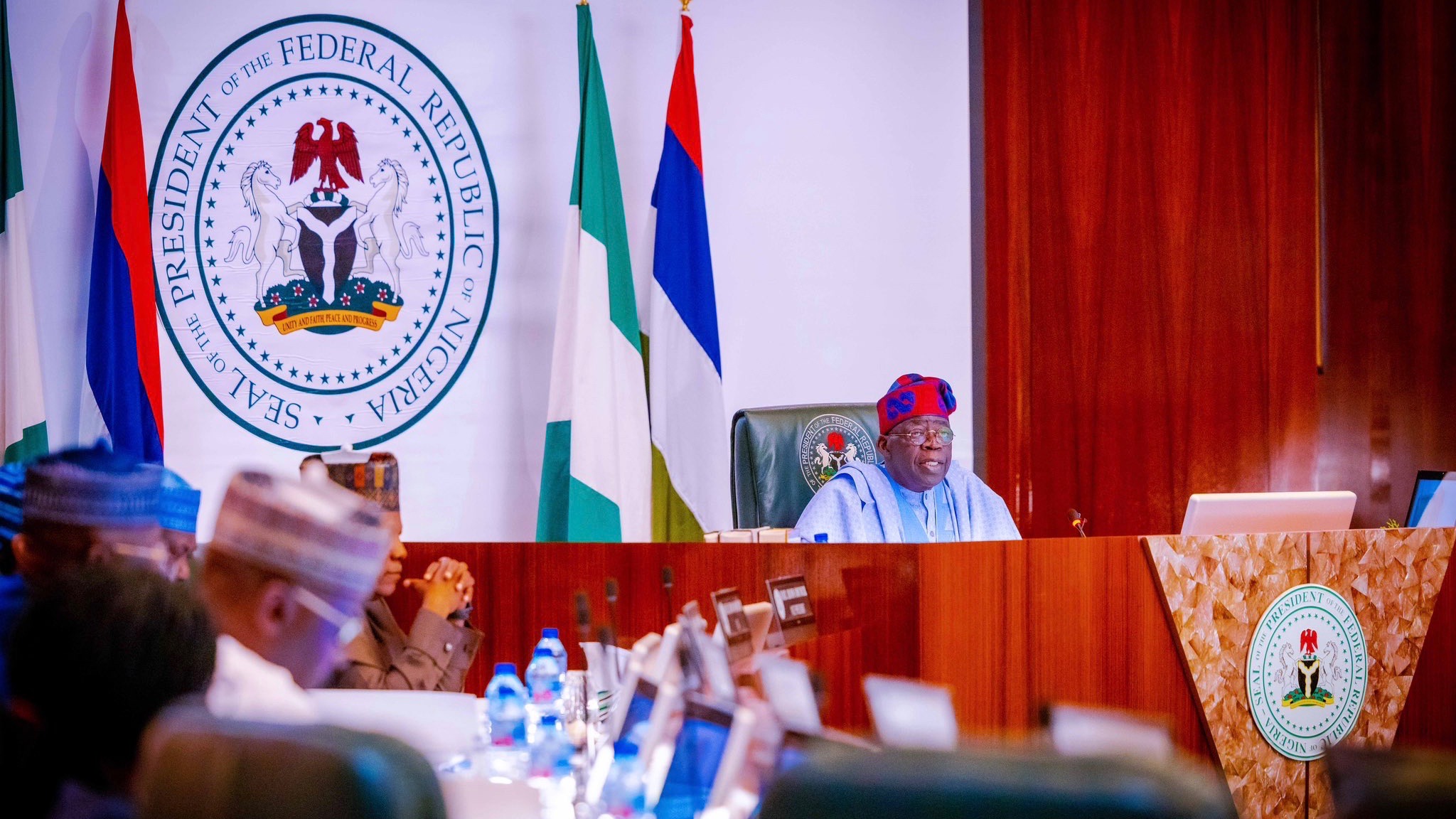
The Presidency has given further insight into the reason for the sacking and replacement of service chiefs in the country.

While denying that the military shake-up was connected to a rumored coup plot, the Presidency said it was a move to “inject new direction” into the armed forces.

The Special Adviser to the President on Information and Strategy, Bayo Onanuga, told Saturday PUNCH that Tinubu acted within his authority to make leadership changes in the military.

“Service chiefs can be hired and fired by the President. He is the Commander-in-Chief. He has the power to hire and fire,” Onanuga said.

Earlier on Friday, the President had announced sweeping changes in the military hierarchy.

A statement by the Special Adviser to the President on Media and Public Communication, Sunday Dare, named General Olufemi Oluyede as the new Chief of Defence Staff, replacing General Christopher Musa.

It added, “The new Chief of Army Staff is Major-General W. Shaibu; Air Vice Marshall S.K. Aneke is Chief of Air Staff; while Rear Admiral I. Abbas is the new Chief of Naval Staff. Chief of Defence Intelligence, Major-General E.A.P. Undiendeye, retains his position.”

Tinubu charged the new service chiefs to justify the confidence reposed in them by enhancing the professionalism, vigilance, and comradeship that define Nigeria’s Armed Forces.

The appointments, Dare said, took immediate effect.

The development came barely a week after an online media platform, Sahara Reporters, published a story alleging that some military officers plotted to remove President Tinubu.

The report, which went viral on October 19, linked the detention of 16 military officers to the purported coup and claimed that the cancellation of the Independence Day military parade was part of efforts to suppress internal unrest in the military.

However, the Defence Headquarters denied the story.

In a statement signed by the Director of Defence Information, Brig. Gen. Tukur Gusau, the military dismissed the report as “false and intended to cause unnecessary tension and distrust among the populace.”

Gusau said the cancellation of the Independence Day parade was “purely administrative” and that the detained officers were being investigated for “issues of indiscipline.”

He maintained that the armed forces remained loyal to the Constitution and to the President.

See also  Attempted Coup in Benin Republic as military attacks President Talon’s residence, seizes national TV

Still, the timing of the service chiefs’ removal — barely days after the coup report — has continued to fuel public suspicion.

Why Tinubu sacked service chiefs — Presidency

Reacting to the speculation, the Senior Special Assistant to the President on Media and Publicity, Tope Ajayi, explained that the move followed two years of sustained operations under the previous chiefs.

He noted that the move reflected the President’s desire “to inject new direction, vision, vigour and energy” into the military.

“This is not a reaction to any rumour of coups. He is exercising his powers. The service chiefs have done two years,” Ajayi told Saturday PUNCH.

“We are fighting security issues — Boko Haram in the North-East, banditry in the North-West, IPOB and ESN in the South-East, kidnapping in the South-West, and other crises in the North-Central,” he added.

Ajayi emphasised that the President’s action was lawful.

He further noted that the country’s heavy security spending in recent years had drained funds from other key sectors.

“In the last 15 years, look at our national budget — security taking the largest chunk. The President wants to deal with this matter once and for all, so that the money going into defence expenditure will be better deployed to fund critical infrastructure like power, roads, broadband, education, and healthcare,” he said.

Ajayi added that the President’s decision was consistent with the constitutional provision that all appointees serve at the President’s pleasure.

“Every appointee of government, whether you are minister, head of agency, or service chief, serves at the pleasure of the President. Nobody has a secure tenure. The only two people in the Federal Government who have a guarantee of tenure are the President and the Vice President,” he explained.

Public suspicion persists

Despite the explanations, speculations linking the shake-up to the rumoured alleged coup plot have continued to grow.

A senior security operative in one of the intelligence agencies told Saturday PUNCH that people connecting the change of service chiefs to the rumored coup attempt “have a point.”

“Information about the matter is not something you can easily get. The official statement of the military is that there was nothing like a coup attempt, and we stay with that.

See also  Retirement Benefits: Service Chiefs To Go Home With Bulletproof SUVs, Prado Jeeps, $60,000 For Medicals (PHOTOS)

“However, those trying to connect the removal of the service chiefs to the denied coup plot also have a point. People will definitely add two and two together and form their opinions,” he said.

On X, Nigerians also drew connections between the timing of the announcement and the reports of arrests within the military.

Ikechukwu Ude said, “There were rumours of a military coup last week, and today some of the military service chiefs were sacked. That the rumour was debunked, but it seems to be true right now from the sack of service chiefs! No civilian with zero capacity can stop military generals if they intend to change any government.”

Another Nigerian, Muduwa Kerra, said the removal of the service chiefs signified how close the country was to a coup.

Similarly, Abraham Uyanna queried, “If there wasn’t an attempted coup, why is there a sudden change of service chiefs?”

ADC demands answers

Meanwhile, the African Democratic Congress has urged President Tinubu to explain the replacement of the nation’s military leadership.

In a statement issued on Friday by its National Publicity Secretary, Bolaji Abdullahi, the party said, “We note that nearly all the service chiefs that have been removed were appointed only 28 months ago, with the current Chief of Defence Staff himself appointed just a year ago as Chief of Army Staff.

“We also note that this kind of decision has serious and far-reaching implications for stability within the ranks and therefore could not have been taken without strong reasons. Our position remains, therefore, that the Federal Government owes Nigerians a categorical explanation about what truly happened.

“As an opposition political party, our interest remains the stability of our country and our democracy. In the light of developments in our neighbourhood of Chad and the Sahel States, we are gravely concerned.”

The ADC observed that the near-total overhaul of the nation’s military leadership was more likely to fuel rumours and conspiracy theories rather than dispel them.

Mixed reactions trail appointments

Also, security experts expressed mixed reactions to the changes.

A former Director of Legal Services at the Nigerian Army, Col. Yomi Dare (retd), described the appointment of the new service chiefs as a morale booster.

See also  Nigeria exits global money-laundering watchlist

He said, “There is no security implication other than that the outgone officers have done their bit. The new service chiefs, by virtue of their appointment, must now be motivated to work effectively. They should assess what their predecessors achieved and, in unspoken words, learn from what they did and failed to do.”

Similarly, a former Director of the Department of State Services, Mike Ejiofor, noted that while the President had the constitutional power to make such changes, the real challenge remained funding and operational conditions.

“For me, changing the service chiefs might not necessarily change anything because they have all been working under very difficult situations,” he said.

“We should also not forget that they are operating under serious financial constraints. People say this year’s budget is the highest in terms of defence, but has it been implemented? The funds have not been released, so they are working in a very tough environment.”

Ejiofor urged the Federal Government to prioritise the release of funds and strengthen coordination among the agencies.

“A foundation has already been laid by the former service chiefs, so the new ones should consolidate on the gains made by their predecessors,” he advised.

On his part, security analyst Akogun-Abudu Oluwamayowa faulted the timing and necessity of the overhaul.

“What is happening in this country in terms of insecurity is not about changing the service chiefs. One of the problems we are facing is that we do not have perimeter fencing. People from other countries come into our country without barriers, wreaking havoc. The change may not be effective when major issues are not tackled,” he said.

He urged the new chiefs to prioritise the welfare of soldiers.

“The best welfare for soldiers is not training but their well-being. Their salaries are not even enough. These people are really suffering. I advise that these new service chiefs fight for the soldiers and pay attention to their welfare,” he said.


Continue Reading
Click to comment

Leave a Reply

Your email address will not be published. Required fields are marked *

News

South Africa must end humiliation, attacks on Nigerians – Shettima

Published

on

Vice President Kashim Shettima on Monday declared that Nigeria would no longer tolerate the dehumanisation and mistreatment of its citizens in South Africa.

He warned against the recurring xenophobic and Afrophobic attacks.

He disclosed this when he departed Luanda, Angola, for Nigeria after representing President Bola Tinubu at the 21st Extraordinary Session of the Assembly of Heads of State and Government of the African Union.

Speaking to newsmen in Luanda shortly before his departure, Shettima said the pattern of attacks had crossed a line Nigeria was no longer willing to accept quietly.

Senior Special Assistant to the VP on Media and Communications, Stanley Nkwocha, revealed this in a statement he signed Monday afternoon titled ‘VP Shettima: Why South Africans Must Rethink Xenophobic, Afrophobic Attacks.’

“The government and people of Nigeria will no longer countenance a situation whereby our people are dehumanised and put into very, very unacceptable situations,” Nkwocha quoted the VP as saying.

He invoked Nigeria’s historical role in Southern Africa’s liberation struggle to underline his point, saying, “Those whose palm kernels were cracked by benevolent spirits should learn to be humble.

“We were part of the struggle for the liberation of our brothers and sisters in Southern Africa, and we feel personally pained that our people have been picked up for humiliation.”

The Vice President said Nigeria’s preferred approach remained dialogue rather than confrontation, though he made clear that restraint had limits.

According to him, “We believe in having very robust conversations with our South African brothers.

See also  PHOTOS: Army rescues abducted lieutenant colonel and civilian after 10-day search operation in Enugu

“We don’t want to overheat the polity, but once in a while, you have to make it very clear, vehemently clear, that certain situations are unacceptable, and we’ll work things out.”

While condemning the attacks, Shettima urged South African authorities to protect lives and uphold human dignity in the enforcement of the country’s immigration policies.

His comments followed a message delivered on Tinubu’s behalf at the same summit, in which Nigeria formally reported the recurring attacks to the African Union and requested that the matter be placed on the agenda of the AU’s 40th Ordinary Session scheduled for January 2027.

He also described the incidents as a threat to African solidarity, unity and peaceful coexistence.

The Vice President has since arrived in Nigeria after the summit.

Source: punchng.com

FOLLOW US ON:

FACEBOOK

TWITTER

PINTEREST

TIKTOK

YOUTUBE

LINKEDIN

INSTAGRAM

Continue Reading

News

Police tear-gas elderly pensioners, Falana demands justice

Published

on

Tear gas reportedly disrupted a pensioners’ protest in Alausa, Lagos, on Monday, prompting human rights lawyer Femi Falana (SAN) to demand the arrest and prosecution of the officers involved.

The pensioners had gathered at the Lagos State Government Secretariat and the House of Assembly complex to press for outstanding pension adjustments and wage awards before the police intervention dispersed the protest.

The development came amid a prolonged dispute between retired Lagos public servants and the state government over pension increases, consequential adjustments and wage awards which the retirees say remain unpaid.

The pensioners are, however, expected to meet Governor Babajide Sanwo-Olu later in the week, after the protest reportedly attracted the attention of the Governor’s Office. The proposed meeting is expected to provide an opportunity for the retirees to present their demands directly to the governor and seek a resolution to the outstanding issues.

But the deployment of tear gas has shifted attention to the conduct of the police, with Falana arguing that the pensioners were exercising a constitutionally protected right to peaceful assembly.

In a statement on Monday, Falana condemned the disruption and called on the Inspector-General of Police to identify and prosecute the officers responsible.

He said the Court of Appeal judgment in Inspector General of Police v All Nigerian People Party (2008) affirmed the right of Nigerians to organise rallies and demonstrations without first obtaining a police permit.

Quoting the judgment, Falana said Adekeye JCA held that: “A rally or placard carrying demonstration has become a form of expression of views on current issues affecting government and the governed in a sovereign state.

“It is a trend recognised and deeply entrenched in the system of governance in civilised countries – it will not only be primitive but also retrogressive if Nigeria continues to require a pass to hold a rally.

See also  Impeachment move against Fubara not influenced by Wike – Rivers lawmaker

“We must borrow a leaf from those who have trekked the rugged path of democracy and are now reaping the dividend of their experience.”

Falana further argued that the legal framework governing the police imposed an obligation on officers to protect peaceful gatherings rather than disperse them.

He cited Section 4 of the Nigeria Police Force Establishment Act 2020, which, according to him, requires the police officer responsible for an area where a rally, meeting or procession is taking place to mobilise personnel to provide security for the gathering.

“The violent disruption of the peaceful rally of pensioners at Alausa, Ikeja, Lagos State is a complete violation of the rights of the protesters to assemble and protest against the failure of the Lagos State Government to pay their pension as and when due,” Falana said.

He described the police action as “a provocative breach” of Section 83(4) of the Police Establishment Act, insisting that the officers could not justify the use of force against retirees exercising their right to protest.

“We call on the Inspector-General of Police to arrest and prosecute the police officers who violently disrupted the peaceful rally and thereby inflicted intentional physical bodily injury on the protesters without any legal justification whatsoever,” he said.

The Chairman of the Lagos State chapter of the Nigeria Union of Pensioners Contributory Pension Scheme, Michael Omisande, who spoke with The PUNCH after the protest, said the demonstration recorded participation by several hundreds of retirees and had achieved its immediate objective despite the disruption.

He said representatives of the Lagos State Commissioner of Police later met with the pensioners and apologised for the disarray that followed the police intervention.

According to him, the governor, who was out of Lagos, also sent his Chief of Staff to meet with the protesters.

The Chief of Staff, he said, held what he described as a compassionate discussion with the pensioners and asked them to return to Alausa on Thursday for a meeting with Sanwo-Olu over their outstanding demands.

The development comes as the National Pension Commission opened discussions with the Lagos State Government and the Lagos State Pension Commission to address concerns over delayed pension increases and wage awards for retirees under the Contributory Pension Scheme.

See also  Retirement Benefits: Service Chiefs To Go Home With Bulletproof SUVs, Prado Jeeps, $60,000 For Medicals (PHOTOS)

PenCom disclosed this in a statement issued on Monday following concerns raised by pensioners in Lagos State over delays in implementing approved adjustments to their retirement benefits.

The commission said it recognised the financial importance of ensuring that retirees received all benefits due to them and acknowledged concerns arising from delays in implementing pension adjustments.

“PenCom recognises the importance of ensuring that retirees receive all benefits legitimately due to them and appreciates the concerns arising from delays in the implementation of any approved pension adjustments,” the statement said.
According to the pension regulator, engagements are ongoing with the Lagos State Government and LASPEC over the administration of pensions under the CPS, particularly the extension of appropriate adjustments to eligible retirees.

“PenCom has engaged with the Lagos State Government and the Lagos State Pension Commission on matters related to administering pensions under the CPS, including the need to extend appropriate pension adjustments to eligible CPS retirees,” it stated.

The development comes amid concerns among Lagos retirees over the implementation of pension increases and wage awards, with affected pensioners seeking clarity on when adjustments would be reflected in their benefits.

PenCom explained that implementing pension increases under the CPS required several processes before payments could be made.

It listed the processes to include establishing which retirees qualified for the adjustments, determining the applicable increases, calculating the actuarial liabilities arising from the changes and identifying funding requirements.

The process also requires the provision of relevant data and instructions to Pension Fund Administrators and other pension operators responsible for implementing the adjustments.

See also  Nigeria exits global money-laundering watchlist

“Implementing pension enhancements involves determining eligibility, applicable adjustments, actuarial liability, funding, and providing relevant data and instructions to the pension operators,” the commission explained.

It added that it was engaging relevant stakeholders to ensure that the outstanding processes were properly resolved.

The commission, however, did not provide a timeline for the conclusion of the engagements or indicate when affected retirees could expect the pension increases and wage awards to be implemented.

PenCom said resolving the matter would require collaboration among the state government, LASPEC, PFAs and pensioners’ representatives.

“PenCom will continue to work with the Lagos State Government, LASPEC, PFAs, and representatives of pensioners toward a transparent, orderly, and sustainable resolution of the issues,” the statement added.

The commission also reiterated its responsibility to protect workers and retirees participating in the pension system, saying it would continue to exercise its regulatory and supervisory powers to ensure that pension obligations were administered in accordance with existing laws.

“PenCom remains committed to protecting the interests of pension contributors and retirees and will continue to exercise its regulatory and supervisory mandate to ensure compliance with applicable pension laws and regulations,” it said.

Under the Contributory Pension Scheme, retirement benefits are funded through contributions accumulated in individual Retirement Savings Accounts and managed by licensed PFAs, while PenCom regulates and supervises the pension industry.

For state governments participating in the scheme, the payment of pension liabilities and implementation of benefit adjustments depend partly on the fulfilment of funding obligations by the respective governments.

Source: punchng.com

FOLLOW US ON:

FACEBOOK

TWITTER

PINTEREST

TIKTOK

YOUTUBE

LINKEDIN

INSTAGRAM

Continue Reading

News

Fake agency probe: FG restricts staff movement across MDAs

Published

on

The Federal Government has tightened its control over the deployment and redeployment of civil servants, directing Ministries, Departments and Agencies to stop moving officers from recognised professional pools without approval from the authorities responsible for their postings.

The directive by the Office of the Head of the Civil Service of the Federation comes as the administration of President Bola Tinubu intensifies its crackdown on fake government agencies, ghost workers and weaknesses in the Federal Government’s personnel and institutional control systems.

The OHCSF, in a circular dated August 24, 2026, with reference number HCSF/3065/V.I/275, warned that officers posted to MDAs from recognised professional pools must remain in their approved offices, departments, divisions, units or sections unless their deployment is reviewed and approved by the relevant authority.

The circular was addressed to the Chief of Staff to the President, ministers, the Secretary to the Government of the Federation, permanent secretaries, service chiefs, the Inspector-General of Police and heads of major Federal Government institutions and agencies.

The OHCSF said it had observed that some MDAs were disregarding existing rules by moving officers posted to them from professional pools without securing approval.

“The Office of the Head of the Civil Service of the Federation has observed that some Ministries, Extra-Ministerial Departments and Agencies have continued to redeploy officers posted to them from the professional pools of the OHCSF and other recognised pool offices without the approval of the relevant posting authorities,” the circular stated.

It said the practice was contrary to the provisions of an earlier Circular Ref. No. HCSF/3065/VI/218 dated January 2, 2025, on the prohibition of internal redeployment of pool officers within MDAs.

The latest directive is coming at a particularly sensitive time for the Federal Civil Service, following investigations into how purported government bodies were able to acquire the appearance of official legitimacy and allegedly interact with government institutions.

President Bola Tinubu on August 28 approved a comprehensive forensic audit of the Integrated Personnel and Payroll Information System, Federal Government agencies, ministries and their internal controls.

According to the Presidency, the exercise followed the August 19 Federal Executive Council resolution on findings by the Independent Corrupt Practices and Other Related Offences Commission concerning fake agencies, ghost workers and other control failures.

See also  Attempted Coup in Benin Republic as military attacks President Talon’s residence, seizes national TV

The audit will examine how fictitious or ineligible persons were enrolled on government systems, as well as identity, biometric and bank-account controls.

It will also establish a definitive inventory of Federal Government agencies, departments, commissions, councils, parastatals and other bodies and verify their legal basis and how they obtained official recognition, budgetary consideration, office facilities and access to government systems.

The development gives added significance to the OHCSF circular, which seeks to establish a clearer chain of authority over who can deploy, move and supervise professional officers within the Federal Civil Service.

Under the circular, permanent secretaries may deploy or redeploy only officers on the local staff establishment of their respective MDAs to areas where their services are required for effective and efficient service delivery.

However, officers posted to an MDA by the OHCSF or another recognised professional pool are subject to a different rule.

The circular stated, “Officers posted to Ministries, Extra-Ministerial Departments and Agencies by the OHCSF or any other recognised professional pool shall remain in the offices, departments, divisions, units or sections to which they were specifically posted, in accordance with their posting instructions.”

It added, “Such officers shall not be redeployed internally without the prior approval of the relevant posting authority.”

The OHCSF, however, made a qualification for officers on Grade Level 07 to 14 who are posted to fill vacancies in departments.

According to the circular, such officers may be deployed internally to divisions, units and sections where vacancies exist, provided such deployment remains within the scope of their respective pools or cadres.

The directive also provided a procedure where operational circumstances make a change necessary.

The circular stated, “Where operational exigencies necessitate any review of such postings, the matter shall be referred to the appropriate posting authority for review and necessary approval.”

It ended with a firm instruction to all affected authorities: “Please ensure strict compliance.”

The circular also provided a detailed breakdown of the professional pools and the authorities responsible for managing them.

See also  Obasanjo reveals why NNPC refineries will never work again; read details

Under the Office of the Head of the Civil Service of the Federation, the recognised cadres include Administrative Officers, Executive Officers (General), Store Officers, Stock Verifier Officers, Confidential Secretaries, System/Programme Analysts, Statistical/Data Processing Officers and Library Officers. These officers are managed by the Permanent Secretary, Career Management Office of the OHCSF.

At the Federal Ministry of Justice, the recognised pool consists of State Counsels, with the Solicitor-General/Permanent Secretary serving as the managing authority.

The Bureau of Public Procurement manages the professional pool of Procurement Officers, under the authority of the Director-General of the Bureau.

The Federal Ministry of Information and National Orientation manages the pool of Information, Press and Public Relations Officers, under its Permanent Secretary.

At the Office of the Accountant-General of the Federation, the recognised cadres are Account Officers and Executive Officers (Accounts), with the Accountant-General of the Federation as the managing authority.

The Office of the Auditor-General for the Federation manages the pool of Resident Auditors, under the Auditor-General for the Federation.

The circular also recognised any other duly recognised professional pool office, with the applicable cadre and managing authority.

The detailed listing underscores the fact that professional officers posted to MDAs are subject to defined administrative structures and cannot simply be moved from one establishment to another at the discretion of individual officials.

The latest directive follows a series of revelations surrounding purported government agencies.

In July, President Tinubu ordered the ICPC to investigate the Presidential Foreign Intervention Promotion Council, after the Presidency declared that the body was fictitious and had never been established by the Federal Government.

The ICPC’s subsequent investigation found that the purported council had no legal basis and that the appointment letter used by its promoter was forged.

The investigation also raised questions about how the organisation was able to operate around government structures and allegedly obtain access to official processes.

The controversy widened on August 21 when the ICPC announced the discovery of another purported federal agency, the National Brands Development and Made in Nigeria Special Project Office.

See also  Army Speaks On Abduction Of Brigade Commander In Borno

The commission alleged that the organisation was promoted by George Nwabueze with the suspected involvement of senior public servants in the Office of the Secretary to the Government of the Federation.

Tinubu subsequently ordered the promoter’s arrest and the suspension of three permanent secretaries in the OSGF.

The revelations have raised broader questions about how purported government agencies obtain office accommodation, correspondence privileges, budgetary recognition, access to government systems and, potentially, personnel.

The Federal Government’s comprehensive forensic audit is therefore expected to go beyond identifying individual cases and examine systemic weaknesses in personnel and institutional management.

The Presidency said the exercise would examine the interfaces between IPPIS and other government platforms, including the Government Integrated Financial Management Information System, Remita, the Treasury Single Account and Sub-Treasury Single Account.

It will also determine whether weaknesses resulted from system defects, process failures, inadequate segregation of duties or deliberate circumvention.

The Presidency said the audit is expected to “strengthen the architecture of Government, close systemic loopholes, improve data verification and reconciliation, reinforce accountability, and ensure that only duly constituted entities and eligible personnel have access to Government resources.”

Against this backdrop, the OHCSF’s latest circular provides another layer of administrative control by requiring that the movement of professional pool officers be traceable to an authorised posting authority.

It also places responsibility on permanent secretaries and heads of MDAs to ensure that officers are not arbitrarily moved away from their approved postings.

While the circular does not specifically state that it was issued because of the fake-agency investigations, its emphasis on approved establishments, recognised professional pools, authorised posting authorities and strict compliance comes as the Federal Government moves to close the institutional loopholes exposed by the scandal.

The directive effectively seeks to ensure that civil servants cannot be moved into unauthorised establishments through informal administrative arrangements, while making the relevant professional pool authorities the gatekeepers of such deployments.

Source: punchng.com

FOLLOW US ON:

FACEBOOK

TWITTER

PINTEREST

TIKTOK

YOUTUBE

LINKEDIN

INSTAGRAM

Continue Reading

Trending