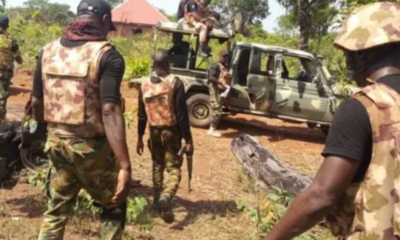
In response to the escalating security crisis in the region, the 19 Northern governors have scheduled an emergency meeting for November 29, 2025, to be held in Kaduna State.
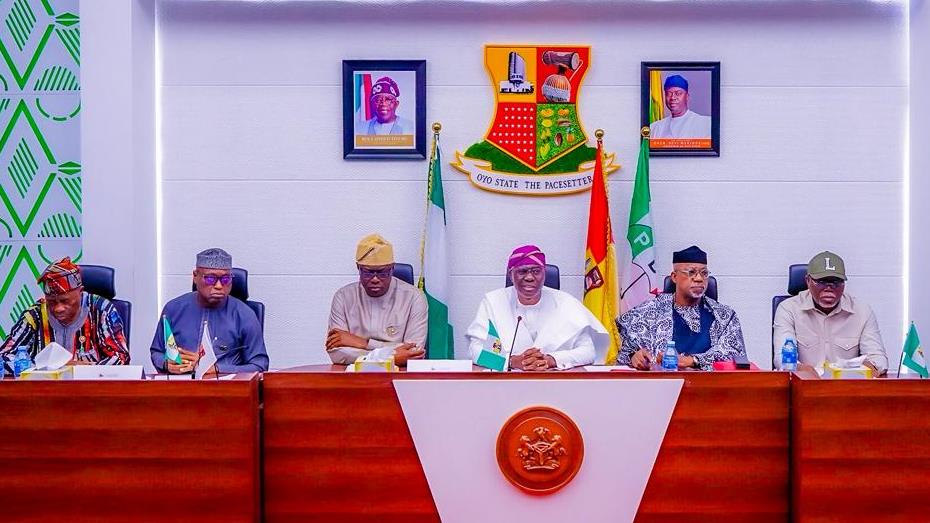
The planned meeting is coming on the heels of a parley by the South-West governors, which took place at the Oyo State Governor’s Office in Ibadan, on Monday.
The South-West governors resolved that it was time for the creation of state police to address the growing incidents of bandit attacks.
The Senior Special Assistant to Governor Abdullahi Sule of Nasarawa State, Peter Ahemba, confirmed Saturday’s meeting by the Northern governors to our correspondent in Lafia, the state capital, on Monday, as concerns spiked over the closure of schools by the authorities.
Ahemba explained that the northern governors’ meeting would deliberate on concrete steps that could be taken to address the rising wave of kidnapping, banditry, and other forms of security threats in the zone.
In recent times, the Northern region has witnessed an increase in attacks on educational institutions, prompting several state governments to temporarily close schools.
Last week, armed attackers raided the Government Girls Comprehensive Secondary School in Maga, Kebbi State, abducting at least 24 schoolgirls and killing the vice principal.
A few days later, gunmen attacked St. Mary’s Catholic Primary and Secondary Schools in Papiri, Niger State, where they seized over 300 students and staff, though 50 students later escaped.
Speaking with The PUNCH, the governor’s aide stated, “The Northern Governors have fixed a meeting for Kaduna on November 29 to discuss the rising wave of insecurity in some parts of the country, especially within the northern part of the country.
“So, the meeting is expected to deliberate on concrete steps that could be taken to address the rising wave of kidnapping, banditry, and other forms of security threats in some parts of the country.
“For Nasarawa State, His Excellency, the Governor, who happens to be the Chairman of the North Central Governors Forum, had to cut short his trip from the G20 Summit that is going on in South Africa, to come back immediately and attend to the security challenges in some states of the northern part of the country.’’
He added, “In line with that, His Excellency had to convene yet another emergency security meeting this afternoon, being Monday, the 24th of November 2025. So, the meeting deliberated on how to prevent the escalation of insecurity, the banditry activities that are being witnessed in some parts of the country, to strengthen surveillance measures and also enhance the support to security agencies to effectively tackle any eventual situation that may occur.
“So far so good, these are the efforts being made by both the Northern Governors Forum and Nasarawa State as a government.”
Responding to a question on what was being done to address insecurity in the state, Ahemba stated, “I can assure you that every necessary measure is being put in place. The government is on a red alert. The security agencies are on red alert because of what is happening within the neighbourhood. So, the government is not resting, and I can assure you that the security agencies are well equipped to respond.’’
Rising from their meeting convened to bolster security in their region, the South-West governors called on the Federal Government to urgently secure the forest across the region and vast forest belts that have become hideouts for the criminal elements.
Governors Babajide Sanwo-Olu (Lagos), Dapo Abiodun (Ogun), Seyi Makinde (Oyo), Lucky Aiyedatiwa (Ondo) and Biodun Oyebanji (Ekiti) were personally in attendance, except Ademola Adeleke of Osun state, who was represented by his deputy.
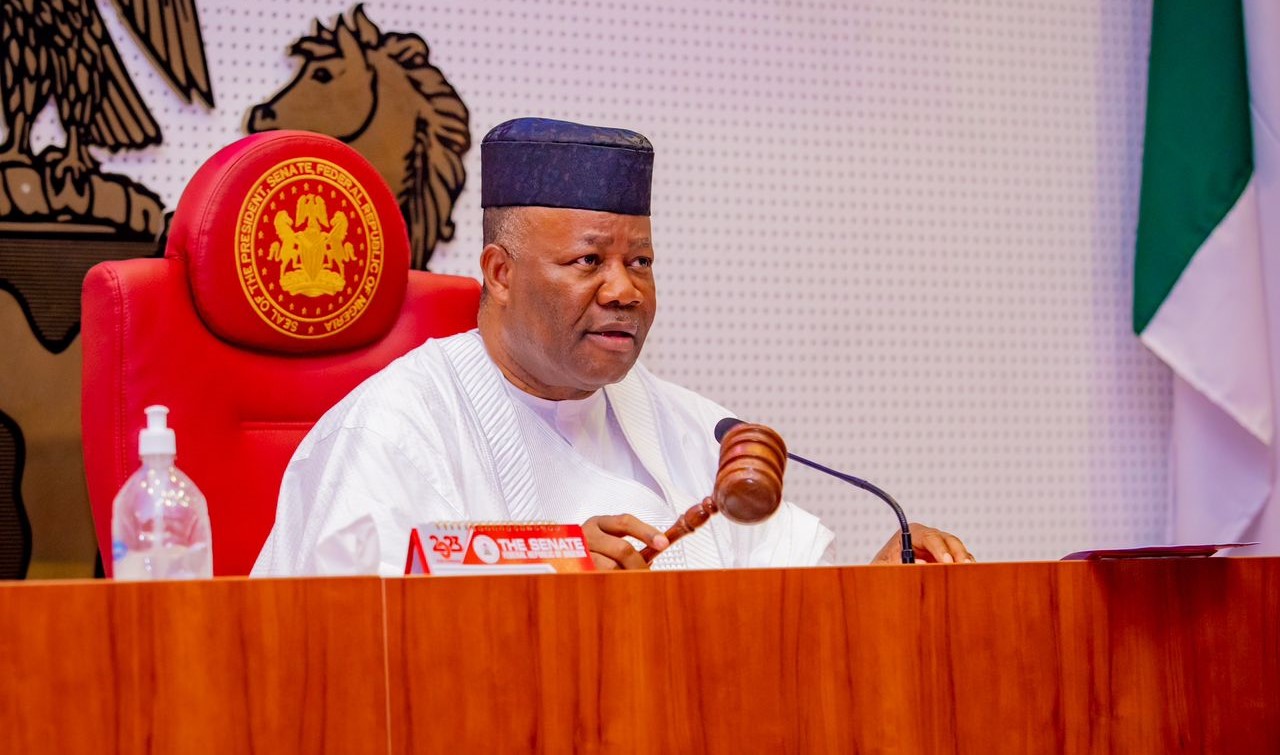
Reading the communique after the meeting, Governor Sanwo-Olu said the forum reviewed the current state of security in the region and reaffirmed its support for the establishment of state police, emphasising that “The time is now and it can no longer be delayed.’’
The governors also called on all the South-West people to remain united and committed to the peace that exists in the region, adding that “We remain one, indivisible entity that will continue to enjoy and guard the religious tolerance that we have always been known.’’
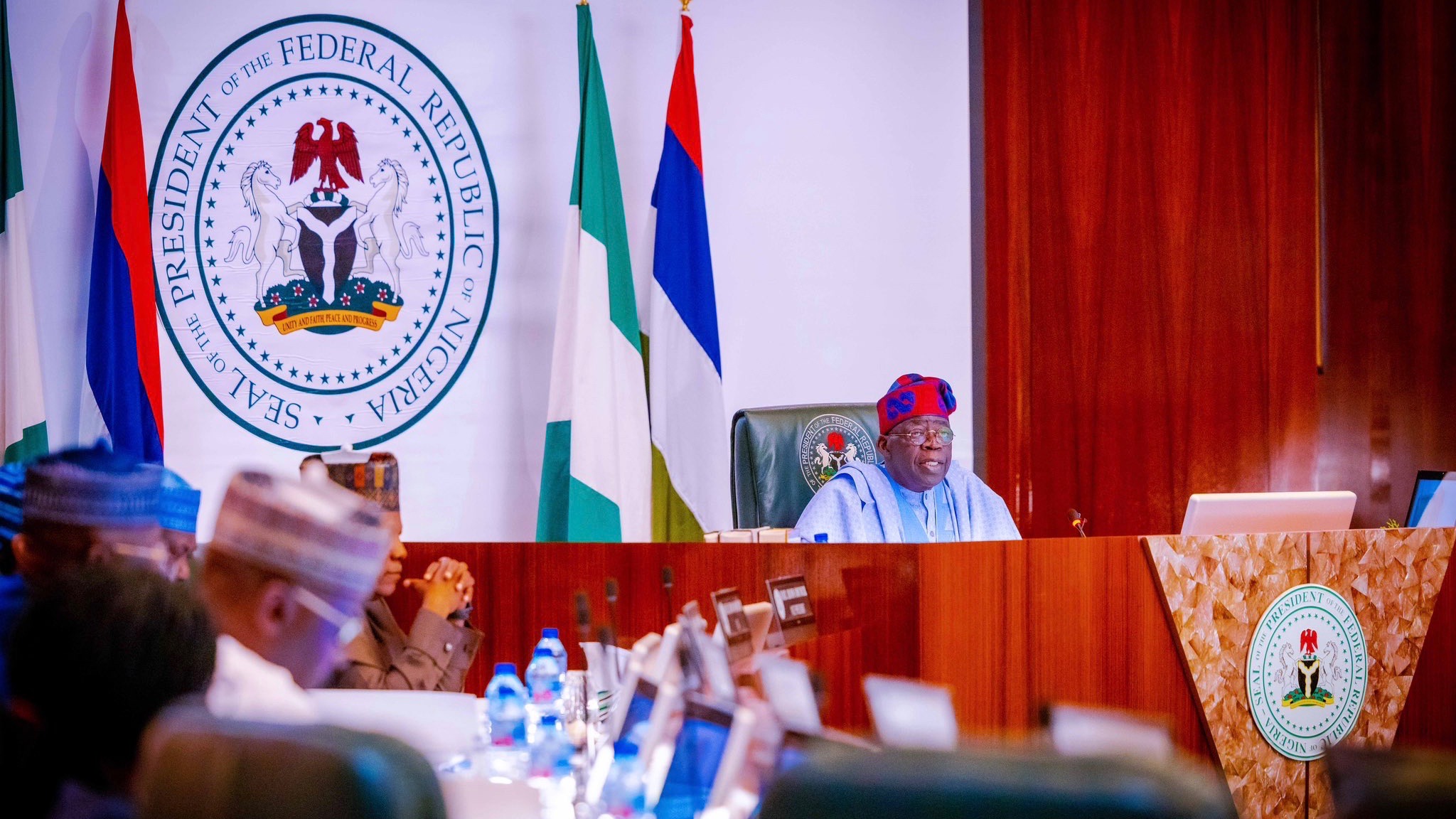
“The forum commends President Bola Tinubu on the fight against insecurity and various economic reforms and other developmental agenda. The forum expresses solidarity with the Federal Government in its efforts in Kebbi, Kwara and Niger States after the recent spate of kidnappings, at the Government Girls Comprehensive Secondary School in Maga town, the Catholic institution of St. Mary’s in Papiri, Agwara LGA, Niger and the CAC Church at Eruku, Kwara State.
“The forum applauds the swift response of the Federal Government towards the rescue of the Kwara abductees and more than 51 students of the Catholic School, Niger State. The forum reviewed the current state of security in our region and took some decisions to ensure the security of the lives and property of our people.
‘’South West Regional Security Fund: The forum agreed to set up a South West Security Fund under DAWN Commission to be administered by the Forum of Special Advisers on Security of all South West States.
“Joint Security Intelligence Sharing and Communication Platform: The forum resolves to establish a live, digital intelligence-sharing platform among all six South West states (Lagos, Ogun, Oyo, Osun, Ondo, Ekiti). This platform will exchange threat notifications, incident logs, traveller and cargo alerts and coordinate state-to-state rapid response.”
On forest surveillance, the governors commended the efforts of the Nigerian Security and Civil Defence Corps, Hunters, Amotekun Corps members and all the other security agencies.
“The Forum calls on the Federal Government to note the urgent need for enhanced forest surveillance across the South West States and calls for the Federal Government to secure the vast forest belts that have become hideouts for criminal elements.
“To this end, the forum agrees that the Federal Government should help deploy Forest Guards across the South West states, with each State Government responsible for providing the required personnel.”
The governors reaffirmed their collective commitment to reclaiming the forests and ensuring that the spaces no longer serve as safe corridors for banditry, kidnapping, or any form of criminal activity.
They said, “On interstate migration, the forum expresses deep concern about the unregulated interstate migration that continues to pose significant challenges across the South-West. The forum calls for stricter border monitoring, data collection and self-identification and for each South West State to work with the National Identity Management Commission for proper identification.
“The Forum agrees to intensify security collaboration to ensure that interstate migration does not become a conduit for insecurity. Illegal Mining Activities: The forum expresses deep concern over the escalating illegal mining activities across the South-West States, which continue to threaten environmental safety, public health and regional security: The forum calls for a comprehensive and enforceable licensing framework, strengthened monitoring mechanisms, and strict enforcement actions against violators who may perpetrate violent crimes under the guise of mining.”
“On agriculture, food security and climate resilience, the forum acknowledges and appreciates the efforts of the Federal Government in providing food sufficiency and, in particular, commends the various farmers in the region for the increase in agricultural output and subsequent stability and reduction in food prices.”
Meanwhile, Plateau State Governor Caleb Mutfwang is set to unveil a comprehensive plan to tackle insecurity in the state, according to his Special Adviser on Policy and Governance, Yiljap Abraham.
The development comes amid escalating security challenges in the state, which had compelled the government to shut down basic schools to prevent attacks by terrorist elements.
Abraham, who spoke with The PUNCH in Jos on Monday night, revealed that the governor has been engaging with security chiefs to address the security situation in the state, but he didn’t provide a specific timeline for the announcement.
“We must await him for that. We were expecting that it would come up today, but some other issues demanded his attention,” Abraham said.
However, he assured that Plateau is working closely with other states and the Federal Government to address the security challenges.
“Plateau State is not working in isolation. It is working with other states and will continue to work hand in hand, especially with the federal government, to address the security challenge facing the state,” Abraham emphasised.
In a bid to address the security situation in the state, the Kebbi State Government said it has held a series of security summits to strengthen security.
The Chief Press Secretary to the state governor, Ahmed Idris, noted, “We held a security summit where all the traditional rulers from the Northern region converged here for about three days.
“We also hosted one a few weeks ago when Northern broadcasters spent about three days here discussing security issues.’’
Speaking in an interview with our correspondent, Governor Abba Kabir Yusuf’s spokesperson, Mustapha Muhammad, said Kano State is taking independent and proactive measures to strengthen internal security, including boosting the mobility and operational efficiency of security agencies.
According to him, Governor Yusuf recently approved the allocation of 10 vehicles and 50 motorcycles to the Joint Task Force operating in frontline councils affected by pockets of insecurity.
The intervention, he said, was aimed at enhancing response time and supporting coordinated security operations in Kiru, Tsanyawa, Kunchi, Ghari, Shanono, Tudun Wada, and Doguwa Local Government Areas.
In a bid to prevent the abduction of students, the Bauchi State Government has announced the immediate closure of all schools across the state following heightened security concerns.
The directive affects all primary, secondary and tertiary institutions, including Federal Government-owned and private schools operating within the state.
This was contained in a statement issued on Sunday by the Information and Public Relations Officer of the Bauchi State Ministry of Education, Jalaludeen Usman.
According to him, the decision was reached after extensive consultations and in response to what he described as “overwhelming security concerns affecting the safety of students, teachers and school communities across the state.”
He stated, “This decision, though difficult, was taken by the Government of Bauchi State after extensive consultations and in response to overwhelming security concerns. The government is fully aware of the inconvenience this may cause. However, the protection of our children remains our highest moral responsibility. Every student in Bauchi State deserves to learn in an environment that is safe, stable and free of fear.”
Usman urged parents, guardians, school proprietors and other stakeholders to remain calm, adding that efforts were ongoing to address the situation.
“We therefore call on parents, guardians, school proprietors and all concerned stakeholders not to panic, but to remain calm and cooperative. The government is working closely with security agencies to address the concerns swiftly and comprehensively, ensuring that normal academic activities resume as soon as it is safe to do so,” he said.
The ministry also called on residents to be vigilant and report suspicious activities. “If you see something, say something. Timely information from the public is crucial in safeguarding our communities,” he added.
Usman assured that the government would continue to provide updates as the situation unfolded.
In compliance with the government’s directive, the Federal Polytechnic, Bauchi, has suspended all academic activities.
In an internal memo circulated to the Polytechnic community on Monday, Safiyo Yila, on behalf of the institution’s Registrar, confirmed the suspension.
The memo, addressed to all staff and students, cited the closure of primary, secondary, and tertiary institutions across the state due to security concerns as the reason for the action.
“Sequel to the public announcement by the Bauchi State Government, which directed the closure of all primary, secondary, and tertiary institutions within the state due to security concerns, I am directed to inform you that all academic activities have been suspended with immediate effect,” the memo read.
Yila further stated that academic activities would resume at a later date, which will be communicated to the Polytechnic community in due course.
The memo also urged heads of departments to ensure full compliance with the directive to safeguard the well-being of staff and students.
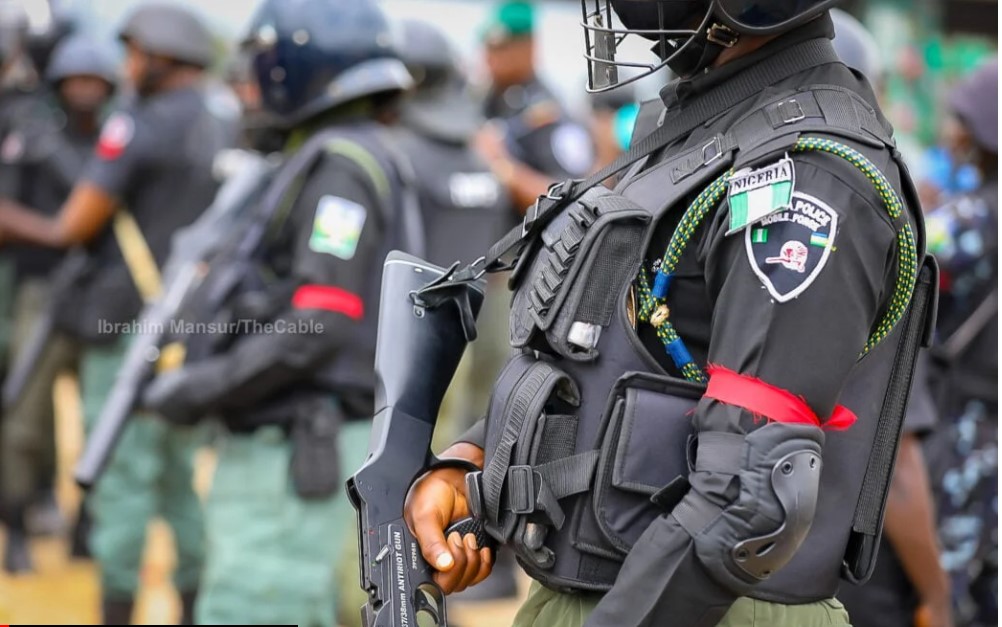
Amid growing concerns over reports of school abductions, the Gombe State Police Command said it has intensified security measures around schools across the state.
The renewed vigilance follows a strategic meeting held on Monday between the Commissioner of Police, Bello Yahaya, and the executive members of the All Confederation of Principals of Secondary Schools, Gombe State chapter.
In a statement signed by the Police Public Relations Officer, Buhari Abdullahi, the command said the engagement formed part of the Inspector-General of Police’s mission “to ensure the safety and security of Nigeria’s learning environments.”
According to the statement, the meeting was convened to “assess the existing security arrangements in schools across Gombe State and identify areas for improvement, especially in schools located in isolated areas or those considered vulnerable to security threats.”
Reaffirming the commitment of the Nigeria Police Force to the protection of educational institutions, the Commissioner of Police told the ANCOPSS executives that safeguarding students remains a top priority.
“Continuous assessment, proactive planning, and strong collaboration with school authorities and stakeholders are essential in addressing emerging security challenges,” Yahaya said.
The command disclosed that patrols, surveillance, and rapid response operations around schools have been intensified. “Special focus is being placed on vulnerable and isolated locations,” the CP assured.
He also stressed the importance of timely intelligence sharing, community policing, and effective communication channels between schools, the Ministry of Education, and Divisional Police Stations.
But speaking on the government’s decision, the Academic Staff Union of Universities on Monday decried the closure of schools by state governments over attacks by bandits.
The union also expressed displeasure at the inaction of the Federal Government in meeting some of its outstanding demands.
Speaking during the opening of the 2025 Harmattan School of the Nigeria Labour Congress, the National President of ASUU, Prof. Chris Piwuna, noted, “We have always been unhappy with the Federal Ministry of Education when they come out to say they’ve met all our demands. But I can see the grammar is changing a bit now. It’s almost all the demands, that’s what they’re saying now.’’
He adds, ‘’Education is under attack. It’s under attack by bandits in the bush and bandits in the government houses, mansions in city centres. So, while the bandits are attacking and killing us instantly, our leaders are attacking and killing education by instalment.”
Also speaking, the national president of the National Union of Teachers, Titus Amba, noted that the union will have no choice but to down tools in schools considered to be in volatile areas.
“Today, our school system is under threat. You can attest to the fact that most of the states are closing schools now, as is the case on the ground. We, as leaders of these teachers, are sending this message to the Federal Government that they should provide the necessary security that is supposed to be provided for our schools. Failure to do that will have no reason not to shut down all the schools that we feel are in a very volatile area because we can’t be teaching while our lives are at risk.”
Worried by the unfolding security situation, Amnesty International Nigeria warned that the wave of mass kidnappings targeting schools could severely derail educational progress across Northern Nigeria.
Country Director Isa Sanusi said the psychological impact of abductions—and even the fear of such attacks—will discourage countless children from attending school.
Speaking in an interview on Channels Television’s Sunrise Daily on Monday, Sanusi noted that rising insecurity is pushing parents to rethink the safety of sending their children to school as incidents of school kidnappings continue to escalate.
“The trauma that comes with being abducted, or with the fear of being abducted, is going to prevent thousands of children from getting an education completely,” Sanusi said.
He added that families in rural communities already struggle to keep their children in school due to economic pressures, and the current security challenges will worsen the situation.
He added, “We also have to consider the fact that in many rural areas, children play key roles in the household, so many parents already make significant sacrifices to allow their children to go to school.
“Now, with these failures, you are going to see a situation where education suffers even more setbacks, especially in Northern Nigeria. People will be scared of going to school, and parents will be more sceptical about allowing their children to attend.”
Sanusi cautioned that the unfolding situation could rob an entire generation of the right to education.
“When added to the more than 12 million children already out of school, the future looks grim and dangerous,” he added.
Weighing in on the worrying security situation, the Director-General of the National Orientation Agency, Mallam Lanre Issa-Onilu, says Nigeria’s lingering crises are rooted in a long-standing absence of a shared national identity, warning that the country continues to function as a collection of competing groups rather than a unified nation.
Speaking on Monday at the inauguration of a joint committee of the NOA and the National Universities Commission to embed national values in university curricula, the DG stated that Nigeria is paying the price for failing to build a collective sense of belonging since its independence.
According to him, recent conversations in the United States Congress about Nigeria’s instability underscore the consequences of ignoring identity formation for decades.
“The need for this has never been more pronounced than now that we have these challenges facing us in the country. At the centre of these challenges is the issue of a shared value system.
“I’m sure some of us have followed the recent debate in the US Congress on Nigeria, where the issue of a lack of national identity was emphasised as part of the reasons why Nigeria has found itself where we are today. So, it is important that we now take this issue very seriously. And it is something that this government should be commended for,” he said.
Meanwhile, Governor Nasir Idris of Kebbi State has called on President Bola Tinubu to urgently review Nigeria’s security architecture following last week’s abduction of schoolgirls from Government Girls Comprehensive Secondary School.
Idris made the appeal on Monday while receiving the Speaker of the House of Representatives, Tajudeen Abbas, who led a federal delegation to Birnin Kebbi to commiserate with the government and people of the state.
Abbas condemned the abduction, describing it as “a heartbreaking and totally unacceptable assault on our children.”
He said the House of Representatives stood firmly with the people of Kebbi State and urged the government to honour the slain Vice Principal.
“Malam Hassan Makuku died while protecting the children under his care. His sacrifice must never be forgotten.
“We appeal to the governor to immortalise him so future generations will know the price he paid,” the Speaker said.
Abbas announced a donation of N20 million to the family of the late Vice Principal and N10 million to the family of the slain watchman.
He also prayed for the safe return of the abducted students, saying, “We will not rest until every girl is brought home.”
In his response, the governor expressed appreciation for the visit, but maintained that he was still waiting for answers from the military regarding the security lapses that allowed the attack.
“There is no reason armed men should invade a school and escape without resistance. I know my earlier comments ruffled some feathers, but I owe the people of this state the truth. We have supported all security agencies, so when something goes wrong, our people deserve explanations,” the governor said.
He added that the attack was part of a wider threat to Nigeria’s stability.
“With what we are seeing recently, it is clear enemies are attempting to scuttle the democracy we enjoy. That is why I am calling on President Tinubu to review the security architecture of this country,” he said.
Idris also accepted the Speaker’s request to rename the school in honour of the late Vice Principal.
“Malam Hassan Makuku paid the ultimate price. We will rename the school to keep his memory alive,” he said.
In another development, Christian faithful across Borno state on Monday evening converged in Maiduguri to pray against the rising cases of attacks on residents across the state.
The worshipers who came out in numbers, representing various churches in the state, had a two-hour praise and worship session at First Baptist church in Maiduguri.
The spiritual exercise was organised in compliance with the announcement made by Governor Babagana Zulum on Saturday, when he urged worshipers across faiths to embark on a voluntary prayer and fasting session to seek divine intervention over the rising level of insecurity in the state and country.
In a related development, the Christian Association of Nigeria planned to organise a five-day crusade aimed at promoting peace and unity in Plateau State.
The event, dubbed “Jos Jesus Crusade,” will take place from December 17th to 21st, 2025, at St. John’s College, opposite the Polo Field, Jos.
Addressing a press conference in Jos on Monday, CAN Chairman,Rev Dunka Gomwalk, emphasised the need for Christians to come together and pray for the nation’s peace and unity.