Connect with us

Business

States to earn over N4tn yearly from VAT reforms

Published

on

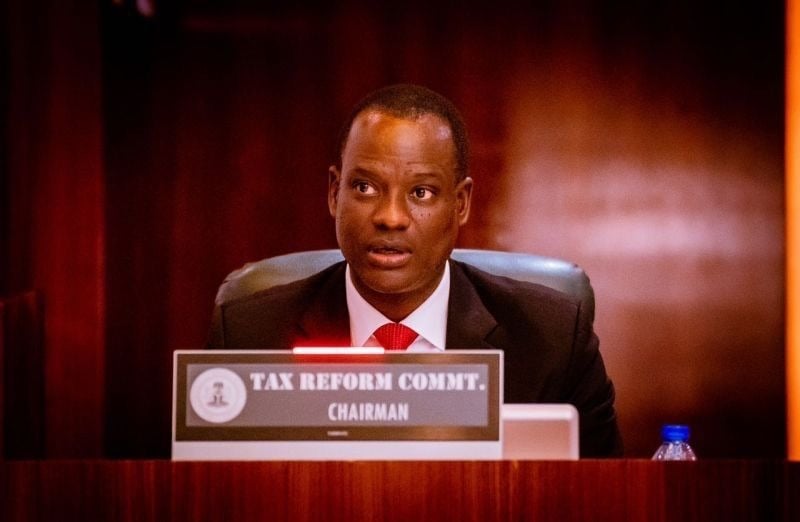
The Chairman of the Presidential Fiscal Policy and Tax Reforms Committee, Mr Taiwo Oyedele, has projected that states could earn more than N4tn annually from 2026, when new Value Added Tax reforms take effect.

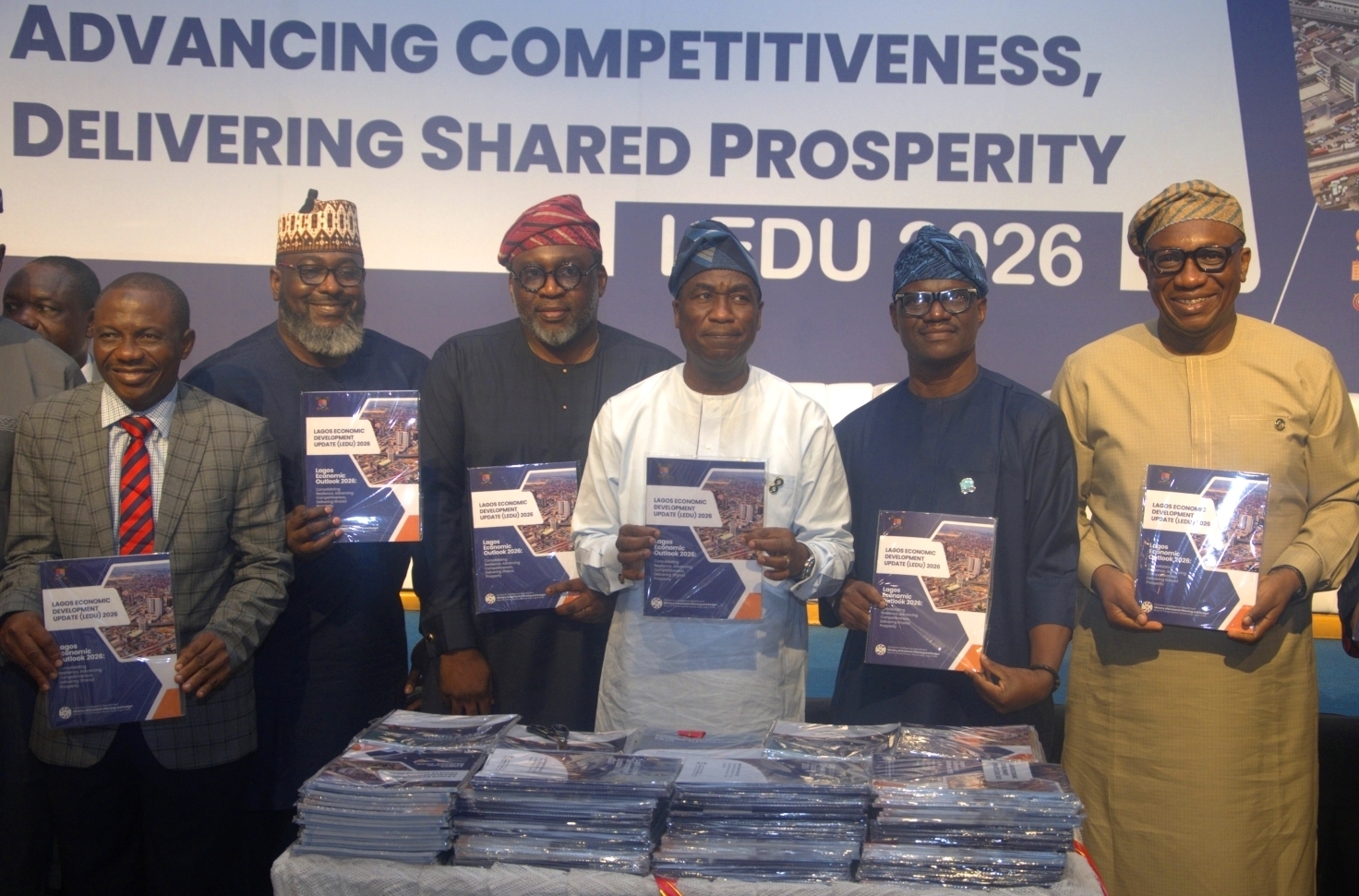
Oyedele made this disclosure on Tuesday at the launch of the BudgIT State of States 2025 Report in Abuja, where he delivered the keynote address.

The event also marked the 10th anniversary of the initiative.

He said, “With VAT reforms kicking in from 2026, states’ share will rise to 55 per cent. That could amount to over N4 tn in 2026. The question is: will this money be spent, or will it be invested?”

The fiscal policy expert noted that while recent economic reforms had more than doubled the Federation Account Allocation Committee transfers, from N5.4tn in 2023 to N11.4tn in 2024, many Nigerians were yet to feel any direct relief.

According to him, governments now have more money in their coffers, but households continue to struggle with reduced disposable income.

“States are receiving more money than ever before. But there is a paradox: while governments have more naira, ordinary Nigerians have less disposable income in their pockets,” he said, urging state leaders to channel the extra revenues into projects that tangibly improve citizens’ lives.

The BudgIT report highlighted that 21 states still rely on federal allocations for over 70 per cent of their revenues, a trend Oyedele described as worrying.

However, he pointed to examples of progress, including Enugu’s 381 per cent growth in internally generated revenue and Bayelsa’s 174 per cent rise.

He explained that the new tax laws, which transfer the full proceeds of electronic money transfer levies to states and exempt state government bonds from tax, would help reduce borrowing costs and create fiscal space.

See also  Tinubu shifts 15% fuel import duty to Q1 2026

“This is a unique opportunity for states to build resilience, close existing tax gaps, and invest in infrastructure,” he stressed.

The keynote speech also drew attention to the mismatch between spending and outcomes. Oyedele acknowledged that, for the first time in many years, capital expenditure had overtaken recurrent expenditure.

Yet, he warned that implementation in critical areas remained poor.

“States implemented only two-thirds of their education budgets, spending less than N7,000 per citizen. In health, implementation was even lower, at just N3,500 per citizen,” he observed.

On debt, he noted a reduction of N2tn in domestic obligations and a $200m fall in foreign loans, with 31 states lowering their domestic debt stock.

Still, states owe over N1.2tn in arrears to pensioners, contractors, and workers.

“Borrowing is not the problem; unproductive application of debt is,” he cautioned.

According to the 2025 rankings, Anambra topped the fiscal performance table, followed by Lagos, Kwara, Abia, and Edo. Cross River, however, slipped dramatically from fifth position in 2024 to 29th in 2025, raising concerns about governance choices.

Oyedele urged state governments to seize the opportunity provided by upcoming reforms to move beyond survival and ensure shared prosperity.

Also speaking, the Deputy Governor of the Central Bank of Nigeria in charge of Economic Policy, Dr Muhammad Abdullahi, called on state governments to entrench fiscal discipline and transparency as revenues surge under ongoing reforms.

He described the BudgIT report as an annual reference point that has “distilled hard fiscal truths, benchmarked performance, and re-centred conversations on capital investment, social outcomes, and fiscal credibility.”

See also  Ending fuel subsidy was tough but necessary — Tinubu

He noted that while reforms in 2024 and 2025 had expanded revenues and pushed capital expenditure above recurrent spending, states must not slip back into a pattern where overheads dominate budgets.

“The challenge is to lock in this fiscal discipline permanently,” he said.

The CBN deputy governor urged states to digitise internal revenue systems, complete Treasury Single Account adoption, and strengthen capital budgeting.

He also called for higher execution of education and health budgets, insisting that implementation must rise above 80 per cent.

Abdullahi warned that subnationals remained highly exposed to foreign currency risks. He disclosed that the CBN was developing an instrument to help them hedge exposures and monetise revenues.

Reviewing the broader macroeconomic environment, Abdullahi said Nigeria had inherited severe distortions, including multiple exchange rates, heavy deficit financing through Ways and Means, and dwindling reserves.

According to him, the apex bank’s response was to return to orthodox monetary policy, normalise the foreign exchange market, and restore credibility.

He concluded that states which prioritise discipline and capital investment, rather than simply relying on higher revenues, would achieve sustainable transformation.

In his goodwill message, the Head of Economic Intelligence at the Nigerian Governors’ Forum, Razaq Fatai, who represented the Director-General, Dr Abdulateef Shittu, said the State of States report had become a valuable tool for guiding governance and promoting fiscal accountability across the country.

He explained that the NGF had served as a technical partner in refining the report over the past decade, ensuring that governors used the findings to improve decision-making.

According to him, “The essence of State of States is to help guide governance and ensure that governors at different levels take the information provided and make sure it reaches their people.”

See also  CBN ends cash deposit limit for bank customers

Fatai noted that initiatives such as the State Fiscal Transparency, Accountability and Sustainability programme had strengthened budget credibility and debt transparency, while the ongoing State Action on Business Enabling Reforms programme was pushing states to improve the business climate.

He added that the NGF would continue to provide a platform for peer learning and collaboration to entrench transparency and accountability at the subnational level.

Speaking earlier, the Co-founder and Global Director of BudgIT, Oluseun Onigbinde, said the State of States report had become a mirror reflecting the choices made by subnational governments.

Onigbinde noted that what began as an effort to make every kobo traceable had grown into a tool of accountability embraced by both governors and citizens.

“This report began with a simple belief, that every kobo meant for citizens should be traceable, justified, and used to improve lives,” he said.

He added that transparency had become a competitive advantage among states, with more governors publishing budgets and citizens using data to demand accountability.

Onigbinde, however, warned that Nigeria remained at a crossroads, with rising inflation, growing debt, and an overreliance on federal allocations leaving many states unable to build resilient local economies.

He urged states to prioritise education, health, and infrastructure while using transparency as a foundation for public trust and give investors returns on their finances.

punch.ng

FOLLOW US ON:

FACEBOOK

TWITTER

PINTEREST

TIKTOK

YOUTUBE

LINKEDIN

TUMBLR

INSTAGRAM

Continue Reading
Click to comment

Leave a Reply

Your email address will not be published. Required fields are marked *

Business

EFCC Begins Probe Of Ex-NMDPRA Boss After Dangote’s Petition

Published

on

The Economic and Financial Crimes Commission (EFCC) has commenced an investigation into a petition filed against the former Managing Director of the Nigerian Midstream and Downstream Petroleum Regulatory Authority (NMDPRA), Farouk Ahmed, by the President of Dangote Group, Aliko Dangote.

It was gathered that Dangote formally submitted the petition to the EFCC earlier this week through his legal representative, following the withdrawal of a similar petition from the Independent Corrupt Practices and Other Related Offences Commission (ICPC).

Dangote had initially approached the ICPC, asking it to investigate Ahmed over allegations that he spent about $5 million on his children’s secondary education in Switzerland, an expense allegedly inconsistent with his known earnings as a public officer.

Although the petition was later withdrawn, the ICPC had said it would continue with its investigation.

Confirming the new development, a senior EFCC officer at the commission’s headquarters in Abuja, who spoke on condition of anonymity because he was not authorised to speak publicly, said the petition had been received and investigations had commenced.

“They have brought the petition to us, and an investigation has commenced on it. Serious work is being done concerning it,” the source said.

In the petition signed by Dangote’s lead counsel, Dr O.J. Onoja (SAN), the businessman urged the EFCC to investigate allegations of abuse of office and corrupt enrichment against Ahmed and to prosecute him if found culpable.

The petition further stated that Dangote was ready to provide documentary and other evidence to support claims of financial misconduct and impunity against the former regulator.

See also  Marketers blame depots as petrol nears N1,000/litre

“We make bold to state that the commission is strategically positioned, along with sister agencies, to prosecute financial crimes and corruption-related offences, and upon establishing a prima facie case, the courts do not hesitate to punish offenders,” the petition read, citing recent court decisions.

Onoja also called on the EFCC, under the leadership of its chairman, Olanipekun Olukoyede, to thoroughly investigate the allegations and take appropriate legal action where necessary.

When contacted, the EFCC spokesperson, Dele Oyewale, declined to comment on the matter but promised to respond later. No official reaction had been received as of the time of filing this report.

FOLLOW US ON:

FACEBOOK

TWITTER

PINTEREST

TIKTOK

YOUTUBE

LINKEDIN

TUMBLR

INSTAGRAM

Continue Reading

Business

IMPORTANT NOTICE REGARDING MONEY TRANSFERS IN NIGERIA (2026)

Published

on

Starting from *January 2026*, please ensure that *any money you send* to anyone — including me — comes with a *clear description* or *payment remark*. This is *very important* for tax purposes.

Use descriptions like:

– *Gift*
– *Loan*
– *Loan Repayment*
– *House Rent*
– *School Fees*
– *Feeding*
– *Medical*
– *Support*,
– School fee etc.

*Why this matters:*

In 2026, any money entering your account *without a description* may be treated as *income*, and *IRS (or relevant tax authority)* could tax it — or even worse, ask you to explain the source.

The *first ₦800,000* may be *tax-free*, but after that, any unexplained funds might attract up to *20% tax*, or in extreme cases, lead to legal issues.

So please:

– *Always include a payment remark.*
– *Avoid using USSD or apps that don’t allow descriptions.*
– *Ask the receiver for the correct description BEFORE sending.*

As for me, *do not send me any money* without discussing it with me first.
And no, I don’t want to hear “Sir/Ma, I used USSD” – if you can’t add a description, *hold your money*.

From now on, *I will tell you exactly what to write in the payment remark.*
Let’s all form the habit of *adding payment descriptions now* to avoid problems later.

FOLLOW US ON:

FACEBOOK

TWITTER

PINTEREST

TIKTOK

YOUTUBE

LINKEDIN

TUMBLR

INSTAGRAM

See also  Ending fuel subsidy was tough but necessary — Tinubu
Continue Reading

Business

FG earmarks N1.7tn in 2026 budget for unpaid contractors

Published

on

The Federal Government has budgeted the sum of N1.7tn in the 2026 Appropriation Bill to settle outstanding debts owed to contractors for capital projects executed in 2024.

A breakdown of the proposed 2026 national budget shows that the amount is captured under the line item titled “Provision for 2024 Outstanding Contractor’s Liabilities,” signalling official recognition of delayed payments to contractors amid recent protests over delayed settlements.

This budgetary provision follows mounting pressure from indigenous contractors and civil society groups who, in 2025, raised alarm over unpaid contractual obligations allegedly exceeding N2tn.

Some groups under the All Indigenous Contractors Association of Nigeria had also staged demonstrations in Abuja, lamenting the severe impact of delayed payments on their operations, with many contractors reportedly unable to service bank loans taken to execute government projects.

Earlier, Minister of Works David Umahi had promised to clear verified arrears owed to federal contractors before the end of 2025. However, only partial payments were made amid revenue constraints, prompting the inclusion of the N1.7tn line item in the 2026 budget as a catch-up mechanism.

In addition to the N1.7tn for 2024 liabilities, the government has also budgeted N100bn for a separate line item labelled “Payment of Local Contractors’ Debts/Other Liabilities”, which may cover legacy debts from previous years, smaller contract claims, or unsettled financial commitments that were not fully verified in the current audit cycle.

The total N1.8tn allocation is part of the broader N23.2tn capital expenditure in the 2026 fiscal plan, which seeks to ramp up infrastructure delivery while cleaning up past obligations.

See also  Marketers raise petrol prices amid drop in crude cost

Nigeria’s contractor debt backlog has been a recurring fiscal issue, worsened by delayed capital releases, partial cash-backing of budgeted projects, and underperformance in revenue targets.

Speaking with journalists at the entrance of the Federal Ministry of Finance in December 2025, the National Secretary of the All Indigenous Contractors Association of Nigeria, Babatunde Seun-Oyeniyi, said the government’s failure to release funds after multiple assurances had forced contractors to resume protests. He said members of the association were owed more than N500bn for projects already completed and commissioned.

He explained that despite recent assurances from the Minister of Finance, Wale Edun, no payment had been made. “After the National Assembly intervened, they told us that they will sit the minister down over this matter.  And we immediately stopped the protest,” he said.

According to him, repeated follow-up meetings with the minister had produced no tangible progress. “They have not responded to our request,” he said. “In fact, more than six times we have come here. Last week, we were here throughout the night before the Minister of Finance came.”

Oyeniyi said that although some payment warrants had been sighted, no funds had been released. “Specifically, when we collate, they are owing more than N500bn for all indigenous contractors. We only see warrants; there is no cash back.”

He accused officials of attempting to push the payments into the next fiscal year. “The problem is that they want to put us into a backlog. They want to shift us to 2026; that 2026, they are going to pay,” he alleged. “They will turn us into debt, and we don’t want that. We won’t leave here until we are paid.”

See also  India buys Nigerian crude as Dangote imports US oil

However, The PUNCH observed that earlier in August 2025, the Federal Government claimed that it had cleared over N2tn in outstanding capital budget obligations from the 2024 fiscal year, with a pledge to prioritise the timely release of 2025 capital funds.

The Minister of Finance and Coordinating Minister of the Economy, Wale Edun, disclosed this at a ministerial press briefing in Abuja, where he also declared that Nigeria is “open for business” to global investors on the back of improved economic stability.

“In the last quarter, we did pay contractors over N2tn to settle outstanding capital budget obligations. That is from last year,” Edun said. “At the moment, we have no pending obligations that are not being processed and financed. And the focus will now shift to 2025 capital releases.”

By December 2025, The PUNCH reported that President Bola Tinubu expressed “grave displeasure” over the backlog of unpaid federal contractors and set up a high-level committee to resolve the bottlenecks and fund repayments.

Briefing State House correspondents after the Federal Executive Council meeting in Abuja, Special Adviser on Information and Strategy, Bayo Onanuga, said the President was “upset” after learning that about 2,000 contractors are owed. “He made it very, very clear he is not happy and wants a one-stop solution,” Onanuga told journalists.

Tinubu directed the setting up of a committee to verify all claims from federal contractors. The new budget’s provisions are expected to draw from the outcome of that verification exercise and may be disbursed in tranches based on confirmed and certified claims.

See also  Crude supply to domestic refineries hit 67.6m barrels – FG

The total proposed 2026 national budget stands at N58.47tn, with N23.2tn earmarked for capital expenditure, N15.9tn for debt servicing, N15.25tn for recurrent spending, and N4.09tn for statutory transfers.

punch.ng

FOLLOW US ON:
FACEBOOK

TWITTER

PINTEREST

TIKTOK

YOUTUBE

LINKEDIN

TUMBLR

INSTAGRAM

Continue Reading

Trending