Connect with us

Business

States to earn over N4tn yearly from VAT reforms

Published

on

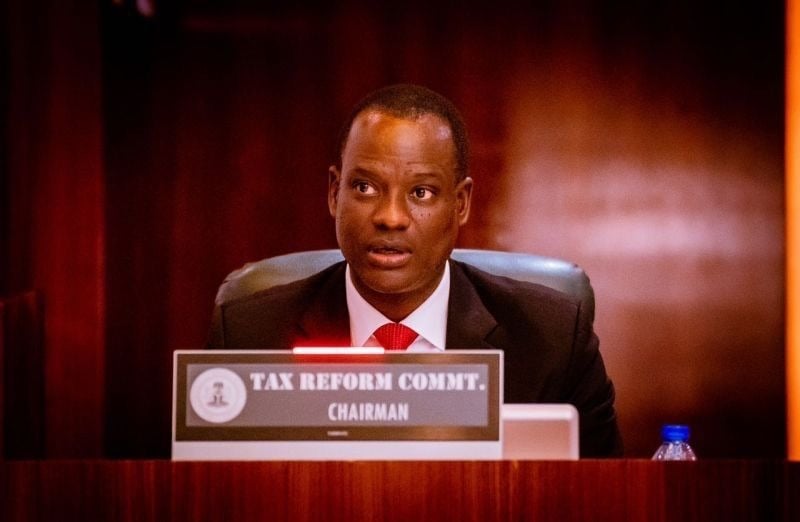
The Chairman of the Presidential Fiscal Policy and Tax Reforms Committee, Mr Taiwo Oyedele, has projected that states could earn more than N4tn annually from 2026, when new Value Added Tax reforms take effect.

Oyedele made this disclosure on Tuesday at the launch of the BudgIT State of States 2025 Report in Abuja, where he delivered the keynote address.

The event also marked the 10th anniversary of the initiative.

He said, “With VAT reforms kicking in from 2026, states’ share will rise to 55 per cent. That could amount to over N4 tn in 2026. The question is: will this money be spent, or will it be invested?”

The fiscal policy expert noted that while recent economic reforms had more than doubled the Federation Account Allocation Committee transfers, from N5.4tn in 2023 to N11.4tn in 2024, many Nigerians were yet to feel any direct relief.

According to him, governments now have more money in their coffers, but households continue to struggle with reduced disposable income.

“States are receiving more money than ever before. But there is a paradox: while governments have more naira, ordinary Nigerians have less disposable income in their pockets,” he said, urging state leaders to channel the extra revenues into projects that tangibly improve citizens’ lives.

The BudgIT report highlighted that 21 states still rely on federal allocations for over 70 per cent of their revenues, a trend Oyedele described as worrying.

However, he pointed to examples of progress, including Enugu’s 381 per cent growth in internally generated revenue and Bayelsa’s 174 per cent rise.

He explained that the new tax laws, which transfer the full proceeds of electronic money transfer levies to states and exempt state government bonds from tax, would help reduce borrowing costs and create fiscal space.

See also  Olumo Rock revenue jumps from N3m yearly to N40m monthly – Ogun gov

“This is a unique opportunity for states to build resilience, close existing tax gaps, and invest in infrastructure,” he stressed.

The keynote speech also drew attention to the mismatch between spending and outcomes. Oyedele acknowledged that, for the first time in many years, capital expenditure had overtaken recurrent expenditure.

Yet, he warned that implementation in critical areas remained poor.

“States implemented only two-thirds of their education budgets, spending less than N7,000 per citizen. In health, implementation was even lower, at just N3,500 per citizen,” he observed.

On debt, he noted a reduction of N2tn in domestic obligations and a $200m fall in foreign loans, with 31 states lowering their domestic debt stock.

Still, states owe over N1.2tn in arrears to pensioners, contractors, and workers.

“Borrowing is not the problem; unproductive application of debt is,” he cautioned.

According to the 2025 rankings, Anambra topped the fiscal performance table, followed by Lagos, Kwara, Abia, and Edo. Cross River, however, slipped dramatically from fifth position in 2024 to 29th in 2025, raising concerns about governance choices.

Oyedele urged state governments to seize the opportunity provided by upcoming reforms to move beyond survival and ensure shared prosperity.

Also speaking, the Deputy Governor of the Central Bank of Nigeria in charge of Economic Policy, Dr Muhammad Abdullahi, called on state governments to entrench fiscal discipline and transparency as revenues surge under ongoing reforms.

He described the BudgIT report as an annual reference point that has “distilled hard fiscal truths, benchmarked performance, and re-centred conversations on capital investment, social outcomes, and fiscal credibility.”

See also  Kano fire: FG, APC govs donate N8bn to victims

He noted that while reforms in 2024 and 2025 had expanded revenues and pushed capital expenditure above recurrent spending, states must not slip back into a pattern where overheads dominate budgets.

“The challenge is to lock in this fiscal discipline permanently,” he said.

The CBN deputy governor urged states to digitise internal revenue systems, complete Treasury Single Account adoption, and strengthen capital budgeting.

He also called for higher execution of education and health budgets, insisting that implementation must rise above 80 per cent.

Abdullahi warned that subnationals remained highly exposed to foreign currency risks. He disclosed that the CBN was developing an instrument to help them hedge exposures and monetise revenues.

Reviewing the broader macroeconomic environment, Abdullahi said Nigeria had inherited severe distortions, including multiple exchange rates, heavy deficit financing through Ways and Means, and dwindling reserves.

According to him, the apex bank’s response was to return to orthodox monetary policy, normalise the foreign exchange market, and restore credibility.

He concluded that states which prioritise discipline and capital investment, rather than simply relying on higher revenues, would achieve sustainable transformation.

In his goodwill message, the Head of Economic Intelligence at the Nigerian Governors’ Forum, Razaq Fatai, who represented the Director-General, Dr Abdulateef Shittu, said the State of States report had become a valuable tool for guiding governance and promoting fiscal accountability across the country.

He explained that the NGF had served as a technical partner in refining the report over the past decade, ensuring that governors used the findings to improve decision-making.

According to him, “The essence of State of States is to help guide governance and ensure that governors at different levels take the information provided and make sure it reaches their people.”

See also  Fuel distribution controversy: Dangote restores marketers amid mounting pressure

Fatai noted that initiatives such as the State Fiscal Transparency, Accountability and Sustainability programme had strengthened budget credibility and debt transparency, while the ongoing State Action on Business Enabling Reforms programme was pushing states to improve the business climate.

He added that the NGF would continue to provide a platform for peer learning and collaboration to entrench transparency and accountability at the subnational level.

Speaking earlier, the Co-founder and Global Director of BudgIT, Oluseun Onigbinde, said the State of States report had become a mirror reflecting the choices made by subnational governments.

Onigbinde noted that what began as an effort to make every kobo traceable had grown into a tool of accountability embraced by both governors and citizens.

“This report began with a simple belief, that every kobo meant for citizens should be traceable, justified, and used to improve lives,” he said.

He added that transparency had become a competitive advantage among states, with more governors publishing budgets and citizens using data to demand accountability.

Onigbinde, however, warned that Nigeria remained at a crossroads, with rising inflation, growing debt, and an overreliance on federal allocations leaving many states unable to build resilient local economies.

He urged states to prioritise education, health, and infrastructure while using transparency as a foundation for public trust and give investors returns on their finances.

punch.ng

FOLLOW US ON:

FACEBOOK

TWITTER

PINTEREST

TIKTOK

YOUTUBE

LINKEDIN

TUMBLR

INSTAGRAM

Continue Reading
Click to comment

Leave a Reply

Your email address will not be published. Required fields are marked *

Business

FG tells marketers to reflect global oil price drop in petrol prices

Published

on

Minister of State for Petroleum Resources, Sen. Heineken Lokpobiri, has directed petroleum marketers to immediately reflect the recent decline in global oil prices by reducing the pump prices of Premium Motor Spirit (PMS) and other petroleum products.

Lokpobiri gave the directive at the 2026 Nigerian Midstream and Downstream Petroleum Regulatory Authority (NMDPRA) General Counsel and Legal Advisers Forum on Monday in Abuja.

The forum is themed “Beyond Compliance Certainty and Investment Confidence in Nigeria’s Petroleum Sector.”

Lokpobiri said that with the de-escalation of tensions between Iran and the United States, there was an expectation that the prices of PMS and other petroleum products would be adjusted downward accordingly.

He expressed concern that the anticipated reduction had yet to be reflected at the pumps, stressing that while market forces under the deregulated regime would ultimately restore price equilibrium, marketers should not exploit the situation to make excessive profits.

The minister said the regulator had a statutory responsibility to ensure that deregulation did not become an avenue for profiteering, adding that this must be carried out in line with the provisions of the Petroleum Industry Act (PIA 2021).

“For too long, the dominant question in our regulatory conversations has been: are operators complying? That question matters. It will always matter. But it is no longer sufficient.

“The more consequential question today is this: are our regulatory authorities doing their job? Is it clear, consistent and predictable enough to give investors the confidence they need to commit capital, not just for one cycle, but for the long term?

See also  Kano fire: FG, APC govs donate N8bn to victims

“Compliance is the foundation. Regulatory certainty is the ceiling we must now be building toward,” he said.

Lokpobiri, while urging marketers to comply with the principles of fair pricing to ensure that consumers benefit from the prevailing market realities, urged regulators to move beyond compliance by promoting regulatory certainty to attracting long-term investments.

“The sector is now fully deregulated, a bold reform that President Bola Tinubu had the courage to implement. That decision paved way for the operationalisation of the Dangote Refinery and other refinery projects currently underway.

“It also ensured that artificial scarcity has become a thing of the past.

“You can attest to the fact that since 2023 there has been availability of products in country even with the recent challenges posed by the US-Israeli /Iranian conflict.

“Beyond allowing prices to be determined by market forces, the question is: what is the regulator doing to ensure that consumers receive the correct quantity of product?

“When someone pays for 10 litres of PMS, they should receive exactly 10 litres, not less,” he warned.

Lokpobiri said while compliance with regulations remained fundamental, investors were increasingly interested in jurisdictions with clear, consistent and predictable regulatory frameworks.

He described general counsel as strategic partners whose responsibilities extend beyond interpreting laws to shaping investment decisions, improving regulatory design and supporting national development.

According to him, legal advisers should provide constructive feedback whenever regulations or guidelines create uncertainty that could discourage investment.

He said Nigeria’s petroleum sector was entering a new phase characterised by expanding domestic refining capacity, increased private sector participation and emerging opportunities across the midstream and downstream segments.

See also  Nigeria’s World Bank debt to hit $9.65bn

According to him, attracting investments will require policy consistency, transparent regulation, efficient dispute resolution and strong collaboration among government, regulators, industry operators and legal practitioners.

He expressed confidence that the recommendations from the forum would contribute to improving governance, regulatory certainty and investment confidence in Nigeria’s petroleum sector. (NAN)

punch.ng

FOLLOW US ON:

FACEBOOK

TWITTER

PINTEREST

TIKTOK

YOUTUBE

LINKEDIN

Continue Reading

Business

Olodo uprising: Tinubu aide faults critics of First Lady’s Akara, Kuli kuli comment

Published

on

The Special Assistant to President Bola Tinubu on Social Media, Dada Olusegun, has defended First Lady Oluremi Tinubu’s recent empowerment of micro-traders, saying criticisms of the initiative are driven by ignorance of her record and the role of Nigeria’s informal economy.

In a statement shared on Monday, Olusegun described the backlash over the First Lady’s focus on traders such as akara and kulikuli sellers as a “performative circus of selective amnesia.”

He argued that critics had ignored the numerous interventions carried out by the Renewed Hope Initiative across healthcare, women’s empowerment, support for military widows and persons living with disabilities.

The First Lady, Senator Oluremi Tinubu
The First Lady of Nigeria, Senator Oluremi Tinubu

According to him, the First Lady’s interventions extend beyond petty traders, citing her donation of ₦1bn to the National Cancer Fund for cervical cancer screening and another ₦1bn for tuberculosis diagnostic equipment in Abuja in 2025.

He also referenced the disbursement of ₦250,000 each to 1,709 widows and orphans of fallen military personnel in 2023, as well as ₦200,000 business grants to persons living with disabilities across the 36 states and the Federal Capital Territory.

Olusegun further highlighted the Renewed Hope Initiative’s partnership with the Tony Elumelu Foundation, which targeted 18,500 women nationwide with ₦50,000 grants and the distribution of equipment, including industrial grinding machines, freezers and generators.

He further criticised what he described as an “Olodo uprising” on social media, accusing critics of reacting to trends without researching the facts.

“This entire controversy perfectly mirrors what is now happening with the broader ‘Olodo uprising” across our social platforms. We live in an era where people jump on trending hashtags and soundbites without dedicating a single minute to researching context. Memes are manufactured in seconds; accurate history takes time to read.

See also  Atiku, economists raise concern over Tinubu’s $516m loan request

“When the critics are done making their superficial memes, writing cynical captions, and circulating ignorant narratives, the reality on the ground will remain unchanged. They would be better off advising their constituents to find credible means to key into these ongoing government initiatives,” he stated.

He maintained that empowering small-scale traders should not be viewed as “weaponising poverty.”

“According to various economic metrics, the informal sector contributes over 50 per cent of Nigeria’s GDP and accounts for over 80 per cent of employment. The akara fryer, the kulikuli processor, and the petty trader are not just marginal actors; they are the literal shock absorbers of our micro-economy.

“When you give a micro-grant or operational tools to an akara seller, you are not validating poverty; you are reducing immediate operational capital friction, securing food chains at the grassroots, and expanding household income. Mocking these initiatives as ‘petty’ shows a deep-seated contempt for the actual working class of Nigeria,” he said.

Olusegun also defended the political value of grassroots empowerment, saying such interventions create trust among beneficiaries.

He cited the TraderMoni and MarketMoni programmes introduced during former President Muhammadu Buhari’s administration under then Vice President Yemi Osinbajo as examples of initiatives that directly impacted market traders.

“The opposition often wonders why the poorest segments of the population continually familiarise themselves with the All Progressives Congress during elections. The answer is simple: the party meets them at their point of immediate need,” he said.

Olusegun added that Tinubu’s record as former First Lady of Lagos State, a three-term senator and now First Lady of the Federation showed a consistent commitment to structured empowerment programmes.

See also  Wike distributes subsidised fertilisers to Abuja farmers

“She will not be distracted by digital static from doing what she has mastered over decades: empowering the poorest among us, one structured intervention at a time,” he said.

punch.ng

FOLLOW US ON:

FACEBOOK

TWITTER

PINTEREST

TIKTOK

YOUTUBE

LINKEDIN

Continue Reading

Business

Dangote refinery imports first UAE crude cargoes

Published

on

The Dangote Refinery has purchased two cargoes of crude oil from the United Arab Emirates, marking its first-ever procurement of Middle Eastern crude as it expands its feedstock sources amid persistent domestic supply constraints.

According to a report by S&P Global Commodity Insights, the two cargoes will be the first sourced by the 700,000-barrels-per-day refinery from any Middle Eastern supplier, signalling a shift from its traditional reliance on Nigerian, African, and United States crude grades.

The report said the purchases followed the resumption of oil exports from the Middle East after the United States and Iran reached an interim peace agreement that restored confidence in shipping through the Strait of Hormuz.

The refinery, designed primarily to process Nigeria’s light sweet crude, has increasingly diversified its crude slate as operations ramp up. S&P Global reported that an agreement between the refinery and the Nigerian National Petroleum Company had guaranteed the supply of between 13 and 15 cargoes of Nigerian crude monthly in naira, helping the refinery reduce its foreign exchange exposure.

However, the arrangement has faced challenges due to inadequate crude availability and operational issues at export terminals. According to the report, Dangote Refinery Chief Executive Officer David Bird had previously disclosed that these constraints had compelled the company to seek additional crude sources outside Nigeria.

The report added that the refinery’s expansion plans would further increase its crude requirements. Dangote plans to double the refinery’s processing capacity to 1.4 million barrels per day by the end of 2028, a level that would enable it to process about 80 per cent of Nigeria’s recent crude oil production in a single day.

See also  SERAP Sues NNPC Over Alleged Missing $49.7 Million, ₦22.3 Billion Oil Revenue

Speaking earlier this year, Bird said the refinery intended to increase the share of heavier crude grades in its feedstock mix. “We definitely want to heavy up the barrel,” Bird said in April.

He added, “We will be in the crude blending game. So you can easily imagine at 1.4 million b/d we could process 30 per cent Middle Eastern grades on each train.”

According to S&P Global, the refinery has been broadening the range of crude grades it processes as part of its ambition to operate as a fully merchant refinery. The report noted that in 2025, about 70 per cent of the refinery’s crude imports came from Nigeria, while 24 per cent originated from the United States.

punch.ng

FOLLOW US ON:

FACEBOOK

TWITTER

PINTEREST

TIKTOK

YOUTUBE

LINKEDIN

Continue Reading

Trending