Connect with us

Business

Discos earn N600bn in three months despite electricity blackouts

Published

on

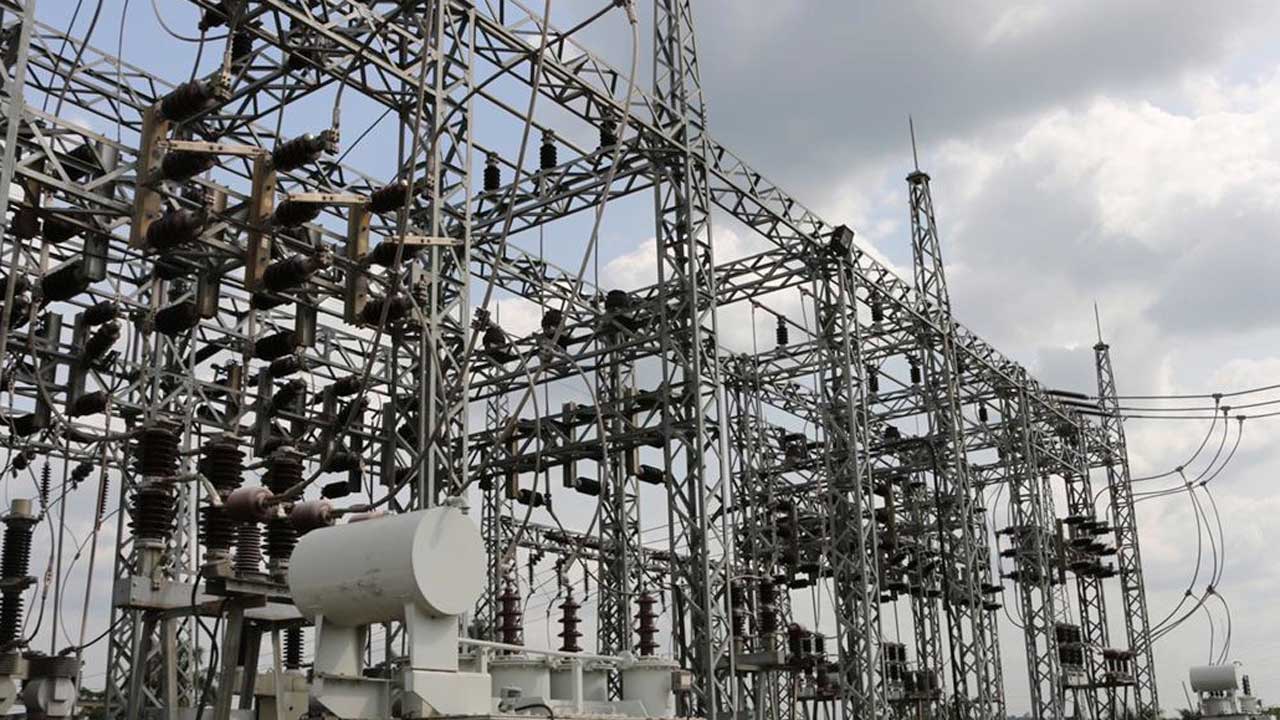
Electricity Distribution Companies in Nigeria collected about N600bn (N597.55bn) from consumers in the first quarter of 2026, according to the latest industry data released by the Nigerian Electricity Regulatory Commission.

The figure, which covers January to March 2026, shows the DisCos generated revenue close to the N600bn mark despite persistent challenges in the power sector.

According to the NERC commercial performance factsheets, the DisCos recorded N204.74bn in January, N196.68bn in February and N196.13bn in March 2026, bringing the first-quarter total to N597.55bn, averaging approximately N199.18bn per month.

The NERC reports highlight varying levels of commercial efficiency across the 11 DisCos. While some companies showed improvements in billing and collection efficiencies in certain months, overall performance remained mixed, with notable revenue shortfalls recorded monthly.

In January, the DisCos had total billings of N268.20bn but collected only N204.74bn, leaving N63.46bn in uncollected revenue for the month. Billing efficiency stood at 79.72 per cent, while collection efficiency was 76.34 per cent.

February 2026 saw total billings of N242.29bn, with N196.68bn collected. This resulted in N45.61bn in uncollected bills. The month recorded better billing efficiency at 87.44 per cent and collection efficiency of 81.17 per cent.

In March 2026, billings totalled N246.43bn, but collections stood at N196.13bn, indicating N50.30bn in uncollected revenue.

Billing and collection efficiencies were 83.89 per cent and 79.59 per cent, respectively, in the third month.

The reports also show significant unbilled energy each month.

Eko DisCo and Ikeja DisCo consistently ranked among the stronger performers in revenue recovery, with Eko achieving over 100 per cent recovery efficiency in February.

See also  Marketers drop petrol prices below Dangote’s cost

In contrast, companies such as Kaduna and Jos DisCos continued to struggle with lower collection and recovery rates. For instance, in February, Kaduna DisCo recorded a recovery efficiency of just 41.20 per cent, one of the lowest in the period.

The NERC data, which tracks energy received, energy billed, total billings, revenue collected, and recovery efficiency, provides a clear picture of the commercial viability of the privatised distribution companies.

Power consumers have continued to express frustration over high tariffs amid frequent outages and perceived poor service delivery.  In the first quarter of the year, Nigerians endured a persistent power crisis due to gas constraints, causing generation to drop from around 4,000 megawatts to less than 2,000 MW at some points.

Stakeholders have repeatedly called for improved metering, tighter enforcement against energy theft, and better customer service to boost collection rates.

It was gathered that the ongoing challenges in the sector, including infrastructure deficits and liquidity issues, continue to affect the ability of DisCos to fully convert energy supplied into revenue.

During the quarter, the Nigerian Independent System Operator provided operational data illustrating the scale of the shortfall, noting that thermal power plants require an estimated 1,629.75 million standard cubic feet of gas per day to operate at optimal capacity, but as of February 23, 2026, actual supply stood at about 692.00 mmscf per day—representing less than 43 per cent of the required volume.

As gas supply declined in Q1, several power plants have shut down while the Transmission Company of Nigeria engaged in load shedding, rationing the limited energy available among the DisCos.

See also  Economic recovery has begun – Edun

On their various platforms, the distribution companies have repeatedly appealed to customers, attributing the outages to gas shortages. However, some Nigerians have reported an improvement in power supplies in the past few weeks.

punch.ng

FOLLOW US ON:

FACEBOOK

TWITTER

PINTEREST

TIKTOK

YOUTUBE

LINKEDIN

INSTAGRAM

Continue Reading
Click to comment

Leave a Reply

Your email address will not be published. Required fields are marked *

Business

Tax revenue hits N27tn after 113% surge – Report

Published

on

Nigeria’s tax collections have surged by 113 per cent in less than three years, rising from N12.3tn in 2023 to N27.1tn as of July 2026, the Nigeria Revenue Service has said.

The revenue authority attributed the sharp increase to the digitisation of the tax system, the enactment of four new tax reform laws, the transformation of the revenue service and an executive order aimed at closing loopholes in the tax system.

The NRS, in an internal report on the state of the Nigerian economy obtained by The PUNCH on Sunday, insisted that the country was moving from a period of severe macroeconomic distress towards a more stable and resilient economy following the implementation of a series of difficult reforms by the President Bola Tinubu administration.

“Tax collections more than doubled from N12.3tn in 2023 to N27.1tn as of July 2026 with the “digitisation of tax systems, four new tax reform laws, the transformation of the revenue service and an executive order that closed loopholes in the system.

“The Nigerian economy has moved decisively from acute macroeconomic distress toward a more stable and increasingly resilient footing,” the revenue service said.

The NRS attributed the development to what it described as Tinubu’s economic management acumen and determination to implement reforms under his administration’s Renewed Hope Agenda.

According to the report, the administration inherited four major economic distortions which had continued to undermine government revenue and economic growth.

It identified the challenges as “a fiscally unsustainable fuel subsidy regime, an opaque forex system that discouraged investment, a non-performing oil sector, and a tax base ‘far below its potential’.”

The revenue authority said the initial impact of the reforms created significant economic difficulties but maintained that the country’s major economic indicators had subsequently begun to improve.

It cited falling inflation, a turnaround in the balance of payments, increased crude oil production, the emergence of Nigeria as a net exporter of petroleum products and the more than doubling of tax collections as evidence of the recovery.

See also  Marketers fear scarcity as cooking gas hits N1,500/kg

The report also highlighted an increase in the minimum wage, saying it had doubled between 2023 and 2026.

It further cited estimates by the United Nations Children’s Fund showing that the number of out-of-school children had declined from 20 million to 18.3 million following government policies and incentives.

The NRS said the government’s naira-for-crude arrangement with the Dangote Petroleum Refinery and other domestic refineries had contributed to a major shift in Nigeria’s petroleum trade position.

According to the report, the arrangement had helped Nigeria move from being a net importer of petroleum products to becoming a net exporter after decades of dependence on imports.

It noted that Ghana had recently decided to pursue a similar policy in its petroleum sector. The report also said crude oil production had increased from about 1.2 million-1.3 million barrels per day in 2023 to 1.73 million barrels per day by July 2026.

It said the latest output was equivalent to 104 per cent of Nigeria’s OPEC quota. The increase in production is significant for government revenue because crude oil remains the country’s largest source of foreign exchange and a major contributor to public finances.

The NRS also pointed to developments in the capital market as another indication of improving economic confidence. It said the market capitalisation of the Nigerian Exchange had risen from N30.36tn in 2023 to N161tn in 2026, describing the increase as a source of wealth creation for millions of Nigerians who invest in the stock market.

The report attributed the market rally partly to improved macroeconomic credibility, the recapitalisation of banks and a growing pool of domestic institutional investment.

Nigeria’s external reserves also rose sharply during the period under review. According to the NRS report, reserves increased from an unrestricted $3.99bn in 2023 to $51.9bn as of July 2026, which it described as a 17-year high.

See also  Marketers drop petrol prices below Dangote’s cost

The country’s balance of payments also moved from a $3.34bn deficit to a $2.38bn surplus in the first quarter of 2026, the report stated. Nigeria’s trade position similarly recorded a significant improvement, moving from a marginal surplus of N44.7bn to N7.55tn in the first quarter of 2026.

The composition of exports also showed some changes, with exports of other oil products, excluding crude, rising by 51 per cent year-on-year to N6.78tn during the first quarter.

The revenue service said improved investor confidence was also reflected in capital importation. Annual capital importation rose from $3.9bn in 2023 to $23.22bn in 2025, while inflows reached $10.37bn in the first quarter of 2026 alone.

The report said foreign portfolio investment had been particularly strong, while foreign direct investment had also improved. The increase in capital inflows, according to the NRS, reflected stronger investor confidence as economic reforms reshaped the operating environment.

The revenue service further highlighted the expansion of the compressed natural gas programme as part of the government’s response to the removal of the petrol subsidy.

According to the report, Nigeria had no large-scale CNG programme three years ago and depended heavily on imported petrol and diesel. By 2026, however, more than 100,000 vehicles had reportedly been converted to CNG, with more than $2bn in investment mobilised and over 10,000 jobs created.

The NRS estimated that CNG could reduce running costs by between 40 and 60 per cent compared with petrol. It said some commercial drivers had seen their monthly fuel bills fall from about N50,000 to N18,000 after converting their vehicles.

On agriculture and food security, it recalled that the administration declared a state of emergency on food security in July 2023 and subsequently introduced measures including the release of strategic grain reserves, the establishment of a N100bn National Agricultural Development Fund, fertiliser distribution and an agricultural mechanisation programme.

See also  NUPENG accuses Dangote of sponsoring division among tanker drivers

Federal agricultural allocation rose from N228.4bn in 2023 to N826.5bn in the 2025 budget, according to the report. The NRS said food prices had fallen by about 50 per cent by March 2026, citing the Ministry of Agriculture.

However, it acknowledged that agriculture would require several planting seasons before increased government support could translate fully into higher production.

On public debt, the NRS acknowledged that Nigeria’s total debt stock had increased substantially, from N87.4tn in 2023 to N159.28tn in late 2025. However, it argued that the more important measure was the country’s debt relative to the size of its economy.

According to the report, the debt-to-GDP ratio declined from 38 per cent in 2023 to 35.5 per cent in 2025 and 32.3 per cent in 2026. The revenue service described the decline as the first sustained reduction in the ratio in more than a decade.

It also said debt servicing as a proportion of government revenue had declined from 68 per cent to an International Monetary Fund-projected 53 per cent.

The NRS said the combination of higher tax collections, increased oil production, stronger capital inflows, rising reserves and improved trade and balance of payments positions pointed to an economy that was gradually emerging from the severe pressures that followed the government’s early reforms.

The report nevertheless acknowledged that the gains came after what it described as “painful” adjustments and stressed that continued implementation of the reforms would be required to consolidate the recovery.

Source: punchng.com

FOLLOW US ON:

FACEBOOK

TWITTER

PINTEREST

TIKTOK

YOUTUBE

LINKEDIN

INSTAGRAM

Continue Reading

Business

NLC demands N500k minimum wage, says current N70k minimum wage is no longer sustainable

Published

on

The Nigeria Labour Congress (NLC) says it will soon begin negotiations with the Federal Government for a new national minimum wage, insisting that the current N70,000 wage is no longer sustainable.

Speaking at the Rights of Workers Summit in Birnin Kebbi on Thursday, NLC President Joe Ajaero, represented by Deputy President Audu Titus Amba, said workers should prepare for fresh negotiations.

He argued that the current minimum wage could no longer meet workers’ basic needs amid rising inflation and the increasing cost of living.

“Anything less than N500,000 cannot cater for workers. The current minimum wage is due for review, and we will soon begin negotiations with the government,” he said.

Also speaking, Trade Union Congress (TUC) President Festus Osifo, represented by Secretary-General Nuhu Toro, said worsening economic conditions had eroded workers’ purchasing power.

He cited rising food prices, transport fares, rent and inflation as factors making the current wage inadequate.

President Tinubu signed the current national minimum wage bill into law on July 29, 2024, raising it from N30,000 to N70,000 per month. The legislation followed negotiations with organized labor and included a provision to review the wage structure every three years.

FOLLOW US ON:

FACEBOOK

TWITTER

PINTEREST

TIKTOK

YOUTUBE

LINKEDIN

INSTAGRAM

See also  High unemployment rate forces hundreds of Ghanaian youths to queue overnight for military recruitment
Continue Reading

Business

Ondo artisans beg FG for inclusion in empowerment programmes

Published

on

Artisans and skilled workers in Ondo State have appealed to the Federal Government to include them in various empowerment programmes under President Bola Tinubu’s Renewed Hope Agenda.

The artisans, under the aegis of the Artisan Defender and Empowerment Foundation, said over 25,000 members of the group had been neglected despite their support for the re-election of the President.

This was contained in a statement issued on Friday by the Chairman and General Secretary of the association, Engr. Ogundipe James and Adebayo Olugbenga, respectively.

According to the statement, the group was founded and registered with the Federal Government to promote the interests of Niger Delta artisans and skilled workers, adding that its members needed government support through empowerment initiatives.

The statement read, “It was evident, the neglect of the welfare and empowerment of over 25,000 artisans that this organisation controls, for which we are advocating better welfare, skills and vocational training, empowerment, workshops and recognition of political strength and weight the coalition commands in the voting structure.

“The deteriorating situation of artisan welfare, particularly in Ondo State, is why the body is seeking immediate attention, mostly empowerment and skills upgrading from the primary concerned government agencies—the Federal Ministry of Trade and Investment, Directorate of the Office of Humanitarian Affairs and Poverty Reduction, Small and Medium Enterprises Development Agency of Nigeria, Presidential Amnesty Programme, among others.

“The neglect of this very important organisation, which plays a vital role in employment and the growth of the national economy, will cause disagreement and affect political support that comes from this coalition group.”

See also  FG plans 500 CNG stations to cut petrol use

The statement urged the concerned Federal Government agencies to consider the proposals earlier submitted by the group to enhance the support of its members for the President’s administration.

The group stated, “We call on the agencies mentioned above, demanding immediate attention to the proposals that have earlier been sent to this parastatal.

“This is a public warning and general awareness that failure to listen to Niger Delta Artisan Forum’s demands will lead to a national protest and have huge political support consequences for the continuation of the Renewed Hope Agenda of President Bola Ahmed Tinubu come the 2027 election, if attention is not immediately given to the demands.”

punch.ng

FOLLOW US ON:

FACEBOOK

TWITTER

PINTEREST

TIKTOK

YOUTUBE

LINKEDIN

Continue Reading

Trending