
Connect with us

News

Groups Kick As Islamic Council Says No Christian Genocide In Nigeria

Published

on

Supreme Council for Islamic Affairs blames insecurity on poverty, climate change, crime | Seek foreign help to stop Christian killings, Anglican Primate tells Tinubu

Christian bodies, including the Pentecostal Fellowship of Nigeria (PFN), Northern States Christian Association of Nigeria (CAN), its Kaduna State Chapter and others have kicked against the Nigerian Supreme Council for Islamic Affairs’ (NSCIA) dismissal of the reports of a Christian genocide in Nigeria.

The NSCIA had described the reports of Christian genocide in Nigeria as false, divisive, and part of a broader geopolitical conspiracy to destabilise the country.

However, the president of the Pentecostal Fellowship of Nigeria (PFN), Bishop Francis Wale Oke, has insisted that it would be a ‘desecration’ to the memory of thousands of victims to describe the killings targeting Christian communities in some states in the North as anything other than genocide.

After a meeting of the Ulamah Council in Abuja on Sunday, the national secretary of the NSCIA, Prof Is-haq Oloyede, said both Muslims and Christians were victims of the same failed security system, poverty, and criminality, and that it was not a religious persecution.

“We turn to our genuine Christian brothers and sisters and tell them: you are not our enemies. You are our compatriots, colleagues, and neighbours.

“We are both Muslims and Christians — victims of a perennial, failed security architecture and a brutal criminal insurgency that targets us all.

“ We have never denied our collective pain. Do not allow foreign political gladiators or domestic separatists to exploit our real suffering to destroy our shared home.

“We, as Muslims, stand with you today against all forms of violence, criminality, and terror. We affirm that in Nigeria, there is no Christian genocide, and there is no Muslim genocide.

“The tragedy in Nigeria is not one of religion but of poverty, climate change, prolonged poor governance, and armed criminals who kill indiscriminately — while sections of the world seek to exploit the situation for geopolitical gain.”

He called on the international community and the press to reject the false, dangerous, and destabilising narrative of a Christian genocide.

“We also urge the Nigerian government to redouble its efforts to protect all citizens, regardless of faith; to defeat the bandits and terrorists; to expose all corrupt instigators of this divisive agenda; and to hold to account any foreign actors working against Nigeria’s unity,” he added.

According to Oloyede, the narrative of genocide was being pushed by foreign political interests seeking to fragment Nigeria along religious lines.

Oloyede warned that the attempt by some Western powers, particularly the United States, to brand Nigeria’s security crisis as genocide was a geopolitical ploy designed to fragment the nation.
He accused certain foreign actors of exploiting Nigeria’s insecurity for “geopolitical profits” while turning a blind eye to atrocities elsewhere, including Gaza.

“If the USA truly loves humanity, it should strengthen Nigeria’s capacity to fight banditry and insurgency, not undermine the country with false narratives,” he said.

The NSCIA insisted that there was no religious war in Nigeria, noting that the constitution guarantees freedom of religion through three co-existing legal systems — common law, sharia, and customary law.

See also  ‘US Airstrikes In Nigeria Signal Tough Stance On Attacks Against Christians’, Says Congressman Huizenga

He accused the United States and other Western actors of exploiting the country’s security challenges to advance their own agenda.

“Genuine assistance requires partnership, not unilateral actions which, even if unintentional, could fragment our nation. We will not allow Nigeria to be destabilised by a foreign agenda,” he declared.
The NSCIA maintained that the recent statements by some American political figures linking Nigeria to Christian persecution were “factually baseless and morally reckless.”

It noted that Amnesty International and other credible global bodies had found no evidence of a coordinated campaign to exterminate Christians in the country.

Oloyede said, “What Nigeria faces is a complex tragedy of poverty, climate change, and criminality. Armed groups kill indiscriminately—Muslims and Christians alike. These terrorists are not our representatives; they are our mortal enemies.”

The Council argued that linking the violence in northern Nigeria to religious motives ignored the deeper causes of insecurity, including desertification, economic deprivation, and organised crime in mining and arms trafficking.

The NSCIA also claimed the “genocide” narrative intensified after Nigeria reaffirmed support for the Palestinian cause at the United Nations General Assembly.

It said the misinformation was being driven by far-right and pro-Israeli lobbyists to distract global attention from the ongoing conflict in Gaza.

The NSCIA urged the federal government to intensify efforts in protecting all Nigerians regardless of faith and to “destroy the bandits, expose their sponsors, and confront the corruption feeding insecurity.”

The group also called on the international community to resist false narratives and support Nigeria with intelligence sharing, logistics, and human capacity development.

“We believe that if the United States is truly a lover of humanity and genuinely cares about this country, what is expected is support to strengthen the capacity of government to sincerely fight banditry and insecurity.”“

No Controversy About Targeted Killings In Nigeria – Bishop Oke

But the President of the Pentecostal Fellowship of Nigeria (PFN), Bishop Francis Wale Oke, has insisted that it would be a ‘desecration’ to the memory of thousands of victims to describe the killings targeting Christian communities in some states in the North as anything other than genocide.

During an interview with journalists at the Covenant Cathedral of Christ Life Church at Agodi, Ibadan, Oyo State capital, Bishop Oke said the scale and persistence of attacks on Christians in several parts of Northern Nigeria could “no longer be debated,” stressing that the situation demands urgent and sincere government action.

Worried by the unabated spate of killings of Christians for many years without an end in sight, the PFN President asked, “Where is Lea Sharibu? What happened to the Chibok girls? Chibok is a predominantly Christian community in Borno State.

“What is going on in Benue State is still on now? Since Donald Trump cried foul against Nigeria on the matter of genocide, many more people are being killed in Plateau State.”

Bishop Oke noted that United States President Donald Trump had previously designated Nigeria as a ‘Country of Particular Concern,’ citing what he described as ‘Christian genocide.’

See also  Venezuelan interim president announces proposal for mass amnesty

While Nigerian authorities have repeatedly rejected that classification, Oke said Trump’s concerns reflect a reality that many Nigerians were witnessing.

“We are not accusing the Muslim community, get me clear. We have been living together for a long time, maintaining mutual respect and harmony. It is the violent sect of Islam that is called Boko Haram, ISWAP, and others that use the name of Islam to attack churches.

“Hundreds of churches had been burnt down, tens of thousands of Christians had been massacred. Hundreds of pastors had been butchered.

“It would be a desecration to the blood of these Nigerians to call it any other name. There is not a single instance of a Christian group attacking Muslims. It is always the other way round. “

Anglican Primate Tells FG To Seek Foreign Help To Stop Christian Killings

For his part, Primate of the Church of Nigeria (Anglican Communion), Most Rev’d Henry Ndukuba, has called on the federal government to seek foreign assistance if it is unable to end the violent killings and persecution of Christians in the country.

The Archbishop made this comment while speaking with journalists on the sidelines of the consecration of 15 new Bishops at the Cathedral of Church of the Advent, Abuja, on the issue of targeted killings of Christians in Nigeria.

Ndukuba confirmed the grim reality of targeted attacks, revealing that several pastors and their families remain in captivity after being abducted from their churches.

“The persecution of Christians and the violence that is going on in this land is not something that anybody can deny.

“As I am talking to you now, we have some of our pastors who are kidnapped with their families, taken from their church, and they have not been released.

“If our authorities, the government, cannot handle it, it is good for them to seek help. But at the due time, we will say what we should say,” he said.

Faith-based Killings In Nigeria A Reality- CAN

Contrary to insinuations that there are no faith-based killings in Nigeria, the Christian Association of Nigeria (CAN) has said that killings of Christians in Nigeria are a reality and should not be denied by any God fearing person.

Kaduna State CAN chairman Rev. Caleb Maaji said: “Killings in Nigeria are a reality and killings are never permitted by either Christians or Muslims.

It is very very unfortunate, no man makes life, no one has a right to take another person’s life no matter what. Whoever does that is not a religious person; they are criminals that are supposed to be arrested prosecuted and jailed after being tried.”

Corroborating his position, the chairman of CAN in the Northern States and the Federal Capital Territory, Rev. Dr John Joseph Hayab said, “My understanding of this argument is that even if they find the corpses of our children on ground, they will still deny, so we don’t need to react to them since that’s the reason why we have not been able to solve Nigerian problems – because people choose debating about sensitive or serious issues rather than finding solutions.

See also  FG deploys military retirees to secure ungoverned spaces

“We cannot continue to live in self denial. If you have a wound or you are sick and you refuse to accept and chose the part of denying that you are not sick … you will not get cured.’’

“The fact is that what we believe is that what is happening now is supposed to be an opportunity for all of us to find solutions and look at how we work together to stamp out these killings, expose those who are hiding under any religious name to kill fellow citizens.

“The denial is probably to satisfy some people who don’t want the problem solved, so if they choose the part of denial, I can tell you even if they see the corpse of a Christian, they will still deny it. They have done that before as well, so it’s not strange to us.

“We have condemned and spoken against all forms of killings in Nigeria, be it Christian or Muslim, but I have really never seen them courageously come out to criticise anybody who used their religious name to do evil, and that is why evil people are thinking that they have been supported.

‘I hope the Nigerian government will wake up from sleep and correct the wrongs. How can I deny that people are being killed? What will their family members think? he concluded.

US Has Credible Information About Killings In Nigeria – Isong

In reaction to claims of the Supreme Council for Islamic Affairs, former national publicity secretary and Current National Vice president South South zone for Pentecostal Fellowship of Nigeria, PFN, Archbishop Emma Gospel Isong, said that the US has credible intelligence about the killings, stressing that the US move was justified.

According to him, Nigeria should even be grateful for the designation.

He said that the international community had been watching Nigeria for many years, stressing that the US had enough surveillance technology and intelligence to say what it said.

“To say that Christians had been targeted within communities is a fact; some communities have been wiped out, and most of them have been put in internally displaced persons (IDP) camps.

“You cannot disagree except somebody who has been sleeping for the last 20 years.”

Isong, the General Overseer of Christian Central Chapel International (CCCI), Calabar, stressed that this is the time for Nigeria to restructure its security and intelligence system, rather than live in denial.

He said that admission would possibly lead to the US assisting Nigeria in enhancing its defensive capabilities. Isong dismissed the fear that the US would hurt Nigerians.

“I work under the Anti-Corruption and Inter-religious department of the United States Embassy. I’m a member of the board,” Isong maintained.

“They said that Nigerians whose hands are clean should have nothing to fear.
Those perpetrating killings in the guise of ethno-religious crises are the ones who deserve sanction from the United States Government.”

FOLLOW US ON:

FACEBOOK

TWITTER

PINTEREST

TIKTOK

YOUTUBE

LINKEDIN

TUMBLR

INSTAGRAM

Continue Reading
Click to comment

Leave a Reply

Your email address will not be published. Required fields are marked *

News

State police: Federal force can intervene over electoral intimidation — Senate

Published

on

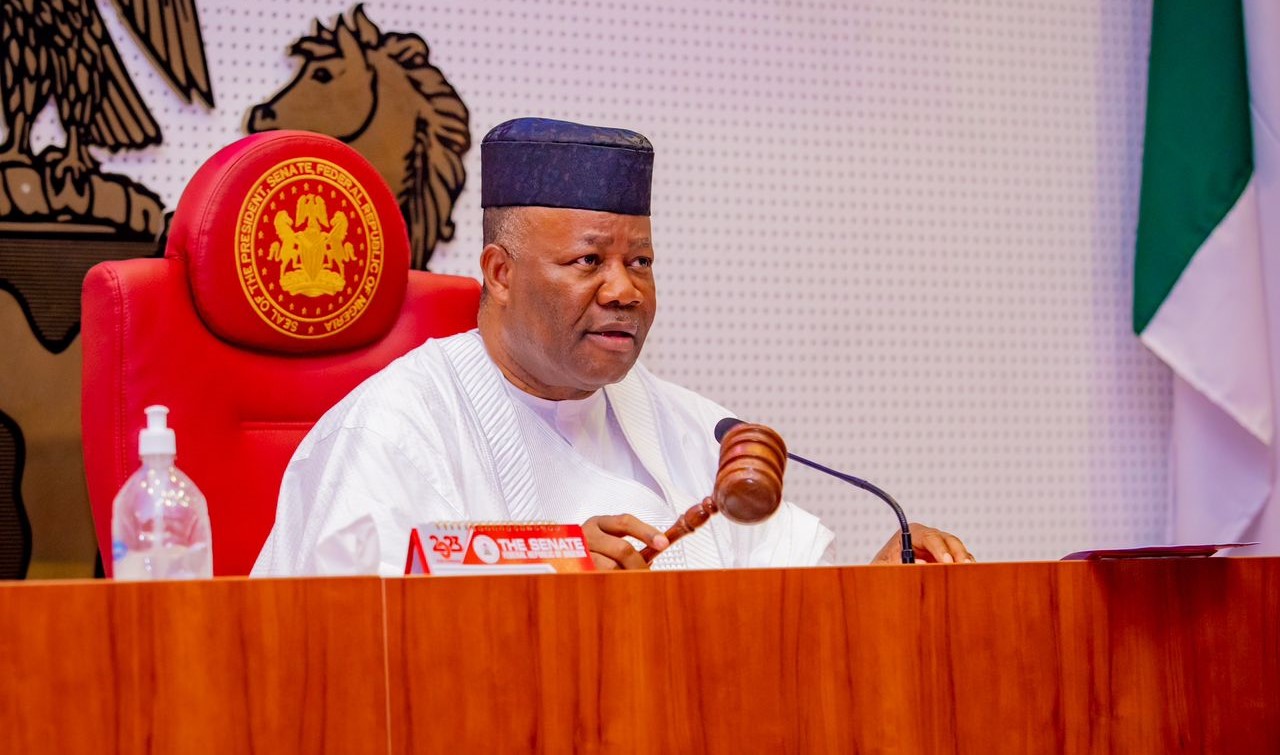
The Senate on Sunday said the proposed State Police Bill contains constitutional safeguards that would allow the federal police to intervene in cases of electoral intimidation, serious human rights violations and threats to national security, dismissing concerns that governors could abuse the proposed policing system for political purposes.

The upper chamber also defended the passage of the Constitution of the Federal Republic of Nigeria (Alteration) (State Police) Bill, 2026, revealing that 84 of the 109 senators voted in support of the legislation during its clause-by-clause consideration, describing the outcome as evidence of broad bipartisan backing.

The clarification comes amid growing debate over the proposed decentralisation of policing, with supporters arguing that state police would strengthen security at the grassroots, while critics fear governors could exploit the outfit to intimidate political opponents ahead of elections.

Defending the Senate’s position in a statement issued by his media office on Sunday, the Senate Leader, Opeyemi Bamidele, said the proposed amendment clearly delineates the constitutional responsibilities of the federal and state police to minimise operational conflicts and improve security coordination.

He explained that the federal police would continue to handle the protection of federal institutions, policing of the Federal Capital Territory, counter-terrorism, organised crime, cybercrime, border security, arms trafficking, interstate criminal activities and other national security matters, while state police would be responsible for enforcing state laws, maintaining public order and protecting lives and property within their jurisdictions.

Bamidele said the bill equally contains several safeguards designed to prevent governors from abusing state police.

See also  FG deploys military retirees to secure ungoverned spaces

He explained that although governors may nominate commissioners of police, such appointments would require recommendations by the National Police Council and approval by a two-thirds majority of the relevant state House of Assembly.

The Senate Leader added that the National Police Council would oversee overall policy, funding and appointments, while an independent State Police Service Commission would regulate state police operations without the control of state governors.

Explaining the circumstances under which the federal police may intervene, Bamidele said such action would only be permissible in exceptional situations.

He said, “The intervention can only be granted when there is an outright breakdown of public order; where a state police service is incapable of functioning; where there are serious abuses of fundamental rights; where there is partisan or electoral intimidation; and when national security is heavily strained and threatened.

“To avoid any form of abuse, the bill creates the State Police Service Commission. In design, the commission will serve as the regulatory authority of the state police system.

“Under this arrangement, the commission will be authorised ‘to, without the approval or control of the governor, make rules regulating its own procedure or conferring powers and imposing duties on any officer or authority for the purpose of discharging its functions under the 1999 Constitution.’”

Continuing, Bamidele dismissed claims that the proposal was politically motivated, insisting that it emerged from extensive consultations with the executive, the Nigeria Governors’ Forum, the Conference of Speakers of State Legislatures and the leadership of the Nigeria Police.

The Ekiti senator added that public hearings conducted across the six geopolitical zones in July 2025 produced overwhelming support for the establishment of state police.

See also  Indian Army Places Emergency Order For PULS Rocket Systems As Artillery Recast Into Integrated Strike Formations

He said, “The state police bill was subjected to intense debates at the Senate and House of Representatives. Even though the All Progressives Congress is the majority party, opposition legislators actively took part in the process that approved the state police initiative.

“They exercised their discretion in favour of the proposal, mainly in the national interest and not on a parochial basis. In the Senate, for instance, 84 out of 109 members voted clause by clause in support of the Bill. This accounted for 77.06 per cent approval at the Senate alone.”

He maintained that the proposed constitutional amendment was designed to strengthen accountability and ensure that the creation of a state police enhances national security without undermining democratic governance or citizens’ fundamental rights.

punch.ng

FOLLOW US ON:
FACEBOOK

TWITTER

PINTEREST

TIKTOK

YOUTUBE

LINKEDIN

Continue Reading

News

FG warns South Africa, threatens tough action over Xenophobia killings

Published

on

The Federal Government has warned that Nigeria may consider additional measures if attacks on its citizens in South Africa persist.

This is as the country condemned the killing of two Nigerian nationals in South Africa and demanded immediate investigations, warning that the continued targeting of foreigners, particularly Nigerians, raises serious concerns about their safety and the resurgence of xenophobic violence in the country.

The victims, Emeka Charles Iroegbu and Musa Yunana Joe, popularly known as Big Joe, were both killed on June 28, 2026.

While Iroegbu was allegedly tortured to death by officers of the Tshwane Metro Police in Sunnyside, Pretoria, Joe was reportedly shot dead by unidentified criminals outside his shop in Witbank, Mpumalanga.

In separate statements issued on Sunday by the Ministry of Foreign Affairs, the Nigerian Consulate General in Johannesburg and the Nigerian Union South Africa, authorities called for prompt, transparent and exhaustive investigations to ensure that those responsible were apprehended and prosecuted without delay.

“We wish to place the Government of South Africa on notice that if the situation continues to persist, all options remain on the table, some of which will be activated if the uncultured and provocative trend of intolerance and apartheid-style behaviour of South Africa against foreigners is not addressed,” the statement from the Ministry of Foreign Affairs stated.

The government described the incidents as part of a disturbing pattern of violence against Nigerians in South Africa, noting that the same Tshwane Metro Police officers allegedly implicated in the killing of another Nigerian, Nnaemeka Mathew Andrew Ekpenyong, on April 20, have yet to be arrested despite being known to the South African Police Service.

See also  US says Nigerian students with valid F1, J1 visas safe from restrictions

In the statement issued on Sunday by the spokesperson of the Ministry of Foreign Affairs, Kimiebi Ebienfa, the government expressed outrage over the deaths.

The statement said, “One victim, Emeka Charles Iroegbu, was reportedly killed by Tshwane Metro Police officers on 28th June 2026, in Sunnyside, Pretoria, using gruesome interrogation techniques.”

The government further recalled that the same officers were allegedly involved in the extrajudicial killing of another Nigerian, Nnaemeka Mathew Andrew Ekpenyong, on April 20, 2026.

“His case is still pending; no arrests have been made, even though the four officers involved are known to the South African Police Service,” the statement added.

The ministry noted that the killings occurred amid rising xenophobic tensions and increasing attacks on foreigners in South Africa, warning against attempts to stereotype Nigerians as criminals.

“These two killings come at a time when foreigners are being unduly targeted in South Africa. This raises questions about a deliberate attempt by some elements to wrongfully generalise and tag well-meaning, hard-working, and respectable Nigerians as criminals,” it stated.

The Federal Government also accused some South African security operatives, particularly officers of the Tshwane Metro Police, of complicity in the attacks.

Nigeria further expressed concern over remarks reportedly made by a spokesperson of the South African government, who allegedly challenged Nigerians leaving the country because of xenophobic protests to reveal where illegal drugs were hidden.

The government described the comments as inflammatory and unacceptable.

“The unguarded public statements are unacceptable and are strongly condemned. Such derogatory, unprofessional and uncensored generalised public statements by highly placed government officials constitute hate speech that influences and incites negative and criminal actions against members of the Nigerian community,” the statement said.

See also  Imo will start paying N104,000 minimum wage with August salaries – Gov’s aide

The Federal Government called on South African authorities to launch immediate investigations into the killings and other unresolved cases involving Nigerian nationals.

“The Government of Nigeria, therefore, calls on the South African authorities to conduct urgent investigations into the two killings and several other pending cases of extrajudicial killings of Nigerian nationals in South Africa, and ensure that the perpetrators of the heinous crimes are brought to justice without further delay,” the ministry stated.

While sympathising with the families of the deceased, the government said it would continue engaging South African authorities at the highest levels until justice is achieved.

The ministry also advised Nigerians residing in South Africa to remain calm, law-abiding and vigilant, urging them to relocate to safer areas and avoid locations prone to violence amid ongoing xenophobic and Afrophobic demonstrations.

The ministry, however, appealed to Nigerians not to engage in retaliatory actions, stressing that the government would continue to pursue dialogue and negotiations in the spirit of African unity, brotherhood and solidarity.

It added that the evacuation process for registered Nigerians willing to leave South Africa remained ongoing.

Another statement signed by the Nigerian Consul General in Johannesburg, Amb Ninikanwa Okey-Uche, revealed that the officers of the Tshwane Metro Police killed Iroegbu, while Joe was murdered by some criminals.

“We continue to call on the South African authorities to investigate the cases and bring the perpetrators of the gruesome acts to justice without further delay,” the statement affirmed.

Also, the Nigerian Union South Africa “demands prompt, transparent and exhaustive investigation to ensure that the perpetrators are apprehended and face the full wrath of the law.”

See also  FG deploys military retirees to secure ungoverned spaces

The statement by the union’s spokesperson, Akindele Olunloyo, said the community was working with the Nigerian High Commission in Pretoria and the Consulate General of the Federal Republic of Nigeria in Johannesburg to monitor the situation.

“In light of these tragic killings, we urge all Nigerians in South Africa to remain calm, law-abiding and vigilant. Please exercise extreme caution in your daily activities, know your surroundings, and report any suspicious activities to the local police,” it added.

punch.ng

FOLLOW US ON:

FACEBOOK

TWITTER

PINTEREST

TIKTOK

YOUTUBE

LINKEDIN

Continue Reading

News

FG secures $11.4bn World Bank loans in three years

Published

on

President Bola Tinubu’s administration has secured $11.40bn in loan approvals from the World Bank in just about three years, putting it on course to surpass the total amount approved under former President Muhammadu Buhari’s eight-year administration, an analysis of data obtained by The PUNCH from the World Bank has shown.

The analysis showed that the World Bank approved loans worth $11.40bn for Nigeria between June 2023 and June 2026, compared with $14.59bn approved during Buhari’s presidency from May 2015 to May 2023.

The latest figure means Tinubu’s administration has already secured about 78.2 per cent of the total World Bank financing approved during Buhari’s two terms in office and requires another $3.19bn in approvals to exceed that record.

The data further showed that World Bank loans approved under Tinubu have already surpassed those listed under Buhari’s first term by more than $5.8bn. According to the World Bank data, projects approved under Buhari’s first term amounted to about $5.56bn.

Using the figures contained in the World Bank database, Tinubu’s current approvals exceed the Buhari first-term total by about 105 per cent.

However, of the $11.4bn approved under Tinubu, only $2.32bn had been disbursed as of the latest update on the World Bank website, leaving $8.41bn available for disbursement. This represents a disbursement rate of about 20.3 per cent.

By comparison, projects approved during Buhari’s administration have recorded much higher implementation levels. Out of the $14.59bn approved during his presidency, $11.94bn had been disbursed, while $1.53bn remained available.

The figures translate to a disbursement rate of about 81.8 per cent, reflecting the fact that many of the projects have either been completed, are in repayment or are approaching completion.

The World Bank portfolio under Tinubu has been concentrated largely in economic reforms, education, healthcare, agriculture, energy, digital infrastructure, financial inclusion and social protection.

The single largest approval came in June 2024, when the World Bank approved a $2.25bn financing package comprising the $1.5bn Nigeria Reforms for Economic Stabilisation to Enable Transformation Development Policy Financing and the $750m Nigeria Accelerating Resource Mobilisation Reforms Programme-for-Results.

According to the World Bank, the financing was designed to support Nigeria’s economic reform programme, strengthen macroeconomic stability, improve domestic revenue mobilisation and protect poor and vulnerable households during the implementation of reforms.

The World Bank said the package was intended to support the Federal Government’s ongoing reforms, including exchange rate reforms, fiscal consolidation, and measures aimed at strengthening public finances.

The World Bank data showed that the RESET programme has been fully disbursed, while the ARMOR programme had recorded disbursements of $280.55m, leaving $469.45m available.

The reform package attracted public attention because it coincided with the implementation of major economic reforms, including the removal of the petrol subsidy and the liberalisation of the foreign exchange market, both of which contributed to sharp increases in inflation and the cost of living.

The World Bank has consistently maintained that the reforms are necessary to restore macroeconomic stability and place public finances on a more sustainable path, although several labour unions, civil society groups and opposition politicians have criticised the pace of the reforms and their impact on households.

Another major addition to Tinubu’s World Bank portfolio came on June 29, 2026, when the bank approved the Nigeria Actions for Investment and Jobs Acceleration programme. The programme consists of two facilities worth $500m and $750m respectively, bringing total financing under the initiative to $1.25bn.

Announcing the approval, the World Bank said the financing formed part of its new Country Partnership Framework for Nigeria covering 2026 to 2032. According to the bank, the framework aims to support private sector-led growth, improve job creation, expand energy access, strengthen digital infrastructure, and improve agricultural productivity.

Agriculture also accounts for a significant share of the approvals under Tinubu. In March 2026, the World Bank approved a $500m credit for the Nigeria Sustainable Agricultural Value-Chains for Growth project.

See also  Imo will start paying N104,000 minimum wage with August salaries – Gov’s aide

The bank said the project is expected to improve agricultural productivity, strengthen value chains, increase market access for smallholder farmers and create employment opportunities across participating states. The facility had yet to record any disbursement, according to the World Bank data.

In December 2024, the bank also approved three separate credits worth $357m, $57m and $86m for the Rural Access and Agricultural Marketing Project Scale-Up, bringing total financing under the programme to $500m. The facilities were still awaiting disbursement.

The power sector has also remained one of the largest recipients of World Bank financing under Tinubu. In June 2023, shortly after the inauguration of the administration, the World Bank approved $750m for the Power Sector Recovery Performance-Based Operation through separate facilities of $301m and $449m.

The World Bank data showed that the facilities had disbursed $28.10m and $41.24m, respectively. In December 2023, the bank approved another $750m for the Nigeria Distributed Access through Renewable Energy Scale-up Project. The project comprises three facilities worth $350m, $250m, and $150m.

The World Bank said the programme is expected to provide new or improved electricity access to about 17.5 million Nigerians through distributed renewable energy solutions. The data showed that only the $350m facility had recorded disbursement, amounting to $97.71m, while the remaining two facilities had yet to record any drawdown.

In September 2024, the World Bank approved another $500m for the Sustainable Power and Irrigation for Nigeria Project. According to the World Bank, the project is designed to improve dam safety, strengthen irrigation infrastructure, and increase hydropower generation in selected locations across the country.

The World Bank data showed that $33m had been disbursed under the project, leaving $467m available. Nigeria’s power sector has remained one of the most heavily financed sectors by the World Bank over the past decade. However, implementation challenges have also persisted.

The PUNCH earlier reported that the Federal Government and the World Bank agreed to cancel about $717m in undisbursed financing under the Power Sector Recovery Operation following changes in implementation arrangements and unmet programme conditions, including reforms linked to electricity tariffs and sector financing.

Education and healthcare also account for a substantial portion of Tinubu’s World Bank borrowing. In September 2023, the World Bank approved the $700m Adolescent Girls Initiative for Learning and Empowerment project. The project had recorded a disbursement of $148.35m, while $558.22m remained available.

The Nigeria for Women Programme Scale-Up Project, approved in June 2023, received $500m. The World Bank data showed that $109.62m had been disbursed, while $393.67m remained available.

The World Bank expanded its support for Nigeria’s human capital development in September 2024 with the approval of three major projects valued at $1.5bn. The projects comprised the $500m Nigeria Human Capital Opportunities for Prosperity and Equity Governance programme, the $500m Primary Healthcare Provision Strengthening Programme and the $500m Sustainable Power and Irrigation for Nigeria Project.

According to the World Bank, the HOPE programmes are expected to improve access to quality basic education and primary healthcare services while strengthening governance and accountability in the delivery of public services. An analysis of the World Bank data showed that implementation of the projects remains at an early stage.

The HOPE Governance project had recorded disbursement of $3m out of the approved $500m, leaving $497m available. The Primary Healthcare Provision Strengthening Programme had disbursed $75.35m, while $424.65m remained available. The Sustainable Power and Irrigation Project had drawn $33m, leaving $467m yet to be disbursed.

Combined, the three projects had received disbursements of $111.35m, representing about 7.4 per cent of the approved financing.

The World Bank also approved another package of projects in March 2025 covering education, community resilience and nutrition. The package included the $500m HOPE for Quality Basic Education for All project, the $500m Community Action for Resilience and Economic Stimulus Programme, and the $80m Accelerating Nutrition Results in Nigeria 2.0 project.

The financing was intended to improve education quality, support vulnerable households, and address malnutrition among women and children. The World Bank data showed that none of the projects had recorded any disbursement as of the latest update.

See also  ‘US Airstrikes In Nigeria Signal Tough Stance On Attacks Against Christians’, Says Congressman Huizenga

Financial inclusion and digital infrastructure also featured prominently in the Tinubu administration’s World Bank portfolio. In December 2025, the World Bank approved the Fostering Inclusive Finance for MSMEs in Nigeria project comprising a $400m International Bank for Reconstruction and Development facility and a $100m International Development Association credit.

The bank said the project is expected to expand access to finance for micro, small and medium enterprises, strengthen financial institutions and mobilise private capital. Neither component had recorded any disbursement.

In October 2025, the World Bank approved the $500m Building Resilient Digital Infrastructure for Growth project to improve broadband connectivity and digital infrastructure across Nigeria.

The bank said the project would help increase broadband penetration, improve digital public infrastructure and support digital inclusion. The project remained at the effective stage with no disbursement recorded.

The World Bank also approved $250m for the Health Security Programme in Western and Central Africa, Nigeria Phase II, in September 2025 to strengthen disease surveillance and emergency preparedness following lessons from the COVID-19 pandemic. The facility was listed as signed and had yet to record any disbursement.

A sectoral analysis of the Tinubu administration’s World Bank portfolio showed that economic reforms, power, agriculture, education, healthcare and social protection account for the bulk of the financing approved since June 2023.

By comparison, Buhari’s World Bank borrowing was spread across fiscal reforms, electricity, agriculture, social investment, education, health, erosion control, mining, water resources, livestock development, business reforms, and COVID-19 response.

An analysis of annual approval trends showed that Tinubu’s administration has averaged about $3.7bn in World Bank approvals per year since assuming office in May 2023. By comparison, Buhari’s administration averaged about $1.82bn annually over eight years.

The figures indicate that World Bank financing approvals have accelerated under the current administration, although implementation remains at an earlier stage than projects approved during the previous administration.

The PUNCH recently reported that Nigeria’s debt to the World Bank rose by $2.08bn in one year to $19.89bn as of December 31, 2025, according to an analysis of external debt stock data released by the Debt Management Office.

The figure represents an 11.7 per cent increase from the $17.81bn owed to the global lender as of December 31, 2024. The World Bank debt comprises loans from the International Development Association and the International Bank for Reconstruction and Development.

The IDA provides concessional grants and loans to low-income countries, while the IBRD provides financial products and policy advice mainly to middle-income and creditworthy developing countries.

DMO data showed that Nigeria’s IDA debt rose from $16.56bn in 2024 to $18.51bn in 2025, an increase of $1.94bn or 11.73 per cent. IBRD exposure also increased from $1.24bn to $1.38bn, representing an increase of $141.84m or 11.41 per cent.

The increase means World Bank loans accounted for 38.36 per cent of Nigeria’s total external debt stock of $51.86bn as of the end of 2025.

Reacting to the rising World Bank commitments to Nigeria, Lagos-based economist Adewale Abimbola said loans from multilateral institutions such as the World Bank are largely concessionary, with interest rates typically below market levels and longer repayment tenors.

He noted that the critical question is not whether Nigeria should be borrowing, but whether the loans are structured and deployed effectively. “If it’s concessionary and tied to viable projects with medium-term revenue prospects, I don’t think it’s a bad idea,” Abimbola explained. “Borrowing isn’t bad; what matters is utilisation.”

See also  Natasha invites Akpabio, others for Kogi constituency projects unveiling

He stressed that the economic impact of such loans depends on how well they are channelled into projects that can generate sustainable growth, strengthen revenue, and improve public services over time.

Development economist and CEO of CSA Advisory, Dr Aliyu Ilias, expressed strong reservations about Nigeria’s rising debt profile in light of the World Bank’s fresh commitments.

While acknowledging that borrowing is not inherently bad for an economy, he questioned the rationale for taking on more debt at a time when the government claims to have higher revenues.

According to him, the impact of the current borrowing spree is being felt in reduced public service delivery, particularly in capital expenditure, as debt servicing now consumes a significant portion of available revenue.

He warned that this crowding-out effect limits job creation, fuels inflation, and worsens Nigeria’s foreign-exchange imbalance, with the naira trading at historically low levels.

He argued that given the claimed revenue surpluses, the Tinubu administration should not have needed to borrow within its first two years in office, let alone at the scale currently being witnessed.

Economist and CEO of the Centre for the Promotion of Private Enterprise, Dr Muda Yusuf, said that borrowing should always be backed by sound economic reasoning and clear development priorities. Yusuf emphasised that the key issue is debt sustainability, which depends primarily on the country’s revenue capacity to service its obligations.

Without strong cash flow to meet repayment schedules, he warned, Nigeria risks falling into a vicious cycle of borrowing to service existing loans, thereby perpetuating fiscal vulnerability. He said it is essential that projects funded by loans directly support the economy’s capacity to repay.

According to him, Nigeria should be cautious with foreign loans due to the exchange rate risks they pose, noting that domestic debt is generally easier to manage. He stressed that a disciplined approach to debt sustainability will be crucial for Nigeria to avoid long-term fiscal distress.

Responding to an enquiry by The PUNCH recently on the delay in loan disbursements, the Senior External Affairs Officer at the World Bank, Mansir Nasir, noted that funds for projects financed by the institution were not disbursed at once but in instalments, depending on the nature of the project and financing instruments.

“Projects financed by the World Bank run for a certain time, which varies depending on the specific project. The total amount of the project is not disbursed as a one-off, but rather in instalments depending on the financing instruments—e.g., IPF or PforR—which require certain milestones for specific disbursement values.

“If you look at the portal, you will see the specific disbursement timelines and values,” Nasir added. He further stated that before a new project can begin disbursement, it must meet certain agreed conditions between the Federal Government and the World Bank.

The Minister of Finance and Coordinating Minister of the Economy, Taiwo Oyedele, recently faulted Nigerians, especially analysts and commentators, for criticising government borrowing without considering the purpose, cost and expected returns of such debt.

Oyedele said, “When analysts go on TV and join the populist view to accuse the government of borrowing, you are doing a disservice. The relevant question is never simply how much debt.

“It is always debt for what and at what cost, against what return, and repaid on what terms. A nation, a state, or a business that borrows to finance a productive asset generating returns above the cost of that capital is not behaving recklessly; it is behaving rationally.”

punch.ng

FOLLOW US ON:

FACEBOOK

TWITTER

PINTEREST

TIKTOK

YOUTUBE

LINKEDIN

Continue Reading

Trending