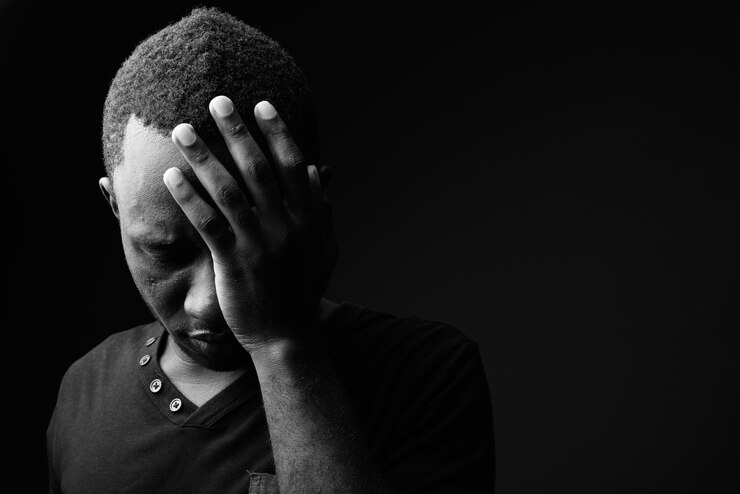
Behind closed doors, some Nigerian men are living with violence, fear and enforced silence in intimate relationships society assumes they control. This report by VICTOR AYENI interrogates the hidden reality of male survivors of domestic violence, the stigma that keeps them quiet, and how cultural expectations, social shame and weak support systems silence many. It also examines how unresolved abuse can escalate into fatal outcomes, including cases of androcide
To those who met the Akinjides for the first time, they appeared to be an ordinary couple, one that had weathered its share of ups and downs but was managing well enough.
Rotimi Akinjide, 39, a native of Ilesa in Osun State, grew up in Lagos and now works with a logistics company in the city. His wife, Rebecca, hails from Abeokuta in Ogun State and is employed as an administrative secretary at a firm on Lagos Island.
On most weekend evenings, life in the Akinjides’ modest bungalow in a Lagos mainland neighbourhood followed a familiar rhythm. Rotimi would settle down to watch football with a few friends, the air filled with cheers and animated commentary. In another room, their two children, aged 10 and seven, would be hunched over their school assignments, usually under Rebecca’s watchful eye.
From the outside, it was a picture of domestic normalcy. But on one Saturday evening in July 2024, that carefully maintained image collapsed like a house of cards.
Two of Rotimi’s friends arrived at the family home only to sense that something was wrong. The compound was unusually tense, with three neighbours standing at the entrance, their faces etched with concern. Before the visitors could ask any questions, they were told that Rotimi and Rebecca had just been locked in a violent altercation, one so intense that neighbours had been forced to intervene and separate them.
Inside the house was a scene of chaos. Furniture lay scattered and displaced, while framed pictures had been knocked off the walls, leaving shards of broken glass littering the sitting room floor. In the kitchen, plates, cutlery, and a pot of vegetable soup lay overturned, mixed with spilled rice, evidence that the confrontation had begun there before spilling into the sitting room.
An elderly couple in the neighbourhood reportedly helped to calm the situation, mediating between the shaken spouses, while another neighbour hurried the children away from the house to shield them from the turmoil.
‘My wife has been hitting me’
For a brief moment, peace appeared to return. But about a week later, Rotimi recounted what had transpired, lifting the veil on deeper tensions that had long simmered beneath their seemingly happy façade.
According to him, the immediate trigger was an argument over a WhatsApp post he had made using Rebecca’s phone.
Saturday PUNCH gathered that some of Rotimi’s relatives had complained that Rebecca rarely greeted her in-laws on their birthdays, yet insisted that her husband send birthday wishes to her own relatives during their celebrations. In an attempt to prove his family wrong, Rotimi reportedly posted a WhatsApp message and a photo celebrating his younger brother, who turned 31 on July 17 of that year.
“When Rebecca found out, she became furious. She stormed into the room and asked what right I had to use her phone. Knowing her temper, I tried to explain, but she began insulting my family. I then picked up her phone and deleted the post, after which she warned me never to try such again.
“I didn’t argue because I knew she would use it as an excuse to start a physical fight. For some years now, Rebecca has been hitting me unprovoked,” Rotimi said, his eyes darting away as he avoided eye contact.
“It started with her locking my clothes away and grabbing me by the neck whenever we argued over money, food, the children or other issues. In truth, she had been doing these things even before we got married, but I thought she would change with time. Instead, it got worse.
“She would shout at me, call me all sorts of names and even curse me. There was a day she insulted my parents and threatened to stab herself, claiming I was frustrating her life. After some fights, she would come to where I was sleeping and hit me with objects or punch me with her fists. I know it sounds unbelievable, but it’s true.”
Rotimi acknowledged that many found his story hard to believe because he is physically taller and appears stronger than his wife.
Yet, he said that whenever Rebecca became angry, she seemed to draw unusual physical strength, striking him repeatedly.
This, he explained, often forced him to avoid sharing their bed after quarrels.
“She hits me with objects while I’m asleep, and I live in fear that she might stab me one day. On the day we fought over the WhatsApp issue, she was already fuming. I switched on the television to watch a programme, and she unplugged it.
“I grabbed my keys to leave the house, as I usually do to avoid trouble, but she blocked the door and told me I wasn’t going anywhere. I sat down, then went to the kitchen to get some water. She followed me, seized the glass cup and hurled it against the wall.
“That was when I lost my cool. What if it had hit our children? She ran back into the kitchen, picked up pots and hit me with them, then pushed me against the wall. I had to escape through the back door because I feared she could kill me.
“The most painful part? When the neighbours arrived, she started crying and claimed I had been beating and maltreating her. Everyone believed her, ignoring the bruises on my body,” Rotimi said, his voice heavy with frustration.
Saturday PUNCH learnt that despite repeated advice to separate from his wife, Rotimi had remained reluctant, citing his role as a Sunday school teacher and his reputation as a respected member of his community.
Battered by his ex-girlfriend
While Rotimi was bound by marriage to an intimate partner he alleged abused him, 25-year-old Sola Alade recounted a different but equally harrowing experience, a “life-draining” relationship with his former girlfriend, known simply as Queen.
Alade said he began dating Queen during his second year at the University of Ilorin, Kwara State. After some time, she moved into his off-campus lodge. For the first three months, their relationship appeared effortless, almost idyllic.
However, as weeks turned into months, the warmth and excitement that once bound them faded, and their relationship drifted into troubled waters.
Now a Chemistry graduate, Alade told Saturday PUNCH that Queen became obsessively controlling, constantly stalking him on social media and monitoring his calls and chats.
“At the time, I was into crypto trading, so I spent a lot of time online alongside my studies. But she wouldn’t let me breathe. She monitored who I spoke to in my department, who called my phone and even who I talked to in the compound where we lived.
“She insisted that I put all my calls on the loudspeaker. If I spoke to any female colleague, she would fight me when I returned to the room and keep malice for days.
“One day, a female neighbour, a fellow student who also had a boyfriend everyone knew, came to charge her phone because I had a generator. Queen poured water on my bed, accusing me of sleeping with the girl. She said that was the only reason the girl would come to our room,” Alade recalled.
He said that after about a year, arguments frequently escalated into physical violence, with Queen slapping or choking him.
Gradually, he became unhappy and socially withdrawn.
To make matters worse, he developed anxiety whenever she called, as he often sensed trouble brewing.
“I genuinely loved Queen, but she never trusted me. She became so controlling that I took the issue to our church shepherd because I attend a white-garment church. The cleric said she was an emere, someone with familiar spirits, and asked me to bring her for prayers. Even after prayers and fruit rites, nothing changed.
“One night, she started a fight because a strange number called me. It was just a friend from another state, but nothing I said mattered. She picked up a turning stick and beat me repeatedly, calling me a dog, a cheat and a deceiver.
“That night, I lost control. I smashed a bottle against the wall and injured myself because I was simply tired of living. She became so frightened that she ran out of the room. That was how she moved out, and the relationship ended,” Alade said.
The 25-year-old noted that while the physical injuries healed quickly, the emotional scars took much longer. He remained single until graduation and has since moved on.
Now studying in the United Kingdom, Alade said he is in a serious relationship and plans to return to Nigeria to marry in a few years.
Male survivors of domestic abuse
The experiences of Rotimi and Alade reflect a corrosive but often overlooked pattern of gender-based violence in Nigeria, one in which men are the victims and their intimate partners the aggressors.
The European Institute for Gender Equality acknowledges that while women are disproportionately affected, gender-based violence “is deeply rooted in structural, political, economic and social imbalances between women and men” and constitutes “one of the most severe human rights violations”.
Gender experts note that men can also be victimised by abusive partners who hit, kick, bite, punch, spit, throw objects or destroy personal property. Such cases disrupt the dominant narrative of men as sole perpetrators, revealing their vulnerability within intimate relationships.
To overcome differences in physical strength, some female perpetrators attack male partners while they are asleep or catch them off guard. Others resort to weapons, threaten or harm children, or abuse pets.
Experts further note that domestic abuse often escalates from verbal threats to physical violence.
“Men are often reluctant to report abuse because they feel embarrassed, fear they won’t be believed, or worry their partner may retaliate,” according to HelpGuide.org.
While physical injuries are the most visible danger, the emotional and psychological consequences of abuse are equally severe.
In the United Kingdom, the Office for National Statistics reported that one in five men (21.8 per cent) in 2024 and 2025 said they had experienced domestic abuse in their lifetime, about 5.2 million men. The report added that between one in five and one in six men (18.2 per cent) had suffered partner abuse (4.3 million).
In the United States, roughly one in four men experience some form of intimate partner physical violence, while nearly one in 10 experience rape, severe violence or stalking, according to the National Domestic Violence Hotline at the US Centers for Disease Control and Prevention.
In Nigeria, estimates vary across regions, cultures and religious settings. Saturday PUNCH found that official statistics on male survivors of domestic violence are largely unavailable, likely due to the stigma surrounding reporting.
However, a 2022 study published in the African Journal of Primary Health Care and Family Medicine found that 462 of 1,227 respondents, 37.7 per cent, were survivors of intimate partner violence. Of these, 368 (30.0 per cent) were women, while 94 (7.7 per cent) were men.
Similarly, a report by the Lagos State Domestic and Sexual Violence Agency documented 920 male gender-based violence cases between November 2024 and November 2025. Of these, 437 involved domestic violence, making it the most frequently reported violation, followed by 75 non-sexual gender-based violence cases.
“These figures highlight the need for sustained advocacy to ensure men feel safe reporting abuse and accessing support without stigma.
“Statistics often portray men solely as perpetrators, yet men can also be victims. They must know that help is available and that speaking out is acceptable,” said the agency’s Executive Secretary, Titilola Vivour-Adeniyi.
Abuses escalating to androcide
In recent times, there have been media reports of intimate partner violence in which husbands were murdered by their wives in grisly acts of androcide.
On Tuesday, tragedy struck in Okene, Kogi State, where a woman identified as Favour Odoba was alleged to have killed her husband, Momo Jamiu, also known as Abdul-Kadir Nagazi, reportedly over claims that he had taken a second wife.
Sources said the couple had been married for about nine years without having a child, a situation that reportedly strained the relationship. Trouble, relatives said, deepened after Jamiu married another woman, who gave birth roughly two months ago.
A relative of the deceased, identified simply as Onono, said the fatal incident followed an invitation from Odoba to her husband to spend the night with her.
“Favour was married to him for nine years without a child. After he married another woman who had recently given birth, she invited him to sleep over. She later took his lifeless body to a hospital,” the relative said.
Odoba was said to have abandoned the corpse at the hospital before fleeing. Medical sources reportedly raised suspicions of poisoning and the use of harmful injections after preliminary tests, although the exact cause of death had yet to be established at the time of reporting, according to Daily Trust.
Confirming the development, the Police Public Relations Officer of the Kogi State Command, William Aya, said investigations were ongoing.
“Investigation is ongoing to determine the actual cause of death and the circumstances surrounding it. The woman, said to be the wife of the deceased, is currently on the run. Efforts are being intensified to arrest her to assist with the investigation,” he said.
Similarly, in July, the Ondo State Police Command confirmed the arrest of one Augustina Mowari for the alleged killing of her boyfriend, Michael Ikuedowoni, in the Okitipupa area of the state.
Police sources said the incident followed a heated argument between the couple over suspected infidelity. The state Police Public Relations Officer, Olayinka Ayanlade, confirmed that the command had commenced investigations, adding that the case would be charged to court upon conclusion of inquiries.
Saturday PUNCH gathered that the couple had been cohabiting in a one-room apartment and had endured persistent conflicts rooted in distrust and accusations of cheating, tensions that ultimately escalated into a case of androcide.
Mowari reportedly accused Ikuedowoni of being involved with another woman, leading to a confrontation.
“In the course of the fight, she brought out a pair of scissors and stabbed him in the leg. He was taken to a nearby hospital, treated and discharged after receiving injections and prescribed medication,” a source disclosed.
However, his condition reportedly worsened after he returned home. The injured leg became swollen, and he was rushed back to the hospital on Sunday night, where he later died despite medical intervention.
One of the most high-profile cases of androcide in Nigeria occurred on November 19, 2017, when Maryam Sanda stabbed her husband, Bilyaminu Bello, to death in their Abuja apartment.
During the trial, a close friend of the deceased and key prosecution witness, Ibrahim Mohammed, testified that he had spent over eight hours at the couple’s residence on the night of November 18, shortly before the incident.
The court heard that the argument was triggered by allegations of infidelity and Bello’s intention to marry a second wife. Mohammed told the court that Sanda had threatened to mutilate Bello if he refused to grant her a divorce, and that she had attempted to attack him with various objects during the altercation.
Though these attempts were repelled initially, she finally succeeded later in the night when Bello was asleep.
After a trial that spanned more than two years, the High Court of the Federal Capital Territory, Abuja, in January 2020, found Sanda guilty of culpable homicide and sentenced her to death by hanging for the killing of Bello.
In October 2025, Sanda was granted a presidential pardon, which commuted her death sentence to 12 years’ imprisonment.
However, the reprieve was short-lived. In December, a five-member panel of justices of the Supreme Court overturned the presidential commutation, nullified the reduced sentence, and upheld the original death penalty imposed by the trial court.
Legal gaps
Checks by Saturday PUNCH showed that although Nigeria’s legal framework recognises domestic violence in principle, it does not adequately protect men who are victims.
Law enforcement agencies and the courts still largely perceive men as perpetrators rather than survivors, while gaps in legislation further weaken protection.
Not all states have domesticated the Violence Against Persons (Prohibition) Act, 2015, leaving many survivors without clear or enforceable legal safeguards.
As of March 2025, Kano State remained the only state yet to adopt the VAPP Act. Meanwhile, Kogi, Borno, Jigawa and Katsina states had passed the law but had not gazetted it, effectively limiting its enforceability.
Findings also revealed that some police officers and other first responders routinely dismiss complaints by male victims, trivialising them as jokes or reducing them to “family issues.”
Saturday PUNCH further learnt that men who report abuse often risk arrest, ridicule or social backlash, as deeply entrenched cultural norms across both Northern and Southern Nigeria equate masculinity with endurance, dominance and emotional silence.
‘Taming’ an aggressive woman
In May 2020, while the world grappled with the COVID-19 pandemic, a Lagos couple, Kola and Feyi Fasaye, received a quit notice compelling them to vacate their rented apartment.
Saturday PUNCH gathered that the two-bedroom flat had been confiscated following a court injunction against the landlord.
Stranded and financially constrained amid the pandemic, Kola, who worked at a tech firm, turned to friends for help. One friend, living on the outskirts of Lagos, offered them a vacant boys’ quarters to stay in temporarily so they could regain their footing.
But the move from a spacious apartment to the cramped quarters, coupled with storing much of their property in friends’ homes, put enormous strain on the marriage. Kola recounted the ordeal while speaking to friends at a pub, where a discussion on domestic violence was underway.
“That time was one of the most testing periods of our lives,” he said. “Any small argument between us, and Feyi would talk me down, blaming me for everything. We were still hoping to have a child, and that added even more pressure.
“One night, during an argument, she slapped me. I couldn’t believe it. I asked her, ‘Feyi, did you just slap me?’ She said, ‘Yes, what will you do?’ I looked at her and couldn’t believe this was the same woman I married. Where did she learn it? She grew up in a respectable home and is well educated.
“She hit me two more times. But who could I tell? I accepted that it was partly my fault; I made wrong decisions, and we were in a tough place. But a man has to find a way to manage such a situation. You can’t go around talking about divorce over something like this,” Kola said.
He explained that after several months, they pooled money together and moved into another apartment. When Saturday PUNCH later asked if he was still experiencing domestic violence, he declined to comment.
How society, religion trap abused men
Speaking to Saturday PUNCH, a psychologist, Dayo Courson, said it is rare for men experiencing intimate partner violence from women to speak out because society assumes men are naturally resilient to pain.
“Society believes men should endure, and it’s shameful for them to say, ‘My wife is beating me.’ There’s a belief that a woman can’t hit a man, so male victims are not taken seriously,” Courson said.
He added, “When a girl hits a boy, the boy is stereotyped as weak. But gender does not determine strength, capacity, or experience. Domestic violence is wrong, whether it is against men or women.”
Courson explained that patriarchal conditioning often leads men to tolerate emotional and physical abuse, sometimes developing medical conditions or contemplating suicide as a result.
He emphasised that no one should risk their life to remain in a failing marriage. “Being single, alive, and healthy is far better than staying in a marriage where you lose your identity and your life,” he said.
The psychologist also highlighted how societal expectations and religion can prevent men from being vulnerable.
“Society judges men harshly, insisting they must not express pain or emotions. Even when men are abused, people often side with the woman. Shame, stigma, and low self-esteem keep men trapped.
“Religions, too, sometimes discourage seeking practical solutions, promoting prayer and fasting as the only remedy. Men should feel safe expressing their feelings. And other men must stop mocking them because violence often escalates when survivors are pushed too far, which can tragically end in death, either of the woman or the man himself.”
Men also need safety planning – Expert
A development practitioner and gender mainstreaming specialist, Emilia Okon, has clarified that violence can be physical, psychological, sexual, financial or emotional, and may sometimes involve threats and digital harassment.
She noted that violence is not gender-exclusive and that, while women have been more often victims or survivors over the years, this does not mean that men do not experience it.
“Some of the key factors that make men experience violence are what we call social norms and learned behaviour. For instance, there is an expectation that men should be stronger and be the ones who are violent. So, even when they are in spaces where they experience verbal abuse and physical violence, they do not exactly respond.
“In truth, there are some men who are not violent by nature. No matter how much a woman hits them, they may not retaliate and may not have been socialised to be physically violent towards women. Some women might take advantage of this and become verbally or physically abusive. There are instances where such men are called ‘weak’ or ‘broke’ by their intimate partners, even on social media.
“Power and control dynamics are another factor. Some women have experience in manipulation, control, threats and isolation. They may come into your life, isolate you from your friends, and continue to manipulate you,” Okon explained.
FOLLOW US ON: