Connect with us

Lifestyle

When Did Abuja Become The Capital Of Nigeria?

Published

on

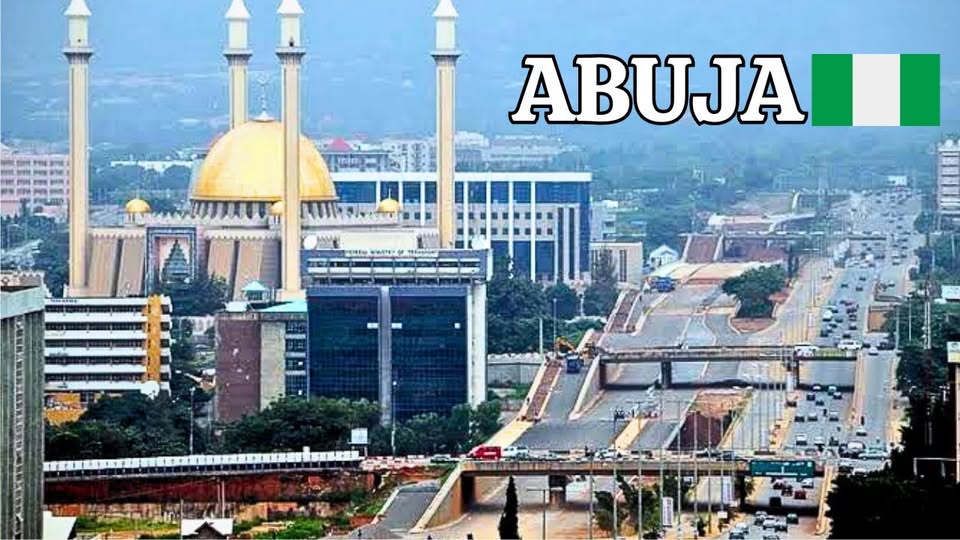
Abuja officially became the capital of Nigeria on December 12, 1991, replacing Lagos. The decision to move the capital was made to address issues such as overpopulation, congestion, and the geographic limitations of Lagos.

Located at the geographic center of Nigeria within the Federal Capital Territory, Abuja was planned and developed beginning in the late 1970s to serve as a neutral, accessible, and modern administrative center for the country.

Why Was The Capital Moved From Lagos To Abuja?

The decision to move Nigeria’s capital from Lagos to Abuja was influenced by several reasons: political, economic, geographic, and symbolic.

Lagos had served as the capital since 1914, but by the 1970s, it had become increasingly overcrowded and unsuitable for national administration.

Lagos had grown into one of Africa’s largest cities and Nigeria’s main commercial center. But this growth came with problems.

The city faced constant traffic, housing shortages, poor sanitation, and overstretched infrastructure. Its location, surrounded by water and limited by natural barriers, made expansion difficult.

Another major concern was political neutrality. Nigeria is home to hundreds of ethnic groups. Lagos, located in the Yoruba-dominated southwest, was seen as favoring one region over others.

Abuja was chosen because it sits near the geographic center of the country and doesn’t belong to any major ethnic group.

Abuja’s central location also made it more accessible from all parts of Nigeria. Unlike Lagos, which sits on the far southwest coast, Abuja allows for easier coordination and travel from different states.

See also  Jonathan Adagogo Green: Nigeria’s First Indigenous Professional Photographer

This strategic positioning supports national governance and the development of interior regions. Security played a part, too. Lagos, being a coastal city, was harder to defend and more exposed to external threats.

Abuja offered a more secure inland site with better control over access and planning. There was also symbolic meaning. Lagos had been the colonial capital under British rule.

Moving the capital to Abuja was a way to show Nigeria’s independence and growth as a nation. However, the move began in the mid-1970s under General Murtala Mohammed.

A panel led by Justice Akinola Aguda recommended Abuja. Construction started in the late 1970s, and by December 12, 1991, the capital officially moved under General Ibrahim Babangida’s leadership.

Who Declared Abuja The Capital Of Nigeria?

Abuja was officially declared the capital of Nigeria by General Ibrahim Badamosi Babangida on December 12, 1991. However, the journey to that declaration began much earlier and involved some key leaders.

The first person to propose moving the capital was General Yakubu Gowon in 1974. At the time, Lagos was overcrowded, chaotic, and geographically limited.

Gowon believed a more central and neutral location would be better for the country’s unity and administration. But it wasn’t until General Murtala Mohammed came into power in 1975 that the idea gained real momentum.

Murtala Mohammed created a seven-man committee, led by Justice Akinola Aguda, to study whether Lagos should remain the capital or not.

After detailed research, the committee recommended relocating the capital to a new area in the center of the country, which we now know as the Federal Capital Territory (FCT).

See also  Anglican bishop decries insecurity, urges protection of lives during Easter

The location was chosen for its neutrality among Nigeria’s major ethnic groups and its central position, which made it easier to access from all parts of the country.

Sadly, Murtala Mohammed was assassinated in 1976, and the project slowed down. But the idea didn’t die. In 1979, President Shehu Shagari revived the effort. By 1980, the planning phase began.

An American firm, International Planning Associates, designed the master plan. Japanese architect Kenzo Tange also contributed to the city’s modern design. Eventually, under Babangida’s leadership, Abuja was developed quickly.

Despite facing major challenges, like limited infrastructure and air access, his administration made the final move. On December 12, 1991, the seat of Nigeria’s federal government was officially moved from Lagos to Abuja.

Which Is bigger, Lagos Or Abuja?

When comparing Lagos and Abuja, Lagos is the biggest city in terms of population, economic significance, and urban scale. While Abuja is Nigeria’s capital and growing rapidly, it still lags behind Lagos in several key areas.

Population Size

As of 2025, Lagos has an estimated population of about 17.16 million people, making it the largest city in Nigeria and all of Africa.

Abuja’s population is around 4.2 million, roughly one-quarter the size of Lagos. Lagos has grown from just 325,218 people in 1950 to over 17 million today, with an annual growth rate of around 3.75%. Though Abuja’s growth rate is slightly higher at 4.58%, it is still much smaller in overall numbers.

Geographical Size And Density

Geographically, Abuja is larger. It spans about 1,769 square kilometers, compared to Lagos’s 1,171 square kilometers.] But Lagos is far more crowded.

See also  Royal row: Alaafin may publish Supreme Court ruling after 48-hour ultimatum

Its population density is about 6,871 people per square kilometer, while Abuja has far fewer people spread over a larger area. This makes Abuja feel more open and organized, while Lagos is often congested and densely packed.

Economic And Social Value

Lagos is Nigeria’s economic capital. It produces roughly 25% of the country’s GDP and is home to major industries, ports, and businesses.

It’s also extremely diverse, with over 250 ethnic groups living and working there. On the downside, about 66% of Lagos residents live in slums and face major infrastructure challenges.

Abuja, also, is the political and administrative center. It houses the Presidency, National Assembly, foreign embassies, and other federal institutions.

FOLLOW US ON:

FACEBOOK

TWITTER

PINTEREST

TIKTOK

YOUTUBE

LINKEDIN

TUMBLR

INSTAGRAM

Continue Reading
Click to comment

Leave a Reply

Your email address will not be published. Required fields are marked *

Lifestyle

Ibadan indigenes warn politicians against disrespecting Olubadan

Published

on

The Central Council of Ibadan Indigenes, on Monday, read a riot act to the politicians in Oyo State, especially in the ancient city, over disrespecting the sacred stool of Olubadan of Ibadanland, warning that any attempt to denigrate the revered stool will be met with severe consequences.

CCII President-General, Ajeniyi Ajewole, gave this warning in a statement released by the council’s Publicity Secretary, Kola Olomide, in Ibadan, the state capital, amid growing concerns over rising reckless  utterances and conducts in the state by some power-seeking politicians

He said recent actions by some political actors had crossed acceptable boundaries and posed a risk to the dignity of traditional institutions in Ibadanland.

Ajewole stressed that the council would not tolerate any form of disrespect directed at the Olubadan stool, warning further that the CCII would not sit idly by and watch the Olubadan throne desecrated for political gain.

CCII said, “The stool is sacred to the people of Ibadanland and must be treated with the highest respect at all times. Any attempt to denigrate the revered stool will be met with severe consequences.”

The PG added that the Olubadan remains a unifying father figure to all indigenes and residents of Ibadan, regardless of political affiliation.

He said, “All politicians in Oyo are sons and daughters of the Olubadan. They must conduct themselves with decorum, restraint, and absolute respect for the institution.

“Any attempt at casting aspersions on the person of Olubadan and the stool and turning around to tender any apology would not be tolerated any longer. You mess up with that stool, you must be ready to face the consequence(s).

See also  Jonathan Adagogo Green: Nigeria’s First Indigenous Professional Photographer

“The palace can never become any politician’s pawn; it is our symbol of strength and unity. This is the last time such nonsense will be condoned. Let politicians be warned, to be forewarned is to be forearmed. We will defend our tradition, our heritage, and our dignity,” the council warned.

It also reiterated that the institution is strictly non-partisan and has continued to maintain neutrality and respect for all political actors in the state.

The council expressed strong displeasure over incidents where politicians were seen raining curses on their opponents, describing such conduct as irresponsible and unacceptable.

Ajewole, therefore, urged political actors to exercise restraint, warning that political differences must never be allowed to escalate into attacks on cultural and traditional institutions.

He called for maturity in political engagement, saying, “Politics should never be reduced to insults, curses, or hostility. We urge all political actors to rise above bitterness and act in the interest of peace and unity.”

The CCII reaffirmed its commitment to protecting the sanctity of the Olubadan stool and called on all stakeholders to ensure that respect, peace, and decorum remain central to political activities in the state.

Continue Reading

Lifestyle

Nollywood actor Lateef Adedimeji, wife welcome triplet sons

Published

on

Popular Nollywood actor, Lateef Adedimeji, on Friday announced the arrival of his triplet sons with his wife and fellow actress, Adebimpe Oyebade, popularly known as Mo Bimpe.

Adedimeji made the announcement via his official Instagram page, sharing an emotional message in which he described the children as his world, responsibility, and legacy.

“I’ve been quiet… not absent. I was building, protecting, and embracing the greatest blessing of my life. God gave me more than I prayed for — a woman who became a mother of three, and three kings to call my own,” he wrote.

The actor, who closed the post with the Islamic expression of gratitude, “Alhamdulilah,” did not disclose the date of birth or the names of the children.

The announcement drew an outpouring of congratulations from fans and colleagues.

Fellow Nollywood actress, Mercy Aigbe wrote, “To God be the glory. Congratulations.”

OloyedeJuliana also wrote, “God is Good!!! God is Good!!!God is Good!!! Watching this again, I’m in tears, congratulations my fam, so happy for you two. Can’t believe
I’m an Auntie”

Also reacting, Omowumi Dada wrote, “Such GOODNEWS for the month of May. THANK YOU JESUSSSSSSSSSSSSS. Congratulations fam”

Adedimeji and Mo Bimpe, both prominent figures in the Yoruba film industry, had their wedding ceremony in 2021.

punch.ng

FOLLOW US ON:

FACEBOOK

TWITTER

PINTEREST

TIKTOK

YOUTUBE

LINKEDIN

INSTAGRAM

See also  Murtala Muhammed’s simplicity led to his assassination – Daughter
Continue Reading

Lifestyle

I take full responsibility, Sisi Alagbo’s husband apologises over leaked sex tape

Published

on

The husband of popular social media personality Eniola Fagbemi, known as Sisi Alagbo, Adesola Akeem, has issued a public apology over a leaked sex tape involving his wife, himself and another woman.

The video went viral on Monday and has since generated widespread controversy online.

The video, which depicted the trio in an intimate encounter, began circulating on WhatsApp groups and Telegram channels before spreading rapidly to gossip blogs, Instagram pages and explicit-content websites.

In the footage, Fagbemi is seen filming Akeem having sexual relations with the third woman while all three were unclothed. It remains unclear how the video made its way online.

Akeem, in a statement posted on his Facebook page on Thursday, said he took full responsibility for his actions and acknowledged the disappointment the incident had caused.

“I write with a deep sense of responsibility and sincere remorse to extend my heartfelt apologies to my family, friends, business associates, religious leaders, fans, loved ones, and the entire Nigerian public over the recent incident involving a leaked sex scandal.

“I acknowledge the disappointment, embarrassment, and concern this situation has caused, and I take full responsibility for my actions,” he wrote.

He added that his conduct had fallen short of the values expected of him by those who had trusted and supported him.

Akeem also directed specific apologies to family members, friends, business associates, and religious bodies.

“To my fans and supporters, I deeply regret letting you down,” he said.

He described the period as one of reflection and said he was committed to making better decisions and rebuilding trust.

See also  Anglican bishop decries insecurity, urges protection of lives during Easter

“I am committed to making better decisions, rebuilding trust, and upholding integrity in both my private and public life going forward,” he added.

Sisi Alagbo had on Wednesday also apologised on her verified Facebook account, saying she had been unable to eat or sleep since the video emerged.

“I own my mistakes, and I apologize with all sincerity for the video circulating online. I am deeply sorry to everyone who felt disappointed in me,” she wrote.

Fagbemi rose to prominence through her promotion of herbal concoctions and became a social media sensation after a viral video of her kneeling to greet Super Eagles striker Victor Osimhen at the 2025 Africa Cup of Nations in Morocco.

punch.ng

FOLLOW US ON:

FACEBOOK

TWITTER

PINTEREST

TIKTOK

YOUTUBE

LINKEDIN

INSTAGRAM

Continue Reading

Trending