
Connect with us

Education

FG Bans Igbo, Hausa, Yoruba In Schools, Declares English Sole Medium Of Instruction

Published

on

The Federal Government has cancelled the national policy mandating the use of indigenous languages like Hausa, Igbo and Yoruba as the medium of instruction in primary schools.

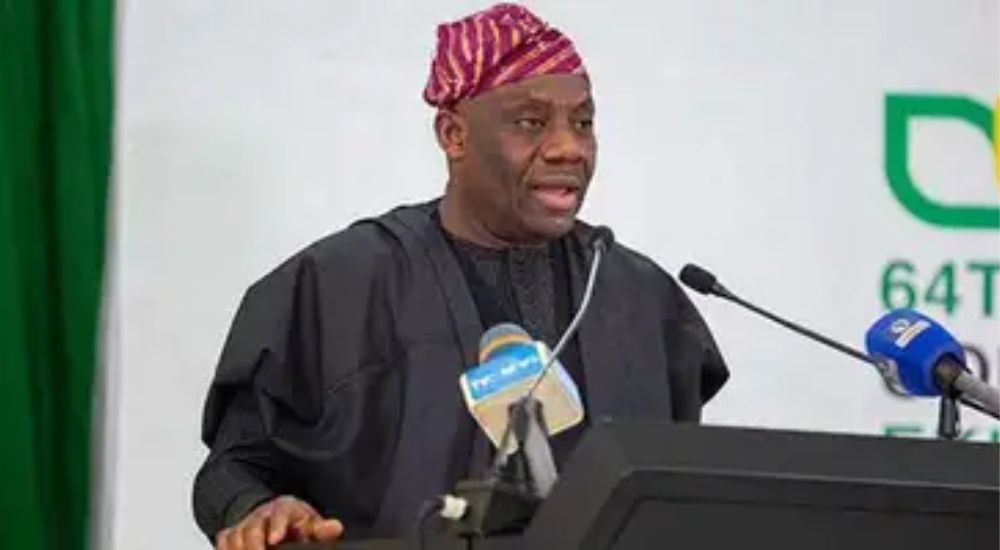
The minister of Education, Dr. Tunji Alausa, announced this development at the 2025 Language in Education International Conference, organized by the British Council in Abuja on Wednesday.

In 2022, the Nigerian government approved a National Language Policy (NLP), which stipulates that from Early Childhood Education to Primary Six, the language of instruction will be in the mother tongue or the language of the immediate community.

The policy aims to promote indigenous languages, recognise their equal status, and improve early childhood learning outcomes, while English remains the official language used in later education and formal settings.

Speaking at the conference, Alausa said English is now the language of instruction in Nigerian schools from primary to tertiary levels.

He said Nigerian children had been performing abysmally in public exams as a result of being taught in their mother tongue.

The minister stated that the decision to cancel the policy was based on extensive data analysis and evidence showing that the use of the mother tongue as the primary medium of instruction had negatively impacted learning outcomes in several parts of the country.

“We have seen a mass failure rate in WAEC, NECO, and JAMB in certain geo-political zones of the country, and those are the ones that adopted this mother tongue in an over-subscribed manner.

“This is about evidence-based governance. English now stands as the medium of instruction from the pre-primary, primary, junior secondary, senior secondary and to the tertiary education level.”

See also  NECO Opens Centre In United Kingdom

“Using the mother tongue language in Nigeria for the past 15 years has literally destroyed education in certain regions. We have to talk about evidence, not emotions,” he said.

According to him, data gathered from schools across the country revealed that students taught primarily in indigenous languages recorded higher failure rates in national examinations and struggled with basic English comprehension.

“The national policy on language has been cancelled. English now stands as the medium of instruction across all levels of education,” he declared.

The minister urged stakeholders with differing views to present verifiable data to support their positions, adding that the government remained open to evidence-based dialogue that would strengthen the education sector.

He commended the British Council for its continued partnership with Nigeria in advancing education reforms and promoting inclusive language and learning policies.

The Minister of State for Education, Prof. Suwaiba Ahmed, spoke on other areas of focus by the government to address the teaching and learning crisis at the foundational level of education.

Ahmad said a new training package had been designed for teachers to help with literacy and numeracy learning.

”Now we are designing a training package for the teachers that focuses on the learning of literacy and numeracy.

“This is specifically training teachers who teach across the foundation level from pre-primary to primary one to three.

“We are training them how best to teach literacy, how best to teach numeracy, and of course, the approach,” she said.

FOLLOW US ON:

FACEBOOK

TWITTER

PINTEREST

TIKTOK

YOUTUBE

LINKEDIN

TUMBLR

INSTAGRAM

Continue Reading
Click to comment

Leave a Reply

Your email address will not be published. Required fields are marked *

Education

Kebbi, Sokoto adjust school calendars for Ramadan

Published

on

Authorities in Kebbi State and Sokoto State have adjusted their 2025/2026 academic calendars to accommodate the ongoing Ramadan fast, reshuffling term dates and holiday periods across schools.

In Kebbi State, the Kebbi State Universal Basic Education Board (SUBEB) extended the ongoing Second Term by two weeks, altering the earlier timetable for the Ramadan break in all public and private primary schools.

Under the revised schedule, the term, previously set to end on February 13, 2026, will now run until February 27, 2026.

” The Ramadan break will begin on February 28 and end on March 21, while schools are to resume on March 22 to complete the term, now slated to close on May 1, 2026″

In a statement issued in Birnin Kebbi on Thursday, SUBEB said the adjustment was approved by the state Ministry for Basic and Secondary Education to ensure adequate academic coverage before the break.

“The extension of the Second Term by two weeks is aimed at allowing schools sufficient time to complete instructional activities and other academic engagements before the Ramadan break,” the statement said.

The board directed Education Secretaries, Head Teachers and School Administrators to strictly comply with the revised calendar to guarantee smooth implementation.

The updated academic plan shows that the First Term ran from August 24 to December 12, 2025, followed by a three-week holiday, while the Third Term is scheduled to begin on May 24 and end on August 14, 2026.

Similarly, the Sokoto State Ministry of Basic and Secondary Education announced adjustments to its calendar in preparation for Sallah.

See also  School not scam, foundation warns pupils

In a statement dated February 19, 2026, the Permanent Secretary, Dr. Sanusi Aliyu Binji, said the revised timetable was approved to ensure effective planning and coordination of school activities statewide.

According to the ministry, the Ramadan break will commence on March 6 and end on March 29, 2026, after which academic activities will resume as scheduled.

Both states urged principals, parents and guardians to take note of the changes and support efforts to maintain academic standards during the holy month of Ramadan, a period marked by fasting, prayer and reflection for Muslims.

Education officials say the adjustments are part of routine measures in northern Nigeria to balance religious observances with uninterrupted learning.

Continue Reading

Education

FG plans military medical college to tackle 340,000 doctor shortfall

Published

on

The Federal Government has announced plans to establish the Armed Forces College of Medicine and Health Sciences as part of efforts to address Nigeria’s estimated shortfall of 340,000 doctors.

The decision followed a high-level meeting involving the Minister of Education, Maruf Alausa; the Minister of State for Education, Suiwaba Ahmed; and the Minister of Defence, Christopher Musa, alongside other stakeholders in the education, defence and health sectors.

The development was disclosed in a statement signed by the Director of Press and Public Relations at the Federal Ministry of Education, Boriowo Folasade, on Friday.

According to the statement, Nigeria’s population has exceeded 240 million, while only 189 medical professionals are currently serving within the Armed Forces.

“While the nation’s population exceeds 240 million, only 189 medical professionals currently serve within the Defence Forces.

“He further highlighted Nigeria’s broader deficit of approximately 340,000 doctors, stressing the urgent need for scalable and innovative training models,” the statement read in part.

The proposed AFCOM&HS is designed “as a strategic national intervention to strengthen military healthcare services, address critical manpower shortages within the Armed Forces, and expand Nigeria’s overall medical training capacity.

“It will further position Nigeria as a regional hub for military medical training in West Africa.”

As part of broader reforms, the government said it has increased annual medical school admissions from about 5,000 to nearly 10,000, with projections to scale up to approximately 19,000 in the coming years.

The ministry noted that the new college would form a critical component of this expansion strategy, aimed at building a sustainable pipeline of combat casualty-trained doctors, surgeons, trauma specialists, emergency response medics, military public health and disaster response professionals, as well as other allied health personnel.

See also  FG, EU partner on €40m education project for N’west

The initiative aligns with the administration’s education reform agenda, with emphasis on strengthening science, technology, engineering, mathematics and medical sciences.

According to the statement, the college will operate within the existing university framework of the Nigerian Defence Academy in compliance with the Federal Government’s seven-year moratorium on new tertiary institutions and in line with the directive of President Bola Tinubu.

Clinical training will take place in accredited federal and military hospitals.

Medical cadets will gain admission through the Joint Admissions and Matriculation Board and, upon completion of their training, will be commissioned as Captains in the Armed Forces.

A Technical Working Group comprising representatives of the Federal Ministry of Education, Ministry of Defence, Nigerian Defence Academy, MODHIP, the Medical and Dental Council of Nigeria, the National Universities Commission, JAMB and other regulatory bodies has been constituted to oversee compliance and quality assurance.

The government said the necessary processes are being put in place for admissions to commence by October or November 2026.

punch.ng

FOLLOW US ON:

FACEBOOK

TWITTER

PINTEREST

TIKTOK

YOUTUBE

LINKEDIN

TUMBLR

INSTAGRAM

Continue Reading

Education

PICTURES: Zulum approves N12.9bn aeronautics scholarship for 54 Borno students

Published

on

Babagana Zulum, Governor of Borno State, has approved a N12.9 billion scholarship scheme to sponsor 54 indigenes of the state to study aeronautics and engineering, alongside various professional certifications, at Isaac Balami University of Aeronautics and Management.

The Senior Technical Assistant to the governor on Print and Digital Communications, Abdulrahman Bundi, said in a statement on Friday that the training programme covers basic pilot training.

PHOTOS: Zulum approves N12.9bn aeronautics scholarship for 54 Borno students

It includes 10 beneficiaries specialising in Aerospace Engineering, 11 in Electrical and Electronic Engineering, 11 in Mechatronics Engineering, 12 in Software Engineering, and 10 in Systems Engineering.

At a brief ceremony held at the Government House in Maiduguri on Thursday night, he said, “Zulum presented a cheque for N2.5 billion to the institution, covering the annual tuition and associated expenses, with the 5-year total package valued at N12.9 billion”

Addressing the beneficiaries, Zulum charged them to remain focused and dedicated to their studies.

Zulum during the cheque presentation

He emphasised that the selection process was deliberately designed to ensure equity across the state, with two students chosen from each of Borno’s 27 Local Government Areas.

“What matters most is not just gaining admission, but how focused you will be in your studies. I advise you to remain dedicated and become good ambassadors of our state,” the governor stated.

In addition to funding their education, the governor announced an immediate financial support package of N500,000 per student to cover resumption logistics and other incidental expenses.

Giving an overview of the selection process, the State Commissioner for Education, Lawan Abba Wakilbe, revealed that the scholarship attracted interest from across the state.

See also  NECO Opens Centre In United Kingdom
PHOTOS: Zulum approves N12.9bn aeronautics scholarship for 54 Borno students

He disclosed that the ministry received over 3,000 applications.

According to the commissioner, the large pool was initially shortlisted to 1,200 candidates, who were then subjected to a written examination, from which the final 54 successful candidates emerged.

“These programmes reflect Governor Zulum’s commitment to human capital development, youth empowerment and investment in education,” Wakilbe said.

The founder of the university, Isaac Balami, an indigene of Borno State, commended Governor Zulum for the initiative, while assuring the government that the students would receive world-class training.

He expressed confidence that they would be among those who would eventually build the first made-in-Nigeria aircraft.

Continue Reading

Trending