Connect with us

Business

Govt eyes N1.49tn electricity export revenue

Published

on

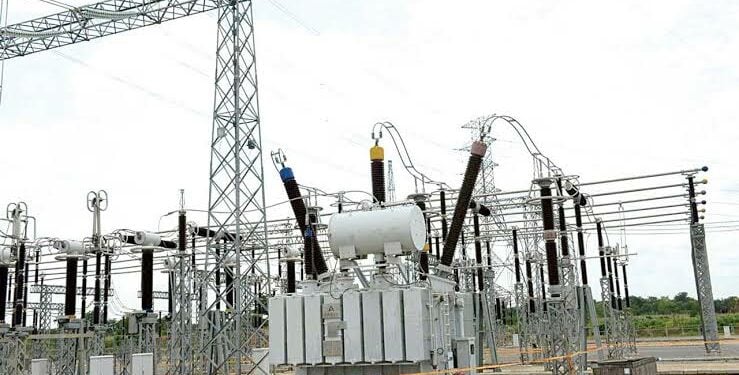
The Federal Government is projecting nearly $1bn (about N1.49tn) in annual revenue from electricity exports to 15 West African Countries under the Economic Community of West African States sub-region from June 2026.

The earnings are based on what a full 600 megawatts export capacity is capable of generating at the prevailing regional tariff, as Nigeria pushes toward full participation in the West African power market following a landmark grid synchronisation exercise carried out this month.

The Minister of Power, Chief Adebayo Adelabu, hinted at the new revenue stream at a press conference on Wednesday in Abuja, where he announced that Nigeria successfully conducted a grid synchronisation test with 15 West African countries for four hours on November 8, 2025.

He said the development positions Nigeria to fully exploit its strategic role as the regional power hub under the West African Power Pool, especially as generation companies ramp up compliance with free-governor control, an operational discipline crucial to regional grid stability.

On November 8, 2025, Nigeria successfully conducted a grid synchronisation test connecting the national electricity grid with the interconnected West African Power Pool system.

The synchronisation exercise, conducted between 05:04 am and 09:04 am, involved the Nigerian grid, which includes the Niger Republic and parts of Benin and Togo, and the rest of West Africa’s interconnected systems covering Ghana, Côte d’Ivoire, Burkina Faso, Liberia, Sierra Leone, Guinea, Senegal, The Gambia, Guinea-Bissau, and Mali.

The minister said for four uninterrupted hours, power flowed seamlessly across national borders, operating at a single stable frequency and proving that West Africa is now technically capable of functioning as a unified power bloc. This exercise represents the first time in history that Nigeria has operated in a unified, stable, and fully harmonised configuration with the rest of the sub-region.

See also  Banks deposit N4.15trn with CBN as excess liquidity persists

But beyond the latest achievement, the minister said the government is working toward achieving permanent grid synchronisation by June 2026, with a second 48-hour test run planned once ongoing discussions with regional operators are concluded.

The Executive Director, Market Operations at the Nigerian Independent System Operator, Edmund Eje, said Nigeria currently allocates 600MW for its bilateral power trade agreements each day. According to data from the Nigerian Electricity Regulatory Commission, Nigeria continues to offer the cheapest electricity tariffs in West Africa.

NERC figures show that the average approved end-user tariff in Nigeria is about $0.07 per kilowatt-hour (approximately N100.27/kWh), representing just 35.71 per cent of the average $0.19/kWh charged by several other countries in the sub-region.

If exported power is billed at this regional tariff, government officials estimate that delivering the full 600MW allocation could generate close to $1bn in annual revenue.

A breakdown of the figures shows that exporting 600MW, equivalent to 600,000 kilowatts, at the prevailing tariff of $0.19 per kilowatt-hour would fetch about $114,000 every hour. This translates to roughly $2.73m daily and an estimated $998.6m in annual revenue.

The projection assumes uninterrupted export of the contracted volume once a permanent grid synchronisation is completed at a tentative date of June 2026. Officials say the revenue could provide a critical buffer for the power sector, help reduce liquidity shortfalls, and accelerate expansion of regional energy markets.

The government, however, assured electricity consumers that exporting power to West African countries will not compromise supply to the domestic market. Speaking further in his address, Adelabu noted that the milestone also marks the most successful synchronisation attempt since 2007, when a trial collapsed after seven minutes.

See also  PENGASSAN stops gas, crude supply to Dangote refinery

He said, “The benefits of synchronisation with other WAPP countries would extend directly to the Nigerian people. A more stable grid improves the performance of essential services such as hospitals, water supply, transport systems, digital infrastructure, and public institutions.

“As ongoing transmission expansion projects, including the North-Core line, the Ajegunle 330 kV Substation, the Kaduna–Kano transmission upgrades, and the Gwagwalada–Gurara connection, are completed, synchronisation will help deliver more reliable power to homes and industries nationwide. While expectations must remain realistic, this achievement provides the structural foundation for the improvements Nigerians have long awaited.”

The minister added that Nigeria’s transmission wheeling capacity has risen to 8,500 megawatts, creating a more stable backbone for future export commitments. However, despite this available capacity, low demand from the electricity distribution companies has kept actual generation at around 5,000MW, leaving about 3,500MW stranded within the Nigerian Electricity Supply Industry. The industry achieved an all-time generation peak of 5,801.44MW earlier this year.

He said, “Today, the minimum grid capacity we can even communicate is 8,500MW of capacity. If our generation reaches 8,000MW today, the grid can comfortably and conveniently transmit it. We are even sure that it is higher than that, but it is put at a conservative level, at 8,500 MW.

“We have the capacity and the facility to generate more power in Nigeria, and investment is still open to interested power sector investors. As long as there is demand in the other 14 countries of West Africa, Nigeria can easily export energy to those countries.”

Earlier, at the NISO Maiden Stakeholders’ Engagement themed “Building a Resilient and Competitive Electricity Market – The Role of NISO,” Managing Director Abdul Mohammed said the successful grid synchronisation represents more than a technical achievement.

See also  NNPC / Heirs Energies ends gas flaring at OML 17, seals deals with offtakers

NISO Executive Director for Systems Operation, Nafisatu Ali, said that 60 per cent of Nigeria’s power-generating plants have now adopted the operating regime of free governor control, significantly boosting the country’s readiness for cross-border electricity trade.

She explained that since the Nigerian Electricity Regulatory Commission issued the directive on governor control, compliance has steadily improved.  “Before now, compliance was very low, about 20 per cent. But as of the last check two days ago, at least 60 per cent of generators have implemented the three-governor system,” Ali said.

She noted that this advancement was evident during the recent grid synchronisation test, when a generator tripped in Côte d’Ivoire, and Nigerian generators responded automatically, maintaining stability.

“The intention is to achieve 100 per cent compliance. This system has already improved grid resilience, ensuring automatic responses whenever there is a tripping event,” she added.

The Free governor control is a critical operational regime in power systems that allows generating units to automatically respond to changes in grid frequency. When a generator trips or demand suddenly spikes, FGC enables other units to adjust output instantly, stabilising the grid without manual intervention.

With the system in place, Nigerian Gencos can respond automatically to frequency disturbances, reducing grid instability and strengthening investor confidence in the country’s electricity market.

punch.ng

FOLLOW US ON:

FACEBOOK

TWITTER

PINTEREST

TIKTOK

YOUTUBE

LINKEDIN

TUMBLR

INSTAGRAM

Continue Reading
Click to comment

Leave a Reply

Your email address will not be published. Required fields are marked *

Business

Agricultural quarantine service postpones release of recruitment shortlist

Published

on

The Nigeria Agricultural Quarantine Service has postponed the publication of shortlisted candidates for its ongoing recruitment exercise, which was initially scheduled for Thursday, August 13.

NAQS said the decision was made to ensure a thorough, transparent and accurate recruitment process.

The agency announced the postponement in a public notice signed by the Director of Human Resources, ACG Issaka Ahmed, and posted on its X handle on Friday.

“In order to ensure a thorough, transparent and accurate process, we are unable to release the list of shortlisted candidates as scheduled,” the notice stated.

The agency apologised for the delay and urged applicants and members of the public to remain patient while awaiting a new date.

“We sincerely regret any inconvenience or uncertainty this delay may have caused and appreciate the patience, understanding and continued interest of all applicants.

“All applicants and the general public are hereby notified that a new date will be communicated in due course through our official communication channels,” it said.

The agency advised applicants to rely only on information released through its official channels.

The recruitment exercise, which opened on July 28 and closed on August 10, attracted 606,928 attempted applications, while 407,659 were successfully submitted, according to statistics released by NAQS on Wednesday.

The agency said 199,269 applications were incomplete at the close of the application period.

The Assistant Superintendent of Quarantine II cadre, requiring HND or bachelor’s degree, recorded the highest number of applications with 290,076, followed by Quarantine Assistant II with 117,177 applications.

Other cadres included the NCE category with 79,685 applications, OND with 70,170, and the Superintendent cadre requiring a master’s degree with 13,183 applications.

See also  Foreign debt servicing gulps almost $1bn in two months

PUNCH Online reports that NAQS said it will conduct a computer-based test and interviews on August 15, after shortlisted candidates are released on August 13.

However, candidates will now await new dates.

The recruitment exercise covers the Superintendent, Inspectorate and Assistant cadres.

Source: punchng.com

FOLLOW US ON:

FACEBOOK

TWITTER

PINTEREST

TIKTOK

YOUTUBE

LINKEDIN

INSTAGRAM

Continue Reading

Business

Customs dismiss smuggling, revenue leakage allegations

Published

on

The Nigeria Customs Service has dismissed allegations of increased smuggling, revenue leakage, recruitment impropriety and manipulation of succession within the service, describing them as a misrepresentation of its operations and administrative processes.

The service’s National Public Relations Officer, Deputy Comptroller Abdullahi Maiwada, stated this in a response released on Thursday to an investigative report published by a media outlet (not PUNCH) on August 7, 2026.

The report had alleged intensified smuggling along the Seme, Idiroko, Ilaro, Ipokia and Igbeti-Kishi corridors, as well as manipulation of the 846 valuation code at the Apapa, Tin Can Island and PTML Area Commands.

Maiwada said the claim of a surge in smuggling was inconsistent with the service’s enforcement activities, pointing to regular seizures recorded along the affected corridors.

“Our responsibility is to reduce smuggling to the barest minimum, not to claim that it can be completely eradicated,” he said.

On the 846 valuation code, the NCS explained that it was a digital tool designed for vehicles with non-standard or non-compliant Vehicle Identification Numbers, including specialised heavy equipment, classic vehicles and customised models.

“The 846 code is an established digital valuation code within the Customs portal, specifically designated for vehicles with non-standard or non-compliant Vehicle Identification Numbers,” Maiwada said.

He added that standard vehicles were assessed automatically through manufacturer-linked databases, while 846 applications were subjected to secondary approval by valuation officers and Area Controllers.

Maiwada said discrepancies discovered through post-clearance audits could lead to Demand Notices for the recovery of short-collected duties and sanctions against offending operators, adding that revenue collections at major ports had reached historic levels under the digital framework.

On the recruitment of Assistant Superintendents of Customs II, the Service said the exercise was conducted under the authorisation of the Nigeria Customs Service Board and in line with the NCS Act 2023 and Federal Character Commission guidelines.

See also  See Full List of Top 10 World’s Largest Economies in 2026

It said successful candidates were issued provisional offers subject to medical verification, background checks and formal acceptance.

The Service also rejected allegations of succession manipulation and favouritism among officers, saying promotions were determined by seniority, merit, promotion examinations and available vacancies in accordance with established regulations.

“Succession and promotion within the Service are governed by established rules and career progression structures, not personal preference,” the Service said.

Maiwada said leadership training for Deputy Comptrollers was part of the Service’s human capital development strategy, aimed at strengthening trade operations, intelligence management and executive leadership.

He explained that approved training programmes and international exposures were funded through budgetary allocations or formal technical assistance arrangements with partner institutions.

Responding to calls for independent investigations, the NCS said it remained subject to oversight by the Federal Ministry of Finance, National Assembly, Office of the Auditor-General for the Federation and anti-corruption agencies.

“The management maintains a firm, intolerant posture toward corruption, revenue leakage or administrative misconduct,” the Service stated.

It added that any officer or stakeholder found culpable would face disciplinary action and prosecution in accordance with the law, while assuring Nigerians that the Service would cooperate with any legitimate investigation by statutory authorities.

Source: punchng.com

FOLLOW US ON:

FACEBOOK

TWITTER

PINTEREST

TIKTOK

YOUTUBE

LINKEDIN

INSTAGRAM

Continue Reading

Business

Patience Jonathan revealed she mentored Azikel refinery boss Eruani from ‘small boy’ to big businessman

Published

on

Ex-President Goodluck Jonathan’s wife, Patience, has described the Group President of Azikel Group, Dr Azibapu Eruani, as a “small boy” she raised and mentored into the league of Nigeria’s biggest businessmen.

She said her guidance was behind his bold entry into big business at a relatively young age.

The former First Lady spoke on Tuesday in a video which went viral on Thursday during an inspection tour of the Azikel Refinery in Obunagha, Bayelsa State, alongside other dignitaries.

She said she personally introduced Eruani to billionaire businessmen, Aliko Dangote and Aminu Dantata, and pushed him to aspire to their level despite being the youngest among them.

“He’s a boy that I brought up. We are always together. Although he’s the little one among us when we are friends — Dangote, Seyi, Dantata, Eruani — among us, he’s the smallest. But I made sure he followed the Dangotes, he followed Dantata.

“Because I’m a woman in their midst, I made sure I told this small boy, ‘Go and follow them, and stop the grammar.’ But when he told me that one day he would be like Dangote, I said, ‘You’re thinking too high.’ I prayed to God to grant him his heart’s desire,” she said.

Group President of Azikel Group, Dr Azibapu Eruani

The former First Lady also recalled how the immediate past APC administration under Muhammadu Buhari initially failed to grant Eruani a refinery licence before eventually approving three.

“During the Buhari administration, he and others came to me and told me they were going to apply for a refinery. I told him, ‘Eruani, your brother, the President, did not give you a refinery.

See also  Banks deposit N4.15trn with CBN as excess liquidity persists

“Is it the APC government that will give you one?’ I prayed it would happen. But later, they came back and told me they had been given three refineries,” she said.

The inspection coincided with the arrival of the refinery’s Crude Distillation Unit, a major milestone in the development of the $1bn facility.

The 25,000 barrels-per-day plant is a private hydro-skimming refinery designed to process condensate into petrol, diesel, aviation fuel, kerosene and other products.

It is set to become Nigeria’s second-largest full-slate refinery and the first major privately owned refinery in the Niger Delta.

The Managing Director/Chief Executive Officer of the Niger Delta Development Commission, Samuel Ogbuku, who joined the inspection tour, commended Eruani for his perseverance, noting that he had attended the project’s groundbreaking ceremony eight years ago.

Ogbuku described the refinery as an inspiration and a potential catalyst for investment, job creation and economic growth in Bayelsa State, and urged residents, particularly youths, to key into the opportunities it would create.


He also praised the Bayelsa State Government for improving road infrastructure leading to the refinery site and called for continued support for the project.

Governor Douye Diri, who was represented at the inspection by his deputy, Peter Akpe, has consistently backed the project, which is expected to employ hundreds of workers and drive industrialisation in the state.

Other dignitaries at the event included the Chairman of the Bayelsa State Council of Traditional Rulers, King Bubaraye Dakolo; Vice President of Azikel Group, Presley Asemota; and Isaac Yalah, among others.

See also  Marketers fault Dangote’s 500,000-litre fuel delivery threshold

Source: punchng.com

FOLLOW US ON:

FACEBOOK

TWITTER

PINTEREST

TIKTOK

YOUTUBE

LINKEDIN

INSTAGRAM

Continue Reading

Trending