Connect with us

Business

Govt eyes N1.49tn electricity export revenue

Published

on

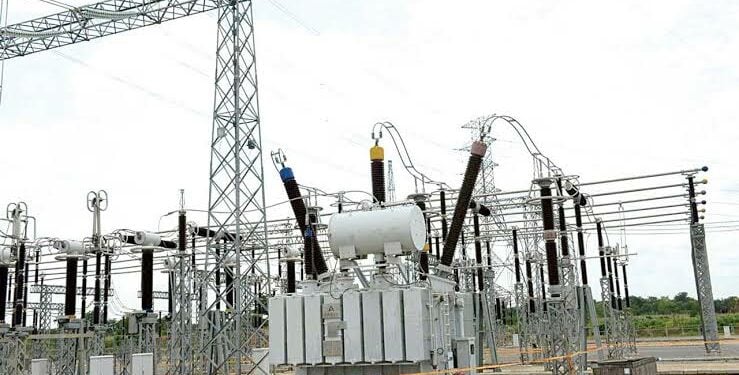
The Federal Government is projecting nearly $1bn (about N1.49tn) in annual revenue from electricity exports to 15 West African Countries under the Economic Community of West African States sub-region from June 2026.

The earnings are based on what a full 600 megawatts export capacity is capable of generating at the prevailing regional tariff, as Nigeria pushes toward full participation in the West African power market following a landmark grid synchronisation exercise carried out this month.

The Minister of Power, Chief Adebayo Adelabu, hinted at the new revenue stream at a press conference on Wednesday in Abuja, where he announced that Nigeria successfully conducted a grid synchronisation test with 15 West African countries for four hours on November 8, 2025.

He said the development positions Nigeria to fully exploit its strategic role as the regional power hub under the West African Power Pool, especially as generation companies ramp up compliance with free-governor control, an operational discipline crucial to regional grid stability.

On November 8, 2025, Nigeria successfully conducted a grid synchronisation test connecting the national electricity grid with the interconnected West African Power Pool system.

The synchronisation exercise, conducted between 05:04 am and 09:04 am, involved the Nigerian grid, which includes the Niger Republic and parts of Benin and Togo, and the rest of West Africa’s interconnected systems covering Ghana, Côte d’Ivoire, Burkina Faso, Liberia, Sierra Leone, Guinea, Senegal, The Gambia, Guinea-Bissau, and Mali.

The minister said for four uninterrupted hours, power flowed seamlessly across national borders, operating at a single stable frequency and proving that West Africa is now technically capable of functioning as a unified power bloc. This exercise represents the first time in history that Nigeria has operated in a unified, stable, and fully harmonised configuration with the rest of the sub-region.

See also  First Abu Dhabi Bank to open Nigerian office in sub-Saharan push

But beyond the latest achievement, the minister said the government is working toward achieving permanent grid synchronisation by June 2026, with a second 48-hour test run planned once ongoing discussions with regional operators are concluded.

The Executive Director, Market Operations at the Nigerian Independent System Operator, Edmund Eje, said Nigeria currently allocates 600MW for its bilateral power trade agreements each day. According to data from the Nigerian Electricity Regulatory Commission, Nigeria continues to offer the cheapest electricity tariffs in West Africa.

NERC figures show that the average approved end-user tariff in Nigeria is about $0.07 per kilowatt-hour (approximately N100.27/kWh), representing just 35.71 per cent of the average $0.19/kWh charged by several other countries in the sub-region.

If exported power is billed at this regional tariff, government officials estimate that delivering the full 600MW allocation could generate close to $1bn in annual revenue.

A breakdown of the figures shows that exporting 600MW, equivalent to 600,000 kilowatts, at the prevailing tariff of $0.19 per kilowatt-hour would fetch about $114,000 every hour. This translates to roughly $2.73m daily and an estimated $998.6m in annual revenue.

The projection assumes uninterrupted export of the contracted volume once a permanent grid synchronisation is completed at a tentative date of June 2026. Officials say the revenue could provide a critical buffer for the power sector, help reduce liquidity shortfalls, and accelerate expansion of regional energy markets.

The government, however, assured electricity consumers that exporting power to West African countries will not compromise supply to the domestic market. Speaking further in his address, Adelabu noted that the milestone also marks the most successful synchronisation attempt since 2007, when a trial collapsed after seven minutes.

See also  Monopoly fears rise as Dangote controls N14.4tn petrol market

He said, “The benefits of synchronisation with other WAPP countries would extend directly to the Nigerian people. A more stable grid improves the performance of essential services such as hospitals, water supply, transport systems, digital infrastructure, and public institutions.

“As ongoing transmission expansion projects, including the North-Core line, the Ajegunle 330 kV Substation, the Kaduna–Kano transmission upgrades, and the Gwagwalada–Gurara connection, are completed, synchronisation will help deliver more reliable power to homes and industries nationwide. While expectations must remain realistic, this achievement provides the structural foundation for the improvements Nigerians have long awaited.”

The minister added that Nigeria’s transmission wheeling capacity has risen to 8,500 megawatts, creating a more stable backbone for future export commitments. However, despite this available capacity, low demand from the electricity distribution companies has kept actual generation at around 5,000MW, leaving about 3,500MW stranded within the Nigerian Electricity Supply Industry. The industry achieved an all-time generation peak of 5,801.44MW earlier this year.

He said, “Today, the minimum grid capacity we can even communicate is 8,500MW of capacity. If our generation reaches 8,000MW today, the grid can comfortably and conveniently transmit it. We are even sure that it is higher than that, but it is put at a conservative level, at 8,500 MW.

“We have the capacity and the facility to generate more power in Nigeria, and investment is still open to interested power sector investors. As long as there is demand in the other 14 countries of West Africa, Nigeria can easily export energy to those countries.”

Earlier, at the NISO Maiden Stakeholders’ Engagement themed “Building a Resilient and Competitive Electricity Market – The Role of NISO,” Managing Director Abdul Mohammed said the successful grid synchronisation represents more than a technical achievement.

See also  FG plans 500 CNG stations to cut petrol use

NISO Executive Director for Systems Operation, Nafisatu Ali, said that 60 per cent of Nigeria’s power-generating plants have now adopted the operating regime of free governor control, significantly boosting the country’s readiness for cross-border electricity trade.

She explained that since the Nigerian Electricity Regulatory Commission issued the directive on governor control, compliance has steadily improved.  “Before now, compliance was very low, about 20 per cent. But as of the last check two days ago, at least 60 per cent of generators have implemented the three-governor system,” Ali said.

She noted that this advancement was evident during the recent grid synchronisation test, when a generator tripped in Côte d’Ivoire, and Nigerian generators responded automatically, maintaining stability.

“The intention is to achieve 100 per cent compliance. This system has already improved grid resilience, ensuring automatic responses whenever there is a tripping event,” she added.

The Free governor control is a critical operational regime in power systems that allows generating units to automatically respond to changes in grid frequency. When a generator trips or demand suddenly spikes, FGC enables other units to adjust output instantly, stabilising the grid without manual intervention.

With the system in place, Nigerian Gencos can respond automatically to frequency disturbances, reducing grid instability and strengthening investor confidence in the country’s electricity market.

punch.ng

FOLLOW US ON:

FACEBOOK

TWITTER

PINTEREST

TIKTOK

YOUTUBE

LINKEDIN

TUMBLR

INSTAGRAM

Continue Reading
Click to comment

Leave a Reply

Your email address will not be published. Required fields are marked *

Business

Marketers push N800/litre petrol, seek import licences

Published

on

Independent petroleum marketers on Monday pushed for the restoration of importation rights and projected that the pump price of Premium Motor Spirit, popularly called petrol, could fall below N800 per litre as the Federal Government intensified efforts to force down the cost of petrol.

The development came as the Federal Government met with major operators in the downstream petroleum sector, including representatives of the Dangote Petroleum Refinery, over what it described as the disconnect between falling global crude oil prices and the relatively high pump prices of petrol in the domestic market.

The stakeholders’ meeting on cost-reflective pricing of PMS, held at the headquarters of the Nigerian Midstream and Downstream Petroleum Regulatory Authority in Abuja, brought together the Federal Competition and Consumer Protection Commission, the Independent Petroleum Marketers Association of Nigeria, the Major Energy Marketers Association of Nigeria, the Depot and Petroleum Products Retailers Association of Nigeria, the Depot and Petroleum Products Marketers Association of Nigeria, the Nigerian Association of Road Transport Owners, and other major operators in the sector.

Also in attendance were chief executives and representatives of TotalEnergies, Eterna Plc, Matrix Energy Group, officials of the NMDPRA, and delegates from the Dangote refinery.

The PUNCH reports that petrol prices have remained a major source of hardship for households and businesses in Nigeria, with pump prices surging following the spike in global crude oil prices triggered by tensions in the Middle East, particularly between Iran and the United States.

Although crude prices have moderated after diplomatic efforts eased the tensions, the reduction has yet to be fully reflected in domestic petrol prices, prompting the Federal Government to convene a stakeholders’ meeting aimed at driving a fair reduction in pump prices.

The National President of the Independent Petroleum Marketers Association of Nigeria, Abubakar Maigandi, urged the government to permit independent marketers to import petroleum products directly, saying greater competition would ultimately reduce prices.

Maigandi also called for support for local refineries, particularly the Dangote Petroleum Refinery, while stressing the need to allow marketers to import products whenever necessary.

“Our major is that if products are to be distributed, let IPMAN buy products directly from the Dangote refinery and then, if we request importation, let IPMAN import by themselves. What we are trying to encourage is our local refinery. Let the government allow the local refinery to function properly and assist those who intend to refine products too,” he said.

The IPMAN president assured Nigerians that independent marketers were prepared to slash petrol prices significantly and projected that pump prices could fall below N800 per litre under the right market conditions.

“The price of the product is coming down bit by bit. Even when the price was increased, it was not increased at the same time. Likewise, now, as the price is coming down, we too are bringing the price down. If you check prices all over the country, you will see that independent petroleum marketers are reducing their prices gradually. Presently, we have reduced by N125 per litre nationwide,” he stated.

Miagandi added, “At any time when there is a reduction in price, we are ready to reduce the price to even below N800 per litre, not even N900. It depends on the way we buy the product from the private depot owners and the Dangote refinery.

See also  First Abu Dhabi Bank to open Nigerian office in sub-Saharan push

“I thank God that the Dangote refinery has accepted independent petroleum marketers to start purchasing products directly. It is a plus, and very soon the populace will see the change in terms of price.”

The renewed push for importation comes amid an intense pricing battle in the downstream sector following the commencement of large-scale production at the Dangote refinery and the deregulation of the petrol market.

Speaking to journalists after a closed-door session with the stakeholders, the Minister of State for Petroleum Resources (Oil), Senator Heineken Lokpobiri, said the government remained concerned that current petrol prices were not reflective of prevailing crude oil prices in the international market.

According to him, the government had engaged marketers in frank discussions aimed at ensuring that the reduction in global crude prices translates into lower pump prices for Nigerians.

Lokpobiri said, “The engagements are ongoing. We had very fruitful and frank discussions with the marketers and the leaders of the downstream sector of the petroleum industry with a view to driving down the price of PMS.

“My own opinion is that the petrol prices are not cost-reflective; they are not reflective of the cost of crude oil. But the marketers are also saying that crude oil prices are still high.

“In fact, somebody told us right there that the crude oil price for a month is still over $90 per barrel. But we are saying that when Brent crude was over $118 per barrel, the price was rapidly going up. Now that the price has come down drastically, why has petrol not come down correspondingly? That is a worry.”

The minister said the government had communicated the concerns of consumers to operators and directed them to return with practical measures that would lead to lower petrol prices.

“We have said that these are the issues of concern to the government. They have also said they will go back and think about what they can put together with a view to addressing the issue of the high cost of PMS that is not reflective of the price of crude in the market.

“We told them the concern of the Nigerian consumer, and they have also said they will go back and think of what concrete steps can be taken with a view to ensuring that the price drops,” he stated.

On when Nigerians should expect a reduction in petrol prices, Lokpobiri said discussions were still ongoing and declined to give a deadline. “As we called you today, we will call you as soon as possible. But the important thing is that discussions are ongoing,” he added.

Before the closed-door meeting, Lokpobiri warned petroleum marketers against using profits from previously acquired expensive fuel inventories as justification for maintaining high petrol prices, insisting that the benefits of lower replacement costs must be passed on to consumers.

The government said the continued disconnect between falling international crude oil prices and domestic petrol prices had become a source of concern, warning petroleum marketers against sustaining high pump prices of Premium Motor Spirit despite declining global crude prices and insisting that Nigerians should enjoy the benefits of lower replacement costs in a deregulated market.

He insisted that temporary gains realised from inventories purchased when crude oil prices were higher should not become the basis for sustaining elevated pump prices after global oil prices had declined.

See also  Job losses loom as more Inland Container Terminals shut down

“I am aware that PMS pricing is influenced by several factors beyond crude oil prices, but it is equally important to distinguish between genuine replacement cost and windfall gains arising from inventory management.

“Temporary gains realised from inventories acquired at higher prices should not become the basis for sustaining elevated pump prices after replacement costs have declined. As inventories are replenished at lower costs, the benefits of those lower costs should be transmitted to consumers in a timely and transparent manner. That is the essence of a competitive and efficiently functioning market,” he stated.

According to the minister, as marketers replenish their stocks at lower costs, reductions in procurement expenses should be reflected promptly in ex-depot and retail petrol prices in line with the principles of a competitive and efficient deregulated market.

The minister added that the Federal Government remained committed to protecting consumers in the post-subsidy era, stressing that deregulation was not designed to create opportunities for excessive pricing or market distortions but to deepen competition, improve efficiency, and deliver value to Nigerians.

He further warned that sustaining high energy costs beyond what prevailing market conditions justify could worsen inflationary pressures and undermine the gains recorded in moderating the country’s inflation rate.

The minister urged petroleum marketers and operators to immediately transmit the benefits of falling global crude oil prices to Nigerian consumers, warning that deregulation should not be exploited to sustain high petrol prices and generate windfall gains.

His comments come amid growing public concerns over the slow pace of reductions in petrol prices despite the sharp moderation in crude oil prices in recent months.

According to the minister, international crude prices traded between $61 and $65 per barrel in January before surging above $118 per barrel in April following heightened geopolitical tensions in the Middle East. However, prices have since declined to around $71 per barrel after the easing of the tensions.

He noted that while the earlier rise in crude prices exerted upward pressure on petrol prices, the subsequent decline had not been reflected proportionately in domestic pump prices.

“Ordinarily, such movements in crude oil prices should be reflected in the pricing of refined petroleum products. While the initial increase in crude prices understandably exerted upward pressure on PMS prices, the subsequent moderation in crude oil prices has not translated into a commensurate reduction in pump prices across the domestic market.

“This disconnect has understandably raised concerns. PMS peaked at about N1,596 per litre in May and currently sells at around N1,296 per litre. While there has been some reduction, the adjustment has not been commensurate with the decline in underlying market conditions,” the minister said.

He also called for the speedy operationalisation of the National Strategic Stock, describing it as a critical instrument for safeguarding national energy security and moderating future price shocks.

See also  Labour rejects N100,000 minimum wage proposal; see the amount NLC proposed

“The National Strategic Stock will strengthen national energy security, reduce exposure to supply disruptions, and moderate price volatility. There is urgency in ensuring that this mechanism becomes fully operational,” he said.

Nigeria’s petrol market has witnessed sharp fluctuations in prices over the past year, with pump prices peaking at over N1,500 per litre in some parts of the country following spikes in global crude oil prices and exchange rate volatility.

However, the recent decline in international oil prices and improved domestic refining capacity have increased pressure on marketers to cut prices, with many consumers expecting further reductions in the coming weeks.

The outcome of the government’s engagement with operators could determine the next phase of competition in the downstream sector and whether Nigerians will eventually see petrol prices fall to the N800 per litre level projected by marketers.

Earlier in his opening remarks, the Authority Chief Executive of the NMDPRA, Rabiu Umar, said the meeting was convened at the directive of the minister to address the growing concerns surrounding petrol pricing and ensure that Nigerians benefit from improvements in global market conditions.

Umar recalled that a similar engagement with operators in the domestic gas sector had recently resulted in a noticeable reduction in liquefied petroleum gas prices, expressing optimism that the same collaborative approach could deliver results in the petrol market.

“Just two weeks ago, many of us gathered in a similar forum to discuss the domestic gas sector. The candid dialogue and the actionable wins we secured during that session are already bearing fruit. Notably, we have seen LPG prices coming down significantly across the market, and we look forward to seeing even more reduction within the next two weeks.

“It is exactly this kind of tangible success that inspired today’s gathering. When regulators and industry operators sit at the same table, we do not just debate challenges; we engineer solutions,” he said.

The NMDPRA boss acknowledged that global crude prices had moderated significantly in recent weeks but lamented that the domestic retail market had yet to adjust accordingly.

“As a responsible regulatory authority, it is our duty to step in alongside you, our valued partners, to interrogate the market forces, understand the operational bottlenecks, and directly address this disconnect between falling replacement costs and sustained retail prices.

“Deregulation is not a licence for market distortion or unfair consumer pricing. It is intended to drive efficiency, maximise value, and protect the public interest. Sustainable profitability for marketers and consumer welfare are not mutually exclusive. We need to build a transparent ecosystem where the benefits of market improvements are passed down to the Nigerian consumer in a timely and fair manner,” Umar added.

He stressed that the objective of the meeting was not to dictate prices but to collaborate with industry stakeholders on practical solutions that would keep businesses viable while protecting consumers.

punch.ng

FOLLOW US ON:

FACEBOOK

TWITTER

PINTEREST

TIKTOK

YOUTUBE

LINKEDIN

Continue Reading

Business

UBA names Nnorom chairman as Elumelu exits board

Published

on

United Bank for Africa Plc has announced that its Group Chairman, Tony Elumelu, will retire from the Board of Directors of UBA on August 21, 2026.

The decision follows the completion of the 12-year tenure limit prescribed for non-executive directors of banks by the Central Bank of Nigeria.

This was contained in a statement issued by the bank and sent to The PUNCH on Monday. The statement, signed by the Group Head of Marketing and Corporate Communications for United Bank for Africa Plc, Alero Ladipo, noted that the financial institution is entering a new phase of strategic growth.

“At its meeting held on July 6, 2026, the board accepted Mr Elumelu’s retirement and elected Mr Emmanuel Nnorom, a Non-Executive Director of the bank, as his successor, with effect from August 21, 2026,” the statement read in part.

The board appreciated Elumelu for his visionary leadership and exceptional contribution to the strategic vision and institutional strength of the UBA Group.

Elumelu’s tenure has been described as a defining chapter in the group’s history. Under his stewardship, UBA was transformed into a pan-African institution operating in 20 African countries and four global financial centres, serving over 50 million customers.

Similarly, Nnorom is a chartered accountant with over 40 years’ experience in banking, finance, and audit. He brings to the role extensive leadership experience and deep institutional knowledge of the financial institution.

Commenting on his retirement, Elumelu said, “Serving United Bank for Africa has been one of the great privileges of my career. UBA has established a unique competitive position across Africa and globally, and I leave the board with great confidence in UBA’s future. Emmanuel Nnorom is a leader of integrity, experience, and sound judgement, and I am confident that the bank will continue to thrive under his leadership.”

See also  NNPC links cooking-gas price hike to PENGASSAN strike

Also speaking on his appointment, Nnorom said, “I am honoured by the trust the board has placed in me and deeply conscious of the legacy I inherit. I look forward to working with my colleagues on the board, management, and our staff across all our markets to sustain UBA’s momentum and continue delivering long-term value to our shareholders, customers, and stakeholders.”

United Bank for Africa Plc, widely recognised as Africa’s global bank, operates across 20 African countries and has an active footprint in the United Kingdom, the United States of America, France, and the United Arab Emirates. UBA provides retail, commercial, and institutional banking services while leading financial inclusion through cutting-edge technology.

The financial group stands as one of the largest employers in the financial sector on the African continent, boasting 25,000 employees group-wide. Established in 1949, the UBA Group has evolved significantly over the last 75 years.

Meanwhile, at the close of trading on Monday, the share price of the financial giant gained N1.40, representing a 3.41 per cent increase to close at N42.40 from N41.00 at the start of trading for the day. Investors traded 13.768 million shares valued at N577.82m in 1,566 deals.

punch.ng

FOLLOW US ON:
FACEBOOK

TWITTER

PINTEREST

TIKTOK

YOUTUBE

LINKEDIN

Continue Reading

Business

Dangote beats US, ships N757bn jet fuel to Europe – Report reveals

Published

on

Dangote Petroleum Refinery exported about 466,000 metric tonnes of jet fuel to Europe in June, valued at an estimated N757bn, overtaking shipments from the United States and others.

This is as Nigerian jet fuel exports to the continent reached their highest level since the country became a net exporter of aviation fuel in 2024.

According to a market report by S&P Global Commodity Insights, the refinery’s exports came as the European jet fuel market turned increasingly bearish following a sharp decline in prices from the highs recorded during the Middle East conflict.

The report stated that flows of jet fuel from Nigeria to Europe rose from 232,000 metric tonnes in May to 466,000 metric tonnes in June, the highest volume exported from the country to Europe since Nigeria became a net exporter of jet fuel in 2024, when the Dangote Refinery commenced aviation fuel production.

The June export volume is equivalent to about 582.5 million litres of jet fuel. At an estimated domestic value of N1,300 per litre, the shipment is worth about N757.25bn.

On the other hand, aviation fuel exports from the United States fell sharply in the past months. The report showed that jet fuel exports from the United States to Europe declined steadily over the same period, falling from a record 818,000 metric tonnes in April to 560,000 metric tonnes in May and further to 399,000 metric tonnes in June, leaving Nigeria as a bigger supplier to Europe during the month.

Commenting on the market, a trader attributed the oversupply partly to increased shipments from Dangote and the United States. “Jet is oversupplied because of high local refinery production; refineries pushed back maintenance to make the most of the high prices.

See also  14 Ships Laden With Petrol, Diesel, Fresh Fish Arrive Lagos Ports

“The US and Dangote also shipped large volumes. Now there are some flows resuming through the Suez, too, from the UAE, but let’s see how it goes,” the trader was quoted as saying.

The report noted that the European jet fuel forward curve had weakened significantly after reaching record highs during the Middle East war, as traders now anticipate an oversupplied summer market amid weaker-than-expected aviation demand.

According to Platts, part of S&P Global Commodity Insights, the Northwest Europe jet CIF cargo financial assessment for July dropped to $981.75 per metric tonne on June 30, down sharply from the all-time high of $1,694.25 per metric tonne recorded on March 30.

Similarly, the August contract declined from $1,507.50 per metric tonne on March 30 to $968.25 per metric tonne by June 30.

The report added that Europe could receive even more jet fuel supplies in the coming months as the East-West arbitrage remains attractive, encouraging exporters in the Middle East and India to ship cargoes westward.

While flows from the United Arab Emirates and Kuwait were absent in June, shipments from Saudi Arabia increased to about 106,000 metric tonnes, up from 7,000 metric tonnes in May, while exports from India rose from 129,000 metric tonnes to 197,000 metric tonnes over the same period.

Despite the current oversupply, two European jet fuel traders reportedly told Platts that market conditions would depend largely on developments in the Strait of Hormuz and the pace at which Middle Eastern refineries recover from disruptions caused by the recent conflict.

See also  FG plans 500 CNG stations to cut petrol use

They also noted that stronger summer travel demand and refiners’ growing preference to maximise diesel production over jet fuel could gradually help rebalance the aviation fuel market.

Data from the Nigerian Midstream and Downstream Petroleum Regulatory Authority showed that the Dangote refinery exported an estimated 1.66 billion litres of refined petroleum products in April 2026.

This was during the mounting tensions in the Middle East that caused disruption to global fuel supply routes.

An analysis of the NMDPRA’s April 2026 fact sheet showed that the country exported about 513 million litres of premium motor spirit, popularly called ‘petrol’; 534 million litres of automotive gas oil, also known as diesel; and 615 million litres of aviation fuel within the month in April.

The Dangote refinery is the only major functional refinery in Nigeria that currently produces enough refined petroleum products for both local consumption and export.

Nigeria has become a net petrol exporter for the first time in decades due to rising output from the Dangote refinery. The refinery had earlier exported about 434 million litres of petrol in March after domestic production exceeded local consumption levels.

The latest figures underscore Nigeria’s gradual transition from a major importer of refined petroleum products to an export hub within Africa. It was observed that jet fuel exports may rise further with the instability caused by the Middle East crisis, which disrupted traditional supply chains serving Europe and other regions.

punch.ng

FOLLOW US ON:

FACEBOOK

TWITTER

PINTEREST

TIKTOK

YOUTUBE

LINKEDIN

Continue Reading

Trending