
Connect with us

News

Alleged terrorism: I’ve no case to answer, let me go — Nnamdi Kanu

Published

on

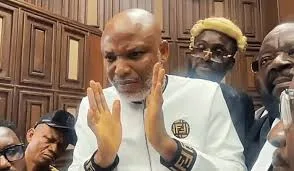
For the fourth time, detained leader of the Indigenous People of Biafra, IPoB, Nnamdi Kanu, yesterday, failed to open his defence to the seven-count terrorism charge the Federal Government preferred against him.

At the resumed proceedings, Kanu, who is conducting his case by himself, after he disengaged his team of lawyers, insisted he has no case to answer.

He maintained that in the absence of a valid charge pending before the court, there was no legal basis for him to either open his defence or to file and exchange a final written address with FG.

Rather, he urged the judge to take judicial notice of the motion he filed along with a supporting affidavit, which challenged the jurisdiction of the court to continue to try him over an offence he said is unknown to any extant law.

Kanu asked the court to order his immediate release from the custody of the Department of State Services, DSS, where he has been detained since 2021.

“You cannot ask me to begin my defence when you have not stated the law under which I am being charged. The records of this court show there is no law backing these charges. I request to be released. My Lord, please take judicial notice of all the records before this court,” he added.

Citing section 36(12) of the 1999 Constitution, as amended, Kanu contended that there was no law to back the charge against him, even as he accused the court of violating a Supreme Court judgment he said condemned his extraordinary rendition from Kenya by the FG.

See also  Group warns FG, claims Kanu’s detention stoking anger

When he was reminded that the apex court remitted his case for a fresh trial, Kanu stood his ground that trying him over a non-existent crime amounted to a denial of his constititional rights.

“In Nigeria today, the Constitution is the Supreme law; there is no provision for terrorism offence in the Constitution. There is no valid charge against me. I will not go back to any detention today.

“Terrorism Prevention and Prohibition Act has been repealed. I cannot put in defense under a repealed law. I won’t do that,” Kanu fumed from the dock.

Continuing, he said, “Tell any lawyer to show me the valid charge. I appeal to you to please take judicial notice of the repeal of the terrorism charges. I am not ready to go back to detention today unless I am shown the valid charge against me.

“I cannot be tried under a law that has been repealed. A law that is not written in our Constitution. Prosecuting me under a repealed law is a violation of my fundamental right,” he added.

In his response, the prosecution counsel, Chief Adegboyega Awomolo, SAN, queried the competence of the documents Kanu served on him, insisting they lacked probative value and should be discounted by the court.

FG’s lawyer prayed the court not to further indulge the defendant, who he said was merely wasting valuable judicial time.

He urged the court to deem the documents that Kanu recently filed as his final written address and to order parties to adopt the processes to enable judgment to be delivered in the matter.

In a short ruling, trial Justice James Omotosho dismissed FG’s contention that the processes Kanu filed were not competent.

See also  Israeli strikes k!ll at least 20 in Lebanon hours after ceasefire

Justice Omotosho said the court would take them into consideration in its judgment.

Besides, the court said it took notice of the fact that the defendant is not a lawyer and decided to give him a further opportunity to consult a legal practitioner for further guidance.

Justice Omotosho hinted that the court would foreclose Kanu’s right should he fail to defend the charge within the period allotted for him to do so.

He subsequently adjourned further proceeding till Wednesday for the defendant to either enter his defence or have his right to do so waived.

It will be recalled that the court had, on October 24, ordered the IPOB leader to open his defence to the charge against him.

However, Kanu, who earlier named several individuals that included serving Governors, Ministers, ex-Governors, and Security Chiefs, among the 23 persons he intended to produce as his witnesses, later made a volte face and shelved his plan to defend the charge.

Kanu had initially prayed that the court grant him a 90-day period for the witnesses he described as vital to testify in the matter.

Among his earlier proposed witnesses were the Governor of Imo state, Hope Uzodimma; that of Lagos state, Babajide Sanwo-Olu; Minister of the Federal Capital Territory, FCT, Nyesom Wike; the immediate past Attorney General of the Federation and Minister of Justice, Abubakar Malami; as well as a former Chief of Army Staff, Gen. Tukur Buratai (rtd).

Others were the Minister of Works, Dave Umahi; the immediate past Governor of Abia State, Okezie Ikpeazu; a former Minister of Defence, Gen. Theophilus Danjuma (rtd); the immediate past Director-General of the National Intelligence Agency, NIA, Ahmed Rufai Abubakar; as well as the former Director-General of the Department of State Services, DSS, Yusuf Bichi.

See also  Akpabio warns governors against abusing state police

In the motion dated October 21 and marked: FHC/ABJ/CR/383/2015, Kanu equally hinted that he would call other persons whose names were not on the list he submitted.

On the day he was to open his defence, though the court reserved seats for the “summoned witnesses,” Kanu backtracked.

The court had earlier rejected a no-case-submission he filed to be discharged and acquitted.
It dismissed the defendant’s position that the totality of evidence the prosecution tendered in the matter failed to establish a prima-facie case against him.

Kanu argued that the five witnesses FG brought to testify before the court failed to prove his culpability.

FG had, among other things, accused him of leading a separatist movement that called for the secession of the South-Eastern part of the country.

He was further accused of inciting violence and killings through broadcasts that were heard in various parts of the country.

Kanu had since pleaded his innocence to the charge.

FOLLOW US ON:

FACEBOOK

TWITTER

PINTEREST

TIKTOK

YOUTUBE

LINKEDIN

TUMBLR

INSTAGRAM

Continue Reading
Click to comment

Leave a Reply

Your email address will not be published. Required fields are marked *

News

FBI Submits Tinubu’s Records To US Judge

Published

on

The United States Federal Bureau of Investigation (FBI) has submitted records relating to President Bola Tinubu’s 1993 drug-trafficking and money-laundering case directly to a federal judge in Washington, D.C., court documents have shown.

According to Peoples Gazette, the materials were delivered to Judge Beryl Howell of the US District Court for the District of Columbia under seal, meaning they are currently accessible only to the court as it considers whether to make the records public.

The submission followed a prolonged legal battle over a Freedom of Information Act request filed by American transparency campaigner Aaron Greenspan, who has been seeking access to Tinubu’s records from the FBI.

Court filings indicated that the bureau delivered the documents on Friday, August 28, after Howell ordered it to explain its continued refusal to release the records.

The documents were submitted without notifying Greenspan of their contents.

According to the filing, the records were “hand delivered to the Court on August 28, 2026 in compliance with this Court’s Minute Order dated August 20, 2026.”

Greenspan had originally sought the records through a FOIA application submitted in 2023. He worked with Nigerian journalist David Hundeyin in pursuing the request.

The case later became a dispute over how quickly the FBI was processing the request, with the agency repeatedly asking for more time.

Howell reportedly gave the FBI several opportunities to explain why it was withholding the records but grew increasingly dissatisfied with the delays.

The judge eventually set August 28 as the deadline for the bureau to comply with her directive.

See also  Court orders FG takeover of 48 properties linked to Malami

The bureau had argued earlier that releasing the records could infringe on Tinubu’s privacy rights.

It also maintained that the Freedom of Information Act was primarily intended to promote transparency concerning government operations and records, rather than provide unrestricted access to information about private individuals.

The controversy surrounding the records dates back several years and is linked to allegations concerning Tinubu’s activities in the United States in the early 1990s.

FOLLOW US ON:

FACEBOOK

TWITTER

PINTEREST

TIKTOK

YOUTUBE

LINKEDIN

INSTAGRAM

Continue Reading

News

Why My FBI, DEA Records Should Remain Secret – Tinubu Tells US Court

Published

on

President Bola Tinubu has given the United States District Court for the District of Columbia four reasons why his records with the Federal Bureau of Investigation (FBI) and Drug Enforcement Agency (DEA) should not be released.

It was reports that the president gave his reasons in filings by his lawyers, Christopher Carmichael, Victor Henderson and Oluwole Afolabi.

He argued that the US Freedom of Information Act (FOIA) and Privacy Act precluded disclosure and there was no public interest in the matter.

Tinubu also said there was no public interest to balance and the plaintiff had ulterior motives for demanding documents with his name on them.

The President’s submission was in response to a request by American transparency activist Aaron Greenspan, which sought disclosure of the records under the US Freedom of Information Act.

Greenspan had argued that his requests concerned the “sitting President of Nigeria…” and “a nation of over 230 million people whose daily lives are directly affected by President Tinubu’s decisions”.

Tinubu, according to filings by his lawyer, urged the US District Court to reject the bid because it amounted to an attempt to obtain private information for political purposes in Nigeria.

The President’s lawyers noted that the request sought access to information about government activities.

They specifically rejected the argument that Nigerians’ interest in Tinubu’s background constituted a public interest recognised by US law.

The team also rejected an argument on the President’s fitness for office, stating that “the asserted ‘public interest in Tinubu’s own fitness for office’ is not an interest FOIA recognises or one that needs to be balanced.”

See also  Israeli strikes k!ll at least 20 in Lebanon hours after ceasefire

The lawyers further argued that the records sought were protected by privacy provisions under FOIA and the US Privacy Act.

“The redacted information sought by the plaintiff is exempt from disclosure,” they stated, citing Exemption 7(C), which protects personal information contained in law-enforcement records.

The President’s legal team relied on a 1989 US Supreme Court decision, Department of Justice v Reporters Committee for Freedom of the Press, to argue that FOIA was designed to allow the public to know “what the government is up to” rather than provide access to information about private citizens.

They argued that Greenspan was seeking “disclosure of information about private citizens that is accumulated in various governmental files,” which, they said, “reveals little or nothing about an agency’s own conduct.”

FOLLOW US ON:

FACEBOOK

TWITTER

PINTEREST

TIKTOK

YOUTUBE

LINKEDIN

INSTAGRAM

Continue Reading

News

Tinubu’s FBI Records: ADC, NDC Demand Release, Say Nigerians Deserve Truth

Published

on

President Bola Ahmed Tinubu’s records with United States law enforcement agencies has taken another turn with opposition parties demanding that the documents be made public.

The African Democratic Congress (ADC) and the Nigeria Democratic Congress (NDC) have questioned the President’s decision to oppose the release of the records, insisting that Nigerians deserve to know the truth about his past.

Naija News reports that the fresh controversy comes as details of submissions made by Tinubu’s lawyers before the United States District Court for the District of Columbia emerged.

In the filings, the President’s legal team, led by Christopher Carmichael, Victor Henderson and Oluwole Afolabi, gave reasons why his unredacted records with the Federal Bureau of Investigation (FBI) and Drug Enforcement Administration (DEA) should not be released to the public.

Tinubu’s lawyers argued that the records were protected under the US Freedom of Information Act and the Privacy Act.

The legal team maintained that the information being sought contained private details from law enforcement files and therefore fell under provisions that exempt such records from public disclosure.

The lawyers also argued that there was no recognized public interest under US law strong enough to justify releasing the records.

According to them, the argument that Nigerians have an interest in knowing about Tinubu’s background does not amount to the kind of public interest recognized under the Freedom of Information Act.

They further rejected the argument that the documents could be necessary to determine the President’s fitness for public office, saying such an interest was not one that the US law was designed to address.

See also  Israeli strikes k!ll at least 20 in Lebanon hours after ceasefire

Tinubu’s legal team also questioned the motive behind the request, arguing that the documents were being sought largely for political purposes in Nigeria.

The lawyers said the filings by the American transparency activist, Aaron Greenspan, showed that his main interest was obtaining government documents bearing Tinubu’s name.

They urged the court not to allow the FOIA process to be used as a means of accessing private information about an individual simply because he is the President of Nigeria.

The legal team also dismissed suggestions that the records could expose a secret prosecution or an agreement by US authorities not to prosecute Tinubu, describing such claims as speculative and unsupported by evidence.

The lawyers further argued that the fact that some information about Tinubu’s past had previously entered the public domain did not automatically remove his right to privacy over other details contained in government files.

The President Should Come Out Clean – ADC

Reacting to the development, ADC spokesperson, Bolaji Abdullahi, described the President’s opposition to the release of the records as suspicious.

Abdullahi, who spoke with a correspondent on Saturday, said Tinubu should allow the records to be released if he wanted to put the controversy surrounding his past to rest.

“Why is the President opposing the release of his past records? That is suspicious. The President should allow them (records) to be released to clear himself.

“The President should come out clean. He should be the one calling for the records to be released if he has nothing to hide because this is not good for him and the image of the country,” he said.

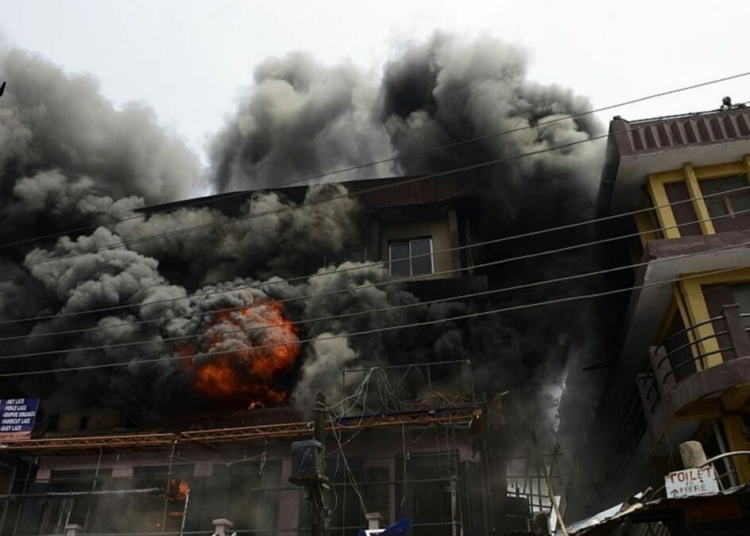
See also  PHOTOS: No Casualties As Fire Guts Great Nigeria Insurance House In Lagos

Nigerians Deserve To Know – Says NDC

The National Publicity Secretary of the NDC, Osa Director, also called on the President to allow the records to be made public.

Speaking with The PUNCH on Saturday, Director rejected the argument that the request for Tinubu’s records was simply a political move by the opposition.

According to him, the President should use the opportunity to clear the air over an issue that has remained in the public domain for more than two decades.

“When a man commits an offence and he says, please, don’t blame me because it is the devil, does that mean he should not face the consequence of his action because it is the devil? That is the question the President should answer.

“Whether it is the opposition or not, if the issue wasn’t there, the opposition would not capitalise on it. Why did the opposition not ask the FBI to release records on our presidential candidate, Peter Obi, or Atiku? That is not an excuse,” Director said.

He argued that the controversy would continue to resurface as long as the matter remained unresolved.

“Nigerians deserve to know and in the interest of the President. He deserves to clear the air. This case has been hanging on since his time as a governor. It is over 20 years.

“Even me, as an opposition, am getting bored. It is time, once and for all, that he should clear the air to allow the issue to be buried,” he added.

Naija News reports that the controversy over Tinubu’s US records dates back several years and became a major political issue during the build-up to the 2023 presidential election.

See also  Court orders FG takeover of 48 properties linked to Malami

At the centre of the matter are records relating to a 1993 US civil forfeiture proceeding involving $460,000 held in an account linked to Tinubu.

US authorities had alleged that the funds represented proceeds of narcotics trafficking or were connected to prohibited financial transactions.

Meanwhile, the ruling All Progressives Congress (APC) had maintained during the presidential election litigation that the case was a civil forfeiture proceeding and did not amount to a criminal conviction.

FOLLOW US ON:

FACEBOOK

TWITTER

PINTEREST

TIKTOK

YOUTUBE

LINKEDIN

INSTAGRAM

Continue Reading

Trending