Connect with us

Education

2026 CBT rollout on track, says WAEC

Published

on

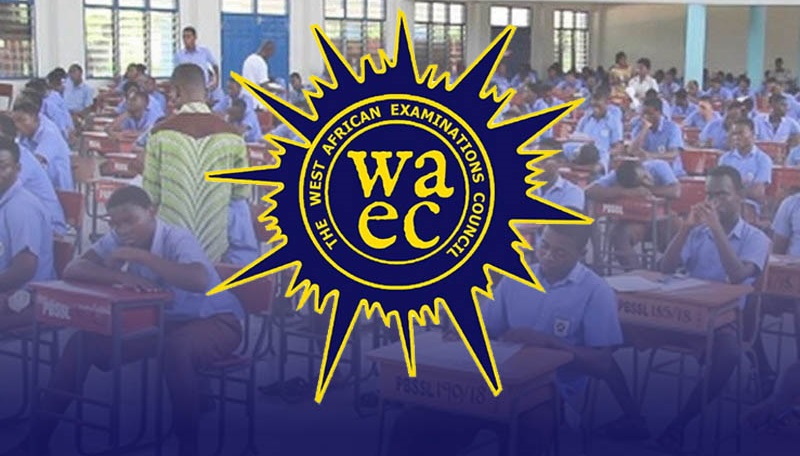
The West African Examinations Council has maintained that its plan to conduct the 2026 West African Senior School Certificate Examination for school candidates through a fully computer-based system remains firmly on track.

WAEC also assured that no candidate would be required to travel more than two kilometres from their location to take the examination.

This was contained in a statement delivered by the Head of the Nigeria National Office of WAEC, Dr Amos Dangut, during a press conference in Umuahia, Abia State, on Friday.

Dangut spoke in response to growing concerns among parents, schools, and education stakeholders regarding the transition to the Computer-Based WASSCE for the May/June diet.

It would be recalled that the House of Representatives, on November 13, asked the Federal Ministry of Education and WAEC to immediately suspend the implementation of the Computer-Based Test policy for the 2026 Senior Secondary School Certificate Examination.

The House also directed the Federal Ministry of Education to collaborate with states to include, in their 2026–2029 budgets, the recruitment of computer teachers, the construction of computer halls with internet facilities, and the provision of standby generators for all secondary schools in the country.

It similarly urged adequate provision of necessary facilities in private schools before the commencement of the policy in 2030.

However, Dangut said the briefing became necessary to speak on the Council’s preparedness to align with the Federal Government’s directive mandating the use of computer-based testing for the 2026 WASSCE.

He recalled the Federal Government’s order requiring all public examination bodies to migrate to digital assessment beginning in 2026. According to him, WAEC immediately initiated a series of measures, including testing digital examination platforms and evaluating the readiness of schools nationwide.

See also  EU-Funded Shs1.64Bn Project to Equip Over 3,000 Accounting Students in Uganda,Nigeria with Real-World Skills

He explained that WAEC, in line with its mandate and test administration standards, undertook a nationwide assessment of all secondary schools to determine their ICT capacity, geographical suitability, and infrastructure for digital examinations.

The findings, he said, informed a new classification framework grouping schools into three categories to determine how candidates would be assigned centres.

“In line with the Council’s test administration policies, a review of the readiness of all secondary schools across the country, particularly their geographical locations and access to modern Information and Communications Technology facilities, led to the development of a framework classifying schools into three main categories,” he said.

“Based on this framework, the Council conducted a mapping of the schools and modalities for the conduct of CB-WASSCE in line with the mapping of the schools, thereby ensuring that the conduct of the CB-WASSCE will not put any candidate at a disadvantageous position.”

He emphasised that fears of candidates travelling long distances were taken into cognisance, noting that WAEC had completed its mapping strategy to guarantee convenience, equity, and safety.

“Therefore, I stand here today to assure the general public that the Council has developed a robust strategy to ensure that no candidate sitting the CB-WASSCE for School Candidates, 2026, will be disenfranchised.

“Furthermore, we have a firm plan to ensure that no candidate will have to travel for more than two kilometres to sit the examination. This is our commitment to access and equity,” he assured.

On the controversial review of the curriculum, Dangut stressed that curriculum development and approval remained the responsibility of the Federal Government, not WAEC.

See also  1,032 students gets N110,000 each from C’River lawmaker

He said the Council merely implements what is approved, consistent with legal and administrative frameworks.

“On the recent review of the Basic and Secondary School Curricula, the Council wishes to clarify that this initiative is a directive from the Federal Government.

“The Council operates strictly within the legal framework of its host country, and the Government is solely responsible for the development of curricula and the monitoring of their implementation,” he noted.

He outlined the new subject structure approved for the 2026 WASSCE, saying the five fields are Core, Science, Humanities, Business, and Trade Subjects. Dangut added that although Citizenship and Heritage Studies and Digital Technologies are now listed as compulsory core subjects, they will not be examined until 2028.

“The Government approved Core (Compulsory) subjects are: English Language, General Mathematics, Citizenship and Heritage Studies, Digital Technologies, and one Trade Subject. However, candidates will not be tested in Citizenship and Heritage Studies and Digital Technologies in 2026 and would therefore not be examined until 2028 upon full implementation of the revised and streamlined syllabus,” he said.

With this adjustment, he said candidates for the 2026 and 2027 examinations will sit only three core subjects: English Language, General Mathematics, and one Trade Subject, while selecting five or six electives, bringing their total subject load to eight or nine.

He also disclosed a major change to the Trade Subjects category, revealing that the number had been reduced from 26 to six, while some subjects were renamed but retained their existing curriculum content.

One of the new additions, Horticulture and Crop Production, he said, is derived from Agricultural Science and will have its own syllabus.

See also  UNILAG faults ASUU strike, insists exams will hold

Addressing concerns about subject registration limits, Dangut reassured schools and parents that WAEC had not placed any restrictions on candidates choosing subjects across fields.

“Specifically, Science students will not be barred from taking Economics as an elective,” he said.

On continuous assessment, he announced that WAEC would extend the timeline for uploading Continuous Assessment Scores to allow schools to adjust to the new curriculum.

He urged schools to conduct the required minimum of three assessments for candidates taking new subjects to meet the CASS requirement.

“Furthermore, WAEC will extend the period for Continuous Assessment Scores upload to ensure they meet the CASS requirement,” he said.

punch.ng

FOLLOW US ON:

FACEBOOK

TWITTER

PINTEREST

TIKTOK

YOUTUBE

LINKEDIN

TUMBLR

INSTAGRAM

Continue Reading
Click to comment

Leave a Reply

Your email address will not be published. Required fields are marked *

Education

FG approves N4bn take-off grants for Tinubu poly, Epe varsity

Published

on

The Federal Government has approved N2bn each as take-off grants for the Bola Ahmed Tinubu Federal Polytechnic in Abuja and the Federal University of Science and Technology, Epe in Epe, Lagos State, as part of efforts to support their early operations.

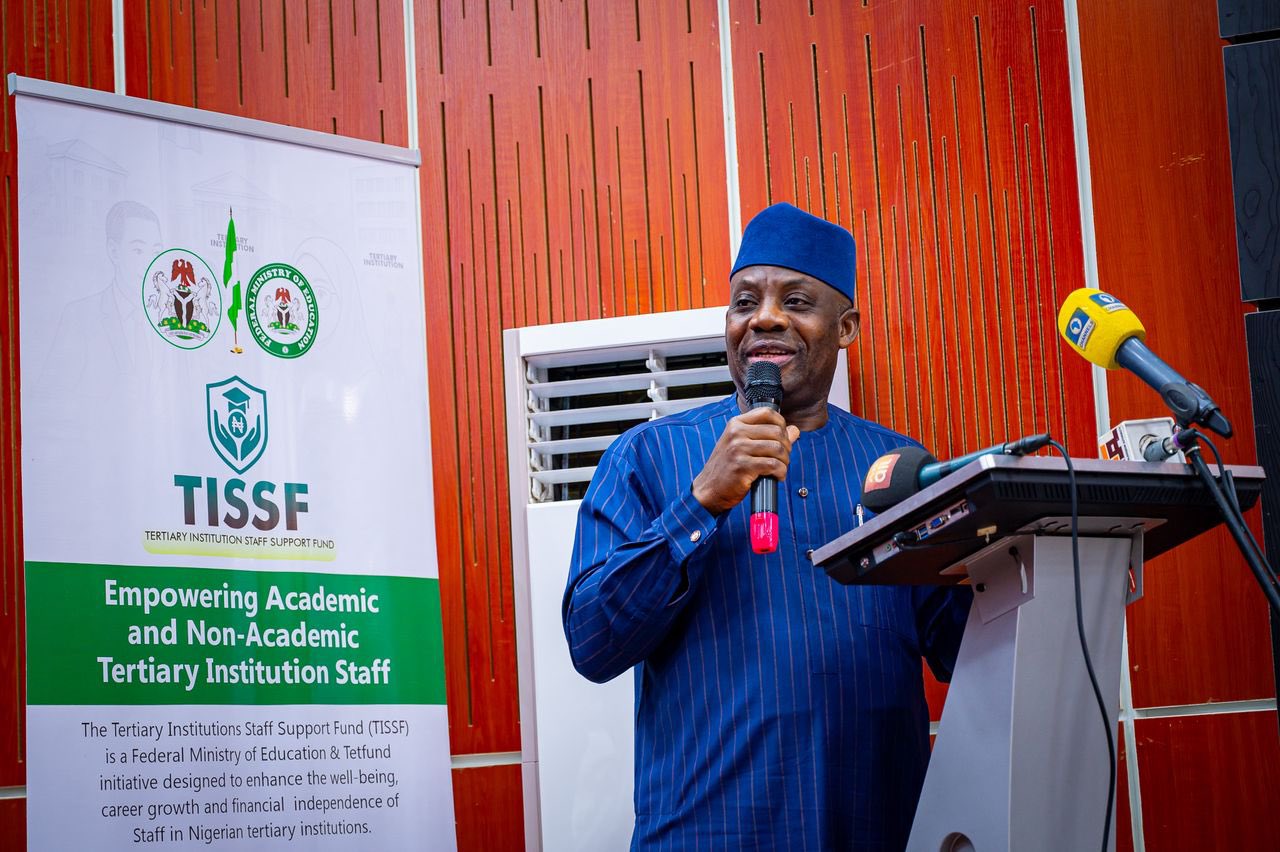
The Minister of Education, Dr Tunji Alausa, disclosed this on Thursday during the inauguration of key officials appointed to lead the two institutions, according to Arise News.

Among those inaugurated were Prof. Nosiru Onibon, who will serve as the pioneer Rector of the Bola Ahmed Tinubu Federal Polytechnic, Abuja; Prof. Adeola Oshikoya, appointed Vice-Chancellor of the Federal University of Science and Technology, Epe; and Dr Angela Ajala, who assumed office as Executive Secretary of the National Commission for Colleges of Education.

Presenting the letters of appointment in Abuja, Alausa said the newly created institutions were part of the Federal Government’s efforts to expand access to higher education and strengthen Nigeria’s capacity in science, technology and innovation.

“Every child in this country deserves access to the highest quality education comparable to global standards. The appointees were carefully selected based on their record of service and achievements across Nigeria’s educational institutions.

“To whom much is given, much is expected. You have been chosen from millions of Nigerians to serve your country, and this recognition extends to your families as well,” the minister said.

He noted that the administration of President Bola Tinubu was focused on building a stronger education system capable of producing skilled manpower needed for national development.

See also  1,032 students gets N110,000 each from C’River lawmaker

According to the minister, the N2bn take-off grants approved for each institution are meant to help the schools establish basic administrative and academic structures as they commence operations.

Alausa urged the newly appointed officials to provide strong leadership that would shape the identity and long-term development of the institutions.

He said the Federal University of Science and Technology in Epe and the polytechnic in Abuja were strategically located to harness the economic potential and human resources available in the two regions.

The minister added that the institutions are expected to focus on areas such as technological innovation, renewable energy, climate change response, disaster risk management and other research fields relevant to national development.

He also congratulated Ajala on her appointment as NCCE Executive Secretary, stressing the importance of teacher education to the development of the country’s education system.

punch.ng

FOLLOW US ON:

FACEBOOK

TWITTER

PINTEREST

TIKTOK

YOUTUBE

LINKEDIN

Continue Reading

Education

Ekiti approves N165m for rehabilitation of two schools

Published

on

Ekiti State Government has approved about N165m for reconstruction works at two special schools in the state.

The Commissioner for Information, Taiwo Olatunbosun, in a statement in Ado Ekiti on Thursday, listed the schools as Government Special School, Ido-Ekiti and Government Special School for the Deaf, Ikoro-Ekiti.

Speaking on decisions taken at the State Executive Council meeting on Wednesday, Olatunbosun said the council approved N85.73m for the Government Special School, Ido-Ekiti, covering the reconstruction of failed drainage systems and the concrete landscaping of driveways and walkways within the school premises.

Similarly, the government approved N88.94m for the Government Special School for the Deaf, Ikoro-Ekiti, where erosion had severely affected drainage channels, driveways, walkways, and parts of the school frontage.

He said, “The interventions are expected to restore critical infrastructure within the affected schools, improve the safety and accessibility of the facilities, and provide a more conducive learning environment for students, particularly those with special educational needs.

“The approval specifically covers the reconstruction of failed drainage systems and the concrete landscaping of driveways and walkways at the Government Special School, Ido-Ekiti, as well as the construction of a new culvert, drainage systems, and associated concrete works at the Government Special School for the Deaf, Ikoro-Ekiti.”

According to him, the interventions became necessary following the devastating impact of erosion on key infrastructure within the schools, including collapsed drainage channels, damaged walkways, compromised driveways, and in some cases, damaged perimeter fencing and assembly grounds.

These, he said, had significantly affected the learning environment and overall safety of students, particularly given the special needs of the pupils in the affected institutions.

See also  1,032 students gets N110,000 each from C’River lawmaker

The commissioner said the two projects “are to be executed within 16 weeks by the State Bureau of Special Projects through direct labour, given the urgency of the intervention and the need to minimise disruption to the learning activities of the students.”

punch.ng

FOLLOW US ON:
FACEBOOK

TWITTER

PINTEREST

TIKTOK

YOUTUBE

LINKEDIN

TUMBLR

INSTAGRAM

Continue Reading

Education

UNILAG faults ASUU strike, insists exams will hold

Published

on

The management of the University of Lagos UNILAG has chided the varsity’s chapter of the Academic Staff Union of Universities for declaring an industrial action without following due process.

PUNCH Online reports that the ASUU UNILAG, rising from a congress held on Tuesday, asked lecturers to withdraw their services from Wednesday over what they described as ‘amputated’ January and February salaries received.

The Chairman, ASUU, UNILAG chapter, Prof Idou Keinde, stated that the lecturers did not receive the full complement of their salaries: Consolidated Salary Structure for Academics, Consolidated Academic Tools Allowance and Professorial Allowance.

Keinde vowed that the lecturers would not resume work until their full salaries are paid.

But UNILAG, through its Head, Communication Unit, Adejoke Alaga-Ibraheem, on Wednesday, said the university would continue to engage with the ASUU executive to address the issues, especially the unpaid Consolidated Academic Teaching Allowances.

The statement read, “The Management of the University of Lagos has noted reports circulating in the media that the Academic Staff Union of Universities, UNILAG Chapter, at its Congress held on Tuesday, March 10, 2026, directed its members to suspend their services over alleged unpaid Consolidated Academic Teaching Allowances.

“Management observes that due process was not followed in making this declaration. Nevertheless, in its commitment to the welfare of staff and students, the university has continued to engage with the ASUU Executive to address all issues.”

While noting that engagement with the ASUU would continue, the UNILAG management said the ongoing students’ examinations scheduled for Wednesday will proceed as planned.

See also  My administration’s education investments already yielding positive results — Aiyedatiwa

“The university is particularly mindful that students are currently at a critical stage of the academic session, with semester examinations already underway.

“Any disruption at this time would adversely affect students, especially those scheduled to commence the Students’ Industrial Work Experience Scheme, internships, and those preparing to proceed to the Law School,” the statement added.

It, however, noted that courses for which students have been informed by their Deans or Heads of Department that examinations will not be held will be rescheduled.

“All examinations will continue as scheduled from Thursday, March 12, 2026, and deans are to ensure that necessary arrangements are put in place for the smooth and successful conduct of the examinations.

“Management appeals to all members of the university community to remain calm and continue to go about their lawful academic activities as discussions with ASUU executive continue toward an amicable resolution of the issues raised,” the statement concluded.

Continue Reading

Trending