Connect with us

News

FG to capture N4tn power sector bond in MTEF

Published

on

The Federal Government on Thursday announced that the newly launched power sector liquidity bond, designed to settle decade-long N4tn debts owed to electricity generation companies will be fully captured in the country’s Medium-Term Expenditure Framework, a move officials say strengthens its credibility and guarantees repayment.

This will also increase the nation’s public debt by N4tn.

Speaking at a virtual investor forum convened by the Federal Ministries of Finance and Power, top government officials and financial advisors said the debt instrument, backed by a sovereign guarantee, is central to the Presidential Power Sector Debt Reduction Programme and marks the administration’s boldest attempt yet to restore confidence in Nigeria’s troubled electricity supply industry.

CardinalStone Partners’ Group Managing Director, Michael Nzewi, told prospective investors that the bond should not be confused with previous power sector interventions that failed to close liquidity gaps, stressing that the inclusion of the debt in the MTEF elevates it to a statutory government obligation.

“These bonds are backed by the Federal Government. The debt will be included in the medium-term federal framework. This is essentially an insurance by the government.

“We should not be overly worried about shortfalls from GenCos or DisCos. The government has stepped in with a guarantee to cover such gaps,” Nzewi said.

Recall that on Tuesday, PUNCH Online reported that the government had begun the process of repaying the N4tn debt owed to Power Generation Companies with the launch of a N590bn first-tranche bond issuance.

The initial tranche, part of a wider N4tn NBET Finance Company Plc Bond Programme, is guaranteed by the Federal Government. It comprises N300bn in cash bonds to be issued to the market and N290bn in non-cash bonds to be directly allotted to GenCos on identical terms.

See also  Cleric warns against foreign manipulation, says insecurity not religious war

PUNCH Online learnt that details contained in the bond term sheet obtained by our correspondent on Tuesday revealed that the Series 1 bond will be issued between November and December 2025. CardinalStone Partners Limited is serving as the lead issuing house and financial adviser.

According to the term sheet, “Series 1 Tranche A involves N300bn issued to the market for cash, while N290bn under Tranche B is allotted to the GenCos on identical terms. The bond will be issued between November and December, with a seven-year tenor on a fixed-rate coupon, redeemed on an amortising basis and paid semi-annually in arrears.”

Giving further details, the MD explained that unlike regular sovereign issuances that disappear into general financing, this bond has a defined purpose: injecting liquidity into the power sector to make it financially viable. “It will form the foundation for the sector’s next phase of development,” he added.

Providing a breakdown of the instrument, Head of Investment Banking at CardinalStone Onyebuchim Obiyemi, said the issuer is NBET Finance Company Plc, a special-purpose vehicle sponsored by the Nigerian Bulk Electricity Trading Plc.

She noted that the SPV structure was created to ring-fence both historic liabilities and receivables.

Between February 2015 and March 2025, all debts owed to GenCos are being migrated to the SPV, while receivables due from distribution companies over the same period are also being assigned to it.

“This creates a stand-alone entity responsible for the entire transaction,” he said, explaining that the structure removes the burden from NBET and improves transparency for investors.

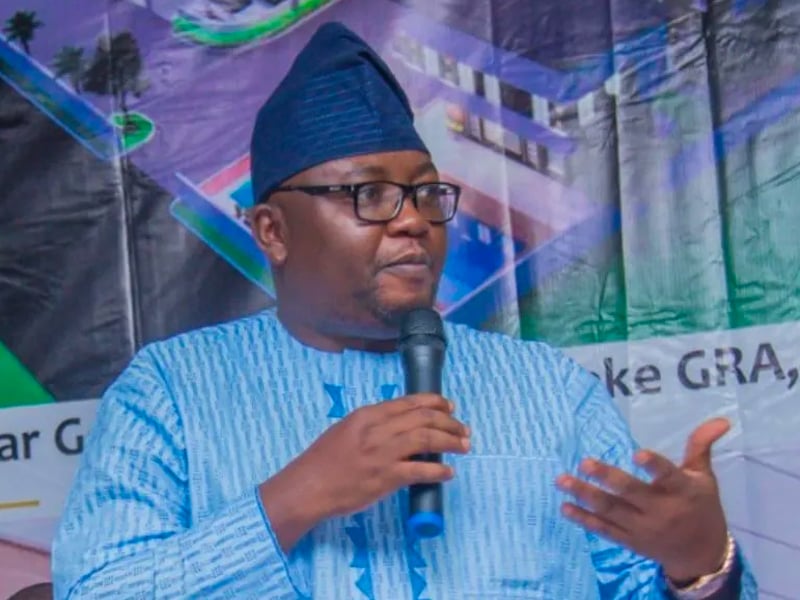
Minister of Power, Adebayo Adelabu, said the reform will be complemented by improved service delivery by distribution companies, particularly as more customers migrate to Band A.

See also  Firm bench, fiery defendant: Senior lawyers back judge’s sharp rebuke to Nnamdi Kanu

He maintained that not all subsidies would be removed, insisting that vulnerable households will continue to receive government support.

“Those who can afford to pay for reliable electricity must do so. But low-income Nigerians will still enjoy targeted subsidies,” he said.

“The key is to redesign the subsidy regime so it reaches only those who truly need it.”

Adelabu added that the Federal Government would monitor DisCos more stringently to ensure they deliver value for money.

In his closing remarks, NBET’s Acting Managing Director, Johnson Akinnawo, described the programme as a “strategic reset” rather than another bailout for the power sector.

He said the sovereign guarantee provides the “sunlight and water” needed for investor confidence, noting that several months of claim validation have culminated in a debt instrument designed to stabilise the electricity ecosystem.

“This bond issuance is our collective tree-planting. It is an investment in Nigeria’s energy security,”* he said, thanking President Bola Tinubu, the finance and power ministers, and investors for supporting the initiative.

PUNCH Online reports that more than 600 institutional investors, including pension funds, asset managers, banks, insurers and trustees, joined Thursday’s call.

The forum officially heralded the launch of the Presidential Power Sector Debt Reduction Programme, which aims to clear long-standing GenCo debts, stabilise market cash flow, and attract fresh investment into generation, transmission and distribution infrastructure.

Attaching the debt to the MTEF places it within Nigeria’s medium-term fiscal planning, improving transparency, repayment certainty, and credit quality, three factors investors have long demanded from the sector.

punch.ng

FOLLOW US ON:

FACEBOOK

TWITTER

PINTEREST

TIKTOK

YOUTUBE

LINKEDIN

TUMBLR

INSTAGRAM

Continue Reading
Click to comment

Leave a Reply

Your email address will not be published. Required fields are marked *

News

African Nations move towards unified reparations claim against Britain

Published

on

In a historic move signaling a coordinated legal and diplomatic offensive, African leaders are advancing plans to file a joint reparation claim against the United Kingdom for crimes committed during the colonial era. The push gained significant momentum at a major conference in Algiers on Sunday, where policymakers convened to translate principle into action.

The meeting, focused on having colonial-era crimes “recognized, criminalized and addressed through reparations,” directly advances a resolution passed by the African Union (AU) earlier this year. That resolution calls for justice and reparations for victims of colonialism, building on a landmark proposal at the AU’s February summit to formally define colonization as a crime against humanity and develop a unified continental position.

Nigeria, a regional powerhouse, is taking a leading role in the burgeoning campaign. The push was foreshadowed in September when Nigerian Senator Prince Ned Nwoko sent an official claim to the British government demanding $5 trillion in reparations for the damages of colonialism. While this was a national initiative, it set a powerful precedent and figure for the broader continental discussion.

The British government has consistently rejected such claims. Officials in London have previously labeled demands for colonial reparations as “astonishingly hypocritical,” maintaining that the UK is proud of its modern partnership with African nations and refuses to engage with allegations of historical crimes in a legal or reparative framework.

However, the African initiative is gaining traction in the court of global public opinion. A recently released documentary, “From Slavery to Bond,” has renewed scrutiny on the British Empire’s legacy. The film investigates how colonial policies on resource extraction, arbitrary borders, and historical artifacts offset laid a “solid ground for modern problems and crises” across the continent, lending academic and moral weight to the reparations argument.

See also  FG to fix skills gap, connect 20 million youths to jobs

The Algiers conference represents a critical step in a meticulously planned framework. Analysts suggest a joint AU claim would carry far greater geopolitical and legal heft than individual national efforts, posing a significant diplomatic challenge to the UK. The next phase is expected to involve consolidating a common historical assessment, finalizing a legal strategy, and determining the structure and scope of the reparations demand.

While the path to any monetary payment remains long and fraught, the collective move marks a pivotal shift.

Written by Ademola Adegoke

FOLLOW US ON:

FACEBOOK

TWITTER

PINTEREST

TIKTOK

YOUTUBE

LINKEDIN

TUMBLR

INSTAGRAM

Continue Reading

News

Minister reveals how Benin sought Nigeria’s military help to foil coup

Published

on

The Republic of Benin Minister of Foreign Affairs, Olushegun Bakari, in Abuja, on Thursday, gave an insight into how his country called on Nigeria for military help to foil last Sunday’s coup attempt to overthrow President Patrice Talon.

Bakari spoke to journalists on the sidelines of the ECOWAS Council of Ministers Summit which held in Abuja on Thursday.

He lauded Nigeria and ECOWAS swift intervention, saying it played a critical role in averting a potentially devastating bloodbath in his country.

Addressing the press in Abuja on Thursday, Bakari said while Benin’s military successfully confronted the insurgents, the intervention from Nigeria and other ECOWAS member states such as Ghana, Côte d’Ivoire, among others, was crucial in preventing a bloodier confrontation, particularly in the densely populated area where the rebels had fortified themselves.

He said,“We are here as part of our ordinary ministerial meeting within ECOWAS, and it is important for all of us within our community, and especially for the two leaders of Benin and Nigeria, to clearly show that the ECOWAS region is still an area where democracy prevails.

“This is very important. We show that in our region and environment, we cannot accept those who attack democracy,” Bakary said.

“We requested the intervention under the ECOWAS protocol from Nigeria and other countries like Côte d’Ivoire, Sierra Leone, and Ghana, who also offered their support, after Benin made the request. We asked for the support of our brothers and sisters, not because our army was not capable of handling it,” he added.

See also  Editors seek tax reliefs, journalists’ safety charter to strengthen democracy

The minister stressed that the coup attempt was a failure, but the potential for civilian casualties remained high as the insurgents had barricaded themselves in a military barracks situated near civilian neighbourhoods.

He thanked President Tinubu of Nigeria and other ECOWAS leaders for stepping in and preventing further escalation.

“We were able to stop the rebels from taking over key installations like the airport, thanks to the support from Nigeria and other ECOWAS nations like Côte d’Ivoire, Ghana, and Sierra Leone.

“Their support was crucial to ensure that we could neutralise the threat with minimal loss of life. We did not want to engage in an all-out assault that could have led to many civilian deaths,” he explained.

He added, “Our defence forces—the Republican Guard —blocked them. They fought back and then they withdrew into a military camp. So, when we started discussions for the intervention of Nigeria and others under the ECOWAS protocol, our military had already pushed them back. The coup had already failed.”

The minister emphasised that the coup was ultimately unsuccessful but that the timely intervention prevented the situation from escalating further.

“Why did we ask for support, especially from Nigeria? It was mainly because the area where they had established themselves in a military barracks was surrounded by civilians. We didn’t want to risk significant casualties. If we let our military enter there, the casualties would have been very high.”

Bakari explained that this intervention allowed them to neutralise the rebels without causing large-scale destruction.

“That’s one of the reasons why President Talon requested support from Nigeria—to ensure that we could have a surgical impact, destroy the armoured vehicles they had in the barracks, and prevent them from taking over key locations like the airport.”

See also  Group lauds Nwoko’s call for Anioma State creation

Reflecting on the situation, Bakari underscored two key lessons learned from the episode. First, he emphasised the strength and resolve of Benin’s military forces, which were able to fend off the coup despite being outnumbered.

“Our army is a republican army, one that fights for democracy, and it is capable of stopping such coups,” he said.

Second, he lauded the partnership between Benin and Nigeria, particularly under the framework of ECOWAS, for working together to preserve democracy in the region.

“We showed that together we can fight for democracy. We can stop people trying to derail our democracy in the region,” Bakari affirmed.

In his address, Nigerian Foreign Affairs Minister Yusuf Tuggar highlighted that the incident demonstrated how rapidly democratic institutions can be safeguarded when neighboring countries maintain open channels of communication.

“We are all aware of what transpired in the Republic of Benin and the fast reaction that followed.

“The coordination to ensure that democracy remains untampered in Benin was successful, and it is an exemplar of what really should obtain whenever democracy is under threat in our region,” he said.

Tuggar added that he and Bakari were “in constant contact from the very beginning,” emphasising that “the fast reaction and communication between us and several of our colleagues is what led to the thwarting of this attempt to undermine democracy by way of an unconstitutional change of government.”

He also stressed that the episode highlighted the importance of strengthening the ECOWAS Standby Force.

“First and foremost, we all have to pay up our dues. These recent events underscore the need for us to have a standby force that is well funded and effective,” he noted.

See also  Certificate Scandal: How Tinubu Invited Ex-Minister, Nnaji To Aso Rock, Asked Him To Resign

The attempted coup in the Republic of Benin began early Sunday when armed mutineers launched an attack on the presidential residence.

Security forces repelled the assault, prompting the plotters to target the national broadcaster instead.

They briefly invaded the Office de Radiodiffusion et Télévision du Bénin in an effort to seize control of the state signal, but their attempt ultimately collapsed.

Following the incident, President Bola Tinubu announced that he had approved the deployment of Nigerian troops to help stabilise the neighbouring country.

punch.ng

FOLLOW US ON:

FACEBOOK

TWITTER

PINTEREST

TIKTOK

YOUTUBE

LINKEDIN

TUMBLR

INSTAGRAM

Continue Reading

News

Nigeria killings: US officials prepare high-level briefing for Trump

Published

on

The United States congressional delegation, led by Congressman Riley Moore has concluded its fact-finding mission to Nigeria over alleged genocide and is expected to brief President Donald Trump before the end of the month.

The delegation, made up of five members of Congress, arrived in the country on Sunday and visited Internally Displaced Persons, survivors of terrorist attacks, Christian communities, Christian leaders and traditional rulers, particularly in Benue State.

They also held a meeting with the National Security Adviser, Nuhu Ribadu, and the Attorney General of the Federation, Lateef Fagbemi (SAN).

Featuring on a Fox News programme anchored by Harris Faulkner on Thursday, Moore said the team heard harrowing accounts of killings allegedly carried out by Fulani and Islamic extremists, describing the experience as the most disturbing of his career.

“It was really shocking — the stories we heard, the imagery. I have never witnessed anything like that in my life,” he said. “I met one woman who lost her entire family. Five of her children were murdered right in front of her while she was pregnant. She escaped and delivered her baby in an IDP camp. You can see that her soul has literally left her body. There are countless stories like these.”

He also narrated another case of a woman who lost her husband, two daughters, and her unborn child during an attack, saying the pattern of violence suggested that Christian communities were deliberately targeted.

Moore said the delegation travelled across Benue State in armoured vehicles due to security risks, adding that they met Catholic and Protestant leaders, bishops and community heads to obtain what he called “ground truth”.

See also  Fire guts store at Abuja mall

“This is a fact finding mission. Benue is one of the most dangerous states in Nigeria. This is where the majority of Christians are being murdered for their faith in our Lord and Saviour Jesus Christ. But I felt we had to go,” he said.

According to him, IDP camps were not spared by attackers, raising questions about claims that the violence was driven by climate pressures or land disputes.

“For those who say this is about climate change or economics, why would you burn down a church? Why would you attack an IDP camp screaming ‘Allahu Akbar’? It is very clear what the answer is,” he said. “They are trying to erase Christians in Benue State and across Nigeria from their ancestral homeland.”

Moore confirmed that President Trump tasked him and House Appropriations Chairman, Tom Cole, to compile a full report on the situation.

“We will report back to the President and make recommendations. He has asked myself and Chairman Tom Cole to give him a report, and we are going to do that by the end of this month,” he added.

Trump had late October designated Nigeria a ‘Country of Particular Concern’ over alleged Christian genocide, a position the Federal Government has countered, insisting that Nigeria’s security crisis has no religious colouration.

punch.ng

FOLLOW US ON:

FACEBOOK

TWITTER

PINTEREST

TIKTOK

YOUTUBE

LINKEDIN

TUMBLR

INSTAGRAM

Continue Reading

Trending