Connect with us

News

Autonomy battle: Local Governments demand direct funds as states receive N7.43tn

Published

on

The Association of Local Governments of Nigeria and the National Union of Local Government Employees have thrown their weight behind President Bola Tinubu’s plan to enforce direct deductions of council funds from the Federation Account Allocation Committee, even as state governments continue to retain control over allocations to local governments.

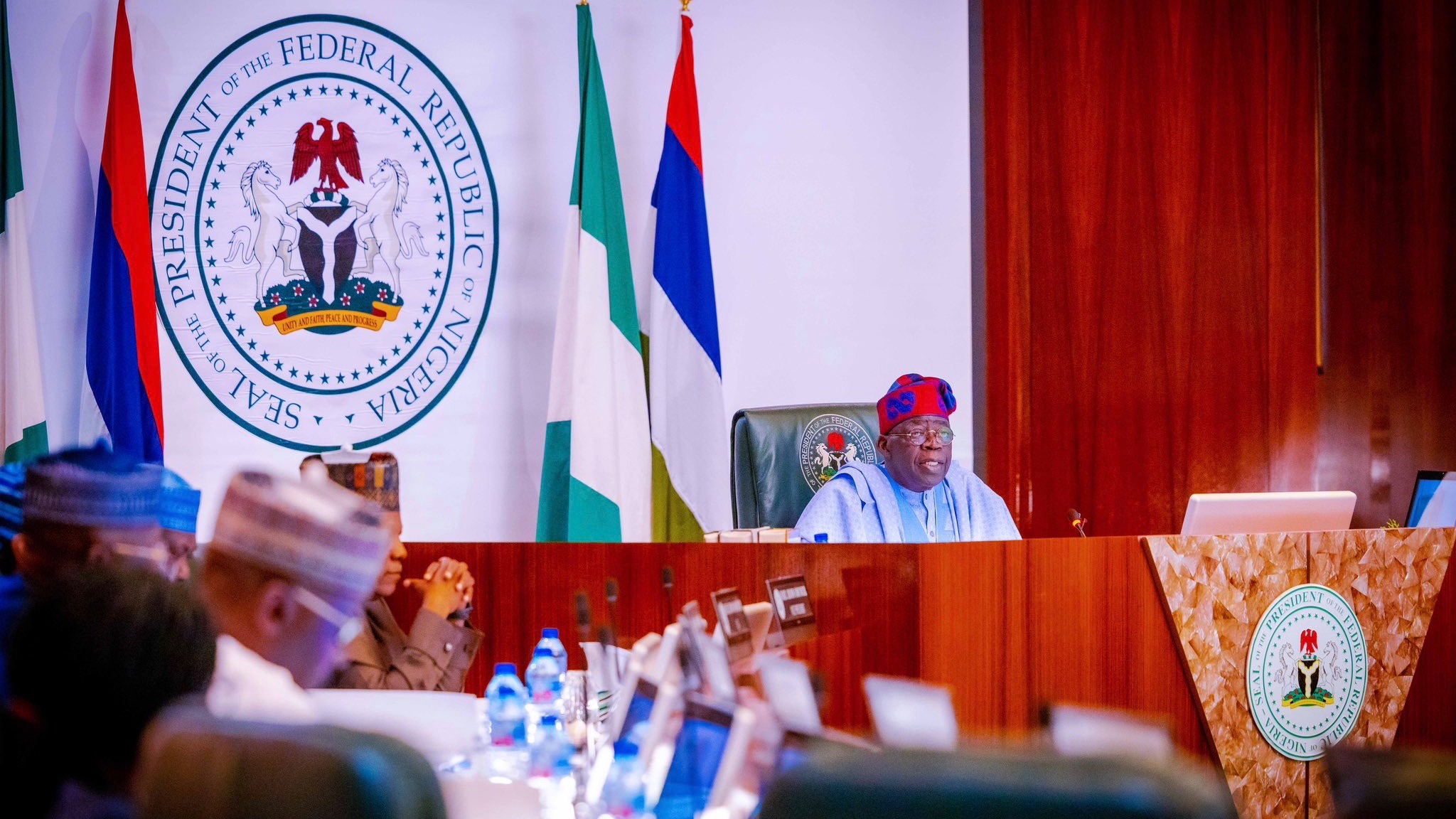
During the 15th National Executive Committee meeting of the All Progressives Congress at the State House Conference Centre, Abuja, Tinubu urged state governors to comply with the Supreme Court ruling granting financial autonomy to local governments.

The President warned that failure by governors to honour the verdict may compel him to issue an Executive Order to ensure direct allocations from the Federation Account to local councils.

Tinubu’s remarks followed the July 11, 2024, judgment by the Supreme Court, which upheld the Federal Government’s suit seeking to enforce financial independence for local governments.

In a unanimous decision, a seven-member panel of the apex court declared that it is unconstitutional for state governments to retain or manage funds meant for local councils.

The judgment held that the use of a caretaker committee amounts to the state government taking control of the local government and is in violation of the 1999 Constitution.

However, 18 months after the judgment, findings by The PUNCH show that the process remains largely unimplemented.

Local government allocations have continued to pass through state governments amid delays and disputes between the Central Bank, state governments, local government authorities, and other relevant agencies.

The PUNCH learnt that state governments received control over at least N7.43tn meant for local government councils between July 2024 and December 2025, despite the landmark Supreme Court ruling mandating direct financial autonomy for councils across the federation.

An analysis of Federation Account Allocation Committee disbursements, based on official press statements issued by the Office of the Accountant General of the Federation after each FAAC meeting, shows that local governments were allocated N7.43tn over the 18-month period, even as the structure for direct access to the funds remained largely unchanged.

The amount was derived from allocations to the 774 local councils from July to December 2024 and the full 12 months of 2025.

In the second half of 2024 alone, councils received N2.08tn, rising sharply to N5.35tn in 2025.

FAAC data show that in July 2024, local governments received N337.02bn as revenue earned in June.

This rose to N343.70bn in August and moderated to N306.53bn in September. Allocations rebounded in the final quarter, climbing from N329.86bn in October to N355.62bn in November, before peaking at N402.55bn in December 2024.

Despite the rising inflows, funds continued to be paid through the long-criticised State Joint Local Government Account framework, allowing governors to retain significant influence over council finances.

The trend accelerated in 2025. Local governments received N361.75bn in January, rising steadily to N434.57bn in February and N410.56bn in March.

By mid-year, monthly allocations crossed N440bn, reaching N444.85bn in July and N485.04bn in August.

The highest monthly allocation to councils during the period was recorded in October 2025, when N529.95bn was shared as revenue earned in September.

This was followed by N505.80bn in November before moderating to N445.27bn in December 2025.

In total, local governments received N5.35tn in 2025, compared with N3.77tn in 2024, representing an increase of N1.58tn or about 42 per cent year on year.

The surge mirrored broader growth in FAAC distributions. Total allocations to the three tiers of government rose from N13.91tn in 2024 to N20.28tn in 2025, while total distributable revenue, including 13 per cent derivation, climbed from N15.26tn to N21.89tn.

Federal Government allocations increased from N4.95tn in 2024 to N7.61tn in 2025, while states’ allocations rose from N5.19tn to N7.31tn over the same period.

See also  Adeleke warns IBEDC ahead of Osun power regulator takeoff

However, the continued routing of council funds through state structures has raised concerns that the gains from higher revenues are not translating into improved grassroots governance.

ALGON, NULGE back Tinubu

In an interview with our correspondent in Abuja, the Secretary General of ALGON, Muhammed Abubakar, affirmed support for President Bola Tinubu’s move to mandate the deduction of funds meant for LGs directly from the Federation Account Allocation Committee.

Muhammed said the President had made his warning directly to the governors and anchored it on the Supreme Court judgment, which he described as the highest authority in the land.

“So basically, as you are aware, he said it in their presence, not in their absence. So, my belief is that they will actually carry that out before the president will also do the needful, like he rightly told them in the meeting,” he said.

He expressed confidence that the governors would comply with the ruling without further prompting, noting that Tinubu’s remarks were clear and left no ambiguity about the consequences of continued non-compliance.

“So I guess they will obey the Supreme Court’s order and do the needful.  But basically, if that is not carried out, I think we will all be in support of the president to go ahead with whatever threat he has made,” he added.

Also commenting, NULGE Bauchi State chapter has applauded Tinubu’s proposed executive order aimed at stopping state governments from diverting local government funds.

Speaking with The Punch correspondent on Monday, the President of NULGE in the state, Muhammad Yunusa, described the move as a welcome development that would bring relief to local government workers across the country.

Yunusa said, “If the President invokes an executive order to stop governors from diverting local government funds, it is we, the local government workers, that will be honoured.”

He noted that the issue of local government financial autonomy had lingered for years despite legal interventions, including a Supreme Court judgment delivered last year.

“This matter has been on for a long time. Even after the Supreme Court passed its judgment last year, up till today it has not seen the light of the day,” he said.

According to him, full implementation of the executive order would strengthen grassroots governance and improve the welfare of local government workers.

Yunusa further insisted that the directive would enhance accountability and ensure that funds intended for councils are used strictly for grassroots development.

Punch efforts to get the reaction of the Chairman of ALGON Bauchi State chapter, Mahmood Baba-Ma’aji, proved unsuccessful, as calls and messages sent to him were not responded to as of the time of filing this report.

Also speaking, the Chairman of NULGE in Kano, Comrade Ibrahim Muhammad, has expressed cautious optimism about the state administration’s management of local government funds.

He told PUNCH that while there is currently no formal discussion with the state government regarding direct allocation of funds to local government areas, the union is satisfied with how the funds are being handled.

“The governor is not relenting in releasing funds for meaningful projects across the state,” he said. “We also commend the current NNPP-led administration for clearing billions of naira in debts owed to civil servants. That is commendable.”

Muhammad added that he is optimistic that Kano State would comply fully with the president’s directive on local government autonomy.

“The recent orders by the president will be complied with in Kano. The governor was not in town when the president restated the order. I’m sure when he returns, he will address the issue effectively,” he said, noting that any failure by governments to treat LGAs appropriately could justify the president’s intervention.

See also  PoS takeover: FG ends cash payments in MDAs

Efforts to obtain a reaction from the ALGON Chairperson in the state, Hon. Saadatu Salisu, proved unsuccessful as repeated calls to her phone went unanswered.

In a related development, the Kebbi State government has expressed willingness to ensure that local governments in the state enjoy their autonomy in accordance with the Supreme Court rulings.

A top government official in the state who spoke with our correspondent on the condition of anonymity said the state government is working on modalities to ensure the ruling is adhered to the fullest.

According to the source, “as you are aware, our governor is a comrade who was also part of the struggle for the restoration of power to the local governments.

“He is also someone who has a close relationship with Mr President, therefore we should be assured that he will implement the judgment for the benefit of the people at the grassroots.

“There is no cause for alarm over the President directives and I can assure you that it is a done deal here in Kebbi States” he added.

Meanwhile, efforts to get reactions from Sokoto State were not successful as both ALGON and government officials declined to comment on the development.

Also speaking, the Nasarawa State chapter of the NULGE has said it is currently expecting the state government to comply with Tinubu’s directive on the full implementation of the LG Autonomy which was approved by the Supreme Court.

The President of NULGE in the state, Comrade Adamu Sharhabilu, stated this while speaking with our correspondent during an interview in Lafia, the state capital, on Monday.

According to him, despite the Supreme Court’s decision on the matter, Nasarawa State had continued in its old pattern of distributing funds to the 13 Local Government Areas of the state through the state’s Ministry for Local Government and Chieftaincy Affairs.

While lamenting the situation, the NULGE President said that with directives from President Tinubu, the association expects to witness new developments on the matter in the coming days.

He added, “The Nasarawa State government has not started giving us our money yet. We do not know their direction at the moment, because President Bola Tinubu said if they do not give us the money, he will remove our share from the FAAC and send it to the LGAs, so we are waiting for his action.”

Meanwhile, the Nasarawa State government has clarified that it is not interfering with funds accruing to the 13 LGAs of the state.

The state government noted that the LGAs had been enjoying full autonomy since 2019, when Governor Abdullahi Sule took over the leadership of the state.

The Senior Special Assistant to the Governor on Public Affairs, Peter Ahemba, disclosed this while speaking with our correspondent in Lafia on Monday.

“The narrative that Local Government funds are being tampered with in Nasarawa State is not correct. I can tell you very firmly that Governor Sule has never tampered with local government funds.

“In fact, he had been the one supporting the LG Chairmen with funds to meet up with some of their responsibilities, even though they are enjoying the full autonomy.

“The Nasarawa State government is committed to continue to give our LGAs every necessary support to enable them to pay salaries to workers and embark on meaningful projects without any hitches,” he said.

However, Tinubu’s warning to state governors to release Local Government funds or face executive action has sparked mixed reactions in Jigawa State.

The State Chairman of the ALGON, Hon. Sibu Abdullah, who is also the chairman of Dutse LGA, expressed optimism that the state government will comply with the Supreme Court ruling.

See also  Satguru Maharaj Ji promises to help free Nnamdi Kanu if Biafra can do the following...

“We are guaranteed that the state government have respect for the court’s decision and it’s already releasing the funds to enable local governments to function effectively,” Abdullah said.

However, efforts to reach the leadership of the NULGE in Jigawa State by the PUNCH Correspondent on Monday were unsuccessful, with a senior staff member declining to comment on the issue.

Another senior official at the Jigawa State ALGON secretariat, who spoke on condition of anonymity, hinted that the association is weighing the Supreme Court ruling and Tinubu’s warning before making a decision.

In a similar vein, Attorney-General Abdulkadir Fanini did not respond to inquiries on whether the state government plans to comply with Tinubu’s request.

However, an official who asked not to be mentioned, citing that he is not authorised to speak to the press on the issue, told our Correspondent that the state government is committed to respecting the rule of law and the constitution.

“Jigawa state government has no intention whatsoever to retain or manage funds meant for local councils,” he declared.

The Chairman of Toungo local government and the state chairman of ALGON, Mr Suleiman Toungo, has said that the federal government is playing politics with the local government autonomy Supreme Court judgement.

Toungo, who spoke with The PUNCH by phone on Monday, said Governor Ahmadu Fintiri directed all 21 council chairmen in the state to open accounts with the Central Bank of Nigeria, as requested by the federal government.

“I went to CBN three times to open account, the last time I went the management ask me to go back and that they will communicate to me, as I am talking to you now there is no communication from CBN to and any of my members in Adamawa state, “ he said.

“Fintiri has long ago implemented the local government autonomy, nobody touches our money, if you can tour the 21 local governments, you can see projects unlike before, this means we are in charge of our federal allocation, “ he stated.

Toungo said that the federal government should come clear on the issue of autonomy and stop dancing in the gallery.

“President Bola Tinubu should ask CBN why it refuses to open accounts for some of us, how can autonomy be fully operated without CBN accounts? “he asked.

He said that the issue of local government autonomy has turned into politics, pointing out that the Adamawa state governor had handed over local government funds to council chairmen before the Supreme Court’s judgment.

Also speaking, NULGE Gombe chapter chairman, Saleh Abdullahi, says there is no case diversion in the state.

In a telephone chat with our correspondent in Gombe, he said, “We are not sure of any diversion in the state, so our state may not be affected.”

Texts and calls to the ALGON chairman and the chairman of Gombe LGA, Sani Haruna, were not returned as of the time of filing this report.

Also, attempts by our correspondent to reach the Director General of the Nigeria Governors Forum, Abdullateef Shittu, for a comment on the story were unsuccessful, as his phone was unreachable at the time.

However, the NGF spokesperson, Yunusa Abdullahi, stated that the President has spoken with the Governors, who will provide an update to the public shortly.

He stated, “The President has spoken with the Governors, so they will have a meeting, and then the details will be out. The President spoke with the Governors, and I am sure they will respond appropriately.”

FOLLOW US ON:

FACEBOOK

TWITTER

PINTEREST

TIKTOK

YOUTUBE

LINKEDIN

TUMBLR

INSTAGRAM

Continue Reading
Click to comment

Leave a Reply

Your email address will not be published. Required fields are marked *

News

Implement our 15 demands to avoid strike, resident doctors tell FG

Published

on

The Nigeria Association of Resident Doctors has urged the Federal Government to conclude the process of reinstating the dismissed resident doctors in Lokoja and to capture and implement outstanding professional allowances in the January budget, among other demands.

In an exclusive interview with PUNCH Healthwise, the President of NARD, Dr Mohammad Suleiman, expressed hope that the 15 demands of the association being discussed would be implemented this month.

He said, “We hope they will finalise the processes of returning our members to Lokoja. We hope they will capture the professional allowances in the budget and implement them this January. And we hope they will pay this allowance.”

Suleiman further stated that while the government and some stakeholders often wanted the association to focus on a single demand, all 15 items were critical to the welfare of resident doctors and the healthcare system.

He stated, “We don’t have just one demand. We have 15 items at the table for discussion.”

PUNCH Healthwise reports that the association shelved its planned January 12 strike on Sunday after engagements with various government agencies.

NARD had, on November 1, 2025, embarked on an indefinite strike to press home its demands. The strike, which lasted for 29 days, was called off on November 29.

A communiqué issued by the association’s Secretary General, Dr Shuaibu Ibrahim, on January 11, 2026, following a virtual extraordinary National Executive Council meeting, detailed the status of the 15 demands and the progress made through engagements with various government agencies.

The communiqué revealed that regarding the Federal Teaching Hospital Lokoja crisis, a reconciliation committee comprising the Chief Medical Directors, the Ministry of Health and Social Welfare, and NARD had been established to ensure all members remained at the facility and to broker lasting peace between the Association of Resident Doctors at FTH Lokoja and the Medical and Dental Consultants Association of Nigeria at the same institution.

See also  FG plans 500 CNG stations to cut petrol use

PUNCH Healthwise reports that tensions had earlier arisen at the FTH, Lokoja, following disagreements involving resident doctors and other medical staff, which led to the dismissal of five resident doctors and strained working relationships within the facility.

Continuing, NARD stated that concerning the outstanding 25 per cent and 35 per cent Consolidated Medical Salary Structure arrears, verified lists had been forwarded to the Integrated Personnel and Payroll Information System, while the Federal Ministry of Labour and Employment had written to the Federal Ministry of Finance with attention to IPPIS for prompt payment.

Suleiman said, “Verified lists have been forwarded to IPPIS. The Federal Ministry of Labour and Employment has written to the Federal Ministry of Finance, with attention to IPPIS. NARD will continue close follow-up to ensure prompt payment.”

The communiqué noted similar progress on outstanding accoutrement allowances, with the association maintaining close follow-up to ensure payment.

Regarding promotion and salary arrears, the association disclosed that lists had been transmitted by the Federal Ministry of Health and Social Welfare to the Federal Ministry of Finance and the Budget Office, with the Honourable Minister of State for Finance acknowledging receipt.

The statement read, “Lists have been transmitted by FMoH&SW to the FMoF and Budget Office. Importantly, the Honourable Minister of State for Finance has acknowledged it, and NARD is now engaging to ensure a clear and expedited payment plan.”

On the issue of skipping and entry-level placement, NARD stated that the Director of Hospital Services at the Federal Ministry of Health and Social Welfare would communicate with Chief Executives of hospitals regarding a clarification issued by the Office of the Head of Civil Service of the Federation, emphasising that CONMESS 3 was the recognised entry level.

See also  Insecurity: Tinubu pledges state police to US, European allies

The association revealed that a multi-stakeholder committee comprising the Federal Ministry of Health and Social Welfare, Chief Medical Directors, the Nigerian Medical Association and NARD had been constituted to address locum practice and work hour regulation, with preliminary activities commencing ahead of formal inauguration.

Concerning house officers’ welfare, the communiqué stated that the Federal Ministry of Labour and Employment had intervened, and the Federal Ministry of Health and Social Welfare would formally engage the Medical and Dental Council of Nigeria to communicate with IPPIS on salary delays, arrears and issuance of pay advisories.

On membership recategorisation, Suleiman disclosed that a committee chaired by the Director of Hospital Services had been set up to engage MDCN, Chief Medical Directors, postgraduate colleges and NARD.

The association stated that it would work closely with affected centres to ensure salary and allowance arrears in state and private facilities were cleared while ensuring that gains at the federal level were replicated at the state level.

Regarding the professional allowance table, the communiqué revealed that the circular had been released and the Ministry of Health and Social Welfare had written to the Office of the Accountant-General of the Federation for full implementation, beginning with the January salary.

Suleiman said, “The circular has been released. MoH&SW has written to the Office of the Accountant General of the Federation for full implementation beginning with the January salary. NARD is following up closely. Assurances have also been given that 18 months’ arrears will be captured in the 2026 Budget.”

The association noted that it would continue to push for the immediate resumption and timely conclusion of negotiations on the Collective Bargaining Agreement.

See also  El-Rufai denies comments on 2027 presidency, describes claim as fake

Following firm commitments from critical stakeholders, including the Federal Ministry of Health and Social Welfare, Federal Ministry of Labour and Employment, Federal Ministry of Finance, Office of the Head of Civil Service of the Federation, Office of the Accountant General of the Federation, IPPIS, Director General of Budget, Chief Medical Directors, the National Assembly, Director General of the Department of State Services, and notably the Vice President of the Federal Republic of Nigeria, the NEC unanimously resolved to suspend the resumption of Total and Indefinite Comprehensive Strike 2.0.

The communiqué stated, “This suspension is strategic and conditional, allowing room to objectively review tangible progress at the January NEC meeting commencing 25th January 2026.”

In addition, the NARD president told PUNCH Healthwise that 4,700 doctors left Nigeria in 2024 alone, contributing to a brain drain crisis that has seen approximately 15,000 medical practitioners emigrate over the past seven years.

Suleiman noted that data on the number of doctors who left the country in 2025 would become available by the end of January or in February 2026, adding that the continuous exodus of medical professionals was significantly affecting healthcare delivery in the country.

punch.ng

FOLLOW US ON:

FACEBOOK

TWITTER

PINTEREST

TIKTOK

YOUTUBE

LINKEDIN

TUMBLR

INSTAGRAM

Continue Reading

News

FG votes N19bn for VP’s aircraft engine, others

Published

on

The Federal Government has allocated a cumulative N10.61bn for the overhaul of engines on the Gulfstream G550 aircraft assigned to Vice President Kashim Shettima over a three-year period, an analysis of appropriation bills from 2024 to 2026 has revealed.

The aircraft, registered as 5N-FGW, received the highest single allocation among all engine overhaul projects in the Presidential Air Fleet, accounting for 55 per cent of the N19.27bn total spent on engine maintenance across the fleet under the President Bola Tinubu administration.

Budget documents obtained and analysed by The PUNCH show that the allocation for overhauling the vice president’s aircraft engines jumped from N1.24bn in 2024 to N5.51bn in 2025—a 345 per cent increase—before settling at N3.86bn in 2026.

The 2024 Appropriation Bill listed the project under code ERGP31206170 as “Overhaul of 5N-FGW Engines” with a “NEW” status and an allocation of N1.24bn. By 2025, the project’s status changed to “ONGOING” with the allocation rising to N5.51bn, before declining to N3.86bn in 2026 while maintaining its “ONGOING” status.

The 13-year-old Gulfstream G550, which flies under the call sign “Nigerian Air Force 2” when carrying the vice president, has been plagued by technical faults that have led to cancellations of Shettima’s international trips in the past.

In May 2024, Shettima was forced to abort his trip to the United States for the 2024 US-Africa Business Summit in Dallas, Texas, after the aircraft developed a technical fault mid-flight.

The incident occurred less than a month after President Tinubu was compelled to charter a private jet to Saudi Arabia when the same Gulfstream jet, originally assigned to the vice president, developed an oxygen leak in the Netherlands. Four months later, in October 2024, the vice president again cancelled his trip to the Commonwealth Heads of Government Summit in Samoa after a foreign object hit the aircraft during a stopover at JFK Airport in New York.

See also  Adeleke warns IBEDC ahead of Osun power regulator takeoff

Presidency officials, who spoke on condition of anonymity to our correspondent, said the repeated technical failures may have prompted urgent maintenance, which in turn drove the escalating budget allocations.

Aside from the vice president’s aircraft, the FG also allocated funds for overhauling engines on two Falcon 7X jets (registered 5N-FGV and 5N-FGU), which received N1.66bn in 2024, N3.13bn in 2025, and N2.19bn in 2026, totalling N6.98bn over the three years. Additionally, a Gulfstream jet registered 5N-FGS received N1.68bn for engine overhaul in 2024, though no further allocations were made for it in subsequent years.

In total, engine overhaul projects across the Presidential Air Fleet consumed N4.58bn in 2024, N8.65bn in 2025, and N6.05bn in 2026, bringing the three-year aggregate to N19.27bn.

A close study of the allocation patterns revealed that engine maintenance costs peaked in 2025, a year after the Presidency took delivery of the N150bn Airbus A330, which the Spokesman to the President, Bayo Onanuga, argued would “save Nigeria huge maintenance and fuel costs, running into millions of dollars yearly.”

While engine overhaul spending for older aircraft declined by 30 per cent in 2026 compared to 2025, routine aircraft maintenance allocations under line item 22020407 increased by 10 per cent, from N4.12bn in 2025 to N4.54bn in 2026.

Aviation experts say aircraft age influences maintenance costs.

“These aircraft are not new. The older the aircraft, the higher the cost of maintenance and operation. So, the cost will increase over the years,” said General Secretary of the Aviation Round Table, Olumide Ohunayo. He argued that the Gulfstream G550, now 13 years old, requires increasingly frequent and expensive overhauls as critical components, such as engines, approach the end of their operational lifespan.

See also  Satguru Maharaj Ji promises to help free Nnamdi Kanu if Biafra can do the following...

“The figure likely includes far more than the direct cost of repairing the aircraft,” Chief Executive Officer of Centurion Security Limited, John Ojikutu, stated.

“Engine overhauls are mandatory at specified intervals, regardless of whether the aircraft has been flown extensively or not,” explained an aircraft maintenance engineer who requested anonymity. “For a jet like the G550, a complete engine overhaul can cost anywhere from $1.5m to $3m per engine, depending on the condition and the extent of work required. If you see the cost increase, it could mean they’re replacing major components, not just doing standard checks. It could also show that they deferred previous maintenance and have to do catch-up work.”

The Presidential Air Fleet, managed by the Nigerian Air Force and headquartered at the Presidential Wing of Nnamdi Azikiwe International Airport, Abuja, currently operates 10 aircraft, including six fixed-wing jets and four helicopters.

Critics have long argued that Nigeria’s presidential fleet is among the largest in Africa and disproportionately expensive for a country grappling with severe fiscal constraints.

The Executive Chairman of the Centre for Anti-Corruption and Open Leadership, Debo Adeniran, argued that the administration’s spending habits were opposite to Nigerians’ expectations of frugality.

“What we are getting from this administration is the opposite of our expectations. We thought we would have an administration that would be frugal in spending and very meticulous in implementing its budget. But what we are getting is an administration that has fallen in love with profligacy, that doesn’t see anything wrong in living big in the midst of a poverty-stricken nation,” said Adeniran.

See also  Natasha broke penal code in attacks on Akpabio, Bello –AGF

The House of Representatives Committee on National Security and Intelligence had in 2024 recommended the procurement of new aircraft for both the president and vice president, citing high maintenance costs and safety concerns with the ageing fleet. While the president received the Airbus A330, no similar replacement was announced for the vice president’s aircraft, which has received substantial maintenance allocations under Tinubu.

At the time of filing this report, the Presidency had not responded to inquiries about the specific nature of the engine work carried out on the aircraft.

The budget documents also indicate ongoing capital projects for PAF infrastructure, including N714.8m for the construction of a hangar for the Presidential Air Fleet in 2025, which fell to N500.36m in 2026.

The PAF’s total budget allocation declined from N17.32bn in 2025 to N14.70bn in 2026, mainly driven by decreased capital expenditure.

punch.ng

FOLLOW US ON:
FACEBOOK

TWITTER

PINTEREST

TIKTOK

YOUTUBE

LINKEDIN

TUMBLR

INSTAGRAM

Continue Reading

News

21,000 unregistered refugees in Nigeria – UNHCR

Published

on

At least 21,807 foreign refugees and asylum seekers fleeing violence in neighbouring countries remain unregistered in Nigeria, denying them access to food assistance, healthcare and other essential services, the United Nations has revealed.

The figures, contained in the November 2025 UNHCR dashboard obtained by The PUNCH, show that the unregistered asylum seekers, predominantly come from Cameroon’s conflict-torn Anglophone region.

The data revealed that Nigeria currently hosts a total of 127,000 refugees and asylum seekers from 41 countries, with 21,807 still awaiting registration by the National Commission for Refugees, Migrants and Internally Displaced Persons, alongside 80,915 recognised refugees and over 25,000 asylum seekers whose cases are being processed.

Analysis of successive UNHCR dashboards reveals that the backlog of unregistered refugees has fluctuated over the past year, climbing from 21,095 in December 2024 to a peak of 32,750 in June 2025, a 55 per cent surge in six months, before declining to 21,807 by November 2025.

The March 2025 dashboard recorded 20,997 persons awaiting registration, suggesting that the new arrivals continue to outpace the Federal Government’s capacity to process them.

Unregistered refugees remain ineligible for UNHCR-provided food stipends, cash assistance, health insurance schemes, and other humanitarian aid, leaving thousands in limbo as they struggle to meet basic needs in host communities.

One official familiar with the refugee registration process told our correspondent that staffing shortages, security restrictions, and logistical challenges have slowed enrolment in Borno, Adamawa, and Cross River States, which host the bulk of new arrivals.

“Registration can take weeks or even months, depending on the state and the availability of NCFRMI personnel,” explained one field officer who spoke on condition of anonymity.

See also  It is an honor to serve in the Nigerian Military - Defence Headquarters shares post hours after Wike’s altercation with soldiers

The data shows that Cameroonians dominate Nigeria’s refugee population, accounting for 86 per cent or approximately 119,208 people fleeing the eight-year-old Anglophone crisis in Cameroon’s North-West and South-West regions.

Smaller populations originate from Niger (15,011), the Central African Republic (1,053), Syria (1,330), and the Democratic Republic of Congo (598), among others.

Women and girls account for just over half of all refugees, while children represent close to 60 per cent, according to UNHCR statistics.

Most refugees live in host communities across Cross River, Taraba, Akwa Ibom, Benue, and Adamawa States, rather than in camps.

Urban centres such as Lagos, Abuja, and Kano also shelter refugees from diverse nationalities, some of whom have been in Nigeria for over a decade.

Nigeria’s open-door policy and adherence to the 1951 Geneva Convention and the 1969 Organisation of African Unity Convention require the country to grant asylum to individuals fleeing persecution and conflict.

The NCFRMI, working with the Nigerian Immigration Service and UNHCR, is responsible for registering asylum seekers and conducting Refugee Status Determination procedures, which can take three to six months.

Successful applicants receive refugee identity cards that provide access to work permits, school enrolment, and, in principle, freedom of movement beyond designated settlements.

In 2019, Nigeria began issuing Convention Travel Documents—refugee passports—to enable international travel.

However, during mass influxes, individual asylum procedures are often suspended in favour of group recognition.

In 2024, the government granted 86,000 Cameroonian refugees Temporary Protection Status valid through June 2027, while 20,000 Nigeriens in Damasak received prima facie recognition.

See also  El-Rufai denies comments on 2027 presidency, describes claim as fake

Speaking with our correspondent, a former Nigerian Ambassador to Singapore, Ogbole Amedu-Ode, warned that while Nigeria must fulfil its international obligations, border control agencies must remain vigilant against infiltrators.

“Nigeria is a signatory to the appropriate international instruments, conventions and treaties that grant favour to asylum seekers, especially those under persecution.

“We’re aware of all the people from Cameroon, where there’s some kind of civil unrest. The same goes for Sudan, Syria and parts of Lebanon. Based on those international conventions, Nigeria is obliged to admit and grant them asylum.

“However, given the security situation we face in Nigeria, the relevant agencies should have their eyes peeled to watch out for people who might be used to infiltrate the Nigerian space for any negative objectives,” Amedu-Ode told The PUNCH.

The registration backlog comes as Nigeria grapples with a broader displacement crisis.

According to the UNHCR, the country hosts 3.5 million internally displaced persons, primarily in the North-East, due to Boko Haram and Islamic State West Africa Province insurgencies.

In 2024, severe floods affected over 480,000 people in 34 of Nigeria’s 36 states, including tens of thousands in Borno, Adamawa, and Yobe, further straining humanitarian resources.

Meanwhile, nearly 408,000 Nigerian refugees remain registered in neighbouring countries such as Cameroon, Niger, and Chad, having fled insurgent violence in the Lake Chad Basin.

In 2025, UNHCR facilitated the return of 26,473 Nigerian refugees through voluntary repatriation programmes, including a landmark Tripartite Agreement signed in February with Chad and Nigeria.

Nigeria’s refugee response is coordinated through a Refugee Response Plan involving government agencies, UN bodies, international NGOs, and civil society organisations.

See also  Insecurity: Tinubu pledges state police to US, European allies

punch.ng

FOLLOW US ON:

FACEBOOK

TWITTER

PINTEREST

TIKTOK

YOUTUBE

LINKEDIN

TUMBLR

INSTAGRAM

Continue Reading

Trending