Connect with us

Business

Oil earnings fall short by N16.2tn

Published

on

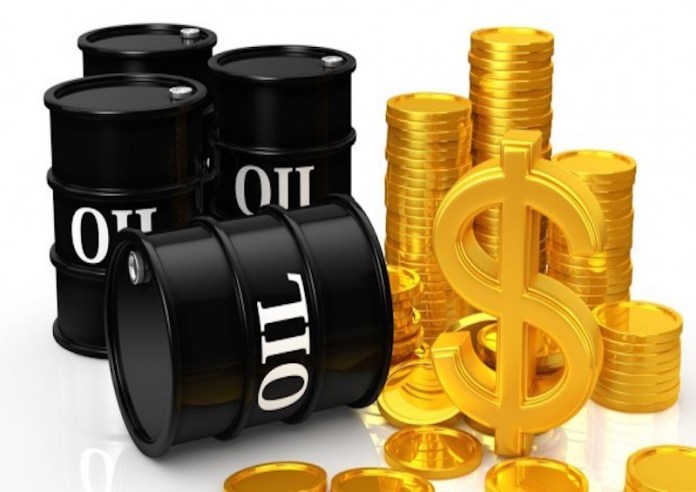
Despite an improvement in crude oil production, the Federal Government earned 63.49 per cent less than its projected oil revenue target in the first half of 2025, according to the second quarter Budget Performance Report released by the Budget Office on Monday.

The report showed that gross oil revenue of N9.32tn was recorded between January and June 2025, far below the N25.52tn pro-rated budget projection for the period. This translated into a N16.20tn shortfall, underscoring the persistent fragility of Nigeria’s oil-dependent fiscal structure.

Data from the report also indicated that average crude oil production stood at 1.68 million barrels per day, below the budget benchmark of 2.12mbpd, with significant revenue implications for the Federation Account.

However, output improved marginally compared with earlier periods, rising by 0.08mbpd from the 1.6mbpd recorded in the first quarter of 2025 and by 0.27mbpd above the 1.41mbpd produced in the corresponding period of 2024.

Despite missing its revenue target, the half-year performance marked a notable improvement year-on-year, as oil revenue increased by N2.78tn, or 42.59 per cent, compared with the actual half-year earnings recorded in 2024.

The report read, “Gross oil revenue amounting to N9.32tn was collected in the first half of 2025 as against N25.52tn prorate budget projection for the period. This denotes a decrease of N16.20tn (63.49 per cent) from the 2025 half-year budget estimate. It, however, reflects an increase of N2.78tn (42.59 per cent) from the actual half-year gross oil revenue performance reported in 2024.”

Crude oil has remained Nigeria’s single most important source of foreign exchange and public revenue for over five decades, accounting for about 80–90 per cent of export earnings and more than half of government revenue in most fiscal years.

See also  CBN announces new withdrawal limit, removes deposit cap

Earnings from crude oil exports largely determine the country’s foreign exchange inflows, the strength of the naira, and the volume of funds available for distribution to the federal, state, and local governments through the Federation Account Allocation Committee.

These revenues are highly sensitive to international oil prices, production volumes, exchange rates, and fiscal terms, making government income vulnerable to external shocks.

Despite its dominance, Nigeria’s reliance on oil has exposed the economy to repeated fiscal stress during periods of price crashes or production disruptions. Challenges such as crude oil theft, pipeline vandalism, underinvestment, operational inefficiencies, and regulatory uncertainty have often constrained output and revenue performance, even when global oil prices are favourable.

A detailed breakdown of the figures revealed mixed outcomes across revenue lines. Concessional rentals surged to N24.82bn, exceeding the half-year projection of N2.06bn by N22.77bn (1,106.99 per cent), while miscellaneous oil revenue, including pipeline fees, rose to N29.73bn, beating its N11.72bn projection by N18.01bn (153.65 per cent).

In contrast, the major oil revenue streams significantly underperformed. Crude oil and gas sales generated N712.57bn, falling short of the N2.36tn target by N1.64tn (69.76 per cent). Petroleum Profit and Gas Taxes yielded N4.16tn, missing the projection of N15.69tn by N11.53tn (73.47 per cent).

Similarly, oil and gas royalties stood at N3.53tn, lower than the N6.86tn estimate by N3.33tn (48.54 per cent), while incidental oil revenue, including royalty recoveries and marginal field licences, came in at N438.90bn, undershooting its N591.76bn projection by N152.87bn (25.83 per cent).

The report also noted that gas flaring penalties and exchange gains, which had no half-year budget projections, contributed N267.25bn and N148.31bn, respectively, during the period under review.

See also  Audit uncovers over N61bn payment breaches in NNPCL

According to the Budget Office, oil revenue performance in the second quarter of 2025 improved compared with 2024 levels, largely due to higher crude output and improved collection of petroleum profit tax and royalties. Non-oil revenues also posted gains, attributed mainly to inflationary pressures and increased economic activities.

On pricing, Nigeria’s crude averaged $74 per barrel in Q2 2025, representing a marginal decline of $0.98 per barrel (1.31 per cent) from Q1 2025 and a sharper drop of $10.76 per barrel (12.69 per cent) compared with the corresponding quarter of 2024. The figure was also $1 below the $75 per barrel benchmark set in the 2025 budget.

Although production improved from 1.6mbpd in Q1 2025 and 1.41mbpd in the same period of 2024, the report highlighted that Nigeria’s oil sector continues to face deep-seated challenges, including crude oil theft, pipeline vandalism, weak security, underinvestment in infrastructure, regulatory uncertainty, and limited domestic refining capacity.

In the second quarter alone, gross oil revenue stood at N4.77tn, representing a N7.99tn (62.62 per cent) shortfall from the N12.76tn quarterly projection. Nonetheless, this was N1.59tn (33.33 per cent) higher than the N3.18tn recorded in the corresponding quarter of 2024.

On the non-oil side, gross non-oil revenue of N4.46tn was recorded in Q2, reflecting an increase of N404.26bn (6.68 per cent) above estimates. After deductions, the net distributable revenue available to the three tiers of government stood at N9.85tn, representing a shortfall of N7.01tn (41.58 per cent).

The figures reinforce ongoing concerns about Nigeria’s fiscal vulnerability amid oil market volatility, production shortfalls, and structural weaknesses, despite reforms introduced under the Petroleum Industry Act.

The report added that Nigeria’s oil sector continues to grapple with deep-seated challenges, including persistent crude oil theft, pipeline vandalism, and inadequate security, which have contributed to production shortfalls and supply disruptions. It noted that underinvestment in modern technology and infrastructure, corruption and regulatory uncertainties, as well as the country’s heavy reliance on crude oil exports, have continued to expose public finances to market volatility.

See also  Marketers fault Dangote’s 500,000-litre fuel delivery threshold

It further highlighted concerns over limited domestic refining capacity, environmental degradation arising from gas flaring, and weaknesses in the fiscal and policy framework, despite the enactment of the Petroleum Industry Act. According to the report, sustained efforts to resolve legacy production issues and deepen reforms across key sectors of the economy remain critical to economic recovery and revenue stability.

Last week, the Minister of Finance and Coordinating Minister of the Economy, Wale Edun, opened up on Tuesday that the Federal Government recorded a significant revenue shortfall in the 2025 fiscal year. He noted that while the Federal Government projected N40.8tn revenue for this year, it ended up making only N10.7tn.

Edun made the disclosure while appearing before the House of Representatives Committees on Finance and National Planning during an interactive session on the 2026–2028 Medium Term Expenditure Framework and Fiscal Strategy Paper.

He recalled that the Federal Government had projected a revenue target of N40.8tn in 2025 to fund the N54.9tn “budget of restoration,” designed to stabilise the economy, secure peace, and lay the foundation for long-term prosperity. However, the minister said current fiscal performance shows that total revenue for the year is likely to end at about N10.7tn.

FOLLOW US ON:

FACEBOOK

TWITTER

PINTEREST

TIKTOK

YOUTUBE

LINKEDIN

TUMBLR

INSTAGRAM

Continue Reading
Click to comment

Leave a Reply

Your email address will not be published. Required fields are marked *

Business

FG seeks Canadian tech, investment to fast-track mining reforms

Published

on

The Federal Government has intensified efforts to reposition Nigeria’s mining sector, with the Minister of Solid Minerals Development, Dele Alake, stating that the country is ready to leverage Canada’s advanced technology and global expertise to accelerate reforms and unlock the industry’s economic potential.

Alake made the disclosure while receiving the Canadian High Commissioner to Nigeria, Pasquale Salvaggio, at his office in Abuja on Thursday, according to a statement issued on Friday by his Special Assistant on Media, Segun Tomori.

The minister said deeper bilateral collaboration with Canada would support Nigeria’s quest to attract investment, entrench international best practices, and drive sustainable growth in the mining industry.

He also reflected on the long-standing diplomatic ties between the two countries, recalling Canada’s support for Nigeria during the pro-democracy struggle that followed the annulment of the June 12, 1993, presidential election.

“Canada stood firmly with the Nigerian people during our pro-democracy struggle. The cooperation we enjoyed from the Canadian High Commission was exemplary and deeply encouraging. We regarded Canada as an archetypal pro-democracy ally,” Alake said.

He added, “Today, we are committed to strengthening that relationship, particularly in mining and mineral development, where Canada’s global reputation for excellence is well established. We believe enhanced cooperation will help accelerate sectoral growth, attract investment, and institutionalise global best practices.”

The minister reaffirmed Nigeria’s commitment to building a transparent and investor-friendly mining environment, stressing that the Federal Government is prioritising the formalisation of artisanal mining, capacity building for professionals, technology transfer, and improved regulatory oversight.

See also  Shettima urges respect for Dangote’s investment to protect Nigeria’s future

“We are working deliberately to de-risk the mining environment. Our focus is on attracting foreign direct investment, strengthening regulatory frameworks, building the capacity of Nigerian mining professionals, and formalising artisanal mining to reduce illegal operations and enhance revenue generation,” he said.

Alake highlighted several incentives designed to boost investor confidence, including tax waivers on imported mining equipment and full repatriation of profits after statutory obligations such as taxes and royalties are met.

“These incentives reflect our commitment to creating a stable and competitive investment climate. Investors are guaranteed the full repatriation of their profits after fulfilling all legal obligations. We are also introducing fiscal measures to ensure that Nigeria remains one of the most attractive mining destinations globally,” he added.

In his remarks, Salvaggio appreciated Nigeria’s recognition of Canada’s historic role in its democratic journey and commended the minister for acknowledging Canada’s leadership in the global mining industry.

He noted that Nigeria is Canada’s second-largest trading partner in Africa and highlighted the potential to expand trade relations, particularly in mining.

“Nigeria is a strategic partner for Canada. We see significant opportunities to expand our trade and investment cooperation across several sectors, especially mining, where Canada has global expertise and Nigeria has immense potential,” the envoy said.

He also praised the establishment of the Nigeria Solid Minerals Company, describing it as a strategic initiative capable of boosting investor confidence and catalysing growth.

“The creation of the Nigeria Solid Minerals Company is a commendable step. It sends a strong signal to global investors about Nigeria’s seriousness in developing the sector and strengthening governance,” he added.

See also  Tanker drivers’ strike will not cause fuel shortage – Dangote Refinery

Salvaggio highlighted strong people-to-people ties between the two countries, including the Nigerian diaspora in Canada, noting that the relationship provides a solid foundation for deeper economic cooperation.

“I am confident that Nigeria could become Canada’s largest trading partner in Africa within the next five to ten years, given its dynamism, entrepreneurial spirit, and commercial outlook. Nigeria is currently the sixth-largest recipient of Canadian development cooperation globally, which underscores the depth of our partnership,” he said.

The envoy also emphasised Canada’s readiness to facilitate increased investment, urging the Federal Government to revisit the stalled Foreign Investment Promotion and Protection Agreement (FIPA).

“The ratification of FIPA will significantly enhance investor confidence and guarantee investment security. We encourage the Nigerian government to expedite this process,” he added.

He expressed Canada’s willingness to expand capacity-building initiatives, including replicating the 2025 training programme for Nigerian mining professionals at the University of Calgary in Alberta and supporting additional technical exchange programmes.

In response, Alake said the agreement predates the current administration but assured that the government is ready to review and fast-track its ratification.

He reiterated President Bola Tinubu’s commitment to attracting foreign direct investment as a pathway to economic growth and job creation.

“The current administration is focused on economic transformation. We recognise the role of foreign direct investment in job creation and sustainable development, especially for our youthful population. We are therefore open to reviewing the agreement and ensuring that it supports our national economic priorities,” he said.

Both countries agreed to establish a joint working group to identify priority areas of cooperation in the mining sector and develop clear timelines to ensure measurable outcomes from the renewed bilateral engagement.

See also  CBN announces new withdrawal limit, removes deposit cap

Nigeria has intensified reforms in the solid minerals sector in recent years as part of broader efforts to diversify the economy away from oil dependence.

The government has introduced policies aimed at curbing illegal mining, strengthening regulatory institutions, and improving transparency to attract global investors.

Canada, regarded as a global leader in mining technology, governance, and financing, hosts some of the world’s largest mining companies and remains a major source of investment and technical expertise in the sector.

Industry experts believe stronger Nigeria-Canada collaboration could help unlock the country’s vast mineral resources, including lithium, gold, and rare earth elements critical to the global energy transition.

Continue Reading

Business

Meta sues Brazil, China advertisers over celebrity deepfake scams

Published

on

US tech giant, Meta, filed lawsuits on Thursday against several individuals and companies in Brazil and China who used celebrity deepfakes to advertise products on its platforms, the company said in a statement.

AI technology is allowing criminals around the world to create sophisticated voice and video copies of well-known figures to endorse scam investments, and helping make dodgy online messages appear more genuine.

Meta, the parent company of Facebook, Instagram, and WhatsApp, filed “lawsuits against four scam advertisers who impersonated well-known celebrities and brands to deceive and defraud people,” the statement said.

In Brazil, the firm sued B&B Suplementos e Cosmeticos and Brites Academia de Treinamento as well as two individuals for “a scam operation that used deepfakes of a prominent physician to advertise healthcare products without regulatory approval.”

Brites also “sold courses teaching the same tactics,” according to Meta.

Renowned Brazilian oncologist Drauzio Varella was one of the public figures impersonated by Brites, and stated that Meta’s legal actions are insufficient.

It’s “a drop in the ocean of fraud against public health,” the doctor told the O Globo newspaper.

Varella said Meta’s platforms were “partners in the fraud” because of their reach.

“They earn billions by spreading this and ensuring the video reaches as many people as possible,” he told the newspaper.

The US company also sued Vitor Lourenco de Souza and Milena Luciani Sanchez for similar practices in Brazil.

In China, Meta sued Shenzhen Yunzheng Technology over “celeb-bait ads to target people in the US and Japan, among other countries, as part of a larger fraud scheme that lured people into joining so-called investment groups,” the company said.

See also  States to earn over N4tn yearly from VAT reforms

The tech giant also sued Vietnamese company Ly Van Lam for publishing fraudulent advertisements for Longchamp luxury handbags.

AFP

punch.ng

FOLLOW US ON:

FACEBOOK

TWITTER

PINTEREST

TIKTOK

YOUTUBE

LINKEDIN

TUMBLR

INSTAGRAM

Continue Reading

Business

FCCPC probes fare fixing by local airlines

Published

on

The Federal Competition and Consumer Protection Commission has uncovered patterns of price manipulation by some domestic airlines during the December 2025 festive season, raising fresh concerns about consumer exploitation and competition in Nigeria’s aviation sector, according to an interim review released by the agency on Thursday.

It said the development raised fresh concerns over consumer exploitation and market competition in Nigeria’s aviation sector. The interim report, released by the commission’s Department of Surveillance and Investigations, followed an industry-wide probe announced in January.

According to the report, preliminary analysis of data obtained from local airlines showed that ticket fares during the festive peak were significantly higher than post-peak levels in January 2026, despite relative stability in key operating variables such as aviation fuel, government taxes, and foreign exchange.

The commission, in a statement signed by its Director of Corporate Affairs, Ondaje Ijagwu, said the forensic exercise compared domestic pricing trends during the December festive rush with subsequent fare levels. It noted that the differences observed in ticket prices appeared to reflect airlines’ discretionary pricing decisions rather than external cost pressures.

The statement read in part, “A review undertaken by the Federal Competition and Consumer Protection Commission has uncovered patterns of price manipulation perpetrated by some local airlines during the last festive season.

“The forensic exercise benefited from data collated by the commission from airlines operating local routes in the country. The report compares domestic airline pricing from the December 2025 festive period with post-peak January 2026 fare levels.

“Preliminary analysis indicates that fares recorded during the December peak were materially higher than those observed in the post-peak period across several routes, despite relative stability in critical operating variables like fuel price, government taxes, and foreign exchange.

See also  Marketers fault Dangote’s 500,000-litre fuel delivery threshold

“The differences observed in fares therefore appear to reflect airlines’ arbitrary pricing decisions, including yield management and capacity allocation, rather than any variation in regulatory fees.”

The commission said route-level analysis showed that fare increases coincided with periods of reduced seat availability during predictable seasonal demand peaks, suggesting deliberate supply constraints. It added that on high-density routes, peak fares were often clustered within narrow ranges across several operators, a pattern that may indicate coordinated behaviour.

“For instance, on certain corridors such as Abuja–Port Harcourt, peak fares were several times higher than corresponding post-peak levels. On selected routes, the difference in the price of a single ticket reached approximately N405,000,” the report stated.

It further noted that median fares across sampled routes rose sharply during the festive window compared with January benchmarks. However, the commission acknowledged that seasonal demand, fleet utilisation, and scheduling constraints could also affect pricing during peak travel periods, noting that “these factors remain under consideration as part of the commission’s ongoing review.”

Speaking on the findings, the Executive Vice Chairman and Chief Executive Officer of the Commission, Tunji Bello, said the exercise was part of the agency’s mandate to promote competition and protect consumers.

“This assessment is intended to provide clarity on pricing behaviour during predictable peak travel periods. The commission’s role is not to disrupt legitimate commercial activity, but to ensure that market outcomes remain consistent with competition and consumer protection principles under the law,” Bello said.

He stressed that the report was interim and that the Commission would conduct deeper structural and route-level analysis before taking any regulatory steps.

See also  FG scraps revenue collection deductions, pledges fiscal transparency

“It is important to emphasise that this is an interim report. Our next action will be dictated by the full facts established at the end of the review exercise. Then, the Commission will decide whether any regulatory guidance, engagement, or enforcement steps are necessary, strictly in accordance with the law,” he added.

The report identified possible violations of provisions of the Federal Competition and Consumer Protection Act 2018, including those relating to anti-competitive agreements, abuse of dominance, price-fixing, and unfair contract terms.

According to the commission, the relevant sections include prohibitions against restraint of competition, abuse of a dominant position, conspiracy, and unfair or unjust dealings with consumers.

It noted, “The report identifies the possible relevance of Sections 59, 72, 107, 108, 124 and 127 of the Federal Competition and Consumer Protection Act 2018, which respectively address the prohibition of agreements in restraint of competition, the prohibition of abuse of a dominant position, the offence of price-fixing, conspiracy to commit offences under the Act, the right to fair dealings, and the prohibition of unfair, unreasonable or unjust contract terms.”

Meanwhile, Bello disclosed that the commission would extend its probe to international airlines amid widespread complaints that Nigerians are charged higher fares compared to travellers in neighbouring countries on similar routes.

“Following the ongoing review of domestic airlines, the Commission will also examine the pricing behaviour of foreign carriers operating in Nigeria. There have been persistent concerns that Nigerians pay higher fares on certain routes compared to countries of similar distance,” he said.

Airfare pricing in Nigeria has remained a major concern for travellers, particularly during festive periods when demand surges. Industry operators often attribute high fares to limited fleet capacity, rising aviation fuel costs, and operational challenges.

See also  Crude supply to domestic refineries hit 67.6m barrels – FG

However, consumer groups have accused airlines of exploiting predictable seasonal demand by restricting seat supply and inflating prices. Nigeria’s aviation sector has also struggled with aircraft shortages, high maintenance costs, forex constraints, and infrastructure gaps, which have reduced capacity and increased pressure on fares.

The FCCPC’s probe could reshape pricing transparency and competition in the sector if enforcement actions follow. The development comes amid broader regulatory efforts to strengthen consumer protection and ensure fair market practices across critical sectors of the economy.

Responding to the allegations, spokesperson of the Airlines Operators of Nigeria, Prof Obiora Okonkwo, tongue-lashed the FCCPC, saying it lacks the required expertise to dabble in how airfares are fixed. He further said the FCCPC’s actions are detrimental to the survival of domestic airlines.

Okonkwo said, “I have not read the details of the report, but what the FCCPC is doing is very detrimental to the survival of domestic operators. They don’t know the economics of airlines and do not possess the professional expertise to dabble in how prices are fixed.

“They don’t understand airline operations, and, as far as the AON is concerned, they are playing to the gallery and should not be taken seriously. We have immense respect for all government agencies, but we would not accept any statement not based on realities or facts.”‎

punch.ng

FOLLOW US ON:

FACEBOOK

TWITTER

PINTEREST

TIKTOK

YOUTUBE

LINKEDIN

TUMBLR

INSTAGRAM

Continue Reading

Trending