Connect with us

Business

Consumers pay N1.13tn electricity bill despite blackouts

Published

on

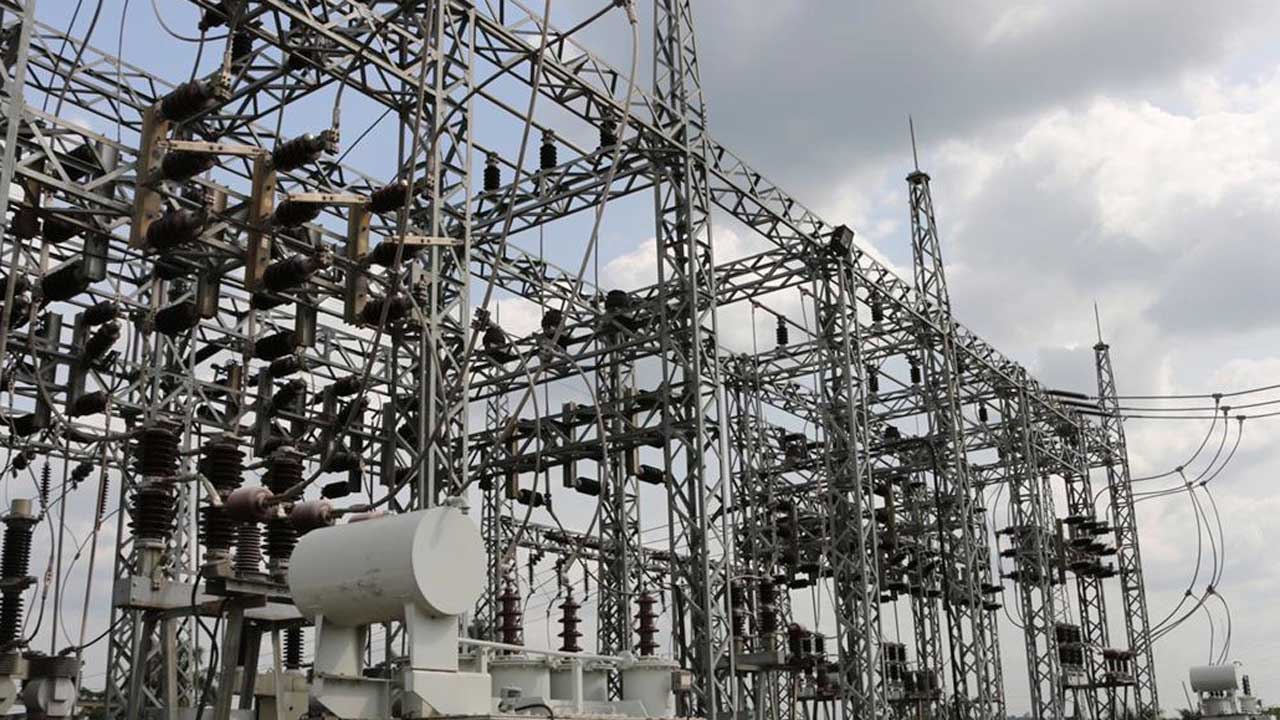
Electricity distribution companies in Nigeria collected a total of N1.13tn in revenue from their customers over the six months spanning the second and third quarters of 2025 (April to September), according to detailed monthly performance data from the Nigerian Electricity Regulatory Commission.

This is despite repeated complaints of low power supply among electricity consumers and incessant cases of blackouts in many locations nationwide.

During the period under review, the national power grid suffered a total collapse, plunging customers into darkness. At the same time, GenCos (power generation companies) reported a reduction in power generation due to the low gas supply to power plants as a result of unpaid debts.

Despite this, the NERC report on monthly revenue performance and collection efficiency, covering the 11 DisCos, stated that the total revenue collected by all DisCos in 2025/Q3 was N570.25bn out of the N706.61bn that was billed to customers.

This translates to a collection efficiency of 80.70 per cent. In comparison, the total revenue collected by all DisCos in 2025/Q2 was N564.71bn out of the N742.34bn billed to customers, which translated to a 76.07 per cent collection efficiency.

The summation of both quarters indicates that power users paid N1.13tn to the distribution companies as electricity bills for the six months. This means that at an aggregate level, DisCos recorded a 4.63 pp increase in collection efficiency between 2025/Q2 and 2025/Q3.

In 2025/Q3, Ikeja DisCo recorded the highest collection efficiency of 100 per cent, while three other DisCos recorded collection efficiencies greater than 80 per cent: Eko, 88.74 per cent; Benin, 86.44 per cent; and Abuja, 81.60 per cent. Conversely, Kaduna DisCo recorded the lowest collection efficiency at 45.67 per cent.

See also  NCAA suspends no-pay, no-service airline enforcement order

A comparison of DisCos’ performance shows that Ikeja (+17.58 percentage points), Port Harcourt (+8.83 pp), Yola (+8.72 pp), Abuja (+5.24 pp), Jos (+4.90 pp), Eko (+0.94 pp), and Benin (+0.89 pp) DisCos recorded improvements in collection efficiency between 2025/Q2 and 2025/Q3.

Conversely, the remaining four DisCos recorded declines in collection efficiency, with Kaduna (-2.70 pp) and Ibadan (-1.34 pp) DisCos having the most significant declines across the quarters.

From April to June 2025, N564.67bn was collected, translating to N197.08bn in April, N188.70bn in May, and N178.89bn in June. In the third quarter, when revenue grew to N570.28bn, a sum of N190.52bn was recovered in July, N187.47bn in August, and N192.29bn in September.

The six-month total of N1.13tn reflects a modest increase in absolute collections from Q2 to Q3, despite a decline in total billing between the two quarters. This contributed to the overall improvement in collection efficiency by 4.63 percentage points in Q3 compared to Q2.

The data underscores ongoing efforts by DisCos to enhance revenue recovery amid challenges such as estimated billing, energy theft, and infrastructure constraints. Collections in September 2025 (N192.29bn) represented the highest monthly figure in the period, indicating some stabilisation.

Individual DisCo performances varied widely, with urban-based operators like Ikeja exceeding 100 per cent efficiency in Q3 due to possible legacy recoveries and Eko leading in recovery rates, while northern DisCos such as Kaduna, Jos, and Kano lagged significantly.

“In 2025/Q3, energy accounting and collection efficiencies increased by 1.37 pp and 4.63 pp, respectively, compared to 2025/Q2. Based on historical trends, this increase in efficiencies across the two quarters can be attributed to the decreased energy offtake (-6.08 per cent) during the quarter compared to 2025/Q2.

See also  Monopoly fears rise as Dangote controls N14.4tn petrol market

“It has been observed that there is an inverse relationship between DisCos’ energy offtake and their energy accounting/collection efficiencies. Typically, when DisCos take less energy, they often prioritise areas where they record historically lower energy accounting and collection inefficiencies.

NERC noted that accurate metering is needed to boost collection efficiencies. “The most proven methods to improve energy accounting and revenue recovery are accurate customer enumeration and the installation of end-use customer meters.

“The commission issued the order on the operationalisation of Tranche A of the Meter Acquisition Fund in 2024/Q2. The Order directed DisCos to utilise the first tranche of disbursement from the MAF scheme to procure and install meters for unmetered Band A customers within their franchise areas.

“The first tranche of MAF ended in June 2025 and recorded a total meter installation of 107,461 for Band A customers. Subsequently, the commission issued the Order on the operationalisation of MAF tranche B in September 2025, and the Order provides that DisCos could utilise N28bn out of the funds that have accrued in the MAF for the metering of Bands A and B customers in their franchise area,” the report added.

FOLLOW US ON:

FACEBOOK

TWITTER

PINTEREST

TIKTOK

YOUTUBE

LINKEDIN

TUMBLR

INSTAGRAM

Continue Reading
Click to comment

Leave a Reply

Your email address will not be published. Required fields are marked *

Business

Fuel Subsidy Is The Biggest Scam – Donald Duke

Published

on

Former governor of Cross River State, Donald Duke has described fuel subsidy as the biggest scam.

It was reports that Duke made the claim in a recent interview.

The Peoples Redemption Party (PRP) presidential candidate argued that Nigeria’s crude oil resources could support significantly lower domestic fuel prices if properly managed.

“Look, I don’t believe there’s any subsidy in fuel.

“For a barrel of crude oil, there are about seven by-products. The two consequential ones are diesel and petrol, PMS and AGO, and kerosene, aviation fuel and all those things.

“You sell them at commercial rates, okay? Work it out. You can almost sell petrol today at ₦200 a litre, not the ₦1,000-plus.

“So that thing about subsidy, I think, is the biggest scam that has been perpetrated, maybe globally,” Duke said.

The former governor also described Nigeria as an energy-rich country that has failed to translate its vast resources into affordable and reliable energy for its citizens.

“You’re an energy-blessed country. You have all known forms of energy existing in Nigeria, from the crudest, which is human labour, to hydrocarbons, solar, hydro, uranium and now lithium.

“You have all those things. Why are we still energy-poor? Because the political will is not there. But even beyond the political will, we’re not thinking through this,” Duke said.

Duke said the continued flaring of natural gas, despite the country’s energy challenges, was another indication of what he described as poor management of Nigeria’s resources.

“We easily flare two billion cubic feet of gas a day. That is equivalent to 20 million litres of diesel.

See also  Average city bus fare rises 2.43% to N1,431 in May

“If you had a turbine to power all of Africa, it would not consume 20 million litres of diesel daily.

“So, it’s akin to the abundance of water while the fish is thirsty,” he said.

He also rejected arguments that domestic fuel prices should be benchmarked against international prices, saying countries should leverage their natural resources to improve the welfare of their citizens.

“When I hear excuses like, ‘Oh, it’s cheaper in America,’ or, ‘We’re cheaper than it is in America,’ every country has its own endowments.

“You’ve got to use what you’ve got to get what you want. We are an energy-blessed country. The people should feel their blessings,” he said.

FOLLOW US ON:
FACEBOOK

TWITTER

PINTEREST

TIKTOK

YOUTUBE

LINKEDIN

INSTAGRAM

Continue Reading

Business

Whatsapp to begin charging businesses per message from October 1

Published

on

Meta, the parent company of WhatsApp, will begin charging businesses for certain messages sent through the WhatsApp Business Platform from October 1, 2026.

This was disclosed in a WhatsApp Business Platform pricing update in July 2026.

The new charges will be applied to companies using the official WhatsApp Business Platform, formerly known as the WhatsApp Business API, to manage customer conversations at scale.

Banks, fintechs, e-commerce companies, telecoms operators, logistics firms and large retailers that rely on the platform for customer service and transactional communication are among those that could be affected.

However, the development will not affect ordinary WhatsApp users or most small businesses using the standard WhatsApp Business app on their phones.

Under the current system, when a customer sends a message to a business, a 24-hour customer service window opens. During that period, businesses can respond with free-form service messages and certain utility messages without paying Meta.

However, from October 1, Meta will begin charging businesses on a per-message basis for service messages sent during the customer service window.

Meta, in its developer documentation, said, “Effective October 1, 2026, Meta will charge on a per-message basis for all service messages, consistent with how Meta charges for template messages. These messages have not been charged since November 1, 2024.”

The company added, “Effective October 1, 2026, Meta will charge on a per-message basis for utility messages sent in response to users (within an open 24-hour customer service window). These messages have not been charged since July 1, 2025.”

Utility messages include communications such as payment confirmations, order updates and delivery notifications.

See also  Electricity subsidy: FG to deduct N3.6tn from Federation Account

Meta also warned businesses and Solution Providers about the need to add a payment method ahead of the new charges.

It said, “For any Solution Provider or directly-integrated businesses that does not have a payment method on file by September 30, 2026, Meta will stop delivering service messages as of when they become charged on October 1, 2026.”

For Nigerian businesses, a chargeable utility or service message is expected to cost about $0.0101 per message, equivalent to roughly ₦14 based on an exchange rate of about ₦1,340 to the dollar.

Marketing messages are considerably more expensive, at about $0.062 per message, or approximately ₦84 at the same exchange rate.

The charges are Meta’s fees and do not necessarily represent the total amount a business will pay. Companies using Business Solution Providers or third-party platforms to access the WhatsApp Business Platform may incur additional provider charges.

FOLLOW US ON:

FACEBOOK

TWITTER

PINTEREST

TIKTOK

YOUTUBE

LINKEDIN

INSTAGRAM

Continue Reading

Business

FG reaffirms partnership with Taraba to unlock economic potential

Published

on

The Federal Government has reaffirmed its commitment to working with the Taraba State Government to unlock the state’s vast potential in agriculture, energy, tourism, infrastructure and mineral resources.

The Minister of Information and National Orientation, Mohammed Idris, stated this on Thursday in Jalingo at the Gala night to mark the Taraba State’s 35th anniversary and the official unveiling of the Taraba Regional Development Master Plan.

He described the newly unveiled Taraba Regional Development Master Plan as an important blueprint for sustainable growth.

Idris, who conveyed the greetings of President Bola Tinubu and the Federal Executive Council to the government and people of Taraba State, said the state’s 35th anniversary offered an opportunity not only to celebrate its progress since creation in 1991, but also to define a clear pathway for its future.

He commended Governor Agbu Kefas of Taraba for adopting a long-term development framework, saying the success of the Master Plan would ultimately depend on sustained implementation and its impact on the lives of citizens.

“The success of this Master Plan will not be measured by the ceremony at which it is unveiled, but by the roads built, businesses created, jobs generated, communities connected and lives improved,” the minister said.

Idris described Taraba as one of Nigeria’s most promising economic frontiers, with enormous opportunities in agriculture and agro-processing, livestock, hydropower, tourism, manufacturing and mineral development.

He praised the Kefas Administration for its investments in education, healthcare, infrastructure, security and economic development, particularly its policy of free and compulsory primary and secondary education.

He said the evidence was in the provision of more than N1.8 billion in 2026 to cover NECO, BECE and NABTEB examination registration for public-school students.

See also  US-Iran war: Petrol price surge sparks relief calls

The minister also highlighted the approximately 268 million dollars financing agreements signed between Taraba State and the ECOWAS Bank for Investment and Development for an integrated industrial park, 10,000 hectares of irrigated rice production and processing, and a 50-megawatt solar power plant in Jalingo.

He said the investments represented the kind of initiatives required to convert the state’s natural advantages into production, value addition, employment and sustainable economic growth.

Idris said Tinubu’s administration was complementing the state’s development drive through major federal infrastructure projects.

“These include the Gembu–Mbamnga–Yang (Lip) Road, the Bali–Serti–Gashaka–Gembu Road, interventions on the Jalingo–Mutum Biyu–Tella–Wukari corridor, as well as further work on the Mayo Selbe–Gembu, Mutum Biyu–Garba Chede and Jalingo–Numan roads.

“These are more than roads. They are investments in connectivity, trade, tourism, agriculture, security and the movement of people and goods,” he said.

The minister also reaffirmed the federal government’s commitment to harnessing Taraba’s agricultural, energy and mineral potential, including the strategic Mambilla Hydroelectric Power Project.

On security, Idris said the federal government was advancing reforms toward the establishment of State Police to bring policing closer to communities while ensuring professionalism, accountability and safeguards against abuse.

He said such a framework could be particularly beneficial to Taraba because of its vast terrain and dispersed border communities, where local knowledge, intelligence gathering and rapid response were critical to effective policing.

The minister also cited the establishment of the Nigerian Army’s 10 Division, headquartered in Jalingo, with operational responsibility for Taraba and Adamawa States, as evidence of the federal government’s commitment to strengthening security in the region.

“Security and development must go together. People cannot invest, farmers cannot move their produce, tourists cannot visit and businesses cannot grow where communities feel unsafe,” Idris said.

See also  Electricity subsidy: FG to deduct N3.6tn from Federation Account

He said the federal government’s economic reforms were designed to create a stronger fiscal foundation for development, noting that the removal of petrol subsidy had mobilised N15.8 trillion in additional resources for the Federation between June 2023 and December 2025.

According to him, approximately N5.4 trillion accrued to the federal government while about N10.4 trillion went to states and local governments, providing additional resources for infrastructure, education, healthcare, security and human capital development.

Idris said the federal government remained opposed to a return to the previous subsidy regime, stressing that the priority was to consolidate the gains of reform, protect vulnerable Nigerians and ensure that additional public resources translated into tangible improvements in citizens’ lives.

He emphasised that development must ultimately be people-centred, creating opportunities for young people, expanding women’s economic participation, supporting farmers and small businesses, and connecting communities to markets and public services.

The minister also pledged stronger collaboration between the Federal Ministry of Information and National Orientation and the Taraba State Ministry of Information and Re-Orientation to ensure citizens understand and embrace the objectives of the Master Plan.

“The vision contained in this Master Plan must go beyond government offices. It must reach the farmer, the entrepreneur, the student, the trader and communities across Taraba.

“This is because a plan for Taraba must ultimately be a plan owned by the people of Taraba,” he said.

Idris congratulated Kefas, the government, and the people of Taraba State on the state’s 35th anniversary, describing the occasion as both a celebration of Taraba’s history and a renewed commitment to its future.

See also  Nigerians pay more for cement than African neighbours – FCCPC

“35 years of history. A new blueprint for the future. And a renewed commitment to building the Taraba we want and the Nigeria we deserve,” the minister said.

In his remarks, Kefas also called for continuity in governance, acknowledging the contributions of former military administrators and elected governors to Taraba State’s development.

He said his administration was committed to building on previous achievements, correcting what needed to be corrected, completing worthy projects and opening new frontiers for future generations.

He stressed that the development of Taraba must remain bigger than any government, political party, ethnic group or individual, urging former leaders to continue contributing their experience and institutional knowledge to the peace, unity and prosperity of the state.

“Government must be a continuum. Development must be cumulative. Taraba is bigger than any government, any administration, any political party, any ethnic group, or any individual,” Kefas said.

He added that the ultimate credit for development belongs to the people of Taraba State.

Present at the event were the former Governor of Taraba State, Rev. Jolly Nyame; Secretary to the Government of Taraba State, Chief G.T. Kataps; Director-General of the Nigerian Television Authority, Salihu Dembos; and  Director-General of the Federal Radio Corporation of Nigeria, Dr Mohammed Bulama.

Others were the Managing Director of the Nigerian Ports Authority, Dr Abubakar Dantsoho; as well as other distinguished government officials, traditional leaders, members of the diplomatic and business communities, and other dignitaries.

NAN

Source: punchng.com

FOLLOW US ON:

FACEBOOK

TWITTER

PINTEREST

TIKTOK

YOUTUBE

LINKEDIN

INSTAGRAM

Continue Reading

Trending