Connect with us

Lifestyle

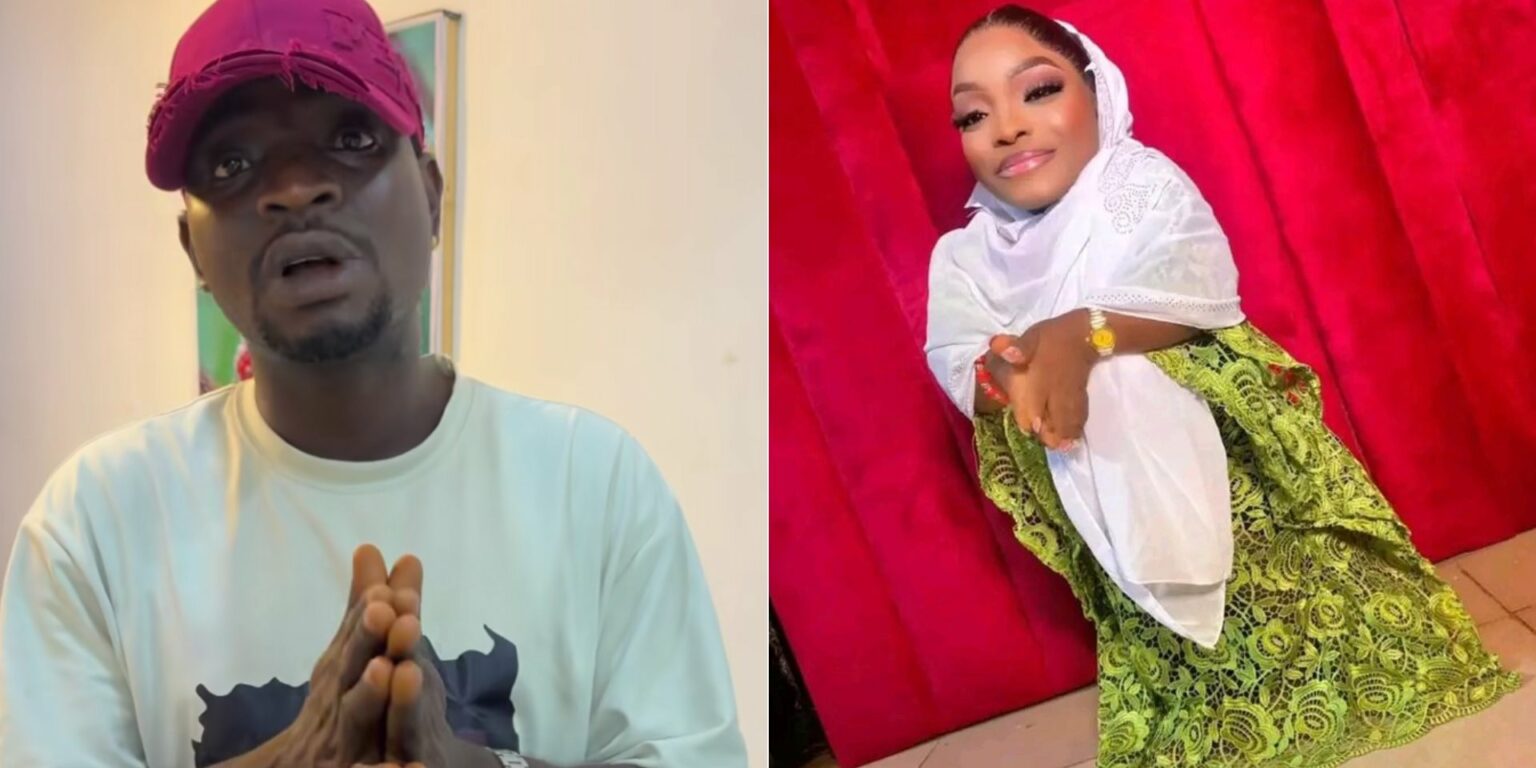
Awujale: Ruling house slams KWAM1 over protest letter to Abiodun

Published

on

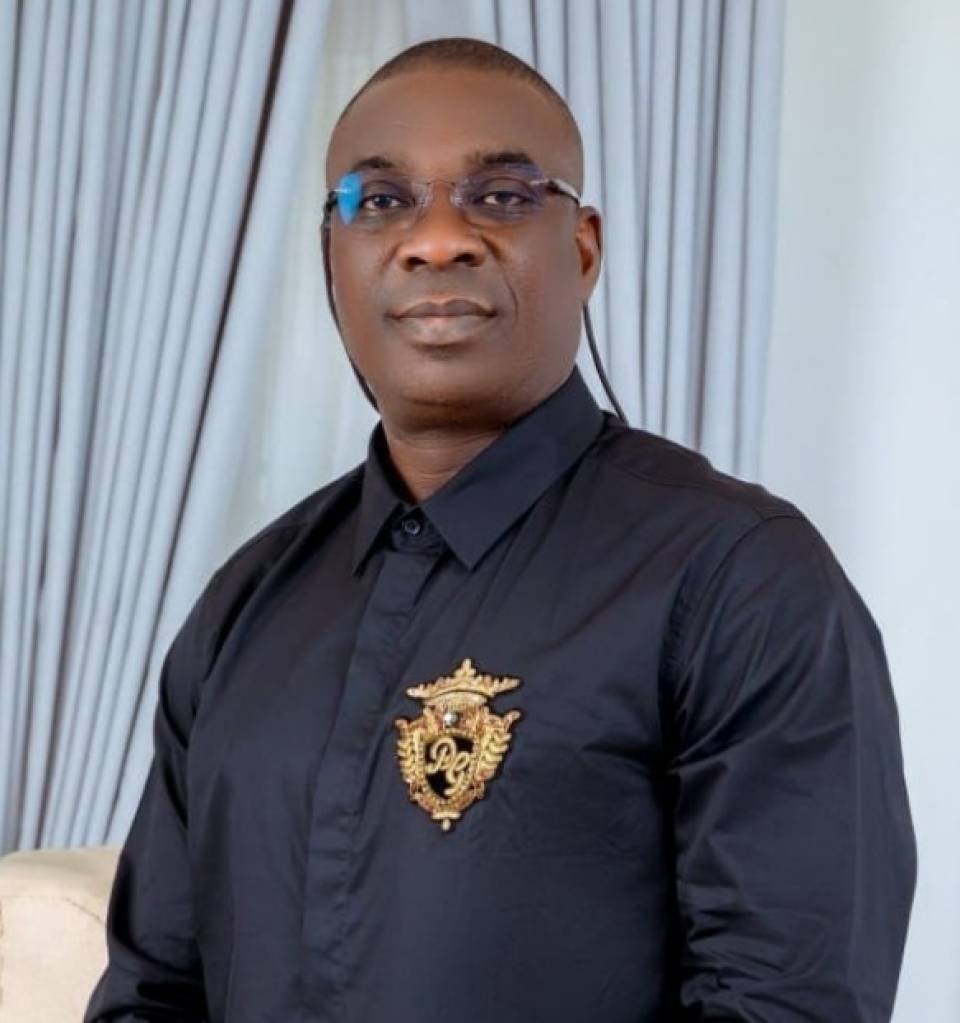
The Fusengbuwa Ruling House of Ijebu land on Sunday lashed out at popular Fuji musician Alhaji Wasiu Ayinde, also known as KWAM1, over his protest letter to Ogun State Governor, Dapo Abiodun, in which he alleged that he was being deliberately excluded from the ongoing selection process of the next Awujale of Ijebu land.

In his protest letter dated January 8, 2026, written by his lawyer, Dr. Wahab Shittu (SAN), KWAM1 explained that the Fusengbuwa Ruling House, next in line to produce the new Awujale, had issued directives that were unknown to the Chieftaincy Declaration and the Obas and Chiefs Law of Ogun State.

He claimed these directives were aimed at disenfranchising him from contesting for the throne.

But responding to the development, the Vice Chairman of the Fusengbuwa Ruling House, Prof. Fassy Yusuf,  dismissed the protest letter as “arrant nonsense” with no bearing on the selection process.

Speaking on the telephone on Sunday, Yusuf said: “It is a misguided letter. Either Wahab Shittu is being misled or Wasiu Ayinde is being misled. It is arrant nonsense.

The letter was directed to the government, so they will respond appropriately. The issue being raised about the screening is illogical. We have over 20,000 members in the ruling house. How does he expect us to manage the crowd? What is being talked about is illogical.”

He added that the family had fixed Monday for the nomination meeting of aspirants for the vacant stool.

The selection process for the new Awujale, which has reportedly attracted over 60 aspirants, has generated widespread interest, with Ayinde openly declaring his interest in the stool.

See also  Pastor Adeboye releases prophecies for New Year 2026

The Fusengbuwa family, however, asserted that the Fuji musician is not a member of the ruling house and therefore not qualified to participate in the process.

Ayinde had approached the Ogun State High Court sitting in Ijebu-Ode, seeking an interim injunction restraining the governor and six others from proceeding with the selection process. The court declined the application, ruling that it lacked merit. The suit was subsequently withdrawn by Ayinde through his lawyer, although no reason was given.

The ruling house also suspended the nomination process and restarted it afresh after intervention by the state government.

In the fresh letter to the governor, Ayinde stated that the Ijebu-Ode Local Government, through a letter dated January 6, 2026, and signed by its Secretary, Oke Adebanjo, had given approval for the ruling house to commence the selection process for the new Awujale.

He said it was surprising that while members of the family were preparing for a meeting, one Prince Adeleye Lateef Ademuyiwa, the Public Relations Officer of the ruling house, issued a notice directing candidates to obtain nomination forms and appear before a screening committee chaired by Prince Alhaji Mitiu Adenuga.

Ayinde further stated that the directive fixed the nomination exercise for Monday, January 12, 2026, but also stipulated that nominations would be conducted by delegates selected at a meeting scheduled for January 10, 2026.

KWAM1’s lawyer said: “It is a matter of deep concern to our client that all the illegal directives—unknown to the Chieftaincy Declaration, the Obas and Chiefs Law, and the letter of the Secretary of Ijebu-Ode Local Government—were included in the family’s letter to the Local Government dated January 6, 2026. It is clear that there are plans by the leadership of the ruling house to disenfranchise members who wish to participate in the nomination of candidates for the Awujale stool.”

See also  Akinwunmi Ambode: A Profile of Leadership in Lagos State

He added that his client took exception to the directives from the ruling house, describing them as deliberate attempts to exclude him from the process.

“We wish to emphasise that all members of the ruling house are entitled to attend this important meeting to nominate candidates of their choice. A group of people in the ruling house cannot usurp the rights of members to freely nominate candidates. The attempt by certain individuals to hijack the nomination process will certainly create a crisis in what should be a seamless exercise.

We state in specific terms that the directive providing for screening of candidates and nomination by delegates is not only inconsistent with the spirit and letter of the Chieftaincy Declaration but also with the Obas and Chiefs Law of Ogun State 2021. We counsel that in the larger interest of justice and compliance with due process, you take timely steps to address these fundamental concerns capable of affecting the integrity of the entire process.”

The letter added that attempts to preclude KWAM1 from the process would be resisted: “In particular, our client is concerned that certain elements are attempting to exclude him from the process in flagrant violation of the law, and this will be resisted. We hope your intervention will ensure that justice is done to all parties involved, including our client.”

The Awujale stool became vacant in July last year following the death of Oba Sikiru Adetona at the age of 91, after a 65-year reign.

Efforts to obtain the state government’s reaction were unsuccessful, as the Special Adviser to the Governor on Information and Strategy, Mr. Kayode Akinmade, had not responded to enquiries as of press time.


Continue Reading
Click to comment

Leave a Reply

Your email address will not be published. Required fields are marked *

Lifestyle

Breast cancer in Nigeria: Study reveals profound social, emotional toll on women

Published

on

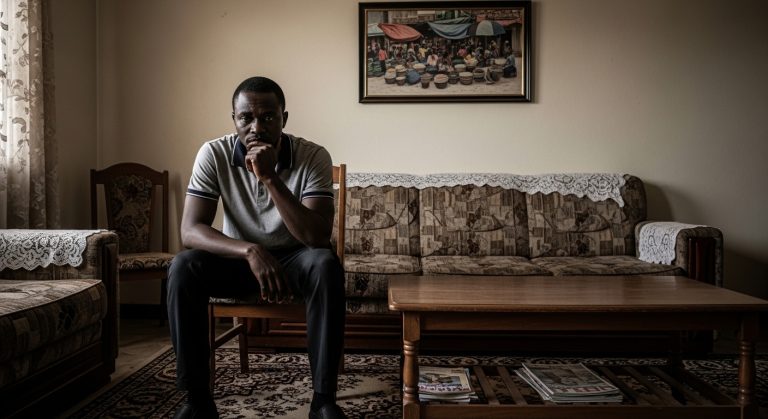
As the world mark this years’ World Cancer Day today, a recent study published in Cancer Reports had revealed breast cancer not only presents physical challenges to Nigerian women but also profoundly affects their sense of self, social standing, and emotional well-being.

The researchers said that breast cancer remains the most prevalent cancer among women in Nigeria, accounting for 25 per cent of all cases, yet access to early detection and treatment remains limited.

The study, conducted by researchers from the Federal University Lokoja, Usmanu Danfodiyo University, and Teesside University, examined the self-identities of 22 women living with breast cancer across different age groups and stages of the disease. Using a qualitative grounded theory approach, the researchers identified a pattern of evolving self-identity across three phases: before diagnosis, during treatment, and post-treatment.

Before diagnosis, women generally held a “valued self-identity”, experiencing themselves as physically whole and socially integrated in their roles as mothers, wives, and professionals. With diagnosis and treatment, women entered a transitional phase, developing either a dependent self-identity, often associated with younger women relying on family support, or a self-determined identity, more common among older women with greater economic and emotional agency.

The post-treatment phase revealed a “devalued self-identity”, where women experienced diminished self-esteem, reduced sense of femininity, and social vulnerability due to bodily changes such as mastectomy.

The study highlights that these identity shifts are particularly pronounced in younger women, affecting their perceived social value, sexual relationships, and long-term psychological well-being.

The researchers also noted the broader context exacerbates these challenges. Only 14 cancer treatment centers exist in Nigeria, mostly concentrated in the south, with limited availability of radiation therapy.

See also  Akinwunmi Ambode: A Profile of Leadership in Lagos State

Cancer care is largely out-of-pocket, and the National Health Insurance Scheme covers less than 5 per cent of the population, leaving many women financially vulnerable. Late-stage diagnosis is common, further complicating treatment outcomes.

Lead author Dr. Aisha Abimbola Adaranijo emphasized the significance of the findings:

“Our study shows that breast cancer is not just a physical illness. It fundamentally reshapes a woman’s sense of self, her social roles, and her emotional well-being. Healthcare providers must consider these psycho-social dimensions in treatment and survivorship care.”

Co-author Dr. Kehinde Kanmodi added: “Understanding the trajectories of self-identity among Nigerian women with breast cancer is essential. It allows caregivers and policymakers to design interventions that address not only medical treatment but also the emotional and social impacts of the disease.”

The study calls for comprehensive psychosocial support, community awareness, and policies that improve access to early detection and affordable treatment. According to the authors, addressing these dimensions is crucial to helping women navigate the “new normal” of life after a breast cancer diagnosis, where survival extends beyond the disease to encompass identity, dignity, and social reintegration.

FOLLOW US ON:

FACEBOOK

TWITTER

PINTEREST

TIKTOK

YOUTUBE

LINKEDIN

TUMBLR

INSTAGRAM


Continue Reading

Lifestyle

No other country sees daily killings like Nigeria – Kukah

Published

on

The Bishop of the Catholic Diocese of Sokoto, Most Reverend Matthew Kukah, has expressed concern over the daily killings in Nigeria, describing the situation as unparalleled globally.

Speaking in Yola, Adamawa State, at the launch of a book on Governor Ahmadu Fintiri titled ‘The Man They Could Not Stop’, authored by his former Director General of Media and Communication, Solomon Kumangar, Kukah said the country is divided along religious lines, a situation he said is exacerbated by Western media narratives.

“What is happening in Nigeria cannot happen in Sudan, Cameroon, Niger, Ghana, or any other country in the world,” Kukah said. “There is no other country in the world that 10 people are killed on Monday, 50 on Tuesday, 100 on Wednesday, and the killings go on every week. How can such a country move forward?”

He added, “Only in Nigeria do people die as Christians and Muslims. The Western media is fuelling the killings along religious lines — 20 Christians killed, 30 Muslims killed.”

Kukah called on political and religious leaders to build institutions that unite Nigerians for peace and the country’s development.

He also commended former Chairman of the Independent National Electoral Commission, Prof. Attahiru Jega, for intervening in the 2023 governorship crisis in Adamawa State.

At the event, former Senate President and ex-Kwara State governor, Bukola Saraki, urged Nigerians to prioritise leaders with strong leadership qualities over political affiliations.

“The country can only move forward when the right people are given the chance to pilot its affairs,” he said, adding that Fintiri’s infrastructural footprint shows he is prepared for leadership.

Nassarawa State Governor, Abdullahi Sule, who chaired the ceremony, encouraged Fintiri to join the All Progressives Congress, saying the party’s expansion had reached Adamawa State.

See also  Fela Anikulapo-Kuti: The Lion of Afrobeat (PHOTOS)

“If I come with the APC cap and flag, I would hand it to you today as our new member,” he said.

Governor Fintiri described himself as a “man of destiny,” reflecting on the 2023 elections.

“There were numerous futile shots at stopping me. The 2023 election was just the height of them, and an embarrassing one, not only to the state but to the nation and to democracy globally. In 2023, we saw treachery; we saw assault; we saw the moral compromise of a bankrupt elite masked as patriots. But most importantly, we saw support and resilience of the true Adamawa people and friendships that go beyond the state.”

He continued, “If 2023 had not happened, I wouldn’t have known some people for who they are: pretentious, greedy, opportunistic, and desperate, yet crying the victim and still claiming democratic credentials they are distant from. The sad news is that this clique of pretenders and political puppeteers are still around, shuttling between Yola and Abuja, shamelessly and dangerously hovering around our democracy. We must, as we did in 2023, resist them with our votes and unmask them to the world.”

The book launch was attended by governors of Bauchi, Bala Mohammed; Nassarawa, Abdullahi Sule,, the deputy governor of Oyo, and representatives from Gombe, Borno, Yobe, Taraba, and Plateau states.

Deputy National Vice Chairman (North-East) of APC, Mustapha Salihu, unveiled the book and urged Adamawa residents to continue supporting Fintiri’s developmental projects.

punch.ng

FOLLOW US ON:

FACEBOOK

TWITTER

PINTEREST

TIKTOK

YOUTUBE

LINKEDIN

TUMBLR

INSTAGRAM

Continue Reading

Lifestyle

Makoko demolition: When economic interest overrides humanity

Published

on

When American missionary and science teacher, Jack Kyle, arrived in the mega slum of Makoko, Lagos in August 2023, I doubt if he ever thought that one day, his love for slum dwellers and the underserved would never find expression in the area, at least not among the tough-skinned ones living on the dirty lagoon at the backyard of the Ebute Meta area of the mega city. Sixty-year-old Kyle, who left his family of five children and lovely wife in Manhattan, Kansas, United States, didn’t settle in Makoko because of his love for the ghetto, but to be able to add positive values to the lives of these strange fellows in their ‘natural habitat’.

Apart from building a ‘house’ that cost about $4,000 in the community for himself and other volunteers, the American missionary, who defied the opposition of family members back home to embark on this treacherous journey, ensured that, from rainwater, he was able to provide clean water for some residents using solar power. He equally had plans for aquaculture and sewage-to-menthane gas, among other utilities, ignored by the relevant authorities.

At a time in the past, I wondered if the throng of willing donors never had any other locations, orphanages and struggling public schools, apart from this waterfront ghetto, where their supports are much needed both in Lagos and beyond. The little contributions of Kyle and several other Nigerians – individuals and organisations – in helping the slum dwellers in Makoko have sadly gone down the lagoon, where the residents and landlords once had their log houses.

Some years back, a few heads of a few organisations truly took the support of their organisations outside Lagos in order to reach out, no matter how little. A financial institution with its headquarters in Lagos ‘adopted’ a private school in Abuja where the organisation pumped in money like water from a big tap. It wasn’t until the school was involved in a big crisis that the undiscerning minds among us knew that the school actually belonged to the Oga Patapata of the organisation which had adopted the school. A few years later, the chairman of the board took a loan of N120bn to buy a Disco that the Goodluck Jonathan government put on sale, and of course, refused to pay back. And you think such an organisation wouldn’t go under?

See also  Homosexuality scandal rocks Nigerian Catholic Church

Do you equally want me to tell you about the ‘adoption’ of the private school of the late wife of a living former military president, where the Niger State Government paid the salaries and other expenses of the private institution for years before such brazen impunity was discovered? Could it be because the founder of the school had died? Nigerians love to help in wonderful ways, you know! Let’s go back to Makoko for now, please.

Ever since I noticed this curious settlement from the vantage view of the Third Mainland Bridge, I never ceased to wonder if real humans actually lived in those shanties until it became clear that all manners of fishermen – Ijaws, Beninese, Ghanaians, and their families – had their abode in the Makoko floating slum. You will be dead wrong if you believe the massive ghetto housed fishermen alone. There were schools, a big orphanage, churches, and others, mostly established by private individuals, charitable groups, corporate entities and organisations.

While the location was conducive for the occupation of the residents and providing contents for local and visiting bloggers, it had long been an eyesore. So, the end of this kingdom, if it hadn’t been foretold by some of our self-styled prophets, had been long in coming. The inevitable end came in January courtesy of its demolition by the Lagos State Government, which is not in any way new to demolitions and land reclamation by the way.

In some other parts of the world, pets (and other animals) almost have the same right to life and decent living as their human owners. Imagine driving on a highway (not Nigerian highway o), and you are warned of ‘deer crossing, apply caution’! God helps you if you are unfortunate enough to run into any deer. Imprisonment or deportation beckons or both, depending on your immigration status. In broad daylight, some squirrels deliberately torment your imagination as they playfully jump from one tree branch to another and sometimes take over a small field by your residence. May God deliver you from those deadly thoughts you are entertaining at the moment – in case you are thinking of breaching their ‘animal’ rights.

In our dear country, however, the case is different for a simple reason. We tend to act before we think about the consequences, no matter how fatal the outcome may be. Some of the reactions the Makoko demolition has attracted may sound political, especially from those who seek to reap political capital from this and other sad episodes. The underbelly of this demolition is that we have collectively lost our sense of humanity, not that we have ever prioritised our lives and our living at any time before now.

See also  Senator Oluremi Tinubu: From the Senate to Nigeria’s First Lady

It may interest you to know that Makoko isn’t the first slum to be demolished with the same sense of insensitive logic. During the military era, the Maroko slum (now Lekki) was levelled on the orders of then-Col. Raji Rasaki, the military administrator, who acted with ruthless alacrity in 1990. In July 2012, thousands of residents were displaced when a part of the Makoko ghetto was turned upside down. In March 2016, no fewer than 3,000 were sacked in Mosafejo, Ajegunle, allegedly on short notice.

Otodo Gbame, a Lekki waterfront ghetto, suffered the same fate between November 2016 and April 2017, where 30,000 were said to have been evicted, and the shanties housing them were demolished. There were claims that no fewer than 11 lives were lost. Ilubinrin, a neighbourhood of Obalende/Osborne, Ikoyi, wasn’t spared the same year from the reclamation of more land. Ilaje Otumara fell in March 2025, while the Itesiwaju Ajumoni in Oworonshoki followed suit in October, drawing a massive outcry and protests.

Uncle, are you saying the government should have left those squalid settlements to thrive side-by-side with our much-desired megacity, especially when the Makoko slum, which is the focus here, is expectedly illegal in every sense? Not at all! I was taught as far back as my secondary school days that the government holds power in trust for the people, and the same government has a responsibility to protect and provide social services for the people who put them in power.

It then presupposes that the government of the day must ensure that, apart from ensuring that it protects its citizens from any harm under whatever circumstances, adds value to their living standards and must equally incorporate their interests into governance. With the manner in which the Lagos State Government has dispatched these illegal slum residents of Makoko, I bet my social studies teachers might need to revisit their notes or question their own teachers if they are still alive to take their angry questions.

See also  How I lost my three-week-old daughter to Makoko demolition — Carpenter

I happen to be one of the apolitical Nigerians who have a lot of good words for the Lagos State Government in terms of its forward-looking development strides, no-delay project execution and its consistent security arrangements that have ensured that the state can live in relative peace, especially when compared to other states. But may I ask when it becomes a fashion for a supposedly progressive and responsive government to throw out people and their families into the lagoon, demolish their shelters and their minimal facilities provided by private individuals and groups without any safety valve?

I’m sure you may like to ask why the government should help these distressed families to settle down, even in temporary camps, till they find their feet again. They are human beings created in the image of God as those in power. They are citizens of this great nation (I know some of them are from Ghana, Togo and the Benin Republic) who deserve to be protected and have a right to decent living so that they can put the pieces of their lives together. There are children in ghetto schools and orphanages who also aspire to rise in life and deliver their families from the slum and the stranglehold of poverty. In what ways are their interests protected or considered in these mindless demolitions?

You may equally like to find out how the few lucky ones displaced by previous demolitions have fared in their much-trumpeted new settlements in Jakande (Ajah) and Ikorodu, which are pitiably drops in the ocean? It is no longer news that the state government is pressed for land in all areas, having to contend with the lagoon, the ocean and Ogun State on all sides. These boundaries should not be an excuse to allow economic and political banditry to override our sense of humanity, as if blood does not flow in the veins of our leaders. So, happy land reclamation in pursuit of our megacity!

Continue Reading

Trending