Connect with us

News

“We Cannot Sacrifice Our Children On The Altar Of Trade” – NAFDAC Defends Ban On Sachet Alcohol

Published

on

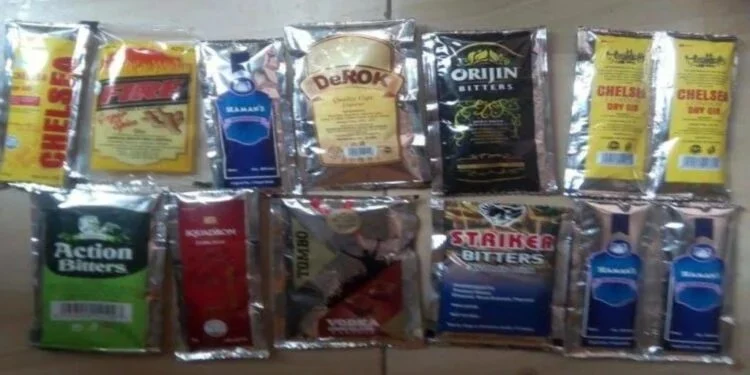
The National Agency for Food and Drug Administration and Control (NAFDAC) has again justified its decision to ban and enforce the ban on the production and sale of sachet alcohol.

Speaking on Friday during an interview on Arise News, the NAFDAC Director General, Professor Mojisola Adeyeye, said the health and safety of children must be prioritized over commercial gains.

She added that the future of children must be protected by avoiding future alcohol addiction. Adeyeye stressed that the action is about protecting the health of citizens.

“So it is on their side that they are all about money, not about health. We are about health and good investments… But we cannot sacrifice our children on the altar of trade,” she said.

Adeyeye explained that alcohol falls under NAFDAC’s regulatory mandate as a food product, noting that the agency was not banning alcohol entirely.

“We are not banning alcohol. We approve alcohol in different packages. It is only in small packages that we are banning.”

No Court Order Against Ban

During the interview, the NAFDAC boss also denied claims that a court order has stopped the enforcement of the ban on sachet alcohol.

Adeyeye maintained that NAFDAC has not received any court order to that effect

“NAFDAC has not been served. If we have been served, I have not been given that,” she said.

She added that the agency resumed enforcement based on legislative backing.

“The Senate gave us the order to resume enforcement,” Adeyeye noted.

Tracing the policy to 2018, she said NAFDAC raised the alarm over sachet alcohol with concentrations of between 43 and 45 per cent.

See also  Trump sends letter of support on Ukraine’s Independence Day as Zelensky declares Kyiv ‘will not lose’ the war

According to her, an agreement was reached with manufacturers under the supervision of the Federal Ministry of Health, giving them five years to reorganise.

“That can be easily squeezed into the pocket of a primary school, secondary school child.”

“We all signed that by, after five years, they will not sell alcohol in sachets,” she said.

According to her, when the agreed time expired, on January 31, 2024, an extension was granted following interventions by lawmakers and certain industry stakeholders.

She added that the extended moratorium expired in December 2025.

“The Minister called me and said there had been some discussion, we should give one year moratorium, an extra one year above the five years that we have given before. And that one year expired December 2025.”

Adeyeye said that despite opposition from manufacturers seeking further extensions, enforcement resumed based on the order given by the Senate.

She dismissed claims that warning labels could curb underage drinking.

She also said the policy aligns with Nigeria’s international obligations.

“Do not use under 18. Do not use in Nigeria, are we kidding ourselves? Are we really kidding ourselves? In Nigeria? Who is going to enforce?”

“In 2010, Nigeria signed an agreement, World Health Assembly, 2010, 193 countries signed it that we will not make alcohol to be easily accessible to vulnerable populations,” Adeyeye added.

On criticisms that NAFDAC continued to register sachet alcohol products during the moratorium, Adeyeye said the agency was acting based on legislative directives.

“We were honouring the moratorium, the extended moratorium that was given by registering within a period.

See also  US court upholds Trump administration’s $100,000 visa fee for tech workers

“I think we are learning our lessons now that we shouldn’t have even listened or register products, a product at that particular period,” the NAFDAC boss stated.

Responding to suggestions that alcohol concentration should be reduced instead of banning sachets, she said the issue was accessibility and concealment.

She disclosed that some schoolchildren are already getting addicted and there is the urgent need for intervention to correct the trend.

“Actually, it is scientifically possible. It is not just the volume. It is the pack size.

“The principal said that in his school, a student said that he cannot study for exam without a sachet alcohol.

“We are making our children addicts. Addicts.”

“Because you are frying your liver slowly with alcohol over time,” Adeyeye clarified.

She added that NAFDAC is shutting down production lines used for sachet production, and not entire companies.

According to her, manufacturers have always been carried along in the developments leading to the current enforcement.

“Lines have been shut down… We are shutting down lines.

“We were having regular meetings, quarterly meetings with MAN.”

FOLLOW US ON:

FACEBOOK

TWITTER

PINTEREST

TIKTOK

YOUTUBE

LINKEDIN

TUMBLR

INSTAGRAM

Continue Reading
Click to comment

Leave a Reply

Your email address will not be published. Required fields are marked *

News

US Justice dept releases documents, images, videos from Epstein files

Published

on

The US Justice Department began releasing millions of new pages on Friday from the Jeffrey Epstein files along with photos and videos, adding fuel to the politically explosive case that has dogged President Donald Trump.

Deputy Attorney General Todd Blanche said the White House played no role in the review of the extensive files related to the convicted sex offender, a former friend of Trump.

“They did not tell this department how to do our review, what to look for, what to redact, what to not redact,” Blanche said at a press conference.

The Justice Department said some of the documents being released contained “untrue and sensationalist claims” about the 79-year-old Trump submitted to the FBI before the 2020 presidential election.

But Blanche — who previously served as Trump’s personal lawyer — dismissed suggestions that embarrassing material about the president had been redacted from the more than three million documents, 180,000 images and 2,000 videos being released on Friday.

“We did not protect President Trump,” he said. “We didn’t protect or not protect anybody.”

Blanche said all images of girls and women were being redacted aside from those of Ghislaine Maxwell, who was convicted of trafficking underage girls for Epstein and is serving a 20-year prison sentence.

However, a statement by survivors of Epstein’s alleged abuse claimed identifying information about them still remained in the files, “while the men who abused us remain hidden and protected.”

The letter signed by 19 individuals, some using aliases or initials, demanded “the full release of the Epstein files” and that Attorney General Pam Bondi directly address the matter when she testifies before Congress next month.

See also  Trump sends letter of support on Ukraine’s Independence Day as Zelensky declares Kyiv ‘will not lose’ the war

A wealthy US financier, Epstein died in a New York prison cell in 2019 while awaiting trial for sex trafficking of underage girls. His death was ruled a suicide.

Previous document releases have shed light on Epstein’s ties to top business executives such as Microsoft’s Bill Gates, celebrities such as filmmaker Woody Allen, academics and politicians, including Trump and former president Bill Clinton.

In a draft email among the documents published on Friday, Epstein said Gates had engaged in extramarital affairs, a claim the Gates Foundation denied in a statement to The New York Times.

“These claims — from a proven, disgruntled liar — are absolutely absurd and completely false,” it said.

In other emails, Epstein connected Steve Tisch, 76, producer of the movies “Forrest Gump” and “Risky Business” and the co-owner of the New York Giants football team, with multiple women.

In one exchange with Tisch, Epstein describes a woman as “russian, and rarely tells the full truth, but fun.”

– Conspiracy theories –

Trump’s right-wing base has long been obsessed by the Epstein saga and conspiracy theories that the financier oversaw a sex trafficking ring for the world’s elite.

Only one person — Epstein’s former girlfriend Maxwell — has ever been charged in connection with his crimes, and Blanche appeared to play down expectations that the latest files would lead to further prosecutions.

Trump and Clinton both figure prominently in the records published so far but neither has been accused of wrongdoing.

A Republican-led House panel voted recently to launch contempt of Congress proceedings against Bill and Hillary Clinton over their refusal to testify before its probe into Epstein.

See also  INEC chair: Security check begins, Council of State to meet

Trump, who used to move in the same social circles as Epstein in Florida and New York, fought for months to prevent release of the vast trove of documents about the disgraced financier.

But a rebellion inside his Republican Party forced him to sign off on a law mandating release of all the documents.

Trump has given varying accounts of why he eventually fell out with Epstein. He has criticized the file dumps, expressing concern that people who “innocently met” Epstein over the years risked having their reputations smeared.

The Epstein Files Transparency Act called for all of the documents held by the Justice Department to be published by December 19.

Blanche said Friday’s release “marks the end of a very comprehensive document identification and review process to ensure transparency to the American people.”

He blamed the delay on the need to painstakingly carry out redactions that protected the identities of Epstein’s more than 1,000 alleged victims.

AFP

punch.ng

FOLLOW US ON:

FACEBOOK

TWITTER

PINTEREST

TIKTOK

YOUTUBE

LINKEDIN

TUMBLR

INSTAGRAM

Continue Reading

News

Venezuelan interim president announces proposal for mass amnesty

Published

on

Venezuela’s acting president announced on Friday a proposal for mass amnesty in the country, in her latest major reform since the US toppling of Nicolas Maduro just weeks ago.

Delcy Rodriguez, in a speech at the Venezuelan Supreme Court attended by top government officials, said she will propose a “general amnesty law covering the entire period of political violence from 1999 to the present.”

Leftist revolutionary Hugo Chavez assumed the presidency in 1999, and was succeeded upon his death in 2013 by Maduro, who oversaw an increasingly authoritarian government and whose two re-elections were widely dismissed as fraudulent.

“This law will serve to heal the wounds left by political confrontation, fueled by violence and extremism. It will allow us to put justice back on track in our country,” Rodriguez said, also announcing a “major national consultation for a new judicial system.”

She also announced plans to close the notorious El Helicoide prison in Caracas, where rights groups say political prisoners were tortured by Maduro’s intelligence services.

The massive facility, originally built as a shopping mall, will be turned into a “sports, cultural and commercial center for police families and neighboring communities,” Rodriguez said.

A mother interviewed by AFP near El Helicoide was overjoyed that her son, imprisoned inside, may soon be released under the law.

“It’s wonderful! I haven’t heard from my son in six months, so, damn it, this is a huge joy, it’s an amnesty, my God, it’s total liberation,” said Betsy Orellana, 63.

– Wary opposition –

Formerly Maduro’s vice president, Rodriguez, 56, has quickly moved in less than four weeks in power to overhaul Venezuelan society in ways sought by the United States, earning high praise from US President Donald Trump.

See also  Tinubu approved lifetime salary for retiring senior officers – Interior minister

Along with her brother, National Assembly President Jorge Rodriguez, she has passed a new law opening up the country’s critical oil sector to private investments — a key demand of Trump.

The move on Thursday was almost immediately followed by a rollback on US sanctions targeting Venezuela’s oil industry.

The government also agreed on January 8, five days after Maduro was seized in a deadly US military operation, to free inmates considered political prisoners by rights groups.

Families — many of whom began camping outside the prisons — and rights groups have criticized the slow pace of the releases, with the Foro Penal NGO counting less than 300 in total released since January 8.

Opposition figures in Venezuela have voiced reserved optimism at the changes taking place, wary that Maduro’s closest allies still remain in power.

Nobel Peace Prize laureate Maria Corina Machado said Friday that Rodriguez’s amnesty proposal came only after she was pushed by Washington.

“This is not a voluntary gesture by the regime, but a response to pressure from the United States government. And I hope that the prisoners will soon be able to be with their families,” she posted on social media.

Opposition lawmaker Tomas Guanipa, whose two brothers are imprisoned, said he hope the amnesty would end “an era of repression.”

“May this be the beginning of a path that leads us to freedom and democracy, definitively and forever,” he told AFP in an interview at his home in Caracas.

– Americans freed –

US authorities on Friday announced that all Americans known to be held prisoner in Venezuela had been released.

See also  Mahama Hails Ooni Of Ife, Reaffirms Respect For Yoruba Tradition, Pan- African Unity

The announcement came hours after the release of Peruvian-American political prisoner Arturo Gallino Rullier, whom the Foro Penal group said was on his way to the United States.

For years, Venezuela has routinely arrested foreigners and domestic opposition actors on a range of charges from spying to plotting attacks — charges critics dismiss as fabricated.

In a sign of Trump’s satisfaction with the new Venezuelan authorities, his administration lifted a ban on US flights to the South American country.

And after years of the US embassy being shuttered, Washington is also preparing to re-establish its diplomatic presence in Caracas.

Seasoned diplomat Laura Dogu was recently named US charge d’affaires for Venezuela — the highest level representative below an ambassador.

Dogu is expected to arrive in Caracas on Saturday, diplomatic sources told AFP.

AFP

Continue Reading

News

Osun LG Accounts: Court issues arrest warrants against bank

Published

on

A Chief Magistrate’s Court sitting in Osogbo, the Osun State capital, has issued arrest warrants against the United Bank for Africa Plc and four of its senior officials over the alleged illegal operation and maintenance of bank accounts in the name of the 30 local government councils in the state.

The case, marked MOS/601c/2025 and filed by the Osun State Government, was heard on Friday in Osogbo.

In a Certified True Copy of the order titled “Warrant for Arrest of Defendant Who Has Disobeyed Summons (General Title – Form No. 1)”, addressed to the Osun State Commissioner of Police, the court stated in part, “Complaint has been made that the defendant(s) did allow unauthorised persons to operate and maintain 30 accounts opened in favour of the 30 Local Government Councils in Osun State with UBA Bank Plc.

“And the defendant(s) were thereupon summoned to appear before the Chief Magistrate’s Court of Osogbo. An oath has been made that the defendant(s) were duly served with the summons but did not appear, and that such complaint is true.

“You are hereby commanded to bring the defendant(s) before the Magistrate’s Court forthwith to answer to the said complaint or be further dealt with according to law.”

The matter has been adjourned to February 10, 2026, for trial.

The defendants in the suit are United Bank for Africa Plc; its Group Managing Director, Oliver Alawuba; the Company Secretary and Group Legal Adviser, Billy Odum; and the Deputy Managing Director, Chukwuma Nweke.

See also  I predicted mass US visa, green card revocations – Soyinka

According to the charge sheet, the Osun State Government filed a 31-count charge against the bank and its officials, with each count relating to alleged infractions connected to the opening and operation of bank accounts for the state’s 30 local government councils.

In count one, the prosecution alleged that the defendants, on or about December 9, 2025, and on subsequent days, at Olonkoro, Osogbo branch of the UBA, conspired to commit a felony by opening, operating, and maintaining what it described as illegal Osun State Local Government Council accounts.

The alleged offence, according to the charge is said to be contrary to and punishable under Section 516 of the Criminal Code, Cap 34, Volume 2, Laws of Osun State of Nigeria, 2002.

The defendants were further accused of allowing the opening, operation, and maintenance of local government accounts “by unknown private individuals as signatories,” despite the Local Government Service Commission having formally introduced Directors of Administration and General Services, as well as Directors of Finance of the councils, as the authorised signatories to the statutory accounts.

The prosecution said the action constituted an offence contrary to Sections 2 and 3(1) and (2), and punishable under Section 5(1) and (2) of the Osun State Local Government Accounts Administration Law, 2025.

Court documents show that the remaining counts similarly relate to the alleged unlawful opening and operation of accounts connected to all 30 local government councils in Osun State.

At the last sitting in December 2025, the Chief Magistrate, Mr A. A. Adeyeba, ordered that the defendants be served through their various email addresses and other substituted means in newspapers. He subsequently adjourned the case to yesterday, January 30, 2026, for hearing.

Continue Reading

Trending