Connect with us

News

Genocide accusations: US Congress panels hold new session on Nigeria today

Published

on

Witnesses appearing before the United States Congress Foreign Affairs Committee have cautioned that Nigeria is at risk of descending into widespread Christian–Muslim violence, identifying the country as a major flashpoint in an escalating global crisis of religious freedom.

The warning is contained in written testimonies released ahead of the joint hearing of the committee, which is holding on Wednesday (today), with witnesses citing recurring killings, displacement and insecurity as indicators of an emerging broader religious conflict in Nigeria.

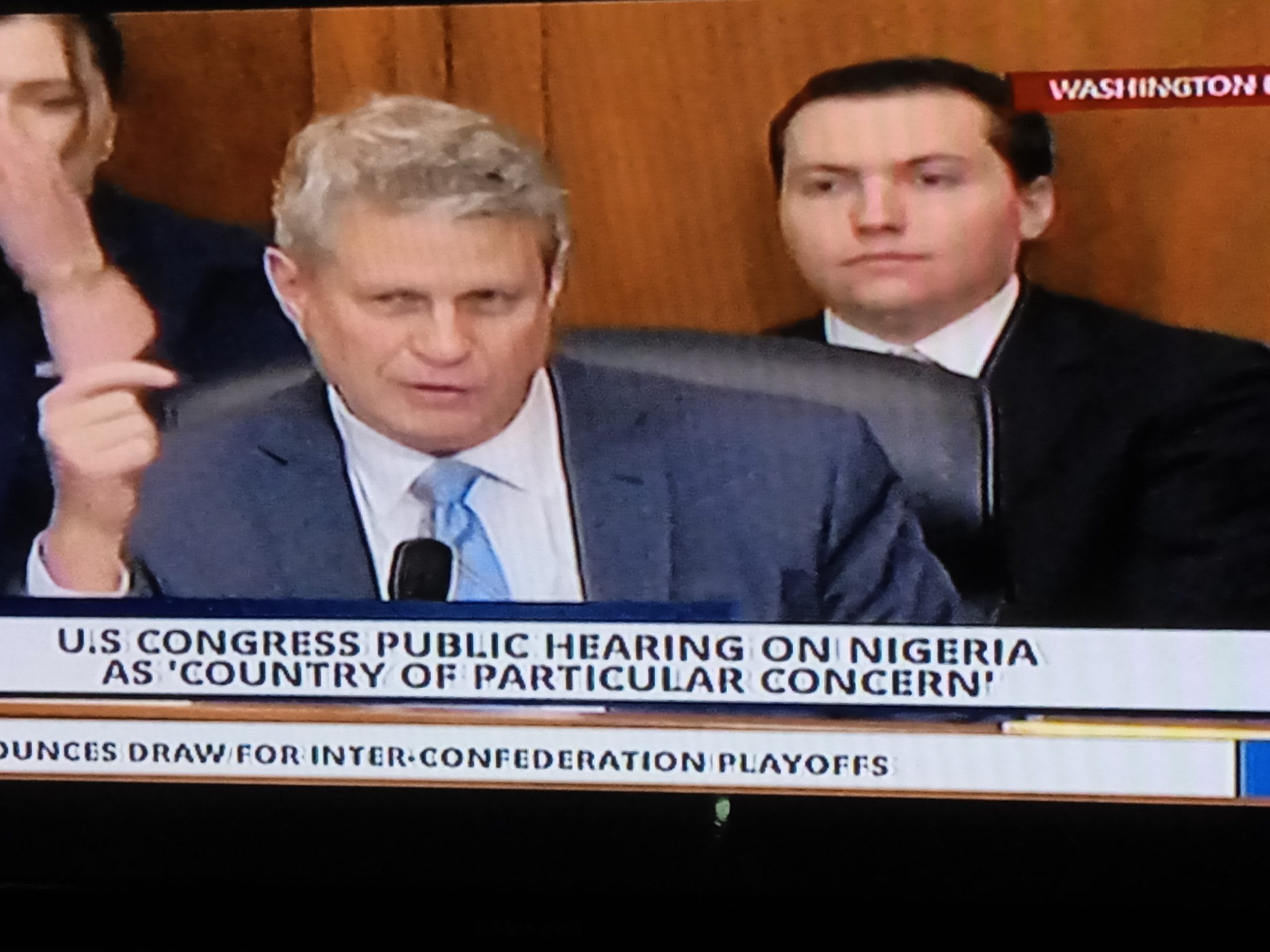
The hearing will be jointly convened by the House Subcommittee on Africa and the Subcommittee on the Western Hemisphere to assess what US lawmakers describe as mounting threats to religious freedom worldwide. It is titled, ‘Defending Religious Freedom Around the World.’

Written testimonies by key witnesses were released on the committee’s website ahead of the session and are expected to be delivered when the hearing convenes.

Among those scheduled to testify are the former US Ambassador-at-Large for International Religious Freedom, Sam Brownback; Principal Advisor for Global Religious Freedom at the US State Department, Mark Walker; Grace Drexel, daughter of detained Chinese pastor Ezra Jin; and Dr Stephen Schneck, former chair of the US Commission on International Religious Freedom.

In his prepared testimony, Brownback said, “Radical, militant Islam continues its purification efforts throughout the MENA region and beyond.

“Syria and Nigeria are key focus areas of opportunity for them in their quest for dominance, excluding all other faiths, even others within Islam.

“The people of faith being targeted by this persecution are America’s greatest allies in the spread of freedom around the world. We should see and treat them as such,” he stated.

See also  I’ve kept campaign promises, delivered major projects – Oyebanji

The ex-envoy identified religious freedom as a central fault line in global politics, warning that authoritarian and totalitarian regimes increasingly view faith communities as threats to state control.

“Religious freedom is now one of our primary weapons against the dark alliance gathered against us,” Brownback said in his prepared testimony.

Brownback singled out Nigeria as a major global flashpoint, describing the country as “the deadliest place on the planet to be a Christian.”

He warned that patterns of violence across the country suggest a deepening religious crisis with implications beyond Nigeria’s borders.

“Early warning signs of a Muslim-on-Christian war are brewing across Africa,” he wrote, adding that Nigeria sits at the centre of that danger.

The ex-ambassador also raised concerns about foreign involvement in Nigeria’s security landscape, stating that support from countries such as “China, Russia, Turkey and Saudi Arabia” could worsen instability if not carefully scrutinised.

Brownback cautioned that failure to act decisively could allow the violence to escalate into mass atrocities similar to those seen in Iraq.

In his own prepared testimony, Schneck described freedom of religion or belief as being in a “historic crisis” worldwide, driven by rising authoritarianism, religious nationalism and state failure.

“Freedom of religion or belief is in crisis in the contemporary world. Whether measured structurally in culture, institutions and laws, or in the sheer number of incidents, persecution is increasing across the globe,” Schneck wrote in his private capacity and not on behalf of the commission.

The ex-USIRF chair identified Nigeria, Syria and Sudan as countries where weak governance and widespread insecurity have created dangerous conditions for religious communities.

“Nigeria, Syria, and Sudan are current examples of such conditions threatening freedom of religion or belief.

See also  Reps, others pay tribute to ex-Speaker at valedictory session

“Both Nigeria and Syria are experiencing high levels of societal insecurity and

Their respective governments have been unable to halt widespread violence against communities of faith.

“Both have what were previously designated as Entities of Particular Concern operating within their borders,” he wrote.

According to the ex-USIRF chairman, such environments allow armed groups, insurgents and criminal networks to exploit religious identity, leading to killings, displacement and long-term instability.

He also criticised the US government’s performance under the International Religious Freedom Act, the 1998 law guiding US policy in this area, arguing that Washington has failed to match its rhetoric with sustained action.

“If we are to take the International Religious Freedom Act as our measure, then the United States is not doing enough.

“We have been long on rhetoric and short on substance, consistency and effectiveness,” the ex-USIRF chairman said.

Schneck expressed particular concern about delays in the release of the US State Department’s International Religious Freedom reports and the absence of updated designations of Countries of Particular Concern.

“The State Department has still not made its designations of Countries of Particular Concern, Special Watch List, or Entities of Particular Concern. President Biden’s 2023 designations were to have lapsed at the end of 2025.

“Apparently, Nigeria, thanks to its unique designation by President Trump, is the only country in the world currently designated as a Country of Particular Concern and there are no designated Special Watch List countries or  Entities of Particular Concern. This is very concerning at a time when countries like China and Iran are engaged in ever more repressive actions against people of faith,” he noted.

He further warned against narrowing religious freedom advocacy to the persecution of Christians alone, stressing that international law protects all faiths and beliefs.

See also  48-hour curfew imposed after attack on bar in Plateau, Jos

“International religious freedom, as defined in human rights law, is universal,” Schneck stated. “Selective advocacy undermines both effectiveness and legitimacy.”

The ex-USIRF chairman added, “The administration has relied on high-profile events (such as a one-off Tomahawk strike on Nigeria) and social media declarations rather than sustained, country-specific strategies.

“Religious freedom violations are deeply embedded in legal systems, security practices, and social norms; addressing them requires long-term engagement, multilateral coordination, and careful diplomacy. Early efforts seem to have prioritised visibility over durability.”

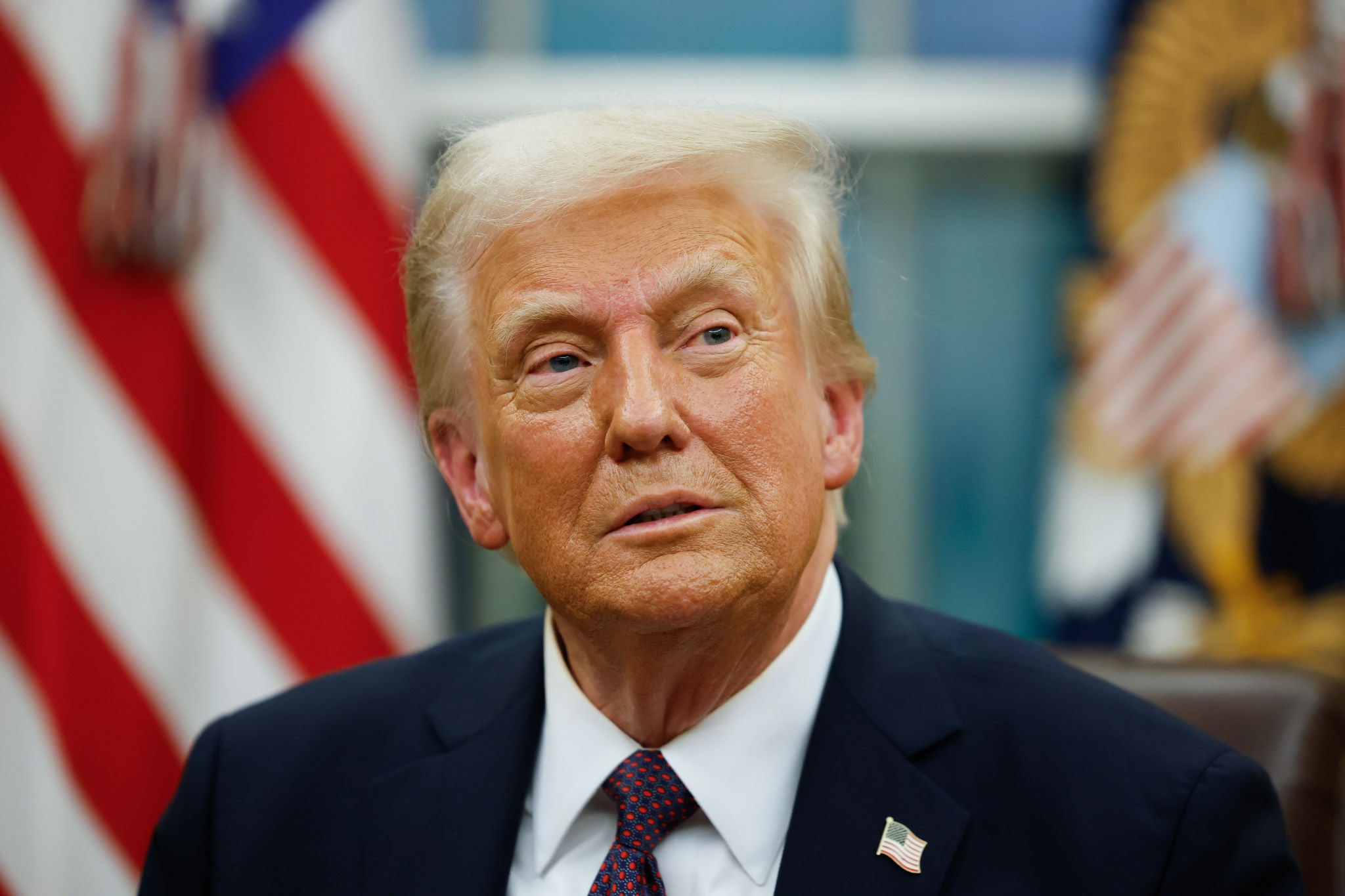
Last year, US President Donald Trump redesignated Nigeria as a Country of Particular Concern over alleged religious freedom violations, a move accompanied by threats of possible US military intervention.

The US government subsequently attacked terrorist hideouts in Sokoto on Christams day.

However, the Federal Government dismissed claims of systemic Christian persecution, maintaining that insecurity affects citizens of all religious backgrounds.

On November 20, 2025, US Secretary of War Pete Hegseth hosted National Security Adviser Nuhu Ribadu at the Pentagon for discussions on coordinated strategies to address the crisis.

In December, Ribadu announced that he had hosted a US congressional delegation in Abuja as part of ongoing security consultations between the two countries.

According to the NSA, discussions during the meeting focused on “counter-terrorism cooperation, regional stability,” and ways to “strengthen the strategic security partnership between Nigeria and the United States.”

Last month, there was a plenary session of the Nigeria–US Joint Working Group on Nigeria’s designation as a CPC.

punch.ng

FOLLOW US ON:

FACEBOOK

TWITTER

PINTEREST

TIKTOK

YOUTUBE

LINKEDIN

TUMBLR

INSTAGRAM

Continue Reading
Click to comment

Leave a Reply

Your email address will not be published. Required fields are marked *

News

White House denies considering nuclear strikes on Iran

Published

on

The White House denied Tuesday that remarks by Vice President JD Vance about military operations in Iran had contained any suggestion of a US nuclear strike against the Islamic republic.

After Vance said US forces have tools they “so far haven’t decided to use” to enforce a dramatic ultimatum from President Donald Trump, the White House said on X: “Literally nothing @VP said here ‘implies’ this, you absolute buffoons.”

The post was in response to one from an account associated with former vice president Kamala Harris that said Vance implied Trump “might use nuclear weapons.”

AFP

punch.ng

FOLLOW US ON:

FACEBOOK

TWITTER

PINTEREST

TIKTOK

YOUTUBE

LINKEDIN

See also  Terrorism: Judge begs Nnamdi Kanu in ‘God’s name’ to consult lawyers
Continue Reading

News

Soldiers do not buy uniforms or bulletproof vests – Army

Published

on

The Nigerian Army has dismissed allegations by a former soldier, Rotimi Olamilekan, that personnel purchase their uniforms and protective equipment with personal funds.

In a statement issued on Tuesday by its Acting Director of Army Public Relations, Appolonia Anele, the Army described the claims as false and misleading, insisting that troops are adequately equipped and catered for.

The statement was in response to a viral interview in which Olamilekan, popularly known as Soja Boi, alleged that soldiers buy items such as uniforms, boots and bulletproof vests despite earning modest salaries.

On remuneration, the Army maintained that it operates a structured and transparent salary system, with additional benefits for personnel.

“In addition to consolidated monthly salaries, personnel are entitled to uniform allowances and other allowances, which are periodically paid directly into their accounts,” it said.

The Army also noted that troops deployed for operations receive extra support.

“Personnel serving in operational theatres… are also paid operational allowances and other mission-specific entitlements designed to support their welfare and enhance operational effectiveness,” the statement added.

Addressing the core allegation, the Army rejected claims that soldiers procure their own kits and protective gear.

“The claim that soldiers are required to purchase uniforms and protective equipment, including bulletproof vests and helmets, is entirely false. The provision of uniforms, kits, arms, ammunition, and operational gear is an institutional responsibility executed through established logistics systems,” it stated.

It acknowledged that some personnel may choose to supplement issued kits for personal comfort but stressed that such decisions are voluntary.

“While some personnel may choose to supplement issued kits based on personal preference and comfort, such actions are voluntary and do not indicate any systemic failure,” the Army said.

See also  Tinubu bans export of raw shea nut

The statement further emphasised that no soldier is deployed without adequate protection.

“For the avoidance of doubt, no soldier is deployed to an operational theatre without the necessary protective equipment,” it added.

The Army urged the public to disregard the allegations, warning that such claims could undermine morale and national security.

“The public is requested to disregard these baseless allegations… Citizens are urged to refrain from amplifying unverified claims that may undermine these institutions,” the statement said.

Reacting, the Army said the former lance corporal was dismissed over disciplinary breaches and not for expressing his views.

“The Nigerian Army categorically states that Mr Olamilekan was not dismissed for ‘speaking the truth’ or expressing opinions on political leadership. He was dismissed following persistent and grave acts of indiscipline, including violations of the Armed Forces Social Media Policy,” the statement read.

It added that his actions, including unauthorised media appearances and misuse of military identity, contravened established regulations.

Olamilekan had earlier claimed in an interview that soldiers earned between N51,000 and N111,000 and were responsible for purchasing essential gear, sparking widespread reactions online.

punch.ng

FOLLOW US ON:

FACEBOOK

TWITTER

PINTEREST

TIKTOK

YOUTUBE

LINKEDIN

Continue Reading

News

Nigeria, Jamaica, others at risk of UK visa restrictions – Official

Published

on

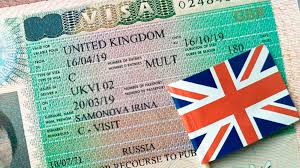
Several African and Caribbean countries, including Nigeria and Jamaica, could face visa restrictions to the UK if Reform UK wins the next general election.

The proposed policy targets nations that formally demand reparations for slavery.

As reported by the Daily Mail on Monday, the party’s home affairs spokesperson, Zia Yusuf, defended the plan, saying: “A growing number of countries are demanding reparations from Britain. They ignore the fact that Britain made huge sacrifices to be the first major power to outlaw slavery and enforce this prohibition.

“Astonishingly, these countries have received 3.8 million visas and £6.6 billion in foreign aid over the past 20 years. Enough is enough.”

Several African and Caribbean countries, such as Nigeria and Jamaica, have made requests, raising the prospect that their nationals could be barred from entering the UK.

Other nations mentioned by Reform UK include Kenya, Haiti, Guyana, Barbados, and The Bahamas.

The announcement comes weeks after a United Nations vote calling on former colonial powers to pay reparations for slavery.

The resolution described the forced displacement of Africans as one of the “gravest crimes against humanity.” Britain abstained from the vote.

Reform UK leader Nigel Farage criticised the UN, saying: “It is now the UN telling us we should go bankrupt, to apologise for what people did in 1775 or whatever it might have been. Forget it. The UN has no legitimacy over this country whatsoever.”

The party also vowed to cap foreign aid spending at £1 billion annually, a 90% reduction from current levels.

A Foreign Office spokesman said the UK acknowledges the horrors of the slave trade but reiterated that its position on reparations remains unchanged. Opposition leader Keir Starmer has similarly ruled out an apology or payments, saying: “I want to look at the future rather than spend a lot of time on the past.”

See also  PHOTOS: Army pulls out 10 retired generals in Lagos

Reparations: History and Modern Politics

Centuries ago, millions of Africans were torn from their homes, forced onto ships, and sold into slavery across the Americas and Europe.

Families were destroyed, communities uprooted, and entire cultures disrupted. The scars of these atrocities have endured across generations, shaping nations and peoples long after slavery ended.

In modern times, countries directly affected by this history have begun formally asking for reparations. Ghana has taken a leading role, advocating at the United Nations for recognition of the transatlantic slave trade as one of the “gravest crimes against humanity.” The African nation calls for formal apologies, restitution of stolen cultural items, and reparatory justice to address the lasting impact of slavery.

According to the United Nations, it has been increasingly involved in discussions and declarations regarding reparations, especially for slavery and its consequences.

In March and April 2026, the UN General Assembly adopted a resolution declaring the trafficking of enslaved Africans and racialised chattel slavery as the “gravest crime against humanity.”

This resolution, pushed by Ghana and supported by many African and Caribbean states, called for reparations to remedy historical wrongs, including apologies, restitution of cultural items, and dialogue on justice.

The vote was 123 in favour, with 3 (the United States, Israel, and Argentina) against and 52 abstentions.

The UN added that the following countries and groups asking for reparations are Ghana, Caribbean Community (CARICOM) Nations, African Union, Antigua and Barbuda, Guyana and Haiti

punch.ng

FOLLOW US ON:
FACEBOOK

TWITTER

PINTEREST

TIKTOK

YOUTUBE

LINKEDIN

Continue Reading

Trending