Connect with us

Business

Nigeria secures $18.2bn oil investments, 28 field plans

Published

on

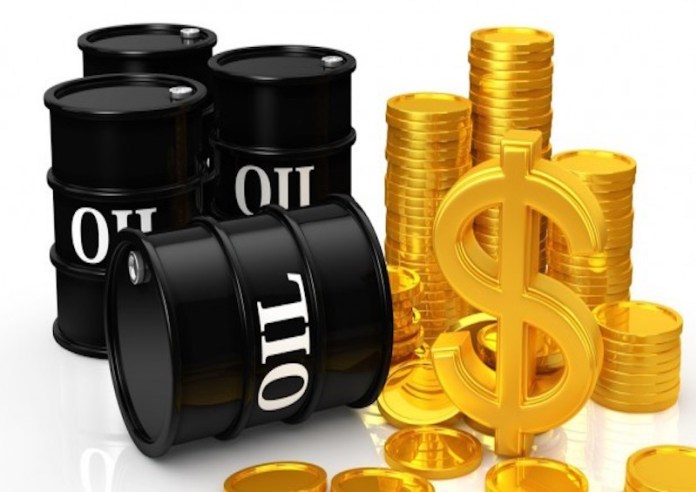
The Minister of State for Petroleum Resources (Oil), Heineken Lokpobiri, has stated that Nigeria achieved a major investment breakthrough in 2025 with the signing of 28 new field development plans, valued at $18.2bn, which carry an estimated production potential of 1.4 billion barrels of oil.

Lokpobiri disclosed this on Tuesday in Abuja while delivering his ministerial address at the opening ceremony of the 9th Nigeria International Energy Summit 2026, saying Nigeria had emerged as Africa’s leading destination for oil and gas investments, with four of the seven major Final Investment Decisions announced across the continent between 2024 and 2025 taken in the country.

The Nigeria International Energy Summit is the Federal Government’s official annual platform for energy policy dialogue, investment promotion, and innovation. The ninth edition of the summit is themed “Energy for Peace and Progress: Securing Our Shared Future.”

According to the minister, the development was not accidental but the outcome of deliberate reforms, improved policy clarity, and stronger governance, which have helped to restore investor confidence in Nigeria’s oil and gas sector.

He added that the renewed inflow of capital signalled Nigeria’s return to the global energy investment map after years of stalled projects and declining output, stressing that recent fiscal, regulatory and operational reforms were beginning to yield measurable results.

Lokpobiri said, “I want to talk first about Nigeria; our successes, our renewed readiness, the reforms we have implemented, and then put that in the context of Africa, because our fortunes are tied together.

“In 2025 alone, 28 new field development plans worth $18.2bn were signed, with the potential of 1.4 billion barrels of oil. Between 2024 and 2025, of the seven major FIDs announced across Africa, four were in Nigeria. This did not happen by accident; it is the result of steady work, policy clarity, and better governance. These are facts, not rhetoric, showing that Nigeria is once again a magnet for serious business. Our investment climate in Nigeria allows for free movement of capital.”

See also  Poor Nigerians, others to get tariff relief with the Electricity Act

Lokpobiri recalled that when the current administration took office, Nigeria’s upstream sector was in distress, with declining production, investor apathy, and an absence of major new projects.

“That Nigeria possesses an enormous hydrocarbon endowment, and a geography that combines deepwater, shallow, and onshore acreages, is a fact. But resource richness alone is not enough. What makes Nigeria now different is the legal, regulatory, financial, and structural transformation we are delivering. Because ‘investment-ready’ means more than just having reserves; it means having clarity, predictability, efficiency, incentives, and alignment.

“When this government started, this sector was struggling, production and capital flight, and investment had stalled. For more than a decade, there were no major final investment decisions on new projects. Investors were cautious, and confidence was lacking. That was our reality,” he narrated before a distinguished audience, including Gambia’s President, Adama Barrow.

He attributed the reversal of this trend to the full implementation of the Petroleum Industry Act, which he said provided a stable fiscal framework, clearer licensing processes, stronger regulation, and predictable contract terms.

The minister added that cost pressures in the upstream sector were also addressed through the Upstream Petroleum Operations (Cost Efficiency Incentives) Order 2025, which grants tax credits and lowers unit operating costs for producers.

Lokpobiri said the launch of Project One Million Barrels in October 2024 had delivered tangible results within a year, lifting crude oil production to between 1.7 million and 1.83 million barrels per day, representing an increase of about 20 per cent over previous output levels.

“We launched ‘Project One Million Barrels’ in October 2024. In less than a year, production rose to between 1.7 and 1.83 million barrels per day, up by roughly 300,000 barrels in July 2025 alone. The number of active rigs jumped from a paltry 14 in 2023 to over 60 as of today. These are signs that the reforms are working, that idle assets are being activated and existing assets are being optimised,” he said.

See also  World’s largest tech expo opens in Dubai

Lokpobiri also highlighted the successful completion of long-delayed asset divestments by International Oil Companies, which transferred onshore and shallow-water assets to Nigerian firms.

He noted that the divestments had added about 200,000 barrels per day to national output and were concluded in record time under President Bola Tinubu’s leadership.

However, Lokpobiri admitted that some local policy missteps had created fresh challenges, noting that Nigeria’s oil and gas service sector continued to face structural constraints, particularly within the engineering, procurement, and construction segment.

He said a misinterpretation of the Nigerian Oil and Gas Industry Content Development Act had encouraged the rise of “briefcase EPC companies,” forcing out experienced international contractors while sidelining competent indigenous firms.

Lokpobiri said Africa’s annual $120bn hydrocarbon import bill represented a lost opportunity, calling for stronger support for the African Energy Bank, headquartered in Nigeria. “If we do not mobilise resources to solve Africa’s energy problems, our misery will increase as our population grows. The responsibility is ours and ours alone,” he said.

Meanwhile, the Independent Petroleum Producers Group has called for urgent reforms to streamline industry fees, reduce bureaucracy, and improve access to long-term capital to sustain growth in Nigeria’s oil and gas sector.

Delivering a keynote address at the event, the IPPG Chairman and Aradel Holdings CEO, Adegbite Falade, said the summit would be “deeply engaging, thought-provoking, and solution-driven,” adding that the global energy landscape was being reshaped by conflicts, shifting alliances, and growing energy insecurity.

“In today’s interconnected world, energy has no borders. Shocks in one region affect people across continents, and Africa, including Nigeria, is not shielded from these pressures,” Falade said.

See also  Debt dispute: Drama as Max Air pilot refuses to fly

He noted that Nigeria’s oil and gas sector had recorded significant growth, highlighting that for the first time, indigenous producers and independents now account for more than 50 per cent of national production. He attributed this to improved export pipeline availability, reduced crude losses, and stronger local participation.

“We must continue to create an industry that allows private capital to drive mainstream infrastructure development. Without this, we cannot bridge the massive gap in potential that exists in our contribution to the nation’s GDP,” Falade said.

“To achieve this, we must reduce bureaucracy, streamline industry fees and related charges to keep operators competitive. Our sector currently operates at significantly elevated costs compared to other non-shared jurisdictions. Access to long-term, affordable capital must also improve.”

The PUNCH reports that the consensus of stakeholders at the event was that Nigeria’s oil and gas sector is on a strong recovery path, driven by policy clarity, regulatory reforms and strategic investments, and that sustained collaboration between government, indigenous companies and international partners is essential to consolidate growth, expand domestic energy access and position the country as a regional and global energy hub.

punch.ng

FOLLOW US ON:

FACEBOOK

TWITTER

PINTEREST

TIKTOK

YOUTUBE

LINKEDIN

TUMBLR

INSTAGRAM

Continue Reading
Click to comment

Leave a Reply

Your email address will not be published. Required fields are marked *

Business

Tax reforms will modernise, boost economy – G24 chief

Published

on

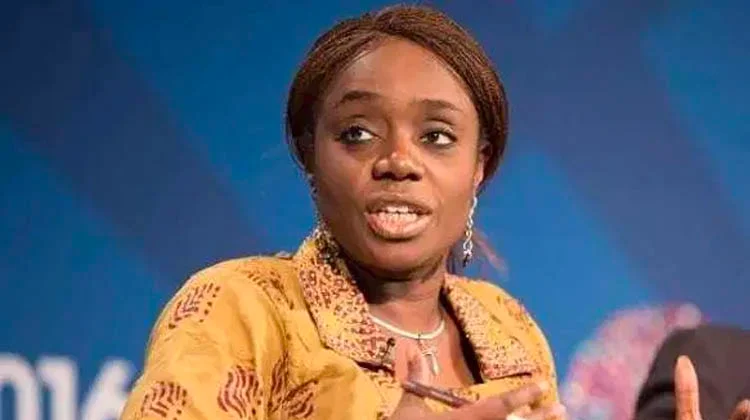
Director of the Intergovernmental Group of Twenty-Four on International Monetary Affairs and Development, Iyabo Masha, has said the new tax laws will support Nigeria’s transition into a modern and more efficient economy.

Masha, who is the first African to occupy the position since the establishment of the G- 24 over five decades ago, spoke at a press conference in Abuja ahead of the meeting of the group.

She explained that tax and domestic resource mobilisation remained central to development, stressing that Nigeria’s reform drive could deepen formalisation and strengthen public finances over time.

“Tax and domestic resource mobilisation are fundamental to economic development,” she said, noting that taxation enables governments to provide infrastructure, education, healthcare, and maintain law and order.

According to her, governments generally finance development through taxation, borrowing, or asset sales, but “out of all of these, taxation is the most efficient one that leads to the least macroeconomic destabilisation”.

Masha observed that developing countries often recorded weak tax mobilisation, “in some cases as low as seven per cent of GDP”, compared to others that generate “25, 30 per cent of GDP”.

Speaking on Nigeria’s reforms, the group director added that in her previous role, she had examined the country’s tax framework and found it “very fragmented”, with inadequate implementation contributing to low revenue mobilisation.

See also  Dangote refinery, engineers on warpath over fresh redeployment
Continue Reading

Business

Recapitalisation: Banks raise N4tn ahead of March deadline

Published

on

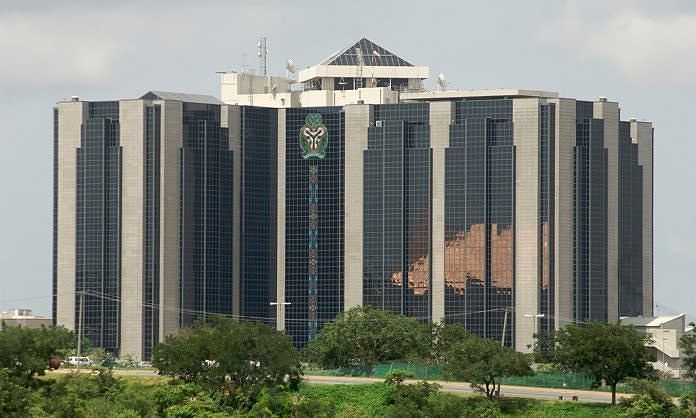
Banks have raised N4.05tn in verified and approved capital ahead of the March 31, 2026, recapitalisation deadline set by the Central Bank of Nigeria.

The CBN Governor, Olayemi Cardoso, disclosed this on Tuesday during the Monetary Policy Committee briefing in Abuja, saying, “As of February 19, 2026, total verified and approved capital raise stands at N4.05tn.”

The PUNCH observed that this figure was nearly double the N2.4tn reportedly raised as of April 2025. Cardoso said N2.90tn of the amount, representing 71.6 per cent, was mobilised domestically, while N1.15tn, equivalent to 28.33 per cent, came from foreign participation.

“In summary, 71.67 per cent is domestic mobilisation and 28.33 per cent is foreign participation. This balance, in my view, represents a mix of domestic and foreign, which signals broad investor engagement and confidence in the sector,” Cardoso said.

He recalled that he had earlier hinted at strong foreign investor appetite for Nigerian banks. “Several MPCs ago, I did mention that when I went abroad, and I met with some of the investor community, they had a very, very strong interest in investing in banks. So, I’m glad that that has come out in a very positive way,” he added.

On compliance status, the governor said, “To date, 20 banks have fully met the new minimum capital requirements, and a further 13 are at the advanced stage of their capital raising processes.”

He expressed optimism that the banks still raising capital would conclude within the stipulated timeframe. Cardoso noted that some institutions under regulatory intervention were operating under specific legal and structural considerations that influenced the sequence of their recapitalisation actions.

“We remain, as a Central Bank of Nigeria, actively engaged with all relevant stakeholders to ensure that they have an orderly and credible outcome while maintaining financial stability,” he said.

He assured depositors that “Depositor funds in these institutions remain secure, and operations continue under close supervisory and regulatory oversight of the central bank.”

In March 2024, the CBN directed banks with international licences to raise their minimum paid-up capital to N500bn, while those with national authorisation are required to meet a N200bn threshold before the March 31, 2026, deadline.

Regional commercial banks and merchant banks are expected to have a minimum capital base of N50bn, while non-interest banks must hold N20bn for national licences and N10bn for regional licences.

See also  Petrol remains N865 per litre amid Dangote’s free delivery

The recapitalisation policy is aimed at strengthening the resilience of the banking sector and positioning lenders to better support economic growth and absorb potential shocks.

Beyond recapitalisation, Cardoso highlighted developments in the external sector, stating that Nigeria’s gross external reserves rose to about $50.4bn as of mid-February 2026. “Just a point of correction. These aren’t net reserves, it’s gross reserves. And the gross reserves, as of the middle of February, is about $50.4bn, which is the highest figure that we’ve had in 13 years,” he said.

According to him, the reserve build-up was supported by favourable trade developments, a healthy current account surplus, rising non-oil exports, and increased diaspora remittances.

“There’ll be favourable trade developments. The current account is in a healthy surplus, and of course, the non-oil exports have also gone up. It’s something I talk about all the time, which is the issue of diaspora remittances, which again is going up very strongly indeed,” he said.

He attributed the gains to improved market confidence. “Underpinning all this, quite frankly, is market confidence. Without market confidence, no matter what you do, you’ll find you will significantly sub-optimise,” Cardoso stated.

He added that the CBN had engaged widely with international investors, made commitments, and ensured policy consistency to engender positive market sentiment.

On sustainability, the governor cautioned that risks remained. “There will always be risks to any outlook. We cannot underestimate the potential global shocks that could come our way,” he said, citing uncertainties around oil prices and global tensions.

He also warned that pre-election spending and fiscal deficits could pose risks if not properly managed. “Importantly, pre-election spending, if not properly contained, can destabilise the stability we’ve accomplished,” he said. Nevertheless, Cardoso expressed confidence in the current direction of policy.

On inflation, he dismissed suggestions that the CBN could relax its guard following the Monetary Policy Committee’s decision to cut the Monetary Policy Rate by 50 basis points to 26.5 per cent. “That hasn’t changed, to be frank. Caution is our watchword in the central bank,” he said, stressing that the apex bank remained conservative in order to protect the economy.

He noted that headline inflation, which was about 34 per cent when the current management assumed office, had declined to slightly above 15 per cent. “Inflation at that time, 34 per cent, we’ve brought it down to where it is slightly over 15 per cent. We’re encouraged by that,” Cardoso said, adding that tight monetary policy had been necessary.

See also  Dangote refinery, engineers on warpath over fresh redeployment

He emphasised that sustaining the gains would require collaboration across fiscal and monetary authorities. “It will take a lot of discipline from all the stakeholders. This is not something that will be central bank alone,” he said.

On digital finance, the governor said the CBN recognised the importance of innovation but would ensure that risks to financial stability were properly managed. “We are advancing work already on a very comprehensive framework for digital assets,” he said, noting that the process would involve consultation and scrutiny to ensure transparency and long-term resilience.

He disclosed that there are over 430 licensed fintech operators in Nigeria and described the segment as systemically important, adding that the CBN was strengthening supervisory oversight to address cyber threats and other emerging risks.

The Group Chief Economist and Managing Director of Research and Trade Intelligence at Afreximbank, Dr Yemi Kale, earlier said that the ongoing bank recapitalisation exercise is a critical engine required to bridge Africa’s staggering $80 to $120bn annual trade finance gap.

Speaking at the Ecobank Customer Forum, Kale, who was Nigeria’s former Statistician General, highlighted that Nigeria’s journey toward a $1tn economy hinges on its ability to transform from a raw material exporter into a competitive industrial hub. However, this transition requires “muscle” in the financial sector that currently does not meet the scale of the continent’s ambitions.

He said, “Recapitalisation of the banks is important.” You cannot lend to businesses to grow, expand or import machinery if you do not have enough capital to do so. How do Nigerian banks support deepening intra-African trade if they do not have enough capital?

“By increasing recapitalisation, you increase the ability of banks to lend more to domestic businesses and exporters. There are significant benefits for the Nigerian economy, especially in improving intra-African trade.”

The PUNCH in April 2025 reported that the Securities and Exchange Commission said that the ongoing banking sector recapitalisation exercise is a testament to the strength and resilience of Nigeria’s capital market.

SEC Director-General Dr Emomotimi Agama disclosed this in Abuja while highlighting key provisions of the Investments and Securities Act 2025, describing it as a transformative law that will further deepen market activities and drive economic growth.

See also  World’s largest tech expo opens in Dubai

He said, “The capital market is strong enough to provide the much-needed funding for various sectors of the economy. It is one of the strongest you can think about; our ROI was one of the best in the world for last year. When you look at what the capital market has already done with the bank recapitalisation, which is still ongoing, you can agree with me that our market is strong.”

Also, the Deputy Governor, Economic Policy, CBN, Dr Muhammad Abdullahi, while speaking on a panel at the launch of the 2026 Macroeconomic Outlook of the Nigerian Economic Summit Group in Lagos, said that the recapitalisation programme was designed to build stronger banks capable of supporting Nigeria’s ambition of becoming a trillion-dollar economy.

“I think that even at the inception of the capitalisation programme, the major focus is on how to ensure that we have stronger banks that can support our drive towards a trillion-dollar economy? And the only way to get there is through the credit-review sector, to SMEs, to businesses that require funding at good rates. So as we close up towards March, I mean, the efforts have been quite impressive. We have about 20 banks that have already met it. A number of banks are meeting it every day.

They’re huge. It’s very busy within CBN today, tomorrow, and through to March, as you can imagine.”

However, he stressed that recapitalisation alone was not sufficient, warning that the focus must now shift from bigger balance sheets to productive and sustainable lending.

“The focus that we really are turning our attention to, especially from the financial system stability side, is that we ensure that a strengthened capital base translates into credit that is productive, that is well-targeted, and that is sustainable,” he said.

He said the CBN has spent the past year strengthening its regulatory capacity through technology to ensure that the benefits of recapitalisation are transmitted to priority sectors of the economy.

punch.ng

FOLLOW US ON:

FACEBOOK

TWITTER

PINTEREST

TIKTOK

YOUTUBE

LINKEDIN

TUMBLR

INSTAGRAM

Continue Reading

Business

Dangote signs deal to distribute 65m litres petrol

Published

on

The Dangote Petroleum Refinery has concluded an offtake agreement with 12 major petroleum marketing companies to distribute between 60 million and 65 million litres of Premium Motor Spirit (petrol) daily across the country, in a move expected to stabilise supply and deepen Nigeria’s fuel self-sufficiency.

President of the Dangote Group, Aliko Dangote, disclosed this in Lagos, noting that the structured framework would guarantee nationwide availability of petrol while exporting surplus volumes.

According to a statement issued, Dangote said, “We have agreed an offtake framework to supply up to 65 million litres daily for the domestic market. Any surplus, estimated at between 15 and 20 million litres, will be exported.”

Dangote stated that the initiative marks a major shift in the country’s downstream petroleum sector, as Nigeria’s daily consumption currently ranges between 50 million and 60 million litres.

This means the refinery is expected to supply about 1.8 billion to over 2 billion litres of petrol monthly, depending on daily output and the number of days in the month.

The latest offtake and distribution arrangement follows an earlier agreement reached in October 2025 between the Dangote Petroleum Refinery and downstream operators aimed at stabilising fuel supply and curbing volatility in pump prices.

At the time, independent petroleum marketers disclosed that the refinery had set a target to release up to 600 million litres of Premium Motor Spirit monthly to the domestic market as part of efforts to address supply disruptions and rising costs across the country.

Under the arrangement endorsed by the Nigerian Midstream and Downstream Petroleum Regulatory Authority, selected marketers will handle nationwide distribution to prevent supply disruptions and eliminate speculative practices.

See also  World’s largest tech expo opens in Dubai

The marketers include MRS Oil Nigeria Plc, Nigerian National Petroleum Company Limited Retail, 11 Plc, TotalEnergies Marketing Nigeria, Rainoil Limited, Northwest Petroleum & Gas Company Limited, Ardova Plc, Bovas & Company Limited, AA Rano Nigeria Limited, AYM Shafa Limited, Conoil Plc, and Masters Energy.

The statement noted that the structured offtake model is designed to ensure efficient logistics, reduce hoarding, and support price stability. It added that the refinery would export between 15 million and 20 million litres daily once domestic supply obligations were met.

“This would conserve foreign exchange, improve the country’s trade balance and strengthen external reserves, as Nigeria will no longer rely heavily on imported fuel,” the statement explained.

For decades, Africa’s largest oil producer depended on imported refined products, exposing the economy to exchange rate volatility, global supply disruptions and recurring shortages.

The Group Chief Executive Officer of the Nigerian National Petroleum Company Limited, Bayo Bashir Ojulari, recently described the refinery as a transformative national asset capable of redefining the country’s energy security architecture.

He said, “This plant was designed for 650,000 barrels per day. None of us thought it would even touch 550,000. What we saw live today was 661,000. These are live parameters, not reports or photographs.”

Ojulari added that the refinery represents a new era of industrial capability and technological advancement for Nigeria.

Nigeria has intensified reforms in the oil and gas sector following the deregulation of the downstream market and removal of fuel subsidy under President Bola Tinubu.

The Dangote refinery, Africa’s largest, is expected to play a central role in ending decades of petrol importation, stabilising prices, and positioning Nigeria as a net exporter of refined petroleum products across West and Central Africa.

See also  Access Holdings appoints Innocent Ike new GMD/CEO

The success of the structured offtake model could usher in a more stable fuel supply chain and reduce the risk of shortages that have plagued the country for years.

punch.ng

FOLLOW US ON:

FACEBOOK

TWITTER

PINTEREST

TIKTOK

YOUTUBE

LINKEDIN

TUMBLR

INSTAGRAM

Continue Reading

Trending