Connect with us

Business

Nigeria secures $18.2bn oil investments, 28 field plans

Published

on

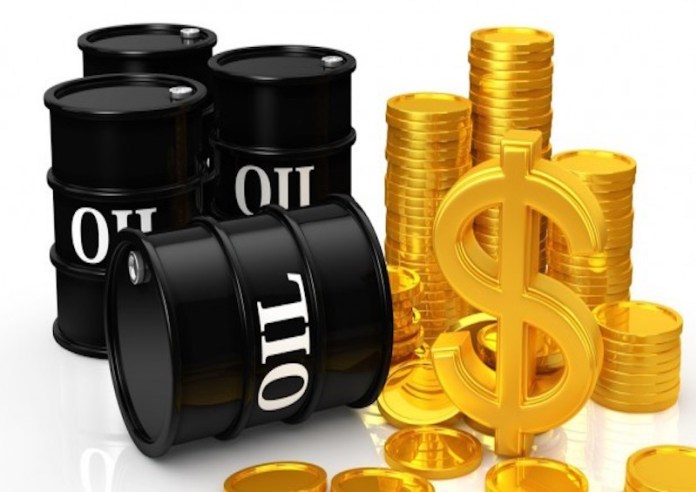
The Minister of State for Petroleum Resources (Oil), Heineken Lokpobiri, has stated that Nigeria achieved a major investment breakthrough in 2025 with the signing of 28 new field development plans, valued at $18.2bn, which carry an estimated production potential of 1.4 billion barrels of oil.

Lokpobiri disclosed this on Tuesday in Abuja while delivering his ministerial address at the opening ceremony of the 9th Nigeria International Energy Summit 2026, saying Nigeria had emerged as Africa’s leading destination for oil and gas investments, with four of the seven major Final Investment Decisions announced across the continent between 2024 and 2025 taken in the country.

The Nigeria International Energy Summit is the Federal Government’s official annual platform for energy policy dialogue, investment promotion, and innovation. The ninth edition of the summit is themed “Energy for Peace and Progress: Securing Our Shared Future.”

According to the minister, the development was not accidental but the outcome of deliberate reforms, improved policy clarity, and stronger governance, which have helped to restore investor confidence in Nigeria’s oil and gas sector.

He added that the renewed inflow of capital signalled Nigeria’s return to the global energy investment map after years of stalled projects and declining output, stressing that recent fiscal, regulatory and operational reforms were beginning to yield measurable results.

Lokpobiri said, “I want to talk first about Nigeria; our successes, our renewed readiness, the reforms we have implemented, and then put that in the context of Africa, because our fortunes are tied together.

“In 2025 alone, 28 new field development plans worth $18.2bn were signed, with the potential of 1.4 billion barrels of oil. Between 2024 and 2025, of the seven major FIDs announced across Africa, four were in Nigeria. This did not happen by accident; it is the result of steady work, policy clarity, and better governance. These are facts, not rhetoric, showing that Nigeria is once again a magnet for serious business. Our investment climate in Nigeria allows for free movement of capital.”

See also  Naira strengthens to 1,514/$, nears five-month high

Lokpobiri recalled that when the current administration took office, Nigeria’s upstream sector was in distress, with declining production, investor apathy, and an absence of major new projects.

“That Nigeria possesses an enormous hydrocarbon endowment, and a geography that combines deepwater, shallow, and onshore acreages, is a fact. But resource richness alone is not enough. What makes Nigeria now different is the legal, regulatory, financial, and structural transformation we are delivering. Because ‘investment-ready’ means more than just having reserves; it means having clarity, predictability, efficiency, incentives, and alignment.

“When this government started, this sector was struggling, production and capital flight, and investment had stalled. For more than a decade, there were no major final investment decisions on new projects. Investors were cautious, and confidence was lacking. That was our reality,” he narrated before a distinguished audience, including Gambia’s President, Adama Barrow.

He attributed the reversal of this trend to the full implementation of the Petroleum Industry Act, which he said provided a stable fiscal framework, clearer licensing processes, stronger regulation, and predictable contract terms.

The minister added that cost pressures in the upstream sector were also addressed through the Upstream Petroleum Operations (Cost Efficiency Incentives) Order 2025, which grants tax credits and lowers unit operating costs for producers.

Lokpobiri said the launch of Project One Million Barrels in October 2024 had delivered tangible results within a year, lifting crude oil production to between 1.7 million and 1.83 million barrels per day, representing an increase of about 20 per cent over previous output levels.

“We launched ‘Project One Million Barrels’ in October 2024. In less than a year, production rose to between 1.7 and 1.83 million barrels per day, up by roughly 300,000 barrels in July 2025 alone. The number of active rigs jumped from a paltry 14 in 2023 to over 60 as of today. These are signs that the reforms are working, that idle assets are being activated and existing assets are being optimised,” he said.

See also  OPay named The Sun’s first-ever Fintech/Digital Bank of the Year 2025

Lokpobiri also highlighted the successful completion of long-delayed asset divestments by International Oil Companies, which transferred onshore and shallow-water assets to Nigerian firms.

He noted that the divestments had added about 200,000 barrels per day to national output and were concluded in record time under President Bola Tinubu’s leadership.

However, Lokpobiri admitted that some local policy missteps had created fresh challenges, noting that Nigeria’s oil and gas service sector continued to face structural constraints, particularly within the engineering, procurement, and construction segment.

He said a misinterpretation of the Nigerian Oil and Gas Industry Content Development Act had encouraged the rise of “briefcase EPC companies,” forcing out experienced international contractors while sidelining competent indigenous firms.

Lokpobiri said Africa’s annual $120bn hydrocarbon import bill represented a lost opportunity, calling for stronger support for the African Energy Bank, headquartered in Nigeria. “If we do not mobilise resources to solve Africa’s energy problems, our misery will increase as our population grows. The responsibility is ours and ours alone,” he said.

Meanwhile, the Independent Petroleum Producers Group has called for urgent reforms to streamline industry fees, reduce bureaucracy, and improve access to long-term capital to sustain growth in Nigeria’s oil and gas sector.

Delivering a keynote address at the event, the IPPG Chairman and Aradel Holdings CEO, Adegbite Falade, said the summit would be “deeply engaging, thought-provoking, and solution-driven,” adding that the global energy landscape was being reshaped by conflicts, shifting alliances, and growing energy insecurity.

“In today’s interconnected world, energy has no borders. Shocks in one region affect people across continents, and Africa, including Nigeria, is not shielded from these pressures,” Falade said.

See also  PENGASSAN backs NUPENG, threatens shutdown of Dangote refinery

He noted that Nigeria’s oil and gas sector had recorded significant growth, highlighting that for the first time, indigenous producers and independents now account for more than 50 per cent of national production. He attributed this to improved export pipeline availability, reduced crude losses, and stronger local participation.

“We must continue to create an industry that allows private capital to drive mainstream infrastructure development. Without this, we cannot bridge the massive gap in potential that exists in our contribution to the nation’s GDP,” Falade said.

“To achieve this, we must reduce bureaucracy, streamline industry fees and related charges to keep operators competitive. Our sector currently operates at significantly elevated costs compared to other non-shared jurisdictions. Access to long-term, affordable capital must also improve.”

The PUNCH reports that the consensus of stakeholders at the event was that Nigeria’s oil and gas sector is on a strong recovery path, driven by policy clarity, regulatory reforms and strategic investments, and that sustained collaboration between government, indigenous companies and international partners is essential to consolidate growth, expand domestic energy access and position the country as a regional and global energy hub.

punch.ng

FOLLOW US ON:

FACEBOOK

TWITTER

PINTEREST

TIKTOK

YOUTUBE

LINKEDIN

TUMBLR

INSTAGRAM

Continue Reading
Click to comment

Leave a Reply

Your email address will not be published. Required fields are marked *

Business

Nigeria to partner global allies on clean energy – Tinubu

Published

on

President Bola Tinubu on Tuesday said Nigeria is ready to collaborate with African nations, global partners, and the private sector to deliver cleaner, affordable, inclusive, and more secure energy.

He said energy plays a critical role as the invisible force holding the modern world together, as well as the quiet architecture of balance among nations, and as the unseen hand that steadies economies and sustains societies.

The President stated this when he declared open the 9th Nigeria International Energy Summit held at the State House Banquet Hall, Abuja. The summit was attended by heads of delegation and senior government officials from across the globe, as well as leaders of international energy organisations, chief executives of global and indigenous energy companies, development finance institutions, and representatives of host communities.

Tinubu, who was represented at the summit by his deputy, Vice President Kashim Shettima, observed that while energy remains central to peace, prosperity, and global stability, Nigeria is focusing heavily on utilising its vast gas reserves as a transition fuel and expanding renewable energy capacity.

“Energy must unite communities, stabilise economies, and secure futures. It must power factories, illuminate homes, fuel innovation, and build trust between government, investors, and citizens. Nigeria stands ready to collaborate with Africa, global partners, and the private sector to deliver energy that is secure, affordable, cleaner, and inclusive,” he declared.

The President recalled that even though his administration inherited an energy sector that was rich in potential in 2023, the sector was “constrained by inefficiencies, uncertainty, and prolonged underinvestment.”

See also  Dangote pumps 43 million litres, denies petrol shutdown

“We set to work without fanfare, guided by the clear understanding that energy cannot be treated simply as an economic commodity if stability is our goal.

“Energy is a catalyst for national security, industrial growth, social inclusion, and regional cooperation,” he noted.

Tinubu assured that his government was fully committed to “building an energy system that delivers reliability, transparency, sustainability, and shared prosperity.”

Outlining efforts by his administration to boost the energy sector, the President said his administration sustained and deepened the full implementation of the Petroleum Industry Act, consolidating its role as the linchpin of sector reform and strengthening regulatory institutions to ensure clarity of roles, transparency, and investor confidence.

He continued: “Under our watch, Nigeria’s upstream activity recorded a historic rebound. Rig counts rose from eight rigs in 2021 to 69 rigs by late 2025, reflecting renewed exploration and drilling momentum.

“The sector secured Final Investment Decisions exceeding $8bn, including major offshore gas developments involving global energy companies. Foreign direct investment into the oil and gas subsector rebounded strongly, driven by regulatory certainty, fiscal reforms, and improved operating conditions.”

Under his watch, Tinubu said crude oil theft, which had been a major constraint on production and revenue, declined significantly due to enhanced security coordination, surveillance, and regulatory enforcement, adding that the efforts paid off, restoring operational stability and improving Nigeria’s production reliability in international markets.

Earlier, Gambian President Adama Barrow observed that Nigeria’s policies have implications far beyond its borders, noting that working together through strategic partnerships is key to regional solutions and energy security.

See also  Capital projects crumble as states cut spending

President of the Republic of Equatorial Guinea, Teodoro Obiang Nguema Mbasogo, maintained that Africa must cease to be merely an exporter of raw materials and focus on processing them for the betterment of future generations.

The Senate President, Godswill Akpabio, in a speech that was read on his behalf, averred that in Africa, energy is not just about resources but about inclusive and sustainable prosperity.

He assured that the National Assembly is ready to work with relevant stakeholders through legislative backing, agreeing that when the energy system works, the economy grows more resilient.

punch.ng

FOLLOW US ON:

FACEBOOK

TWITTER

PINTEREST

TIKTOK

YOUTUBE

LINKEDIN

TUMBLR

INSTAGRAM

Continue Reading

Business

Konga targets singles in Valentine campaign

Published

on

Konga has launched a Valentine campaign aimed squarely at single shoppers, marking a shift from traditional couple-focused marketing as Nigeria’s e-commerce giant taps into changing consumer behaviour.

The campaign, tagged “Black Valentine: Special Love Series,” runs from 1 to 16 February 2026, and offers discounts of up to 60 per cent alongside same-day delivery across key categories including Home and Kitchen, Computing, Electronics, Beauty, and Personal Care.

“The narrative around Valentine’s Day needs expansion,” Senior Vice President at Konga, Irfan Vayani, said in a statement on Tuesday.

Valentine’s Day promotions in Nigeria have typically centred on romantic gifting for couples. Konga’s Black Valentine campaign broadens that narrative, positioning the season as a time for self-love, personal investment, and everyday upgrades, an approach the company says reflects demographic and lifestyle shifts among young, urban consumers.

Recent lifestyle trends show a growing segment of Nigeria’s economically active population is single, financially independent, and increasingly focused on wellness, grooming, and home improvement.

Konga’s campaign is designed to speak directly to this group while remaining inclusive of customers shopping for partners, friends, or family.

“Love is multifaceted, and the most foundational relationship one can nurture is the one with oneself. ‘Black Valentine’ is our way of honouring every individual’s journey, whether they are single, in a relationship, or focused on personal growth,” Vayani stated.

Beyond discounts, the campaign is supported by an extensive omnichannel marketing push, including digital advertising, social media engagement, influencer partnerships, and in-app promotions. Konga said the strategy is designed to drive reach and conversions across its nationwide customer base.

See also  Ending fuel subsidy was tough but necessary — Tinubu

The initiative also reflects broader shifts in retail, where purchasing decisions are increasingly tied to emotional fulfilment, lifestyle expression, and convenience. As digital adoption continues to rise in Nigeria, Konga said it is leveraging its technology stack and logistics network to deliver seamless shopping experiences during high-demand periods.

By reframing Valentine’s Day around self-appreciation as well as romantic gifting, Konga is positioning Black Valentine’s Day as more than a seasonal sale but as a lifestyle statement aligned with global retail trends around self-care and emotional wellbeing.

punch.ng

FOLLOW US ON:
FACEBOOK

TWITTER

PINTEREST

TIKTOK

YOUTUBE

LINKEDIN

TUMBLR

INSTAGRAM

Continue Reading

Business

OPay named The Sun’s first-ever Fintech/Digital Bank of the Year 2025

Published

on

Leading financial institution, OPay, has been named Fintech/Digital Bank of the Year 2025 at The Sun Awards organised by The Sun Publishing Limited, one of Nigeria’s respected media institutions, on the 31st January 2026 at Eko Hotels and Suites, Victoria Island, Lagos, marking a historic milestone as this is the first time the category has been introduced since the awards began.

According to the statement from OPay on Tuesday, the recognition celebrates OPay’s role in building a reliable, inclusive, and easy-to-use digital financial platform that supports millions of Nigerians every day.

The award recognises OPay’s integrated platform, which brings together mobile banking, digital wallets, fast payments, merchant services, and lifestyle solutions in one place. Through this approach, OPay continues to bridge the gap between traditional banking and the digital economy, making financial services more convenient and accessible for individuals and businesses across Nigeria.

For many users, OPay is more than an app; it is a trusted partner for daily life. From sending money instantly to supporting small merchants with seamless payment solutions, OPay’s technology is designed to solve real problems and support economic activity at every level.

The COO/CTO of OPay, Adekunle Adedotun, said, “This recognition is a welcome development. The Sun has stood out as one of the shining beacons of journalism, and we are pleased to receive the award. This is an incentive to do more. We’re committed to being user-friendly and innovative. Our desire is to see banking services get to every nook and cranny; whether you use Android or Apple, we want to make sure you’re financially included.”

Speaking also on the recognition, Chief Commercial Officer of OPay, Elizabeth Wang, said, “This award is a strong validation of our long-term commitment to Nigeria. Being recognised in the first-ever Fintech/Digital Bank category by The Sun is not just an honour for OPay, but a recognition of the trust millions of Nigerians place in us every day. We remain focused on building secure, reliable, and inclusive financial solutions that make life easier for individuals and help businesses grow.”

See also  OPay named The Sun’s first-ever Fintech/Digital Bank of the Year 2025

The company reiterated that the award reflects years of consistent investment in secure infrastructure, customer experience, and local partnerships. OPay emphasised that trust, reliability, and scale remain central to its mission to support Nigeria’s growing digital economy.

As the first recipient of The Sun’s Fintech/Digital Bank of the Year award, OPay sees this recognition not just as a corporate achievement, but as a shared win with its users, merchants, and partners across the country. The company reaffirmed its commitment to continue driving financial inclusion and supporting Nigeria’s long-term digital and economic growth.

OPay, established in 2018, has the mission to make financial services more inclusive through technology. The company offers a wide range of payment services, including money transfer, bill payment, card service, airtime and data purchase, and merchant payments, among others.

Renowned for its fast and reliable network and strong security features that protect customers’ funds, OPay is licensed by the Central Bank of Nigeria and insured by the Nigerian Deposit Insurance Corporation with the same insurance coverage as commercial banks.

punch.ng

FOLLOW US ON:

FACEBOOK

TWITTER

PINTEREST

TIKTOK

YOUTUBE

LINKEDIN

TUMBLR

INSTAGRAM

Continue Reading

Trending