Connect with us

Business

Corruption goes beyond stealing money – ICPC boss

Published

on

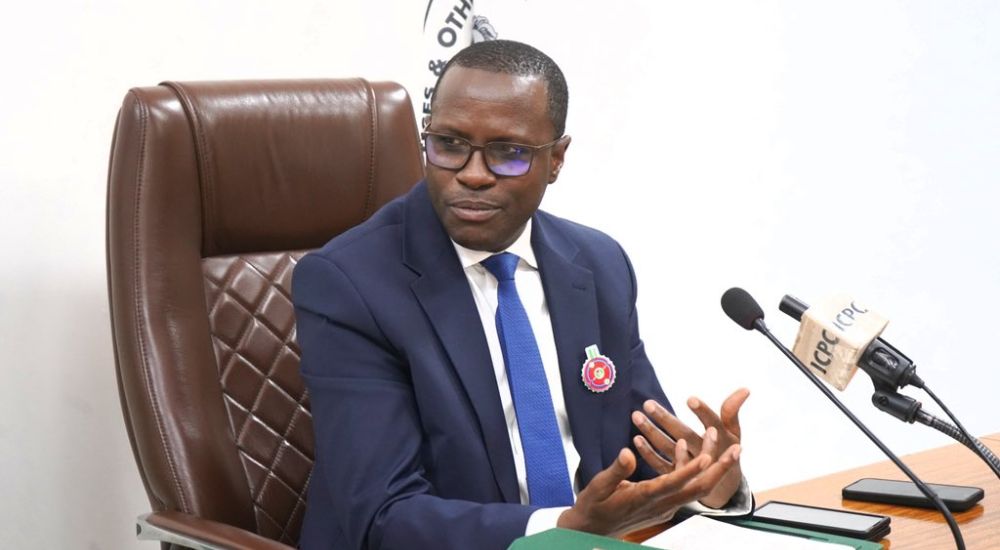
The Chairman of the Independent Corrupt Practices and Other Related Offences Commission, Dr Musa Aliyu (SAN), has said that corruption in Nigeria goes far beyond stealing public funds, describing it as “any deviation from the rule or due process.”

Aliyu made this remark in Abuja on Thursday while presenting a paper titled “Understanding Anti-Corruption Laws and Their Implications for Local Government Officials” at the 2025 National Summit of the Association of Chairmen of Local Government Service Commissions in Nigeria.

The summit, themed “Strengthening Local Government Administration in Nigeria,” drew participants from across the country — including local government administrators, policymakers, and anti-corruption experts — to discuss reforms aimed at improving transparency and governance at the grassroots level.

Represented by his Special Assistant on Legal Matters, Zainab Nass, the ICPC chairman stressed that corruption permeates every facet of society — from schools to markets and private institutions — and not just the public sector.

“Corruption is not just about stealing money; it is anything that deviates from the rule. It is corruption not to follow due process,” Dr Aliyu stated.

He urged Nigerians to uphold integrity, transparency, and adherence to the rule of law in all spheres of life, noting that meaningful development can only occur when both citizens and institutions act responsibly and lawfully.

Reflecting on Nigeria’s historical fight against corruption, Aliyu recalled earlier government campaigns such as the Ethical Revolution, the War Against Indiscipline and Corruption, and the Mass Mobilisation for Self-Reliance, Social Justice and Economic Recovery (MAMSER), which he said failed due to lack of institutional continuity and legal backing.

See also  Marketers fault Dangote’s 500,000-litre fuel delivery threshold

He noted that the establishment of the ICPC in 2000 marked a decisive shift in the nation’s anti-corruption drive, providing the first comprehensive legal framework to investigate, prevent, and prosecute corruption cases.

According to him, the Commission’s work is built on three key pillars — enforcement, prevention, and public education — and its initiatives such as Corruption Risk Assessments, Systems Studies and Reviews, and the creation of Anti-Corruption and Transparency Units in Ministries, Departments, and Agencies have significantly enhanced integrity in public institutions.

Aliyu also highlighted Nigeria’s compliance with international and regional anti-corruption frameworks, including the United Nations Convention Against Corruption, the Financial Action Task Force Standards, and the African Union Convention on Preventing and Combating Corruption.

Addressing local government officials, the ICPC chairman reminded them that all public servants — whether elected or appointed — are legally obligated to uphold ethical standards and accountability in their duties.

He warned that administrative misconduct such as financial misappropriation, falsification of records, nepotism, and abuse of office now carry serious legal consequences under Nigeria’s anti-corruption laws.

Citing the landmark 2024 Supreme Court judgment in Attorney-General of the Federation v. Attorney-Generals of Abia State & 35 Others, which nullified the dissolution of democratically elected local councils by state governors, Aliyu described the ruling as “a new dawn for grassroots governance.”

“We are now in the regime of asset recovery — taking back what was taken. Local governments must ensure that public funds serve the people, not private interests,” he declared.

Aliyu concluded by calling for renewed commitment to integrity, probity, and effective service delivery at the local government level, emphasising that true national development depends on how well local councils manage public resources to uplift the welfare of citizens.

See also  CBN bets on easing inflation, FX stability for rate cut

punch.ng

FOLLOW US ON:

FACEBOOK

TWITTER

PINTEREST

TIKTOK

YOUTUBE

LINKEDIN

TUMBLR

INSTAGRAM

Continue Reading
Click to comment

Leave a Reply

Your email address will not be published. Required fields are marked *

Business

NNPC April crude supplies to Dangote cross 1bn barrels

Published

on

Crude oil supply from the Nigerian National Petroleum Company Limited’s trading arm surged in April 2026, with shipment records indicating that more than 1.03 million metric tonnes, equivalent to about 6.8 million barrels or over 1.08 billion litres, were delivered to the Dangote Oil and Gas Company Limited within the month.

An analysis of tanker vessel movements obtained by The PUNCH on Tuesday shows that the deliveries were executed through eight crude cargoes handled by NNPC Trading, reinforcing the state oil firm’s role as a major feedstock supplier to the 650,000 barrels-per-day Dangote refinery.

The shipments, sourced from key Nigerian crude streams including Anyala, Bonga, Odudu, Forcados, Qua Iboe, and Utapate, were routed through the refinery’s Single Point Mooring systems, SPM-C1 and SPM-C2.

The document shows that out of the eight cargoes, five have been fully discharged, while three others are still awaiting berthing or completion, indicating a steady pipeline of crude inflows into the refinery.

This development comes amid the refinery’s continued complaints of supply inadequacies, with a total requirement of 19 cargoes monthly, and a recent report that the country imported 55.39 million barrels in January and February 2026.

A breakdown of the deliveries showed that Sonangol Kalandula initiated the supply chain, delivering 123,000 metric tonnes of crude from Anyala. The vessel arrived on April 5, berthed on April 8, and sailed on April 9.

This was followed by Advantage Spring, which supplied 128,190 metric tonnes from Bonga, arriving on April 11 and completing discharge by April 13.

See also  Marketers fault Dangote’s 500,000-litre fuel delivery threshold

Similarly, a vessel code-named Barbarosa delivered 125,000 metric tonnes from Odudu, while Sonangol Njinga Mban transported 129,089 metric tonnes from Bonga.

Another completed shipment, handled by Nordic Tellus, brought in 139,066 metric tonnes from Forcados, completing discharge on April 17.

However, three additional cargoes remain in progress. Advantage Sun, carrying 142,327 metric tonnes from Bonga, has arrived but is yet to berth. Also pending are Advantage Spring from Utapate with 120,189 metric tonnes, and Sonangol Kalandula from Qua Iboe with 126,471 metric tonnes.

In total, the NNPC Trading cargoes account for 1,033,332 metric tonnes of crude, underscoring what industry analysts describe as a “strong and sustained supply commitment” to the Dangote refinery.

Further findings show that, beyond crude deliveries, the Dangote refinery also received multiple shipments of refined products and blending components from international markets during the period.

Among them, Seaways Lonsdale delivered 37,400 metric tonnes of blendstock gasoline from Immingham, United Kingdom, handled by Vitol, between April 18 and 19.

Another vessel, Augenstern, supplied 37,125 metric tonnes of Premium Motor Spirit from Lavera, France, discharging between April 8 and 9.

From Norway, Emma Grace brought in 37,496 metric tonnes of PMS from Mongstad, while LVM Aaron delivered 36,323 metric tonnes from Lome, Togo.

Similarly, Egret discharged 35,498 metric tonnes of naphtha from Rotterdam between April 16 and 18, providing critical feedstock for gasoline blending.

A pending shipment, Mont Blanc I, carrying 36,877 metric tonnes of blendstock gasoline from Antwerp, Belgium, is yet to berth, while Aesop is expected to deliver 130,000 metric tonnes of residue catalytic oil from Singapore later in April.

See also  Banks sent pretty ladies to woo me for deposits – Otedola

In addition to NNPC Trading volumes, other crude cargoes from international and domestic traders also supported refinery operations.

Notably, Yasa Hercules delivered 273,287 metric tonnes of crude from Corpus Christi, United States, while Front Orkla brought in 264,889 metric tonnes from Ingleside, US.

A major cargo, Navig8 Passion, supplied 496,330 metric tonnes of crude from Cameroon, highlighting regional supply integration.

Domestic contributions included Harmonic, which delivered nearly 993,240 barrels from Ugo Ocha, and Aura M, which supplied 1 million barrels from Escravos, alongside an additional 651,331 barrels of cargo from Anyala.

Operational data indicate that most vessels berthed within one to two days of arrival and departed shortly after discharge, suggesting improved efficiency at the refinery’s offshore terminals.

The Dangote refinery, located in Lekki, Lagos, is Africa’s largest single-train refinery, with a nameplate capacity of 650,000 barrels per day.

The facility is expected to significantly reduce Nigeria’s dependence on imported petroleum products by refining domestic crude and supplying petrol, diesel, aviation fuel, and other derivatives to the local market.

NNPC Limited, through its trading arm, has remained a central player in supplying crude to the refinery under evolving commercial arrangements, amid ongoing reforms in Nigeria’s downstream oil sector.

Earlier this month, Africa’s richest man and President of the Dangote Group, Aliko Dangote, revealed in a report by Bloomberg that the refinery received 10 cargoes of crude oil from the state-owned oil firm in March, compared to an average of about five cargoes monthly since late 2024.

Dangote said the shipments included six cargoes paid for in naira and four in dollars, under the crude supply arrangement between the refinery and the NNPC.

See also  CBN bets on easing inflation, FX stability for rate cut

“Nigeria doubled crude supply to Dangote Refinery in March as Africa’s top oil producer moved to shore up fuel availability after the Iran war disrupted Middle East shipments. Last month, they gave us six cargoes with payments in naira and four cargoes with payments in dollars,” he stated.

Continue Reading

Business

CBN, NCC to combat SIM-related fraud

Published

on

The Central Bank of Nigeria and the Nigerian Communications Commission on Monday signed a memorandum of understanding to tackle SIM-related fraud and strengthen consumer protection across Nigeria’s digital ecosystem.

The agreement, signed at the CBN headquarters in Abuja, aims to improve coordination between the financial and telecommunications sectors, focusing on combating electronic fraud linked to mobile numbers, enhancing payment system integrity, and protecting consumers.

Speaking at the event, the CBN Governor, Olayemi Cardoso, said the pact was a “practical statement of national interest”, noting that the increasing reliance on digital channels for payments and financial services required stronger collaboration between both regulators.

He said, “This MoU is not merely an administrative document; it is a practical statement of national interest,” adding that the agreement would reinforce the stability and integrity of Nigeria’s payment system while supporting innovation and consumer safety.

Cardoso explained that the deal would strengthen coordination on approvals, technical standards, and innovation trials, including sandbox testing, to ensure that financial services remain reliable and scalable.

He noted that the partnership would also improve the response to rising electronic fraud, stressing that “addressing these threats requires joined-up action, shared intelligence, clearer escalation paths, stronger operational readiness across regulated entities, and consistent public education”.

A key component of the agreement is the rollout of the Telecom Identity Risk Management Portal, a data-sharing platform designed to detect fraud linked to recycled, swapped, or blacklisted phone numbers.

According to Cardoso, the platform would enable real-time verification of mobile number status across banks and fintech firms, providing an additional layer of protection for consumers and the financial system.

See also  US-Iran war: Petrol price surge sparks relief calls

He said strict compliance with data protection laws, including encryption and consent protocols, would guide the use of the platform.

Also speaking, the Executive Vice Chairman of the NCC, Aminu Maida, described the agreement as a major step in strengthening Nigeria’s digital economy.

He said, “The signing of this Memorandum of Understanding marks an important milestone in the regulatory stewardship of Nigeria’s digital economy,” adding that collaboration between both institutions was “not optional; it is imperative.”

Maida noted that the initiative would give financial institutions better visibility into the status of phone numbers used in transactions, including whether a line had been swapped, recycled, or flagged for fraudulent activity.

“This ensures that our financial services industry is better equipped with timely and relevant information to effectively combat e-fraud, particularly those perpetrated using phone numbers,” he said.

He added that the agreement would also improve consumer protection, assuring Nigerians that issues such as failed airtime recharges would be resolved more quickly under the new framework.

Earlier, the Director of Payment System Supervision at the CBN, Dr Rakiya Yusuf, said the partnership between both regulators had evolved over the years from separate oversight roles into a more integrated collaboration focused on securing Nigeria’s digital and financial systems.

She traced the relationship back to earlier efforts to align mobile payment regulations and telecom licensing frameworks, including the 2018 MoU that enabled telecom operators to participate in mobile money services through special purpose vehicles.

She also highlighted joint interventions such as the resolution of the USSD pricing dispute and the introduction of a N6.98 per session fee, as well as recent efforts to address failed transactions through a proposed 30-second refund framework.

See also  Elon Musk Reacts as Nigeria Makes Top 10 List of Countries Contributing to Global GDP

Under the new agreement, two joint committees will be established to drive implementation. These include the Joint Committee on Payment Systems and Consumer Protection and the Joint Committee on the telecom risk management platform.

The agreement is expected to deepen digital financial inclusion, reduce fraud risks, and strengthen trust in Nigeria’s rapidly expanding digital economy.

The PUNCH earlier reported that the CBN and the NCC unveiled a joint framework to tackle the growing problem of failed airtime and data transactions, which have left consumers frustrated after payments are processed but service delivery is not provided.

The 20-page draft, published on the CBN’s website, was developed by the CBN’s Consumer Protection & Financial Inclusion Department and the telecom regulator, with input from banks, mobile operators, payment providers, and other stakeholders.

The regulators seek to clarify accountability, standardise complaint-resolution timelines, and create a coordinated system for addressing grievances across the financial and telecommunications sectors.

punch.ng

FOLLOW US ON:

FACEBOOK

TWITTER

PINTEREST

TIKTOK

YOUTUBE

LINKEDIN

INSTAGRAM

Continue Reading

Business

Electricity reforms: Rivers, Kano, 19 others delay takeover

Published

on

Twenty-one states, including Rivers and Kano, are yet to assume regulatory control of their electricity markets nearly three years after the enactment of the Electricity Act 2023, even as 15 states have already transitioned to independent market oversight.

The Nigerian Electricity Regulatory Commission disclosed that the states that have completed the transition have established their own electricity regulatory frameworks and are now responsible for market development, investment attraction, tariff oversight, and customer protection within their jurisdictions.

According to the commission, the shift follows the decentralisation provisions of the Electricity Act 2023, which empower subnational governments to regulate electricity generation, transmission and distribution within their territories after completing the necessary legal and administrative processes.

NERC noted that 15 states have so far completed the transition to state-level regulation. These include Enugu, Ekiti, Ondo, Imo, Oyo, Edo, Kogi, Lagos, Ogun, Niger, Plateau, Abia, Nasarawa, Anambra and Bayelsa.

However, the remaining 21 states yet to assume regulatory control are Adamawa, Akwa Ibom, Bauchi, Benue, Borno, Cross River, Delta, Ebonyi, Gombe, Jigawa, Kaduna, Kano, Katsina, Kebbi, Kwara, Osun, Rivers, Sokoto, Taraba, Yobe and Zamfara.

Industry analysts said the slow pace of transition in some states could delay the expected benefits of decentralisation, including improved power supply, localised tariff structures, and accelerated investments in embedded generation and mini-grid projects.

Under the new framework, once a state completes its transition, the state electricity regulator takes over licensing of intrastate electricity operations, enforcement of technical standards, tariff setting for local distribution, and protection of electricity consumers within the state.

See also  Marketers fault Dangote’s 500,000-litre fuel delivery threshold

NERC, in turn, retains oversight only on interstate and national grid-related activities.

The commission emphasised that state regulators are expected to drive local electricity market growth by encouraging private sector participation, promoting renewable energy deployment, and ensuring service quality standards for distribution companies operating within their jurisdictions.

The timeline released by the commission shows that the earliest transitions occurred in October 2024, when Enugu and Ekiti states assumed regulatory authority, followed by Ondo shortly after. The pace accelerated in 2025, with several states, including Oyo, Edo, Lagos and Ogun, completing their transitions. The most recent additions include Nasarawa, Anambra and Bayelsa between January and February 2026.

It was observed, however, that some of the 15 states have not set up their regulatory commissions.

Power sector stakeholders argue that states yet to transition risk missing opportunities to attract investments in off-grid electrification projects, particularly in underserved rural communities.

They also note that state-level regulation could help address longstanding distribution challenges by enabling more flexible tariff structures, targeted subsidies, and enforcement mechanisms tailored to local conditions.

With less than half of the states having completed the transition, many argued that the effectiveness of the Electricity Act reforms will largely depend on how quickly the remaining states establish their regulatory institutions and operational frameworks.

Apparently overwhelmed by the country’s power woes, the Federal Government recently pushed the challenge to the 36 states, asking them to take over power generation, transmission, and distribution.

The Federal Government said this was the only solution to the power crisis in the country.

See also  US-Iran war: Petrol price surge sparks relief calls

The Minister of Power, Adebayo Adelabu, said at an energy summit in Lagos that the Electricity Act’s impact includes decentralisation and liberalisation.

“In a country as big as Nigeria, with almost a million square kilometres of landmass, over 200 million people, millions of businesses, thousands of institutions (health and educational institutions), 36 states plus the Federal Capital Territory, and 774 local governments—centralisation cannot work for us. The responsibility of providing stable electricity can never be left in the hands of the Federal Government.

“At the centre, you cannot, from Abuja, guarantee stable power across the country. So, this is one thing that the Act has achieved—decentralisation. That has now allowed all the states or the subnationals to play in all segments of the power sector value chain—generation, transmission, distribution, and even service industries supporting the power sector,” he stated.

He called on the remaining 21 states to set up their electricity market.

“I believe other states will follow suit in operationalising the autonomy granted, with full collaboration of the national regulator. We are working actively with these states to ensure strong alignment between the wholesale market and the retail market.

“In this regard, we believe the active involvement of the state governments, particularly in the off-grid segment, is critical, given the series of roundtable engagements held with governors by the Rural Electrification Agency, as well as ongoing efforts to closely track the distribution companies’ performances within their respective jurisdictions,” Adelabu emphasised.

punch.ng

FOLLOW US ON:

FACEBOOK

TWITTER

PINTEREST

TIKTOK

YOUTUBE

LINKEDIN

INSTAGRAM

Continue Reading

Trending