
Connect with us

News

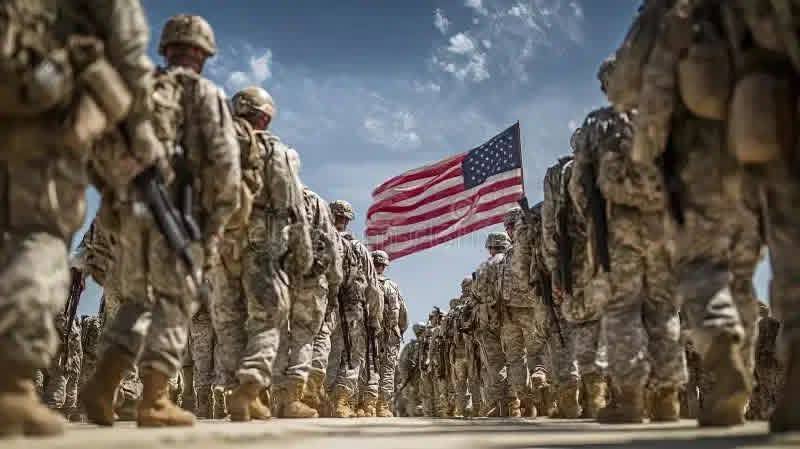
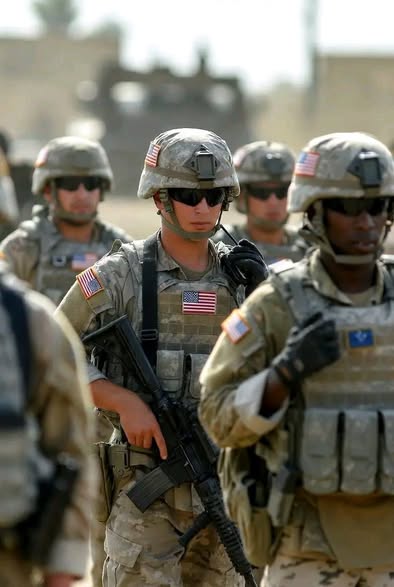
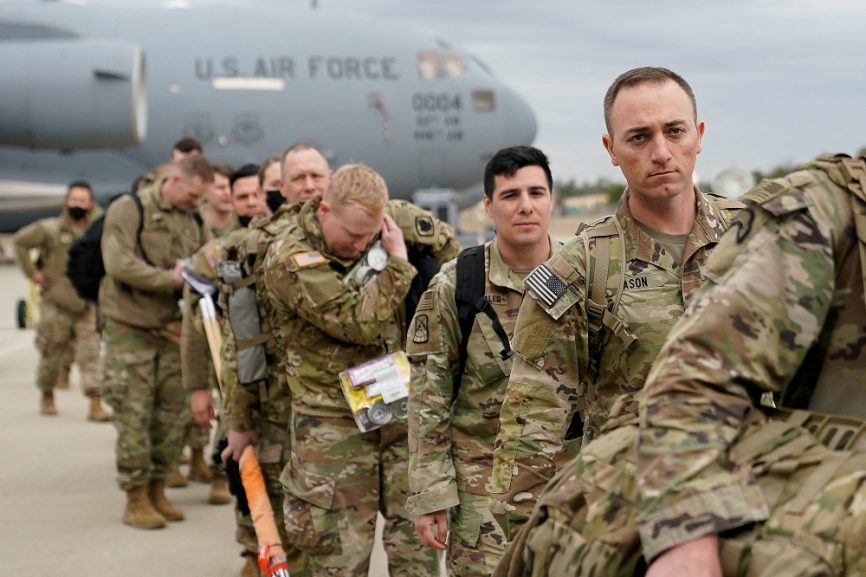
PHOTOS: US deploys troops to Nigeria to boost fight against Terrorism after airstrikes

Published

on

The United States has confirmed the deployment of a small team of military personnel to Nigeria, marking the first official acknowledgment that U.S. forces are now on the ground in the West African nation amid rising insecurity.

General Dagvin R.M. Anderson said the move followed his meeting with Nigeria’s president, Bola Tinubu, in Rome late last year.

The top general said the US team was sent after both countries agreed that more needed to be done to combat the terrorist threat in West Africa.

“That has led to increased collaboration between our nations, to include a small U.S. team that brings some unique capabilities from the United States in order to augment what Nigeria has been doing for several years,” General Dagvin R.M. Anderson, head of the US military’s Africa Command AFRICOM, told journalists during a press briefing on Tuesday.

It is unclear when the team arrived in Nigeria, but they are expected to bring specialized capabilities in intelligence and planning to support Nigerian forces’ efforts against extremist groups.

The deployment of military officers marks the latest development following the U.S. airstrikes carried out on December 25 last year against an Islamic State-affiliated group.

FOLLOW US ON:

FACEBOOK

TWITTER

PINTEREST

TIKTOK

YOUTUBE

LINKEDIN

TUMBLR

INSTAGRAM

See also  Shettima presides over NEC meeting in Abuja
Continue Reading
Click to comment

Leave a Reply

Your email address will not be published. Required fields are marked *

News

Genocide accusations: US Congress panels hold new session on Nigeria today

Published

on

Witnesses appearing before the United States Congress Foreign Affairs Committee have cautioned that Nigeria is at risk of descending into widespread Christian–Muslim violence, identifying the country as a major flashpoint in an escalating global crisis of religious freedom.

The warning is contained in written testimonies released ahead of the joint hearing of the committee, which is holding on Wednesday (today), with witnesses citing recurring killings, displacement and insecurity as indicators of an emerging broader religious conflict in Nigeria.

The hearing will be jointly convened by the House Subcommittee on Africa and the Subcommittee on the Western Hemisphere to assess what US lawmakers describe as mounting threats to religious freedom worldwide. It is titled, ‘Defending Religious Freedom Around the World.’

Written testimonies by key witnesses were released on the committee’s website ahead of the session and are expected to be delivered when the hearing convenes.

Among those scheduled to testify are the former US Ambassador-at-Large for International Religious Freedom, Sam Brownback; Principal Advisor for Global Religious Freedom at the US State Department, Mark Walker; Grace Drexel, daughter of detained Chinese pastor Ezra Jin; and Dr Stephen Schneck, former chair of the US Commission on International Religious Freedom.

In his prepared testimony, Brownback said, “Radical, militant Islam continues its purification efforts throughout the MENA region and beyond.

“Syria and Nigeria are key focus areas of opportunity for them in their quest for dominance, excluding all other faiths, even others within Islam.

“The people of faith being targeted by this persecution are America’s greatest allies in the spread of freedom around the world. We should see and treat them as such,” he stated.

See also  Vladimir Putin to visit India in December

The ex-envoy identified religious freedom as a central fault line in global politics, warning that authoritarian and totalitarian regimes increasingly view faith communities as threats to state control.

“Religious freedom is now one of our primary weapons against the dark alliance gathered against us,” Brownback said in his prepared testimony.

Brownback singled out Nigeria as a major global flashpoint, describing the country as “the deadliest place on the planet to be a Christian.”

He warned that patterns of violence across the country suggest a deepening religious crisis with implications beyond Nigeria’s borders.

“Early warning signs of a Muslim-on-Christian war are brewing across Africa,” he wrote, adding that Nigeria sits at the centre of that danger.

The ex-ambassador also raised concerns about foreign involvement in Nigeria’s security landscape, stating that support from countries such as “China, Russia, Turkey and Saudi Arabia” could worsen instability if not carefully scrutinised.

Brownback cautioned that failure to act decisively could allow the violence to escalate into mass atrocities similar to those seen in Iraq.

In his own prepared testimony, Schneck described freedom of religion or belief as being in a “historic crisis” worldwide, driven by rising authoritarianism, religious nationalism and state failure.

“Freedom of religion or belief is in crisis in the contemporary world. Whether measured structurally in culture, institutions and laws, or in the sheer number of incidents, persecution is increasing across the globe,” Schneck wrote in his private capacity and not on behalf of the commission.

The ex-USIRF chair identified Nigeria, Syria and Sudan as countries where weak governance and widespread insecurity have created dangerous conditions for religious communities.

“Nigeria, Syria, and Sudan are current examples of such conditions threatening freedom of religion or belief.

See also  NASS extends 2025 fiscal year to March due to budget crisis

“Both Nigeria and Syria are experiencing high levels of societal insecurity and

Their respective governments have been unable to halt widespread violence against communities of faith.

“Both have what were previously designated as Entities of Particular Concern operating within their borders,” he wrote.

According to the ex-USIRF chairman, such environments allow armed groups, insurgents and criminal networks to exploit religious identity, leading to killings, displacement and long-term instability.

He also criticised the US government’s performance under the International Religious Freedom Act, the 1998 law guiding US policy in this area, arguing that Washington has failed to match its rhetoric with sustained action.

“If we are to take the International Religious Freedom Act as our measure, then the United States is not doing enough.

“We have been long on rhetoric and short on substance, consistency and effectiveness,” the ex-USIRF chairman said.

Schneck expressed particular concern about delays in the release of the US State Department’s International Religious Freedom reports and the absence of updated designations of Countries of Particular Concern.

“The State Department has still not made its designations of Countries of Particular Concern, Special Watch List, or Entities of Particular Concern. President Biden’s 2023 designations were to have lapsed at the end of 2025.

“Apparently, Nigeria, thanks to its unique designation by President Trump, is the only country in the world currently designated as a Country of Particular Concern and there are no designated Special Watch List countries or  Entities of Particular Concern. This is very concerning at a time when countries like China and Iran are engaged in ever more repressive actions against people of faith,” he noted.

He further warned against narrowing religious freedom advocacy to the persecution of Christians alone, stressing that international law protects all faiths and beliefs.

See also  PHOTOS: Atiku, Patience Jonathan, Osinbajo, David Mark, Others Storm The Wedding Of Rotimi Amaechi’s Son In Abuja

“International religious freedom, as defined in human rights law, is universal,” Schneck stated. “Selective advocacy undermines both effectiveness and legitimacy.”

The ex-USIRF chairman added, “The administration has relied on high-profile events (such as a one-off Tomahawk strike on Nigeria) and social media declarations rather than sustained, country-specific strategies.

“Religious freedom violations are deeply embedded in legal systems, security practices, and social norms; addressing them requires long-term engagement, multilateral coordination, and careful diplomacy. Early efforts seem to have prioritised visibility over durability.”

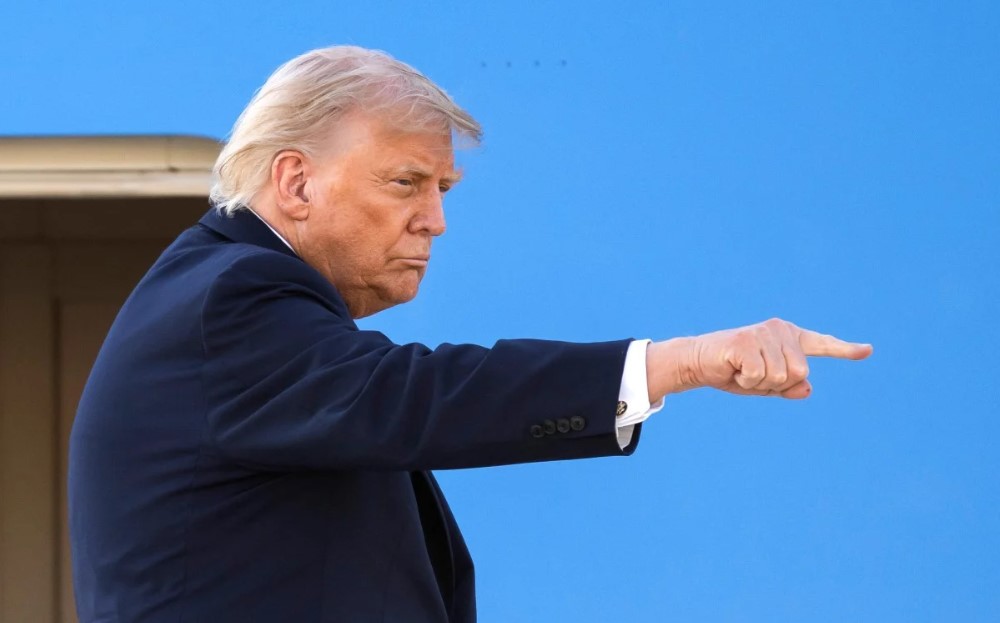
Last year, US President Donald Trump redesignated Nigeria as a Country of Particular Concern over alleged religious freedom violations, a move accompanied by threats of possible US military intervention.

The US government subsequently attacked terrorist hideouts in Sokoto on Christams day.

However, the Federal Government dismissed claims of systemic Christian persecution, maintaining that insecurity affects citizens of all religious backgrounds.

On November 20, 2025, US Secretary of War Pete Hegseth hosted National Security Adviser Nuhu Ribadu at the Pentagon for discussions on coordinated strategies to address the crisis.

In December, Ribadu announced that he had hosted a US congressional delegation in Abuja as part of ongoing security consultations between the two countries.

According to the NSA, discussions during the meeting focused on “counter-terrorism cooperation, regional stability,” and ways to “strengthen the strategic security partnership between Nigeria and the United States.”

Last month, there was a plenary session of the Nigeria–US Joint Working Group on Nigeria’s designation as a CPC.

punch.ng

FOLLOW US ON:

FACEBOOK

TWITTER

PINTEREST

TIKTOK

YOUTUBE

LINKEDIN

TUMBLR

INSTAGRAM

Continue Reading

News

No going back on reforms, Tinubu tells World Bank team

Published

on

President Bola Tinubu on Tuesday declared that his administration would not reverse course on its economic reforms.

He also vowed to sustain transparency and accountability in governance.

Speaking when he received a World Bank delegation led by Managing Director of Operations, Anna Bjerde, at the State House, Abuja, the President said the reforms, though painful at the beginning, were necessary to strengthen Nigeria’s economy and create opportunities for its young population.

“Since we went into this journey of reform, we have our hands on the plow, and we’re never going to look back.

“It is very clear that initially it was painful and difficult, but those who win are not those who give up along the way in their difficult times,” Tinubu stated.

He emphasised that Nigeria, as the heart of the African continent, must take necessary steps to transform its economy, particularly through agricultural mechanisation and support for farmers.

The President specifically called on the World Bank to assist in establishing mechanisation centres to help farmers, enhance seedling programmes, and facilitate access to locally produced fertilisers as Nigeria’s petrochemical industry increases output.

“How do we help the farmers to convert local market for fertilisers to improve their yields and move them from ordinary small-scale holders to huge cooperatives and commercial farmers that can bring opportunity to Nigerians?” Tinubu asked.

He noted that his administration’s commitment to reform required difficult decisions, including ending the fuel subsidy regime and unifying the exchange rate, despite the initial shock of high inflation.

“It was difficult for a leader to look the other way in any corrupt environment for an opportunity that can give a function of money in subsidy regime and multiple exchange rates.

“We gave it up, let the world and the country benefit from a stable currency.

See also  Vladimir Putin to visit India in December

“And yes, the first reaction was high inflation, but it has come down dramatically. Naira is stable today,” the President said.

Tinubu urged the World Bank to explore various financing options that could accelerate Nigeria’s growth, reduce intermediaries, manage risks, and develop the skills of Nigerians.

“What is the value of encouragement for an Africa that is taking this huge population on an assurance of prosperity?

“How can you accelerate that growth in partnership with us?

“Any way that we can cut brokers and push the risk and develop the skill of our people is why I’m seeing you this afternoon,” he added.

In her response, Bjerde commended Tinubu’s steadfast implementation of reforms over the past two years, describing the results as “remarkable and commendable.”

She disclosed that Nigeria has become a frequent example in her discussions with presidents, policymakers, and investors worldwide due to the achievements recorded in the two-year period.

“In these two years, the results that have been achieved are really commendable, and what I have particularly appreciated and followed is your steady direction that you communicate to the people of Nigeria, as well as outside of Nigeria, of the importance of their reforms, because that has given confidence and clarity that even when reform implementation can be difficult, there is no turning back,” Bjerde stated.

She noted that while many countries find it easy to slow down, change direction, or reverse reforms during difficult periods, Tinubu had remained steady, which had been widely noted and quoted internationally.

“Two years ago, you were very much at the launching stage, and here we are, two years later, with very strong results.

“We heard it from the private sector in Lagos on Sunday as well as yesterday, and I think it’s just remarkable and commendable,” the World Bank official said.

See also  Fubara pledges to continue serving people’s interests in Rivers

Bjerde explained that under the leadership of World Bank President Ajay Banga, the institution’s strategies are now anchored in member countries’ national visions, with Nigeria’s target of a $1tn GDP and seven per cent growth rate serving as the operating framework for the Bank’s support.

She identified job creation as the central focus of the Bank’s partnership with Nigeria, noting that Africa’s rising population presents both an opportunity and a challenge.

“In 2051, one in four people will be an African, and 40 per cent of those will be young people. Africa alone needs 600 million additional jobs by 2050.

“So jobs is what we’ve identified as something very important, because the best way out of poverty ultimately is that people have their own livelihoods and incomes,” she said.

The World Bank official highlighted infrastructure development as critical, noting that Nigeria has one of the lower infrastructure spending rates per GDP and would require both public and private sector solutions.

On agriculture, Bjerde praised Nigeria’s innovations and expressed the Bank’s commitment to scaling them through mechanisation, cooperatives, and integration into value chains, including better roads, finance, and technology.

She also addressed the financing gap for small and medium-sized enterprises, which she said account for 70 to 90 per cent of job creation globally but often struggle to access funding.

“Some of the small ones have access to microfinance. Some of the large ones can establish themselves and have access to banks.

“The middle ones are a bit lost. So that’s where the access to finance solutions we think we need to creatively work on together,” Bjerde explained.

On human development, she commended Nigeria’s strategy to address stunting, with early childhood development identified as a potential entry point for World Bank support.

See also  Ivory Coast opposition party calls for rally against election violence

Bjerde disclosed that the World Bank’s portfolio in Nigeria stands at approximately $17bn on the public sector side through the International Development Association and International Bank for Reconstruction and Development, making Nigeria one of the Bank’s largest clients.

She added that the International Finance Corporation has grown its private sector operations in Nigeria to about $5bn annually, while the Multilateral Investment Guarantee Agency currently provides just over half a billion dollars in risk reduction guarantees and insurance schemes, with plans to expand.

She revealed that the institution is preparing a new Development Policy Operation to support Nigeria’s budget, tied to the government’s reform agenda.

“Because you’re so reform-oriented, it’s the perfect instrument, because it’s your reforms and our support to the budget. So they go hand in hand,” she said.

Bjerde noted that while inflation has declined impressively, the Bank recognises that adjustments are ongoing and would continue to support reforms in trade, digital infrastructure, and other areas critical to job creation and private sector growth.

“Yesterday, we heard from the private sector that for youth, digital is the fuel. So all the work you’re doing on digital is just amazing, because that’s where their energy comes from and goes to,” the World Bank executive added.

She described Nigeria as consistently top of mind when asked which African country should be tracked by international observers and investors.

“I’m really honoured to meet you again. Sorry if I talk too much about Nigeria around the world. I often get the question of which country should we be tracking in Africa, and Nigeria is always top of my mind,” she said.

punch.ng

FOLLOW US ON:

FACEBOOK

TWITTER

PINTEREST

TIKTOK

YOUTUBE

LINKEDIN

TUMBLR

INSTAGRAM

Continue Reading

News

Rivers and Lagos top states where minors consume sachet alcohol

Published

on

Rivers and Lagos states top the list in the consumption of alcoholic drinks sold in sachets and Polyethylene Terephthalate bottles among minors and underage persons, according to a nationwide survey by the National Agency for Food and Drug Administration and Control.

The survey, conducted by NAFDAC in collaboration with the Distillers and Blenders Association of Nigeria and carried out by Research and Data Solutions Ltd, Abuja, covered 1,788 respondents across six states between June and August 2021.

NAFDAC said the study examined access to alcohol and drinking frequency among minors below 13 years, underaged persons aged 13 to 17 years, and adults aged 18 years and above.

Presenting the findings on Tuesday, February 3, the Director-General of NAFDAC, Mojisola Adeyeye, said alcohol remains “one of the most widely used substances of abuse among youths”.

She added that “the availability and easy access to alcohol have been identified as a contributory factor to the increasing alcohol consumption among minors.”

According to the report, “54.3 per cent of minors and underage respondents obtained alcohol by themselves. Nearly half (49.9 per cent) purchased drinks in sachets or PET bottles, with Rivers State recording the highest rates, 68.0 per cent for sachets and 64.5 per cent for PET bottles.”

“Lagos followed with 52.3 per cent and 47.7 per cent, respectively, while Kaduna recorded 38.6 per cent sachet and 28.4 per cent PET bottle consumption,” the report stated.

It further noted that “the proportion of drinks procured in sachets was higher among males (51.4 per cent) compared to females (41.5 per cent), and more in rural (50.1 per cent) compared to urban (45.3 per cent) locations.”

See also  Shettima presides over NEC meeting in Abuja

The report also revealed that minors and underaged respondents accessed alcohol through other channels, including friends and relatives (49.9 per cent), social gatherings (45.9 per cent), and parents’ homes (21.7 per cent).

Among respondents who purchased alcohol themselves, the survey found that 47.2 per cent of minors and 48.8 per cent of underaged persons bought drinks in sachets, while 41.2 per cent of minors and 47.2 per cent of underaged respondents procured alcohol in PET bottles.

On drinking frequency, the report showed that 63.2 per cent of minors and 54.0 per cent of underaged persons were occasional drinkers.

However, 9.3 per cent of minors and 25.2 per cent of underaged respondents reported consuming alcohol daily.

The report called for stricter regulation, stating that “access to alcohol by children can be limited if pack sizes that can be easily concealed are not available.”

It added: “A ban on small pack sizes, including sachets and bottles below 200 millilitres, can reduce the menace of underage drinking.”

The report further urged parents, teachers, religious leaders and communities to take responsibility, warning that “consumption of alcohol by children should raise alarm for parents, teachers, religious leaders and the community at large.”

According to NAFDAC, the findings highlight the need for stronger policy interventions and sustained public awareness campaigns to curb underage drinking in both urban and rural communities across Nigeria.

FOLLOW US ON:

FACEBOOK

TWITTER

PINTEREST

TIKTOK

YOUTUBE

LINKEDIN

TUMBLR

INSTAGRAM

Continue Reading

Trending