Connect with us

Business

GenCos deny NLC’s ‘extortion’ claims, warn of looming power crisis

Published

on

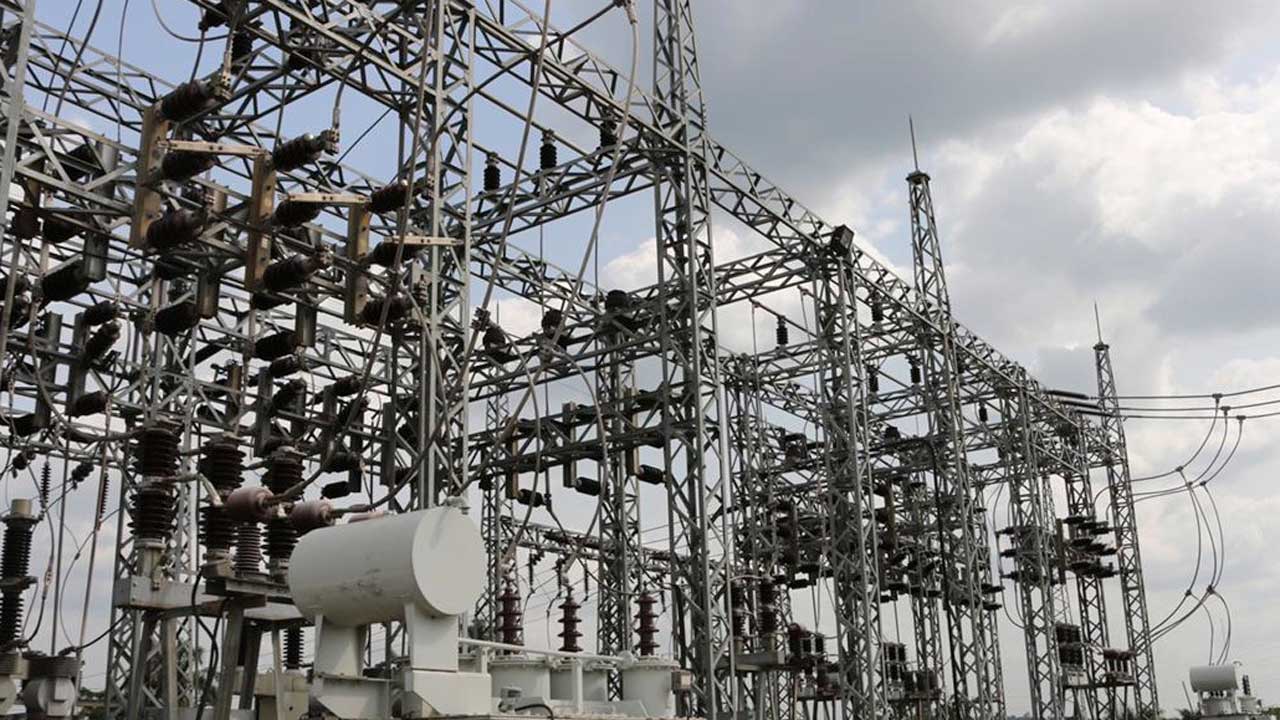
Power generation companies in Nigeria have dismissed allegations by the Nigeria Labour Congress that electricity firms were engaged in “institutionalised extortion,” describing the claims as misleading and damaging to efforts aimed at stabilising the country’s fragile power sector.

The reaction was contained in a statement issued on Wednesday by the Chief Executive Officer of the Association of Power Generation Companies, Joy Ogaji.

Ogaji faulted recent remarks by the President of the NLC, Joe Ajaero, saying they did not reflect the realities of the Nigerian Electricity Supply Industry.

Ogaji stated, “While we acknowledge the frustrations of Nigerians regarding unstable electricity supply, we must firmly reject the characterisation of the sector’s challenges as robbery and a grand deception. Such allegations are a misrepresentation of the facts and a disservice to ongoing efforts to stabilise the power sector.”

According to the association, power generation companies remain the most financially exposed segment of the electricity value chain because they generate electricity that is not fully paid for due to revenue shortfalls across the market.

She added, “GenCos face the greatest risk in the electricity value chain, with outstanding unpaid invoices now exceeding N6tn. Rather than castigate operators, attention should be focused on addressing the liquidity crisis that threatens the sustainability of electricity supply.”

The association also rejected claims that proposed government financial support for the sector amounted to a political arrangement, insisting that intervention funds were necessary to prevent further deterioration.

“We strongly refute the insinuation that proposed government support for the sector is a clandestine plan to settle the boys. Such claims are baseless and undermine the critical liquidity interventions required to keep the lights on,” the statement added.

See also  Fuel Scarcity Looms As PENGASSAN Declares Nationwide Strike

The GenCos said they were open to scrutiny and willing to subject their financial records to independent forensic examination if required.

“If the NLC or any other institution considers it necessary, our books are available for any form of investigation. What is important is to identify the real causes of the sector’s challenges and work collaboratively toward sustainable solutions,” Ogaji said.

The development follows recent comments by the NLC accusing electricity firms of exploiting Nigerians through tariff adjustments and alleged hidden subsidies.

The power generators urged organised labour to engage constructively with stakeholders, warning that inflammatory rhetoric could discourage investment and worsen electricity shortages.

punch.ng

FOLLOW US ON:

FACEBOOK

TWITTER

PINTEREST

TIKTOK

YOUTUBE

LINKEDIN

TUMBLR

INSTAGRAM

Continue Reading
Click to comment

Leave a Reply

Your email address will not be published. Required fields are marked *

Business

China extends trade boom as global AI tech demand surges

Published

on

Chinese exports and imports soared in July, official data showed Friday, as the manufacturing powerhouse benefits from a global AI boom lifting overseas demand for its tech products.

The world’s second-largest economy last year achieved a historic trade surplus of nearly $1.2 trillion, helping its manufacturing sector through a prolonged slump in domestic consumption.

The export boom has been propelled further this year by increased demand for Chinese data-processing equipment and related components, as companies rush to build artificial intelligence capacity.

Exports climbed 23.9 percent year-on-year last month, the General Administration of Customs (GAC) reported, compared with a 23.0 percent forecast by Bloomberg.

Overseas shipments of computers and related parts jumped 45.2 percent on year in the first seven months, the data showed.

“Export and import values remain elevated, helped by soaring global demand for electronics and green tech products,” wrote Julian Evans-Pritchard of Capital Economics.

China’s trade surplus appears to be on pace to match that of last year, reaching $687 billion through the end of July, the data showed Friday.

The yawning gap has increasingly raised eyebrows abroad — particularly in Europe, where leaders worry about floods of Chinese exports squeezing out local manufacturers.

Beijing has insisted it never deliberately pursued a trade surplus.

The Communist Party’s Politburo — the decision-making body headed by President Xi Jinping — urged a more “balanced” trade development at a key meeting late last month.

– China-US flare-up –

“Export growth continued to support the economy in July,” Zhiwei Zhang, president and chief economist at Pinpoint Asset Management, wrote in a note after Friday’s data.

“I expect intense negotiations between China and (its) major trading partners in coming months on what can be done to make trade more balanced,” he added.

See also  OPay secures double honours at Tech Innovation Awards

Imports increased 27.5 percent in July, extending this year’s strong performance even as main indicators of domestic demand have remained weak.

However, that was slower than the 36 percent surge seen in June, and also missed a Bloomberg forecast of 29.5 percent growth.

The growth has been achieved despite considerable pressure on the global trading system from the war in the Middle East and simmering trade frictions between Beijing and Washington.

China’s shipments to the United States rose 17 percent year-on-year last month, Friday’s data showed, as the countries remain locked in a trade war despite efforts to ease tensions.

That brought China’s surplus with its superpower rival this year to nearly $171 billion through the end of July, according to the official data.

The latest figures come days after a fresh flare-up in trade tensions between the world’s top two economies.

Following sanctions imposed by Washington over forced labour and national security concerns, Beijing on Wednesday announced restrictions on drone exports to the United States and blacklisted six firms.

China and the United States spent much of last year embroiled in an escalating trade war but reached a truce when US President Donald Trump met Xi in October.

The relationship will undergo further scrutiny in coming weeks as officials prepare for a scheduled state visit by Xi to the United States in late September.

AFP

punch.ng

FOLLOW US ON:

FACEBOOK

TWITTER

PINTEREST

TIKTOK

YOUTUBE

LINKEDIN

Continue Reading

Business

Food security fears mount as UK farmers battle drought

Published

on

Giant dust clouds rose from a green-red combine harvester as it crawled across a parched field, a sign that something was awry with UK farmer John Pawsey’s land.

“It suddenly, completely dried out,” Pawsey said. For weeks the drought “just seems to have gone on for ever” on his farm in the eastern county of Suffolk.

English farmers have been contending with the driest July ever recorded by the Met Office weather agency — unwelcome news for those like Pawsey who have only seen paltry yields of crops such as oats, wheat and vetch.

Concern over food security has gripped Britain’s headlines amid a series of heatwaves this year.

“All of our fears were realised when we got our combines into the field and realised that actually the yield was … between 25 and 30 percent down,” Pawsey said.

His family has tilled the Suffolk soil since a Scottish great-grandfather moved there, one of many farm workers who flocked south following the late 19th century agricultural depression.

Like his ancestors, Pawsey, 62, is navigating a turbulent future.

“I am worried about the coming years,” he admitted.

The drought is the most recent weather-related challenge to hit the nation’s farmers over the past five years.

Food growers must learn to adapt, Pawsey urged, adding dynamic farmers should view the changing climate as an “opportunity.”

His organic farm has experimented with new crops, like fava beans and chickpeas more suited to hotter, drier climates, and techniques to build resilience such as pairing two different crops in the same field to force them to grow as they compete for space and nutrients.

See also  PENGASSAN-Dangote rift widens over salary suspension

The government needs to support farmers in “making a transition” towards using similar methods, Pawsey argued.

Food security expert Timothy Benton endorses farming less intensively, saying “a more circular, diverse farming system” would be more secure and less dependant on imports of such things as fruits and fertilisers.

“Climate impacts will become greater,” Benton told AFP, adding “food systems will have to change”.

“We’re not investing enough in the forms of technological innovation to address a larger crisis,” he said.

Benton argued: “Food is not just food, it’s what you grow, produce and the products and processes needed to bring it to the general population.”

– Different menu –

Climate change could also force Britain to change its eating habits, said Nicola Cannon, professor at the Royal Agricultural College. She has been growing soya with the aim of introducing it to more British farms.

Dinnertime staples have been hit especially hard by the drought. This year’s pea yield was only “50 percent of what we wanted,” Cannon said.

They had little chance to grow, as there has been “very little moisture since March,” she added.

On Pawsey’s Suffolk farm, an entire crop of quinoa failed.

“We just had no rain,” he said. “The only things that started growing were docks (leaves) and thistles.”

Shortages of certain foods may result if drought conditions continue, National Farmers’ Union president Tom Bradshaw told the BBC.

“We have taken our food supply for granted for far too long,” he warned.

Lower yields make farming less profitable, meaning farmers will lack capital to invest in adaptation and experimenting with new crops.

See also  Airlines risk disruptions as NCAA enforces debt sanctions

Buying seasonal British produce gives “farmers more market certainty which allows them to invest in adaptations,” Cannon said.

“We’ve invested too much in worrying about wheat genetics and not enough about farming systems,” expert Benton said.

“Food security is national security,” Prime Minister Andy Burnham’s spokesperson said earlier this week.

The government has promised “record investment in water infrastructure, including nine new reservoirs,” they added.

Adapting food systems will require greater state intervention, Benton added.

“Change will be much more expensive,” he said, warning that “things are going to get worse in the decades ahead.”

Pawsey said that if weather trends continue, “farmers will go out of business.”

“It’ll either mean higher prices or the government will have to continue to support farmers,” he said.

AFP

punch.ng

FOLLOW US ON:

FACEBOOK

TWITTER

PINTEREST

TIKTOK

YOUTUBE

LINKEDIN

Continue Reading

Business

Lawmakers oppose dollar billing for local petrol sales

Published

on

The House of Representatives has commenced moves to address mounting concerns in Nigeria’s downstream petroleum sector, opposing the continued imposition of US dollar-denominated charges on locally refined petroleum products and announcing plans to investigate alleged irregularities in the allocation of fuel import licences.

The House Committee on Petroleum Resources (Downstream) disclosed this on Tuesday during an interactive session with key industry stakeholders, including the Independent Petroleum Marketers Association of Nigeria, the Depot and Petroleum Products Marketers Association of Nigeria, and the Major Energies Marketers Association of Nigeria.

The engagement forms part of the committee’s ongoing consultations on proposed amendments to the Petroleum Industry Act and broader reforms aimed at strengthening domestic refining, guaranteeing national energy security and ensuring a competitive downstream petroleum market.

The Chairman of the committee, Ikenga Ugochinyere, said the lawmakers would invite the Nigerian Midstream and Downstream Petroleum Regulatory Authority, the Nigerian Upstream Petroleum Regulatory Commission, the Nigerian Ports Authority, the Central Bank of Nigeria, refiners and other relevant agencies to respond to issues raised by industry operators.

“We’ll be meeting with the NMDPRA, NUPRC, the refiners—both modular refinery owners and the large refinery operators—as well as the NPA, the CBN and other relevant agencies on the issues that have been raised. These will form part of our downstream reforms, including proposed amendments to the Petroleum Industry Act and legislative motions to correct identified gaps,” Ugochinyere said.

The lawmaker expressed concern over the continued charging of port fees in U.S. dollars for petroleum products refined and transported within Nigeria, describing the practice as detrimental to the economy.

“We have taken special note of the issue of dollar-denominated charges by the Nigerian Ports Authority. It is not good for the economy that, at a time like this, people involved in domestic downstream activities are still being charged in dollars. That ultimately affects the pump price of Premium Motor Spirit,” he said.

Ugochinyere also pledged to investigate allegations that fuel import licences for the first three quarters of 2026 were issued to the same group of marketers.

See also  PENGASSAN-Dangote rift widens over salary suspension

“We have also taken note of what you said about the lopsidedness in the issuance of import licences, where allocations for the first, second and third quarters went to the same set of operators. We will raise these questions when the NMDPRA appears before the committee to explain the criteria used in issuing those licences,” he added.

The committee chairman stressed the need to strike a balance between protecting Nigeria’s expanding domestic refining capacity and preserving the investments of marketers who have built storage and distribution infrastructure over several decades.

“How do we encourage and protect owners of domestic refineries while also protecting the investments of marketers? We cannot continue importing the same volume of petroleum products as before, given that more refineries are coming on stream. At the same time, we must guarantee national energy security in case local refineries experience disruptions.

“We need a balanced framework that supports domestic refining, preserves healthy competition and ensures the country always has a reliable fuel supply. That is the direction this committee is pursuing,” he said.

Presenting DAPPMAN’s memorandum, the association’s Executive Secretary, Mr Olufemi Adewole, urged lawmakers to address what he described as structural distortions affecting petroleum marketers and depot operators.

According to him, at least 72 of Nigeria’s 154 licensed petroleum depots recorded little or no trading activity over the past year because of what he described as an uneven operating environment.

“From the records of the NMDPRA, not fewer than 72 of the 154 depots nationwide had no regular or consistent trading activity in the last one year. They are merely paying salaries without engaging in meaningful business. This is largely due to an uneven playing field, persistent trading losses and the inability to access alternative sources of supply,” he said.

While welcoming the commencement of operations at the Dangote Refinery, Adewole warned against what he described as a near-monopoly in the supply of PMS.

“Our experience has been one of mixed feelings, bordering on an almost total monopoly in the supply of PMS by the mega refinery. Although the Petroleum Industry Act provides for a fully deregulated market where prices are determined by market forces, that has not been our experience,” he said.

See also  FG rolls out plans to lift 50 million Nigerians out of poverty by 2030

The association also accused the NMDPRA of allocating import permits repeatedly to the same group of marketers. “The same set of marketers received import allocations in the first, second and third quarters of 2026, as though other qualified operators do not exist. This is unacceptable, and we urge this committee to ensure greater transparency and fairness in future allocations,” Adewole said.

DAPPMAN argued that retaining the option of fuel imports remains necessary to prevent shortages during refinery maintenance, operational disruptions or logistics challenges.

“In order to avoid the return of fuel queues, the import option provided under the Petroleum Industry Act must remain available as a regulated contingency mechanism whenever domestic supply is insufficient,” he said.

The association also decried what it described as duplicated port charges and the continued billing of domestic petroleum transactions in foreign currency.

“Marketers are invoiced at the loading point and again at the discharge port for products moved entirely within Nigeria. More critically, certain charges are still imposed in US dollars despite the purely domestic nature of these transactions. This practice persists despite a presidential directive suspending foreign currency-denominated billing for local operations. We urge the committee to ensure compliance,” Adewole added.

DAPPMAN further called for accelerated dredging of major waterways, rehabilitation of pipelines and depots, improved rail transportation for petroleum products and the creation of a national downstream logistics master plan.

IPMAN National President, Abubakar Shettima, commended the Federal Government for encouraging private investment in refining but said marketers continue to grapple with high financing costs, multiple taxation, foreign exchange volatility, inadequate storage infrastructure and limited access to refinery products.

See also  Fuel Scarcity Looms As PENGASSAN Declares Nationwide Strike

He called for policies that would support domestic refining while preserving competition. “We support strengthening domestic refining, but we also need equitable access to locally refined petroleum products, affordable financing and reduced regulatory costs that ultimately increase pump prices,” he said.

Shettima proposed the establishment of a specialised Petroleum Bank to provide single-digit interest loans to operators. “Today, marketers borrow from commercial banks at interest rates of up to 32 per cent. Those costs are eventually passed on to consumers. We are proposing a Petroleum Bank that will provide single-digit interest loans, similar to what exists in the agriculture and industrial sectors,” he said.

He also urged multinational oil companies involved in fuel importation to invest in local refining. “Before now, we depended almost entirely on imported petroleum products. Today, Nigeria is exporting refined products. Multinational companies should invest in domestic refineries to complement the existing capacity rather than relying solely on imports,” he added.

On the future of Nigeria’s state-owned refineries, Shettima suggested that independent marketers be allowed to participate in their management.

“If independent marketers are allowed to participate in operating the government refineries, we believe we can contribute significantly to their revival. We have done it before. Independent marketers invested in what is today NIPCO, which has become one of Nigeria’s leading petroleum marketing companies,” he said.

The committee’s consultations come as Nigeria seeks to consolidate gains from recent reforms in the downstream petroleum sector following the implementation of the Petroleum Industry Act and the expansion of domestic refining capacity.

Lawmakers are expected to engage regulators, refiners, NNPC Limited and other stakeholders before proposing legislative measures aimed at creating a more competitive, transparent and sustainable petroleum market while safeguarding the country’s long-term energy security.

punch.ng

FOLLOW US ON:

FACEBOOK

TWITTER

PINTEREST

TIKTOK

YOUTUBE

LINKEDIN

Continue Reading

Trending