Connect with us

News

Real-time election results transmission achievable in 2027, say telcos

Published

on

Nigeria’s telecommunications network is capable of supporting the real-time electronic transmission of election results, major telecommunications operators have confirmed.

The Independent National Electoral Commission also said 93 per cent of polling units across the country have mobile network coverage, following a joint technical assessment with the Nigerian Communications Commission and major telecom operators.

Major telecom operators, who spoke with The PUNCH, said that Nigeria’s telecommunications network was capable of supporting the real-time electronic transmission of election results, but the process remains largely paper-based.

In a position paper obtained by The PUNCH over the weekend, INEC maintained that electronic transmission of election results is both feasible and supported by existing telecommunications infrastructure, but stressed that implementation hinges on a clear legal framework.

The document, titled Position Paper No.1/2021 on Electronic Transmission of Election Results, was signed on September 9, 2021, by Prof Mahmood Yakubu, the immediate past Chairman of INEC.

INEC stated in the paper that it had “developed adequate structures and processes to successfully transmit election results electronically,” adding that “the technology and national infrastructure to support this are adequate.”

The commission explained that ahead of the 2019 general election, it set up the INEC/NCC Joint Technical Committee on Electronic Transmission of Election Results to evaluate the readiness of the country’s telecommunications infrastructure.

The committee, co-chaired by NCC’s Commissioner for Technical Services, Ubale Maska, and INEC National Electoral Commissioner, Dr Mustapha Lecky, submitted its report on August 9, 2018.

According to INEC, the committee found that mobile networks “adequately covered 93 per cent of INEC polling units with capacity to cover the outstanding 7 per cent.”

The report also assigned polling units to Airtel, Glo, 9Mobile and MTN for result transmission and recommended the use of secure configurations, including Access Point Name and Virtual Private Network integration, to connect to INEC’s backend systems.

Despite these findings, INEC said it did not proceed with electronic transmission in 2019 because it lacked a clear legal mandate at the time.

The commission stated that while the technical committee’s work “profoundly convinced” it that electronic transmission was achievable, the Electoral Act amendment process then underway did not provide the unambiguous authorisation required for full deployment.

In the paper, INEC described electronic transmission as “desirable and doable,” arguing that much of the public debate had generated “a lot of heat but throwing very little light,” and was driven by “unsubstantiated fears” and “profound misconceptions.”

It identified “trust, efficiency and safety” as the key benefits of transmitting results electronically.

According to the commission, faster result management would reduce delays that fuel “feelings that outcomes could be undermined,” while also limiting opportunities for “result jacking” during the physical movement of result sheets.

See also  Moves to demolish my house, hotel politically motivated – Gbenga Daniel insists

INEC also addressed what it termed widespread misconceptions about the process.

It clarified that electronic transmission of results is not the same as electronic balloting or internet voting, stating, “They are not the same thing,” and emphasising that it was “not contemplating” internet voting.

The commission distinguished between electronic transmission and the INEC Result Viewing portal, explaining that while the portal allows scanned polling unit result sheets to be uploaded for public viewing, electronic transmission would involve “the electronic collation of those results to determine the outcome of the election.”

INEC further rejected attempts to link challenges experienced with the Smart Card Reader to its capacity to transmit results electronically.

It stated that the SCR “is not used for result transmission” and is not permanently connected to any data network.

On network quality, the commission described as “simply incorrect” claims that 2G networks cannot transmit election data.

It noted that the telecom operators and the NCC were aware that only 2G coverage existed in some areas when they concluded in 2018 that transmission was possible.

INEC also pushed back against proposals that it should be subjected to certification or attestation by the NCC before transmitting results electronically.

Citing Section 160 of the Constitution, it argued that making its procedures subject to another agency’s approval “will be in breach of the Constitution,” adding that it retains constitutional authority to regulate its own processes.

The commission urged lawmakers to provide a legal framework that “enables rather than inhibits” electronic transmission and cautioned against embedding specific technologies in the law.

The renewed attention on the 2021 position paper comes amid ongoing debate over the electronic transmission of results and recent amendments to the Electoral Act signed by President Bola Tinubu.

The amended law has sparked arguments among political stakeholders and civil society groups over whether real-time electronic transmission from polling units should be made mandatory.

Supporters of compulsory real-time upload argue that it enhances transparency and reduces manipulation during collation, while critics cite logistical and security concerns.

President Bola Tinubu signed the Electoral Act 2026 on February 18, ahead of the 2027 general elections.

While the law allows the use of digital tools, including the Bimodal Voter Accreditation System and an online results portal, it does not mandate electronic transmission, leaving the Independent National Electoral Commission to decide how results are transmitted.

Physical result sheets, known as Form EC8A, remain the legal basis for collation where technology fails. Observers say reliance on paper preserves a hybrid system that could slow result announcements and increase the risk of disputes, even as Nigeria’s digital infrastructure continues to improve.

“The network is there. We have coverage maps and bandwidth data across the country to make real-time transmission feasible. The repository of that information is the Nigerian Communications Commission,” the Chairman of the Association of Licensed Telecommunications Operators of Nigeria, Gbenga Adebayo, told The PUNCH.

See also  Omokri mum as ex-US mayor alleges manipulation

The telecom executive said the NCC is best positioned to advise the government based on verified coverage maps and network performance data.

“So, in my view, as an operator, we have what is required to do what is needed. But it depends on what they are looking for. It depends on what the government or INEC is looking for,” he added.

The presidential and National Assembly elections are scheduled for February 20, 2027, while governorship and state Houses of Assembly polls will follow on March 6, 2027. A revised timetable may be issued in the coming weeks.

An industry executive who did not want to be named said telecom operators are not seeking special government support for the 2027 elections, noting that satellite technology can fill gaps in remote or poorly covered areas.

The source explained that some BVAS machines might not work using GSM SIM cards but could still transmit data via satellite interfaces, adding that as long as the devices could access the sky, they would be able to send results.

“Under the circumstances of the current coverage map, the current availability of solutions and technologies around the world and in the country, what the telcos have should be sufficient enough if that is what the government wants to do.”

The executive added, “The decision to deploy real-time electronic transmission rests with policymakers, not telecom operators. They cannot sit in political discussions and say it is not available.”

According to INEC, IReV had been deployed in the Edo and Ondo governorship elections, six senatorial and three federal constituency by-elections, 15 state assembly constituencies, and one councillorship constituency in the FCT.

The commission concluded that electronic results management added transparency and credibility.

Hacking concerns

While signing the amended Electoral Act 2026 into law, Tinubu commended the National Assembly for handling the process without confusion or disenfranchisement, saying that no matter how good a system was, it would ultimately be managed, promoted, and finalised by the people.

He urged Nigerians to trust the electoral process, pointing to the manual components of voting such as ballot counting and thumbprinting, while also questioning whether the country’s current broadband capacity could support real-time electronic transmission of results.

The president emphasised the need to avoid glitches, interference, or hacking during result transmission, expressing confidence that Nigeria would overcome its challenges and flourish.

The INEC position paper, however, said the remarks contradicted the commission’s earlier assessment.

See also  Diezani was just ‘rubber-stamp’ for oil contracts under Jonathan, Lawyer tells UK court

It noted that INEC’s systems had passed comprehensive security tests, including ethical hacking simulations, and that the commission had successfully transmitted results in real time from densely populated cities to remote areas, islands, and conflict-affected regions such as Borno, Zamfara, Bayelsa, Edo, Bauchi, and Imo states.

The paper added that since August 2020, INEC had transmitted results from 20 states and the Federal Capital Territory, covering 27 constituencies, 84 local government areas, 925 wards, and 14,296 polling units involving nearly 10 million registered voters.

“The commission used the IReV portal to test the security of our systems if they are deployed for the electronic transmission of results. Again, our systems have passed all necessary security tests, including ‘dummy hacking’ by ethical hackers,” the commission noted.

No special intervention required

Adebayo stressed that telecom operators are not seeking any special government intervention specifically for election result transmission, noting that existing infrastructure is adequate.

“I can’t say to you that we need any special intervention for this purpose. What we have is sufficient,” he noted.

He added that current technologies and network solutions available in Nigeria and globally make real-time transmission feasible.

“Under the circumstances of the current coverage map, the current availability of solutions and technologies around the world and in the country, what we have should be sufficient enough if that is what the government wants to do,” he said.

Addressing concerns about network black spots and remote areas without terrestrial connectivity, Adebayo said satellite technology can fill coverage gaps.

“There is no way under the sun that you cannot communicate in any area by satellite, depending on the terminals and devices you have,” he said.

He explained that election devices such as the Bimodal Voter Accreditation System could be configured to work via satellite where GSM coverage is unavailable.

“You can have some BVAS machines that are not working with GSM SIM cards but are working by satellite interface. So long as they can see the sky, they will transmit data,” he said.

Adebayo said the country’s network infrastructure could be mapped into tiers to guide deployment strategies during elections.

He suggested that areas with strong mobile coverage could use standard connectivity, while remote zones could rely on hybrid GSM-satellite devices.

“You can map Tier 1 available coverage at about 80 per cent of the country and Tier 2 at about 20 per cent, where coverage is uncertain.

“If you are deploying devices, most can run on regular mobile services, while some can use special satellite interfaces,” he said.

punch.ng

FOLLOW US ON:

FACEBOOK

TWITTER

PINTEREST

TIKTOK

YOUTUBE

LINKEDIN

TUMBLR

INSTAGRAM

Continue Reading
Click to comment

Leave a Reply

Your email address will not be published. Required fields are marked *

News

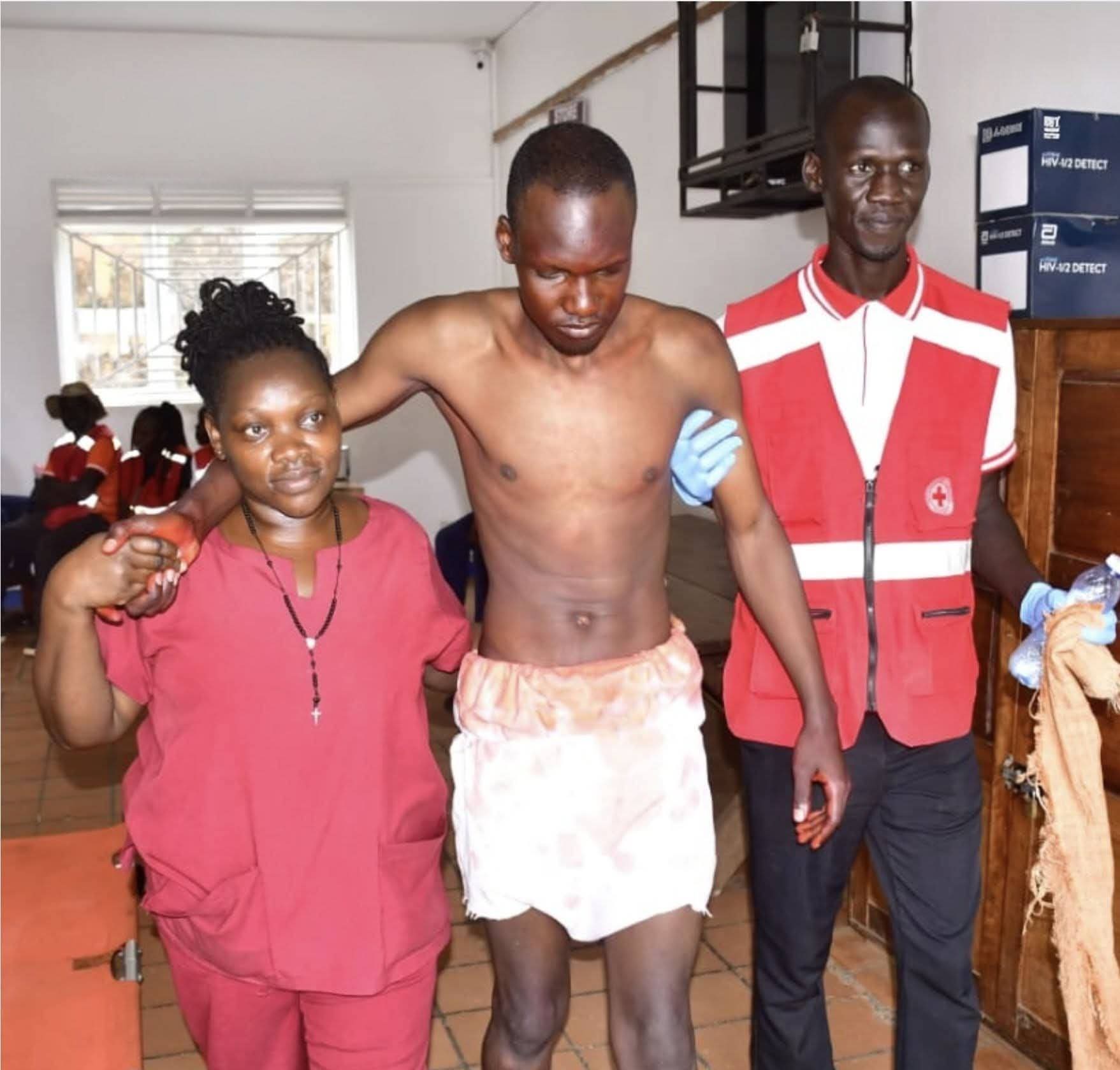
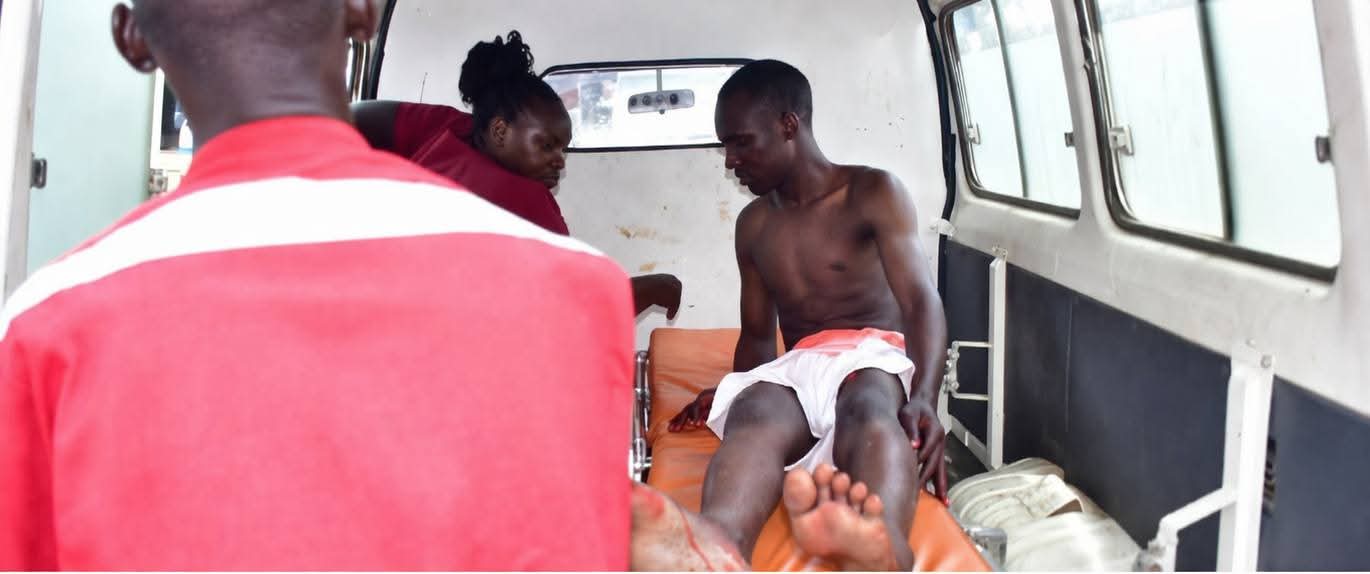
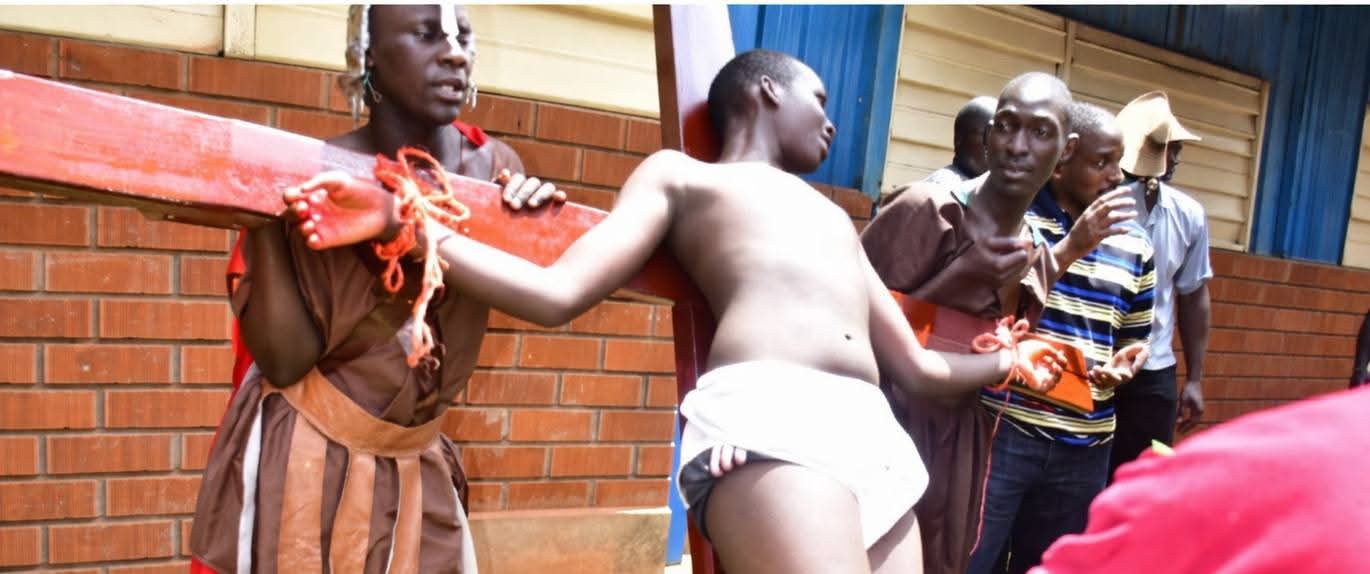
PHOTOS: Man hospitalised after sustaining injuries from beatings while portraying Jesus Christ during Good Friday procession

Published

on

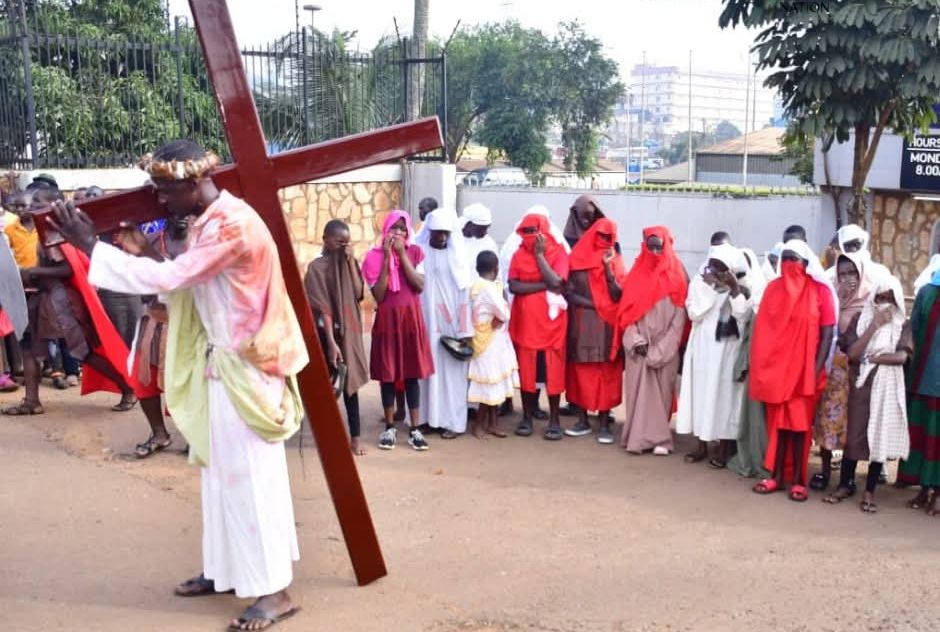
A second-year law student at Kampala International University, Dennis Zziwa, sustained injuries while portraying Jesus Christ during a Good Friday Way of the Cross procession at Our Lady of Africa Church, Mbuya, Uganda.

Dennis sustained injuries from the beatings he received during the intense scenes of the reenactment.

He received immediate first aid from Red Cross responders.

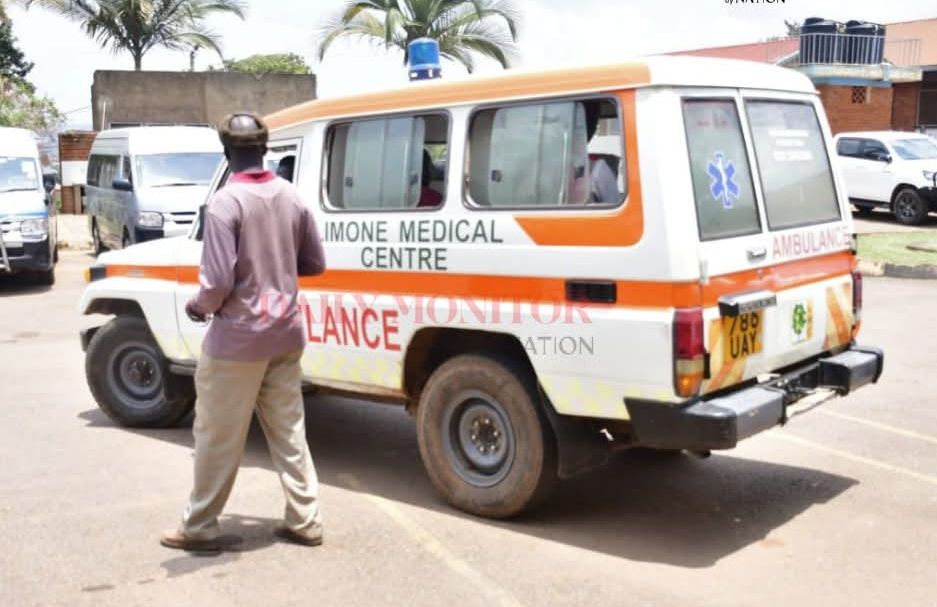
He was later taken to Lamone Health Center in Luzira for further medical attention.

FOLLOW US ON:

FACEBOOK

TWITTER

PINTEREST

TIKTOK

YOUTUBE

LINKEDIN

See also  Ex-CDS Musa meets Tinubu as Irabor dismisses B’Haram recruitment claim
Continue Reading

News

EFCC moves to seize 57 Malami-linked properties

Published

on

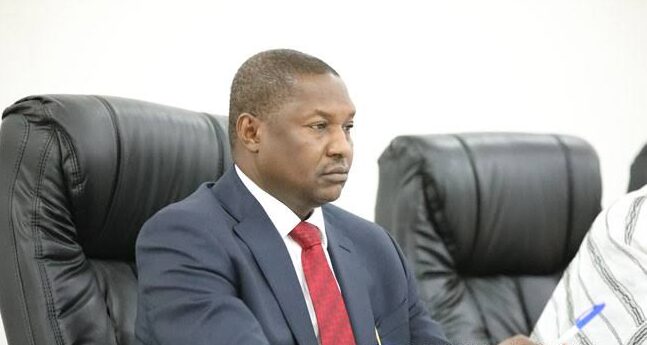
The Economic and Financial Crimes Commission has urged the Federal High Court in Abuja to order the permanent forfeiture of 57 properties allegedly linked to a former Attorney General of the Federation and Minister of Justice, Abubakar Malami, to the Federal Government.

The anti-graft agency, in a motion on notice filed by its legal team led by Jibrin Okutepa (SAN) and Ekele Iheanacho (SAN), told Justice Joyce Abdulmalik that the respondents failed to place sufficient material before the court to justify setting aside the interim forfeiture order earlier granted.

The motion, marked FHC/ABJ/CS/20/2026, listed Malami, Hajia Bashir Asabe and Abiru’ Rahman Abubakar Malami among the respondents, alongside several companies allegedly linked to the assets.

The EFCC brought the application pursuant to Section 17 of the Advance Fee Fraud and Other Fraud-Related Offences Act, 2006, seeking “a final order of this honourable court forfeiting to the Federal Government of Nigeria, the properties described in the schedule below, which were found by the commission as properties reasonably suspected to be proceeds of unlawful activities.”

Arguing the motion, Okutepa stated that the proceeding was a non-conviction-based forfeiture and that the court has the statutory authority to grant the relief sought.

He added: “This honourable court made an interim order forfeiting the properties to the Federal Government of Nigeria.

“The order of the honourable court has been published in a national daily, namely THISDAY Newspaper of 9th January, 2026.

“No sufficient cause has been shown why the properties under the interim forfeiture order should not be finally forfeited to the Federal Government of Nigeria,” Okutepa argued.

See also  Moves to demolish my house, hotel politically motivated – Gbenga Daniel insists

In an affidavit deposed to by an EFCC investigator, Daniel Adebayo, the commission said it received multiple petitions alleging corruption, abuse of office and fraud against the former minister.

Adebayo stated that investigations involved obtaining financial records from banks and the Central Bank of Nigeria, as well as inquiries from agencies including the Corporate Affairs Commission, Federal Inland Revenue Service, Code of Conduct Bureau and the Abuja Geographical Information System.

He added that land registries in Kebbi, Sokoto and Kano states were also queried, while assets were physically verified and valued.

The officer said individuals linked to the transactions were invited and interviewed.

He further stated that Malami’s earnings while in office between 2015 and 2023, including salaries, allowances and estacodes, were not commensurate with the value of the assets under investigation.

“I know as a fact and verily believe the findings of the investigation, which are as follows:

“Mr Abubakar Malami (SAN) was the Hon. Minister of Justice and Attorney General of the Federation, hereinafter referred to as HAGF, from 2015 to 2023.

“He was paid a total of N89,664,000.00 as salary between 2015 and 2023, whilst in office, with an average payment of N962,663.68 per month.

“He also received a severance allowance of N12,158,400.00 at the end of his tenure in office.

“Mr Malami SAN was also paid estacodes allowances to cover his travel expenses whenever he travelled outside the country on official trips.

“He calculated and declared a total sum of N253,608,500.00 as the amount he received for the official trips between 2015 and 2023 in a letter written to the Chairman of the CCB as an addendum to his Assets Declaration Form in June 2023.

See also  Diezani was just ‘rubber-stamp’ for oil contracts under Jonathan, Lawyer tells UK court

“Attached and collectively marked as Exhibit EFCC 2 & 3 are copies of the asset declaration forms filled out by Mr Malami SAN from 2015 to 2023, together with a letter dated 16th of June, 2023, written by him to the Chairman of the CCB as an addendum to the asset declaration form as found at his house during EFCC’s execution of a search warrant.”

Adebayo further deposed: “Aside from the actual acquisition of the properties which are manifestly disproportionate to Mr Malami SAN‘s known and lawful sources of income, no building permits/approvals from appropriate authorities were obtained to erect most of the various structures in Kano and Kebbi states as part of a scheme to disguise the unlawful origin of the funds used to acquire the assets.”

He alleged that some of the properties were acquired through proxies and corporate entities linked to the former minister.

The EFCC listed 57 landed properties spread across Abuja, Kebbi, Kano and Kaduna states, including assets tied to Rayhaan University in Kebbi.

Justice Abdulmalik fixed April 21 for the hearing of the motion.

The case stems from an earlier order of the Federal High Court in Abuja, on January 8, 2026, presided over by Justice Emeka Nwite, which granted an interim forfeiture of the 57 properties following an ex parte application by the EFCC.

The properties, valued at about N213.2bn, were said to be linked to Malami and two of his sons and were suspected to be proceeds of unlawful activities.

The court directed that the assets be temporarily forfeited to the Federal Government, and ordered the EFCC to publish the order in a national newspaper to enable interested parties to show cause within 14 days why they should not be permanently forfeited.

See also  Rivers and Lagos top states where minors consume sachet alcohol

Following the interim order, Malami and other respondents challenged the forfeiture proceedings, urging the court to set aside the order.

punch.ng

FOLLOW US ON:

FACEBOOK

TWITTER

PINTEREST

TIKTOK

YOUTUBE

LINKEDIN

Continue Reading

News

Presidency reveals why Tinubu consoled Plateau victims at Jos airport

Published

on

The Presidency has defended President Bola Tinubu’s decision to meet victims of the Plateau State killings at a hall adjoining the Yakubu Gowon Airport rather than driving into Jos township, citing flight restrictions and logistical constraints as the reasons for the arrangement.

In a statement by Special Adviser to the President on Information and Strategy, Bayo Onanuga on Friday, the Presidency said the runway at the airport does not support night flights due to the absence of navigational aids, making it impossible for Tinubu to visit Rukuba, drive back to the airport and depart before dusk.

“Upon arrival in Jos, the visit encountered some logistical challenges. While the road distance from the airport to Jos township is approximately 40 minutes, the runway does not support night flights due to the absence of navigational aids. The constraints made it unfeasible to drive into town, meet victims for on-the-spot assessment and return to the airport before dusk.

“Consequently, state and federal officials decided to bring representatives of the affected community to a hall adjoining the airport so the President could meet with them promptly while adhering to flight restrictions,” the statement read.

The visit came days after gunmen attacked the Angwan Rukuba district of Jos North Local Government Area on Palm Sunday, killing at least 28 people in one of the deadliest outbreaks of violence in the state in recent years.

The Presidency also explained the delay in Tinubu’s departure for Jos, saying his itinerary for Thursday had included receiving Chadian President Mahamat Idriss Déby Itno at the Presidential Villa for a bilateral meeting on security cooperation.

See also  Rivers and Lagos top states where minors consume sachet alcohol

The meeting, which centred on strengthening collaboration between Nigeria and Chad, ran longer than expected, pushing back his scheduled departure.

According to the statement, Tinubu had initially planned to travel to Iperu, Ogun State, on Thursday, but suspended the trip after Mutfwang briefed him on the security situation in Plateau.

“President Tinubu’s itinerary for Thursday included two main engagements: receiving the Chadian President, Mahamat Idriss Déby Itno, and proceeding to Iperu, Ogun State. After Governor Caleb Mutfwang’s briefing, President Tinubu suspended the trip to Ogun.

“Overnight, the Presidential Villa made arrangements for the visit to Jos, with presidential assets quickly deployed. However, the President could not postpone the scheduled visit by the Chadian leader.

“The President of Chad was at the Presidential Villa for a very important bilateral meeting focused on strengthening security collaboration between the two countries. The meeting ran longer than expected, affecting President Tinubu’s scheduled departure for Jos,” the statement read.

Despite the airport setting, the Presidency said the visit achieved its objectives, with Tinubu consoling victims, listening to community leaders and engaging key stakeholders on ending the decades-long cycle of violence in the state.

Among those present at the hall were the Minister of Defence, the Chief of Army Staff and the Inspector-General of Police, who had earlier visited Rukuba ahead of the President’s arrival.

“President Tinubu’s visit to Jos was not merely symbolic. It was a strategic, high-level engagement aimed at bringing all stakeholders together to address the root causes of conflict and insecurity in the state,” Onanuga said.

See also  Moves to demolish my house, hotel politically motivated – Gbenga Daniel insists

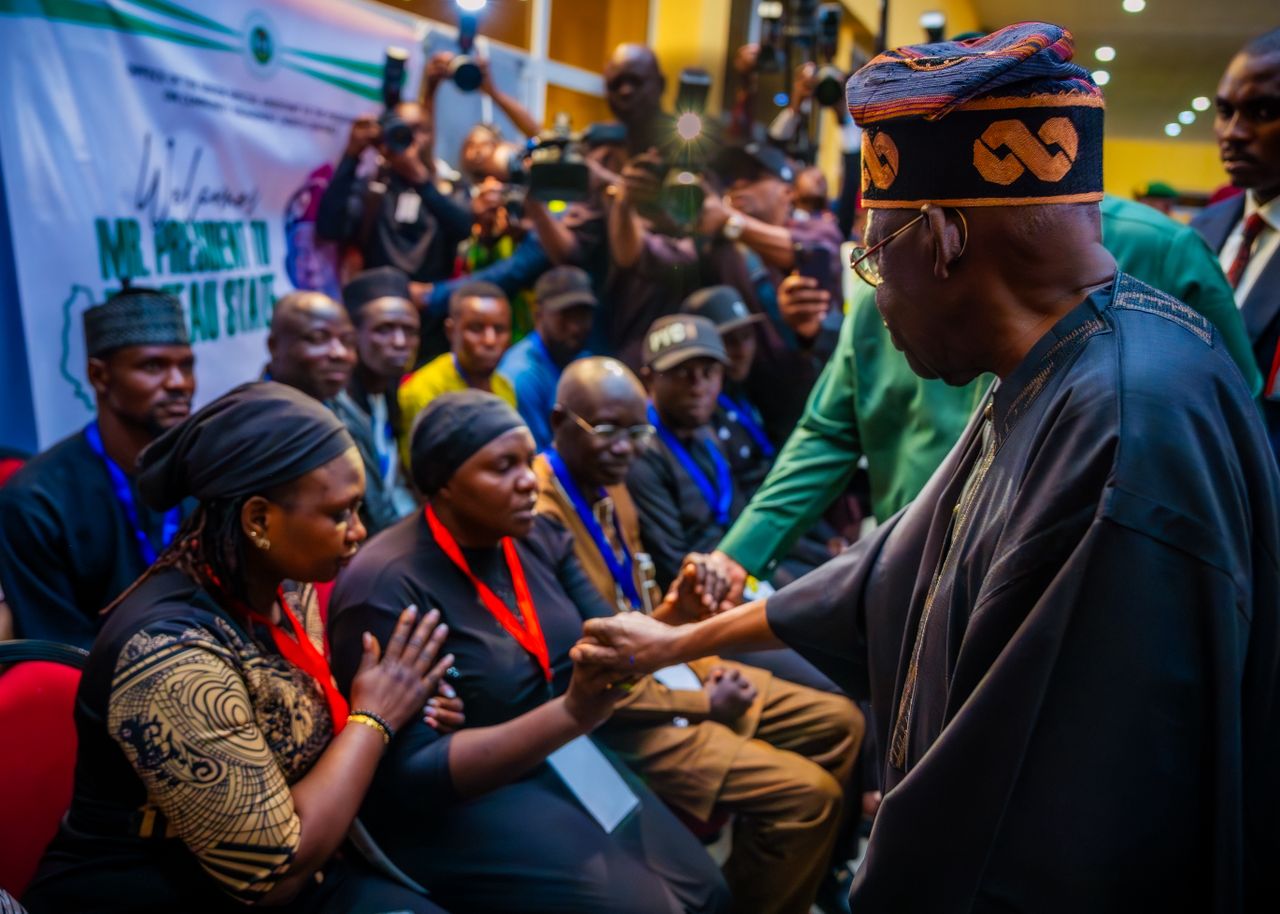
At the meeting, Tinubu addressed a grieving mother, Mrs Rhoda, whose video clutching the bloodied corpse of her son had gone viral and become the defining image of the attack. He identified her son as Ayuba.

“I know the pain. I see in the video how you buried your loved ones and the pain and agony in your heart. But it’s only God who can give you joy and hope. No amount of money can pay all of you back,” he said.

He also announced the deployment of over 5,000 AI-enabled cameras across Plateau State, directed security chiefs to track down the killers, constituted a committee to assess losses and provide compensation, and invited community leaders to Abuja for further talks.

The Nigerian Army separately announced the deployment of over 850 additional troops to reinforce operations under Operation Enduring Peace.

The Presidency insisted the visit was deliberate and strategic, with Onanuga saying “President Tinubu achieved the purpose of his visit, despite the naysayers’ attempts to ridicule it. He dropped an unmistakable message: sustainable peace must be built with the people, not imposed on them.”

However, former Vice President Atiku Abubakar criticised the visit as insensitive.

“It is both shocking and deeply insensitive that several days after the gruesome killings of innocent citizens, the President’s so-called ‘on-the-spot assessment’ was reduced to a brief stop at the foot of his aircraft, never extending beyond the airport, never reaching the grieving communities, and never touching the pain of the victims,” Atiku said in a statement by his aide, Phrank Shaibu.

See also  Trump sends letter of support on Ukraine’s Independence Day as Zelensky declares Kyiv ‘will not lose’ the war

He added that the visit had been hurriedly curtailed to allow Tinubu to proceed to Lagos for the Easter holidays, describing it as “a decision that reflects a deeply troubling prioritisation in the face of national grief.”

punch.ng

FOLLOW US ON:

FACEBOOK

TWITTER

PINTEREST

TIKTOK

YOUTUBE

LINKEDIN

Continue Reading

Trending