Connect with us

News

Terrorists dare Trump, kill scores

Published

on

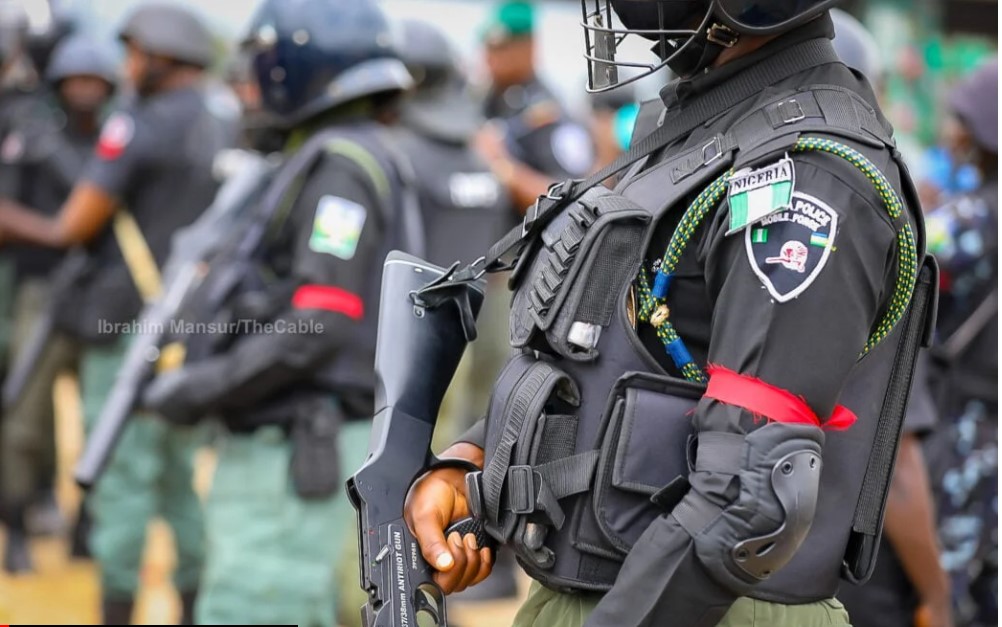
Armed groups have intensified attacks across parts of northern Nigeria following United States air strikes targeting Islamic State-linked militants in Sokoto State.

Findings by Saturday PUNCH revealed that no fewer than 47 people have been killed and 35 kidnapped between December 25, 2025, and January 2, 2026.

Some of the attacks were carried out on communities in Adamawa, Zamfara, Kwara, Plateau, Nasarawa, Yobe and Kano states by bandits, ISWAP and Boko Haram fighters.

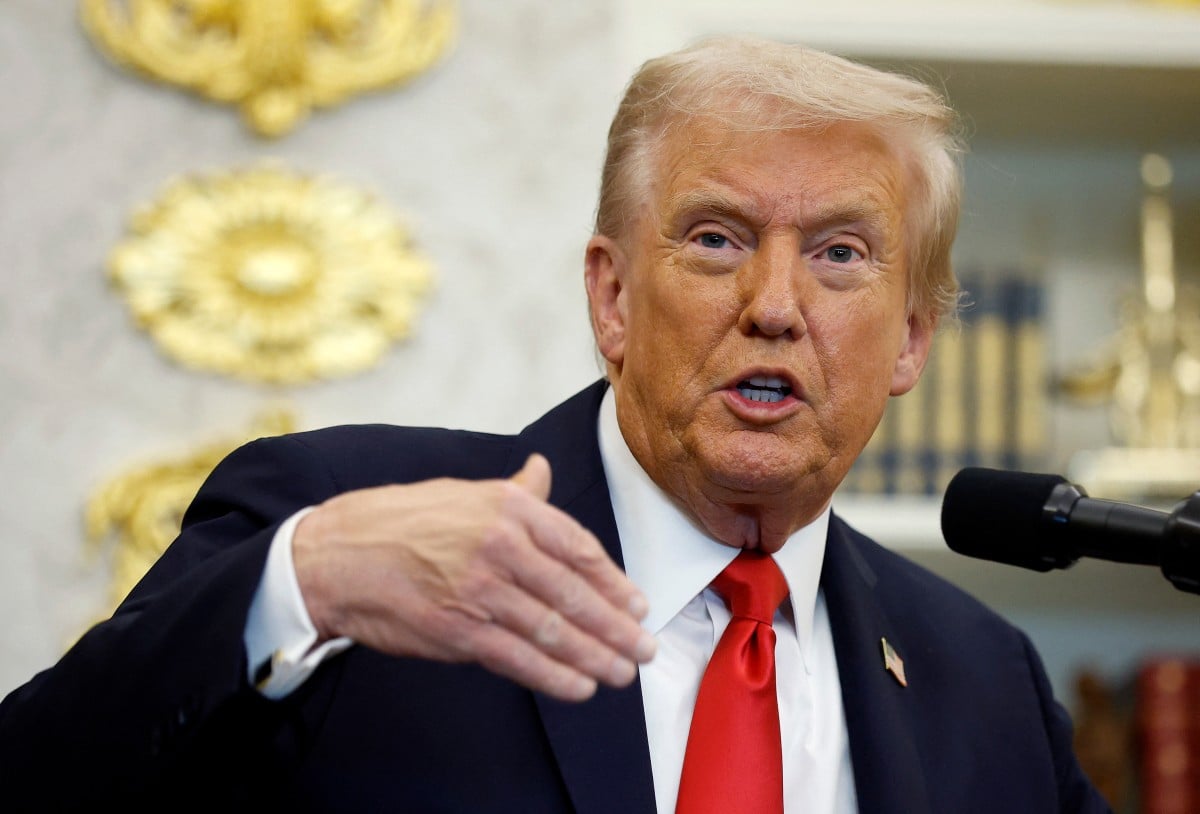
President Donald Trump, last Christmas, announced in a post on his Truth Social platform that US forces conducted deadly strikes against Islamic State terrorists in Northwestern Nigeria, and vowed more attacks if the militants keep killing Christians.

The Defence Headquarters later said intelligence gathered ahead of the mission confirmed the presence of terrorists in the area, adding that a battle damage assessment was still ongoing.

Renewed attacks

However, monitoring of security incidents between December 25 and January 2 shows an escalation in violence, with many communities coming under renewed assault.

A tally of media reports indicates that at least 82 people were either killed or kidnapped during the period.

The figure includes more than 35 people abducted and 47 killed, while over 12 others sustained injuries.

The actual number of abductees may be higher, as some reports did not disclose figures.

Several people were abducted when suspected bandits attacked the Omi-Ara community in Yagba West Local Government Area of Kogi State.

In the same council, gunmen also attacked the Odo-Ere community on Sunday night and abducted at least four residents.

On 30 December, women and children travelling from Wanke to Gusau were kidnapped but were later rescued by security forces.

On 27 December, suspected bandits attacked the Adanla community in the Ifelodun LGA of Kwara State and abducted more than eight people.

On 29 December, at least eight people were killed when gunmen carried out coordinated attacks on Kaiwa, Gelawu and Gebbe villages in the Shanga LGA of Kebbi State.

In Zamfara State, 16 women were abducted, two people were killed, and several others were injured when Sabon-Layi village in the Wanke district of Gusau LGA was attacked.

See also  See why it’s hard tracking bandits with technology — Presidential aide

At least seven farmers were reported killed during an attack in Bum community in Jos South LGA of Plateau State.

The traditional ruler of Aafin community, Oba S. Y. Olaonipekun, and one of his sons, who is a National Youth Service Corps member, were abducted in the Ile-Ire district of Ifelodun LGA of Kwara State.

Gunmen also attacked Kunza community in Ashigye village in Lafia LGA of Nasarawa State, killing three people and injuring nine others on 31 December.

On 26 December, bandits kidnapped five travellers along the Ogbe-Egbe Road and injured one other person.

ISWAP also claimed it fired mortars at a Nigerian military camp in Goniri, Yobe State, although the extent of damage was not disclosed.

On Wednesday, a security analyst, Brant Phillips, said ISWAP raided a village, killing 11 “hostile” Christians, destroying a church and over 100 houses and capturing their properties.

This is the first time ISWAP refers to a group of Christians as being “hostile”, following ISCAP using this same wording recently.

A former United States Secretary of State, Mike Pompeo, in a post on X, urged Trump to conduct a follow-up strike to increase the pressure on the terrorists.

He said, “Nigeria’s Christians deserve the chance to worship our Lord without fear. If President Trump follows up last week’s strikes against ISIS with a sustained pressure campaign, we’ll see important advances for religious freedom in Nigeria and beyond.”

Boko Haram kills 14 in Adamawa

The Chairman of Hong LGA in Adamawa State, Usman Inuwa, confirmed that Boko Haram killed 14 people in two villages in the local government.

Inuwa, who spoke with Saturday PUNCH on Friday, said Boko Haram invaded two villages, Mubang and Zar, at night, killing 14 people and injuring two others.

“Around 9pm on that day, Boko Haram invaded Mubang and Zar villages, which are close to Sambisa forest. They killed 14 people, shot two people and burnt dozens of houses with foodstuffs.

“These villages are located near Sambisa forest, and there are no other villages in between. It is a vast empty land, so Boko Haram took advantage of the ungoverned spaces to attack and kill innocent people”, he said.

See also  Sweden raises income requirement for citizenship applicants

Inuwa added that a combined team of military and vigilante in the past guarded the area, repelling Boko Haram attacks.

Bandits on Thursday night also attacked Yankwada, Babanduhu and other villages in Shanono LGA of Kano State, killing one person and carting away cows.

The terrorists, who reportedly stormed the areas on 50 motorcycles, engaged the Nigerian military in a heavy gun battle until about 5am on Friday morning.

The Chairman of Shanono/Bagwai Community Security Forum, Alhaji Yahya Bagobiri, confirmed the incident to Saturday PUNCH, saying that the bandits came on a revenge mission after losing nine of their members last week to the military fire powers.

Bagobiri called on the Federal Government to provide more arms and redeploy more personnel to complement those gallant officers on ground.

When contacted, the Assistant Director, Army Public Relations 3 Brigade Nigerian Army, Capt. Babatunde Zubairu, confirmed the attack via a WhatsApp message.

“All the details are true except that they didn’t kill anyone and there was no rustling of cows,” he said.

Terrorists move to Niger, Kaduna

Meanwhile, a community leader in the state has hinted that terrorists displaced by the U.S. air strikes in Sokoto may be attempting to infiltrate the state  from neighbouring states through multiple routes.

The community leader, who spoke to Saturday PUNCH on condition of anonymity due to security concerns, said intelligence reports indicated that some fleeing fighters were moving into Niger and Kaduna through parts of Katsina and the Zamfara border, while others were transiting from Kebbi towards Kwara and parts of the South-West.

“Yes, there are movements. Terrorists are infiltrating Niger and Kaduna through parts of Katsina and the Zamfara borders. Some from Kebbi are also running towards Kwara and the South-West,” he said.

He noted that the development had heightened tension in rural communities and prompted local armed groups to enforce internal discipline following what he described as minor breaches of existing peace arrangements.

“Two days ago, some bandits met at Ungwan Nachibi, where the Kachalla warned that any member found breaching the peace agreement would have his rifle and motorcycle seized,” he said.

See also  Nigeria will soon overcome security challenges – Oluremi Tinubu

The community leader added that the directive also included driving out unfamiliar persons entering the area without clearance, as a measure to prevent infiltration.

He further disclosed that aerial surveillance had been intensified, with Nigerian Air Force aircraft hovering daily over parts of Birnin-Gwari, Niger State and areas bordering Kebbi to monitor movements.

“As it is now, people are more vigilant and are reporting any suspicious movement capable of breaching peace,” he said, stressing that no Boko Haram or ISWAP attack has been recorded in Kaduna since the airstrikes, describing current actions as preventive.

Suspected bandits on Wednesday evening invaded Adanla community, a suburb of Igbaja in Ifelodun LGA, abducting eight residents and injuring several others.

Community sources told Saturday PUNCH that the attack triggered panic, forcing many residents to flee to neighbouring towns and farms for safety, fearing further assaults.

Village heads and residents confirmed that some families have temporarily abandoned their homes, especially in Aafin and Adanla, as fear spreads across the area.

No attack in Sokoto

Findings by Saturday PUNCH revealed that no attacks were reported in Sokoto States since the US air strikes.

Our correspondent in Skoto gathered that unlike in previous times when reports of attacks on communities are persistent, things have now slowed down somehow.

Confirming the development, Alhaji Abdullah Umara, a resident of Rabbah, one of the villages in which insecurity is persistent said the community has not recorded any attack in recent times.

He said the situation may be connected to the recent airstrike in some part of the state which has now resulted in some of the bandits fleeing their hideouts.

“We have not witnessed any attack here for some time now, I believe it has to do with the recent attack in some of the hideouts of the criminals.

“We learnt that some of them were wiped out while some ran out of their camp. Our prayer is for this peaceful living should continue “ he added.


Continue Reading
Click to comment

Leave a Reply

Your email address will not be published. Required fields are marked *

News

Pentagon restores name of US Pacific Command

Published

on

The Pentagon is set to restore the name of the US Indo-Pacific Command to the US Pacific Command, it said on Tuesday, reversing a 2018 decision.

The renaming will not change the command’s area of responsibility, which stretches from the western part of India to America’s Pacific coastline, the Department of War said in a statement.

Its “fundamental mission and its unwavering commitment to maintaining a free and open theatre alongside regional allies and partners” also remain unchanged, it added.

The name change “honours the command’s deep historical roots, fostering a sense of pride and collective spirit among all who serve in the Pacific,” the department said, without giving additional details.

The US Pacific Command was established by former President Harry Truman after World War II.

It operated under that name for over 70 years before being renamed as the US Indo-Pacific Command in 2018, in a nod to the growing importance of the Indian Ocean in US strategic thinking.

The 2018 name change also came as part of broader efforts by Washington to counter China’s growing influence across the Asia-Pacific domain.

AFP

See also  Ghana accepts Nigerians, other West Africans deported from US
Continue Reading

News

Labour to engage FG on minimum wage review

Published

on

The Nigeria Labour Congress and the Trade Union Congress said they will restart negotiations with the Federal Government over a new national minimum wage, warning that workers can no longer cope with rising living costs as inflation continues to erode real incomes.

The unions are pushing for what they described as a “genuine living wage” to replace the current framework, which they said no longer reflects Nigeria’s economic realities, particularly sharp increases in food, transport, housing, and healthcare costs.

The position was contained in a joint address delivered at the 114th International Labour Conference in Geneva on Monday, where the unions also rejected any proposal to tax the minimum wage or impose additional fiscal burdens on low-income earners.

Nigeria’s current minimum wage of N70,000 was signed into law on 18 July 2024, in an agreement between organised labour and the federal government. President Bola Tinubu formally announced the wage on 19 July 2024, and it took effect on 29 July 2024.

The agreement originally set a three-year review cycle, shifting from the previous five-year arrangement. However, in January 2025, the Federal Government adjusted the framework, announcing that the minimum wage would now be reviewed every two years, effectively setting 2026 as the next review point.

In light of this, labour leaders said they intend to formally open discussions with the federal government ahead of the July 2026 wage renegotiation deadline, in a bid to prevent the delays that have often hindered previous minimum wage reviews.

“The current Act expires early next year, and we have announced that renegotiation will commence by July 2026 to avoid the painful delays of the past. As soon as we leave here, we shall write again to the government demanding the commencement of the process for renegotiating the national minimum wage,” the unions said.

See also  PSC opens portal for recruitment of 50,000 police constables

The labour leaders said workers are already under severe pressure from inflation, currency depreciation, and rising costs across essential services, arguing that official economic indicators do not reflect the daily realities of most households.

They warned that taxing the minimum wage would worsen poverty and deepen economic hardship at a time when many citizens are struggling to meet basic needs.

“We demand nothing less than a genuine living wage that reflects today’s harsh economic realities. We also demand immediate relief measures by governments at all levels until a new minimum wage is signed into law. We reject outright any attempt to tax the minimum wage or impose further burdens on the poor,” the unions said in their communiqué.

The unions stressed that the upcoming negotiations must go beyond nominal wage adjustments and instead focus on protecting real incomes, which they said have been steadily eroded by inflation.

They also urged federal and state governments to introduce short-term relief measures pending the conclusion of negotiations, warning that delays could heighten industrial tensions across the country.

Beyond wage concerns, the labour movement used the Geneva platform to highlight broader economic and social challenges, including insecurity, unemployment, and rising poverty levels.

They said insecurity in several parts of the country has made commuting increasingly dangerous for workers, with killings, abductions, and displacement affecting productivity and livelihoods.

According to the unions, nearly 2,000 people were killed in the first quarter of the year, while millions have been displaced, with entire communities and economic activities disrupted by violence.

See also  Nigeria will soon overcome security challenges – Oluremi Tinubu

They warned that worsening insecurity could force workers to remain at home as a survival response, escalating tensions beyond traditional labour action if not urgently addressed.

The labour leaders also said about 65 per cent of Nigerians, estimated at roughly 150 million people, are currently living in multidimensional poverty, driven by inflation, job losses, and declining purchasing power.

They argued that while macroeconomic reforms are aimed at stabilisation, they have yet to translate into improved living standards for ordinary citizens.

As the 2027 general elections approach, the unions said they are developing a charter of demands to shape their engagement with political actors and inform their support for candidates, noting that  only political actors who commit to improved security, functional public services, wage reforms, and protection of labour rights would receive their backing.

The labour movement also raised concerns over alleged interference in union affairs in some states, accusing certain governments of undermining democratically elected labour leadership structures.

They emphasised that organised labour would resist any attempt to weaken union independence or impose external control on labour organisations.

As the current wage regime approaches its 2026 review window, the unions said their priority remains securing a wage structure that reflects economic realities and protects workers from further erosion of income.

They maintained that the outcome of the upcoming negotiations would determine whether Nigerian workers receive what they termed a “living wage” or continue to endure worsening economic hardship.

punch.ng

FOLLOW US ON:

FACEBOOK

TWITTER

PINTEREST

TIKTOK

YOUTUBE

LINKEDIN

INSTAGRAM

Continue Reading

News

Ribadu, Akpabio advocate tech-driven border control over Insecurity

Published

on

The National Security Adviser, Nuhu Ribadu, and President of the Senate, Godswill Akpabio, on Tuesday called for the deployment of modern technology and stronger regional cooperation to strengthen Nigeria’s border security architecture and address growing security threats across the country.

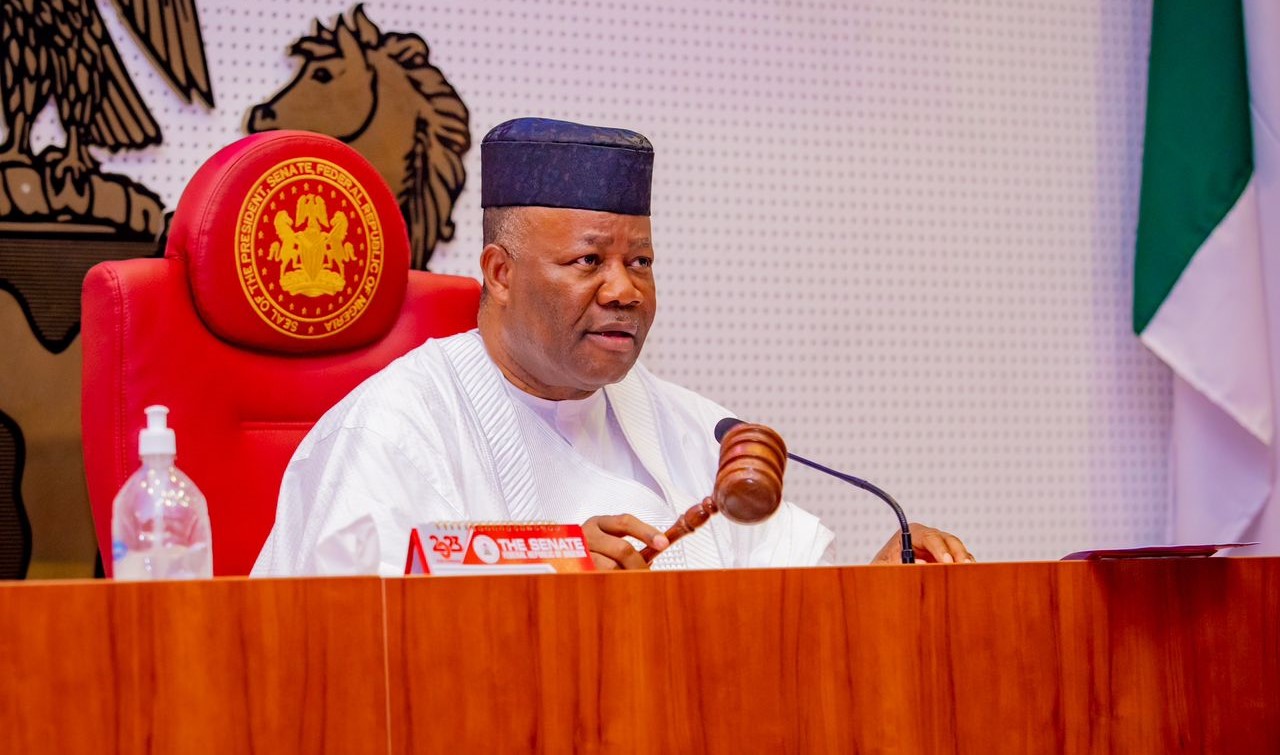
FILE: Akpabio

They made the call at the opening of the 15th National Security Seminar organised by the Alumni Association of the National Defence College in Abuja.

Represented by the Director of Policy and Strategy at the Office of the National Security Adviser, Yazid Gbemudu, the NSA said Nigeria’s territorial integrity and national stability were closely tied to the effectiveness of its border security framework.

He noted that while Nigeria’s extensive land and maritime borders facilitated trade, regional integration and socio-economic development, they also exposed the country to threats including terrorism, arms trafficking, smuggling, human trafficking, irregular migration and other forms of transnational organised crime.

According to him, weak border governance creates vulnerabilities that can be exploited by criminal and terrorist networks, thereby undermining national security and development efforts.

“A major pillar of Nigeria’s contemporary border security framework is the National Border Management Strategy, which promotes an integrated border management approach.

“The strategy seeks to enhance intelligence collaboration, strengthen border infrastructure, improve surveillance capabilities and modernise border management processes,” he said.

Ribadu said the deployment of Border Management Information Systems and other technological solutions at key entry and exit points had improved data collection, traveller screening and migration monitoring.

“These initiatives demonstrate Nigeria’s commitment to aligning its border management practices with international standards,” he added.
See also  Senate panel orders probe after inspecting burnt Lagos airport terminal

The NSA stressed the need for the full implementation of an integrated border management system to improve coordination among security, intelligence and law enforcement agencies.

“Effective intelligence sharing, joint operations and harmonised border procedures are essential for addressing contemporary security threats,” he said.

He also advocated increased investment in technology-driven border security solutions.

“Expanding surveillance systems across land, maritime and coastal borders will significantly improve monitoring capabilities and reduce illegal cross-border activities.

“Modern challenges require modern solutions, including biometric identification systems, advanced border monitoring technologies and data-driven security frameworks,” Ribadu stated.

The NSA further emphasised the importance of regional and bilateral cooperation, noting that many of the security challenges confronting Nigeria’s borders were transnational in nature and required coordinated responses among neighbouring countries.

He also called for greater investment in border communities through sustainable development, improved infrastructure and economic opportunities to reduce their vulnerability to criminal exploitation.

“Strengthening Nigeria’s border security architecture is fundamental to ensuring national stability, protecting territorial integrity and promoting socio-economic development,” he said.

Ribadu, however, acknowledged challenges such as porous borders, inadequate infrastructure, limited technological capabilities and gaps in inter-agency coordination, saying they required urgent attention.

“Border security is a shared responsibility that requires the collective efforts of security agencies, government institutions, border communities and international partners,” he added.

Speaking at the event, Akpabio, who was represented by the Chairman of the Senate Committee on Defence, Ahmad Lawan, said Nigeria’s extensive land and maritime boundaries posed significant security challenges.

“As a country with extensive land and maritime boundaries, Nigeria faces significant challenges relating to border control, illegal migration, arms trafficking, smuggling and the infiltration of criminal and extremist elements.

See also  Lagos women plan nude protest over ancestral home destruction

“It is, therefore, imperative that Nigeria prioritises the strengthening of its border security architecture through improved surveillance, enhanced infrastructure, better inter-agency coordination, technological innovation and stronger regional cooperation,” he said.

Akpabio noted that many of the security threats confronting Nigeria had transnational dimensions, making coordinated responses essential.

He stressed that peace and security remained prerequisites for meaningful national development.

“There can be no meaningful development without peace and security. Porous and poorly managed borders can become vulnerabilities that undermine national security efforts and national stability,” he said.

The Senate President also advocated a whole-of-government and whole-of-society approach to addressing insecurity.

According to him, government institutions, security agencies, civil society organisations, the private sector, traditional institutions, the media and academia all have critical roles to play in safeguarding the country.

Earlier, the Acting President of AANDEC, Commodore Amatare Kpou (retd.), described the seminar as a key platform for promoting informed discourse on national security challenges and opportunities.

Kpou said the theme of the seminar, “Strengthening Nigeria’s Border Security Architecture for National Stability,” was timely, given the growing threats of irregular migration, smuggling, trafficking and other cross-border crimes.

He expressed confidence that the deliberations would generate useful recommendations for policymakers and contribute to efforts aimed at building a safer and more secure Nigeria.

Nigeria shares over 4,000 kilometres of land borders with neighbouring countries and an extensive coastline, making border security a critical component of national security.

Authorities have repeatedly identified porous borders as channels for terrorism, arms smuggling, human trafficking and other transnational crimes.

The Federal Government has in recent years intensified efforts to strengthen border management through technology, intelligence sharing and regional cooperation.

See also  DSS arrests Malami after release from Kuje prison

punch.ng

FOLLOW US ON:

FACEBOOK

TWITTER

PINTEREST

TIKTOK

YOUTUBE

LINKEDIN

INSTAGRAM

Continue Reading

Trending