Connect with us

Politics

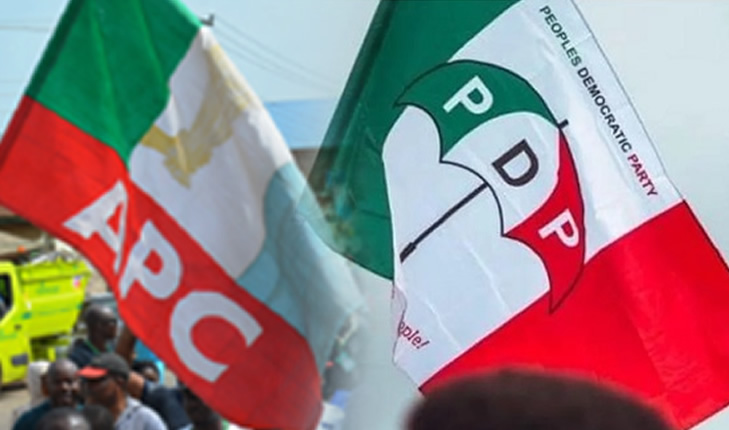
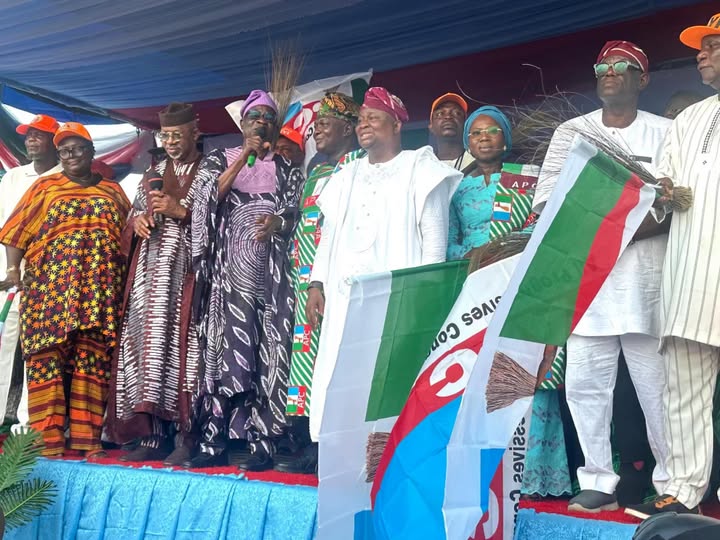
APC, PDP Abuja conventions of varied colours

Published

on

General Editor, Politics, Taiwo Adisa reviews the national conventions of the All Progressives Congress (APC) and the Peoples Democratic Party (PDP), held in Abuja, observing that the two achieved predetermined ends.

Before the November 15, 2025, national convention of the Peoples Democratic Party (PDP) held in Ibadan, Senate President Bukola Saraki acted like the Nostradamus of our political space when he dropped the advice that the party should rather put in place a caretaker committee. The party, however, shunned the advice, went ahead with the convention, and landed in further travails. But the group supported by the Minister of the Federal Capital (FCT), Nyesom Wike, went ahead to set up a caretaker Committee before the tenure of the former chairman, Ambassador Iliya Damagum, ended in December 2025.

That caretaker committee now appears to be the cornerstone of Wike’s control of the party, even as many other bigwigs have started joining the trail.

Within the All Progressives Congress (APC), the groundswell for the affirmation of Prof Nentawe Yilwatda-led National Working Committee was unmistakable ahead of the March 28 convention. There were hardly any issues as the ruling party spoke with one voice and tested its adoption of the consensus option, a move that would possibly be perfected during the forthcoming primaries for the various elective posts on offer for the 2027 polls. As expected, the APC convention sprang no surprises, and all went well. President Bola Tinubu, who spoke at the convention, spoke of unity among Nigerians as he chided the opposition parties for failing to put their houses in order.

Of all the conventions, the gathering of the leadership of the Peoples Democratic Party (PDP) at the Velodrome of the MKO Abiola National Stadium is the one that generated intense heat.

The night before

All eyes were on the Wike-led PDP ahead of the March 29-30 convention. The day before the convention, a report indicated that the faction of the party led by Tanimu Turaki (SAN) had headed to the Supreme Court to appeal the ruling of the Court of Appeal, which nullified the Ibadan convention. There was palpable tension in Abuja, as members of the PDP were largely unsure of the exact situation. There were concerns about whether INEC would monitor the convention, even as some members of the Turaki-led faction went to town with the indication that the convention would not hold because an appeal had been lodged with the Supreme Court. That, however, was doused in the evening house when Wike appeared on an inspection tour of the Velodrome location of the convention. He told the nation that all was well with the planned convention.

See also  ‘Igbo Man Must Be The Next President Of Nigeria For Fairness’ – Yul Edochie

The two remaining governors of the party were clearly against the convention. Governor Bala Mohammed of Bauchi and his Oyo State counterpart, Seyi Makinde, sanctioned the return to the Supreme Court, despite the push for reconciliation. One of the leaders who also spoke against the convention is presidential hopeful Gbenga Olawepo Hashim, who stated that a parallel convention might not be advisable.

The Saraki intervention

The former Senate President had attempted to play the peacemaker before the end of last year and was at a stage appointed to lead the search for peace by the Wike-led faction. As the convention drew closer, Saraki appeared on Channels Television, where he expressed his desire to attend the March 29 convention. It was gathered that he was also privy to several top-level meetings held in Abuja between Tuesday and Friday, centering on the need for a convention that could guarantee that the teeming members of the party are not disenfranchised in the 2027 polls.

As stated by a Saraki insider: “The view of the former senate president is primarily about the fate of the members as he advised that the feuding leaders of the PDP should take concrete steps to protect the interests of the members.”

He was also said to have insisted that the party must seek to put in place an NWC that would be recognised by the Independent National Electoral Commission (INEC) while he urged party leaders to utilise the opportunity of the convention to scale the hurdle of having a leadership that is recognised by INEC.

Wike’s victory lap and convention proper

Having established that there was no court injunction stopping the conduct of the convention, the Wike group moved fast enough, and the venue was the Velodrome of the MKO Abiola Stadium, Abuja. It was an irony that at the same venue in 2022, Wike had lost the presidential primaries to former Vice- President Atiku Abubakar, a development that had some spiralling effects on the PDP, leading it to the greatest haemorrhage it has ever witnessed since its formation in 1998.

So, for Wike, it was a triumphant entry for the FCT Minister at the Velodrome, and every observer saw the joy in Wike on the day. He danced around the complex and was very energetic in his steps. The fact that the convention could hold for him was a victory for his caucus. After all the preliminaries at the convention ground, including the nullification of earlier motions ratified by the previous National Executive Committee, which named Damagum as substantive national chairman, the convention went ahead to elect Hon. Abdulrahman Mohammed Takushara as the new chairman. Whether he is a factional chairman or he would assume the full powers as the chairman of the PDP would be known after the ruling of the Supreme Court.

See also  Supreme Court fixes April 22 for hearing of PDP appeals, see why

Questions over Saraki’s role

Several Nigerians have questioned whether Saraki was with Wike on this route or if he was working to prepare a platform for the 2027 presidential contest. He is a member of the highest decision-making organ of the party, being a former number three man in the country, so he is one of the elders. So what was Saraki driving at, roving around the Wike group and seeking an elusive peace with the other group? Sources close to the former governor of Kwara State said that he had seen the PDP as the veritable platform through which his supporters in the state could seek political power in the next election.

Said a source close to the former Senate helmsman said: “It is believed that he sees the PDP as the only platform that is capable of presenting a solid opposition to the ruling APC with its broad national outlook and structure. Remember, the PDP has never changed its name, and that makes it resonate with a lot of Nigerians.

“Then, Saraki’s supporters back in Kwara have affirmed that they want all their aspirants to contest elections on the PDP platform as it is their sure bet for regaining power in the state. A meeting of the party’s stakeholders in Ilorin last Wednesday agreed that its delegates from the state should attend the Abuja convention and that if they observe that INEC was present and other necessary recognition to validate the activities and resolutions from the convention are present, they will hold another meeting to finally decide on their political future.

“Saraki is of the view that the popularity of the PDP in Kwara State is unmistakable and that his supporters prefer the platform to mobilise the grassroots. Since all politics is local, the former Senate President is determined to listen to his supporters and pursue plans at the national level that will give maximum advantage to his supporters back home. Thus, the survival of PDP and its ability to field candidates in the 2027 polls is important to Saraki.”

It was also learnt that the former Senate president was calculating that the PDP was better placed to benefit from the possible implosion of the ruling party, which he said has become so big that its fall could be imminent. He believes many of the defectors to the APC and others who have gone to displace or put at a disadvantage will either return to the PDP or work for the PDP. He also told his supporters that a prominent gubernatorial aspirant who previously left the PDP for APC in Nasarawa State, David Ombugadu, has returned to the PDP and that many others are willing to return if they fail in the primaries.

See also  92-year-old Paul Biya re-elected as Cameroon's President after 43 years in power

To his joy, the convention was attended by INEC, and a stage could be set for a huge happening within the former ruling party, as the Wike group has been offered the legal right to run the party. Only a Supreme Court’s reversal, as hoped by Tanimu Turaki’s faction, could change Wike’s Abuja dance steps.

What next for PDP?

The former ruling party appears to have boxed itself into Wike’s corner for a long time, when the former Rivers State governor was left to cater for the soul of the party. The fact that many of the party’s governors refused to attend to its welfare strengthened the former Rivers man, and today, maybe he is reaping the fruits of his tenacity in funding the party over the years. However, a thick cloud still hangs in the air, and only the Supreme Court validation would clear the fog. As things stand, the Turaki faction may have to find avenues to fix its ambitious members in a platform that could enable them to contest elections, if words are not coming in early enough from the Supreme Court. As stated by a source, the task of reconciliation should be the duty of the Wike-led team, now that a convention recognised by INEC has been held. “The new NWC must move to withdraw all cases in courts and encourage the other faction to do the same,” the source said, adding that leaders like Saraki must continue to ring the bell of unity and peace. Incidentally, Gbenga Hashim also stated during the week that reconciliation is still possible even after the convention. Hopefully, elders like Sule Lamido, Bukola Saraki, Senator Abba Moro, and Chief Dan Orbi, among others, would serve the party with their wealth of experience to find a lasting peace under the umbrella.

tribuneonline.ng

FOLLOW US ON:

FACEBOOK

TWITTER

PINTEREST

TIKTOK

YOUTUBE

LINKEDIN

Continue Reading
Click to comment

Leave a Reply

Your email address will not be published. Required fields are marked *

Politics

Picking Atiku as vice president greatest mistake of my life – Obasanjo

Published

on

Former President Olusegun Obasanjo has described his decision to choose Alhaji Atiku Abubakar as his running mate in the 1999 presidential election as the biggest mistake of his life. Politics

Obasanjo made the remark on Friday, July 31, during a fireside chat with veteran musician and activist Charly Boy in Lagos. The event marked the unveiling of Charly Boy’s foundation and his memoir, 999: A Memoir in Tribute to Late Justice Chukwudifu Oputa.

Reflecting on his time in office, Obasanjo said that, with the benefit of hindsight, he would not have selected Atiku as vice president. “I would say the greatest mistake I made was picking Atiku Abubakar as my vice president in 1999,” he said.

The former president added that he remained grateful that Atiku’s actions did not derail his administration or prevent him from achieving his objectives while in office. “There is no bitterness in me over what happened,” Obasanjo said. “Despite everything, I was able to achieve what I set out to achieve while in power.”

Obasanjo also addressed the long-standing debate surrounding his ancestry, stating that his parents were from Abeokuta, the Ogun State capital. “I still know our family house there,” he said.

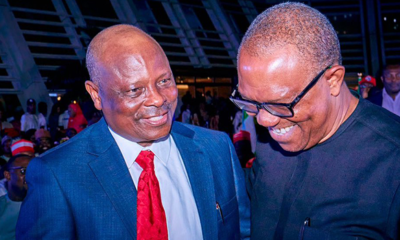
The event attracted several prominent personalities, including former Commonwealth Secretary-General Chief Emeka Anyaoku; National Democratic Congress (NDC) presidential candidate Peter Obi; business mogul Leo Stan Ekeh, who donated ₦20 million each on behalf of Obasanjo and Anyaoku; book reviewer Dr Austin Tam-George; veteran broadcaster Bisi Olatilo; and other dignitaries.

Obasanjo and Atiku were elected on the platform of the Peoples Democratic Party (PDP) and served as president and vice president from 1999 to 2007. Their relationship later deteriorated during their second term in office following political disagreements.


Continue Reading

Politics

Obasanjo bombs Atiku: You’re my biggest mistake

Published

on

Former President Olusegun Obasanjo on Friday described his decision to pick former Vice President Atiku Abubakar as his running mate in the 1999 presidential election as the biggest mistake of his presidency.

Obasanjo made the remark in Lagos during a fireside conversation with veteran entertainer and activist Charles Oputa, popularly known as Charly Boy, at the public presentation of Charly Boy’s foundation and memoir, 999: A Memoir in Tribute to Late Justice Chukwudifu Oputa.

The former President, who served alongside Atiku between 1999 and 2007, said although every leader makes mistakes in office, his choice of vice president remained the one decision he regretted most, saying he would never have chosen him had he known then what he later discovered about his former deputy.

A video of the event, later published by iWitnessLive TV on YouTube, captured Obasanjo reflecting on his years in office after Charly Boy asked him to identify the greatest mistake he made as president.

“What I have found in my own life is that mistakes that could have been fatal, God had taken care of them for me,” he stated.

Pressed to identify one specific mistake, the former President responded, “The man I picked as my running mate, my number two. If I had known him as I came to know him later, I would not have picked him.”

When Charly Boy sought clarification on whether he was referring to Atiku, Obasanjo replied, “My vice president. I don’t know what name you want to give him, but my vice president, I mean that.”

See also  PHOTOS: Mammoth crowd as supporters storm Kwankwaso’s Kano residence

He maintained that with the benefit of hindsight, he would have made a different choice.

“Of course, what I know about him later… I would not have picked him. Thank God that God did not allow his actions and reactions to overwhelm me, divert my focus from Nigeria or harm Nigeria,” he said.

The former President, however, insisted he harboured no personal resentment against Atiku despite their turbulent political relationship.

“There’s no bitterness because he did what he believed he should do, and God did what God had to do, which enabled me to achieve what I was able to achieve,” he added.

Friday’s remarks represent one of the strongest personal assessments the former President has made publicly about his decision to select Atiku as vice president, reviving a political rivalry that has shaped the country’s democratic landscape for more than two decades.

Obasanjo and Atiku emerged as the first democratically elected President and Vice President after the end of military rule in 1999, winning the election on the platform of the Peoples Democratic Party.

For much of their first term, the administration was widely regarded as a formidable political partnership, with Atiku playing a prominent role in the National Economic Council, the National Council on Privatisation and several economic reform initiatives.

However, relations between the two leaders deteriorated sharply during Obasanjo’s second term in office.

The crisis intensified after Atiku opposed attempts by allies of the former President to amend the Constitution to allow a third presidential term for Obasanjo.

The failure of the controversial constitutional amendment in 2006 widened the gulf between both men and triggered one of the most bitter power struggles in Nigeria’s Fourth Republic.

See also  ‘Igbo Man Must Be The Next President Of Nigeria For Fairness’ – Yul Edochie

The feud escalated into legal battles over the powers of the vice president after Obasanjo declared Atiku’s office vacant following his defection from the PDP to the then Action Congress ahead of the 2007 general election.

The Supreme Court eventually ruled that the President lacked constitutional powers to remove an elected vice president, allowing Atiku to complete his tenure.

Since leaving office, both men have repeatedly traded accusations over corruption, abuse of office and political betrayal.

In his memoir, My Watch, published in 2014, Obasanjo accused Atiku of corruption, disloyalty and placing personal ambition above national interest.

Atiku dismissed the allegations, accusing his former principal of attempting to rewrite history and portraying himself as the victim of political persecution during the closing years of the Obasanjo administration.

Although the two politicians briefly reconciled ahead of the 2019 presidential election when Obasanjo endorsed Atiku’s bid against President Muhammadu Buhari, the rapprochement proved short-lived, with both men subsequently returning to separate political paths.

Obasanjo has since remained one of Atiku’s most vocal critics, repeatedly urging Nigerians to prioritise competence, integrity and national interest in the choice of future leaders.

punch.ng

FOLLOW US ON:

FACEBOOK

TWITTER

PINTEREST

TIKTOK

YOUTUBE

LINKEDIN

Continue Reading

Politics

Fubara’s emergence as Rivers governor contentious, says Tonye Cole

Published

on

Former All Progressives Congress governorship candidate in Rivers State, Tonye Cole, has said Governor Siminalayi Fubara’s emergence was controversial from the outset.

Cole urged political actors to use the current situation to chart a new course for governance in the state.

He stated this on Friday during an appearance on Channels Television’s Sunrise Daily.

He commented on Fubara’s reconciliation with the Minister of the Federal Capital Territory, Nyesom Wike, and the political developments in Rivers State.

The APC chieftain said he believed Fubara must have consulted with his associates before deciding to reconcile with Wike in order to complete his tenure without further political distractions.

He stated, “My assumption is that the governor would have gone with his own close allies, discussed with them, and said that this is the best way, that he has to move forward for the next six months or thereabouts of his administration. I would assume that’s what he did.

“But I am not in his chamber, so I wouldn’t know. But that’s what I would assume he would do.”

Cole said that having chosen to remain in office after the political crisis, the governor now has a responsibility to focus on governance rather than prolonging the conflict.

“But the battle that was fought? Now, what do you do? Do you walk away? If he was going to walk away then, he should not have come back as governor.

“But having taken the responsibility to come and finish his term, then he has to finish it in the way that allows him to govern. He can’t go back into fighting.”

See also  2027: I am under serious pressure to join ADC – Tunde Bakare

He argued that Fubara’s path to office had been disputed from the beginning, adding that the prolonged face-off between the governor and his predecessor had negatively affected the state.

He said, “First of all, the method with which he came into power in the first instance was contentious. Throughout the period when he was there, the contention between himself and his predecessor had a lot of problems for River State.

“So that could not have been the wishes of the people. People looked for something different; they didn’t get it.”

Cole, however, expressed hope that the current political climate presents an opportunity for Rivers State to embrace a new style of leadership and a more transparent electoral process.

“Now we have an opportunity, and I come back to this – we have an opportunity in Rivers State, and I’m praying this time around that it will work.

“We have an opportunity in Rivers State to set a different type of governance, a different type of process in electing those who represent us in power. My prayer is that we do it right,” he said.

Fubara and Wike have been locked in a prolonged political feud since shortly after the governor assumed office in May 2023.

The crisis split the Rivers State House of Assembly, disrupted governance and led to a series of legal and political battles over control of the state’s political structure.

In March 2025, President Bola Tinubu declared a state of emergency in Rivers State, suspending Governor Fubara, his deputy and members of the House of Assembly for six months, while appointing a sole administrator to oversee the state.

See also  Oshiomhole dismisses Peter Obi’s threat ahead of 2027, says public anger drove 2023 votes

The emergency rule was lifted after the suspension elapsed, with Fubara returning to office following a reconciliation brokered by the President between him and Wike.

Since his return, the governor has resumed official duties and pledged to work with all stakeholders to restore stability and focus on governance, although political observers say tensions within the state’s political class remain.

punch.ng

FOLLOW US ON:

FACEBOOK

TWITTER

PINTEREST

TIKTOK

YOUTUBE

LINKEDIN

Continue Reading

Trending