Connect with us

Business

Oshiomhole seeks ban on MTN, DSTV, read why

Published

on

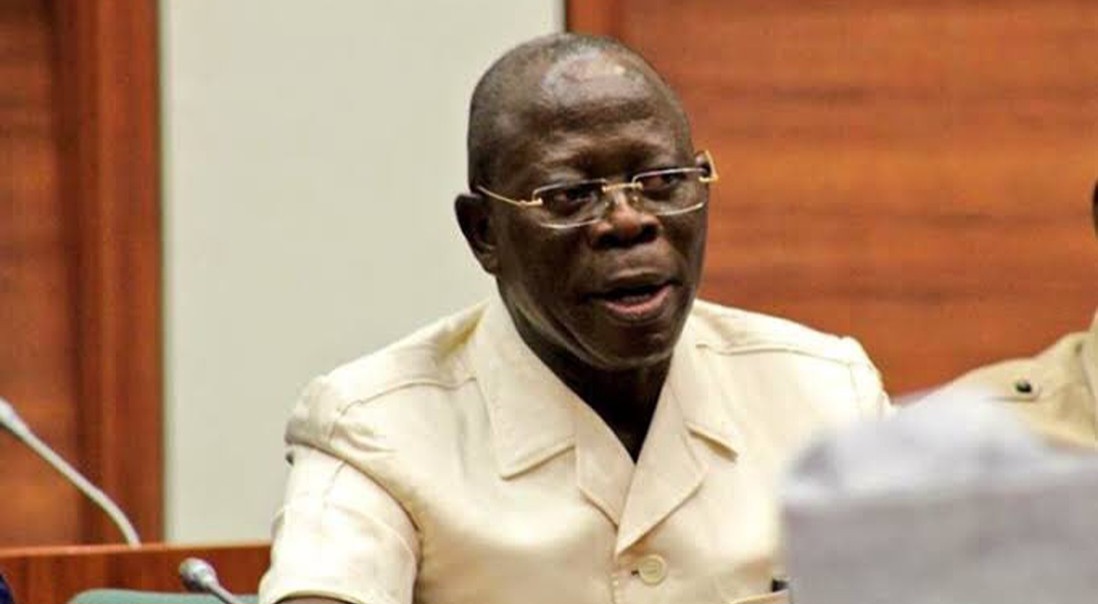
The senator representing Edo North, Adams Oshiomhole, on Tuesday called for the revocation of licences of South African companies operating in Nigeria, including MTN and MultiChoice, owners of DSTV, following renewed xenophobic attacks against Nigerians in South Africa.

The call came as the National Assembly condemned the latest wave of attacks, urging the Federal Government to take immediate diplomatic and protective measures to safeguard Nigerian citizens abroad.

Speaking during plenary, Oshiomhole said Nigeria must respond firmly, invoking the principle of reciprocity in international relations.

He said, “I don’t want this Senate to be shedding tears, to sympathise with those who have died. We didn’t come here to share tears.

“If you hit me, I’ll hit you. I think it is appropriate in diplomacy. It’s an economic struggle.”

The former Edo State governor proposed that Nigeria should nationalise MTN and withdraw its operating licence, arguing that the company repatriates significant revenue while Nigerians face hostility in South Africa.

“This Senate should adopt a position that MTN, a South African company that is cutting away millions of dollars from Nigeria every day, should have Nigeria nationalise it and withdraw its licence,” he said.

According to him, such action would not only serve as a deterrent but also create opportunities for indigenous firms, amid what he described as economic and social targeting of Nigerians abroad.

He extended the call to MultiChoice, urging the Federal Government to revoke DSTV’s licence over alleged exploitative practices.

“I call on the Federal Government to revoke DSTV, which is also a South African company that is cutting away millions of dollars,” he said.

See also  Naira strengthens to 1,514/$, nears five-month high

Oshiomhole linked the recurring tensions to domestic political dynamics in South Africa, noting that anti-immigrant rhetoric had become a feature of its politics and was shaping public attitudes toward foreign nationals, including Nigerians.

“When we hit back, the president of South Africa will go on his knees to recognise that Nigerians cannot be intimidated,” he said.

The senator made the remarks while contributing to a motion sponsored by Osita Izunaso, which was read on the floor by Aniekan Bassey under Senate rules on matters of urgent public importance.

Titled “A call for urgent national diplomatic and humanitarian action to defend the dignity, safety and honour of Nigerian citizens,” the motion highlighted growing concerns over the safety of Nigerians in South Africa.

Also speaking, Senator Victor Umeh described the situation as alarming, warning that Nigerians were living in fear.

“It is worrisome. They are hiding for their lives. They can’t move freely. This is a situation where people are paying good with evil,” he said, referencing Nigeria’s historical support for the anti-apartheid struggle.

Umeh called on the African Union to intervene and impose sanctions, warning that Nigeria could no longer tolerate attacks on its citizens.

“The AU, of which South Africa is a member, should rise now and impose necessary sanctions,” he said, adding that “we cannot allow this to continue.”

Oshiomhole, however, doubled down on calls for economic retaliation, arguing that Nigeria must move beyond rhetoric.

“I don’t want this Senate to be shedding tears to sympathise with those who have died. We didn’t come here to shed tears. I am not going to shed tears. If you hit me, I hit you. I think it is appropriate in diplomacy. It is an economic struggle,” Oshiomhole said.

See also  Elon Musk Reacts as Nigeria Makes Top 10 List of Countries Contributing to Global GDP

He further argued that Nigerians should take advantage of opportunities in the local economy, currently dominated by foreign firms.

Senator Abdul Ningi warned South Africans over recent attacks on Nigerians, threatening that the country would take the fight to their territory.

“If a crime has been committed under the South African law, they have the right to bring any such person to justice, but to kill our people as if we are helpless, we will not allow that.

“If these things continue, we have alternatives, we have options, and therefore, these words should be sent across South Africa. We know where South Africans are, not only in Nigeria but all over Africa, and we can take this fight to their territory,” he said.

Speaking, the Senate President, Godswill Akpabio, decried the attack, adding that the National Assembly would send a joint team to meet with the South-African parliament on the matter.

“This is just not acceptable, this is barbaric, this is cruel, this is unheard of, this is strange behaviour, and we’re not seeing action from the government of South Africa. These are aspects that annoy me,” Akpabio said.

The development underscores mounting pressure on the Federal Government to adopt a tougher stance, as recurring xenophobic violence in South Africa continues to strain diplomatic relations and provoke calls for both economic countermeasures and stronger protections for Nigerians abroad.

Continue Reading
Click to comment

Leave a Reply

Your email address will not be published. Required fields are marked *

Business

FG tells marketers to reflect global oil price drop in petrol prices

Published

on

Minister of State for Petroleum Resources, Sen. Heineken Lokpobiri, has directed petroleum marketers to immediately reflect the recent decline in global oil prices by reducing the pump prices of Premium Motor Spirit (PMS) and other petroleum products.

Lokpobiri gave the directive at the 2026 Nigerian Midstream and Downstream Petroleum Regulatory Authority (NMDPRA) General Counsel and Legal Advisers Forum on Monday in Abuja.

The forum is themed “Beyond Compliance Certainty and Investment Confidence in Nigeria’s Petroleum Sector.”

Lokpobiri said that with the de-escalation of tensions between Iran and the United States, there was an expectation that the prices of PMS and other petroleum products would be adjusted downward accordingly.

He expressed concern that the anticipated reduction had yet to be reflected at the pumps, stressing that while market forces under the deregulated regime would ultimately restore price equilibrium, marketers should not exploit the situation to make excessive profits.

The minister said the regulator had a statutory responsibility to ensure that deregulation did not become an avenue for profiteering, adding that this must be carried out in line with the provisions of the Petroleum Industry Act (PIA 2021).

“For too long, the dominant question in our regulatory conversations has been: are operators complying? That question matters. It will always matter. But it is no longer sufficient.

“The more consequential question today is this: are our regulatory authorities doing their job? Is it clear, consistent and predictable enough to give investors the confidence they need to commit capital, not just for one cycle, but for the long term?

See also  Oil prices fall as Trump eyes Venezuela’s $2bn crude

“Compliance is the foundation. Regulatory certainty is the ceiling we must now be building toward,” he said.

Lokpobiri, while urging marketers to comply with the principles of fair pricing to ensure that consumers benefit from the prevailing market realities, urged regulators to move beyond compliance by promoting regulatory certainty to attracting long-term investments.

“The sector is now fully deregulated, a bold reform that President Bola Tinubu had the courage to implement. That decision paved way for the operationalisation of the Dangote Refinery and other refinery projects currently underway.

“It also ensured that artificial scarcity has become a thing of the past.

“You can attest to the fact that since 2023 there has been availability of products in country even with the recent challenges posed by the US-Israeli /Iranian conflict.

“Beyond allowing prices to be determined by market forces, the question is: what is the regulator doing to ensure that consumers receive the correct quantity of product?

“When someone pays for 10 litres of PMS, they should receive exactly 10 litres, not less,” he warned.

Lokpobiri said while compliance with regulations remained fundamental, investors were increasingly interested in jurisdictions with clear, consistent and predictable regulatory frameworks.

He described general counsel as strategic partners whose responsibilities extend beyond interpreting laws to shaping investment decisions, improving regulatory design and supporting national development.

According to him, legal advisers should provide constructive feedback whenever regulations or guidelines create uncertainty that could discourage investment.

He said Nigeria’s petroleum sector was entering a new phase characterised by expanding domestic refining capacity, increased private sector participation and emerging opportunities across the midstream and downstream segments.

See also  CCB quizzes OSOPADEC leadership over alleged N463m misappropriation

According to him, attracting investments will require policy consistency, transparent regulation, efficient dispute resolution and strong collaboration among government, regulators, industry operators and legal practitioners.

He expressed confidence that the recommendations from the forum would contribute to improving governance, regulatory certainty and investment confidence in Nigeria’s petroleum sector. (NAN)

punch.ng

FOLLOW US ON:

FACEBOOK

TWITTER

PINTEREST

TIKTOK

YOUTUBE

LINKEDIN

Continue Reading

Business

Olodo uprising: Tinubu aide faults critics of First Lady’s Akara, Kuli kuli comment

Published

on

The Special Assistant to President Bola Tinubu on Social Media, Dada Olusegun, has defended First Lady Oluremi Tinubu’s recent empowerment of micro-traders, saying criticisms of the initiative are driven by ignorance of her record and the role of Nigeria’s informal economy.

In a statement shared on Monday, Olusegun described the backlash over the First Lady’s focus on traders such as akara and kulikuli sellers as a “performative circus of selective amnesia.”

He argued that critics had ignored the numerous interventions carried out by the Renewed Hope Initiative across healthcare, women’s empowerment, support for military widows and persons living with disabilities.

The First Lady, Senator Oluremi Tinubu
The First Lady of Nigeria, Senator Oluremi Tinubu

According to him, the First Lady’s interventions extend beyond petty traders, citing her donation of ₦1bn to the National Cancer Fund for cervical cancer screening and another ₦1bn for tuberculosis diagnostic equipment in Abuja in 2025.

He also referenced the disbursement of ₦250,000 each to 1,709 widows and orphans of fallen military personnel in 2023, as well as ₦200,000 business grants to persons living with disabilities across the 36 states and the Federal Capital Territory.

Olusegun further highlighted the Renewed Hope Initiative’s partnership with the Tony Elumelu Foundation, which targeted 18,500 women nationwide with ₦50,000 grants and the distribution of equipment, including industrial grinding machines, freezers and generators.

He further criticised what he described as an “Olodo uprising” on social media, accusing critics of reacting to trends without researching the facts.

“This entire controversy perfectly mirrors what is now happening with the broader ‘Olodo uprising” across our social platforms. We live in an era where people jump on trending hashtags and soundbites without dedicating a single minute to researching context. Memes are manufactured in seconds; accurate history takes time to read.

See also  First Abu Dhabi Bank to open Nigerian office in sub-Saharan push

“When the critics are done making their superficial memes, writing cynical captions, and circulating ignorant narratives, the reality on the ground will remain unchanged. They would be better off advising their constituents to find credible means to key into these ongoing government initiatives,” he stated.

He maintained that empowering small-scale traders should not be viewed as “weaponising poverty.”

“According to various economic metrics, the informal sector contributes over 50 per cent of Nigeria’s GDP and accounts for over 80 per cent of employment. The akara fryer, the kulikuli processor, and the petty trader are not just marginal actors; they are the literal shock absorbers of our micro-economy.

“When you give a micro-grant or operational tools to an akara seller, you are not validating poverty; you are reducing immediate operational capital friction, securing food chains at the grassroots, and expanding household income. Mocking these initiatives as ‘petty’ shows a deep-seated contempt for the actual working class of Nigeria,” he said.

Olusegun also defended the political value of grassroots empowerment, saying such interventions create trust among beneficiaries.

He cited the TraderMoni and MarketMoni programmes introduced during former President Muhammadu Buhari’s administration under then Vice President Yemi Osinbajo as examples of initiatives that directly impacted market traders.

“The opposition often wonders why the poorest segments of the population continually familiarise themselves with the All Progressives Congress during elections. The answer is simple: the party meets them at their point of immediate need,” he said.

Olusegun added that Tinubu’s record as former First Lady of Lagos State, a three-term senator and now First Lady of the Federation showed a consistent commitment to structured empowerment programmes.

See also  Oil prices fall as Trump eyes Venezuela’s $2bn crude

“She will not be distracted by digital static from doing what she has mastered over decades: empowering the poorest among us, one structured intervention at a time,” he said.

punch.ng

FOLLOW US ON:

FACEBOOK

TWITTER

PINTEREST

TIKTOK

YOUTUBE

LINKEDIN

Continue Reading

Business

Dangote refinery imports first UAE crude cargoes

Published

on

The Dangote Refinery has purchased two cargoes of crude oil from the United Arab Emirates, marking its first-ever procurement of Middle Eastern crude as it expands its feedstock sources amid persistent domestic supply constraints.

According to a report by S&P Global Commodity Insights, the two cargoes will be the first sourced by the 700,000-barrels-per-day refinery from any Middle Eastern supplier, signalling a shift from its traditional reliance on Nigerian, African, and United States crude grades.

The report said the purchases followed the resumption of oil exports from the Middle East after the United States and Iran reached an interim peace agreement that restored confidence in shipping through the Strait of Hormuz.

The refinery, designed primarily to process Nigeria’s light sweet crude, has increasingly diversified its crude slate as operations ramp up. S&P Global reported that an agreement between the refinery and the Nigerian National Petroleum Company had guaranteed the supply of between 13 and 15 cargoes of Nigerian crude monthly in naira, helping the refinery reduce its foreign exchange exposure.

However, the arrangement has faced challenges due to inadequate crude availability and operational issues at export terminals. According to the report, Dangote Refinery Chief Executive Officer David Bird had previously disclosed that these constraints had compelled the company to seek additional crude sources outside Nigeria.

The report added that the refinery’s expansion plans would further increase its crude requirements. Dangote plans to double the refinery’s processing capacity to 1.4 million barrels per day by the end of 2028, a level that would enable it to process about 80 per cent of Nigeria’s recent crude oil production in a single day.

See also  Oil prices fall as Trump eyes Venezuela’s $2bn crude

Speaking earlier this year, Bird said the refinery intended to increase the share of heavier crude grades in its feedstock mix. “We definitely want to heavy up the barrel,” Bird said in April.

He added, “We will be in the crude blending game. So you can easily imagine at 1.4 million b/d we could process 30 per cent Middle Eastern grades on each train.”

According to S&P Global, the refinery has been broadening the range of crude grades it processes as part of its ambition to operate as a fully merchant refinery. The report noted that in 2025, about 70 per cent of the refinery’s crude imports came from Nigeria, while 24 per cent originated from the United States.

punch.ng

FOLLOW US ON:

FACEBOOK

TWITTER

PINTEREST

TIKTOK

YOUTUBE

LINKEDIN

Continue Reading

Trending