Connect with us

Business

FirstHoldCo Seeks Shareholders Approval on N1 Trillion Capital Base in Bold Balance Sheet Fortification

Published

on

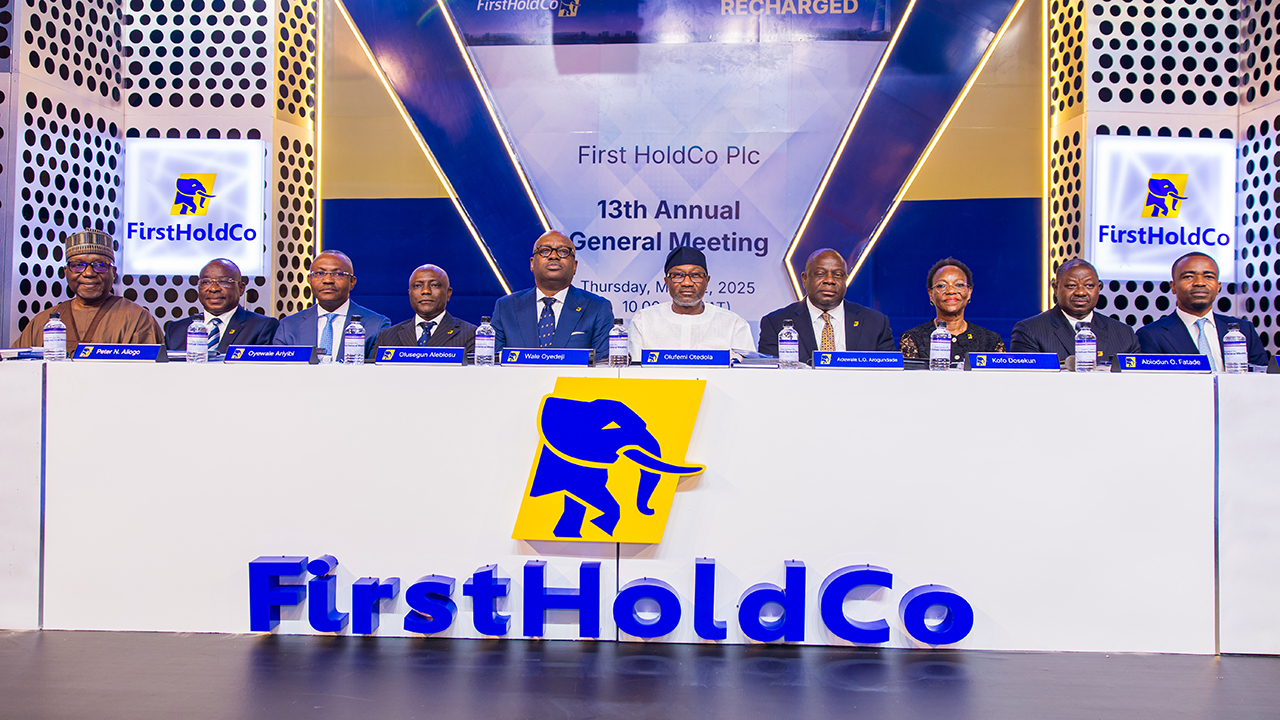
FirstHoldCo Plc, the parent entity of Nigeria’s oldest commercial lender (First Bank), is moving to double the regulatory capital ceiling for international banks, signaling a new phase of aggressive expansion and balance sheet fortification.

In a notice for its 14th Annual General Meeting (AGM) scheduled for May 29, 2026, the group proposed a special resolution to raise up to N253.099 billion in fresh capital, aiming to reach a N1 trillion paid-up capital base—comprising share capital and share premium.

“The capital raise transaction shall be implemented by one or more transactions, through the issuance of shares, by way of a public offering, private placement, rights issue, bonus issues, scrip dividend, or other equity instruments in the Nigerian or international capital markets, at price(s) to be determined by way of a book building process or any other valuation method or combination of methods, in such tranches, series or proportions and at such periods or dates, coupon or interest rates, within such maturity periods and upon such other terms and conditions as may be determined by the Board of Directors (the “Directors”), subject to obtaining the approvals of the relevant regulatory authorities,” FirstHoldCo said in the statement on the NGX.

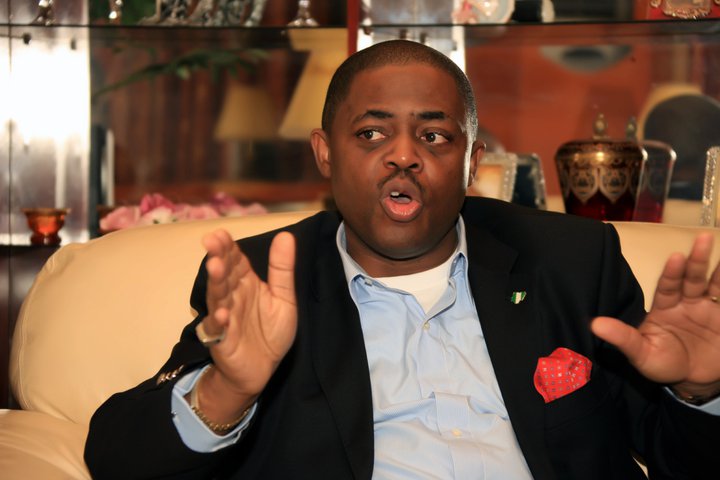
The move comes just months after its banking subsidiary, First Bank of Nigeria, successfully met the Central Bank of Nigeria’s (CBN) current N500 billion minimum threshold for international authorization. By targeting N1 trillion, FirstHoldCo is positioning itself to lead an industry-wide “up-tiering” that Chairman Femi Otedola argues is essential for institutions operating in an economy striving for a $1 trillion GDP.

Otedola’s N1 Trillion Vision

See also  Comedian Broda Shaggy hospitalised after alleged shooting

The proposed capital raise is more than a regulatory box-ticking exercise; it is a strategic statement of intent. Otedola has publicly called for the CBN to raise the minimum requirement for international banking licenses from N500 billion to at least N1 trillion. He argues that a modern Nigerian economy cannot rely on “weakly capitalized banks” and that stronger capital bases will drive better governance and prevent institutions from being “run like personal estates”.

FirstHoldCo has utilized a multi-pronged approach to shore up its equity, including a rights issue, private placements, and the divestment of its merchant banking subsidiary, FBNQuest. The group recently completed a N45 billion private placement in March 2026. The new N253 billion raise, once finalized, is expected to bridge the gap toward the N1 trillion target, effectively resetting the competitive benchmark for “FUGAZ” peers (Zenith, UBA, GTCO, and Access).

Profitability as a Capital Magnet

While the capital raise targets long-term stability, FirstHoldCo’s Q1 2026 performance provides the immediate fundamental justification for investor appetite. The group reported a 72% year-on-year surge in Profit Before Tax (PBT) to N321.1 billion, eclipsing the growth rates of its tier-1 rivals.

Crucially, FirstHoldCo has emerged as the industry leader in capital efficiency. Its Return on Equity (ROE) stood at 31.6% (annualised) for the quarter, the highest among the FUGAZ cohort, outperforming Zenith (24.9%) and GTCO (24.8%). This “phoenix-like” recovery follows a massive N826 billion legacy debt cleanup in late 2025, which has liberated the balance sheet to capture high-yield private sector credit opportunities.

Leadership and Governance Pivot

The strategic shift is being spearheaded by a revamped leadership team, with Wale Oyedeji serving as Group Managing Director of FirstHoldCo and Olusegun Alebiosu leading as the CEO of the flagship banking subsidiary, First Bank. Alebiosu, a former Chief Risk Officer, has focused heavily on asset recovery, clawing back N19 billion in delinquent loans in Q1 2026 alone—a 1,570% increase that has turned risk management into a significant revenue stream.

See also  Natasha resumes Senate plenary session today after six-month suspension

Under Otedola’s chairmanship, the group has also tightened internal prudential standards and appointed new boards for non-banking subsidiaries to enhance corporate governance.

punch.ng

FOLLOW US ON:

FACEBOOK

TWITTER

PINTEREST

TIKTOK

YOUTUBE

LINKEDIN

INSTAGRAM

Continue Reading
Click to comment

Leave a Reply

Your email address will not be published. Required fields are marked *

Business

Vehicle imports jump 67% in three months

Published

on

The Nigerian Ports Authority has stated that the total number of vehicles handled in Nigeria during the first quarter of 2026 rose to 58,870 units from 35,262 units recorded in the corresponding period of 2025, representing a 67 per cent increase.

The NPA disclosed this in its Q1 2026 Operational Performance Review obtained by The PUNCH on Sunday.

The authority explained that Nigeria’s maritime sector recorded strong operational growth in the first quarter of 2026, with Gross Registered Tonnage for ocean-going vessels rising by 19.5 per cent to 46.75 million, highlighting the increasing dominance of larger-capacity ships across the nation’s ports amid ongoing reforms aimed at positioning Nigeria as a regional trade hub under the African Continental Free Trade Area.

It added that the increase in vessel tonnage reflects improved cargo-carrying efficiency and growing confidence among international shipping lines in Nigerian ports. “Vehicle traffic also emerged as a major growth area, with total vehicle units handled rising sharply by 67 per cent to 58,870 units during the quarter, compared to 35,262 units in the same period last year,” the NPA said.

The NPA noted that the development reflects a strategic shift toward larger and more efficient vessels, driven partly by the operational impact of the Lekki Deep Seaport and expanding trade demand.

According to the authority, the strong performance comes at a time when the Federal Government is intensifying efforts to modernise Nigeria’s port infrastructure, improve cargo handling efficiency, and capture a larger share of regional cargo flows under AfCFTA.

See also  Big money, small impact: Governors face fire over N9tn FAAC windfall

The report stressed that total cargo throughput, excluding crude oil terminals, also recorded strong growth during the quarter, “increasing by 11.6 per cent year-on-year to 32.38 million metric tons from 29.02 million metric tons recorded in the corresponding period of 2025.”

The NPA attributed the growth to rising trade volumes, stronger import and export activities, improved port productivity, and sustained demand for port services. “One of the strongest performances during the period came from outward cargo traffic, which surged by 23.7 per cent to 14.13 million metric tons, reflecting stronger export competitiveness and deeper integration into regional and global supply chains,” the NPA added.

The authority highlighted that outward laden container traffic also recorded exceptional growth of 67.6 per cent, rising from 61,332 twenty-foot equivalent units in Q1 2025 to 102,803 TEUs in Q1 2026, a performance linked to improved export logistics and terminal efficiency.

The report further highlighted an 83.1 per cent increase in transhipment container activity, reinforcing Nigeria’s growing relevance within regional maritime trade and logistics networks.

According to the NPA, the Q1 performance demonstrates that the maritime sector is evolving into a more cargo-intensive and commercially dynamic ecosystem capable of supporting economic growth, trade facilitation, and regional connectivity.

The Managing Director of the NPA, Abubakar Dantsoho, said Nigeria’s ports must evolve beyond traditional limitations if the country hopes to compete effectively in a rapidly integrating African market. Speaking at an industry forum in Lagos, Dantsoho said efficiency, speed, innovation, and reliability would determine which countries dominate cargo flows in the new continental trade environment.

See also  Nigeria must cut dependence on debt – Wale Edun

“The time has come for a paradigm shift in the structure of Nigeria’s economy towards the full utilisation of our marine resources. Our port system, if properly harnessed, can serve as a major driver of economic growth,” he said.

In addition to physical infrastructure upgrades, the government is pursuing an aggressive digitalisation agenda through the deployment of the Port Community System and the National Single Window platform to streamline cargo clearance processes, reduce delays, and improve transparency.

The government has also expanded investments in rail integration, inland dry ports, barging operations, and export corridors to improve cargo evacuation and reduce congestion around port corridors.

punch.ng

FOLLOW US ON:
FACEBOOK

TWITTER

PINTEREST

TIKTOK

YOUTUBE

LINKEDIN

INSTAGRAM

Continue Reading

Business

States’ capital spending plunges 58% as 2027 politics intensifies

Published

on

The capital expenditure by 26 state governments plunged by N2.19tn within three months in the first quarter of 2026, raising concerns over slowing infrastructure development and worsening fiscal pressures as politics for next year’s elections intensifies.

An analysis of quarter-on-quarter financial reports published on the official websites of the states showed that total capital expenditure fell by N2.20tn, representing a 58.1 per cent decline, from N3.79tn recorded in the fourth quarter of 2025 to N1.59tn in the first quarter of 2026.

Similarly, a breakdown of state government expenditure between January and June 2025 showed that 31 states collectively spent N2.75tn, averaging N1.38tn on capital projects during the six-month period.

The sharp contraction comes amid growing political activities and early alignments ahead of the 2027 general elections, a period analysts say could increasingly shift government attention from long-term infrastructure investments to political calculations and recurrent spending.

The data were obtained by our correspondent in Abuja on Sunday from quarterly budget implementation and financial performance reports uploaded on the official websites of the states.

The figures gathered and analysed by our correspondent indicate a decline of N2.19tn, representing a 57.9 per cent drop within three months, highlighting a slowdown in infrastructure and development spending across many states.

The findings are against the backdrop of a PUNCH report that the external debt of 32 states and the Federal Capital Territory climbed to nearly $5.7bn in fresh loans in 2025, pushing subnational foreign debt sharply higher year-on-year despite increased inflows from Federation Account Allocation Committee allocations.

The data showed that only one state, Oyo, recorded a significant increase in capital expenditure during the period under review, while most states posted sharp declines in spending.

The PUNCH reports that state government capital expenditure is the money set aside for development projects and public infrastructure that will benefit residents over a long period.

It is meant for building and improving facilities such as roads, schools, hospitals, water projects, housing, electricity infrastructure, public transport systems, and other major projects that support economic growth and public welfare. The aim is to create assets that improve living conditions, attract investment, create jobs, and boost economic activities within the state.

An increase in capital expenditure means more investment in critical infrastructure aimed at improving the welfare of the people, while a reduction indicates slower infrastructure development and fewer completed projects.

Out of the 36 states, only 26 had uploaded their financial data as of the time of filing this report, while 10 states had yet to publish their first-quarter financial performance reports.

The states that published their financial data are Adamawa, Akwa Ibom, Bauchi, Bayelsa, Benue, Borno, Cross River, Ebonyi, Ekiti, Enugu, Gombe, Jigawa, Kaduna, Kano, Katsina, Kebbi, Kogi, Kwara, Lagos, Niger, Ondo, Oyo, Sokoto, Taraba, Yobe, and Zamfara.

The states whose data were unavailable are Abia, Anambra, Delta, Edo, Imo, Nasarawa, Ogun, Osun, Plateau, and Rivers.

Breakdown of figures

A breakdown of the figures showed that Lagos retained its position as the highest spending state on capital projects despite recording a decline. Lagos spent N340.76bn on capital projects in the first quarter of 2026, down from N535.46bn in the fourth quarter of 2025. This represents a decline of N194.70bn or 36.4 per cent.

See also  Terrorists kill Nigerian brigadier general – AFP report

However, Oyo emerged as the only major exception to the nationwide slowdown. The state increased its capital expenditure from N105.35bn in the fourth quarter of 2025 to N231.27bn in the first quarter of 2026. The increase of N125.93bn represents a 119.5 per cent rise, making Oyo the state with the highest growth rate during the period.

The sharp increase in Oyo’s spending coincided with the state’s borrowing profile, as the state also recorded the highest loan figure among the reporting states. Oyo borrowed N164.88bn in the first quarter of 2026.

Akwa Ibom recorded one of the biggest spending cuts among the states reviewed. The oil-rich state reduced its capital expenditure from N428.64bn in the fourth quarter of 2025 to N137.39bn in the first quarter of 2026. The drop of N291.26bn represents a 67.9 per cent decline.

Bayelsa also posted a steep decline. Its capital expenditure fell from N384.81bn in the fourth quarter of 2025 to N77.51bn in the first quarter of 2026. This translates to a decrease of N307.30bn or 79.9 per cent.

Enugu recorded one of the sharpest contractions in percentage terms. The state’s capital spending plunged from N365.69bn to N31.37bn. The decline of N334.33bn represents a massive 91.4 per cent reduction.

Kano also witnessed a decline in spending, though less severe compared to several other states. The state’s capital expenditure dropped from N141.29bn in the fourth quarter of 2025 to N121.96bn in the first quarter of 2026. The decline of N19.33bn represents a 13.7 per cent decrease.

Niger State reduced its capital expenditure from N116.05bn to N79.28bn. The drop of N36.77bn represents a decline of 31.7 per cent. The state, however, recorded borrowings of N39.28bn during the period.

Bauchi spent N85.39bn in the first quarter of 2026 compared to N94.45bn in the previous quarter. This represents a decline of N9.06bn or 9.6 per cent. The state also recorded borrowings of N56.57bn.

Jigawa’s capital expenditure dropped from N193.88bn to N60.62bn. The decline of N133.26bn represents a 68.7 per cent reduction.

Kaduna reduced its capital spending from N106.92bn to N39.51bn. The state recorded a decline of N67.41bn or 63.1 per cent.

Katsina’s capital expenditure fell from N227.80bn to N55.08bn. The drop of N172.73bn represents a 75.8 per cent decline.

Benue recorded capital expenditure of N25.42bn in the first quarter of 2026, down from N114.59bn in the fourth quarter of 2025. This represents a decline of N89.17bn or 77.8 per cent.

Cross River’s capital expenditure dropped from N114.32bn to N19.48bn. The reduction of N94.84bn represents an 83 per cent decline.

Ebonyi reduced its spending from N118.10bn to N31.77bn. The decline of N86.34bn represents a 73.1 per cent decrease.

Ekiti’s capital expenditure fell from N50.05bn to N16.92bn. This represents a drop of N33.12bn or 66.2 per cent.

See also  Reps to regulate crypto, POS operations

Gombe spent N36.19bn in the first quarter of 2026 against N68.06bn in the previous quarter. The state recorded a decline of N31.87bn or 46.8 per cent.

Kebbi reduced its capital spending from N55.87bn to N17.43bn. This represents a decline of N38.44bn or 68.8 per cent.

Kogi’s expenditure dropped from N48.40bn to N21.52bn. The decline of N26.88bn represents a 55.5 per cent reduction.

Kwara recorded capital expenditure of N13.68bn in the first quarter of 2026 compared to N61.65bn in the fourth quarter of 2025. The drop of N47.97bn represents a 77.8 per cent decline.

Ondo reduced capital spending from N52.49bn to N13.56bn. This represents a decline of N38.94bn or 74.2 per cent.

Sokoto’s capital expenditure fell from N59.31bn to N16.82bn. The decline of N42.49bn represents a 71.6 per cent reduction.

Taraba spent N16.91bn in the first quarter of 2026, compared to N26.77bn in the previous quarter. The state recorded a decline of N9.85bn or 36.8 per cent.

Yobe’s capital expenditure dropped from N76.74bn to N31.79bn. The decline of N44.95bn represents a 58.6 per cent decrease.

Zamfara reduced spending from N104.04bn to N28.99bn. The state recorded a decline of N75.05bn or 72.1 per cent.

Adamawa also posted a steep decline. The state’s capital expenditure dropped from N90.77bn in the fourth quarter of 2025 to N22.93bn in the first quarter of 2026. This represents a decline of N67.84bn or 74.7 per cent.

Borno’s spending declined from N46.89bn to N19.91bn. The drop of N26.98bn represents a 57.5 per cent reduction.

An analysis of the first quarter 2026 financial reports of 26 states showed that subnational governments borrowed a combined N361.98bn within three months despite a widespread decline in capital expenditure across the country.

Oyo recorded the highest borrowing figure at N164.88bn, accounting for nearly half of the total loans obtained by the reporting states during the period. Bauchi followed with N56.57bn, while Niger borrowed N39.28bn. Taraba secured fresh loans worth N23.4bn, while Ebonyi and Yobe borrowed N20bn each.

Katsina obtained N8.55bn in loans, Kaduna recorded borrowings of N8.06bn, while Gombe borrowed N7.61bn. Jigawa secured N6.27bn, Ekiti borrowed N3.01bn, while Borno obtained N2.85bn.

Kwara recorded loans worth N438.88m, Ondo borrowed N300m, while Kogi posted the lowest borrowing figure at N5.32m.

The figures showed that 13 of the 26 states that published their financial reports recorded fresh borrowings in the first quarter of 2026, highlighting the growing reliance on debt financing amid rising fiscal pressures and slowing capital spending.

Analysts speak

Analysts said the sharp drop in capital expenditure may reflect the typical slowdown that follows aggressive end-of-year spending by governments trying to implement annual budgets before year-end deadlines.

Economic experts also noted that the decline could be linked to rising debt obligations, revenue pressures, and adjustments following the implementation of fiscal reforms.

A Professor of Economics at Babcock University, Segun Ajibola, stated that the enduring problem of high governance expenses had persisted at the state level, with inadequate oversight and accountability resulting in minimal economic benefits for grassroots citizens.

The Director and Chief Economist at Proshare Nigeria LLC, Teslim Shitta-Bey, warned that the rising debt burden on Nigeria’s subnational governments could challenge their fiscal stability in the coming years. He stressed that most state governments, along with the Federal Government, had failed to effectively manage their balance sheets.

See also  FG reopens fuel imports, Dangote reels from FX losses due to US-Iran war

Speaking recently to The PUNCH, Shitta-Bey said, “The challenge here is that most of the governments, including the Federal Government, are unable to manage their balance sheets properly. While borrowing might seem like an easy way to run operations, it is not necessarily the right approach.”

According to Shitta-Bey, borrowing should not be the default solution for governments. “Governments could consider longer-term debt structures that resemble equity, which might actually be more beneficial in the long run,” he explained.

A macroeconomic analyst, Dayo Adenubi, also emphasised the need for states to take more targeted steps toward boosting internally generated revenue as they grapple with rising debt obligations and constrained federal transfers.

However, the Chief Executive Officer of the Centre for the Promotion of Private Enterprise, Muda Yusuf, posited that capital expenditure usually records slower spending in the early part of the year because of lengthy procurement and contracting procedures.

According to him, unlike recurrent expenditure, which covers regular expenses such as salaries, travels, and other day-to-day government operations, capital projects require more bureaucratic processes before funds can be disbursed.

Muda, speaking during a telephone interview on Sunday, said, “On capital expenditure, the process is usually longer. The contracting processes, procurement, and tendering take more time. It is not like recurrent expenditure, where spending happens every day through salaries, travels, and the like.

“For capital expenditure, there are usually more disbursements around the second and third quarter because by then they would have concluded most of the procurement processes, which are often very bureaucratic. It also involves huge sums of money, and payments are not made at once. So, for capital expenditure to gather momentum, it usually gets to the second or third quarter before you begin to see significant spending.”

The reduction in capital spending by many states could have implications for economic growth, job creation, and infrastructure development, especially at a time when subnational governments are expected to play a larger role in driving economic activities.

Strong spending

Despite the slowdown, some states maintained relatively strong spending levels. Lagos, Oyo, Akwa Ibom, Kano, and Bauchi emerged as the top five states in terms of capital expenditure in the first quarter of 2026.

The figures also showed that several states relied on borrowings to support spending amid declining revenues and rising fiscal pressures.

Financial analysts have repeatedly warned that increasing debt accumulation without corresponding revenue growth may worsen fiscal sustainability challenges for subnational governments.

However, state governments have argued that borrowings remain necessary to finance critical infrastructure projects and bridge funding gaps.

punch.ng

FOLLOW US ON:

FACEBOOK

TWITTER

PINTEREST

TIKTOK

YOUTUBE

LINKEDIN

INSTAGRAM

Continue Reading

Business

TUC urges subsidy for Dangote, modular refineries to lower fuel costs

Published

on

The Trade Union Congress (TUC) has proposed a “production subsidy” for the Dangote Refinery and other modular refineries as a way to reduce the rising cost of premium motor spirit (PMS), commonly known as petrol.

TUC President Festus Osifo made the proposal on Friday while speaking on Politics Today, a current affairs programme on Channels Television.

Osifo said that since the Federal Government has ruled out reintroducing petrol subsidies, alternative measures are needed to ease the burden of high fuel prices on Nigerians.

“So for us as a country, we are making a lot of money. In excess of what we budgeted. All right, so today we make at least $35 or so dollars per barrel beyond what we budgeted,” Osifo said on the programme.

He outlined the TUC’s proposal, focusing on redirecting excess oil revenue to support local refining.

Osifo queried, “So, what we proposed, knowing and understanding that they wouldn’t want to bring consumption subsidy, we were advocating for a production subsidy.

“Production subsidy, in that today we have modular refineries, right?

“So we were advocating that this extra $35, for example, that you are making per barrel, why don’t you take half of it, for example, and use it to subsidise the crude that you are giving to Dangote Refinery and the modular refineries so that they will be able to produce cheaper PMS?”

Petrol prices have surged significantly in recent weeks, rising from about ₦800 to around ₦1,300 depending on location, following the outbreak of the US/Israel-Iran War.

See also  Nigeria must cut dependence on debt – Wale Edun

Despite mounting pressure to reinstate fuel subsidies, which were removed when Bola Tinubu assumed office in May 2023, the Federal Government has maintained its stance against the policy.

On Tuesday, Nigeria’s Coordinating Minister of the Economy and Minister of Finance, Taiwo Oyedele, speaking in Paris at an event, said the Federal Government will not reintroduce subsidies or impose price controls, reaffirming its commitment to market-driven economic reforms.

“We will not bring back fuel subsidy because it creates distortions for the economy, and we won’t introduce price control because we believe in the market… the situation in Iran presents new opportunities for us as the world looks to diversify sources of energy and invest in new markets,” said Oyedele.

Osifo, however, urged the government to explore creative solutions to support citizens amid rising living costs.

But Osifo wants the government to “think out of the box and quickly do things to assist its citizens”.

Continue Reading

Trending