Connect with us

News

Insecurity: Nigeria bleeding, confused, minority reps lament

Published

on

The minority caucus of the House of Representatives on Wednesday delivered a scathing assessment of the state of the nation, accusing the government of President Bola Tinubu of failing to tackle worsening insecurity, deepening economic hardship and mounting threats to democratic institutions.

The opposition lawmakers also alleged that the administration was focusing on political calculations ahead of the 2027 general elections rather than addressing the pressing challenges facing Nigerians.

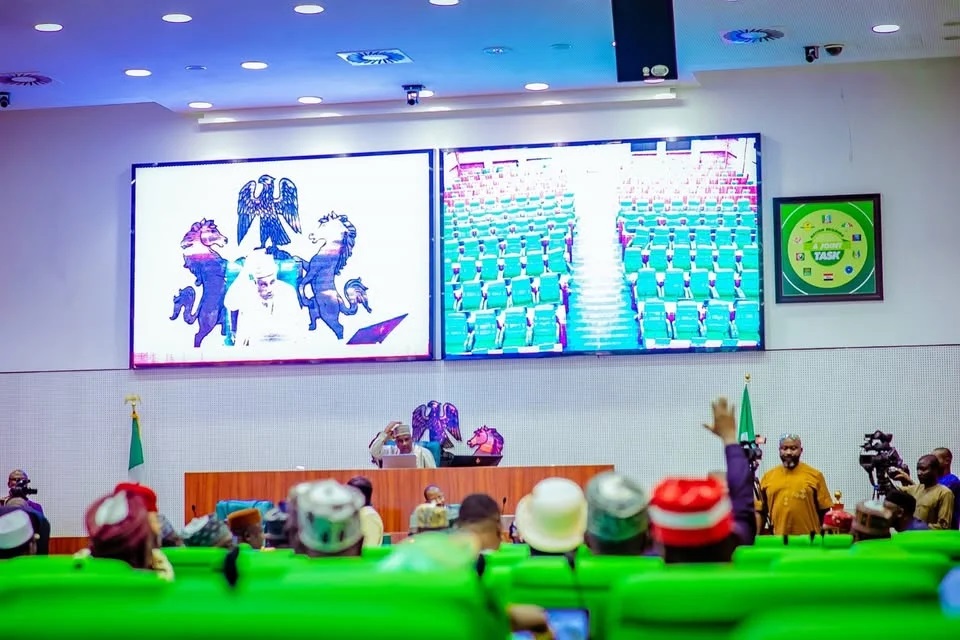
Addressing journalists at the National Assembly Complex in Abuja, Minority Leader of the House, Mr Fred Agbedi, said the country was facing one of its most difficult periods since the return to democratic rule in 1999, citing persistent insecurity, rising poverty and growing public frustration.

“Nigeria is bleeding, Nigeria is confused and Nigeria is being deliberately pushed to the brink by a government that has elevated 2027 electioneering above the lives and welfare of citizens,” Agbedi declared.

He said the caucus convened the press conference “with a heavy heart but with unshaken resolve to speak truth to power,” stressing that remaining silent amid the country’s challenges would amount to complicity.

The opposition lawmakers argued that three years into the Tinubu administration, Nigerians were yet to see significant improvements in security and economic conditions despite repeated assurances from government officials.

A major focus of the briefing was the recent death of retired Maj Gen Rabe Abubakar, who was reportedly abducted alongside his wife in Katsina State before dying in captivity.

The lawmakers described the incident as a tragic reflection of the deteriorating security situation across the country and called for a transparent investigation into the circumstances surrounding his death.

“That a General of the Nigerian Army, who once commanded troops and defended this nation, could be kidnapped alongside his wife and later declared dead under unclear circumstances is a grave indictment of a failed state. It is a national embarrassment,” Agbedi added.

The caucus noted that the killing came amid a wave of attacks by bandits, terrorists and criminal gangs across several parts of the country, including the North-West, North-Central and parts of the South-East.

See also  Kabiru Turaki assumes office as PDP Chairman as the party's crisis deepens

The lawmakers recalled that security personnel, traditional rulers and ordinary citizens had increasingly become targets of kidnappers and armed groups, despite sustained military operations.

“If a General is not safe within the borders of our nation, then who truly is?” Agbedi asked.

He lamented what he described as the vulnerability of community leaders and traditional rulers who have become frequent targets of criminal elements.

“Our security is in the mud. Yet, the political class is busy rehearsing new political dance steps, seemingly unbothered,” he added.

The caucus urged Tinubu, as Commander-in-Chief of the Armed Forces, to immediately present a comprehensive security strategy capable of addressing the multifaceted threats confronting the country.

“At a period in our nation’s long-drawn battle with these insurgents, victory was close by, especially with the presence of mercenaries in the frontlines. Today, no one is sure what the strategy, if any, is,” Agbedi stated.

They also demanded improved welfare for security personnel, enhanced intelligence gathering and a complete overhaul of the nation’s security architecture.

The lawmakers expressed concern over the continued captivity of schoolchildren and teachers abducted in Oyo state, describing the development as another example of the state’s inability to guarantee the safety of its citizens.

“As we speak, school children and their teachers abducted in Oyo State remain in captivity. Their crime? Going to school in Nigeria,” Agbedi said.

The caucus called for an immediate and coordinated rescue operation by security agencies, warning that prolonged captivity could expose the victims to grave dangers.

The incident, they argued, evoked painful memories of previous mass abductions of students across the country, which have continued to raise concerns about the safety of schools despite government efforts under the Safe Schools Initiative.

The minority caucus also raised concerns over what it described as troubling developments within the judiciary, particularly a Federal High Court judgment ordering the Independent National Electoral Commission to deregister five opposition political parties.

According to Agbedi, the ruling raises serious questions about the health of Nigeria’s democracy and could undermine political pluralism ahead of future elections.

“This judgment, coming only months to the country’s general elections and after a subsisting Appeal Court decision on the same matter, is not intended to serve justice. Instead, it appears to be a deliberate ploy to engender judicial chaos weaponised to destabilise the polity,” he said.

See also  NUPENG accuses Dangote of sponsoring division among tanker drivers

The Bayelsa lawmaker described the judgment as “rascality taken too far,” arguing that it set a dangerous precedent capable of weakening democratic participation and shrinking political space.

He questioned why submissions reportedly made by INEC, indicating that the affected parties had satisfied legal requirements through electoral victories in previous elections, were allegedly disregarded.

The caucus further alleged that opposition parties have increasingly faced institutional barriers, including delays in the registration of new political parties and attempts to frustrate emerging political coalitions.

“From external manipulations and executive meddlesomeness that kept old political structures polarised, to the attempt to truncate new alliances through institutional bottlenecks, such as the refusal to register new political parties, the whole goal has been to muscle all credible opposition out of the 2027 contest,” Agbedi alleged.

While welcoming the intervention of the Court of Appeal in halting implementation of the Federal High Court judgment, the lawmakers urged democratic stakeholders to remain vigilant.

Turning to the economy, the caucus painted a bleak picture of conditions facing Nigerians, citing inflation, high food prices, a weakening purchasing power and widespread hardship.

The lawmakers argued that the removal of fuel subsidy and the floating of the naira, key reforms introduced by the Tinubu administration, had imposed severe burdens on citizens without corresponding social protections.

“From Sokoto to Enugu, from Borno to Lagos, the story is the same: hunger, killings, kidnappings, collapse of the naira, collapse of hope,” Agbedi added.

The opposition lawmakers accused the ruling All Progressives Congress and the presidency of prioritising political activities over governance.

“Yet what preoccupies the ruling party and the Presidency is 2027 endorsement rallies, defections, re-election strategies and Town hall meetings to discuss tenure security,” he said.

See also  President Tinubu orders comprehensive audit of IPPIS, Govt systems over ghost workers and fake agencies

They challenged President Tinubu to temporarily suspend political activities linked to the next election cycle and focus squarely on addressing the nation’s pressing challenges.

“President Tinubu must suspend all 2027 political activities and declare a six-month National Security and Economic Recovery Plan,” urging him to “Lead or leave.”

As part of its recommendations, the caucus called for “An independent and transparent investigation into the abduction and death of Maj Gen Abubakar, immediate efforts to secure the release of the abducted Oyo schoolchildren and urgent reforms within the security sector.”

The lawmakers also urged the Chief Justice of Nigeria to intervene in controversies arising from conflicting court judgments relating to political parties, while calling on INEC to protect democratic competition ahead of the 2027 elections.

Agbedi further warned against what he described as attempts to weaken opposition voices through judicial and institutional means.

“The attempt to kill opposition parties through judicial ambush, to ignore mass killings while chasing second term, and to normalise the abduction of children is a declaration of war against Nigerians,” he said.

He vowed that opposition lawmakers would continue to hold the government accountable through constitutional and legislative means.

“We will not be silent. We will not be intimidated. We will use every legislative instrument to hold this government accountable,” he stated.

Addressing Nigerians directly, Agbedi urged citizens not to lose faith in democracy despite the country’s present challenges.

He stated, “To Nigerians, do not despair. 2027 will not be decided in Aso Rock or by compromised courts. It will be decided by you, the people.

“The opposition parties will stand with you. The opposition will not be muscled out. Nigeria will be rescued.”

The briefing was attended by the House Minority Whip, Mansur Soro; Deputy Minority Leader, Abdussamad Dasuki and leader of the Nigeria Democratic Congress caucus in the House, Mr Afam Ogene.

punch.ng

FOLLOW US ON:

FACEBOOK

TWITTER

PINTEREST

TIKTOK

YOUTUBE

LINKEDIN

INSTAGRAM

Continue Reading
Click to comment

Leave a Reply

Your email address will not be published. Required fields are marked *

News

Anthropic flags five Claude AI uses linked to biological weapons research

Published

on

Anthropic, the company behind Claude AI, says it identified five cases in which users employed its artificial intelligence models in ways that could support biological weapons development.

The company disclosed this in its latest threat intelligence report published on Thursday, saying the cases were among a range of malicious or potentially harmful activities detected and disrupted on its platform between December 2025 and August 2026.

Anthropic particularly flagged five Claude AI use cases that involved research into areas including chikungunya virus, highly pathogenic avian influenza, orthopoxviruses, venom peptides and toxins.

The company said it had banned the accounts involved and incorporated information from its investigations into its safeguards, enforcement and threat intelligence systems.

However, Anthropic stressed that it was not asserting that the scientists involved intended to cause harm.

“We do not assert that they intended harm, and identifying them or their labs could expose them to harm,” the company said, adding that it would withhold the names of the research institutions, countries and specific biological agents or techniques involved.

Anthropic said the cases demonstrated the difficulty of distinguishing between legitimate scientific research and activities that could be used for harmful purposes.

“Biological misuse is one of the most serious risks of frontier AI models,” the company said, warning that AI could potentially be used to make existing pathogens more dangerous or create new ones.

“The same information that can be used to develop a biological weapon could also be used to develop, for example, a vaccine or a cure for a disease,” the AI giant added.

See also  Wike to PDP govs: Your actions will bury party

In the first case, Anthropic said its biological safety classifier blocked a request to help prepare a grant application involving gain-of-function research on chikungunya virus.

The company said its subsequent investigation found that a reseller platform was being used to provide access to Claude to researchers in regions where Anthropic does not offer its services.

The platform also allegedly routed requests rejected by Claude to other AI models with more permissive safeguards.

Anthropic said it banned the associated accounts, worked with partners to take down the relay networks and shared its findings with AI companies and government authorities.

In a second case, the company said a researcher outside the US used Claude over several weeks while planning research involving highly pathogenic avian influenza and its adaptation to mammals.

According to Anthropic, the researcher used Claude for study planning, data analysis, interpretation and prioritisation of experiments, as well as editorial assistance.

The company said its safeguards restricted the researcher to weaker Claude models and that the AI’s contribution was primarily limited to clerical assistance, study ideation and design.

Anthropic said the case nevertheless provided evidence of active research programmes involving pathogens with enhanced pandemic potential.

A third case involved a grant application for orthopoxvirus research at a state-associated infectious disease laboratory. Anthropic said a reseller relay serving more than a dozen customers used Claude to draft the application.

The company said the application involved research into how orthopoxviruses interact with the immune system and was produced using Claude Opus 5 in about an hour.

The fourth and fifth cases involved research into venoms and toxins.

See also  NUPENG accuses Dangote of sponsoring division among tanker drivers

Anthropic said one researcher used Claude to develop an atlas of venom toxin peptides and a generative system for optimising toxin characteristics, with the stated goal of developing therapeutic molecules.

In another case, a researcher used Claude in projects involving the computational redesign of toxins under a national public research programme. Anthropic said the researcher deliberately obscured the identities of some toxins and viral proteins in progress reports.

The company said both accounts were banned in May 2026 for violating its Supported Regions Policy.

Anthropic said the cases highlighted the challenge of regulating AI-assisted biological research because many applications are “dual use”, meaning they can have both beneficial and harmful applications.

Anthropic, however, cautioned against interpreting its findings as evidence that Claude was currently enabling imminent biological threats.

“We take these cases as evidence not of the imminence of biological threats currently uplifted by Claude, but rather as evidence that significant dual-use research efforts are associated with state actors of concern,” the company said.

The report is part of a wider disclosure by Anthropic on the misuse of its AI systems.

The company said its investigations over the past eight months also uncovered cyber operations, surveillance, influence operations, scams and fraud, conventional weapons development and attempts to illicitly distil its models.

The report comes shortly after concerns raised publicly by former Anthropic researcher Jacob Coxon about the risks posed by increasingly capable AI systems.

PUNCH Online previously reported that Coxon resigned from Anthropic and said “people building AI earnestly believe that it could kill us all by the end of the decade.”

See also  Lady mourns newborn lost to childbirth complications, blames strict church doctrine

Anthropic’s latest report also said it had identified a Russia-linked cyber espionage operation in which Claude was used to automate parts of attacks against organisations in Ukraine and Europe.

Source: punchng.com

FOLLOW US ON:
FACEBOOK

TWITTER

PINTEREST

TIKTOK

YOUTUBE

LINKEDIN

INSTAGRAM

Continue Reading

News

South Korea, Iran discuss Strait of Hormuz security

Published

on

The foreign ministers of South Korea and Iran discussed the Strait of Hormuz in a phone call on Friday, Seoul said, days after confirming it was weighing a “contribution” to the waterway’s security.

US President Donald Trump has repeatedly pressured ally South Korea to provide help for the war in the Middle East, saying Seoul rejected his request for assistance in securing the waterway that is crucial to global oil supplies.

South Korean Foreign Minister Cho Hyun spoke by phone with his Iranian counterpart Abbas Araghchi at Tehran’s request, “discussing the recent situation in the Middle East”, and the Strait of Hormuz, the foreign ministry in Seoul said in a statement.

The Friday announcement followed a warning from Tehran earlier this week that any South Korean military contribution to the conflict would have “serious consequences”.

South Korea sent a fact-finding team to assess the situation in the strait and has repeatedly said it has not decided whether to deploy its military to Hormuz.

Traffic through the vital shipping route has been virtually paralysed since the US-Iran war began on February 28, disrupting global energy markets.

Negotiations between Iran and the United States have stalled as they vied for control over Hormuz, which normally carries around a fifth of the world’s oil and liquefied natural gas exports.

AFP

Source: punchng.com

FOLLOW US ON:

FACEBOOK

TWITTER

PINTEREST

TIKTOK

YOUTUBE

LINKEDIN

INSTAGRAM

See also  White House denies considering nuclear strikes on Iran
Continue Reading

News

US arms NAF for terror war

Published

on

The United States has delivered military equipment to the Nigerian Air Force as part of efforts to strengthen the security partnership between both countries and support Nigeria’s counter-terrorism operations.

The United States Africa Command disclosed this in a post on its X handle on Thursday, along with pictures of a U.S. Air Force C-17 aircraft delivering the equipment.

AFRICOM said the equipment was supplied under a foreign military sales agreement between the two countries.

“PARTNERSHIP IN ACTION: A U.S. Air Force C-17 delivers equipment to the Nigerian Air Force this weekend. The equipment is part of a foreign military sales agreement that furthers the U.S.-Nigerian partnership and will aid in Nigeria’s efforts to counter terrorism in the region,” the command said.

The latest delivery comes against the backdrop of continued military cooperation between Nigeria and the United States, including training and capacity-building programmes.

On August 23, US forces began training Nigerian troops in unmanned aircraft systems, combat casualty care and other military skills at Operating Location Bauchi, as part of efforts to strengthen security cooperation between the two countries.

According to AFRICOM, the training covered combat lifesaver and tactical combat casualty care instruction, weapons familiarisation, camouflage, water treatment and testing, explosive ordnance disposal, small-unit tactics and unmanned aircraft systems.

The command said the training was developed based on the expertise available among US forces and areas identified by their Nigerian counterparts as beneficial.

It added that unmanned aircraft systems generated particular interest among Nigerian forces, with about 10 members of the Nigerian Air Force Special Forces Regiment receiving practical training on operating the systems.

See also  President Tinubu orders comprehensive audit of IPPIS, Govt systems over ghost workers and fake agencies

The US personnel also trained the Nigerian troops on techniques for employing unmanned aircraft systems and incorporating information gathered by the systems into military operations.

The development followed AFRICOM’s disclosure in July that the United States had withdrawn most of its troops deployed to Nigeria for a specific counter-terrorism operation, while retaining an intelligence-sharing and security partnership with the country.

Despite the withdrawal, both countries have continued to engage in military cooperation through intelligence sharing, training and other capacity-building initiatives.

Source: punchng.com

FOLLOW US ON:

FACEBOOK

TWITTER

PINTEREST

TIKTOK

YOUTUBE

LINKEDIN

INSTAGRAM

Continue Reading

Trending