Connect with us

Education

How blind UNILAG freshman beat brain tumour to top JAMB

Published

on

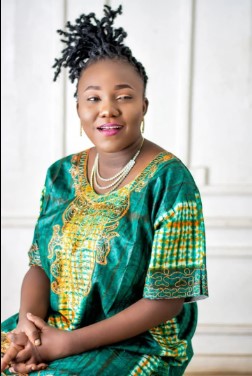
A visually impaired freshman at the University of Lagos (UNILAG), Ogunsua-Dixon Tijesuni, has recounted how she survived a brain tumour, multiple surgeries and years of rehabilitation to emerge as the country’s best matriculating candidate in the Joint Admissions and Matriculation Board Equal Opportunity Group for Persons with Disabilities.

Tijesuni, a 100-level Mass Communication student, spoke exclusively with The PUNCH on Monday, after she was recently honoured at the maiden Rite Foods National Academic Excellence Awards, where she was recognised alongside six other outstanding matriculants from the 2025 admission exercise.

The Ondo State-born student scored 288 in the 2025 UTME and recorded an aggregate score of 81.2 per cent to emerge top in the disability category.

She said her ordeal began at the age of 11, when she was diagnosed with a brain tumour while in Junior Secondary School 2.

Tijesuni said, “I was diagnosed with a brain tumour at age 11. At that point, I had lost partial function of my left limb. My parents did not want to disrupt my education, so they asked me to wait until after secondary school before undergoing surgery,” she said.

Tijesuni said her condition worsened in Senior Secondary School 3, when she began to lose her sight gradually.

“While writing my WAEC, I knew I was struggling to read the question paper, but I pushed on. I didn’t think it was blindness. I later wrote JAMB and scored 225 to study Law at the University of Ibadan,” she said.

She added that shortly after the examination, she collapsed at home, prompting urgent medical intervention.

See also  How online mockery turned into N14m for graduate who sold peanuts to survive

“Not long after writing the examination, I fainted at home, and doctors said the tumour had been there for too long and I needed surgery immediately,” she said.

Recounting the moment she was first diagnosed, Tijesuni described it as the most traumatic phase of her life.

“I was 11 years old when they told my parents I had a brain tumour. I remember looking at the brain scan and seeing the mass. I told the doctor, ‘I am not mad.’ I told my mum the same thing. I kept saying there was nothing wrong with me,” she said.

She added that, despite her initial denial, she was deeply frightened by the diagnosis.

“I was shaking so much because I was actually petrified. My self-esteem dropped a lot because I could no longer participate in sports. I was stumbling, dragging my leg. I was a wreck of myself. That was the life-changing moment,” she said.

Tijesuni recalled that her early symptoms had been persistent migraines and weakness in her limbs, which were initially misunderstood.

“The initial symptoms were headaches – serious migraines. It was what my nurse in the US would describe as migraines that only affect adults. She would ask what I was thinking. I remember using a lot of medications. I noticed weakness in my left arm, and I wasn’t able to use it,” she said.

She underwent brain surgery in January 2018 at the age of 16, by which time her sight had deteriorated significantly.

Before the diagnosis, Tijesuni said she had been actively involved in sports.

“I was captain of the female basketball team in primary school. I also played football, badminton and was learning how to swim. Then my left arm stopped functioning well, and I started walking awkwardly,” she said.

After three years of rehabilitation in Ibadan, she was moved to the Blind Centre in Oshodi, Lagos, where she received training in mobility and independent living.

See also  Education minister retracts claim, confirms 2009 FGN-ASUU agreement still valid

She also underwent hospitality and broadcasting training before deciding to return to formal education.

“At that point, I decided that I needed to go back to school. So I wrote another WAEC in 2025, sat JAMB again and started processing my admission,” she said.

According to her, doctors believe there is a possibility of regaining her sight, but the required neurological rehabilitation technology is not available in Nigeria.

“My consultant said there is a chance for me to regain my sight, but unfortunately that technology is not available in Nigeria,” she said.

Tijesuni noted that she had always aspired to become a medical doctor or lawyer, but had to adjust her academic path due to her condition.

“I come from a long line of teachers, so there were expectations. I wanted to be a doctor. Later, I wanted to be a lawyer—an advocate really. It’s not that I gave up law, but I had to adjust, and I chose Communication,” she said.

She added that losing her sight changed her outlook on life.

“I didn’t really feel anything losing my sight at first. But years later, I began to say, ‘God, I just want to see again.’ Sometimes I would pick up a book and wonder why I couldn’t just read it myself,” she said.

On how she had been attending to her studies, Tijesuni commended UNILAG for its disability-friendly environment and support system.

“God bless UNILAG. There are ramps in different parts of the school. My classmates and lecturers are very supportive whenever I need assistance,” she said.

She also expressed gratitude to JAMB’s Equal Opportunity Group for providing accessible arrangements for candidates with disabilities.

See also  60% of employers say graduates not job-ready — Report

“Thanks to Prof. Ishaq Oloyede, they started this programme where we are lodged and taken to the examination centre. Each person with a disability was allowed to come with a carer. We wrote the examination at UNILAG using laptops, Braille slates or typewriters,” she said.

Tijesuni described receiving the Rite Foods award as a moment of surprise and validation.

“The day I confirmed I had been selected for the Rite scholarship was a shock. I had never been so honoured in my life,” she said.

She urged government and employers to create more opportunities for persons with disabilities, lamenting what she described as weak welfare and employment structures.

“There is no welfare structure for people living with disabilities in Nigeria. Very rarely do companies employ persons with disabilities. Once you show up with a disability, you are judged as unable to do anything. If there was more support, people would see what we can do because there are many talented persons with disabilities,” she said.

punch.ng

FOLLOW US ON:

FACEBOOK

TWITTER

PINTEREST

TIKTOK

YOUTUBE

LINKEDIN

Continue Reading
Click to comment

Leave a Reply

Your email address will not be published. Required fields are marked *

Education

Meet Nigerian professor appointed dean at Canadian university

Published

on

Nigerian-born law professor, Dr. Ibironke Odumosu-Ayanu, has been appointed dean of the College of Law at the University of Saskatchewan, Canada, for a five-year term beginning October 1, 2026.

Odumosu-Ayanu, who is currently the college’s associate dean of research and graduate studies, has been a member of the University of Saskatchewan College of Law since 2008.

The university announced her appointment on Tuesday, September 1, through a statement on its website by Patti McDougall, interim provost and vice-president, academic and chair of the search committee for the new dean.

“Dr. Odumosu-Ayanu’s appointment as dean reflects a distinguished record of academic excellence, collaborative leadership, and dedication to advancing research and graduate education,” McDougall stated.

“Her work as dean will continue to build on the College of Law’s strong reputation for excellence in legal education and research, while strengthening its leadership in Indigenous legal scholarship and engagement with local and global communities.”

Odumosu-Ayanu will succeed Martin Phillipson, who completed two five-year terms as dean and began administrative leave on July 1.

From Lagos to Canada

According to an article on the college website, Odumosu-Ayanu grew up in Lagos, Nigeria, where she developed an early interest in reading and writing.

Although she initially considered pursuing communications, encouragement from her teachers and support from her parents led her towards law.

By the end of secondary school, she had decided to study law and enrolled at the University of Lagos, where she earned her Bachelor of Laws degree.

She later moved to Canada to pursue a master’s degree at the University of Calgary, drawn by its research strengths in natural resources, energy and environmental law.

See also  Education minister retracts claim, confirms 2009 FGN-ASUU agreement still valid

“Since I started law school, I always knew that I wanted to do a master’s and to do one abroad. But I always thought I would go to England.”

She had initially planned to return to Nigeria after completing her master’s degree and work as a lawyer. Instead, she continued her academic journey by pursuing a PhD at the University of British Columbia.

She said she had not initially intended to pursue a doctorate.


After completing her PhD, Odumosu-Ayanu began considering a career in academia and interviewed for academic positions.

She moved to Saskatchewan in 2008 to join the College of Law. A mentor at the University of British Columbia who grew up in Saskatoon had advised her to prepare for the Canadian winter.

Source: punchng.com

FOLLOW US ON:

FACEBOOK

TWITTER

PINTEREST

TIKTOK

YOUTUBE

LINKEDIN

INSTAGRAM

Continue Reading

Education

UN approves new learning institute, Nigeria backs merger of UNITAR, UNSSC

Published

on

The UN General Assembly has approved the merger of two United Nations learning and training bodies, creating a new institution designed to strengthen support for both member states and the UN system itself.

In a resolution adopted on Thursday, the 193-member Assembly, including Nigeria, endorsed the integration of the UN System Staff College (UNSSC) into the UN Institute for Training and Research (UNITAR).

They also approved the establishment of the UN Institute for Capability and Learning Innovation (UNICLI) from January 2027.

The decision is part of the wider UN80 Initiative, which aims to make the United Nations more coherent, effective and responsive to today’s challenges.

The new institute will combine UNITAR’s work helping governments, diplomats and public institutions build skills and capacity with UNSSC’s expertise in training, leadership development and knowledge-sharing for UN personnel.

“Member States and the United Nations system are facing increasingly complex and interconnected challenges.

“The UN must continue to evolve, building stronger capabilities, fostering innovation, and enhancing institutional effectiveness to turn global commitments into tangible results,” said Michelle Gyles-McDonough, UN Assistant Secretary-General and Executive Director of UNITAR.

The merger will create a single platform for learning and capability development, making it easier for member states, UN entities and partners to access expertise and support while reducing duplication and fragmentation.

Overall, the measure better equips the UN system to adapt to a rapidly changing world.

“By integrating UNSSC’s and UNITAR’s expertise in providing training for the UN system and Member States respectively, the new entity will be better positioned to provide a stronger, more coherent capability development function,” Miguel Panadero, Acting Director of UNSSC, said.

Addressing correspondents at UN Headquarters later in the day, spokesman Stéphane Dujarric said the Secretary-General welcomed the Assembly’s decision.

See also  Education minister retracts claim, confirms 2009 FGN-ASUU agreement still valid

“The Secretary-General welcomes the decision, which recognises that capability development, continuous learning and innovation are not ancillary functions, but strategic drivers of the UN’s effectiveness, reform and impact for Member States,” Dujarric said.

“The UN chief invites Member States, UN entities, partners and all stakeholders to join in shaping the new entity’s future and strengthening its contribution to a more sustainable, inclusive and resilient world,” he added.

The transition will take place in phases through the end of 2026 to ensure continuity of programmes, partnerships and services. Until then, UNITAR and UNSSC will continue operating under their existing arrangements.

The new institute will be headquartered in Geneva, while Turin will continue serving as a UN learning campus and centre for leadership development. Existing offices and operations in Bonn, Hiroshima, Madrid and New York will also continue.

The merger represents one of the latest concrete actions taken by member states under the UN80 Initiative, reflecting efforts to build a more agile and future-focused United Nations equipped to meet evolving global needs.

NAN

Source: punchng.com

FOLLOW US ON:

FACEBOOK

TWITTER

PINTEREST

TIKTOK

YOUTUBE

LINKEDIN

INSTAGRAM

Continue Reading

Education

NECO question papers were sold for N3,000 before exams — Minister

Published

on

The Minister of Education, Dr Tunji Alausa, has revealed how examination questions were allegedly obtained for N3,000 before the conduct of the National Examinations Council examinations, describing the level of examination malpractice in the country as “mind-boggling.”

Alausa made the revelation on Thursday at a meeting with the National Association of Proprietors of Private Schools and other stakeholders in the education sector, where he warned parents, teachers, proprietors, principals, invigilators and students against practices capable of undermining the integrity of public examinations.

The minister said examination malpractice had, for years, been tolerated in Nigeria, creating an unfair system in which students who prepared genuinely for examinations were disadvantaged by those who gained access to leaked questions.

According to him, the situation was particularly dangerous because it could push honest students into malpractice as they sought to compete with candidates who had access to examination materials before the tests.

Alausa said, “It’s sad. Before she (Minister of State for Education) and I came, the acceptance of examination malpractice, cheating and examination leakages in this country was mind-boggling, and the country accepted it. It was a nightmare,” adding that the “danger was that the good students would also become bad.”

The minister, while recounting his experience in the fight against examination malpractice, alleged that examination questions had previously been made available for sale before candidates sat for the examinations.

He said, “The Registrar of NECO at the time had a name. His name was (Ibrahim) Wushishi. You would go to Wushishi… I didn’t know that Wushishi meant going to the dark website.

See also  Cross River inducts teachers, lauds FG’s support for primary education

“They bought his question for N3,000. That was it. Before the examination. They called him Wushishi and bought the questions for N3,000 before the examination.”

Alausa also recalled his experience during the 2025 examination period, saying he was regularly sent examination questions allegedly obtained before candidates sat for the papers.

He said the development forced officials to verify the questions with examination authorities, sometimes confirming that the questions being circulated were actually the ones scheduled for the day.

He said, “During that examination period, during the hardest time of my life, I was always worried, waking up. I would wake up to her text. She would send questions to me… She would say, ‘I just got this question.’

“It could be English or Chemistry. I was always waking up with trepidation every morning, doing work. I would send it to the HNO and ask, ‘HNO, is this correct?’ And the answer I got was, ‘Unfortunately, that’s the question we’re doing today.’

“So, that was a more aggressive intervention because we were seeing the question and confirming from the other side.”

The minister said the revelations demonstrated that examination malpractice was not simply a student problem, insisting that the wider education ecosystem must take responsibility for curbing the practice.

He noted that parents, schools, teachers, invigilators and principals all had roles to play in preventing candidates from gaining unfair access to examination materials.

Alausa said, “You might be in that isolated school, but the school system is also involved. In fact, I don’t blame the students that much. Any child can be bad.

See also  PHOTOS: Makinde, Ex-Classmates To Raise N500m For Projects In Ibadan Alma Mater

“But when we have an ecosystem where parents, schools, teachers, invigilators and principals are in full connivance, the students are the smallest players. The people who should put the deterrents in place are the ones involved.”

He warned that the Federal Government would strengthen measures to protect the integrity of public examinations and ensure that academic qualifications reflected genuine learning and merit.

The minister said the reforms were part of President Bola Tinubu’s broader efforts to restore standards and reposition Nigeria’s education system.

He said, “This is a country with the rule of law. President Bola Ahmed Tinubu is transforming this country in a way that’s never been transformed before. This is Nigeria’s renaissance that we’re building to be sustainable into the future.”

He added that the country had for too long tolerated practices that undermined its education system, but said the Tinubu administration was determined to reverse the trend.

The Minister of State for Education, Prof Suwaiba Ahmad, also called on private school proprietors and other stakeholders to support the reforms, noting that stronger examination controls could initially expose weaknesses in students’ actual preparation.

Ahmad explained that some students who appeared to perform exceptionally well in internal examinations might have become accustomed to accessing leaked questions ahead of external examinations.

She said the introduction of serialised examination questions would make it more difficult for candidates to rely on leaked materials, while encouraging genuine preparation.

The minister urged schools to complete their curricula on schedule and promote consistent study among students, assuring private education stakeholders that the Federal Ministry of Education would continue to engage them during the implementation of the reforms.

See also  How UNILAG final year student drowned in Lagos beach

The latest warning comes amid longstanding concerns over examination malpractice in Nigeria, including question-paper leakages, impersonation, collusion and unauthorised assistance to candidates.

The Federal Government’s renewed emphasis on examination integrity is aimed at ensuring that results from public examinations provide a credible assessment of students’ knowledge and abilities, while protecting candidates who prepare and compete fairly.

Source: punchng.com

FOLLOW US ON:

FACEBOOK

TWITTER

PINTEREST

TIKTOK

YOUTUBE

LINKEDIN

INSTAGRAM

Continue Reading

Trending