Two years after the Supreme Court ordered the direct payment of federal allocations to local government councils, implementation of the landmark financial autonomy judgment remains stalled despite N10.48tn being allocated to the third tier of government within the period, findings by The PUNCH have shown.
An analysis of Federation Account Allocation Committee reports, with data from the National Bureau of Statistics and the Office of the Accountant-General of the Federation collated by The PUNCH on Monday, showed that local government councils received N10.479tn between the July 2024 and June 2026 FAAC meetings.
The period covered allocations from revenue earned between June 2024 and May 2026 because FAAC distributes the revenue generated in a particular month at the meeting held in the following month. Consequently, June 2024 revenue was shared at the July 2024 meeting, while May 2026 revenue was distributed in June 2026.
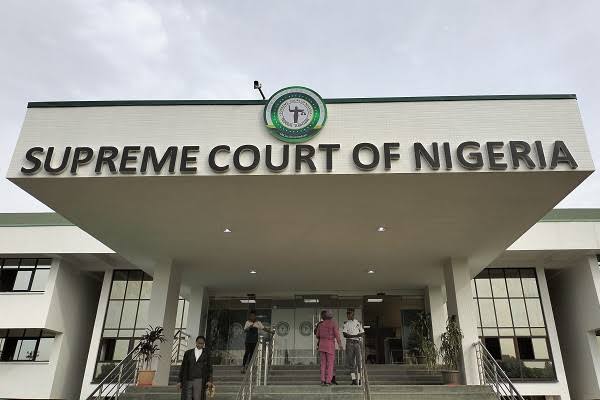
The allocations were made amid lingering uncertainty over the implementation of the Supreme Court judgment delivered on July 11, 2024, in the case of the Attorney-General of the Federation v. Attorney-General of Abia State and 35 others, with suit number SC/CV/343/2024.
The apex court ordered the Federal Government to pay allocations standing to the credit of the 774 local government areas directly to their accounts. It also barred state governments from retaining or spending funds allocated to councils and declared the administration of local governments by unelected caretaker committees unconstitutional.
However, nearly two years after the ruling, questions remain over whether federal allocations are being transferred directly to council accounts, whether State Joint Local Government Accounts are still operating and whether local governments have gained practical control over their finances.
The PUNCH analysis showed that allocations to councils rose sharply in the second year after the judgment, but the increase has not been matched by clear evidence of nationwide compliance with the ruling or a visible transformation in grassroots service delivery.
Between July 2024 and June 2025, local government councils received N4.496tn. The amount increased to N5.984tn between July 2025 and June 2026, representing an additional N1.488tn or a year-on-year increase of 33.10 per cent.
The average monthly allocation to councils consequently rose from N374.65bn in the first 12-month period to N498.67bn in the second, an increase of N124.02bn.
In the first period, councils received N337.02bn in July 2024 from June revenue, N343.70bn in August, N306.53bn in September, N329.86bn in October, N355.62bn in November and N402.55bn in December.
The monthly allocation stood at N361.75bn in January 2025, rose to N434.57bn in February, declined to N410.56bn in March and fell further to N387bn in April. It recovered to N406.63bn in May and N419.97bn in June 2025.
In the second 12-month period, councils received N444.85bn in July 2025, N485.04bn in August and N522.23bn in September.
The allocation subsequently rose to N529.95bn in October before declining to N505.80bn in November and N445.27bn in December.
Councils received N513.27bn in January 2026, N537.88bn in February, N456.47bn in March and N468.83bn in April. The amount climbed to N540.15bn in May before moderating slightly to N534.28bn in June.
The continuing controversy is rooted in the State Joint Local Government Account created under Section 162 of the 1999 Constitution. Under the arrangement, funds due to local governments were transferred through joint accounts controlled at the state level.
For years, council officials, labour unions and civil society organisations accused governors of making deductions from council funds, controlling local government expenditure and leaving councils with insufficient resources for basic services.
The Supreme Court ruling was intended to end the practice by directing that allocations be paid directly to democratically elected councils. However, the continued delay in full implementation has raised concerns that the financial relationship between states and councils has not changed substantially in many parts of the country.
The controversy over local government autonomy has also played out in communities across the country. In Oriire Local Government Area of Oyo State, residents renewed calls for improved security and infrastructure following the recent release of abducted schoolchildren and teachers.
Community members are demanding functional police stations, mobile network coverage to enable distress calls during emergencies, better-equipped healthcare centres, standard schools and improved roads.
The development has also reignited questions over the management of local government allocations, with residents asking why basic infrastructure remains inadequate despite years of FAAC disbursements.
While some blame the continued control of council finances by state governments, others argue that both the state and Federal Government must share responsibility for addressing the area’s developmental challenges.
Beyond the local government allocations, the FAAC reports showed that N42.709tn was shared among the Federal Government, state governments, local government councils and oil-producing states as derivation revenue during the 24-month period.
The Federal Government received N14.620tn, representing about 34.23 per cent of the combined allocations, while state governments received N14.506tn, or 33.96 per cent.
Local government councils accounted for N10.480tn, equivalent to 24.54 per cent, while oil-producing states received N3.103tn as 13 per cent derivation, representing 7.27 per cent of the total.
The allocations to all tiers increased significantly in the second year under review.
The Federal Government’s allocation rose from N5.911tn between July 2024 and June 2025 to N8.709tn between July 2025 and June 2026. This represented an increase of N2.798tn or 47.34 per cent.
State governments, excluding derivation payments, received N6.169tn in the first period and N8.337tn in the second. Their allocations increased by N2.168tn or 35.14 per cent.
Derivation payments to oil-producing states increased at a slower rate, rising from N1.505tn to N1.598tn, a difference of N93.13bn or 6.19 per cent.
Overall allocations to the four categories increased from N18.081tn in the first 12 months to N24.628tn in the second, representing a rise of N6.547tn or 36.21 per cent.
However, the autonomy dispute means that rising allocations alone may not provide a reliable measure of financial independence or development at the local government level.
NULGE, LGs react
Further findings by The PUNCH across several states reinforced concerns that the Supreme Court judgment granting financial autonomy to Nigeria’s 774 local government councils has largely remained unimplemented, with state governments still controlling allocations meant for the third tier of government.
The National Union of Local Government Employees said the Federal Government had yet to begin paying statutory allocations directly to local governments nearly two years after the apex court delivered its landmark judgment.
The National President of NULGE, Aliyu Kankara, told The PUNCH in Abuja that little had changed since the July 11, 2024 ruling, despite repeated appeals by the union to the Federal Government.
“Up till now, they have not started the implementation of the financial autonomy. You know the allocation comes from the Federal Government, so they are the ones to commence the implementation,” Kankara said.
He disclosed that the union had written several letters to the Federal Government, urging it to comply with the judgment and begin transferring allocations directly into the accounts of local government councils.
“We have written several letters to them to remind them of the need to start paying local governments directly, but they haven’t done anything yet,” he stated.
Kankara described the situation as disappointing, noting that state governments continued to receive allocations meant for councils despite the Supreme Court’s directive.
“We are still hoping that they will do the needful, but up till now, states are still being paid the local government allocations,” he said.
He added, “Nothing has changed. Until the allocations go directly to the local governments as ordered by the Supreme Court, we cannot say financial autonomy has been implemented.”
The NULGE president argued that direct control of allocations was necessary to strengthen grassroots administration and improve the delivery of public services in communities.
Following the judgment, President Bola Tinubu directed relevant ministries, departments and agencies to ensure its implementation. The Federal Government subsequently constituted an inter-ministerial committee comprising officials of the Office of the Secretary to the Government of the Federation, Ministry of Finance, Office of the Accountant-General of the Federation, Central Bank of Nigeria and Office of the Attorney-General of the Federation.
The committee was mandated to develop procedures for direct payments, resolve legal and administrative impediments and ensure compliance with the judgment.
However, findings from Kaduna, Kano, Benue, Plateau, Sokoto and Abia indicated that the old financial arrangements had continued in several states.
In Kaduna State, officials said the 23 local government councils had yet to receive allocations directly from the Federation Account and were still operating the State-Local Government Joint Account.
A senior council official, who spoke on condition of anonymity because he was not authorised to comment on the issue, said local governments received only amounts approved and released by the state government, regardless of what was recorded as their allocations in FAAC reports.
“We are yet to receive allocations directly from the Federation Account as pronounced by the Supreme Court judgment granting local government autonomy,” the source said.
Efforts to obtain the response of the Kaduna State chapter of the Association of Local Governments of Nigeria were unsuccessful, as its chairman did not answer repeated calls or respond to a text message as of the time of filing the report.
An LG official in one of the N’West states also said, “You will always hear huge amounts being allocated to local governments on paper, but in reality we are still at the beck and call of the state government. For instance, when you hear that a local government received about N800m, what eventually gets to the council may be as little as N50m released through the Ministry of Local Government and Chieftaincy Affairs.”
According to the source, much of the amount eventually released to councils was used to pay primary school teachers and local government workers.
“From the money released to us, we pay the salaries of teachers and local government staff. We are still operating the joint account with the state government,” the official stated.
In Kano State, a Government House source also confirmed that the state continued to operate joint accounts with its 44 local government councils.
“The Kano State Government still operates a joint account with the local governments in the state. No LGA is receiving its allocations directly from the Federal Government,” the official said.
The source explained that council chairmen seeking to execute projects were required to submit requests to the state government for approval.
“Any local government chairman who wants to carry out a certain project must write a request and forward to the government for approval of the funds needed for the execution of the project,” the source added.
The official said although councils had been directed to open independent bank accounts, direct FAAC transfers had not commenced.
The Kano ALGON chairperson, Sa’adatu Soja, and the state NULGE chairman, Abdullahi Gwarzo, did not respond to calls and messages seeking their comments.
In Benue State, an ALGON official disputed claims by Governor Hyacinth Alia that local governments were enjoying autonomy.
The official, who spoke on condition of anonymity, said attempts by councils to open accounts with the Central Bank of Nigeria had been frustrated by administrative requirements involving the state government.
“They asked us to go and get letters from the state Accountant-General and my question is, who should direct the Accountant-General to issue the letter? Is it not the governor?” the official asked.
He said the state continued to operate a joint account and argued that local governments would remain dependent on governors until the constitutional provision establishing the account was amended.
“Joint account is constitutional. Unless the National Assembly amends the section of the law, it is then we will know that government is serious with granting autonomy to local government,” he said.
The Benue State President of NULGE, Joshua Adiniya, also confirmed that council finances were still being considered under the joint-account arrangement, adding that the union remained particularly concerned about workers’ welfare.
In Sokoto State, a senior ALGON official said financial autonomy existed only on paper, as council chairmen still lacked direct access to their allocations.
“We don’t have direct access to our funds yet. It is just on paper that we operate autonomy, while in the real sense, it’s still the same old pattern of operation,” the official said.
He added that local government funds were still being managed by the state government and that council officials were reluctant to speak publicly about the arrangement.
“It is going to be very difficult if you think anyone can be bold and address the media on such development. We just have to keep silent and watch as things unfold,” he said.
The Sokoto ALGON Chairman, Abba Shehu, could not be reached, as calls and messages sent to his telephone line were not delivered.
In Plateau State, a senior official of Jos North Local Government Council said none of the state’s 17 councils had begun receiving direct allocations and that the joint-account system remained in operation.
“We don’t have independent accounts because the joint accounts with the state government is still what they are using,” the official said.
The situation in Abia State appeared slightly different, as councils were said to operate separate bank accounts, although officials maintained that the Federal Government had not clarified or implemented the Supreme Court judgment.
The state ALGON Chairman and Mayor of Umunneochi Local Government Area, Chinedu Ekeke, said the responsibility for interpreting and enforcing the judgment rested with the Federal Government, which filed the suit.
“There is a Supreme Court judgment from a suit filed by the Federal Government, which wanted to seek the interpretation. The onus is on the Federal Government to seek the clarification and to implement it,” he said.
Ekeke confirmed that the councils had independent bank accounts but said ALGON’s next action would depend on the Federal Government’s interpretation of the judgment.
The Abia State Secretary of NULGE, Andrew Okoro, said the union needed to establish whether councils had begun receiving their allocations directly.
“But it seems the status quo is being maintained,” he said, lamenting that previous court rulings on the issue had not been obeyed.
“This is not the first or second judgment, but all have not been complied with,” Okoro added.
Jigawa State emerged as an exception to the widespread claims of non-compliance.
The state ALGON Chairman and Chairman of Dutse Local Government Area, Sibu Abdullahi, told The PUNCH that all 27 councils in Jigawa had begun receiving their allocations directly from the Federal Government.
“Yes, our LGAs are now receiving allocations directly from the FG without any deductions at the state level,” he said.
Abdullahi also stated that the councils operated independent accounts and were no longer tied to the joint-account arrangement.
“All 27 LGAs in Jigawa operate independent bank accounts. We are no longer on joint accounts with the state government,” he said.
He claimed that the new system had improved transparency and enabled councils to respond more quickly to community needs.
“Independent accounts have strengthened transparency and allowed us to respond faster to community needs,” Abdullahi stated.
According to him, the state ALGON has been working with traditional rulers, civil society groups and lawmakers to protect financial autonomy and ensure that councils concentrate more resources on capital projects.
“We are sharing our model with other states. ALGON will also intensify advocacy, legal engagement and peer learning to ensure no LGA is left behind,” he said.
He added, “The direct allocation and financial independence we now have in Jigawa will improve service delivery at the grassroots if we sustain accountability.”
The contrasting findings show that implementation remains uneven, with Jigawa claiming direct transfers while councils in several other states continue to operate joint accounts or depend on governors for the release and approval of funds.
They also reinforced NULGE’s position that, at the national level, the Supreme Court judgment has yet to produce the uniform financial independence envisaged for local governments.
The Director of Press and Public Relations at the Office of the Accountant General of the Federation, Bawa Mokwa, and the Director of Press and Public Relations at the Federal Ministry of Finance, Mrs Efe Ovuakporie, had yet to provide substantive responses to enquiries sent at least 48 hours before this report was filed.
punch.ng
FOLLOW US ON: