Connect with us

Education

FG seeks to transform polytechnics for job creation, innovation

Published

on

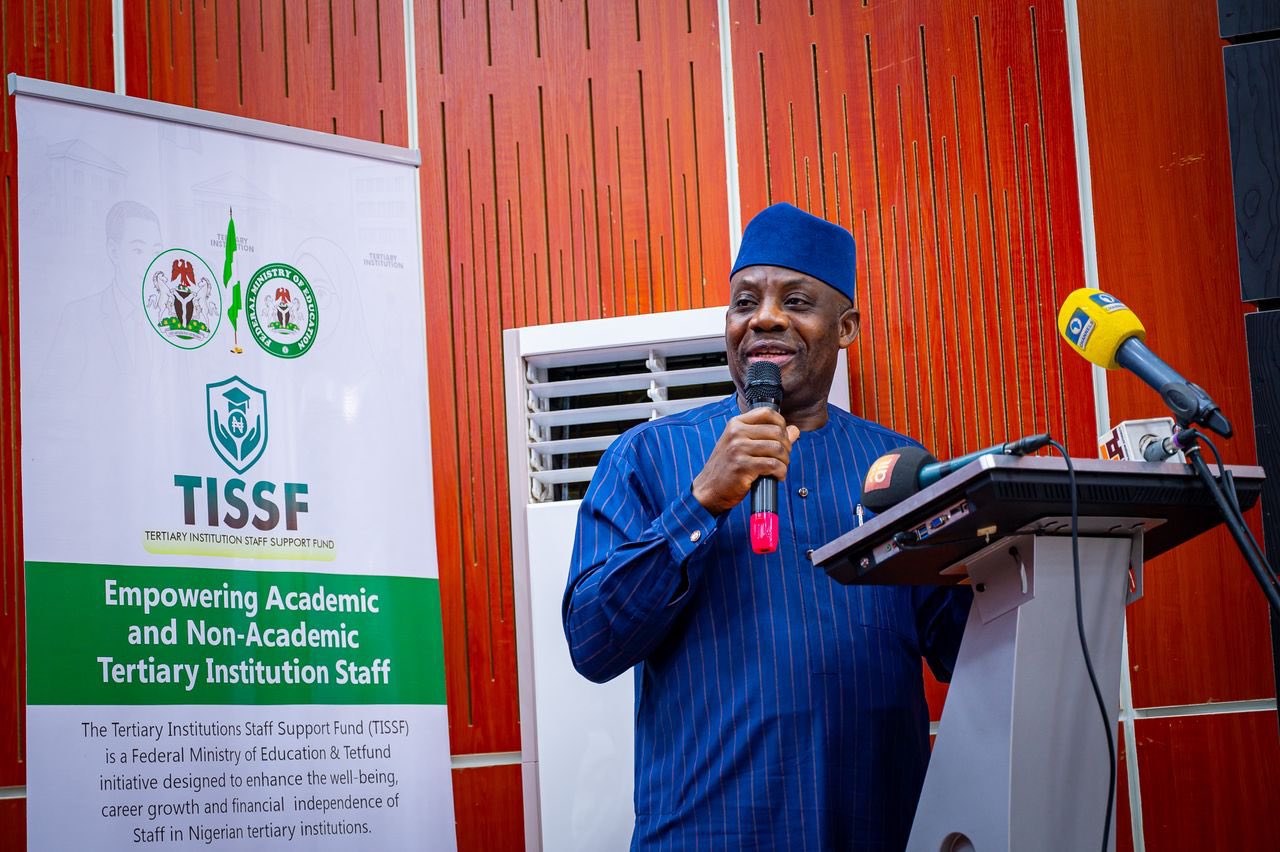
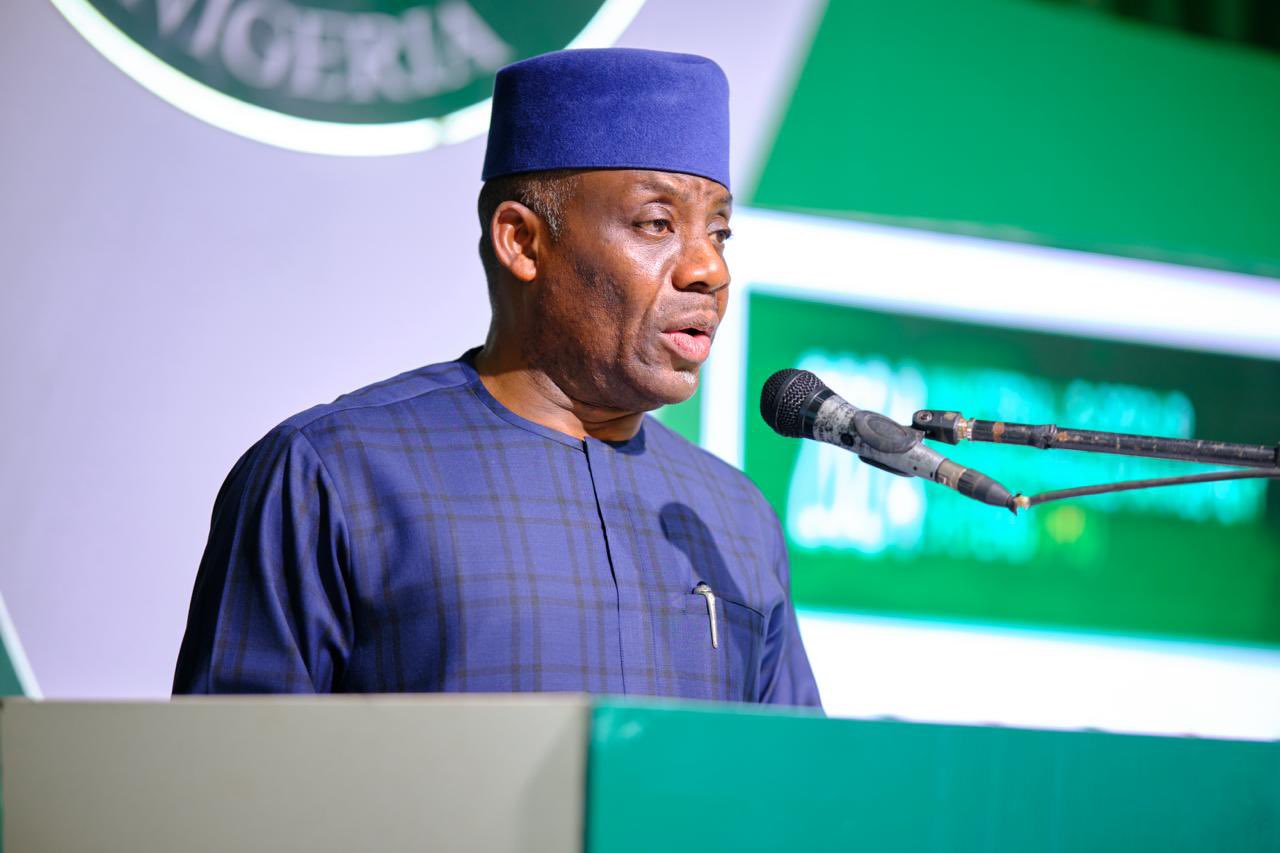
The Minister of Education, Dr Maruf Alausa, has called for a comprehensive transformation of Nigeria’s polytechnic education, emphasising innovation, good governance, and sustainability as key drivers for national development.

His made the call during a retreat organised by the Conference of Heads of Polytechnics, Colleges of Education, and similar institutions for council chairmen, commissioners of education, rectors, registrars, and bursars on Wednesday in Abuja.

Speaking on the theme, ‘Transforming Polytechnic Education in Nigeria: Innovation, Good Governance and Sustainability for National Development’, the minister said, “Polytechnics are not mere institutions; they are the crucibles where innovation meets practicality, where skills forge economic resilience, and where sustainable development becomes a lived reality for our nation.”

The minister highlighted the Federal Ministry of Education’s focus on revitalising Technical and Vocational Education and Training, stressing the need to equip graduates with practical, industry-ready skills.

“We have adopted a policy that ensures our Polytechnic graduates are industry-ready, innovative problem-solvers capable of driving national development,” he stated.

Alausa urged polytechnic leaders to prioritise entrepreneurship and research initiatives.

“Innovation must be the heartbeat of our Polytechnics. I urge you to foster entrepreneurship centres, research hubs, and industry partnerships that turn ideas into prototypes, inventions into enterprises, which will graduate into job creators,” he noted.

He also identified priority sectors including renewable energy, agricultural technology, digital manufacturing, and climate-resilient solutions.

On governance, the minister called for transparency, accountability, and ethical leadership in polytechnics.

“Governing Councils and Management teams must uphold transparency, accountability, and ethical leadership.

“Avoid conflicts of interest, ensure prudent resource management, and prioritise merit in appointments and promotions.

See also  Tinubu renames Federal University of Medical Sciences Azare after Late Sheikh Dahiru Bauchi

“The era of impunity in our institutions is over; we demand fiscal discipline, timely audits, and zero tolerance for corruption to build public trust and attract investment,” the minister urged.

He further emphasised sustainable funding models through Internally Generated Revenue and reduced import dependence.

Acknowledging challenges such as funding gaps, outdated facilities, and societal biases favouring university degrees over technical skills, the Minister expressed confidence in government support.

“Under President Bola Tinubu’s Renewed Hope Agenda, we are committed to supporting you with policy reforms, infrastructure upgrades, and partnerships,” he said.

Alausa also announced a special TETFund intervention to upgrade polytechnic engineering schools with state-of-the-art equipment, following similar interventions in medical colleges last year.

He concluded by urging participants to implement these principles upon returning to their institutions.

In his address, the Chairman of COHEADS, Dr Sani Tunga, said the gathering was both timely and necessary given the role of polytechnic education in Nigeria’s development.

Tunga said the theme reflected current realities facing polytechnics and colleges of technology, which he described as critical institutions for producing skilled and entrepreneurial manpower.

“Our Polytechnics and Colleges of Technology stand at the forefront of producing skilled, innovative, and entrepreneurial manpower needed to drive Nigeria’s diversification agenda, reduce unemployment, and achieve the Sustainable Development Goals,” he said, while acknowledging challenges such as inadequate funding, outdated infrastructure, changing industry demands, governance gaps and sustainability concerns.

He also drew attention to recurring conflicts within the system, particularly between governing councils and management, and between management and staff unions.

See also  ASUU - Hold FG responsible for varsity shutdown

“Among these challenges are the recurring conflicts and tensions that sometimes arise between Governing Councils and Management, as well as between Management and staff unions; such as ASUP, SSANIP, NASU and other critical stakeholders,” he stated.

The chairman explained that such disagreements, often linked to policy interpretation, resource allocation and welfare issues, could undermine harmony and delay progress.

He stressed the importance of collective dialogue among council chairmen, commissioners, rectors, registrars and bursars to address these issues constructively.

According to the COHEADS chairman, the retreat was designed to explore innovative approaches to curriculum development, research and industry partnerships, strengthen governance and accountability, improve financial sustainability, and deliberately address the root causes of conflicts among stakeholders.

He linked the success of the polytechnic sector directly to national development, saying, “The transformation we seek is not merely institutional; it is national.

“A vibrant Polytechnic sector will empower our youths, boost local content in industry, foster self-reliance, and contribute meaningfully to Nigeria’s emergence as a technological and economic powerhouse.”

Tunga urged participants to use the retreat as an opportunity to reduce conflicts and build stronger working relationships across the system.

In his opening remarks, the Executive Secretary of the National Board for Technical Education, Professor Idris Bugaje, has called for a renewed commitment to strengthening polytechnic and technical education in Nigeria, describing recent reforms as a turning point for the sector after decades of neglect.

He traced the origins of technical and polytechnic education in Nigeria, noting that it predates university education in the country.

Bugaje stated that, despite its early start and relevance, technical education suffered neglect after independence, particularly following the civil war, as universities received greater priority.

See also  Step-by-step guide for checking 2025 WASSCE results

He highlighted the disparity in numbers, stating, “We have only 153 technical colleges as against over 15,000 senior secondary schools in Nigeria today. We were really struggling to survive in this very unfriendly system.”

According to him, the situation has begun to change in the last two years, largely due to reforms initiated by the current Minister of Education

He said, “Until the last two years, or even a little bit less than two years, we have started seeing light at the end of the tunnel. NBTE is being reinvented, re-engineered, and re-created in Nigeria, courtesy of the effort of Dr Maruf Alausa.”

The retreat brought together top leaders from Nigeria’s polytechnic and technical education sector to chart a path toward skills-driven national development, reflecting a renewed focus on practical education and institutional excellence.

Nigeria’s polytechnic system has long been positioned as a critical driver of technical manpower development, yet it has struggled with declining relevance amid rising youth unemployment and a widening skills gap.

While polytechnics were originally designed to produce middle- and high-level technical professionals for industry, years of underfunding, outdated curricula, weak industry linkages, and societal preference for university degrees have limited their impact on job creation and innovation.

punch.ng

FOLLOW US ON:

FACEBOOK

TWITTER

PINTEREST

TIKTOK

YOUTUBE

LINKEDIN

TUMBLR

INSTAGRAM

Continue Reading
Click to comment

Leave a Reply

Your email address will not be published. Required fields are marked *

Education

JAMB releases Monday’s UTME results

Published

on

The Joint Admissions and Matriculation Board (JAMB) has released the results of candidates who sat the 2026 Unified Tertiary Matriculation Examination on Monday, April 20.

Its spokesperson, Fabian Benjamin, disclosed this in a statement released on Tuesday, directing affected candidates to the board’s standard result-checking channels.

“The results for Monday, 20th, have been released. Candidates can view their results using the usual process,” the statement read.

Candidates can access their scores by sending “UTMERESULT” to 55019 or 66019 via SMS, using the phone number with which they registered for the examination.

Monday’s release is the latest in a series of daily result announcements that JAMB has been making since the 2026 UTME commenced on Thursday, April 16.

The exercise, which involves over two million candidates sitting computer-based tests at centres across the country, has seen the board publish results in batches corresponding to each examination day.

The board started the process by releasing results for Thursday’s candidates, followed by a combined batch covering Friday, April 17, and Saturday, April 18.

The Friday-Saturday release, however, came later than candidates had expected. JAMB had initially indicated the results would be available on Saturday but failed to meet that timeline, drawing frustration from candidates who waited through the night.

The board subsequently apologised, attributing the delay to the absence of its chief executive, who was occupied with an official engagement.

The results were eventually published on Sunday, April 19, before the board moved on to process and release the Monday batch.

See also  Tinubu renames Federal University of Medical Sciences Azare after Late Sheikh Dahiru Bauchi

punch.ng

FOLLOW US ON:

FACEBOOK

TWITTER

PINTEREST

TIKTOK

YOUTUBE

LINKEDIN

INSTAGRAM

Continue Reading

Education

JAMB releases over 1.8 million UTME results nationwide

Published

on

The Joint Admissions and Matriculation Board (JAMB) has announced the release of results for candidates who sat the 2026 Unified Tertiary Matriculation Examination on Friday, April 17, and Saturday, April 18.

In a statement issued on Sunday by its spokesperson, Fabian Benjamin, the board said 1,264,940 results from the two days had been processed and made available for candidates.

“The results of candidates who sat the examination on Friday, 17 April and Saturday, 18 April 2026 have now been released.

“A total of 1,264,940 results from these two days are available for candidates to check/view,” the statement read.

The board noted that this latest batch follows an earlier release of results for candidates who wrote the examination on Thursday, April 16.

“The board had earlier released 632,752 results of candidates who sat the examination on Thursday, 16 April 2026. This brings the total number of results released so far to 1,897,692,” it said.

JAMB urged candidates to access their results through its designated SMS channels, maintaining its standard result-checking procedure.

“To view their results, candidates should send UTMERESULT to 55019 or 66019 using the phone (SIM) number they used to register for the 2026 UTME,” the statement added.

The examination body further explained that the results released so far represent outcomes from the first three days of the nationwide exercise.

The UTME, which commenced nationwide on Thursday, is expected to have over two million candidates participating across various computer-based test centres.

punch.ng

FOLLOW US ON:

FACEBOOK

TWITTER

PINTEREST

TIKTOK

YOUTUBE

LINKEDIN

INSTAGRAM

See also  JSS1 minimum age not raised to 12 – Nigerian Govt refutes report
Continue Reading

Education

SSANU rejects FG’s 30% pay rise offer

Published

on

The Federal Government has approved a 30 per cent increase in the consolidated salary structure of SSANU – non-academic staff in federal universities, polytechnics and colleges of education under.

The move is aimed at easing long-standing labour tensions and boosting morale across Nigeria’s tertiary education system.

The approval comes after years of agitation by non-academic staff unions, particularly the Senior Staff Association of Nigerian Universities and the Non-Academic Staff Union, over salary disparities and unpaid allowances.

It also followed approval of a 40 per cent pay rise granted to the Academic Staff Union of Universities by the Federal Government.

However, the National Executive Council of the SSANU has insisted that no final agreement has been reached.

It threatened industrial action if talks were not concluded by the end of April.

In a letter dated March 30, 2026, and signed by the Minister of Education, Dr Tunji Alausa, the government said the increment would be implemented as a Consolidated Non-Teaching Tools Allowance.

“I write to convey the approval of His Excellency… for a thirty per cent (30%) increase in the consolidated salary structures of non-academic staff of federal universities, polytechnics and colleges of education,” the minister stated.

The directive, addressed to the Executive Secretary of the National Commission for Colleges of Education, National Universities Commission and the  National Board for Technical Education, indicated that details of the implementation are contained in an attached memorandum.

Alausa said the decision reflected the government’s commitment to improving the welfare and productivity of non-academic staff, who play critical administrative and technical roles in higher institutions.

See also  FG scholars abroad stage protest over unpaid allowances

“This approval underscores the Federal Government’s commitment to enhancing the welfare, motivation, and productivity of non-academic staff,” he said, adding that it would also strengthen “the quality, stability and global competitiveness of Nigeria’s tertiary education system.”

He further urged relevant agencies to ensure the smooth execution of the policy.

“We look forward to your usual cooperation and support for the seamless and timely implementation of this approval,” the minister added.

SSANU’s position rejecting the agreement was contained in a communiqué issued at the end of a special NEC meeting held on Saturday at the union’s National Secretariat in Abuja, where leaders reviewed developments in the negotiation process.

According to the communiqué signed by the National President of SSANU, Muhammad Ibrahim, and forwarded to the press on Sunday, the NEC reaffirmed that “the renegotiation process with the Federal Government is still ongoing and has not been concluded.”

The council also expressed concern over what it described as misleading reports in the public space, suggesting that the process had been concluded.

It specifically pointed to the circulation of a letter allegedly indicating approval of a 30 per cent increase in allowances, insisting that discussions were still ongoing and no binding agreement had been signed.

NEC stated that “SSANU will not accept any outcome that falls below the negotiated understanding reached in the course of the renegotiation process, and insists that fairness, due process, and collective bargaining principles must be respected.”

Reiterating its earlier stance under the Joint Action Committee of NASU and SSANU, the council maintained the ultimatum given to the Federal Government from April 1 to April 30, 2026, to conclude negotiations and sign agreements.

See also  JSS1 minimum age not raised to 12 – Nigerian Govt refutes report

It warned that failure to meet the deadline would leave the unions with no choice but to embark on industrial action.

The communiqué stated that SSANU “will have no alternative but to, along with NASU, commence an indefinite, comprehensive, and total industrial action.”

The council urged members across all branches to remain calm but vigilant, and to stay united in readiness to comply with any directives issued by the union leadership.

“NEC called on all members of the union across the branches to remain calm, vigilant, united, and prepared to fully comply with the decisions of the Union in defence of their welfare, dignity, and collective interest,” the communiqué read.

It further reiterated SSANU’s commitment to defending members’ rights and welfare, stating that the union “will continue to pursue justice with firmness, unity, and resolve.”

The latest warning follows an earlier communiqué issued after SSANU’s 54th National Executive Council meeting held at Ekiti State University, where the union expressed dissatisfaction with the slow pace of renegotiations and issued a final ultimatum to the Federal Government.

At the time, SSANU also raised concerns over salary delays, poor funding of universities, and deteriorating working conditions across the system.

Meanwhile, the National Commission for Colleges of Education has directed provosts of federal colleges of education to commence necessary processes for the implementation of the new payment plan.

The memo, issued on behalf of the Executive Secretary, Dr Angela Ajala, instructed bursars and institutional heads to take note of the development and align with the new salary structure.

See also  ASUU suspends two-week warning strike

“On behalf of the Executive Secretary… I write to respectfully bring to your attention the recent approval by the Federal Government… the thirty per cent (30%) increase in the consolidated salary structure of non-teaching staff,” the commission stated.

It added that the minister’s approval had been attached to guide execution, signalling the start of formal rollout across federal colleges of education.

Both unions have repeatedly embarked on industrial actions in recent years, protesting what they described as inequitable treatment compared to academic staff under the Academic Staff Union of Universities.

Strikes by SSANU and NASU have disrupted administrative operations across campuses, affecting student services, examination processing, and institutional governance.

Their demands have typically included improved remuneration, payment of earned allowances, and inclusion in government intervention funds.

Continue Reading

Trending