Connect with us

News

Presidency closes public submissions on state police today

Published

on

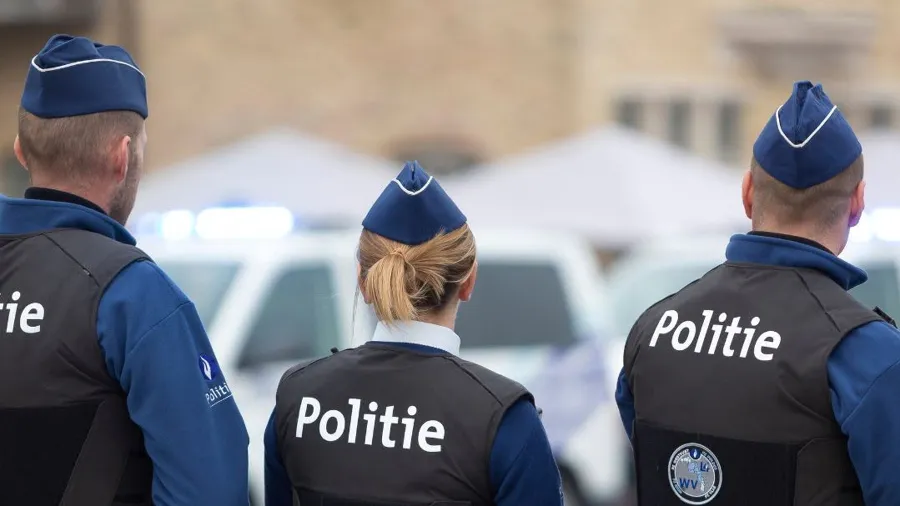
The Presidency has announced that public submissions on the proposed National Policing Bill will close by 5 pm on Thursday, August 13, 2026, urging Nigerians to submit their views on the planned establishment of state police.

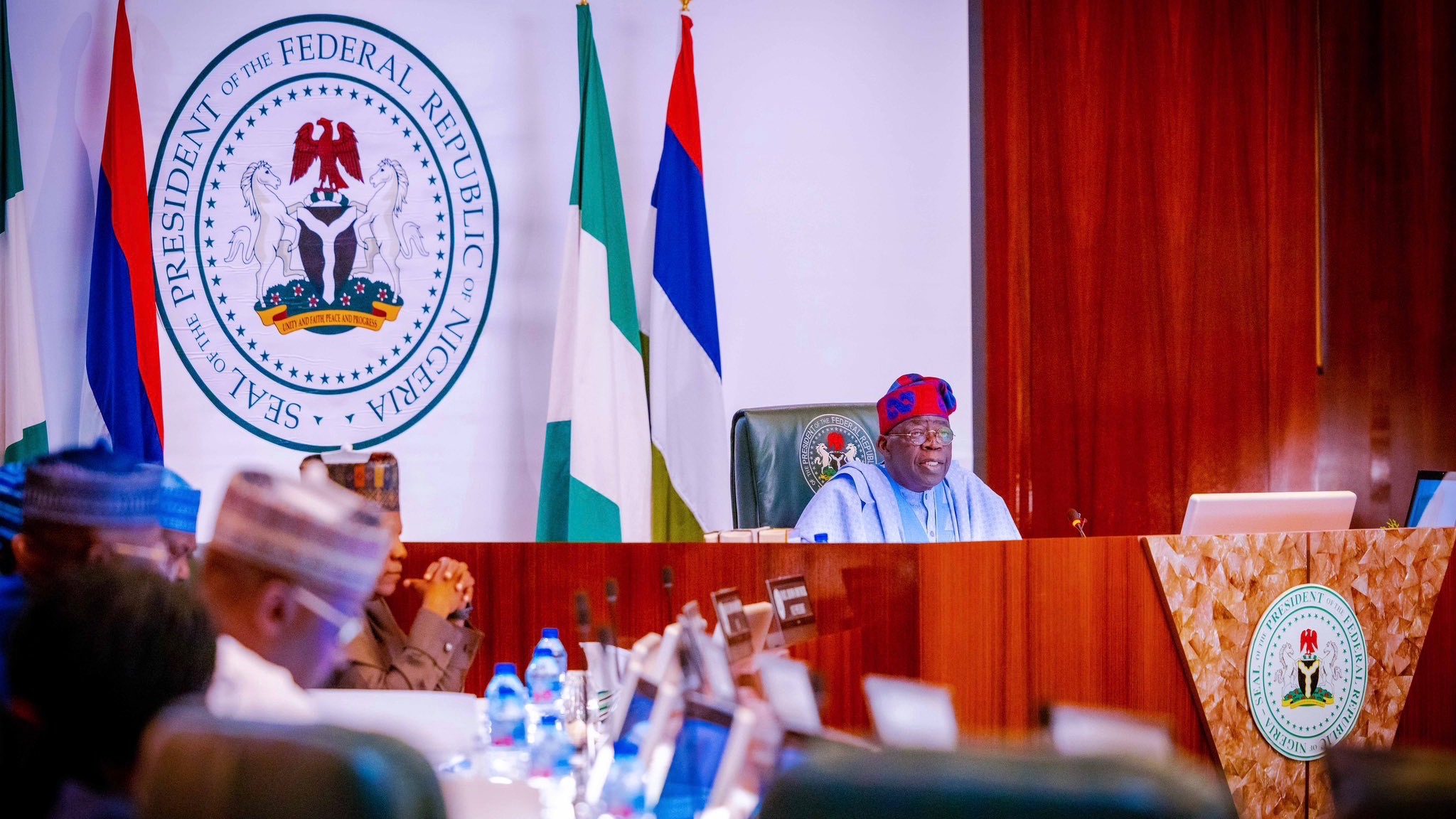
The Chief of Staff to the President and Chairman of the Presidential Working Group on the National Policing Bill, Femi Gbajabiamila, disclosed this on Wednesday, saying the consultation was designed to incorporate the experiences and professional expertise of Nigerians into the proposed legislation.

He said the submissions would be particularly useful in addressing concerns over political interference, oversight, police misconduct and intelligence-sharing between federal and state police services.

He said the consultation would not replace the role of the National Assembly, which would retain the power to scrutinise, amend, reject or pass the Bill when transmitted.

Gbajabiamila urged Nigerians to contribute to the process, particularly on how police services could be protected from political interference, who should investigate serious misconduct and how federal and state forces could share intelligence across state boundaries.

He said, “For too long, the debate has been framed as a choice between effective local policing and protection from political abuse. Nigeria needs both.

“We can bring policing closer to the people while building strong national standards, independent oversight and firm safeguards for every citizen. The time to fix policing in Nigeria is now, and we must see the work through.”

Gbajabiamila also stressed that the proposed state police system must contain strong safeguards to prevent governors from using the force against political opponents, protesters, journalists, minority communities and other citizens.

See also  See how FG moves to recover unremitted funds before April

Gbajabiamila, a former Speaker of the House of Representatives, said although state police could bring policing closer to communities and improve responses to local security challenges, its proximity to state governments raised legitimate concerns about political interference and abuse of power.

He said, “But proximity does not guarantee justice. The concern that governors might use state police against political opponents, minority communities or dissenting voices is serious and must be answered in the design of the law.”

He added that state police services must have lawful authority within their jurisdictions while remaining subject to the constitution, human rights and the rule of law.

According to him, the proposed framework should ensure that police officers are properly recruited, trained, equipped and supervised, while citizens must have access to credible complaints and oversight mechanisms.

Gbajabiamila said the reforms were aimed at creating a policing system that was “closer, faster and better informed by local conditions,” noting that officers familiar with a community’s language, geography and crime patterns would be better positioned to gather intelligence and respond to security threats.

He, however, stressed that the reform must protect citizens from abuse regardless of their political affiliation.

“The law must protect citizens regardless of who holds office. It must protect opposition parties, peaceful protesters, journalists and minority communities.

“It must make unlawful orders easier to resist, misconduct easier to investigate and political interference harder to hide,” he said.

On the legislative process, Gbajabiamila explained that the constitution currently provides for only one police force, the Nigeria Police Force, under Section 214, making constitutional amendment necessary before state police could be established.

See also  Makinde unveils two new surveillance aircraft to combat insecurity

He said both chambers of the National Assembly had approved proposed constitutional changes providing for a Federal Police Service and State Police Services, but the process was not yet complete.

According to him, the National Assembly must complete the remaining stages and transmit the amendment to the state Houses of Assembly, where it must be approved by at least 24 of the 36 state legislatures before it can proceed to the President for assent.

He stressed that until those steps were completed, state police remained a proposal.

Gbajabiamila also disclosed that the Presidential Working Group was preparing the National Policing Bill alongside the constitutional amendment process.

He said the Bill would establish national standards for recruitment, vetting, training, remuneration, pensions, equipment and professional conduct, as well as rules on the use of force, complaints, discipline, independent oversight, intelligence sharing and cooperation between federal and state police services.

He said state police would not automatically be established across the country even after the constitutional amendment and the National Policing Bill became law.

“Each state that chooses to establish a service will still need its own enabling law, institutions and funding. It must also meet the national conditions for operation before its officers can begin policing,” he said.

Gbajabiamila said a state that was not ready to establish its own police service would continue to be served by the Nigeria Police Force.

Source: punchng.com

FOLLOW US ON:

FACEBOOK

TWITTER

PINTEREST

TIKTOK

YOUTUBE

LINKEDIN

INSTAGRAM

Continue Reading
Click to comment

Leave a Reply

Your email address will not be published. Required fields are marked *

News

Yoruba gospel singer Evang. G.A. Idowu Aworinde d!es at 76

Published

on

Popular Yoruba gospel singer and evangelist, Evang. G.A. Idowu Aworinde, has reportedly d!ed at the age of 76.

Aworinde reportedly passed away on Monday, August 10, 2026. He was known for his Yoruba gospel songs and evangelism, with his music touching generations of Christian worshippers.

The visually impaired gospel minister was also a member of Victory Voices Spiritual Singers and was known for songs including Mo Ki Obi Mi.

FOLLOW US ON:

FACEBOOK

TWITTER

PINTEREST

TIKTOK

YOUTUBE

LINKEDIN

INSTAGRAM

See also  Petrol, diesel vessels arrive Nigeria amid price surge
Continue Reading

News

No legal basis for CJN’s ban on ‘Barrister’ title — Law society

Published

on

The Nigerian Law Society has rejected the directive of the Chief Justice of Nigeria, Justice Kudirat Kekere-Ekun, asking lawyers to stop using “Barrister” as a title and adopt “Esquire” instead.

The society argued that the directive has no clear basis in existing legislation.

Recall that the CJN directed lawyers and court officials to immediately discontinue the use of “Barrister” before their names in official engagements at the Supreme Court.

The directive was contained in a July 13, 2026 memo signed by the Chief Registrar of the Supreme Court, Kabir Akanbi, and addressed to legal practitioners, court registrars and other lawyers.]

The memo said the measure was intended to promote professional standards at the apex court.

However, the NLS, through its Executive Director, Dr Tonye Jaja, in a statement released on Wednesday, said the Legal Practitioners Act, 1962 recognises “Barrister” and “Solicitor of the Supreme Court of Nigeria” as titles applicable to lawyers called to the Nigerian Bar.

Jaja explained that although the use of “Barrister” alone does not capture the full professional title, “Esquire” is also not expressly provided for in the relevant legislation.

“Using ‘Barrister’ as a title is a half-truth that leaves out the title of ‘Solicitor’. As an alternative title, the title of ‘Esquire’ or its abbreviated version ‘Esq.’ was to be used as the appropriate suffix by Nigerian lawyers in their official correspondences to the Supreme Court of Nigeria,” Jaja observed.

He argued that the CJN’s directive could not be traced to any provision of the Legal Practitioners Act.

See also  Dangote exports 1.66bn litres fuel amid US-Iran tensions

“The problem with this recommended title of ‘Esquire’, or even other alternatives ‘Barrister-At-Law’ or ‘Attorney-At-Law’ is that they do not appear inside the Legal Practitioners Act, 1962,” Jaja said.

He added that, under the existing legal framework, neither the CJN, the Legal Practitioners Privileges Committee nor the Nigerian Bar Association could impose requirements on lawyers that were not expressly contained in the Act.

The NLS also challenged what it described as inconsistency in the treatment of the controversial “Blue Silks” rank of Senior Counsel of Nigeria, SCN.

The society faulted arguments by the LPPC and Justice James Omotosho of the Federal High Court in Abuja suggesting that the SCN title should not be recognised because it is not expressly provided for in the Legal Practitioners Act.

According to the NLS, the fact that the Senior Advocate of Nigeria, rank is expressly mentioned in the law does not automatically make other professional titles illegitimate.

Jaja accused the CJN and LPPC of applying different standards in dealing with professional titles.

He stated, “The Blue Silks rank of Senior Counsel of Nigeria, SCN, is not stated inside the Legal Practitioners Act, 1962. This is the more reason why neither the NBA nor the LPPC has any powers of regulation over the Blue Silks rank as per the judgment of Hon. Justice Mohammed Garba Umar of the Federal High Court Abuja.

“It is an act of contradiction and hypocrisy for both the CJN and the Chief Registrar of the Supreme Court of Nigeria to impose a ban upon a title ‘Barrister’ that is explicitly listed inside the Legal Practitioners Act, 1962 and replace it with alternatives that are not explicitly stated inside any statutes.

See also  2027: How coalition can stop Tinubu – Osuntokun

“Another level of the hypocrisy and contradiction which is manifestly discriminatory in violation of Section 42 of the Constitution of the Federal Republic of Nigeria, 1999 is for the CJN and LPPC to permit Nigerian lawyers to use some titles (such as ‘Esquire’ for example) that do not appear in any statutes but attempt to ban the use of others (such as the Blue Silks rank of Senior Counsel of Nigeria-SCN).”

Jaja further argued that the SAN title itself evolved from the British King’s Counsel tradition rather than being created directly by Nigerian legislation.

He said Nigeria adopted the SAN title in 1975 after inheriting the King’s Counsel tradition, which dates back to the 1500s in Britain, with Francis Bacon identified as the first holder.

He also maintained that the absence of a title from a statute does not, in itself, make its use unlawful.

Jaja said the Senior Counsel of Nigeria title, conferred by the Nigerian Law Society and the Body of Senior Counsel of Nigeria, BOSCON, similarly derives its legitimacy from guidelines rather than direct statutory creation.

He argued that those guidelines were established pursuant to Section 40 of the Nigerian Constitution and Section 19 of the National Assembly Service Commission Act, 2014.

Source: punchng.com

FOLLOW US ON:

FACEBOOK

TWITTER

PINTEREST

TIKTOK

YOUTUBE

LINKEDIN

INSTAGRAM

Continue Reading

News

10th House working with executive on pro-people bills, says Agbese

Published

on

The Deputy Spokesman of the House of Representatives, Philip Agbese, has said the 10th National Assembly is building synergy with the executive to take actions on. bills capable of having impact in the lives of Nigerians.

The Benue lawmaker said the House had initiated and considered several people-oriented legislative measures before similar proposals were brought forward by the executive.

Agbese cited the proposed establishment of state police as an example, insisting that the initiative originated from the National Assembly and had been under consideration for some time.

In a statement made available to journalists on Wednesday, the lawmaker said the executive’s subsequent introduction of its own bill on state police should not be interpreted as evidence of a rubber-stamp parliament.

Rather, he said, the move presented an opportunity for both arms of government to harmonise their positions and produce a comprehensive proposal before it is transmitted to the state Houses of Assembly.

“The idea is that contrary to the insinuation being created in some quarters that we pass every bill and motion from the executive, I want to clear the air that we are working ahead of the executive on bills that have positive impact on the generality of people,” he said.

On state police, Agbese said, “We have been on the state police bills for sometimes now. The initiative remains solely that of the parliament.

“What the executive have done so far by introducing an executive bill is to come in at the right time for both arms of government to have a refined document at the centre before sending the same proposal to the State Houses of Assembly. It is just to ensure that we don’t waste taxpayers’ resources unnecessarily by going back and forth.”

See also  Dangote exports 1.66bn litres fuel amid US-Iran tensions

The Labour Party chieftain also said resolutions reached between the House and security chiefs during sectoral debates were beginning to produce positive results in the fight against insecurity.

He cited the recent rescue operations involving kidnapped victims in Oriire, Oyo State, Kwara State and other parts of the country as indications that security agencies were making progress despite the challenges confronting the country.

“We are beginning to record positive gains despite the numerous challenges that we are being faced with as a country,” he said.

The lawmaker commended the Chief of Defence Staff, Lt. Gen. Olufemi Oluyede, and other service chiefs for what he described as a more coordinated approach to the management of security operations.

He noted that the CDS had demonstrated that experience and strategic coordination remained important in the fight against terrorism, banditry, kidnapping and other forms of insecurity.

Agbese also commended the Federal Government for measures targeted at improving the welfare of military personnel, including salary increases and the renovation of military barracks.

He also bared his mind on the call by some lawmakers for the National Assembly to suspend its recess over pressing national issues, particularly insecurity and the non-payment of contractors executing constituency projects across the country.

A bipartisan group of lawmakers under the aegis of the Save Democracy Group had recently raised concerns over what it described as the “nosediving” of Nigeria’s democracy.

The group, comprising members from different political parties and regions, cited alleged constitutional breaches, poor budget implementation, opaque public expenditure, economic hardship and worsening insecurity in a statement issued in Abuja on August 5, 2026.

See also  Uzodimma approves N25bn judges’ quarters, N1.9bn CBT centres for Imo

While acknowledging the concerns raised by his colleagues, Agbese questioned the timing of the demand for the National Assembly to suspend its recess, particularly with the 2027 general elections approaching.

“One cannot say the highly respected lawmakers are wrong but the timing is suspicious,” he said.

He cautioned lawmakers against allowing the parliament to become a platform for advancing the interests of political actors outside the legislature.

“The 2027 elections are just by the corner and one must be careful not to be seen to be running errands for highly vested political interests outside the parliament,” he said.

Agbese, however, acknowledged concerns over the failure to pay contractors who had executed constituency projects, saying the matter should be addressed rather than politicised.

“The executive have not done well on their promise to pay contractors who have used their resources to execute constituency projects for the lawmakers. It is wrong and no need to sugar coat it,” he said.

According to him, the leadership of the National Assembly was already engaging the executive through parliamentary diplomacy to resolve the issue.

“Our leaders are using parliamentary diplomacy to engage the executive to do the needful,” he said.

He said President Bola Tinubu, having served previously as a senator, should understand the importance of maintaining a productive relationship between the executive and legislature and ensuring the implementation of approved budgets.

“He is not just an experienced parliamentarian who has served the country in that regards, Mr President understands the essence of good and harmonious working relationship with the parliament,” he said.

See also  Out-of-school children, fertile ground for B’Haram recruitment – Obasanjo

Agbese also dismissed allegations that the leadership of the House routinely takes critical decisions without the required quorum.

“Some persons said the leadership of the House doesn’t allow quorum before taking critical decisions. That is not true,” he said.

He maintained that the House operates an open and rules-based legislative process consistent with international parliamentary standards.

“We run a transparent legislative process that is of international standard,” he said.

The lawmaker urged members with opposing views to use established parliamentary procedures to resolve disagreements rather than resorting to confrontation.

“I doubt if the parliamentarians who want to fight have any boxing experience. We can’t allow that,” he said.

The comments come amid growing scrutiny of the relationship between the executive and legislature as the 10th National Assembly approaches the 2027 general elections.

The House of Representatives has continued to face pressure to strengthen its oversight of government spending, accelerate the implementation of approved budgets and respond more directly to insecurity and economic hardship.

Agbese’s defence of the legislature underscores the position of the House leadership that parliament is not merely reacting to executive proposals but is actively shaping legislation and policy responses to some of the country’s most pressing challenges.

Source: punchng.com

FOLLOW US ON:

FACEBOOK

TWITTER

PINTEREST

TIKTOK

YOUTUBE

LINKEDIN

INSTAGRAM

Continue Reading

Trending