Connect with us

News

RATTAWU honours DSS DG for strategic intelligence, national security

Published

on

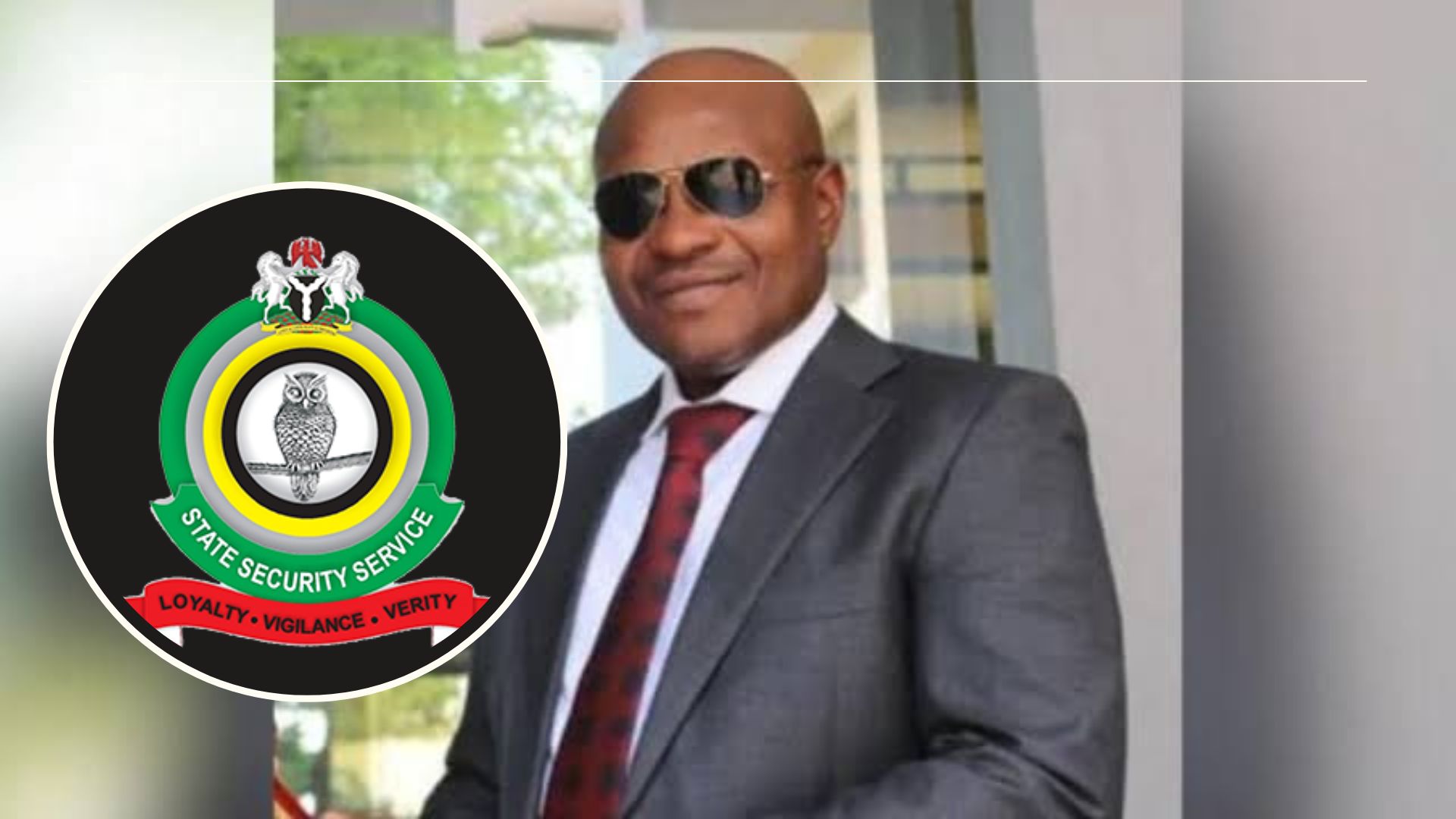
The Radio, Television, Theatre and Arts Workers Union has honoured the Director-General of the Department of State Services, Mr Oluwatosin Ajayi, with the ‘Golden Era Pillar of Critical and Strategic Intelligence for National Development Award’, as part of activities marking its 50th anniversary

RATTAWU conferred the award on Ajayi on Thursday at his office, when the National President of the group, Emeka Kalu, led members to a media/security-critical engagement and strategic partnership meeting for national development in Abuja.

Kalu praised the appointment of Ajayi in 2024 by President Bola Tinubu, describing it as putting “a round peg in a round hole.”

He added that the award was an initiative of the union designed to recognise individuals and institutions that had made outstanding contributions to national development, security, democracy, culture and the growth of Nigeria.

He said, “Your appointment by Mr President demonstrates the importance of placing capable Nigerians with integrity and professional competence in strategic positions of national responsibility.

“The role of the DSS in protecting Nigeria’s national interests, gathering critical intelligence and supporting national security cannot be overemphasised.

“Particularly now that this country is confronted with complex security and emerging technological challenges, appointments like yours are the best ever done by Mr President.

“That is why this union decided to honour you with the Golden Era Pillar of Critical and Strategic Intelligence for National Development Award.”

Responding, the DSS Director-General, Oluwatosin Ajayi, expressed appreciation to the leadership of RATTAWU for the honour.

Ajayi described the recognition as a significant gesture that would further encourage him and the service to remain committed to their responsibilities to the nation.

See also  FG to seek compensation for returning Nigerians from South Africa – Envoy

Source: punchng.com

FOLLOW US ON:

FACEBOOK

TWITTER

PINTEREST

TIKTOK

YOUTUBE

LINKEDIN

INSTAGRAM

Continue Reading
Click to comment

Leave a Reply

Your email address will not be published. Required fields are marked *

News

Seven workers killed, 19 rescued in India tunnel accident

Published

on

At least seven workers were killed and 13 injured following a landslide that sent water and debris gushing into a tunnel under construction in north India, officials said Friday.

The incident occurred late Thursday in the Himalayan state of Uttarakhand, where workers were constructing a tunnel for a state-run hydropower project.

At least three workers are still missing, while 19 were rescued from the Tehri Hydro Development Corporation site, the State Disaster Management Authority said in a statement.

Videos shared by local authorities showed rescue workers equipped with head-mounted torches using makeshift rafts to reach the flooded section of the tunnel.

Uttarakhand has been battered by heavy monsoon rains in recent days.

Accidents on large construction sites are common in India, but ecologists say excessive development projects have led to more disasters in the fragile Himalayan areas.

Last month, 20 people working in a tunnel for another state-run hydroelectric project were killed in the remote northeastern state of Sikkim.

In 2023, 41 workers were rescued after being trapped for 17 days inside a tunnel that collapsed in Uttarakhand.

Hundreds of people have been killed in floods and landslides across the country since the start of the annual monsoon season in June.

Experts say climate change, coupled with poorly planned development, is increasing the frequency, severity, and impact of the disasters.

AFP

Source: punchng.com

FOLLOW US ON:

FACEBOOK

TWITTER

PINTEREST

TIKTOK

YOUTUBE

LINKEDIN

INSTAGRAM

See also  EFCC moves to seize 57 Malami-linked properties
Continue Reading

News

Presidency extends public submission on state police bill to August 21

Published

on

The Presidential Working Group on the National Policing Bill has extended the deadline for the submission of memoranda and position papers on the proposed legislation to Friday, August 21, 2026, at 5.00 pm West Africa Time.

The PUNCH earlier reported that the Presidency, on Wednesday, announced that the public submission would close by 5 pm on Thursday, August 13.

In a statement signed by the Chief of Staff to the President and Chairman of the Presidential Working Group, Femi Gbajabiamila, on Thursday, the group said the extension was intended to ensure that interested individuals, institutions and organisations have adequate opportunity to make substantive contributions to the proposed legislation.

“The Presidential Working Group is committed to ensuring that the process of developing the National Policing Bill benefits from broad consultation and the informed perspectives of Nigerians and relevant stakeholders,” the statement read.

The proposed legislation is intended to provide the operational, administrative, institutional and funding framework necessary for an effective policing architecture that responds to Nigeria’s evolving security needs, while providing appropriate safeguards for accountability, professionalism and the protection of citizens’ rights.

“Given the significance of the proposed reform to the future of policing and internal security in Nigeria, the Working Group considers it important that stakeholders are afforded more opportunity to make substantive and technically sound contributions to the process,” the statement said.

The former lawmaker said legal practitioners, civil society organisations, security sector professionals, state governments, professional bodies, academics, experts and interested members of the public are encouraged to take advantage of the extended window to submit their memoranda and position papers, exclusively through the official National Policing Bill portal, on or before the new deadline.

See also  Strike: Court decides today as FCT workers demand Wike’s removal

According to him, developing an effective policing framework required careful consideration of a number of critical issues, including sustainable funding, command and control structures, recruitment and training standards, operational jurisdiction, inter-agency coordination, accountability mechanisms and safeguards against political interference or abuse.

“These considerations underscore the importance of robust stakeholder engagement in developing a framework that is effective, accountable, sustainable and responsive to the peculiar security needs of communities across the federation,” he added.

He noted that at the conclusion of its assignment, the Presidential Working Group will present a final, implementation-ready draft of the National Policing Bill for onward legislative processing.

The Presidential Working Group appreciated stakeholders who had already made submissions and encouraged others intending to participate in the process to take advantage of the extension.

The National Policing Bill portal went live on August 3, 2026, when Gbajabiamila first announced the public consultation window during a press briefing on the reform, at the time indicating that submissions would close after roughly two weeks.

The Working Group is expected to present the completed Executive Bill package to President Bola Tinubu for review on September 3, 2026.

Source: punchng.com

FOLLOW US ON:

FACEBOOK

TWITTER

PINTEREST

TIKTOK

YOUTUBE

LINKEDIN

INSTAGRAM
Continue Reading

News

Presidency closes public submissions on state police today

Published

on

The Presidency has announced that public submissions on the proposed National Policing Bill will close by 5 pm on Thursday, August 13, 2026, urging Nigerians to submit their views on the planned establishment of state police.

The Chief of Staff to the President and Chairman of the Presidential Working Group on the National Policing Bill, Femi Gbajabiamila, disclosed this on Wednesday, saying the consultation was designed to incorporate the experiences and professional expertise of Nigerians into the proposed legislation.

He said the submissions would be particularly useful in addressing concerns over political interference, oversight, police misconduct and intelligence-sharing between federal and state police services.

He said the consultation would not replace the role of the National Assembly, which would retain the power to scrutinise, amend, reject or pass the Bill when transmitted.

Gbajabiamila urged Nigerians to contribute to the process, particularly on how police services could be protected from political interference, who should investigate serious misconduct and how federal and state forces could share intelligence across state boundaries.

He said, “For too long, the debate has been framed as a choice between effective local policing and protection from political abuse. Nigeria needs both.

“We can bring policing closer to the people while building strong national standards, independent oversight and firm safeguards for every citizen. The time to fix policing in Nigeria is now, and we must see the work through.”

Gbajabiamila also stressed that the proposed state police system must contain strong safeguards to prevent governors from using the force against political opponents, protesters, journalists, minority communities and other citizens.

See also  Akwa Ibom CJ frees 63 more inmates

Gbajabiamila, a former Speaker of the House of Representatives, said although state police could bring policing closer to communities and improve responses to local security challenges, its proximity to state governments raised legitimate concerns about political interference and abuse of power.

He said, “But proximity does not guarantee justice. The concern that governors might use state police against political opponents, minority communities or dissenting voices is serious and must be answered in the design of the law.”

He added that state police services must have lawful authority within their jurisdictions while remaining subject to the constitution, human rights and the rule of law.

According to him, the proposed framework should ensure that police officers are properly recruited, trained, equipped and supervised, while citizens must have access to credible complaints and oversight mechanisms.

Gbajabiamila said the reforms were aimed at creating a policing system that was “closer, faster and better informed by local conditions,” noting that officers familiar with a community’s language, geography and crime patterns would be better positioned to gather intelligence and respond to security threats.

He, however, stressed that the reform must protect citizens from abuse regardless of their political affiliation.

“The law must protect citizens regardless of who holds office. It must protect opposition parties, peaceful protesters, journalists and minority communities.

“It must make unlawful orders easier to resist, misconduct easier to investigate and political interference harder to hide,” he said.

On the legislative process, Gbajabiamila explained that the constitution currently provides for only one police force, the Nigeria Police Force, under Section 214, making constitutional amendment necessary before state police could be established.

See also  200 US troops still in Nigeria for joint intelligence and training – DHQ

He said both chambers of the National Assembly had approved proposed constitutional changes providing for a Federal Police Service and State Police Services, but the process was not yet complete.

According to him, the National Assembly must complete the remaining stages and transmit the amendment to the state Houses of Assembly, where it must be approved by at least 24 of the 36 state legislatures before it can proceed to the President for assent.

He stressed that until those steps were completed, state police remained a proposal.

Gbajabiamila also disclosed that the Presidential Working Group was preparing the National Policing Bill alongside the constitutional amendment process.

He said the Bill would establish national standards for recruitment, vetting, training, remuneration, pensions, equipment and professional conduct, as well as rules on the use of force, complaints, discipline, independent oversight, intelligence sharing and cooperation between federal and state police services.

He said state police would not automatically be established across the country even after the constitutional amendment and the National Policing Bill became law.

“Each state that chooses to establish a service will still need its own enabling law, institutions and funding. It must also meet the national conditions for operation before its officers can begin policing,” he said.

Gbajabiamila said a state that was not ready to establish its own police service would continue to be served by the Nigeria Police Force.

Source: punchng.com

FOLLOW US ON:

FACEBOOK

TWITTER

PINTEREST

TIKTOK

YOUTUBE

LINKEDIN

INSTAGRAM

Continue Reading

Trending