Connect with us

Crime

Reps uncover 58 accounts, probe N400m deal in fake PFIPC agency

Published

on

The House of Representatives Ad-Hoc Committee investigating the purported Presidential Foreign Intervention Promotion Council has uncovered a network of about 58 bank accounts allegedly linked to its detained Director-General, Prince Adeniyi Adeyemi, as well as an alleged N400 million transaction which the committee said may have involved fraudulent representations.

The committee also found that more than 30 of the identified accounts appeared to have been operated in the names of about nine agencies, companies, foundations and related entities allegedly connected to Adeyemi, raising questions about the ownership, control and purpose of the organisations.

The Chairman of the committee, Yusuf Gagdi, disclosed the findings on Wednesday while presenting the panel’s preliminary report to parliamentary correspondents in Abuja on the circumstances surrounding the council’s inclusion in the Federal Budget Framework.

According to Gagdi, preliminary information obtained from financial and investigative institutions showed that the Bank Verification Number (BVN) and other identifying details associated with Adeyemi were linked to a substantial network of personal, corporate, organisational and foundation accounts.

The entities identified by the committee include the Confederation of United Nations Youths; FCT Investment Promotion Agency and Public-Private Partnership; and FCT Investment Promotion Council and Public-Private Partnership.

Others include Foreign Investment Promotion Agency; United Nations Youth Global Agency; United Nations Youth Global Foundation; World United Nations Youth Global Foundation; World Entrepreneurship University Limited; World Enterprise University Limited; FCT Investment Promotion Act; FCT Promotion Agency; and Olubadan of Ibadan Foundation.

Gagdi, however, cautioned that the committee had not concluded that every account, entity or transaction identified was unlawful.

He said the panel was still “reconciling registration records, account mandates, beneficial ownership information, signatories and transaction histories to establish the true nature and control of the organisations and accounts.”

The committee’s findings nevertheless identified what it described as “similarities in the nomenclature, objectives, management structures, signatories and banking relationships of several of the entities.”

According to Gagdi, the similarities raised concerns over a possible pattern of creating or deploying organisations to manufacture artificial credibility, solicit funds, obtain official recognition or induce members of the public to part with money.

Of particular concern is an alleged N400 million transaction involving a company which claimed that Adeyemi induced it to make payments in four instalments after allegedly representing that he could secure a contract for the renovation, furnishing or improvement of a purported official residence allocated to him in his claimed capacity as PFIPC Director-General.

See also  PHOTOS: Six suspects arrested over k!lling of police officer in Bayelsa

Gagdi said the committee was tracing the destination of the funds, identifying the account holders and beneficial owners, and determining whether any public officer or private individual participated in, facilitated or benefited from the transaction.

He said that, if established through competent investigative and judicial processes, the allegations could disclose offences including fraudulent misrepresentation, obtaining money by false pretence, impersonation, conspiracy, forgery and offences relating to the concealment or movement of proceeds of crime.

Beyond the financial trail, the committee said it had uncovered evidence suggesting that the PFIPC itself was never lawfully established.

Gagdi said the investigation found no Act of the National Assembly, gazetted enactment, Presidential Executive Order or other lawful instrument creating the purported council.

He said documentary materials used to project the existence and authority of the organisation contained substantial evidence of alleged fabrication, forgery, mutilation, impersonation and unauthorised representation of institutions and public officers of the Federal Republic of Nigeria.

The committee also found “evidence of alleged fabrication of official documents, including a purported presidential appointment letter for Adeyemi, a purported Executive Order and a document presented as an Act of the National Assembly establishing the organisation.”

Evidence obtained from the State House, according to Gagdi, “established that the purported appointment letter was neither issued nor signed by the Chief of Staff to the President, Mr Femi Gbajabiamila.”

The letterhead and reference number were also said to be inconsistent with official State House correspondence.

The committee consequently exonerated Gbajabiamila from allegations of authorising, establishing or participating in the activities of the purported council, commending him for what it described as timely interventions after alerts concerning the organisation were brought to his attention.

Gagdi said, “The documentary evidence presently before the Committee does not establish that the Chief of Staff authorised, approved, established or participated in the activities of the purported organisation.”

Rather, he said, “the evidence showed that Gbajabiamila promptly communicated with relevant security and investigative agencies, including the Nigeria Police Force, Office of the National Security Adviser, Department of State Services and Economic and Financial Crimes Commission, after receiving alerts concerning the activities of the organisation.”

The committee also exonerated the National Assembly committees responsible for budget scrutiny from culpability.

See also  PHOTOS: Security operatives nab suspected vote buyer with N25.9m cash in Kaduna

According to Gagdi, the investigation had shifted attention to “how an entity that had not been lawfully established was nevertheless able to secure apparent recognition and budgetary treatment within the Federal Government’s administrative machinery.”

The development, he said, exposed serious weaknesses in the verification of government institutions, the creation of administrative and budget codes, the authentication of official correspondence, the allocation of government accommodation and the processing of official-looking vehicle number plates.

The purported council allegedly strengthened its claim to governmental legitimacy by occupying office accommodation within the Federal Secretariat Complex and operating a website that portrayed it as a federal institution.

The committee also found that the organisation allegedly used the names, offices and photographs of President Bola Tinubu and other senior government officials without authorisation.

About 39 persons were also represented as employees of the purported organisation, with the committee investigating their recruitment, appointment letters, identity cards, remuneration and allegations that some prospective employees were required to make payments as a condition for employment.

Gagdi said the committee had recommended that all Ministries, Departments and Agencies immediately refrain from recognising, transacting with or extending government privileges to the PFIPC or any related entity whose legal status had not been independently verified.

The panel further urged relevant government agencies to ensure that “no appropriation, administrative code, warrant, cash backing, financial release or governmental facility should be processed in favour of the purported organisation.”

It also directed relevant financial institutions and investigative agencies to preserve account records, transaction histories, mandates and beneficial ownership information relating to the persons and entities under investigation.

The committee called for “the prompt conclusion of criminal and financial investigations” and said that where sufficient admissible evidence was established, “appropriate agencies should institute criminal proceedings before courts of competent jurisdiction.”

It further recommended “the tracing, preservation, freezing and recovery of proceeds or assets derived from any established unlawful conduct, subject to applicable legal requirements and judicial authorisation where necessary.”

The committee commended the Nigeria Police Force, DSS, EFCC, Independent Corrupt Practices and Other Related Offences Commission and ONSA for their contributions to tracing the alleged fabricated documents, associated entities, financial accounts and transactions.

See also  Roseline Ajesola: Nigerian Lady Arrested In North Carolina Over Alleged $247,000 Fraud

It also proposed enhanced authentication procedures for the creation of new government institutions and administrative and budget codes, as well as correspondence purportedly emanating from the Presidency and other high offices.

Another recommendation was the establishment or strengthening of a secure, centralised digital verification platform through which the lawful existence, establishing instrument and status of every Federal Government institution could be independently authenticated.

The committee said the alleged N400 million transaction should be subjected to a separate and comprehensive investigation, with lawful steps taken to trace, preserve, freeze and recover any proceeds of unlawful activity established by investigators.

Gagdi said the panel would continue examining the ownership and control of the identified accounts, the alleged transaction, the purported official residence, special number plates, occupation of government accommodation and the roles played by public officers and private individuals connected with the matter.

He added that outstanding evidence would be obtained from institutions and public officers who had yet to fully comply with requests from the committee, while affected persons would be given a fair hearing before definitive findings were reached.

The chairman stressed that the findings presented were preliminary and did not amount to a final determination of criminal guilt, which remains the constitutional responsibility of courts of competent jurisdiction.

He said the committee’s final report would be submitted to the House upon its resumption from the two-month annual recess, after which lawmakers would have the constitutional prerogative to consider, debate, adopt, amend or reject the findings and recommendations.

Gagdi said the investigation went beyond exposing a purported government agency or identifying an alleged mastermind, describing it as an effort to protect the integrity of Nigeria’s institutions and prevent private individuals from manufacturing governmental authority.

“The Presidency cannot be impersonated with impunity,” Gagdi said, stressing that the identity, authority and instruments of the Federal Republic of Nigeria could not be appropriated by private individuals or organisations for personal advantage.

He assured that the final report would contain definitive findings, identified institutional and individual responsibilities, and recommendations for appropriate legislative, administrative, disciplinary, civil, financial and prosecutorial action, subject to the decision of the House and due process of law.

Source: punchng.com

FOLLOW US ON:

FACEBOOK

TWITTER

PINTEREST

TIKTOK

YOUTUBE

LINKEDIN

INSTAGRAM

Continue Reading
Click to comment

Leave a Reply

Your email address will not be published. Required fields are marked *

Crime

Ogun pastor, wife found dead after alleged domestic fight

Published

on

A Celestial Church of Christ evangelist, Abidemi Odukoya, and his wife, Adenike, have reportedly died in separate circumstances following an alleged domestic altercation at their residence in the Akinode/Ibogun community, Ogun State.

PUNCH Metro learnt that the incident occurred in the early hours of Monday, August 25, after the couple allegedly engaged in a domestic dispute that escalated into a physical confrontation.

The altercation reportedly left Adenike unconscious and injured, while her husband allegedly fled the residence.

A former Chairman of the Community Development Association, Adejimi Olawumi, said in a video shared by Arole TV on Wednesday that he was alerted by residents’ cries for help and subsequently found the woman lying in a pool of blood.

Olawumi said, “It was around 1am when I heard my neighbours shouting, ‘thief, thief.’ On my way out, I saw Daniel. I asked him what happened, and he said it was his mum and dad. Then I went to call my neighbours to come out.

“Immediately, we got inside the house and saw the wife in a pool of blood. At that time, there were no vehicles to take her to the hospital.

“The son said he did not see what happened between his mum and dad because he was in the other room. So, we started calling people together.”

Olawumi said members of the CDA subsequently noticed that Odukoya was missing and began searching for him.

According to him, they later learnt that the cleric had been hit by a vehicle in the Ifo area of the state.

See also  Roseline Ajesola: Nigerian Lady Arrested In North Carolina Over Alleged $247,000 Fraud

He said, “When we saw that we did not see the husband, everyone in the CDA came out to look for him everywhere. We called our area chairman to tell him about the incident.

“Later, we heard that Mr Abidemi had been hit by a car in Ifo. The police took him to the hospital, and we confirmed that he was the one. The CDA then started working on how to bring his remains home.

“We have never heard or seen something like this happen before. We only know that they fight sometimes and settle it among themselves.”

Meanwhile, the late evangelist’s younger sister, in a video circulating online, claimed that the couple had been involved in repeated disagreements before their deaths.

She said the couple had visited her around April following an earlier altercation, adding that the matter was eventually resolved at a police station.

She said, “I have been hearing that they have been fighting for a while now. Around April, they came to my house. He explained everything about how he and his wife fought, and that it was at the police station they settled it.

“I only told them to be patient with each other because it is not right for a husband and wife to fight against each other. They had been fighting for a very long time, and people helped them settle it. And now we just heard that the husband and wife are dead.”

The woman said the family was informed of the incident after one of the siblings received a phone call, adding that arrangements were subsequently made for the remains of the deceased.

See also  Suspected cult clashes leave two dead in Lagos, Ogun

The wife was reportedly buried on the day of the incident, while Odukoya was buried on Wednesday, September 2.

In separate footage seen by PUNCH Metro on Wednesday, some clerics were seen performing burial rites over the remains of the evangelist at an undisclosed location.

The circumstances surrounding the deaths, however, remained unclear as of the time of filing this report.

When contacted on Wednesday, the deputy spokesman for the state police command, Opeyemi Oluborode, confirmed the incident.

“The police is investigating the incident,” he added.

Source: punchng.com

FOLLOW US ON:

FACEBOOK

TWITTER

PINTEREST

TIKTOK

YOUTUBE

LINKEDIN

INSTAGRAM

Continue Reading

Crime

Kano APC chief abducted, two killed

Published

on

Gunmen have killed two people and abducted the All Progressives Congress Chairman of Rogo Local Government Area of Kano State, Alhaji Abdullahi Fanka, in a fresh overnight attack on the community.

The latest attack came barely 24 hours after gunmen killed the APC Chairman of Rantan Ward in Bebeji Local Government Area, Alhaji Garba Buba, and another resident, Sulaiman Zunduma.

The Rogo attack reportedly occurred around 11pm on Monday when the gunmen invaded the area and opened sporadic fire, sending residents fleeing for safety.

A resident, who spoke with PUNCH Metro on Tuesday on condition of anonymity for security reasons, said the attackers killed two people who attempted to prevent them from abducting Fanka.

“The two people killed couldn’t stop them from whisking away the party chairman because they were in possession of sophisticated weapons,” the resident said.

The incident has heightened concerns over the security situation in Kano, with suspected kidnappers and bandits carrying out a series of attacks in different communities in the state within days.

On Sunday night, gunmen invaded Rantan community in Bebeji LGA, killing Buba, the APC ward chairman, and Zunduma. The Kano State Police Command has since launched an investigation into the incident and efforts to apprehend the perpetrators.

The Rantan attack occurred hours after suspected bandits attacked Chiromawa community in Garun Mallam LGA on Saturday night, where they abducted the Sarkin Noman Kano, Alhaji Yusif Nadabo.

The traditional title holder was, however, rescued by the police after security operatives and residents mounted a response to the attack. Three residents were reported injured during the incident.

See also  Lured online, sold for $5,000: Read how Nigerian youths are trapped in Asia’s cyber-slave camps

The three incidents have occurred in neighbouring parts of Kano within about 72 hours, raising fresh concerns about the spread of kidnapping and armed attacks in the state.

The Minister of State for Defence, Bello Muhammad Matawalle, had on Monday announced that the Federal Government was developing a five-year defence and security plan following the recent attacks in Kano.

Efforts to contact the Kano State Police Public Relations Officer, CSP Abdullahi Haruna Kiyawa, for an update on the latest attack were unsuccessful as of the time of filing this report. Calls to his telephone line were unanswered, while a WhatsApp message sent to him had yet to receive a response.

Source: punchng.com

FOLLOW US ON:

FACEBOOK

TWITTER

PINTEREST

TIKTOK

YOUTUBE

LINKEDIN

INSTAGRAM

Continue Reading

Crime

Olukoyede revealed EFCC recovers N1.23tn, $684m, secures 10,872 convictions

Published

on

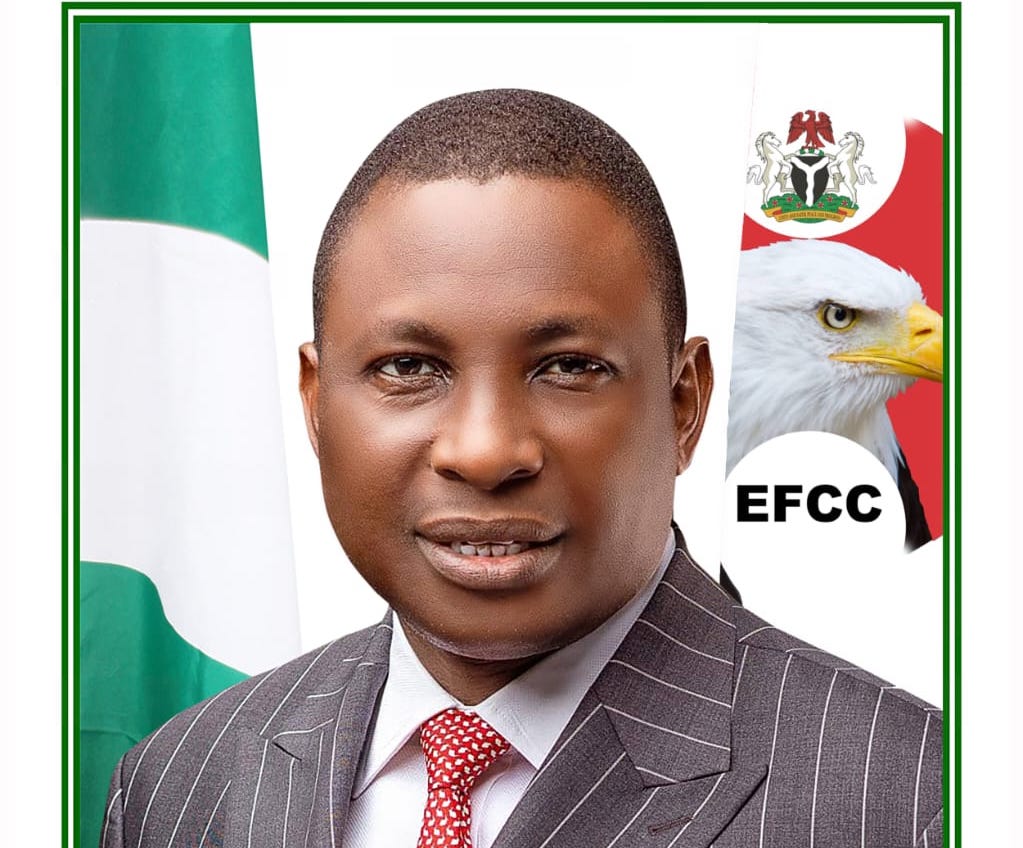
The Economic and Financial Crimes Commission recovered N1.23tn, $684.47m and other foreign currencies in proceeds of crime and secured 10,872 convictions in the first 34 months of Ola Olukoyede’s tenure as chairman.

Olukoyede disclosed this on Monday while presenting his three-year stewardship report at the EFCC headquarters in Abuja.

He said the commission received 49,673 petitions between October 2023 and July 2026, investigated 39,615 cases and filed 14,476 cases in court, resulting in 10,872 convictions.

According to him, the figures represented a 75.1 per cent conviction-to-filing ratio.

The EFCC chairman added that the commission secured 1,370 convictions from 1,889 filings in the first half of 2026 alone.

He said the results reflected a prosecutorial strategy focused on investigation, evidence gathering and courtroom outcomes.

Olukoyede said the commission had remained focused on ensuring that its anti-corruption mandate translated into tangible economic value for Nigerians.

“Our approach has been anchored on properly focusing our mandate in the overall interest of Nigerians, using the anti-graft war to stimulate economic growth, strengthen the rule of law, improve transactional credibility, enhance Nigeria’s image and attract foreign direct investment,” he said.

Giving a breakdown of the recoveries, Olukoyede said the commission recovered N1,233,612,040,411.11, $684,478,457.32, £373,905.78 and €9,343,803.66 between October 1, 2023 and June 30, 2026.

He said about N397.26bn, representing 33 per cent of the naira recovery, constituted direct recoveries for the Federal Government, while N836.34bn, representing 67 per cent, comprised indirect recoveries made on behalf of ministries, departments and agencies, state revenue services, companies, individuals and foreign victims.

He said the figures showed that two out of every three naira recovered by the commission were recovered for beneficiaries other than the Federal Government.

“Recovery is only meaningful when the value is ultimately returned to the public interest or rightful beneficiaries,” Olukoyede said.

He disclosed that N661.32bn and $492.37m had been released to beneficiaries during the period under review.

The naira releases included N325.35bn paid directly to individuals and corporate bodies, while N335.97bn was released to ministries, departments and agencies, the Nigerian Revenue Service, state internal revenue services and other public institutions, companies and individuals.

See also  Nigeria deports 42 Chinese and Philippine nationals convicted of cybercrimes and ponzi schemes

Olukoyede said the commission was working towards making restitution faster, more transparent and more efficient.

The EFCC chairman also disclosed that more than 40 personnel of the commission had been dismissed over corruption and financial malpractice during his tenure.

He said more than five of the affected officers were currently being prosecuted.

Olukoyede said the commission could not effectively fight corruption while tolerating corrupt practices within its own ranks.

“You can’t be fighting corruption when your hands are soiled with corrupt practices,” he said.

He disclosed that the commission had renamed its former Internal Affairs Department as the Department of Ethics and Integrity as part of measures to strengthen internal accountability.

Olukoyede also said the EFCC had introduced policies on gifts and hospitality, conflict of interest and exhibit-room security.

On the changing nature of financial crimes, the EFCC chairman said the commission recorded 46,288 offences across nine major crime typologies between 2024 and 2026 year-to-date.

He said advance fee fraud and cybercrime accounted for nearly two-thirds of the recorded offences.

Olukoyede added that recorded offences increased by 24.1 per cent between 2024 and 2025, with significant increases in procurement fraud, bank fraud, cybercrime and economic-governance offences.

“The trend demonstrates that the EFCC’s responsibility extends beyond the prosecution of high-profile corruption cases,” he said.

According to him, the commission was increasingly focused on protecting ordinary citizens, businesses and institutions from fraud, cyber-enabled crimes and other forms of economic exploitation.

Olukoyede said the commission had intensified enforcement against money laundering, unlicensed bureaux de change, illegal mining, virtual assets and terrorist financing.

He said 920 specialised cases resulted in 212 convictions, while several other investigations and prosecutions remained active.

The commission also recorded 234 cases involving bureaux de change and secured 73 convictions during the period.

Olukoyede said enforcement against unlicensed BDC operations complemented regulatory reforms by the Central Bank of Nigeria and was aimed at promoting a more formal and transparent retail foreign-exchange market.

He said the objective was also to close channels vulnerable to illicit finance, speculation and round-tripping.

See also  PHOTOS: Security operatives nab suspected vote buyer with N25.9m cash in Kaduna

The EFCC chairman reaffirmed the commission’s commitment to investigating and prosecuting high-profile Nigerians regardless of their political positions, public status or influence.

He cited the recent convictions of former Minister of Power, Saleh Mamman, Robert Orya and Chukwunyere Nwabuoku as examples of the commission’s determination to pursue cases without discrimination.

“No office, title or social status should place anyone beyond the reach of the law,” Olukoyede said.

He maintained that the EFCC would investigate cases professionally, prosecute them based on evidence and allow the courts to determine the guilt or innocence of accused persons.

Olukoyede said the EFCC’s enforcement activities also generated approximately N288.1bn in federal and state tax recoveries during the period.

Of the amount, N173.2bn represented federal tax recoveries, while N114.9bn was attributed to state internal revenue services.

He stressed that the recoveries represented enforcement of existing tax obligations rather than the introduction of new taxes.

According to him, about N257.2bn in naira recoveries were also recorded for federal ministries, departments and agencies.

Olukoyede said the figures demonstrated how anti-corruption enforcement could strengthen government revenue without necessarily imposing additional burdens on taxpayers.

The EFCC chairman highlighted the social and economic impact of recovered proceeds of crime, citing the conversion of NOK University in Kachia, Kaduna State, into the Federal University of Applied Sciences, Kachia.

He said the institution, recovered through the commission’s asset-forfeiture process, had 1,909 students matriculating in December 2025.

Olukoyede said the Federal Government also allocated N50bn each from EFCC recoveries to the Nigerian Education Loan Fund and the Nigerian Consumer Credit Corporation in 2024, with additional N50bn allocations to each institution approved in 2026.

He said the use of recovered criminal proceeds for education and household credit represented a shift from viewing anti-corruption merely as punishment to seeing it as a mechanism for restoring stolen value and supporting national development.

Beyond cash recoveries, Olukoyede said the EFCC secured forfeiture orders covering 10,053 tangible assets between October 2023 and July 2026.

The assets included 8,198 electronic items, 1,177 real estate properties, 370 automobiles and 251 plots of land.

Other forfeited assets included schools, factories, hotels, shops, oil rigs, barges, machinery and aircraft, while 102 tonnes of solid minerals were also forfeited.

See also  Banditry: Police free six vigilantes arrested by Army

He said proceeds from the disposal of assets under final forfeiture orders amounted to about N12.07bn and were paid into the Federal Government’s coffers.

Olukoyede linked the commission’s sustained enforcement activities to Nigeria’s broader efforts to strengthen its anti-money laundering and counter-financing of terrorism framework.

He described Nigeria’s removal from the Financial Action Task Force Grey List in October 2025 as a national achievement.

The EFCC chairman said the commission’s casework and enforcement activities contributed to the collective national effort that strengthened Nigeria’s compliance framework.

He also attributed many of the commission’s achievements to increased collaboration with domestic and international law-enforcement agencies, regulators and other institutions.

He listed the United States Federal Bureau of Investigation, United Kingdom National Crime Agency, Royal Canadian Mounted Police and INTERPOL among the international partners working with the EFCC.

Olukoyede said about 60 per cent of the commission’s processes and operations had been digitalised as part of its reform programme.

He said the EFCC had introduced new guidelines on arrest and bail, reviewed its sting operations and established specialised units, including the Department of Fraud Risk Assessment and Control and Cybercrime Rapid Response Centre.

The commission, he added, had inaugurated its Enugu and Ilorin directorates and established new directorates in Ekiti, Anambra and Katsina states.

Olukoyede said the EFCC’s success should not be measured merely by the number of arrests made or funds recovered.

He said the commission’s responsibility was to transform intelligence into prevention, petitions into investigations, investigations into prosecutions, prosecutions into convictions and recoveries into restitution.

“The ultimate objective is to turn enforcement into measurable national value,” he said.

The EFCC chairman pledged that the commission would continue to intensify its fight against corruption and economic crimes while maintaining respect for due process and focusing on outcomes that deliver measurable value to Nigerians.

Source: punchng.com

FOLLOW US ON:

FACEBOOK

TWITTER

PINTEREST

TIKTOK

YOUTUBE

LINKEDIN

INSTAGRAM

Continue Reading

Trending