Connect with us

Business

N11.3tn petrol bill hits Nigerians in seven months

Published

on

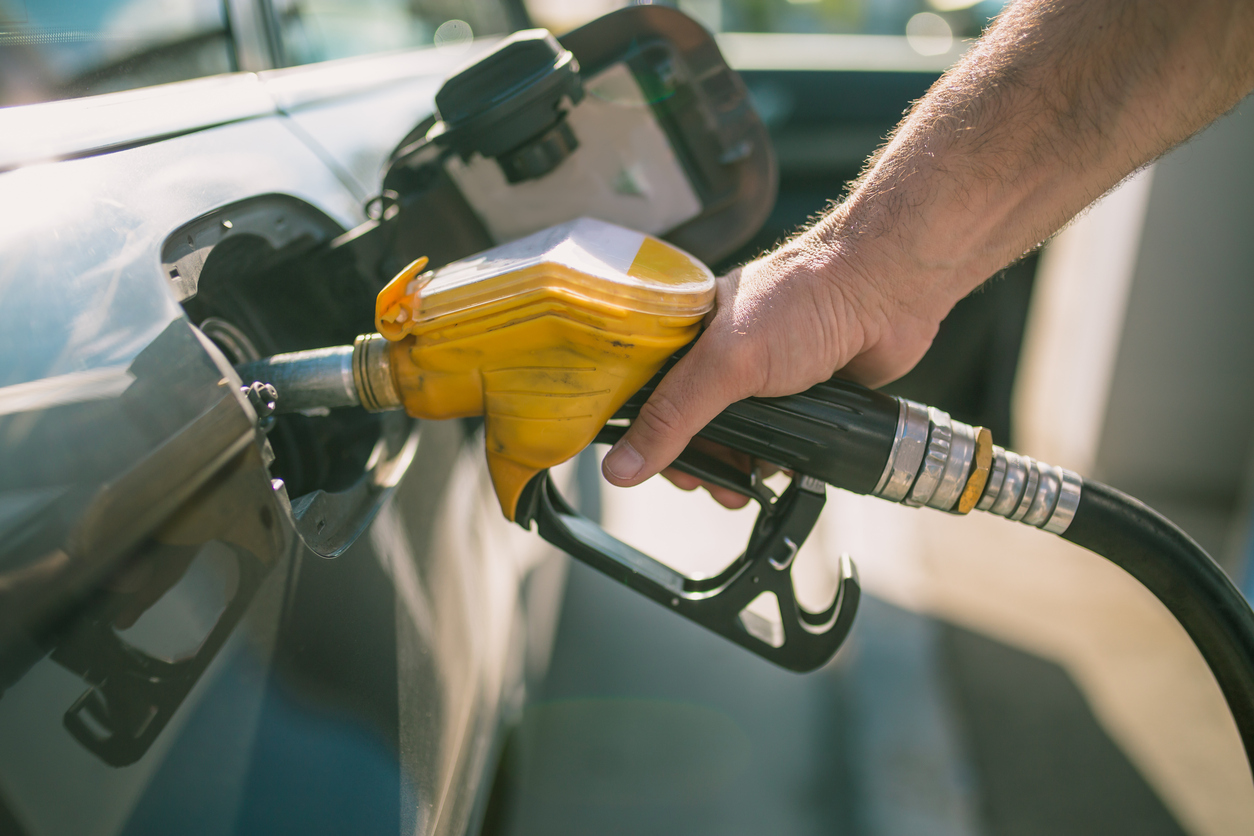
Amid lamentations over rising energy costs, Nigerians spent about N11.3 trillion on Premium Motor Spirit (petrol) between January and July 2026 to power their vehicles and electricity generators, according to data from the Nigerian Midstream and Downstream Petroleum Regulatory Authority.

The NMDPRA July 2026 midstream and downstream statistics showed that approximately 10.37 billion litres of petrol were trucked into the domestic market during the seven months.

An analysis of the monthly volumes against average prevailing petrol prices showed that Nigerians spent N11.3tn on the commodity between January and July this year.

Once subsidised, petrol is the most-used fuel in Nigeria for cars, buses, bikes, tricycles and power generators. Diesel is mainly used by trucks and industries. The removal of petrol subsidies by President Bola Tinubu in 2023 triggered a sharp rise in petrol prices from N175 to the current N1,310 per litre.

According to the NMDPRA report, spending remained above N1tn in each of the seven months, with the monthly bill rising sharply as petrol prices increased from March.

Petrol sold for an average of N830/litre in January and February, before the price rose to N1,100/litre in March, N1,250/litre in April and N1,300/litre in May. The price subsequently moderated to N1,200/litre in June and July.

The price increases, which occurred amid heightened geopolitical tensions involving the United States and Iran, meant that Nigerians continued to spend heavily on petrol even as demand weakened.

In January, about 1.87 billion litres of petrol were consumed, resulting in expenditure of approximately N1.55tn. Consumption fell to 1.59 billion litres in February, with Nigerians spending N1.32tn on the product. However, despite lower volumes, monthly spending increased significantly from March as petrol prices climbed.

About 1.47 billion litres were consumed in March, costing consumers about N1.61tn. The April bill climbed to N1.92tn, despite consumption of about 1.53 billion litres, while May expenditure stood at N1.87tn on 1.44 billion litres.

See also  Remi Tinubu donates ₦110m to families of 22 deceased Kano athletes

In June, Nigerians spent N1.71tn on about 1.42 billion litres, while July recorded the lowest monthly volume of the seven-month period at approximately 1.11 billion litres, with expenditure still reaching N1.33tn.

The figures highlight the impact of higher petrol prices on household and business expenditure, with the country’s total fuel bill remaining above N11tn despite consumption falling considerably from the levels recorded at the beginning of the year.

The decline in demand became particularly pronounced in July, when average daily petrol consumption fell to 35.7 million litres. This was 24.7 per cent lower than the 47.4 million litres consumed daily in June and 24.4 per cent below the 47.2 million litres recorded in July 2025.

July’s consumption was also 44 per cent below the 63.7 million litres per day recorded at the peak in December 2025. The 35.7 million litres per day recorded in July was 28.6 per cent below the 50 million litres per day benchmark for petrol demand in Nigeria.

It was also about 29.4 per cent below the 50.6 million litres per day average recorded over the 13-month period covered by the July statistics. The report shows that the sharp contraction in petrol consumption contrasted with the performance of some other petroleum products.

Diesel consumption stood at 14.7 million litres per day in July, slightly above the 14 million litres per day benchmark. This represented a five per cent increase over the stated daily demand benchmark.

Liquefied Petroleum Gas, popularly known as cooking gas, also recorded consumption above its benchmark, reaching 4.4 kilotonnes per day, compared with a benchmark of 3.9 kilotonnes per day, representing a 12.8 per cent increase.

Aviation fuel, however, recorded a substantial shortfall, with consumption standing at 1.7 million litres per day, 43.3 per cent below its three million-litre daily benchmark.

See also  Onyema warns new taxes could cripple airlines

The figures point to a divergence in the downstream market, with petrol and aviation fuel consumption significantly below their stated benchmarks, while diesel and LPG remained above theirs.

For petrol, the July decline also represented the lowest daily consumption recorded on the July 2025-July 2026 chart. The development came as consumers faced substantially higher petrol prices than at the beginning of the year, increasing the amount paid for every litre even as the quantity purchased declined.

Overall, the January-July figures show that the country’s petrol expenditure remained exceptionally high, with Nigerians spending N11.3tn on 10.37 billion litres in seven months, while daily consumption had fallen well below both the 50-million-litre benchmark and the average recorded over the preceding 13 months.

Recently, energy experts and economists backed the proposal by former Vice President Atiku Abubakar for a review of the Federal Government’s petrol subsidy policy, urging President Bola Tinubu to introduce targeted measures to cushion the hardship caused by the removal of the subsidy.

The experts, who spoke separately on the development, however, warned against a blanket return to the old subsidy regime, stressing the need for transparency, accountability and proper implementation of any intervention.

They argued that while the removal of the subsidy was necessary, the Federal Government had not adequately managed its consequences, particularly the rising cost of petrol, transportation, food and other essential goods.

The Chief Executive Officer of Petroleumprice.ng Olatide Jeremiah argued that the current petrol price was too high for a country where a large proportion of the population is struggling with extreme poverty and hunger.

“It is quite unfortunate that in a country like Nigeria where 80 per cent of its citizens are poor, you allow the masses to pay N1,300 for petrol at the pump. So, you need to understand that without any government intervention, the citizens will not be able to survive N1300 at the pump.

See also  Breaking: Marketers Announce Intention To Increase Petrol Price After Dangote’s Fresh Decision

The Petroleumprice.ng boss said the government could consider directing part of the revenue from crude oil sales towards intervention in the prices of petroleum products.

“All over the world, during this crisis between Iran and the US, most countries of the world intervened in the prices of petroleum products. Some have adopted Atiku’s model, and that helps the countries to cap and control prices, pending when it will be resolved,” he added.

Meanwhile, an energy economist, Prof. Adeola Adenikinju, said production subsidy was preferable in principle to consumption subsidy but warned that Nigeria’s history of special interests could undermine such a system.

Adenikinju also advocated improved mass transportation, saying the government should do more to reduce the burden of transportation on households.

“Another thing that I thought would be very important is the issue of mass transit. And one of the major ways through which, first of all, we provide paths for the economy is through transportation.”

He criticised the government’s CNG intervention as insufficient, particularly because of the limited availability of CNG facilities. “The CNG the government is promoting. In a lot of places, we don’t even see those CNG buses. They aren’t there; they are very insufficient to be able to cushion the effects on the poor people,” he stated.

The renewed debate over subsidy comes as the Federal Government faces increasing pressure to demonstrate how savings from the policy have benefited ordinary Nigerians.

Source: punchng.com

FOLLOW US ON:

FACEBOOK

TWITTER

PINTEREST

TIKTOK

YOUTUBE

LINKEDIN

INSTAGRAM

Continue Reading
Click to comment

Leave a Reply

Your email address will not be published. Required fields are marked *

Business

NAFDAC destroys N8bn products, targets sachet alcohol in N’Central

Published

on

The National Agency for Food and Drug Administration and Control (NAFDAC) has confiscated and destroyed unwholesome, banned, fake and adulterated products worth more than N8 billion in the North-Central states.

Speaking during the destruction ceremony on Thursday in Lafia, the Nasarawa State capital, the Director-General of NAFDAC, Prof. Mojisola Adeyeye, said the products were seized from manufacturing outfits, sales outlets, markets and motor parks across the zone.

The DG, who was represented by a Deputy Director of NAFDAC in the zone, Joseph Edor, said most of the confiscated products were banned alcoholic beverages in small volumes of less than 200 ml (20 cl).

According to her, NAFDAC was established by Decree No. 19 of 1993, as amended, with the mandate to protect and promote public health by ensuring that only quality, efficacious and regulated products are manufactured, imported, distributed and sold in Nigeria.

She explained that the agency banned alcoholic beverages in sachets and glass bottles of less than 200ml due to their availability, affordability and portability, which have made them easily abused by youths and underage schoolchildren.

“Research has shown that early exposure to alcohol affects the brain and other vital organs such as the liver and kidneys.

“It stymies the brain, resulting in mental retardation, brain damage, poor performance of pupils in school, low productivity and several types of illnesses,” she said.

The DG said the ban and subsequent raids were based on these abuses, addiction and adverse health effects, while other seized items included expired, fake and unwholesome food, drugs and cosmetics.

“It is in the course of carrying out these activities that this heap of unwholesome, banned, fake and adulterated products worth about eight billion naira was confiscated from manufacturing outfits, sales outlets, markets and motor parks.

See also  Onyema warns new taxes could cripple airlines

“The bulk of the products in that pile are predominantly banned alcoholic beverages in low volumes of less than 200ml (20cl),” she emphasised.

The Director-General further commended other law enforcement agencies, sister agencies and stakeholders for their continuous collaboration, especially in intelligence sharing and security cover during operations.

Also speaking at the event, the Nasarawa State Coordinator of NAFDAC, Dr Gyani Stephen, explained that the exercise was not targeted at hurting people but was intended to save lives.

He advised those in the habit of selling fake and banned products to desist or be ready to face the full wrath of the law, warning that the agency would come after them if they did not change their ways.

In his goodwill message, the Nasarawa State Commander of the National Drug Law Enforcement Agency, Daniel Saidu, represented by Yakubu Awoh, commended NAFDAC for saving lives through the regular seizure and destruction of expired and fake drugs.

He explained that if these dangerous products were allowed into the markets, they could have destroyed millions of lives and affected the mental health of many others.

Source: punchng.com

FOLLOW US ON:

FACEBOOK

WHATSAPP CHANNEL

TWITTER

PINTEREST

TIKTOK

YOUTUBE

LINKEDIN

INSTAGRAM

Continue Reading

Business

Seven modular refineries to begin operations in 2027, read details

Published

on

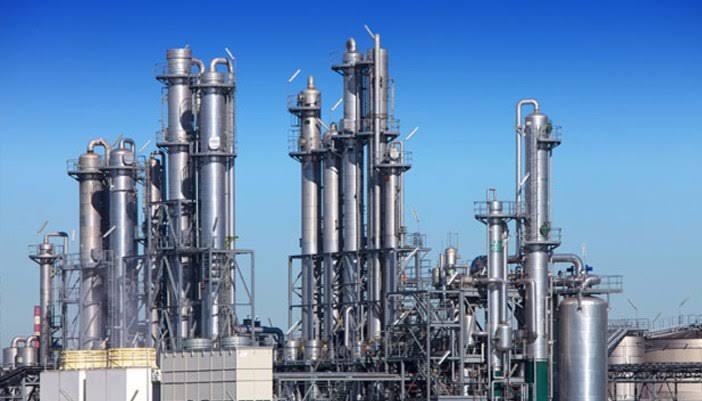
Nigeria’s modular refining sector is expected to expand next year, with seven new refineries projected to commence operations with a combined capacity of 83,000 barrels per day, according to Argus Media’s George Maher-Bonnett.

Maher-Bonnett disclosed this in Lagos on Wednesday during a presentation at the OTL Africa Downstream conference, where he highlighted the changing dynamics of Nigeria’s petroleum products market amid rising local refining capacity and declining fuel demand.

In his presentation, titled ‘African Energy Outlook’, Maher-Bonnett said four modular refineries operated in Nigeria in September, with a combined capacity of 32,000 barrels per day.

“Four modular refineries operating in September, total 32,000 b/d capacity,” he said.

He added, “Seven new modular refineries to start next year“ with a total of 83,000 barrels per capacity.

The projected additions would represent more than two and a half times the combined capacity of the four modular refineries operating in September, potentially increasing the contribution of smaller refining facilities to Nigeria’s domestic petroleum products supply.

However, the presentation did not identify the seven proposed refineries, their owners or locations, or provide individual capacity figures and commissioning schedules.

Maher-Bonnett also highlighted the growing role of the Dangote Petroleum Refinery in improving Nigeria’s self-sufficiency in petroleum products, despite a decline in fuel demand during the year.

“Nigerian fuels demand is down this year,” the presentation stated, attributing the development to “higher flat prices.”

He added self-sufficiency is improving with Dangote ramp-up, projecting that modular refineries would play a growing role.

The presentation linked the decline in demand to higher prices and noted that the only government intervention during the period covered was an NNPC price reduction.

See also  Crude hits $107, fresh petrol price hike looms

“No government interventions, besides NNPC price cut this month,” it stated.

The expected expansion of modular refining capacity comes as Nigeria’s petroleum products market adjusts to increased domestic production and changing international trade flows.

Maher-Bonnett said the Dangote refinery is operating at a high rate, with steady petrol output, reducing the attractiveness of importing some petroleum products from Europe into West Africa.

“Dangote’s 700,000 bpd Lekki refinery is running hard, gasoline output is steady,” the presentation stated.

It also highlighted Ghana’s growing refining capacity, noting that the 45,000-barrel-per-day Tema refinery is ramping up production and improving the country’s self-sufficiency.

According to the presentation, the economics of shipping petroleum products from Europe to West Africa and from Europe to the United States has weakened, with freight costs further affecting the competitiveness of the routes.

Source: punchng.com

FOLLOW US ON:

FACEBOOK

WHATSAPP CHANNEL

TWITTER

PINTEREST

TIKTOK

YOUTUBE

LINKEDIN

INSTAGRAM

Continue Reading

Business

Falana tasks Senate on recovery of $123bn, N66bn oil funds, read details

Published

on

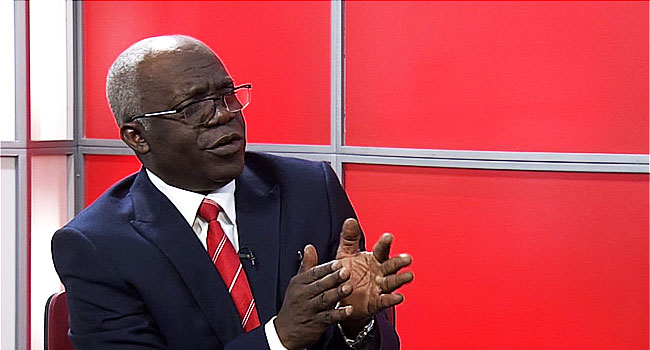
Human rights lawyer, Femi Falana, has asked the National Assembly to compel the recovery of $123.17bn in alleged outstanding oil royalties, taxes and dividends, alongside N66.4bn, from the Nigerian National Petroleum Company Limited and other oil and gas companies.

In a letter dated 28 October, 2026, and titled ‘Request to Recover Dividends, Taxes and Royalties Worth $123.17bn and N66.4bn from NNPC and Other Companies and Remit Same to the Federation Account’, Falana urged the National Assembly to ensure that the alleged outstanding revenues were recovered and remitted to the federation account.

He warned that he would institute legal proceedings at the Federal High Court if the authorities failed to initiate measures to recover the funds within 14 days of receiving the letter.

In an acknowledged copy of the letter made available to The PUNCH on Thursday, the senior advocate said the outstanding revenues covered several categories, including $62bn in unpaid oil royalties, $23.1bn in alleged unremitted dividends from Nigeria LNG Limited, $6.071bn in outstanding industry revenues, and claims relating to stolen crude oil and refinery rehabilitation contracts.

The letter also cited a Supreme Court consent judgment delivered on 20 October, 2018, which it said directed the Federal Government to collect outstanding royalties accrued over 18 years under the Deep Offshore and Inland Basin Production Sharing Contracts Act.

According to Falana, the governments of Akwa Ibom, Bayelsa and Rivers states had approached the Supreme Court to compel the Federal Government to enforce the law, which provided for an upward review of royalties when international crude oil prices exceeded $20 per barrel.

He said a committee constituted by the Office of the Attorney-General of the Federation subsequently determined that $62bn in royalties had not been collected from international oil companies.

Falana added that Akwa Ibom and Rivers states later obtained a Federal High Court judgment for a combined $3.3bn, while Bayelsa State secured a separate judgment for $951m over their alleged entitlements from the outstanding royalties.

See also  Kogi Targets N86.6bn Revenue From Cashew Production In 4 Months

He said the Federal Government had yet to comply with the judgments.

The lawyer also called for the recovery of $29bn linked to alleged crude oil theft and undeclared exports, citing investigations by the Nigerian Maritime Administration and Safety Agency and the House of Representatives.

He said lawyers engaged by NIMASA discovered that about 60.2 million barrels of crude oil, valued at $12.7bn, allegedly stolen from Nigeria, were discharged at the Port of Philadelphia in the United States between 2011 and 2014.

According to the letter, the lawyers submitted their findings to the Office of the Attorney-General after which they filed nine civil cases at the Federal High Court in Abuja and Lagos to recover the value of the alleged stolen crude oil and liquefied gas.

Falana further cited a 2016 House of Representatives ad hoc committee investigation, which he said found that $17bn worth of crude oil and liquefied natural gas had been exported from Nigeria without proper records.

He said the committee found that the crude oil was discharged at the ports of Houston and Lake Charles in the United States.

He urged the National Assembly to direct the Economic and Financial Crimes Commission to pursue the recovery of the funds from the companies allegedly involved.

On the NLNG dividends, Falana alleged that NNPC had failed to remit $23.1bn due to the Federal Government from its 49 per cent shareholding in NLNG.

He explained that NLNG, established in 1989, had paid more than $47bn in dividends to its shareholders over 26 years, with the Federal Government’s share paid through NNPC.

The other shareholders listed in the letter are Shell, with 25.6 per cent; TotalEnergies, 15 per cent; and Eni International, 10.4 per cent.

Falana argued that the dividends received by NNPC on behalf of the Federal Government should have been transferred to the Federation Account in accordance with Section 162 of the 1999 Constitution, as amended.

See also  My account of Mohbad’s story, Naira Marley speaks out on Mohbad's Death

He added that resolutions of the Senate and the House of Representatives calling for the remittance of the funds had allegedly been ignored.

The senior advocate also called for the recovery of $6.071bn and N66.4bn in outstanding revenues owed by oil and gas companies, citing the Nigerian Extractive Industries Transparency Initiative’s 2022/2023 Independent Oil and Gas Industry Report.

According to him, NEITI disclosed on 27 September, 2024, that the outstanding collectible revenues due to the Federal Government as of June 2024 stood at the stated amounts.

He said copies of the report were forwarded to both chambers of the National Assembly in November 2024 in line with the provisions of the NEITI Act.

Falana urged lawmakers to support NEITI in recovering the outstanding revenues without further delay.

The letter also questioned the outcome of the rehabilitation of the Port Harcourt, Warri and Kaduna refineries, for which the Federal Executive Council approved contracts totalling about $2.98bn in 2021.

It said the government approved $1.5bn for the rehabilitation of the Port Harcourt refineries in April 2021 and another $1.48bn for the Warri and Kaduna refineries in August of the same year.

Falana argued that NNPC announced in December 2024 that the Port Harcourt and Warri refineries had been substantially completed, while work on the Kaduna refinery was almost finished.

However, he cited NNPC’s subsequent announcement that the Warri refinery ceased operations on 25 January, 2025, following safety issues involving its crude distillation unit main heater. He also referred to the shutdown of the Port Harcourt refineries for planned maintenance in May 2025.

See also  KWAM1 loses bid to block Awujale selection process

He argued that the contractors had breached the terms of the rehabilitation agreements and called for the recovery of the contract sums.

“In view of the foregoing, we are compelled to request the Office of the Attorney-General to recover the total sum of $123.17bn and N66.4bn owed the Government of the Federation by the Nigerian National Petroleum Corporation Limited, and some oil and gas companies operating in Nigeria,” the letter stated.

Falana said recovering the funds would reduce the Federal Government’s dependence on external borrowing and provide additional revenue for the federation and the states.

He warned that failure to begin recovery measures within 14 days would prompt legal action.

“If you fail to initiate legal measures for the recovery of the aforesaid huge funds belonging to the Government of the Federation within 14 days of the receipt of this letter, we shall not hesitate to file the necessary processes in the Federal High Court with a view to compelling you to discharge the duty of your office,” he wrote.

Falana also defended his firm’s standing to pursue the matter, citing its involvement in drafting and submitting a bill to amend the Deep Offshore and Inland Basin Production Sharing Contracts Act in 2017.

He noted that the bill was adopted and sponsored by a senator, subsequently passing first reading in the Senate before the dissolution of the Eighth National Assembly. According to him, the Ninth National Assembly subsequently adopted and passed the amendment.

He recalled that the then President of the Senate, Ahmad Lawan, had said the amendment would increase the country’s revenue by at least $1.5bn annually.

Source: punchng.com

FOLLOW US ON:

FACEBOOK

WHATSAPP CHANNEL

TWITTER

PINTEREST

TIKTOK

YOUTUBE

LINKEDIN

INSTAGRAM

Continue Reading

Trending